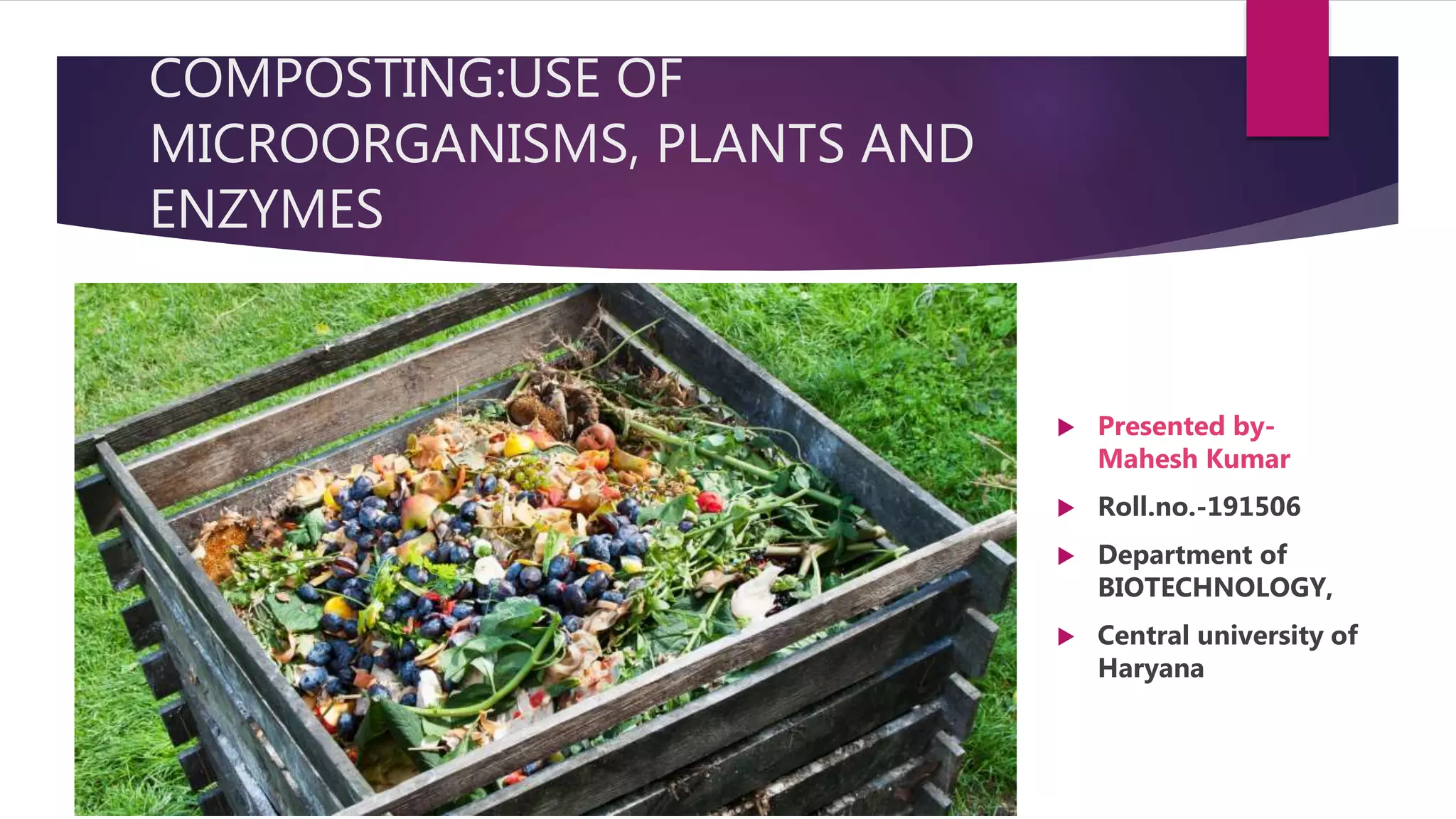
COMPOSTING:USE OF
MICROORGANISMS, PLANTS AND
ENZYMES
 Presented by-
Mahesh Kumar
 Roll.no.-191506
 Department of
BIOTECHNOLOGY,
 Central university of
Haryana
Composting: general introduction
Composting -is the process of biological degradation of Organic waste such as food,or plant material by using
microorganisms like bacteria,fungi ,worms and other microorganisms.
 Compost : it is a Organic matter with rich nutrient. It has been decomposed and recycled in this process.it contains a
variety of nutrients Required by healthy growth of plants.
 It improves the quality of soil,so it is known as soil fertilizer.It improves the soil texture and fertility.
 Parameters includes in composting are:
 C-N ratio-25/30:1
 Ideal moisture-50-60 percent.
 Temperature-55-75
 Ph-6-8
 Oxygen availability-5-15 percent.
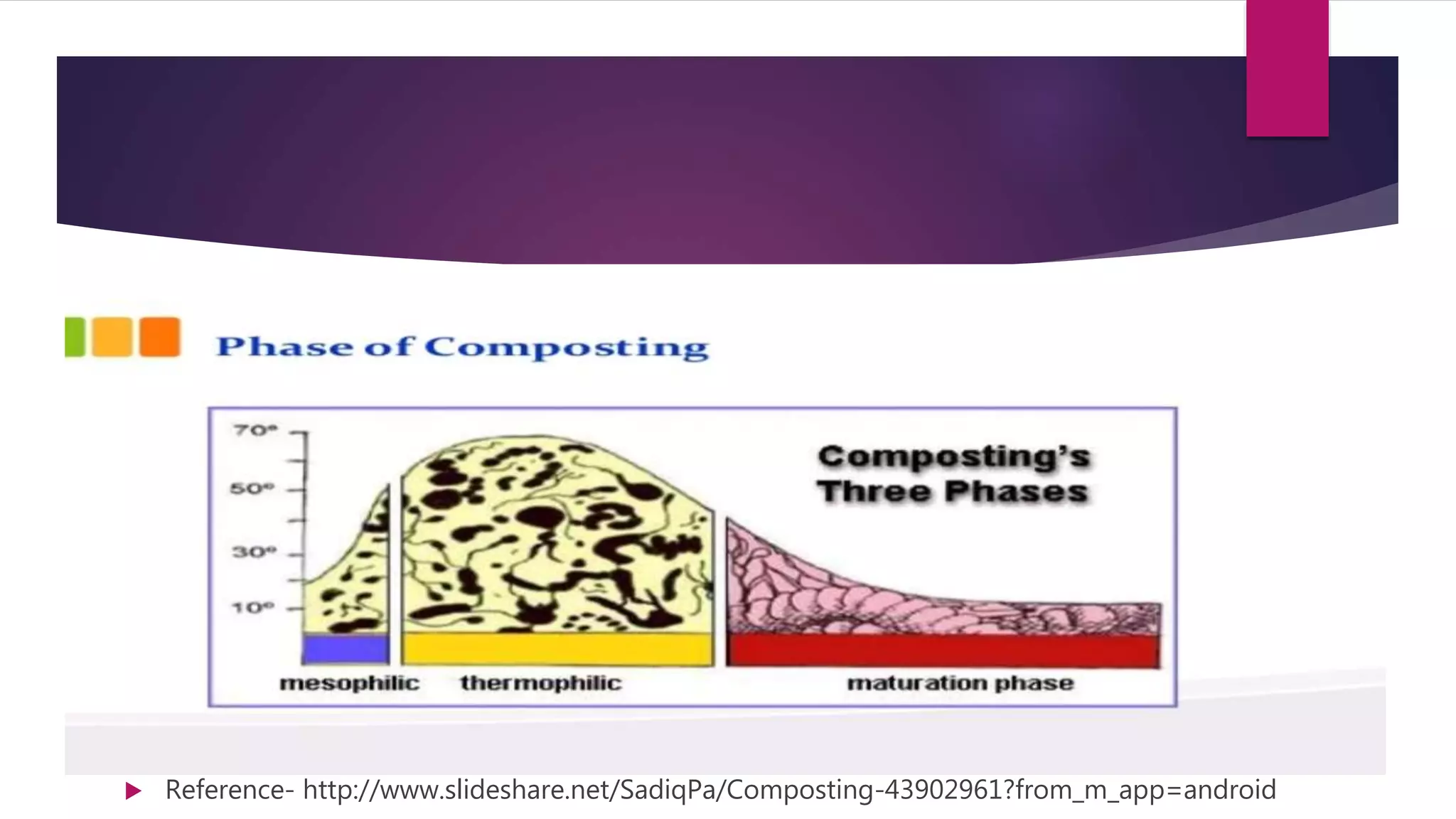
Stages of composting
1.Mesophilic stage-mesophilic microorganisms_survive 30-40
degeree Example –staphylococcus Aureus,e.coli, Streptococcus
pneumoniae etc.
2.Thermophic stage-it can be few days to several months during
which, the temperature increases and development of thermophilic
microorganisms occurs.
Example-bacillus substilis , aspergillus sp.
3.Curang phase or humification-where all the polysaccharide
molecules are transformed into humic acid ,felvic acid and phenolic
compounds.
 Reference- http://www.slideshare.net/SadiqPa/Composting-43902961?from_m_app=android
Organisms include in
composting
 1..Bacteria-they make up 80-90percent part of composting process .
 Three types based on temperature-
 Mesophilic bacteria-0-40degree centigrate.
 40degree above-thermophilus bacteria.
 High temperature-thermus dominates (genus of bacteria).
 eg.bacilus brevis ,b.substilus.
 2.Fungi-they are responsible for the decomposition of many complexes Plant polymer in soil and compost.
 Most fungi live in outer layer of compact when temperature is high .
 eg. Aspergillus fumigatus.humicola grisea.
 3.Plant-plants use enzymes and harmone to grow properly so there is no doubt they are important plants.
 Example –legume plants that Fix nitrogen Like clover and alfalfa.
 4.Enzymes-an enzymes is a special protein that causes chemical reactions to take place.
 They are also key to breaking down compost.
 Examples: cellulase that breaks cellulose,bita glucocidase- It hydrolyse the Glucocide,
 Phospatase and aryl sulphatase remove the phosphate ant and sulphate into organic matter.
Advantages of composting
 1.it improves the quality of the soil and for this reason it is considered as a
soil conditioner.
 It also improves the structure of the soil.
 2.it contains a variety of the basic nutrients required for healthy growth of
plants.
 3.protection provides against erosion.
 Erosion – it is the process where remove of soils By rivers and distruction of
rocks occurs.
 4.cheapest way of degrading compost.
 5.reduce the water need during composting.
Disadvantages
 1.time consuming process.
 2.need of high maintenance technology.
 3.it has low nutrient value as compared to commercial fertilizer.
 4.low possible heavy metal contamination.
 5.more Landed is needed.
APPLICATION
 Improving the soil.
 Providing a substrate for potted Christmas tree.
 Soil conditions for flowers.
 Remediation of contaminated soil.
 Substrate preparation for new sports field.
 Growing media in earth retained structure.
COMPOSTING IMPACT ON
INVIRONMENT
 Reference:http://images.app.google/mHiFEb9Dc4cJZObA
Thankyou

Composting

  • 1.
    COMPOSTING:USE OF MICROORGANISMS, PLANTSAND ENZYMES  Presented by- Mahesh Kumar  Roll.no.-191506  Department of BIOTECHNOLOGY,  Central university of Haryana
  • 2.
    Composting: general introduction Composting-is the process of biological degradation of Organic waste such as food,or plant material by using microorganisms like bacteria,fungi ,worms and other microorganisms.  Compost : it is a Organic matter with rich nutrient. It has been decomposed and recycled in this process.it contains a variety of nutrients Required by healthy growth of plants.  It improves the quality of soil,so it is known as soil fertilizer.It improves the soil texture and fertility.  Parameters includes in composting are:  C-N ratio-25/30:1  Ideal moisture-50-60 percent.  Temperature-55-75  Ph-6-8  Oxygen availability-5-15 percent.
  • 3.
    Stages of composting 1.Mesophilicstage-mesophilic microorganisms_survive 30-40 degeree Example –staphylococcus Aureus,e.coli, Streptococcus pneumoniae etc. 2.Thermophic stage-it can be few days to several months during which, the temperature increases and development of thermophilic microorganisms occurs. Example-bacillus substilis , aspergillus sp. 3.Curang phase or humification-where all the polysaccharide molecules are transformed into humic acid ,felvic acid and phenolic compounds.
  • 4.
  • 5.
    Organisms include in composting 1..Bacteria-they make up 80-90percent part of composting process .  Three types based on temperature-  Mesophilic bacteria-0-40degree centigrate.  40degree above-thermophilus bacteria.  High temperature-thermus dominates (genus of bacteria).  eg.bacilus brevis ,b.substilus.  2.Fungi-they are responsible for the decomposition of many complexes Plant polymer in soil and compost.  Most fungi live in outer layer of compact when temperature is high .  eg. Aspergillus fumigatus.humicola grisea.  3.Plant-plants use enzymes and harmone to grow properly so there is no doubt they are important plants.  Example –legume plants that Fix nitrogen Like clover and alfalfa.  4.Enzymes-an enzymes is a special protein that causes chemical reactions to take place.  They are also key to breaking down compost.  Examples: cellulase that breaks cellulose,bita glucocidase- It hydrolyse the Glucocide,  Phospatase and aryl sulphatase remove the phosphate ant and sulphate into organic matter.
  • 6.
    Advantages of composting 1.it improves the quality of the soil and for this reason it is considered as a soil conditioner.  It also improves the structure of the soil.  2.it contains a variety of the basic nutrients required for healthy growth of plants.  3.protection provides against erosion.  Erosion – it is the process where remove of soils By rivers and distruction of rocks occurs.  4.cheapest way of degrading compost.  5.reduce the water need during composting.
  • 7.
    Disadvantages  1.time consumingprocess.  2.need of high maintenance technology.  3.it has low nutrient value as compared to commercial fertilizer.  4.low possible heavy metal contamination.  5.more Landed is needed.
  • 8.
    APPLICATION  Improving thesoil.  Providing a substrate for potted Christmas tree.  Soil conditions for flowers.  Remediation of contaminated soil.  Substrate preparation for new sports field.  Growing media in earth retained structure.
  • 9.
    COMPOSTING IMPACT ON INVIRONMENT Reference:http://images.app.google/mHiFEb9Dc4cJZObA
  • 10.