The components
of the space
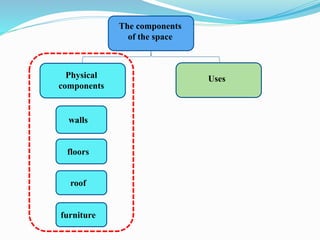
UsesPhysical
components
walls
floors
roof
furniture
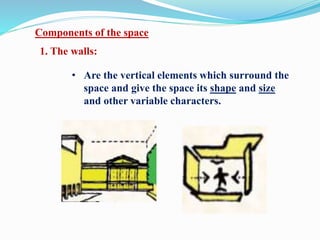
• Are the vertical elements which surround the
space and give the space its shape and size
and other variable characters.
Components of the space
1. The walls:
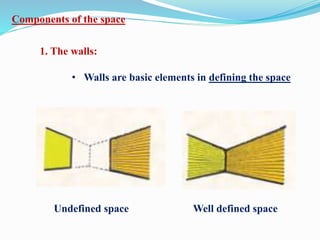
• Walls are basic elements in defining the space
1. The walls:
Components of the space
Well defined spaceUndefined space
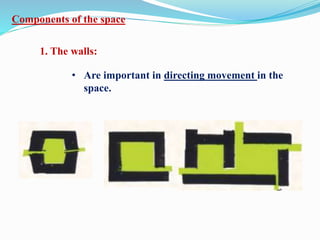
• Are important in directing movement in the
space.
Components of the space
1. The walls:
WHAT ARE THE TYPES OF WALLS?
Components of the space
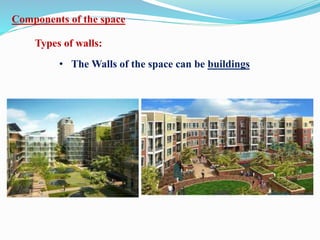
Types of walls:
• The Walls of the space can be buildings
Components of the space
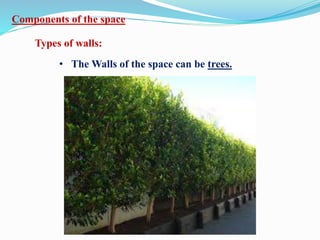
Types of walls:
• The Walls of the space can be trees.
Components of the space
Types of walls:
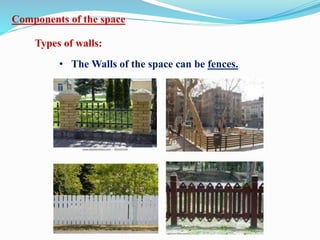
• The Walls of the space can be fences.
Types of walls:
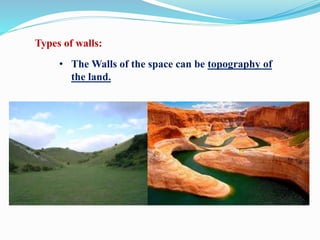
• The Walls of the space can be topography of
the land.
Components of the space
2. The floors:
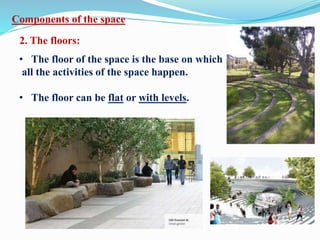
• The floor of the space is the base on which
all the activities of the space happen.
• The floor can be flat or with levels.
Components of the space
2. The floors:
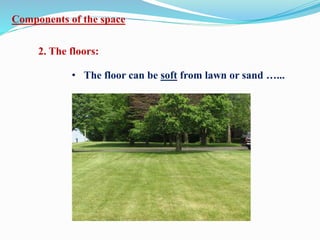
• The floor can be soft from lawn or sand …...
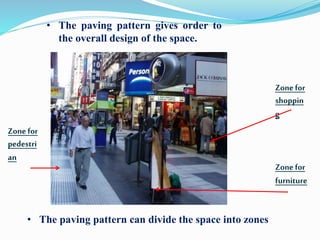
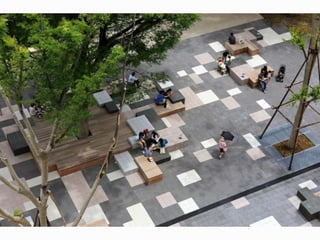
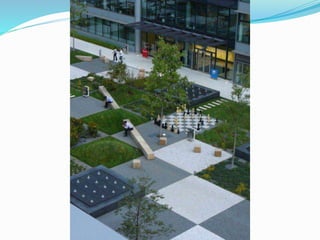
• The paving pattern can divide the space into zones
Zonefor
pedestri
an
Zonefor
furniture
Zonefor
shoppin
g
• The paving pattern gives order to
the overall design of the space.
Components of the space
2. The floors:
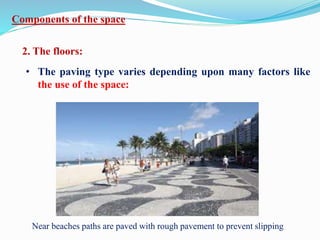
• The paving type varies depending upon many factors like
the use of the space:
Near beaches paths are paved with rough pavement to prevent slipping
Components of the space
2. The floors:
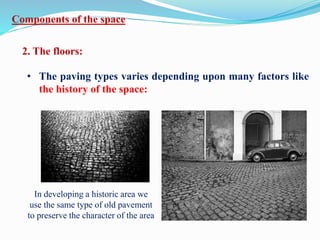
• The paving types varies depending upon many factors like
the history of the space:
In developing a historic area we
use the same type of old pavement
to preserve the character of the area
Components of the space
3. The roof :
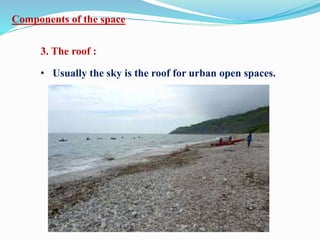
• Usually the sky is the roof for urban open spaces.
Components of the space
3. The roof :
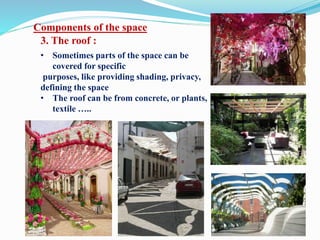
• Sometimes parts of the space can be
covered for specific
purposes, like providing shading, privacy,
defining the space
• The roof can be from concrete, or plants,
textile …..
Components of the space
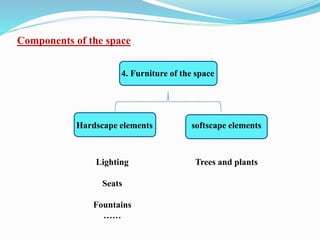
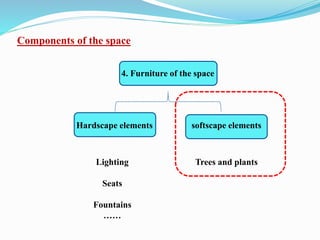
4. Furniture of the space
Hardscape elements softscape elements
Trees and plantsLighting
Seats
Fountains
……
Lighting :
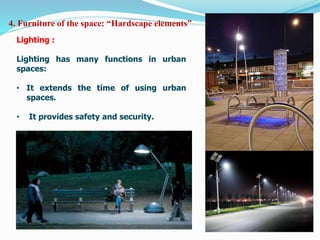
Lighting has many functions in urban
spaces:
• It extends the time of using urban
spaces.
• It provides safety and security.
4. Furniture of the space: “Hardscape elements”
Lighting :
Lighting has many functions in urban spaces:
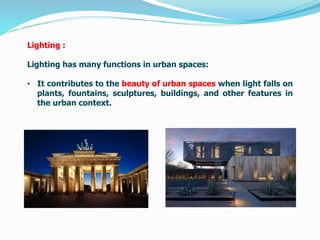
• It contributes to the beauty of urban spaces when light falls on
plants, fountains, sculptures, buildings, and other features in
the urban context.
Lighting :
Lighting has many functions in urban spaces:
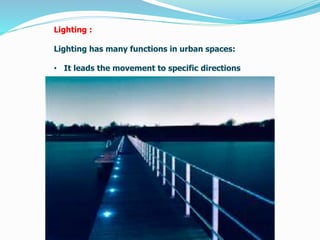
• It leads the movement to specific directions
Types of Lighting units :
There are variable types of lighting units:
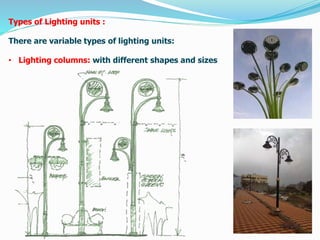
• Lighting columns: with different shapes and sizes
Types of Lighting units :
There are variable types of lighting units:
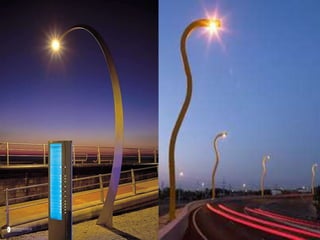
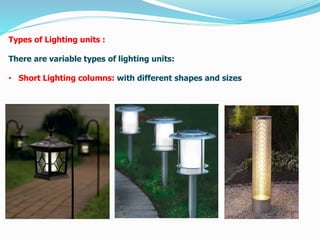
• Short Lighting columns: with different shapes and sizes
Types of Lighting units :
There are variable types of lighting units:
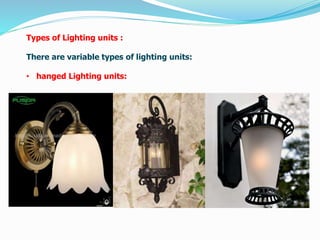
• hanged Lighting units:
Types of Lighting units :
There are variable types of lighting units:
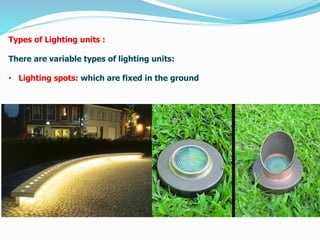
• Lighting spots: which are fixed in the ground
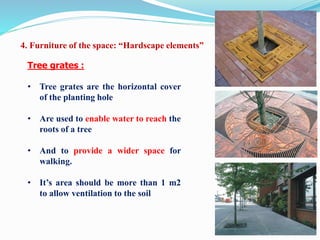
Tree grates :
• Tree grates are the horizontal cover
of the planting hole
• Are used to enable water to reach the
roots of a tree
• And to provide a wider space for
walking.
• It’s area should be more than 1 m2
to allow ventilation to the soil
4. Furniture of the space: “Hardscape elements”
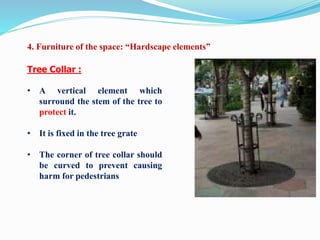
Tree Collar :
• A vertical element which
surround the stem of the tree to
protect it.
• It is fixed in the tree grate
• The corner of tree collar should
be curved to prevent causing
harm for pedestrians
4. Furniture of the space: “Hardscape elements”
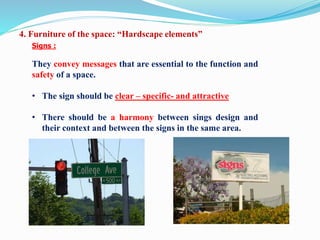
Signs :
They convey messages that are essential to the function and
safety of a space.
• The sign should be clear – specific- and attractive
• There should be a harmony between sings design and
their context and between the signs in the same area.
4. Furniture of the space: “Hardscape elements”
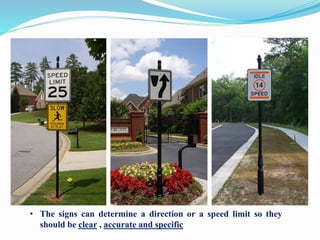
• The signs can determine a direction or a speed limit so they
should be clear , accurate and specific
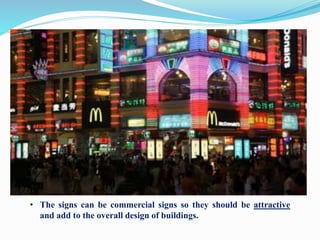
• The signs can be commercial signs so they should be attractive
and add to the overall design of buildings.
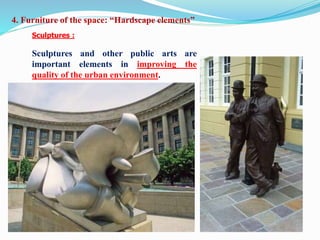
Sculptures :
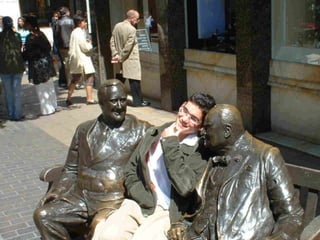
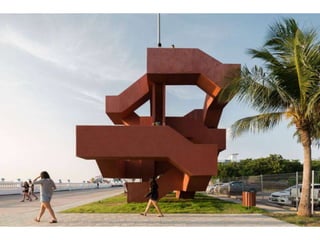
Sculptures and other public arts are
important elements in improving the
quality of the urban environment.
4. Furniture of the space: “Hardscape elements”
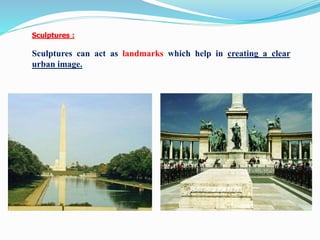
Sculptures :
Sculptures can act as landmarks which help in creating a clear
urban image.
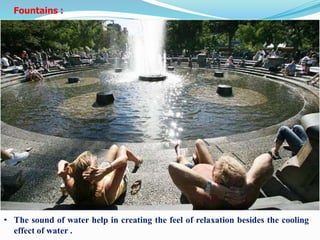
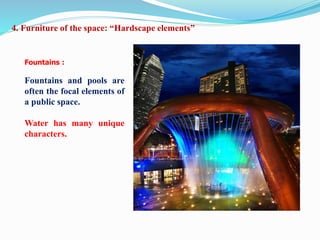
Fountains :
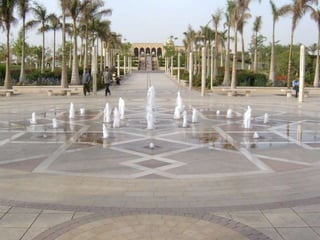
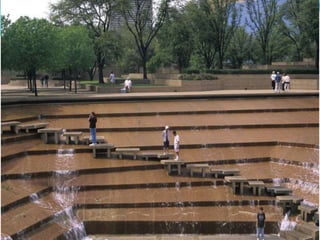
Fountains and pools are
often the focal elements of
a public space.
Water has many unique
characters.
4. Furniture of the space: “Hardscape elements”
• The sound of water help in creating the feel of relaxation besides the cooling
effect of water .
Fountains :
Fountains :
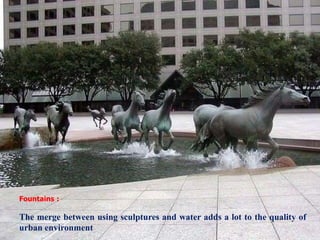
The merge between using sculptures and water adds a lot to the quality of
urban environment
4. Furniture of the space: “Hardscape elements”
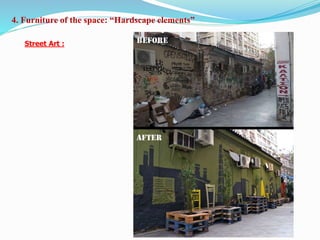
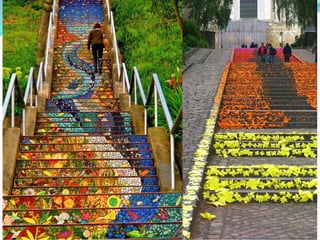
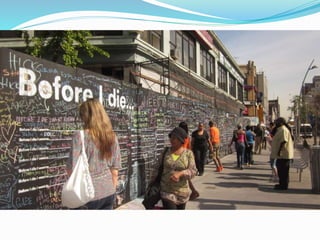
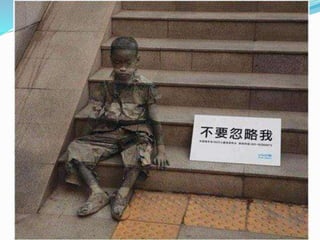
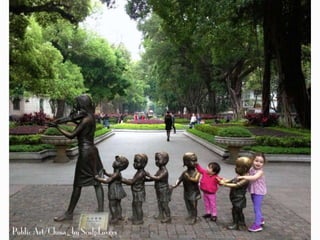
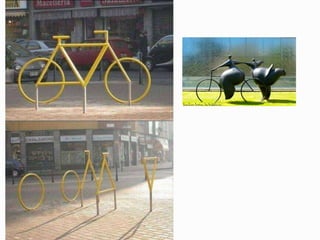
Street Art :
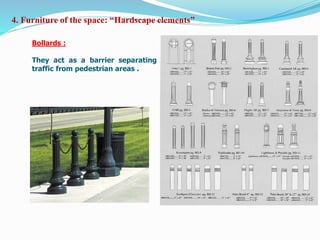
Bollards :
They act as a barrier separating
traffic from pedestrian areas .
4. Furniture of the space: “Hardscape elements”
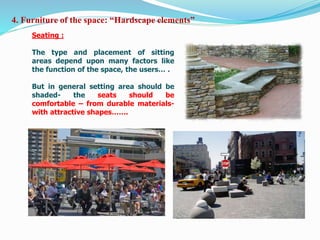
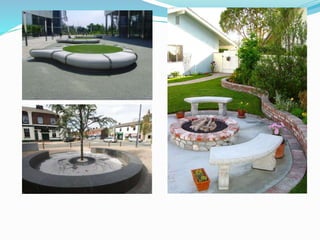
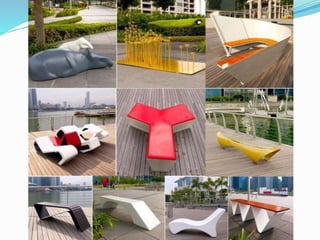
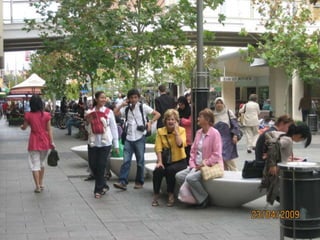
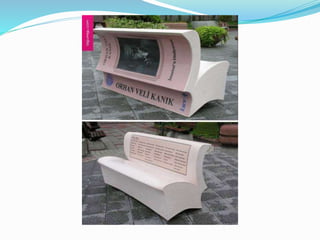
Seating :
The type and placement of sitting
areas depend upon many factors like
the function of the space, the users… .
But in general setting area should be
shaded- the seats should be
comfortable – from durable materials-
with attractive shapes…….
4. Furniture of the space: “Hardscape elements”
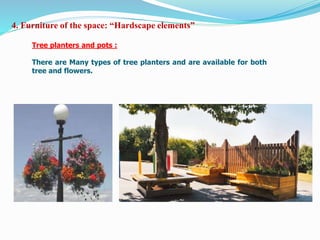
Tree planters and pots :
There are Many types of tree planters and are available for both
tree and flowers.
4. Furniture of the space: “Hardscape elements”
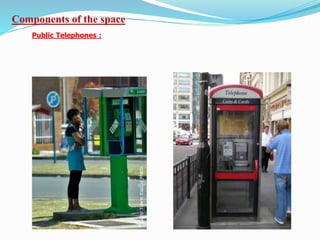
Public Telephones :
Components of the space
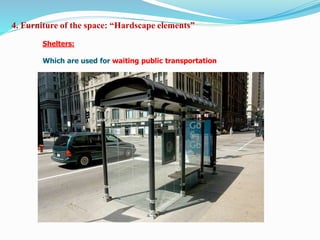
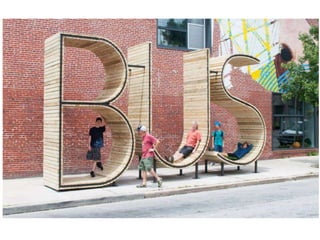
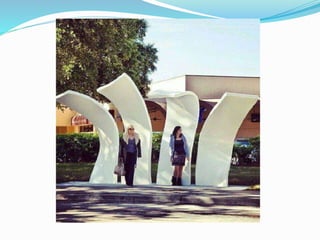
Shelters:
Which are used for waiting public transportation
4. Furniture of the space: “Hardscape elements”
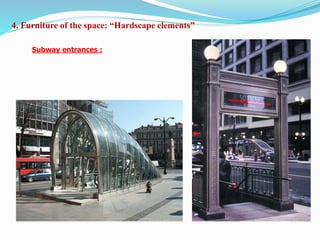
Subway entrances :
4. Furniture of the space: “Hardscape elements”
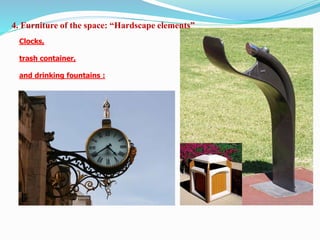
Clocks,
trash container,
and drinking fountains :
4. Furniture of the space: “Hardscape elements”
Components of the space
4. Furniture of the space
Hardscape elements softscape elements
Trees and plantsLighting
Seats
Fountains
……
4. Furniture of the space: “Softscape elements”
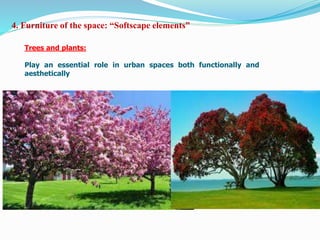
Trees and plants:
Play an essential role in urban spaces both functionally and
aesthetically
4. Furniture of the space: “Softscape elements”
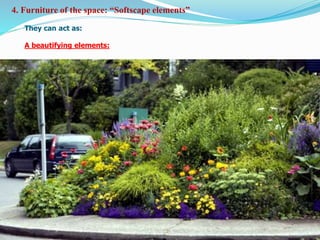
They can act as:
A beautifying elements:
4. Furniture of the space: “Softscape elements”
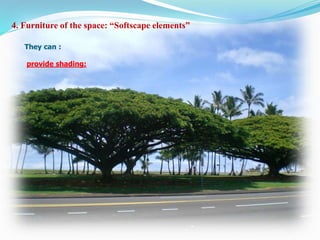
They can :
provide shading:
4. Furniture of the space: “Softscape elements”
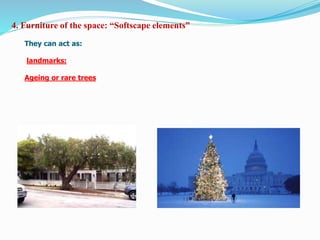
They can act as:
landmarks:
Ageing or rare trees
4. Furniture of the space: “Softscape elements”
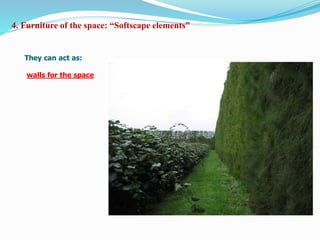
They can act as:
walls for the space
4. Furniture of the space: “Softscape elements”
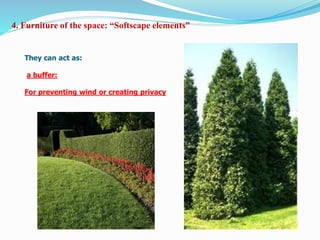
They can act as:
a buffer:
For preventing wind or creating privacy
4. Furniture of the space: “Softscape elements”
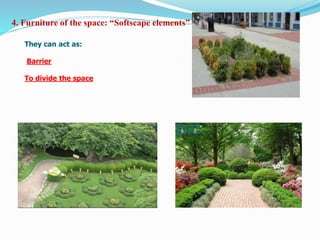
They can act as:
Barrier
To divide the space
4. Furniture of the space: “Softscape elements”
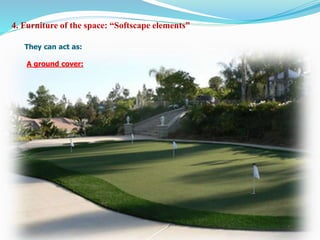
They can act as:
A ground cover:
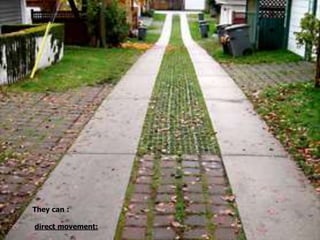
They can :
direct movement:
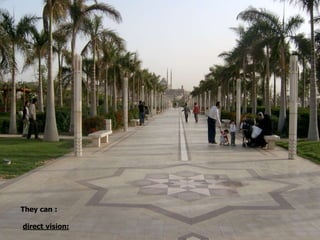
They can :
direct vision:
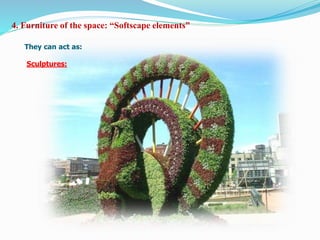
4. Furniture of the space: “Softscape elements”
They can act as:
Sculptures:
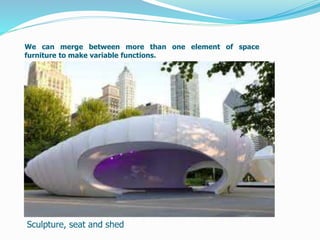
Sculpture, seat and shed
We can merge between more than one element of space
furniture to make variable functions.
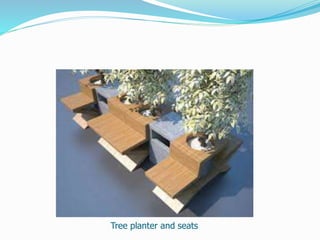
Tree planter and seats
THANKS

Components of the space

  • 2.
    The components of thespace UsesPhysical components walls floors roof furniture
  • 3.
    • Are thevertical elements which surround the space and give the space its shape and size and other variable characters. Components of the space 1. The walls:
  • 4.
    • Walls arebasic elements in defining the space 1. The walls: Components of the space Well defined spaceUndefined space
  • 5.
    • Are importantin directing movement in the space. Components of the space 1. The walls:
  • 6.
    WHAT ARE THETYPES OF WALLS?
  • 7.
    Components of thespace Types of walls: • The Walls of the space can be buildings
  • 8.
    Components of thespace Types of walls: • The Walls of the space can be trees.
  • 9.
    Components of thespace Types of walls: • The Walls of the space can be fences.
  • 10.
    Types of walls: •The Walls of the space can be topography of the land.
  • 11.
    Components of thespace 2. The floors: • The floor of the space is the base on which all the activities of the space happen. • The floor can be flat or with levels.
  • 12.
    Components of thespace 2. The floors: • The floor can be soft from lawn or sand …...
  • 13.
    • The pavingpattern can divide the space into zones Zonefor pedestri an Zonefor furniture Zonefor shoppin g • The paving pattern gives order to the overall design of the space.
  • 15.
    Components of thespace 2. The floors: • The paving type varies depending upon many factors like the use of the space: Near beaches paths are paved with rough pavement to prevent slipping
  • 16.
    Components of thespace 2. The floors: • The paving types varies depending upon many factors like the history of the space: In developing a historic area we use the same type of old pavement to preserve the character of the area
  • 17.
    Components of thespace 3. The roof : • Usually the sky is the roof for urban open spaces.
  • 18.
    Components of thespace 3. The roof : • Sometimes parts of the space can be covered for specific purposes, like providing shading, privacy, defining the space • The roof can be from concrete, or plants, textile …..
  • 19.
    Components of thespace 4. Furniture of the space Hardscape elements softscape elements Trees and plantsLighting Seats Fountains ……
  • 20.
    Lighting : Lighting hasmany functions in urban spaces: • It extends the time of using urban spaces. • It provides safety and security. 4. Furniture of the space: “Hardscape elements”
  • 21.
    Lighting : Lighting hasmany functions in urban spaces: • It contributes to the beauty of urban spaces when light falls on plants, fountains, sculptures, buildings, and other features in the urban context.
  • 22.
    Lighting : Lighting hasmany functions in urban spaces: • It leads the movement to specific directions
  • 23.
    Types of Lightingunits : There are variable types of lighting units: • Lighting columns: with different shapes and sizes
  • 25.
    Types of Lightingunits : There are variable types of lighting units: • Short Lighting columns: with different shapes and sizes
  • 26.
    Types of Lightingunits : There are variable types of lighting units: • hanged Lighting units:
  • 27.
    Types of Lightingunits : There are variable types of lighting units: • Lighting spots: which are fixed in the ground
  • 28.
    Tree grates : •Tree grates are the horizontal cover of the planting hole • Are used to enable water to reach the roots of a tree • And to provide a wider space for walking. • It’s area should be more than 1 m2 to allow ventilation to the soil 4. Furniture of the space: “Hardscape elements”
  • 29.
    Tree Collar : •A vertical element which surround the stem of the tree to protect it. • It is fixed in the tree grate • The corner of tree collar should be curved to prevent causing harm for pedestrians 4. Furniture of the space: “Hardscape elements”
  • 30.
    Signs : They conveymessages that are essential to the function and safety of a space. • The sign should be clear – specific- and attractive • There should be a harmony between sings design and their context and between the signs in the same area. 4. Furniture of the space: “Hardscape elements”
  • 31.
    • The signscan determine a direction or a speed limit so they should be clear , accurate and specific
  • 32.
    • The signscan be commercial signs so they should be attractive and add to the overall design of buildings.
  • 33.
    Sculptures : Sculptures andother public arts are important elements in improving the quality of the urban environment. 4. Furniture of the space: “Hardscape elements”
  • 38.
    Sculptures : Sculptures canact as landmarks which help in creating a clear urban image.
  • 39.
    Fountains : Fountains andpools are often the focal elements of a public space. Water has many unique characters. 4. Furniture of the space: “Hardscape elements”
  • 40.
    • The soundof water help in creating the feel of relaxation besides the cooling effect of water . Fountains :
  • 41.
    Fountains : The mergebetween using sculptures and water adds a lot to the quality of urban environment
  • 44.
    4. Furniture ofthe space: “Hardscape elements” Street Art :
  • 48.
    Bollards : They actas a barrier separating traffic from pedestrian areas . 4. Furniture of the space: “Hardscape elements”
  • 50.
    Seating : The typeand placement of sitting areas depend upon many factors like the function of the space, the users… . But in general setting area should be shaded- the seats should be comfortable – from durable materials- with attractive shapes……. 4. Furniture of the space: “Hardscape elements”
  • 57.
    Tree planters andpots : There are Many types of tree planters and are available for both tree and flowers. 4. Furniture of the space: “Hardscape elements”
  • 58.
  • 59.
    Shelters: Which are usedfor waiting public transportation 4. Furniture of the space: “Hardscape elements”
  • 62.
    Subway entrances : 4.Furniture of the space: “Hardscape elements”
  • 63.
    Clocks, trash container, and drinkingfountains : 4. Furniture of the space: “Hardscape elements”
  • 64.
    Components of thespace 4. Furniture of the space Hardscape elements softscape elements Trees and plantsLighting Seats Fountains ……
  • 65.
    4. Furniture ofthe space: “Softscape elements” Trees and plants: Play an essential role in urban spaces both functionally and aesthetically
  • 66.
    4. Furniture ofthe space: “Softscape elements” They can act as: A beautifying elements:
  • 67.
    4. Furniture ofthe space: “Softscape elements” They can : provide shading:
  • 68.
    4. Furniture ofthe space: “Softscape elements” They can act as: landmarks: Ageing or rare trees
  • 69.
    4. Furniture ofthe space: “Softscape elements” They can act as: walls for the space
  • 70.
    4. Furniture ofthe space: “Softscape elements” They can act as: a buffer: For preventing wind or creating privacy
  • 71.
    4. Furniture ofthe space: “Softscape elements” They can act as: Barrier To divide the space
  • 72.
    4. Furniture ofthe space: “Softscape elements” They can act as: A ground cover:
  • 73.
  • 74.
  • 75.
    4. Furniture ofthe space: “Softscape elements” They can act as: Sculptures:
  • 76.
    Sculpture, seat andshed We can merge between more than one element of space furniture to make variable functions.
  • 77.
  • 78.