Components of
Communication
Sending and De-coding messages
• Communication can best be summarized as the transmission of a
message from a sender to a receiver in an understandable manner.
• The importance of effective communication is immeasurable in the
world of business and in personal life.
• From a business perspective, effective communication is an absolute
must, because it commonly accounts for the difference between
success and failure or profit and loss.
2
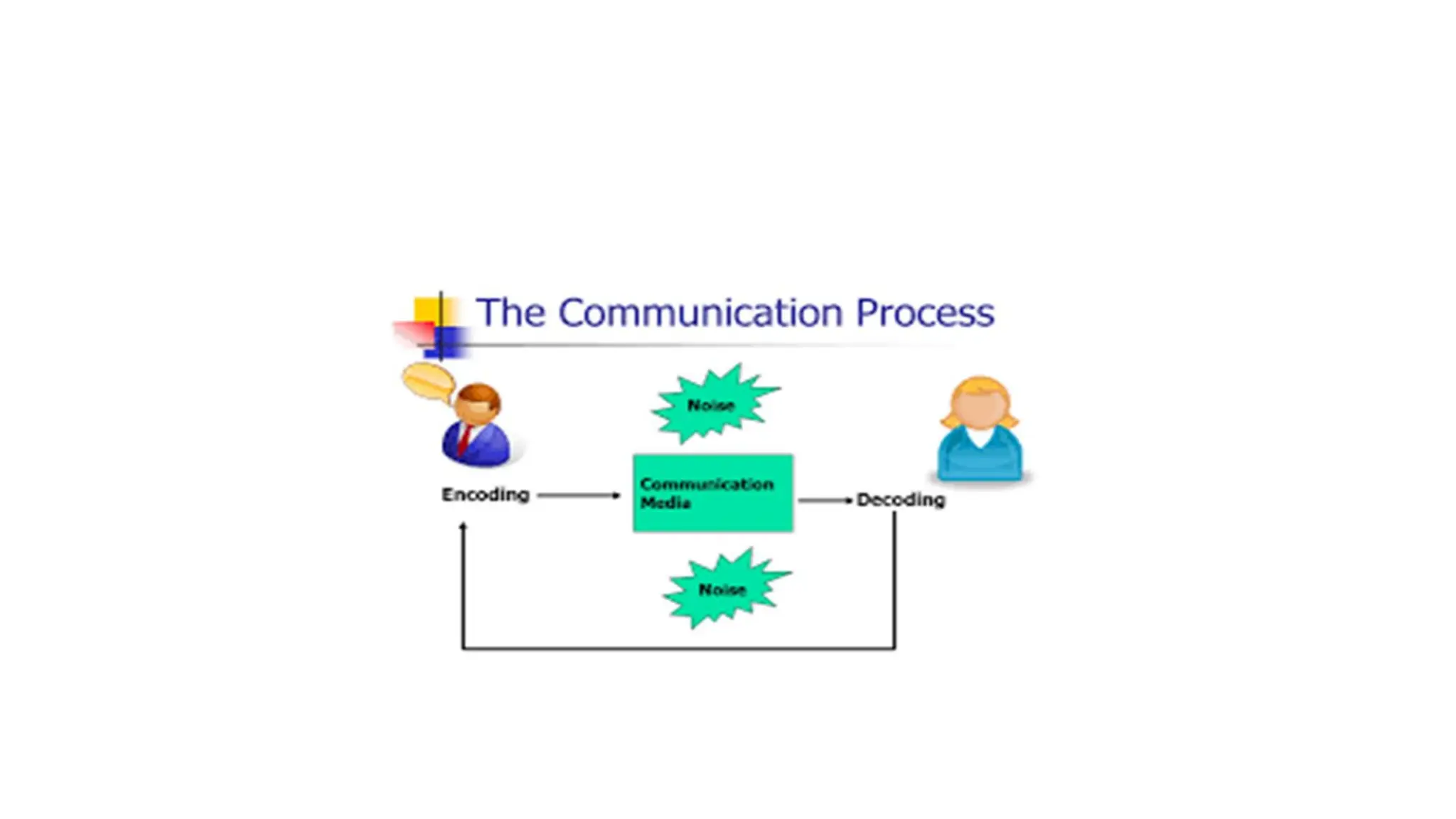
• The communication process is made up of following key components.
• These components include;
Sender
Encoding
Medium of transmission
Receiver
Decoding
Feedback
Context
4
Sender
• The sender is an individual, group, or organization who initiates the
communication.
• This source is initially responsible for the success of the message.
• The sender's experiences, attitudes, knowledge, skill, perceptions, and
culture influence the message.
• ‘The written words, spoken words, and nonverbal language selected
are paramount in ensuring the receiver interprets the message as
intended by the sender’.
• All communication begins with the sender.
5
Encoding messages
• The first step the sender is faced with involves the encoding process.
• In order to convey meaning, the sender must begin encoding, which
means translating information into a message in the form of symbols
that represent ideas or concepts.
• This process translates the ideas or concepts into the coded message
that will be communicated.
6
Contd.
• The symbols can take on numerous forms such as, languages, words,
or gestures.
• These symbols are used to encode ideas into messages that others
can understand.
• When encoding a message, the sender has to begin by deciding what
he/she wants to transmit.
7
Medium
• To begin transmitting the message, the sender uses some kind of
channel (also called a medium).
• The channel is the means used to convey the message.
• Most channels are either oral or written, but currently visual channels
are becoming more common as technology expands.
• Common channels include the telephone and a variety of written forms
such as memos, letters, and reports.
8
Contd.
For example, when immediate feedback is necessary, oral
communication channels are more effective because any uncertainties
can be cleared up on the spot. In a situation where the message must
be delivered to more than a small group of people, written channels are
often more effective. Although in many cases, both oral and written
channels should be used because one supplements the other.
9
Contd.
The sender should ask him or herself different questions, so that they can
select the appropriate channel.
Is the message urgent?
Is immediate feedback needed?
Is documentation or a permanent record required?
Is the content complicated, controversial, or private?
Is the message going to someone inside or outside the organization?
Once the sender has answered all of these questions, they will be able to
choose an effective channel
10
Receiver
• Individual or individuals to whom the message is directed
• can communicate either verbally or non-verbally
• The degree to which the decoder understands the message is
dependent upon various factors such as knowledge of recipient, the
relationship and trust that exists between sender and receiver etc.
• make excellent eye contact, listen carefully and sit up straight.
• focus on the message
11
De-coding
• After the appropriate channel or channels are selected, the message
enters the decoding stage of the communication process.
• Decoding is conducted by the receiver.
• Once the message is received and examined, the stimulus is sent to
the brain for interpreting, in order to assign some type of meaning to
it.
• The receiver begins to interpret the symbols sent by the sender,
translating the message to their own set of experiences in order to
make the symbols meaningful.
12
Feedback
• Response, reaction, or information given by the recipient of a message
to the sender
• Allows the sender to evaluate the effectiveness of the message.
• May take the form of a spoken comment, a long sigh, a written
message, a smile, or some other action.
• Even a lack of response, is in a sense, a form of response
13
Context
• Broad field that consists of different aspects (country, culture,
organization etc.).
• Involves the setting, scene, and expectations of the individuals
• Opinions, attitudes, likes, dis-likes, emotions, experience, education
and confidence
• Physical location and characteristics, the culture associated with the
communicators, the relationships between communicators, and the
expected behavior based on past behaviors can influence
communication.
14

Components of communication.pdf

  • 1.
  • 2.
    Sending and De-codingmessages • Communication can best be summarized as the transmission of a message from a sender to a receiver in an understandable manner. • The importance of effective communication is immeasurable in the world of business and in personal life. • From a business perspective, effective communication is an absolute must, because it commonly accounts for the difference between success and failure or profit and loss. 2
  • 4.
    • The communicationprocess is made up of following key components. • These components include; Sender Encoding Medium of transmission Receiver Decoding Feedback Context 4
  • 5.
    Sender • The senderis an individual, group, or organization who initiates the communication. • This source is initially responsible for the success of the message. • The sender's experiences, attitudes, knowledge, skill, perceptions, and culture influence the message. • ‘The written words, spoken words, and nonverbal language selected are paramount in ensuring the receiver interprets the message as intended by the sender’. • All communication begins with the sender. 5
  • 6.
    Encoding messages • Thefirst step the sender is faced with involves the encoding process. • In order to convey meaning, the sender must begin encoding, which means translating information into a message in the form of symbols that represent ideas or concepts. • This process translates the ideas or concepts into the coded message that will be communicated. 6
  • 7.
    Contd. • The symbolscan take on numerous forms such as, languages, words, or gestures. • These symbols are used to encode ideas into messages that others can understand. • When encoding a message, the sender has to begin by deciding what he/she wants to transmit. 7
  • 8.
    Medium • To begintransmitting the message, the sender uses some kind of channel (also called a medium). • The channel is the means used to convey the message. • Most channels are either oral or written, but currently visual channels are becoming more common as technology expands. • Common channels include the telephone and a variety of written forms such as memos, letters, and reports. 8
  • 9.
    Contd. For example, whenimmediate feedback is necessary, oral communication channels are more effective because any uncertainties can be cleared up on the spot. In a situation where the message must be delivered to more than a small group of people, written channels are often more effective. Although in many cases, both oral and written channels should be used because one supplements the other. 9
  • 10.
    Contd. The sender shouldask him or herself different questions, so that they can select the appropriate channel. Is the message urgent? Is immediate feedback needed? Is documentation or a permanent record required? Is the content complicated, controversial, or private? Is the message going to someone inside or outside the organization? Once the sender has answered all of these questions, they will be able to choose an effective channel 10
  • 11.
    Receiver • Individual orindividuals to whom the message is directed • can communicate either verbally or non-verbally • The degree to which the decoder understands the message is dependent upon various factors such as knowledge of recipient, the relationship and trust that exists between sender and receiver etc. • make excellent eye contact, listen carefully and sit up straight. • focus on the message 11
  • 12.
    De-coding • After theappropriate channel or channels are selected, the message enters the decoding stage of the communication process. • Decoding is conducted by the receiver. • Once the message is received and examined, the stimulus is sent to the brain for interpreting, in order to assign some type of meaning to it. • The receiver begins to interpret the symbols sent by the sender, translating the message to their own set of experiences in order to make the symbols meaningful. 12
  • 13.
    Feedback • Response, reaction,or information given by the recipient of a message to the sender • Allows the sender to evaluate the effectiveness of the message. • May take the form of a spoken comment, a long sigh, a written message, a smile, or some other action. • Even a lack of response, is in a sense, a form of response 13
  • 14.
    Context • Broad fieldthat consists of different aspects (country, culture, organization etc.). • Involves the setting, scene, and expectations of the individuals • Opinions, attitudes, likes, dis-likes, emotions, experience, education and confidence • Physical location and characteristics, the culture associated with the communicators, the relationships between communicators, and the expected behavior based on past behaviors can influence communication. 14