Contents
• What is Communication
• Process of Communication
• Types of Communication
• Levels of Communication
• Communication Barriers
• Tools of Effective Communication
10/3/2013 1:41:04 AM 2
is what ??
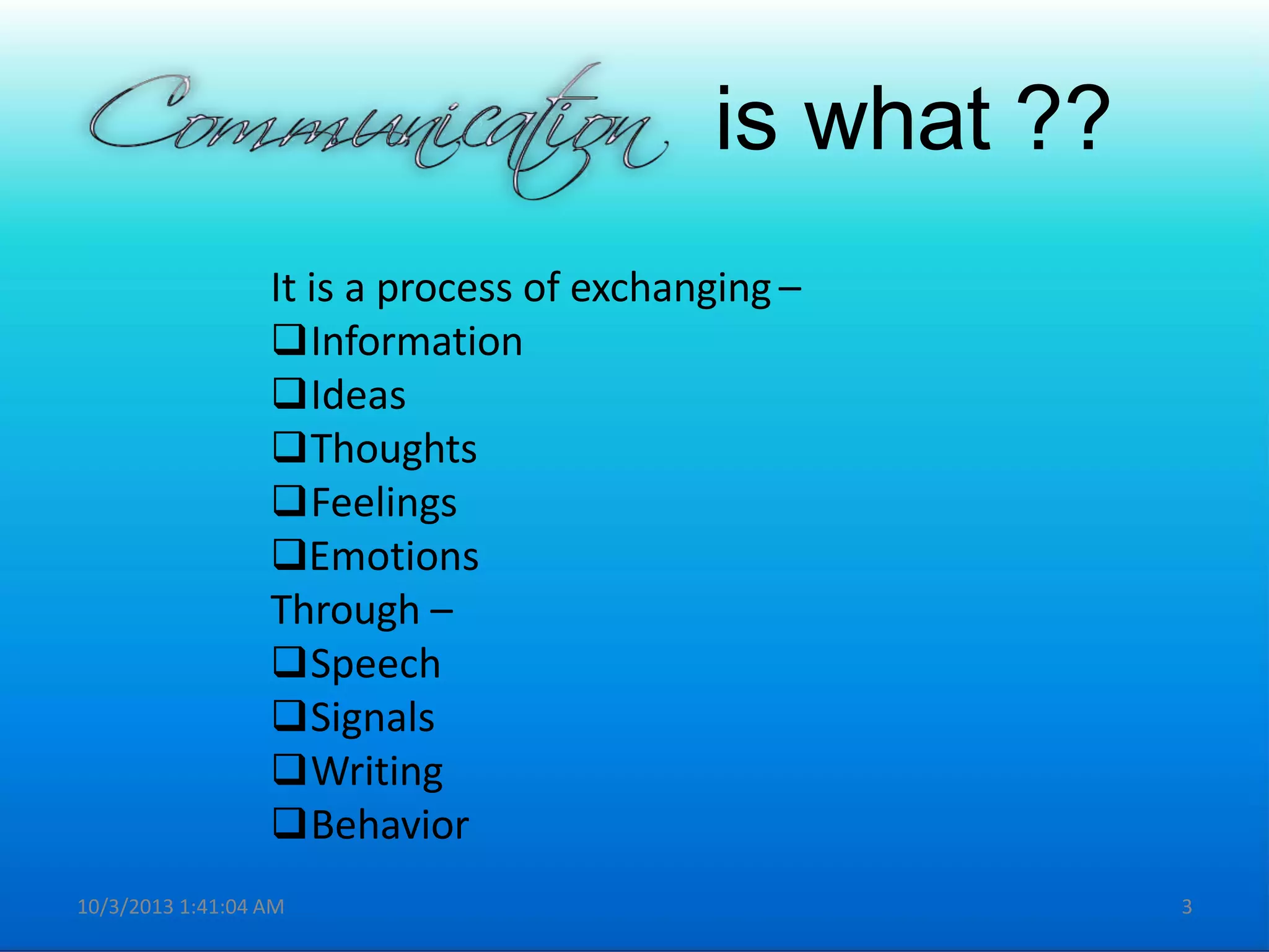
It is a process of exchanging –
Information
Ideas
Thoughts
Feelings
Emotions
Through –
Speech
Signals
Writing
Behavior
10/3/2013 1:41:04 AM 3
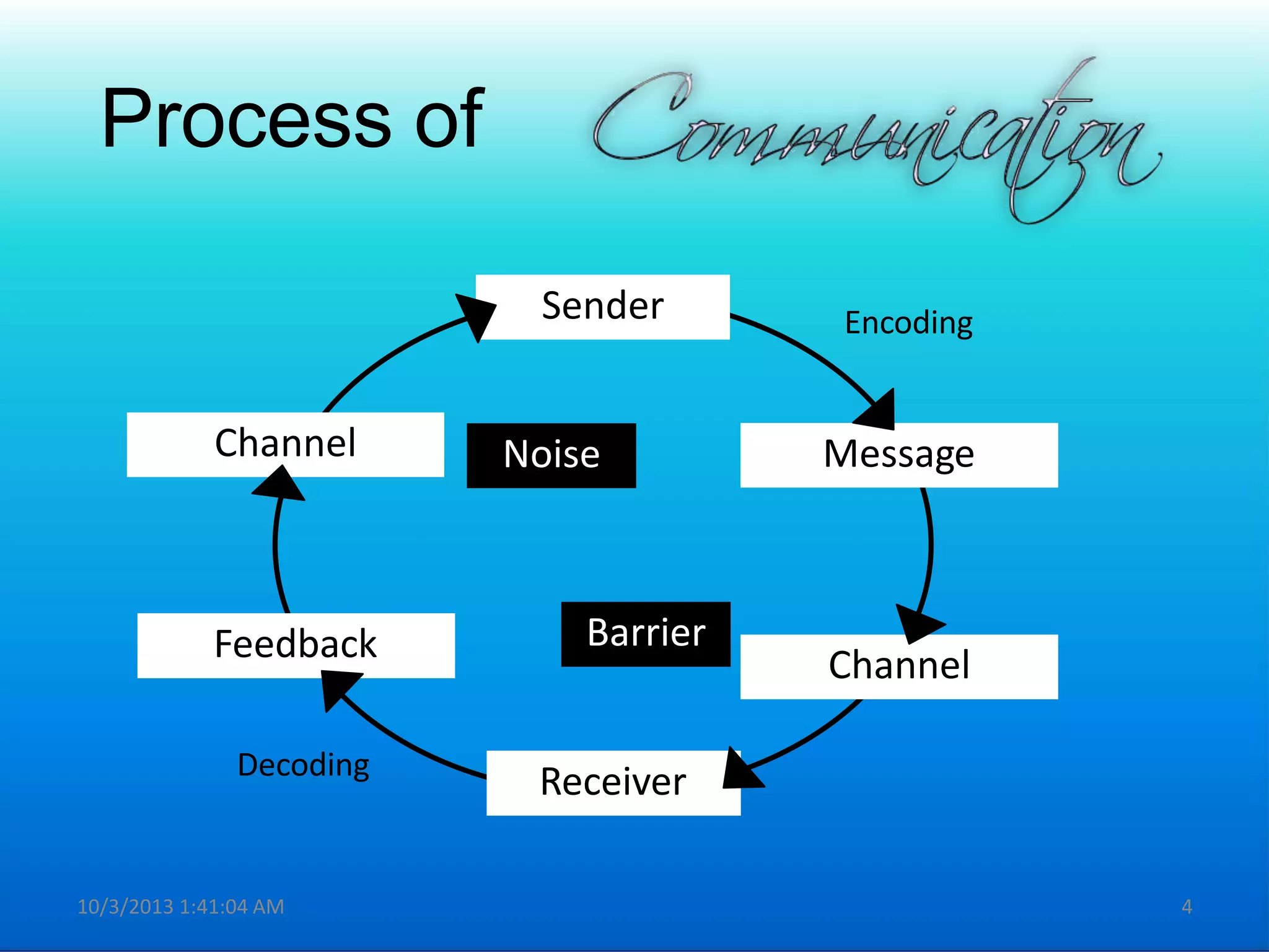
Sender
Channel
Receiver
Feedback
Channel
Encoding
Decoding
MessageNoise
Barrier
Process of
10/3/2013 1:41:04 AM 4
Types of
People communicate with each other in a number of ways
that depend upon the message and its context in which it
is being sent.
Types of communication based on the communication
channels used are –
 Verbal Communication
 Nonverbal Communication
10/3/2013 1:41:04 AM 5
Verbal
 It refers to the form of communication in which message
is transmitted verbally.
 Communication is done by word of mouth and a piece of
writing.
 In verbal communication remember the acronym “KISS”
(keep it short and simple).
Verbal Communication is divided into:
 Oral Communication
 Written Communication
10/3/2013 1:41:04 AM 6
Oral
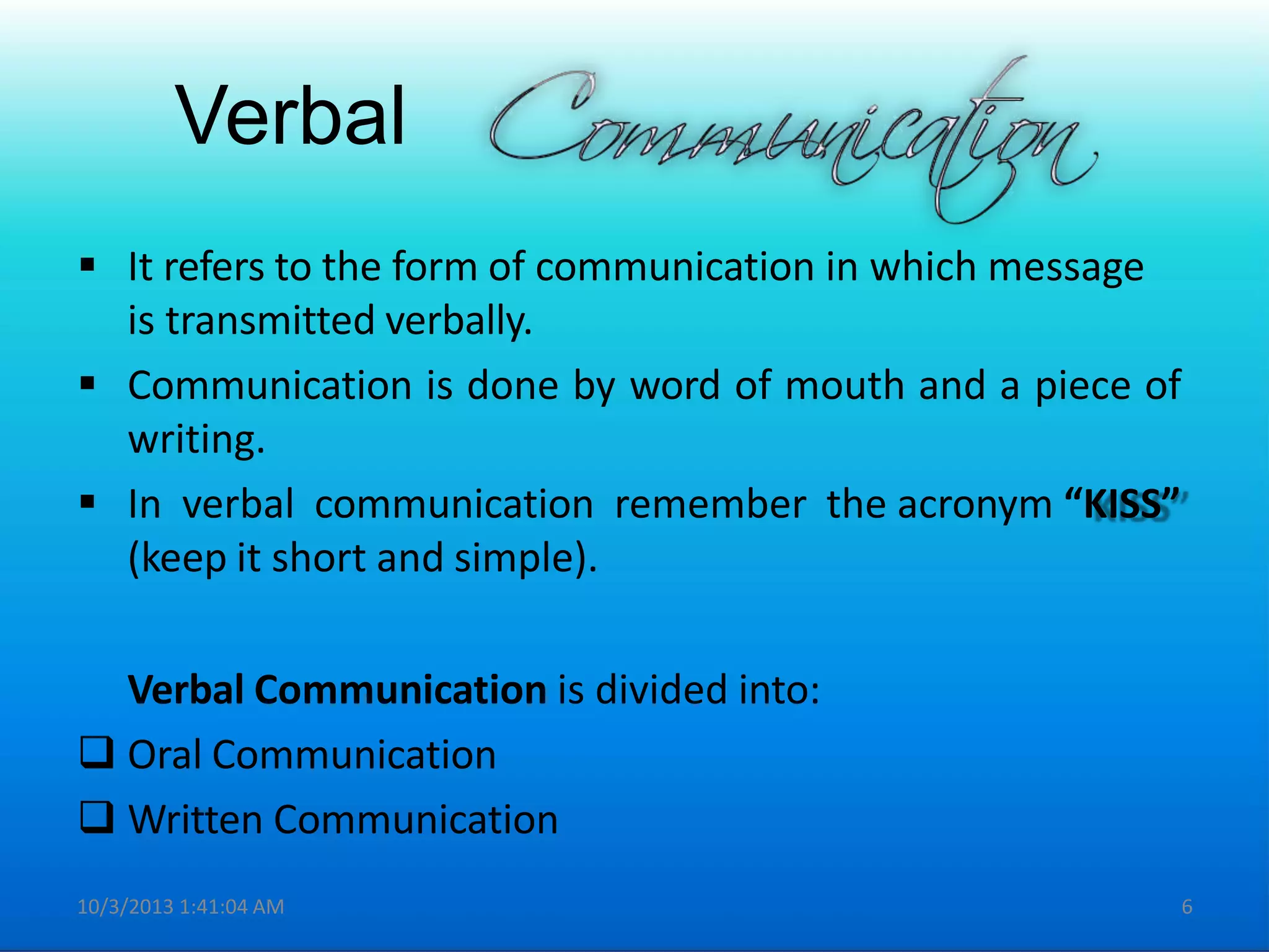
 In oral communication, Spoken words are used.
 It includes face-to-face
conversations, speech, telephonic
conversation, video, radio, television, voice over
internet.
 Communication is influence by
pitch, volume, speed and clarity of speaking.
 Advantages –
It brings quick feedback.
In a face-to-face conversation, by reading facial
expression and body language one can guess
whether he/she should trust what’s being said or
not.
 Disadvantages –
In face-to-face discussion, user is unable to deeply
think about what he is delivering, so this can be
counted as a fault.
10/3/2013 1:41:04 AM 7
Written
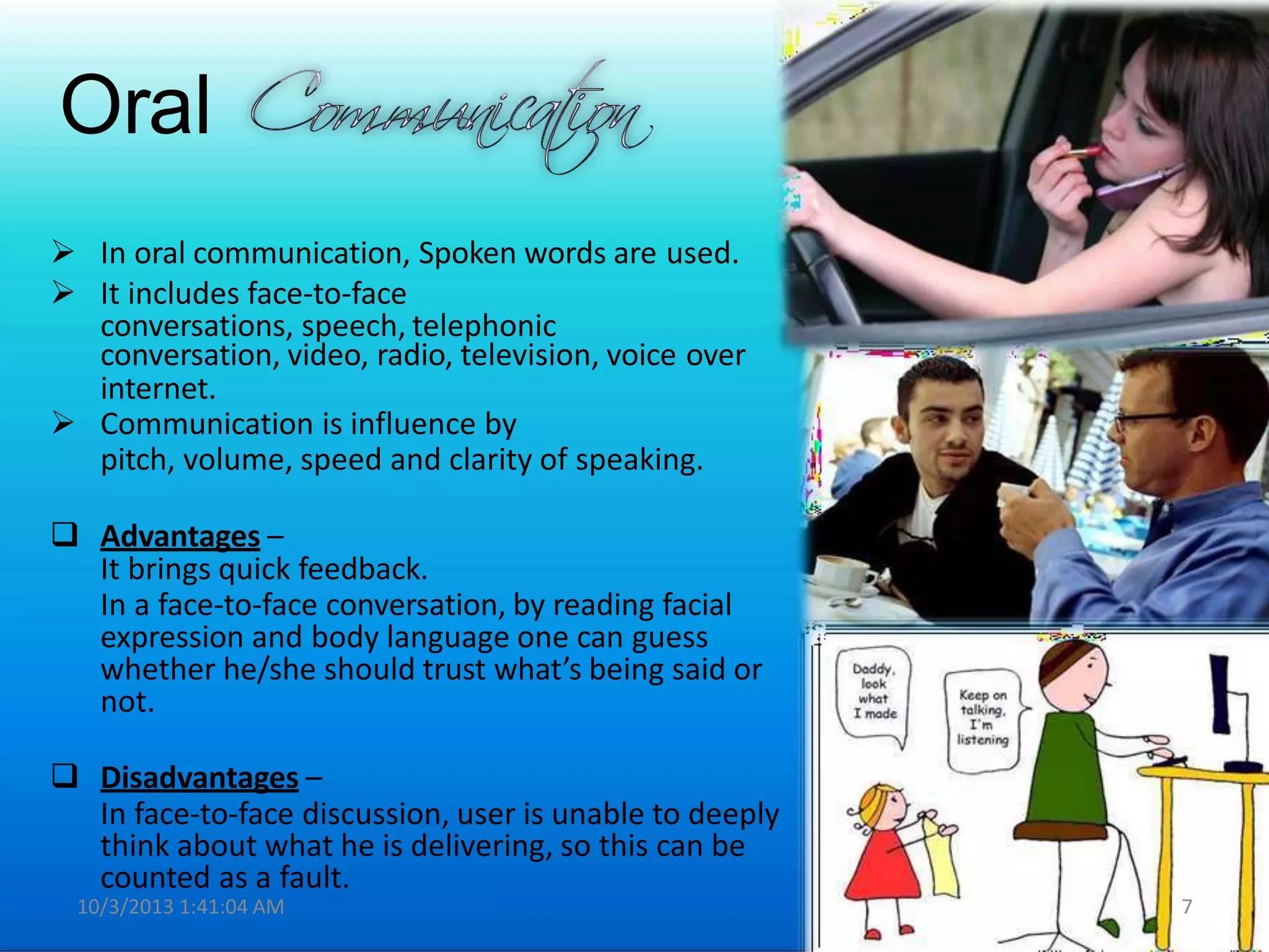
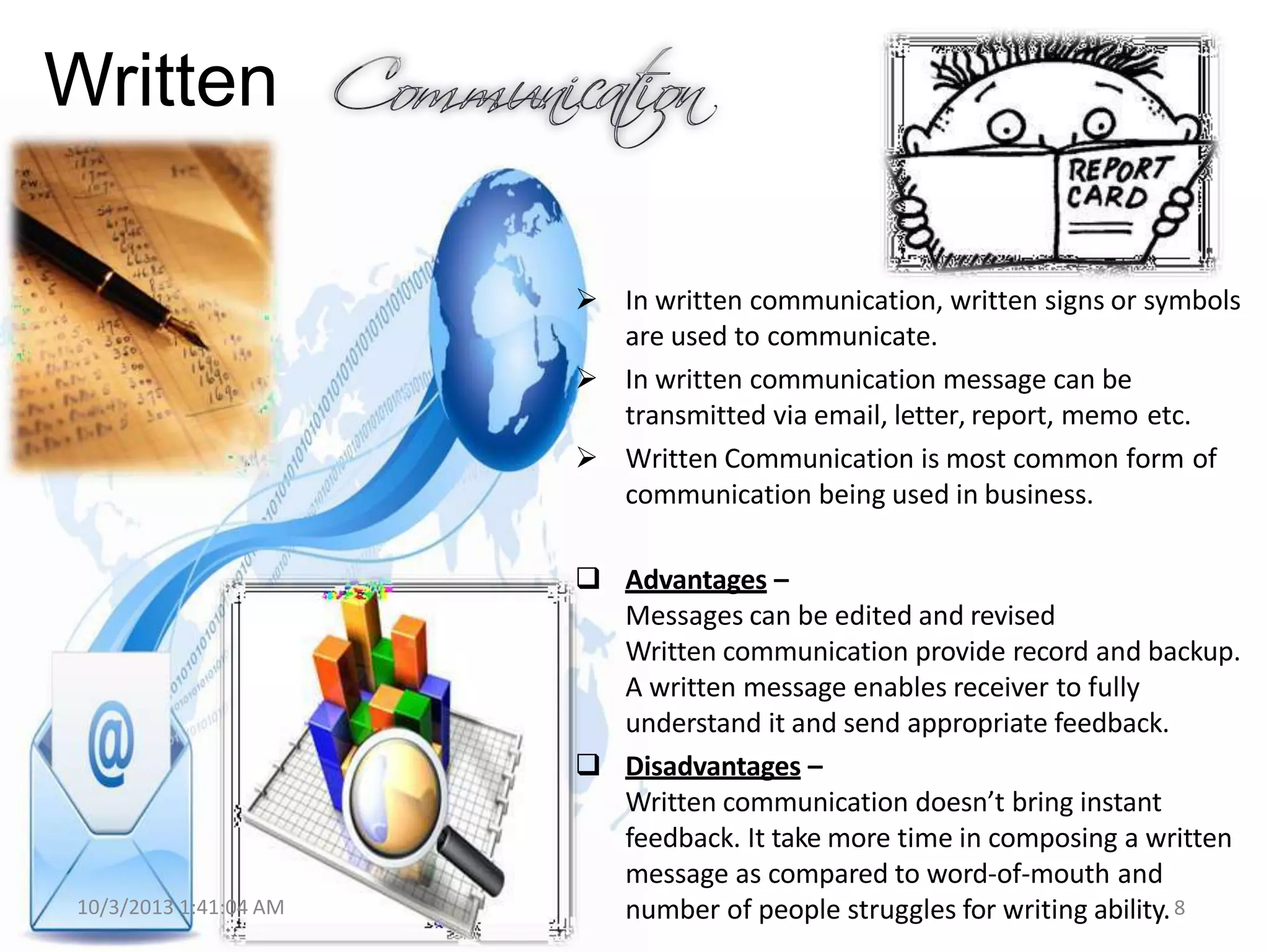
 In written communication, written signs or symbols
are used to communicate.
 In written communication message can be
transmitted via email, letter, report, memo etc.
 Written Communication is most common form of
communication being used in business.
10/3/2013 1:41:04 AM
 Advantages –
Messages can be edited and revised
Written communication provide record and backup.
A written message enables receiver to fully
understand it and send appropriate feedback.
 Disadvantages –
Written communication doesn’t bring instant
feedback. It take more time in composing a written
message as compared to word-of-mouth and
number of people struggles for writing ability.8
Nonverbal
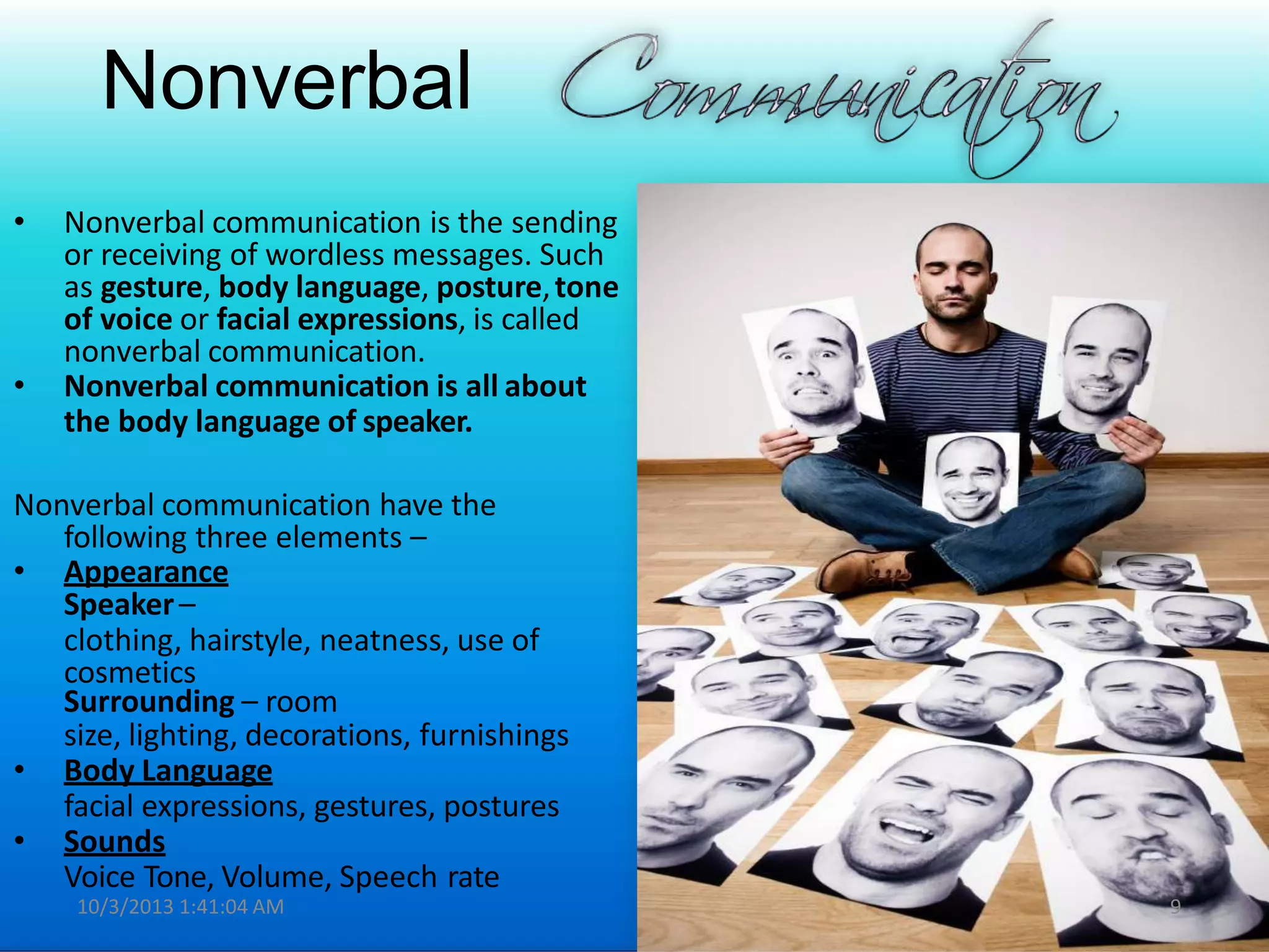
• Nonverbal communication is the sending
or receiving of wordless messages. Such
as gesture, body language, posture,tone
of voice or facial expressions, is called
nonverbal communication.
• Nonverbal communication is all about
the body language of speaker.
Nonverbal communication have the
following three elements –
• Appearance
Speaker–
clothing, hairstyle, neatness, use of
cosmetics
Surrounding – room
size, lighting, decorations, furnishings
• Body Language
facial expressions, gestures, postures
• Sounds
Voice Tone, Volume, Speech rate
10/3/2013 1:41:04 AM 9
Levels of
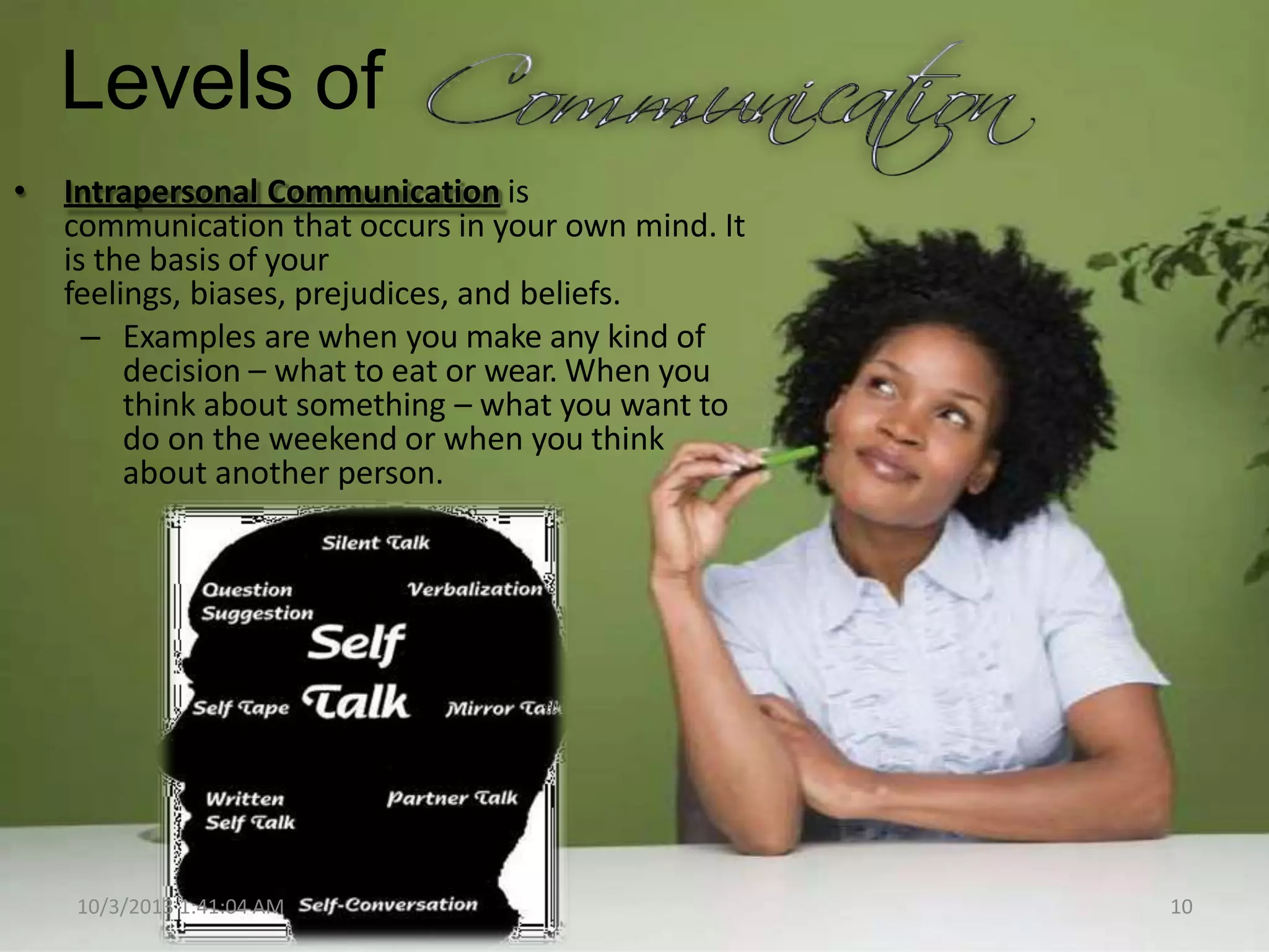
• Intrapersonal Communication is
communication that occurs in your own mind. It
is the basis of your
feelings, biases, prejudices, and beliefs.
– Examples are when you make any kind of
decision – what to eat or wear. When you
think about something – what you want to
do on the weekend or when you think
about another person.
10/3/2013 1:41:04 AM 10
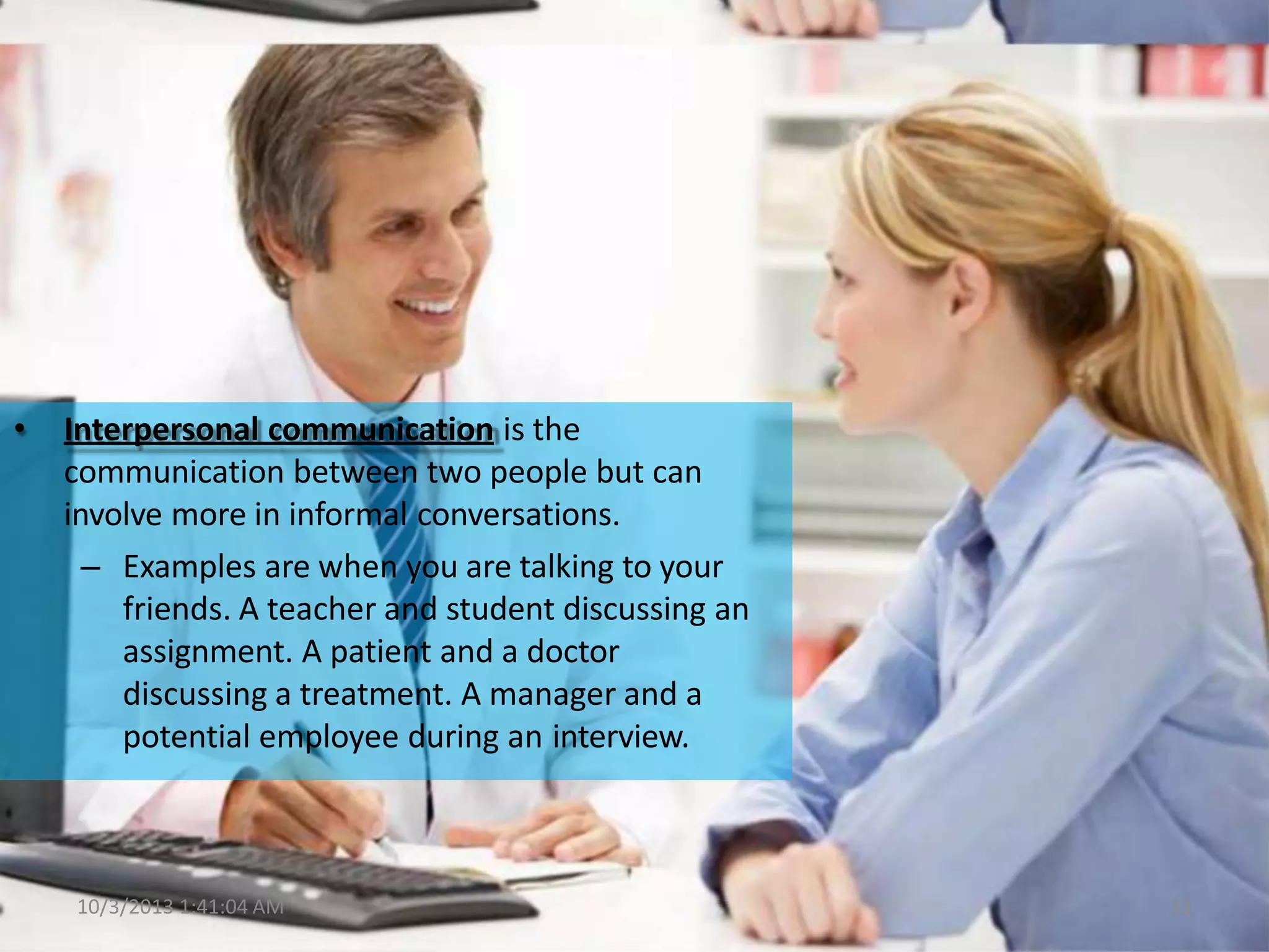
• Interpersonal communication is the
communication between two people but can
involve more in informal conversations.
– Examples are when you are talking to your
friends. A teacher and student discussing an
assignment. A patient and a doctor
discussing a treatment. A manager and a
potential employee during an interview.
10/3/2013 1:41:04 AM 11
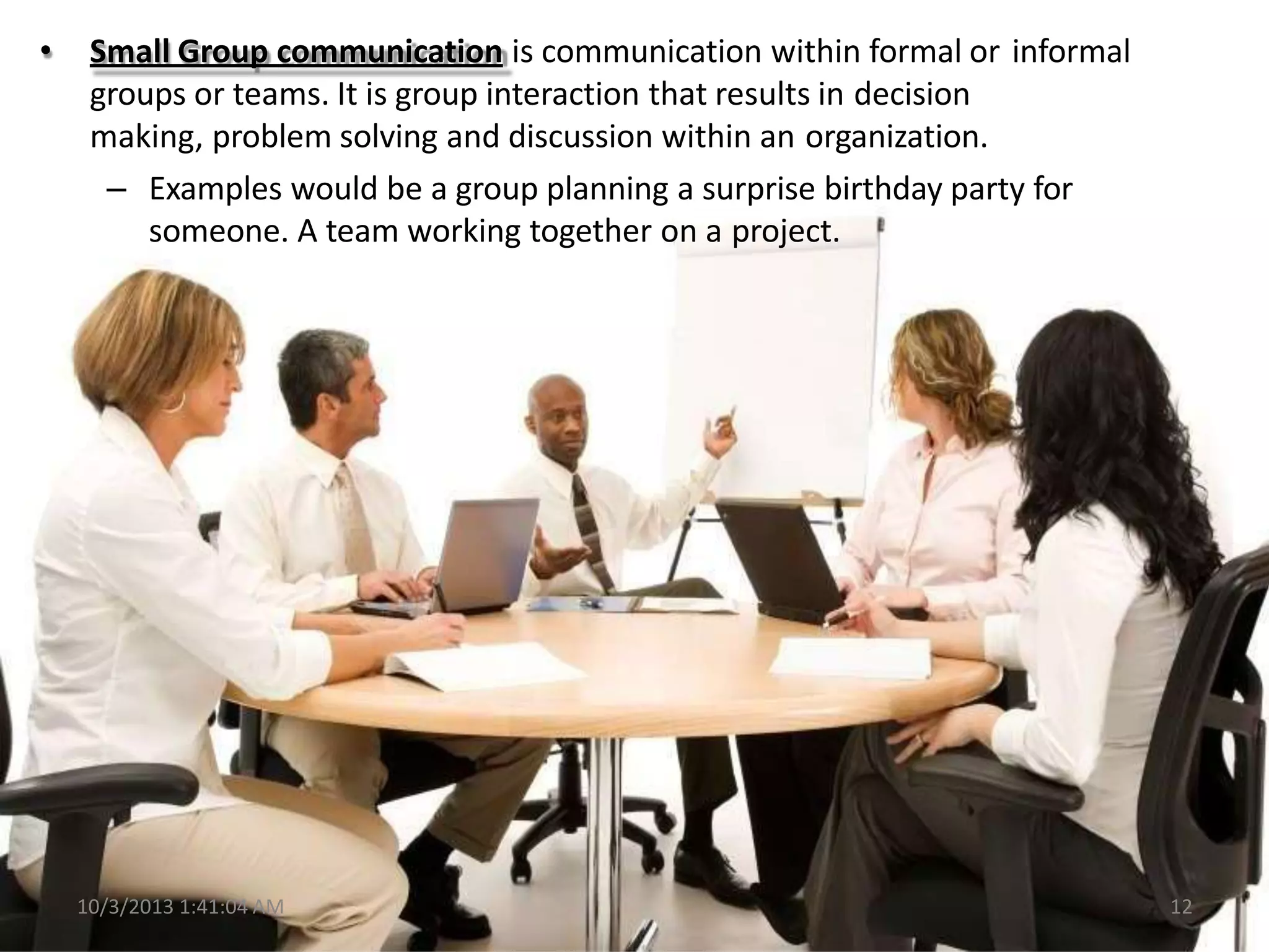
• Small Group communication is communication within formal or informal
groups or teams. It is group interaction that results in decision
making, problem solving and discussion within an organization.
– Examples would be a group planning a surprise birthday party for
someone. A team working together on a project.
10/3/2013 1:41:04 AM 12
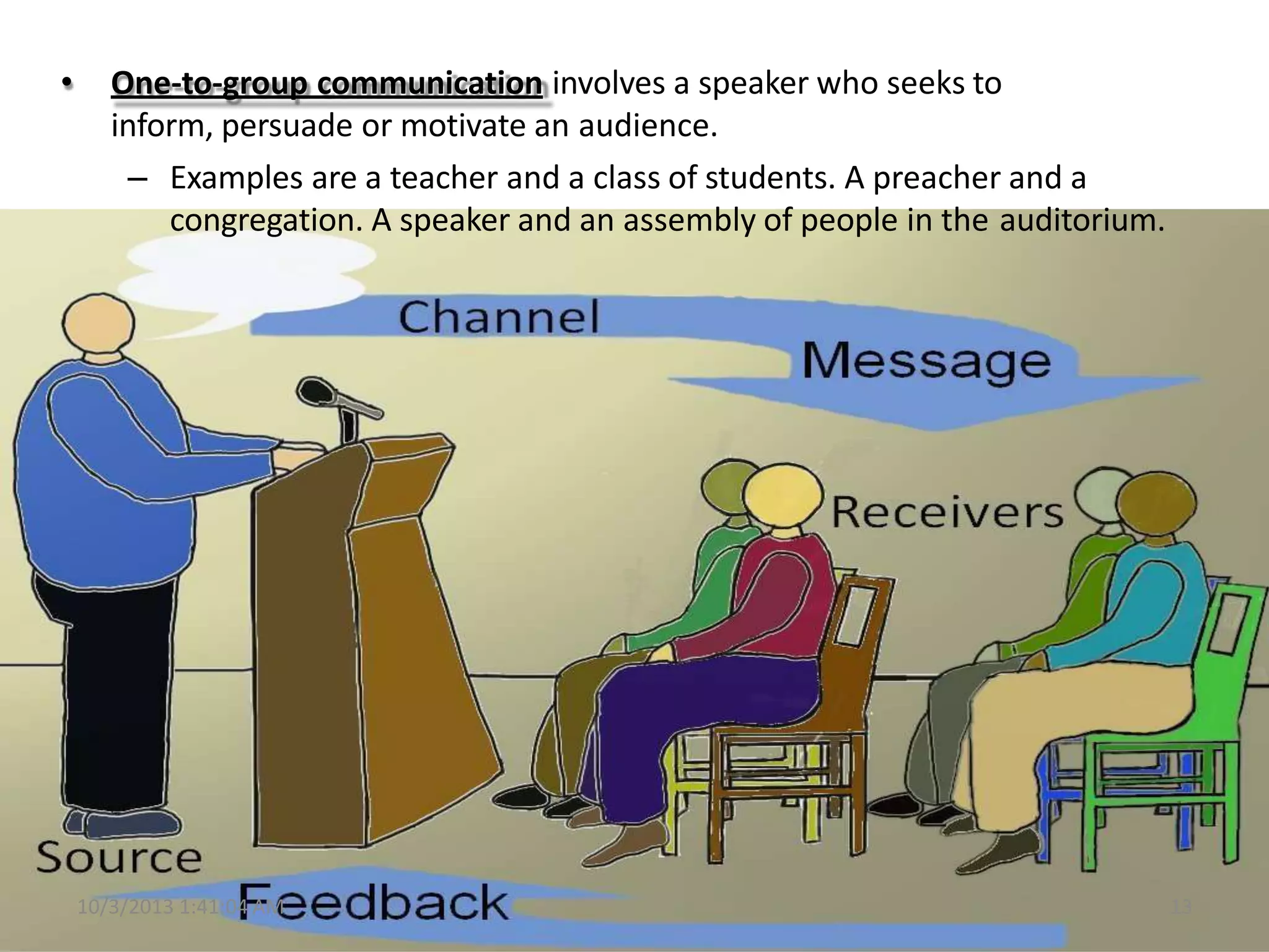
• One-to-group communication involves a speaker who seeks to
inform, persuade or motivate an audience.
– Examples are a teacher and a class of students. A preacher and a
congregation. A speaker and an assembly of people in the auditorium.
10/3/2013 1:41:04 AM 13
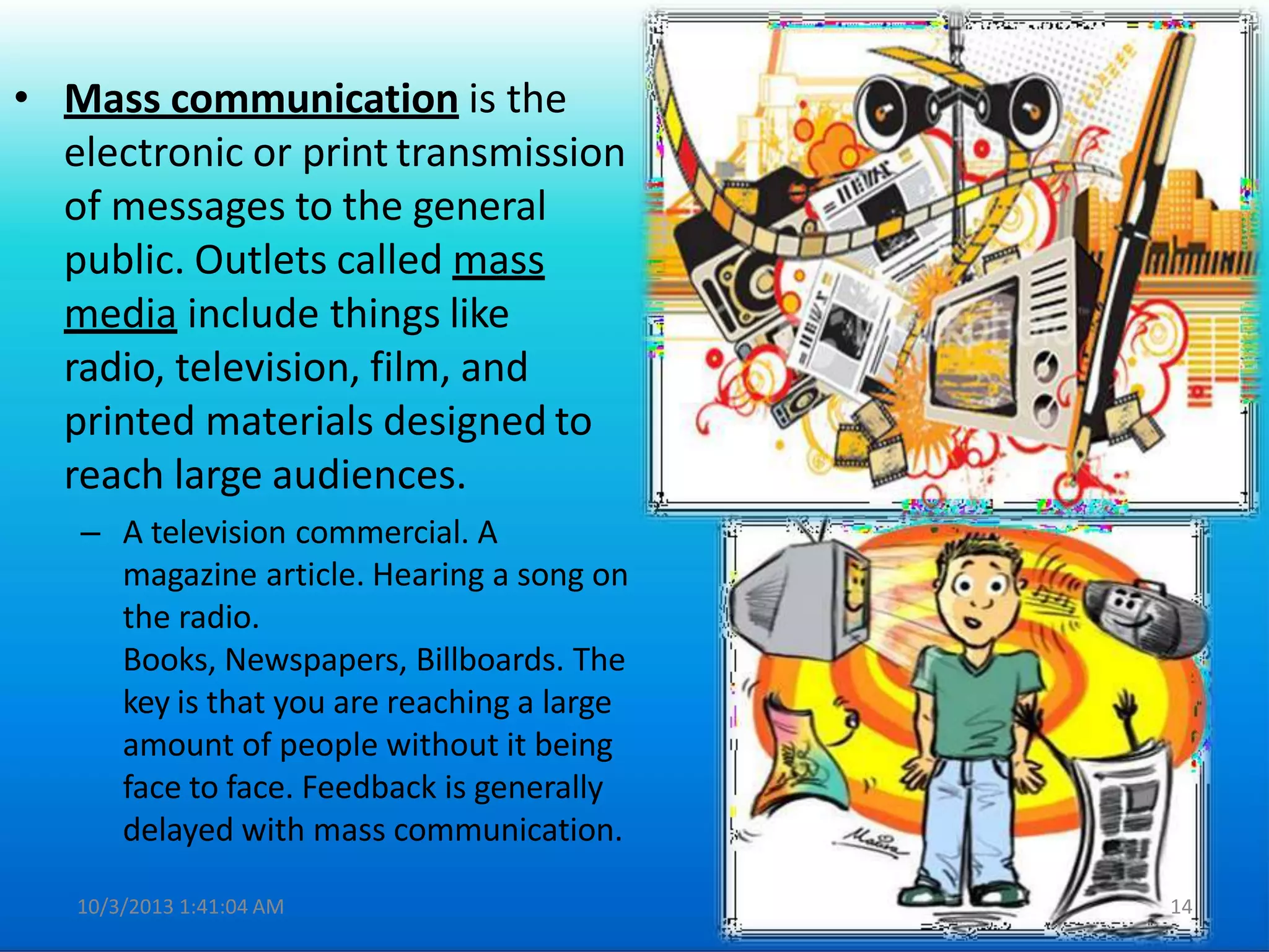
• Mass communication is the
electronic or print transmission
of messages to the general
public. Outlets called mass
media include things like
radio, television, film, and
printed materials designed to
reach large audiences.
– A television commercial. A
magazine article. Hearing a song on
the radio.
Books, Newspapers, Billboards. The
key is that you are reaching a large
amount of people without it being
face to face. Feedback is generally
delayed with mass communication.
10/3/2013 1:41:04 AM 14
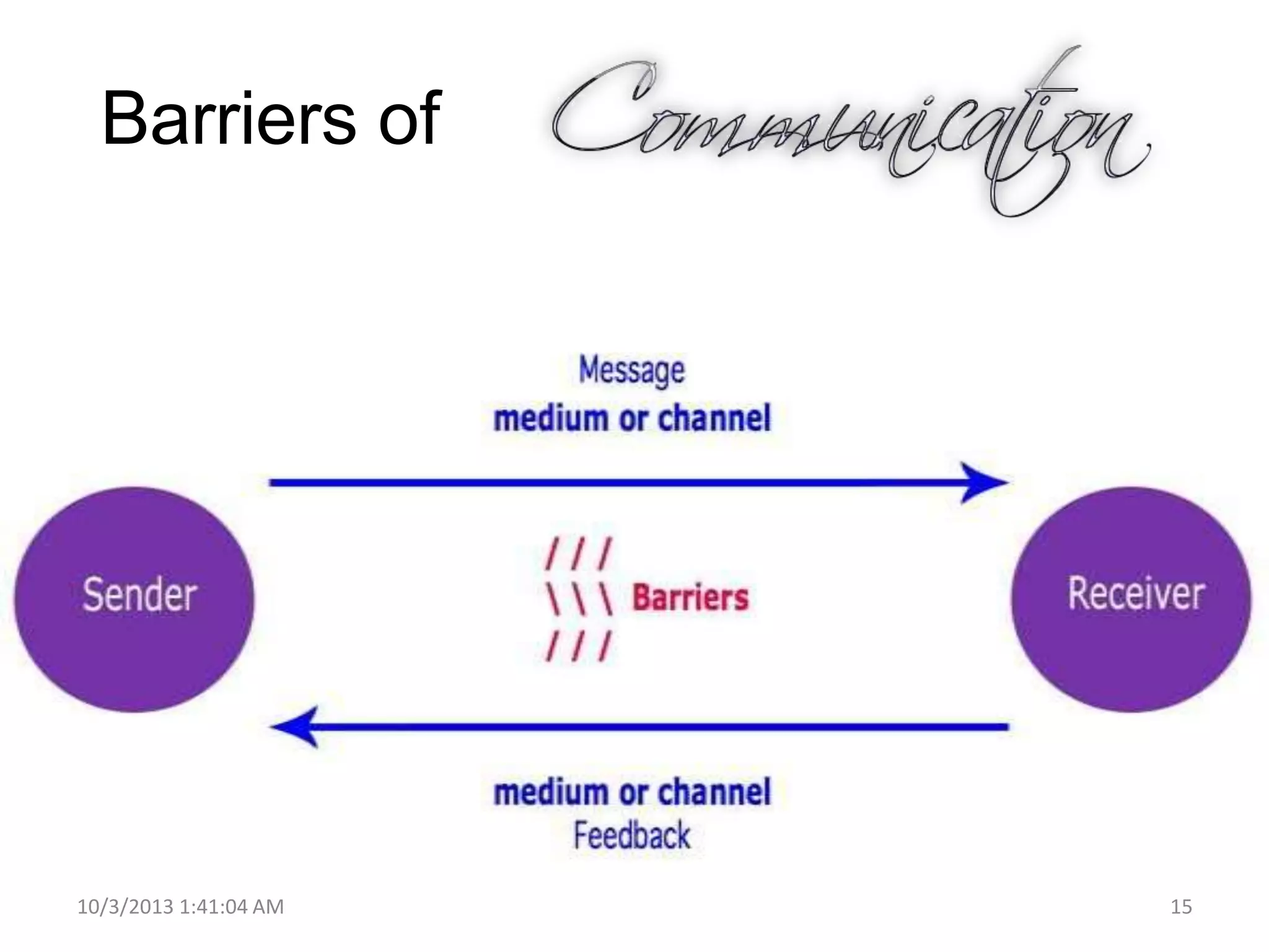
Barriers of
10/3/2013 1:41:04 AM 15
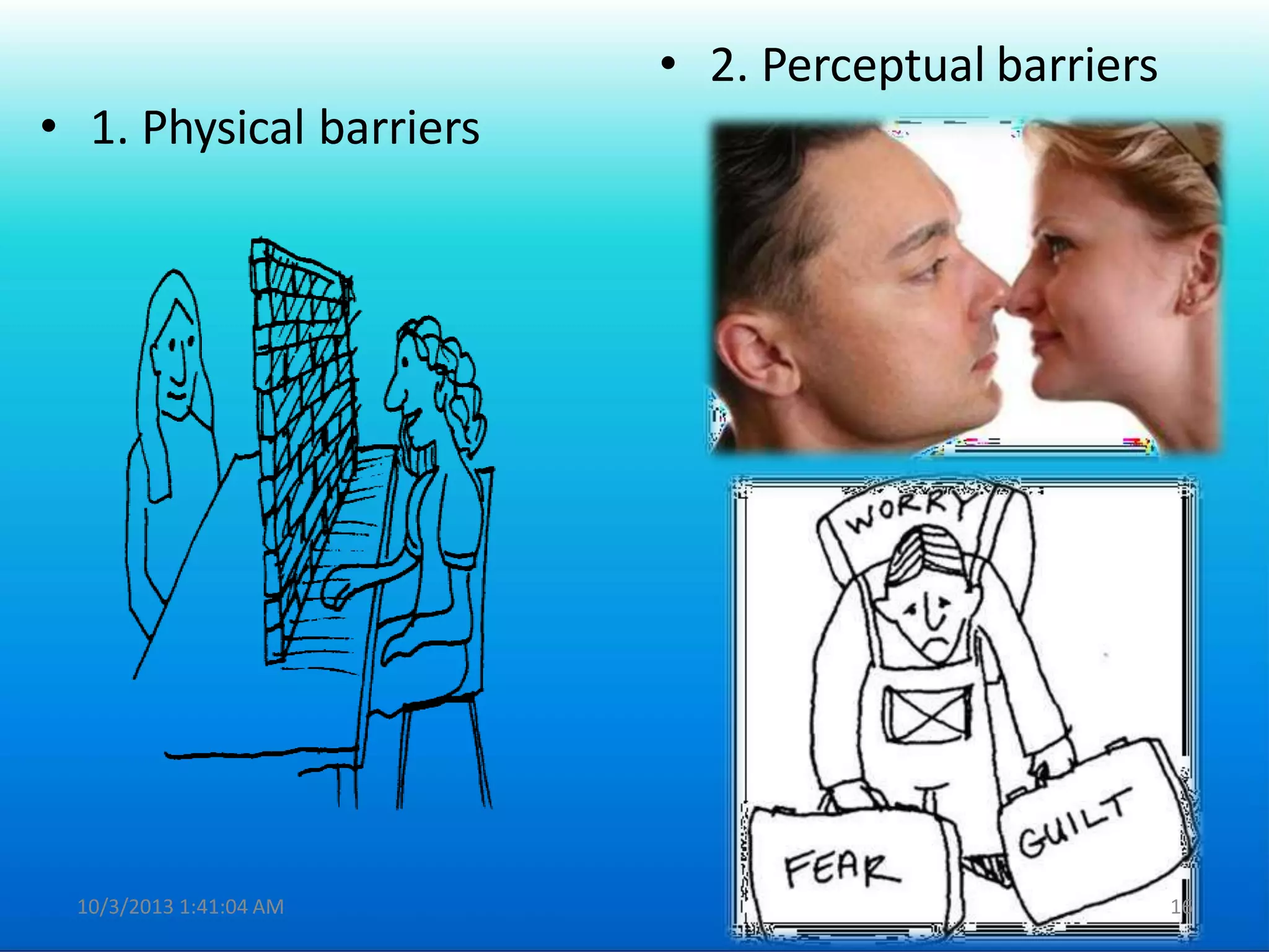
• 2. Perceptual barriers
• 1. Physical barriers
10/3/2013 1:41:04 AM 16
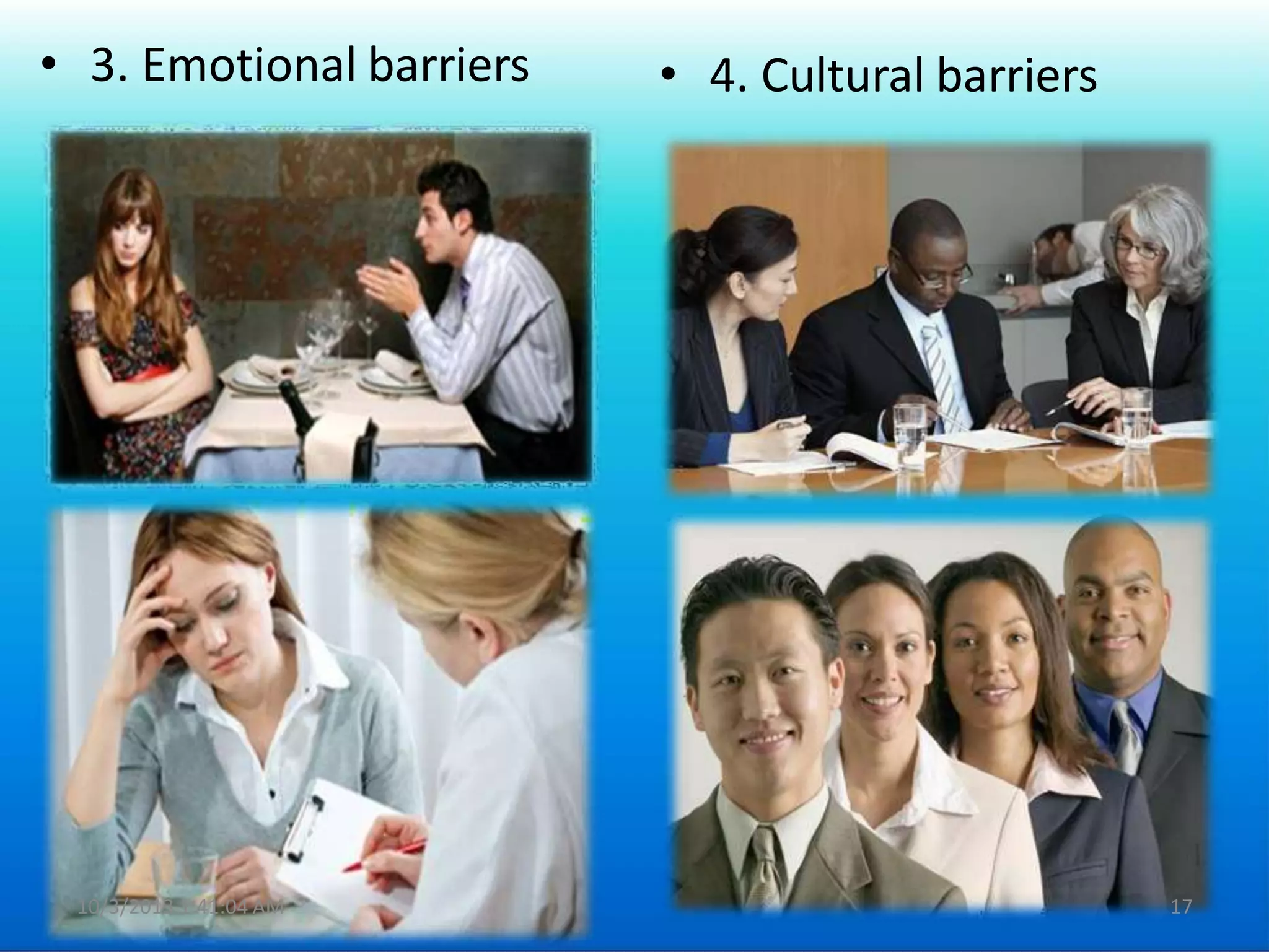
• 3. Emotional barriers • 4. Cultural barriers
10/3/2013 1:41:04 AM 17
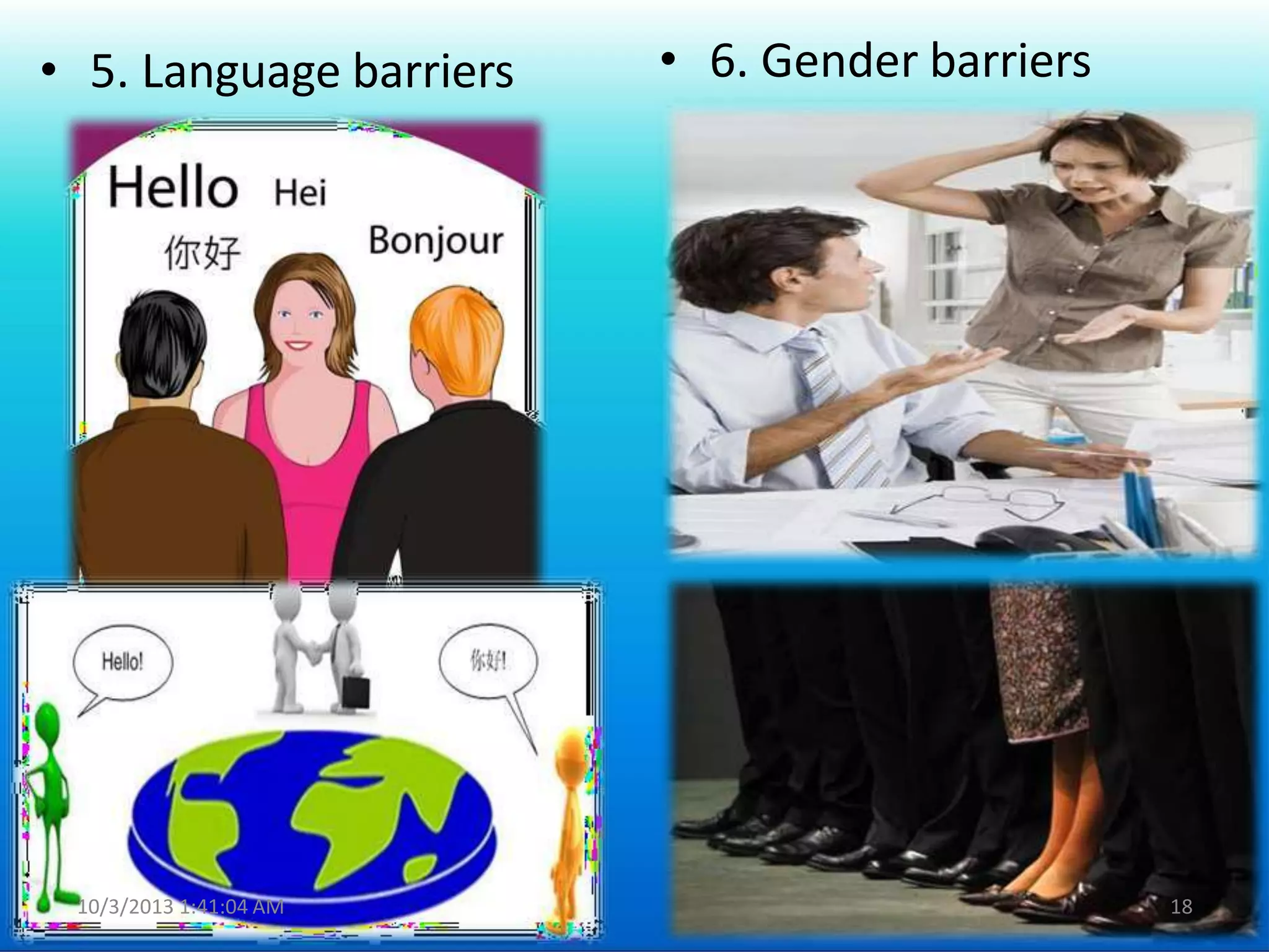
• 5. Language barriers • 6. Gender barriers
10/3/2013 1:41:04 AM 18
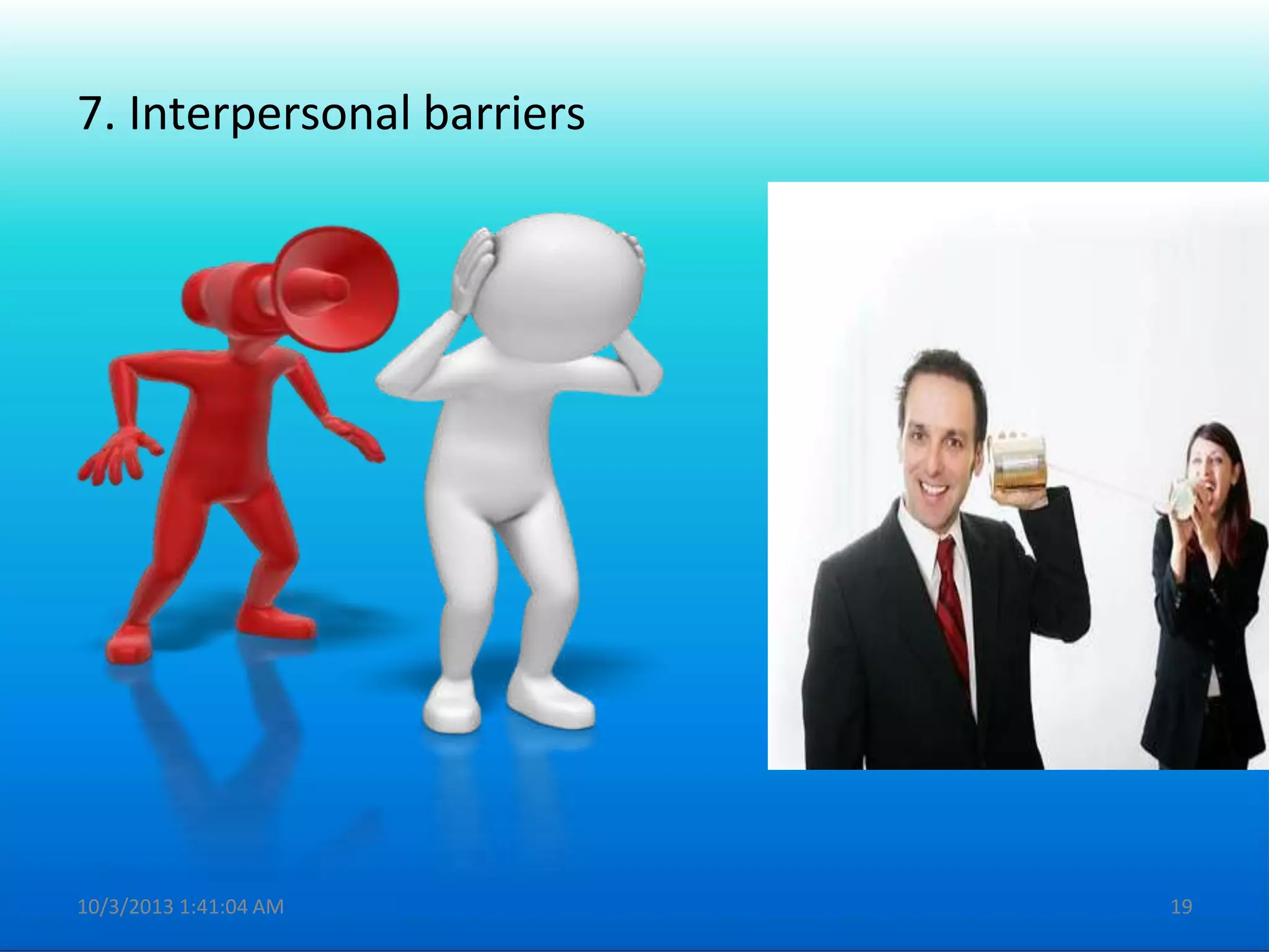
7. Interpersonal barriers
10/3/2013 1:41:04 AM 19
How to Overcome Barriers of
• Taking the receiver more seriously
• Crystal clear message
• Delivering messages skilfully
• Focusing on the receiver
• Using multiple channels to communicate instead of
relying on one channel
• Ensuring appropriate feedback
• Be aware of your own state of mind/emotions/attitude
10/3/2013 1:41:04 AM 20
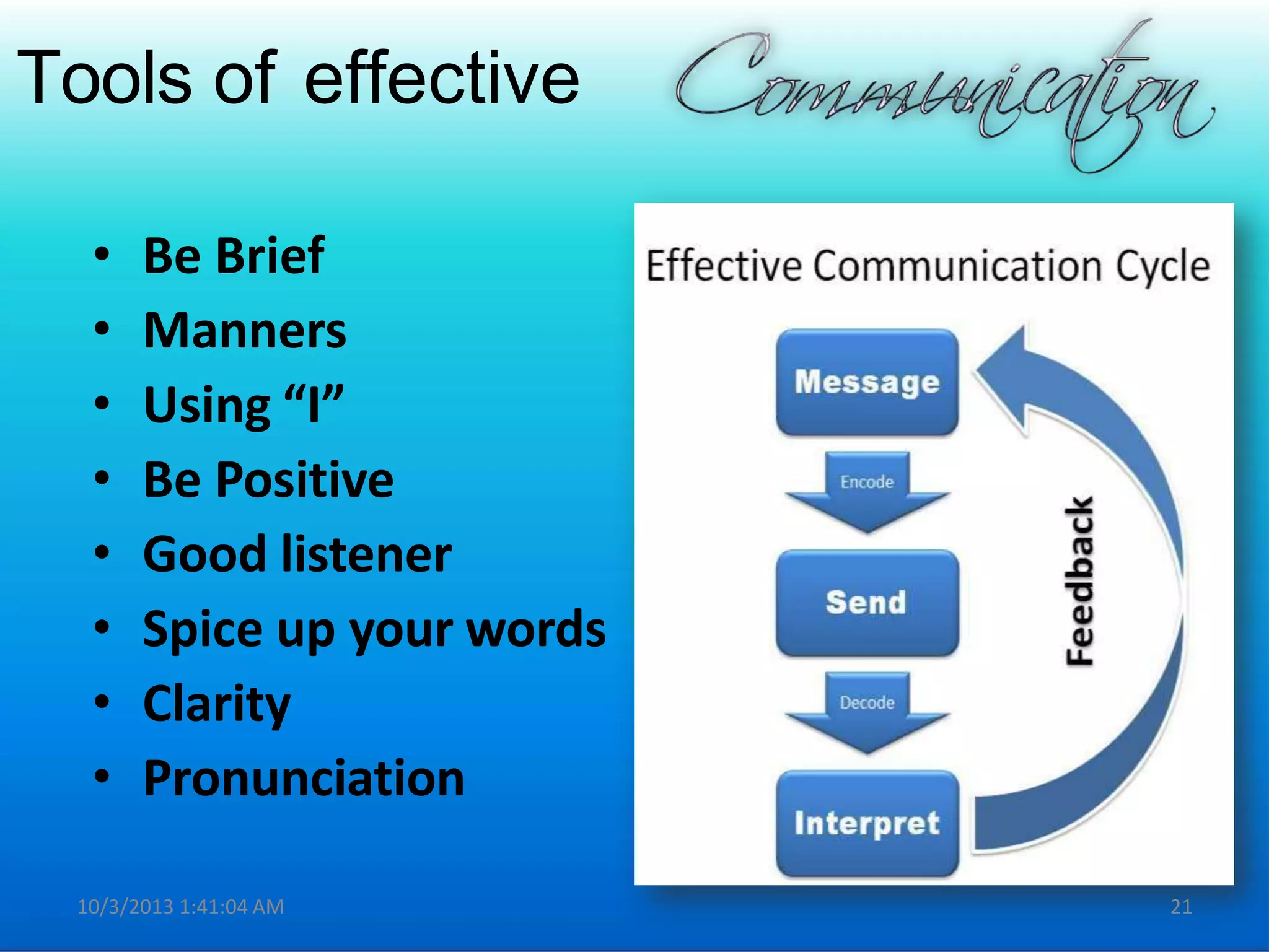
Tools of effective
• Be Brief
• Manners
• Using “I”
• Be Positive
• Good listener
• Spice up your words
• Clarity
• Pronunciation
10/3/2013 1:41:04 AM 21
10/3/2013 1:41:04 AM 22
Presented By
Vishal Goyal

Powerpoint presentation on communication

  • 2.
    Contents • What isCommunication • Process of Communication • Types of Communication • Levels of Communication • Communication Barriers • Tools of Effective Communication 10/3/2013 1:41:04 AM 2
  • 3.
    is what ?? Itis a process of exchanging – Information Ideas Thoughts Feelings Emotions Through – Speech Signals Writing Behavior 10/3/2013 1:41:04 AM 3
  • 4.
  • 5.
    Types of People communicatewith each other in a number of ways that depend upon the message and its context in which it is being sent. Types of communication based on the communication channels used are –  Verbal Communication  Nonverbal Communication 10/3/2013 1:41:04 AM 5
  • 6.
    Verbal  It refersto the form of communication in which message is transmitted verbally.  Communication is done by word of mouth and a piece of writing.  In verbal communication remember the acronym “KISS” (keep it short and simple). Verbal Communication is divided into:  Oral Communication  Written Communication 10/3/2013 1:41:04 AM 6
  • 7.
    Oral  In oralcommunication, Spoken words are used.  It includes face-to-face conversations, speech, telephonic conversation, video, radio, television, voice over internet.  Communication is influence by pitch, volume, speed and clarity of speaking.  Advantages – It brings quick feedback. In a face-to-face conversation, by reading facial expression and body language one can guess whether he/she should trust what’s being said or not.  Disadvantages – In face-to-face discussion, user is unable to deeply think about what he is delivering, so this can be counted as a fault. 10/3/2013 1:41:04 AM 7
  • 8.
    Written  In writtencommunication, written signs or symbols are used to communicate.  In written communication message can be transmitted via email, letter, report, memo etc.  Written Communication is most common form of communication being used in business. 10/3/2013 1:41:04 AM  Advantages – Messages can be edited and revised Written communication provide record and backup. A written message enables receiver to fully understand it and send appropriate feedback.  Disadvantages – Written communication doesn’t bring instant feedback. It take more time in composing a written message as compared to word-of-mouth and number of people struggles for writing ability.8
  • 9.
    Nonverbal • Nonverbal communicationis the sending or receiving of wordless messages. Such as gesture, body language, posture,tone of voice or facial expressions, is called nonverbal communication. • Nonverbal communication is all about the body language of speaker. Nonverbal communication have the following three elements – • Appearance Speaker– clothing, hairstyle, neatness, use of cosmetics Surrounding – room size, lighting, decorations, furnishings • Body Language facial expressions, gestures, postures • Sounds Voice Tone, Volume, Speech rate 10/3/2013 1:41:04 AM 9
  • 10.
    Levels of • IntrapersonalCommunication is communication that occurs in your own mind. It is the basis of your feelings, biases, prejudices, and beliefs. – Examples are when you make any kind of decision – what to eat or wear. When you think about something – what you want to do on the weekend or when you think about another person. 10/3/2013 1:41:04 AM 10
  • 11.
    • Interpersonal communicationis the communication between two people but can involve more in informal conversations. – Examples are when you are talking to your friends. A teacher and student discussing an assignment. A patient and a doctor discussing a treatment. A manager and a potential employee during an interview. 10/3/2013 1:41:04 AM 11
  • 12.
    • Small Groupcommunication is communication within formal or informal groups or teams. It is group interaction that results in decision making, problem solving and discussion within an organization. – Examples would be a group planning a surprise birthday party for someone. A team working together on a project. 10/3/2013 1:41:04 AM 12
  • 13.
    • One-to-group communicationinvolves a speaker who seeks to inform, persuade or motivate an audience. – Examples are a teacher and a class of students. A preacher and a congregation. A speaker and an assembly of people in the auditorium. 10/3/2013 1:41:04 AM 13
  • 14.
    • Mass communicationis the electronic or print transmission of messages to the general public. Outlets called mass media include things like radio, television, film, and printed materials designed to reach large audiences. – A television commercial. A magazine article. Hearing a song on the radio. Books, Newspapers, Billboards. The key is that you are reaching a large amount of people without it being face to face. Feedback is generally delayed with mass communication. 10/3/2013 1:41:04 AM 14
  • 15.
  • 16.
    • 2. Perceptualbarriers • 1. Physical barriers 10/3/2013 1:41:04 AM 16
  • 17.
    • 3. Emotionalbarriers • 4. Cultural barriers 10/3/2013 1:41:04 AM 17
  • 18.
    • 5. Languagebarriers • 6. Gender barriers 10/3/2013 1:41:04 AM 18
  • 19.
  • 20.
    How to OvercomeBarriers of • Taking the receiver more seriously • Crystal clear message • Delivering messages skilfully • Focusing on the receiver • Using multiple channels to communicate instead of relying on one channel • Ensuring appropriate feedback • Be aware of your own state of mind/emotions/attitude 10/3/2013 1:41:04 AM 20
  • 21.
    Tools of effective •Be Brief • Manners • Using “I” • Be Positive • Good listener • Spice up your words • Clarity • Pronunciation 10/3/2013 1:41:04 AM 21
  • 22.
    10/3/2013 1:41:04 AM22 Presented By Vishal Goyal