Communication Strategies
Turn-Taking
Oral Communication 11
Learning Targets
The students should be able
to use turn-taking strategies
in communication.
The students should be able
to define and explain turn-
taking in communication.
The students should be able
to show an understanding of
turn-taking strategies
through examples.
Let's Share!
Communication is a two-way
interaction most of the time, where
one sends a message other receives
it, and vice versa. When participants
in the communication miss the
rhythm and timing of when to speak
and listen, miscommunication
happens.
As a participant in communication,
how do you fix this problem?
What is
Turn-Taking?
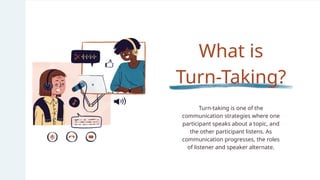
Turn-taking is one of the
communication strategies where one
participant speaks about a topic, and
the other participant listens. As
communication progresses, the roles
of listener and speaker alternate.
Why is Turn-Taking
Important?
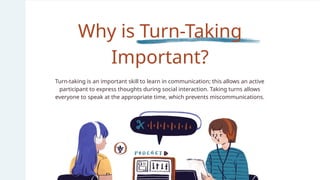
Turn-taking is an important skill to learn in communication; this allows an active
participant to express thoughts during social interaction. Taking turns allows
everyone to speak at the appropriate time, which prevents miscommunications.
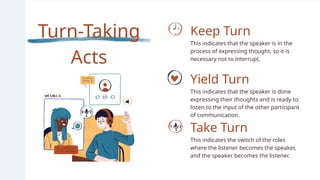
Keep Turn
This indicates that the speaker is in the
process of expressing thought, so it is
necessary not to interrupt.
Yield Turn
This indicates that the speaker is done
expressing their thoughts and is ready to
listen to the input of the other participant
of communication.
Take Turn
This indicates the switch of the roles
where the listener becomes the speaker,
and the speaker becomes the listener.
Turn-Taking
Acts
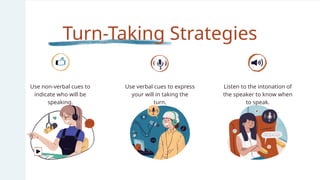
Use non-verbal cues to
indicate who will be
speaking.
Use verbal cues to express
your will in taking the
turn.
Listen to the intonation of
the speaker to know when
to speak.
Turn-Taking Strategies
Wrapping Up!
• Turn-taking is one of the communication strategies where one participant
speaks about a topic, and the other participant listens. As communication
progresses, the roles of listener and speaker alternate.
• "Keep Turn" indicates that the speaker is in the process of expressing
thought, so it is necessary not to interrupt.
• "Yield Turn" indicates that the speaker is done expressing their thoughts and
is ready to listen to the input of the other participant of communication.
• "Take Turn" indicates the switch of the roles where the listener becomes the
speaker, and the speaker becomes the listener.
• Turn-taking is an important skill to learn in communication; this allows an
active participant to express thoughts during social interaction.
Performance
Task
With your group, create a script for a
podcast; the topic should be relevant to
today's social issues. By next week, perform
a live podcast in the class. Make sure to
exhibit the skill of turn-taking during the
podcast.
Thank You for
Listening!
Resources Page

Communication Strategy Turn-Taking Educational Presentation.pptx

  • 1.
  • 2.
    Learning Targets The studentsshould be able to use turn-taking strategies in communication. The students should be able to define and explain turn- taking in communication. The students should be able to show an understanding of turn-taking strategies through examples.
  • 3.
    Let's Share! Communication isa two-way interaction most of the time, where one sends a message other receives it, and vice versa. When participants in the communication miss the rhythm and timing of when to speak and listen, miscommunication happens. As a participant in communication, how do you fix this problem?
  • 4.
    What is Turn-Taking? Turn-taking isone of the communication strategies where one participant speaks about a topic, and the other participant listens. As communication progresses, the roles of listener and speaker alternate.
  • 5.
    Why is Turn-Taking Important? Turn-takingis an important skill to learn in communication; this allows an active participant to express thoughts during social interaction. Taking turns allows everyone to speak at the appropriate time, which prevents miscommunications.
  • 6.
    Keep Turn This indicatesthat the speaker is in the process of expressing thought, so it is necessary not to interrupt. Yield Turn This indicates that the speaker is done expressing their thoughts and is ready to listen to the input of the other participant of communication. Take Turn This indicates the switch of the roles where the listener becomes the speaker, and the speaker becomes the listener. Turn-Taking Acts
  • 7.
    Use non-verbal cuesto indicate who will be speaking. Use verbal cues to express your will in taking the turn. Listen to the intonation of the speaker to know when to speak. Turn-Taking Strategies
  • 8.
    Wrapping Up! • Turn-takingis one of the communication strategies where one participant speaks about a topic, and the other participant listens. As communication progresses, the roles of listener and speaker alternate. • "Keep Turn" indicates that the speaker is in the process of expressing thought, so it is necessary not to interrupt. • "Yield Turn" indicates that the speaker is done expressing their thoughts and is ready to listen to the input of the other participant of communication. • "Take Turn" indicates the switch of the roles where the listener becomes the speaker, and the speaker becomes the listener. • Turn-taking is an important skill to learn in communication; this allows an active participant to express thoughts during social interaction.
  • 9.
    Performance Task With your group,create a script for a podcast; the topic should be relevant to today's social issues. By next week, perform a live podcast in the class. Make sure to exhibit the skill of turn-taking during the podcast.
  • 10.
  • 11.