TYPES OF
COMMUNICATIVE
STRATEGY
Ma’am Mechille
WORD
W O D
R
PLAY
1000
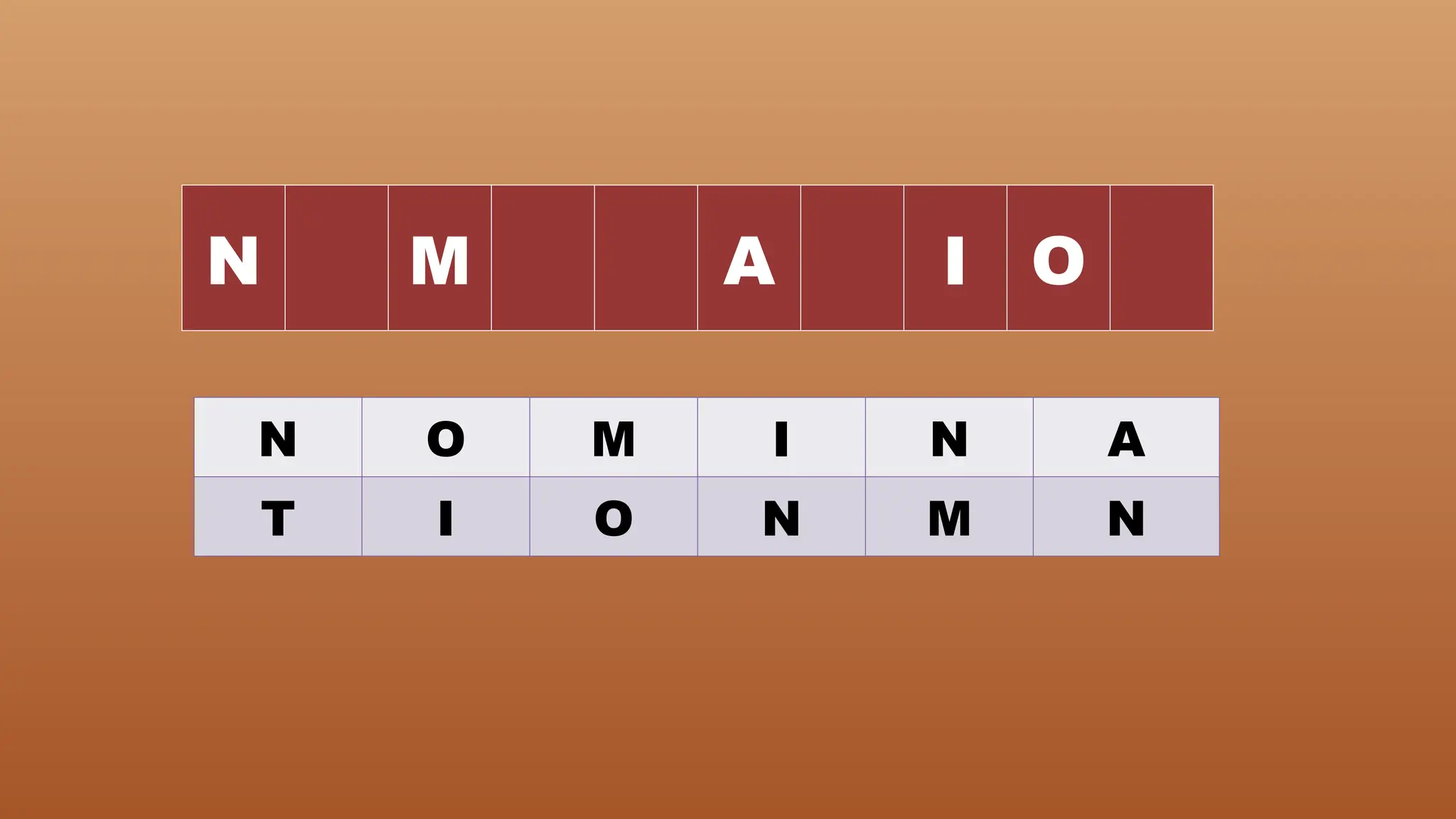
N M A I O
N O M I N A
T I O N M N
N O M I N A T I O N
M N
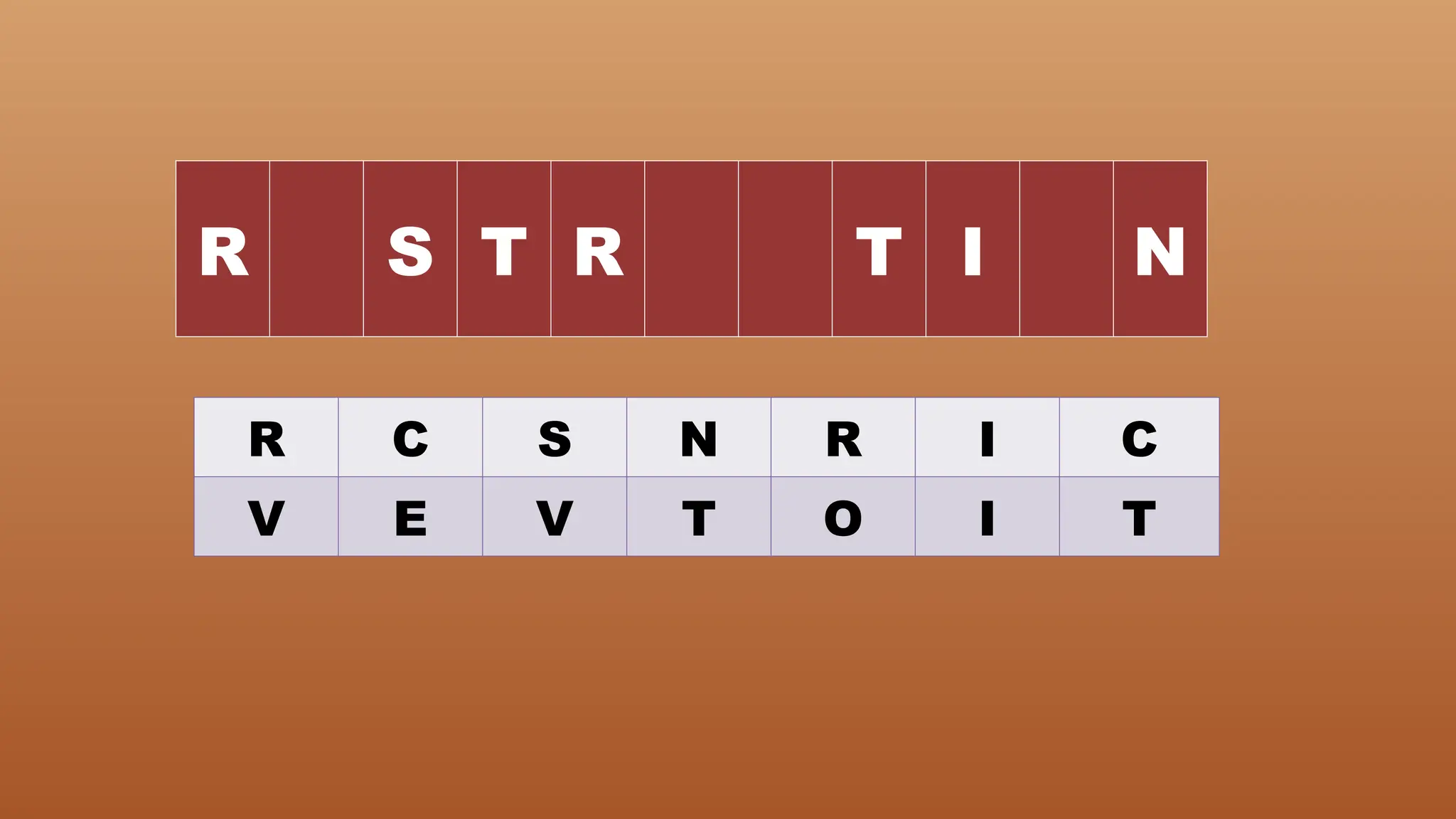
R S T R T I N
R C S N R I C
V E V T O I T
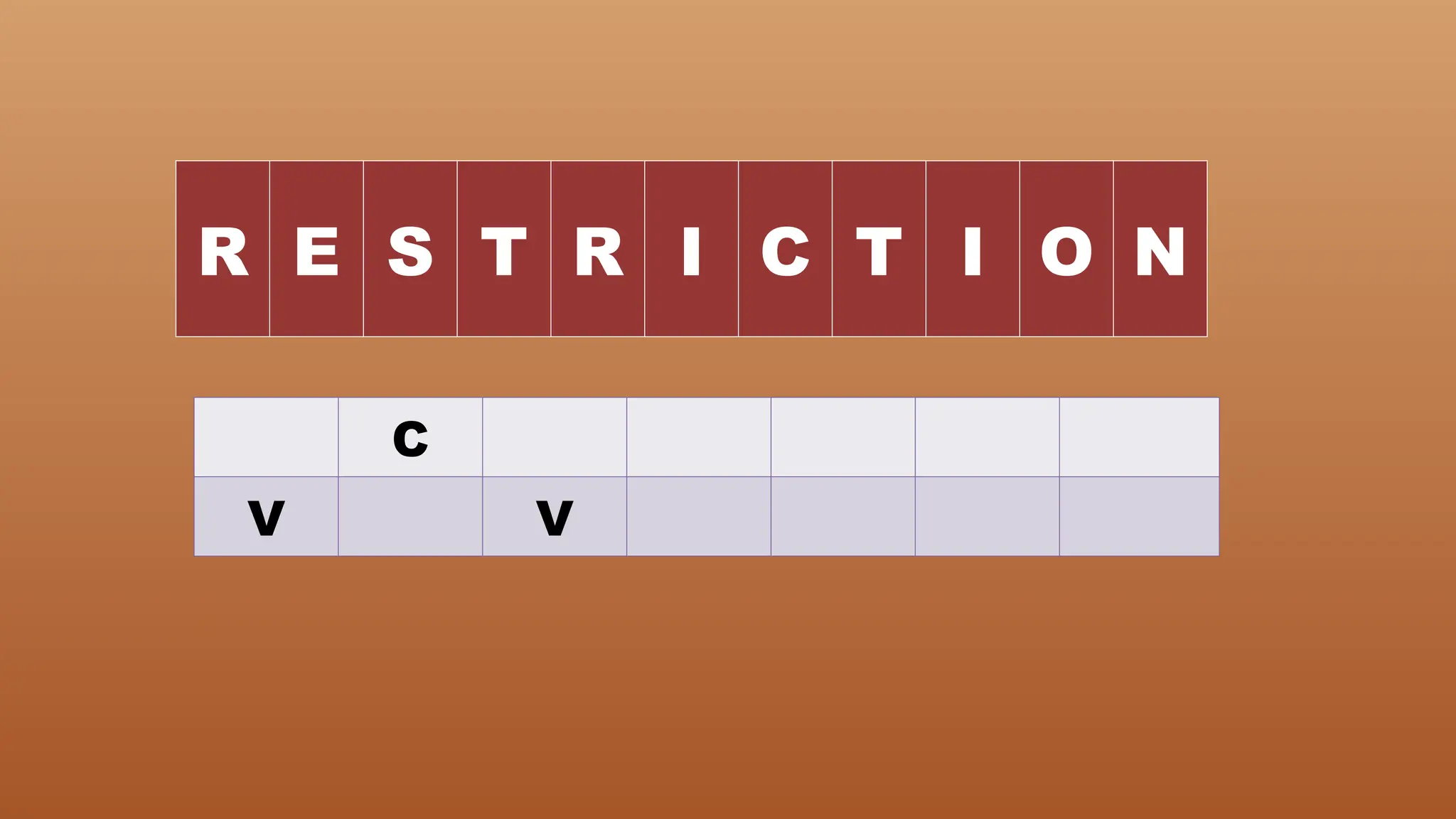
R E S T R I C T I O N
C
V V
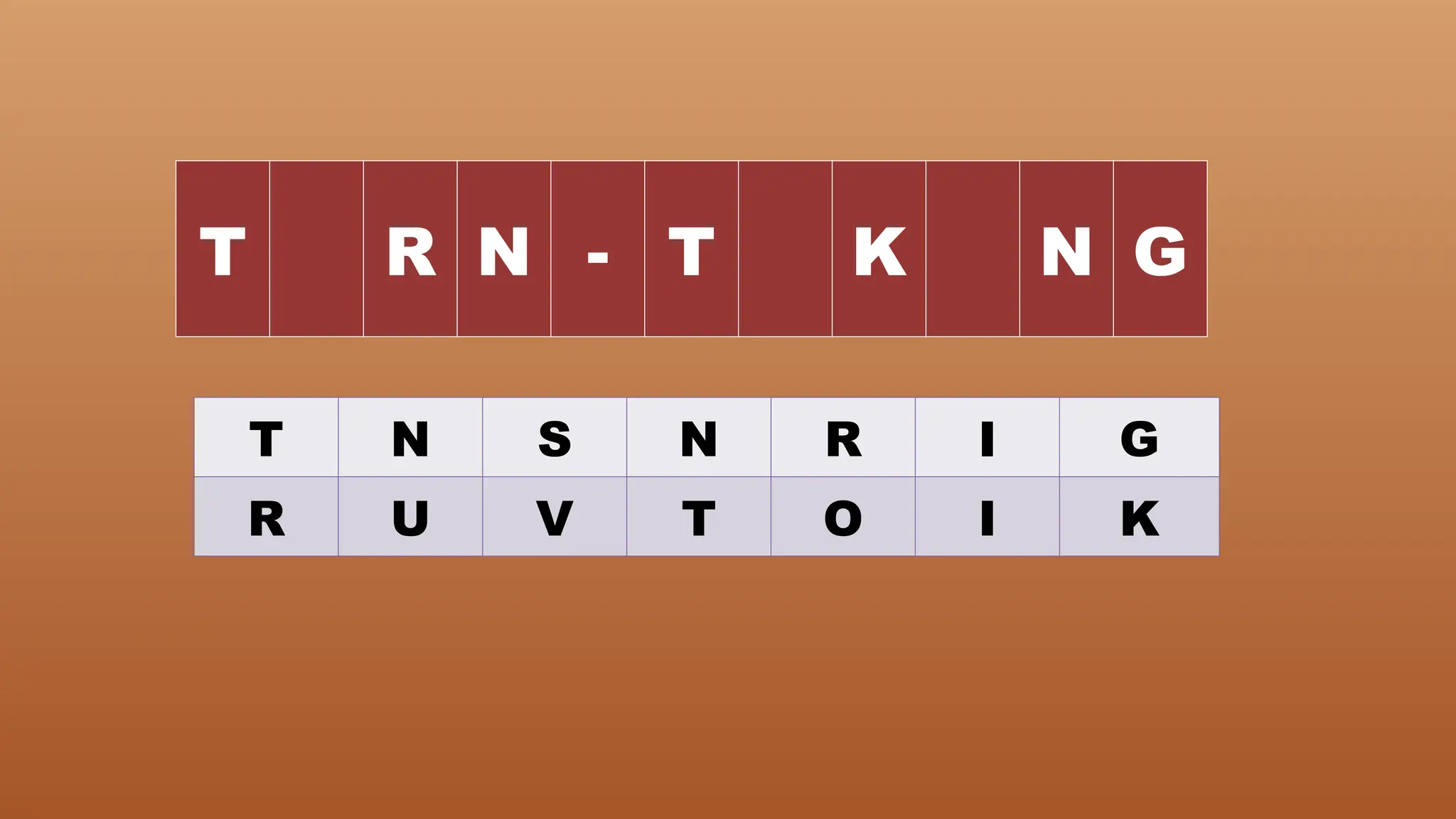
T R N - T K N G
T N S N R I G
R U V T O I K
T U R N - T A K I N G
R C S N R I C
V E V T O I T
TYPES OF
COMMUNICATI
VE STRATEGY
Mrs. Dianne M. Pron
What is
communication?
Is the exchange of
information between
a sender and a
receiver
It is not that simple
It is important for
you to take into
account every
aspect not only
what to say but
also how you
relay information
TYPES OF
COMMUNICATI
VE STRATEGY
Ma’am Meshil
A conversation may be
complex at times that is
why some people get
lost along the way and
misunderstand each
other
How do you maintain a
good conversation?
Are strategies for
communicating
information linked to
particular concern,
occurrence,
circumstances and
audience.
- Blueprints for how the
information will be
exchange
Communicative Strategies
- These strategies are used
by learners to overcome
problems of conveying
intended meanings
- Effective use of these
strategies results to
communicative
competence
“Strategies must be used to start and
maintain conversation."
Coheen, 1990
REVIEW OF THE
LESSON
ONIMONIAT
N
NOMINATIO
N
ERSRTIOCTI
N
RESTRICTIO
N
RUTN-
NAKIGT
TURN-
TAKING
IOPTC
OCNTOLR
TOPIC
CONTROL
OERTMTNIAIN
TERMINATION
7 TYPES OF
COMMUNICATI
VE STRATEGY
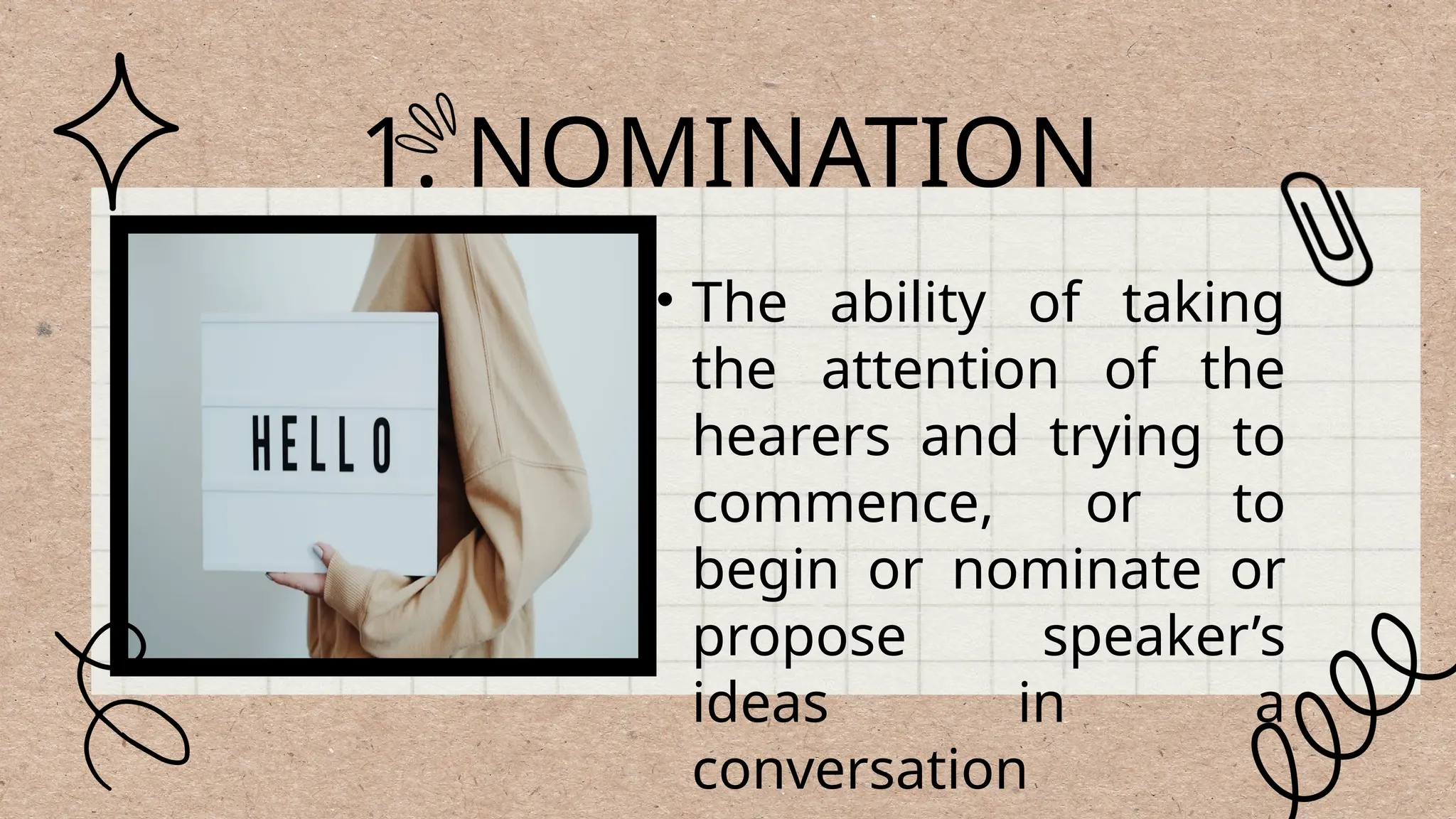
1. NOMINATION
• The ability of taking
the attention of the
hearers and trying to
commence, or to
begin or nominate or
propose speaker’s
ideas in a
conversation
1. NOMINATION
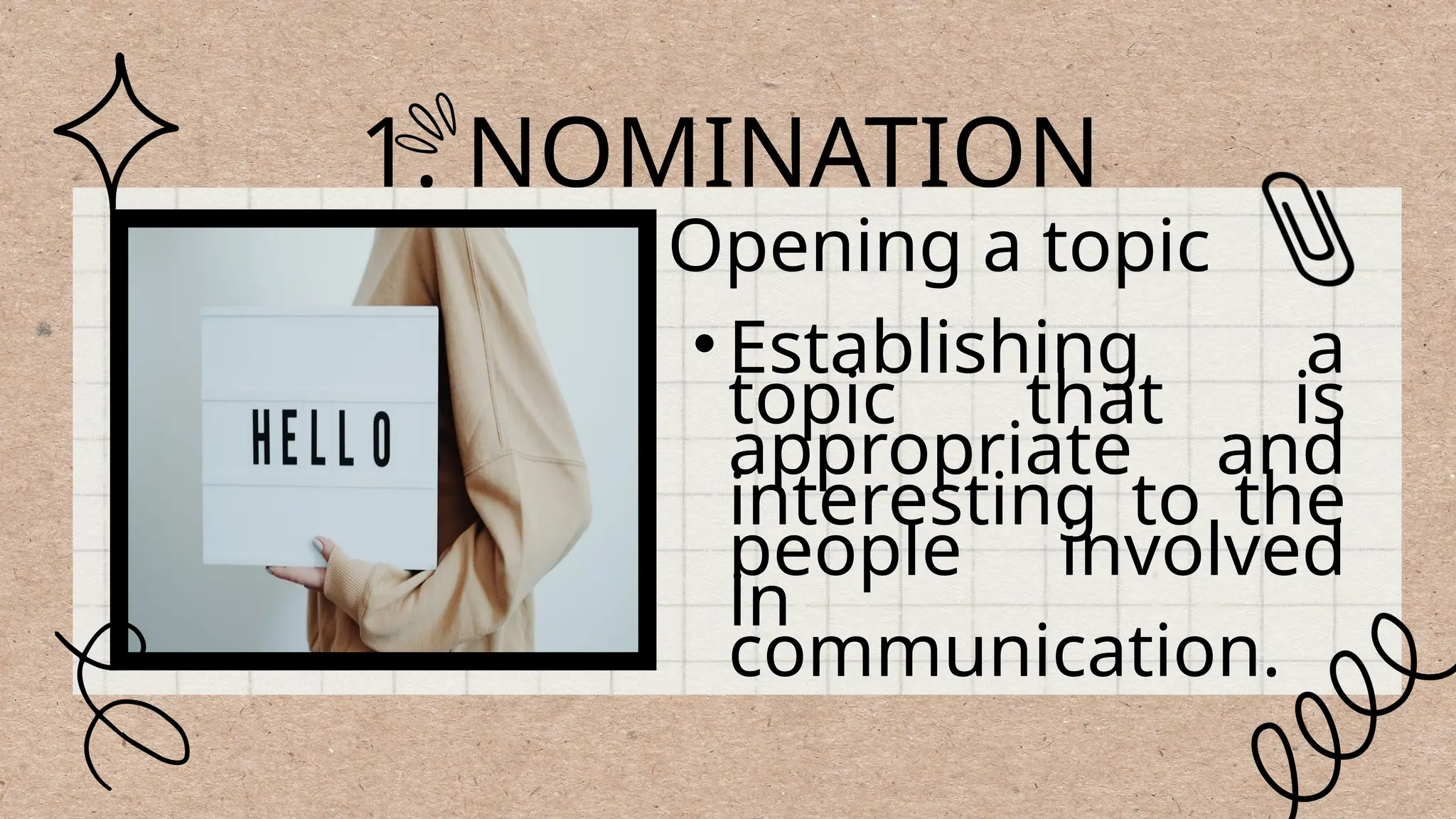
•Establishing a
topic that is
appropriate and
interesting to the
people involved
in
communication.
•Opening a topic
1. NOMINATION
•. When this
strategy is use
the topic is
introduced in a
clear and truthful
manner stating
only what is
relevant to keep
the interaction
focused.
1. NOMINATION
Hi, how are you?
How’s the weather
there?
What’s the latest
news?
•Examples
Usual chat among
friends while
taking snacks
Unlimited talk of a
boyfriend and
girlfriend over a
phone
2. RESTRICTION
• A strategy that
constrains or restricts
the response of the
other person involved
in the communication
situation
2. RESTRICTION
•The listener is
forced to
respond only
with a set of
categories that is
made by speaker
•The speaker is
also confine to
limit what to say
2. RESTRICTION
Homily of a priest
in a mass
•Examples
Commencement
speaker during
graduation
A politician talking
during the
proclamation rally
2. RESTRICTION
Homily of a priest
in a mass
•Examples
Commencement
speaker during
graduation
A politician talking
during the
proclamation rally
3. TURN-TAKING
• Process by which
people in a
conversation decide
who to speak next.
3. TURN-TAKING
• Knowing when to
talk depends on
watching out for
the verbal and
nonverbal cues that
signal the next
speaker that the
previous speaker
has finished or the
topic under
discussion has
been exhausted
3. TURN-TAKING
• It also means that
others should be
given a time to talk
or the opportunity
to take turn
• It uses either an
informal approach
(just jump in and
start talking) or a
formal approach
(asking permission
to speak)
3. TURN-TAKING
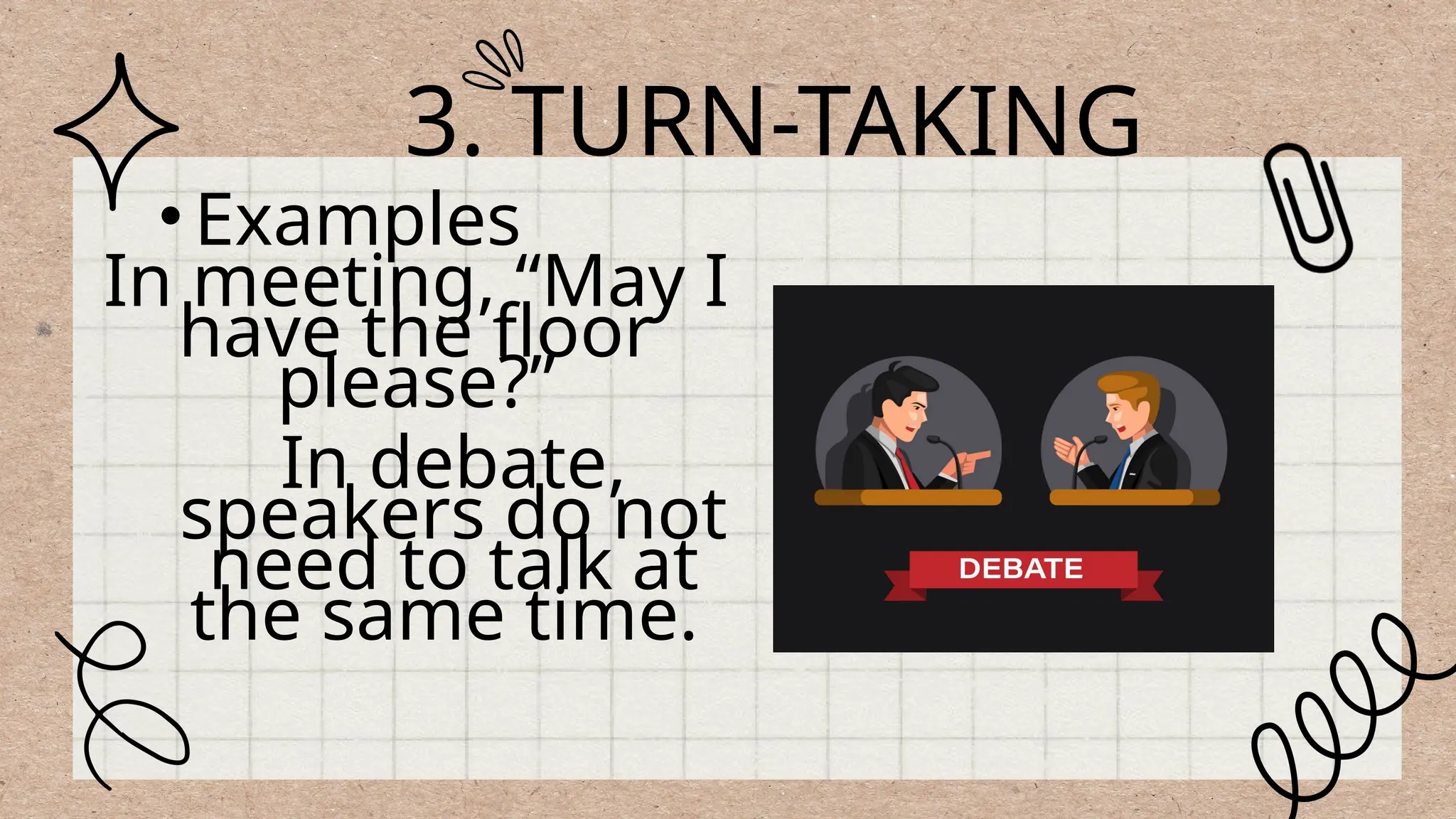
In meeting, “May I
have the floor
please?”
•Examples
In debate,
speakers do not
need to talk at
the same time.
3. TURN-TAKING
•Examples
4. TOPIC CONTROL
• Instances when a
conversation is bound
only to given issues. This
cover how procedural
formality or informality
affects the development
of topic in conversations
4. TOPIC CONTROL
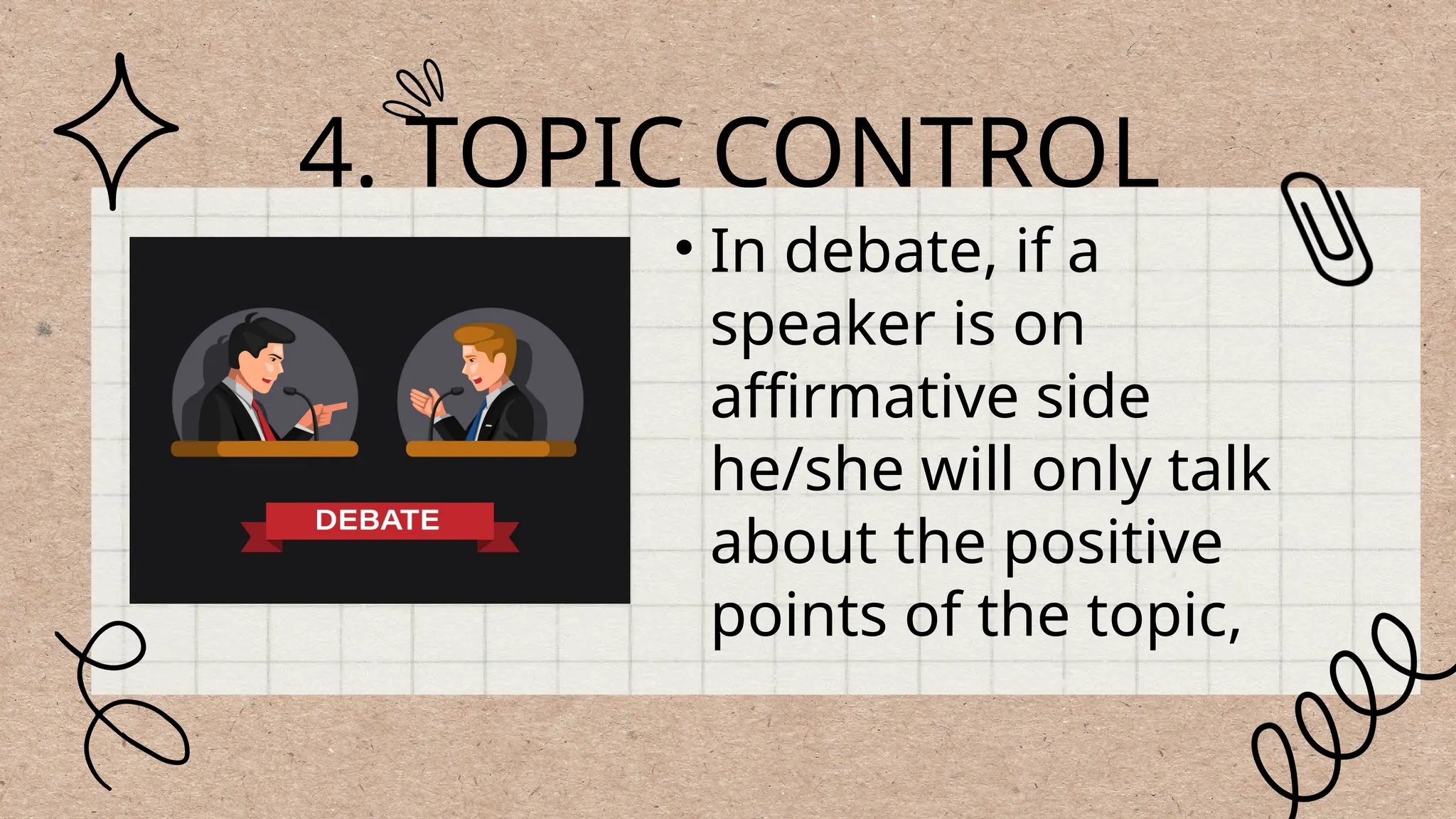
• In debate, if a
speaker is on
affirmative side
he/she will only talk
about the positive
points of the topic,
4. TOPIC CONTROL
• When a topic is
initiated, it should
be collectively
developed by
avoiding
unnecessary
interruptions and
4. TOPIC CONTROL
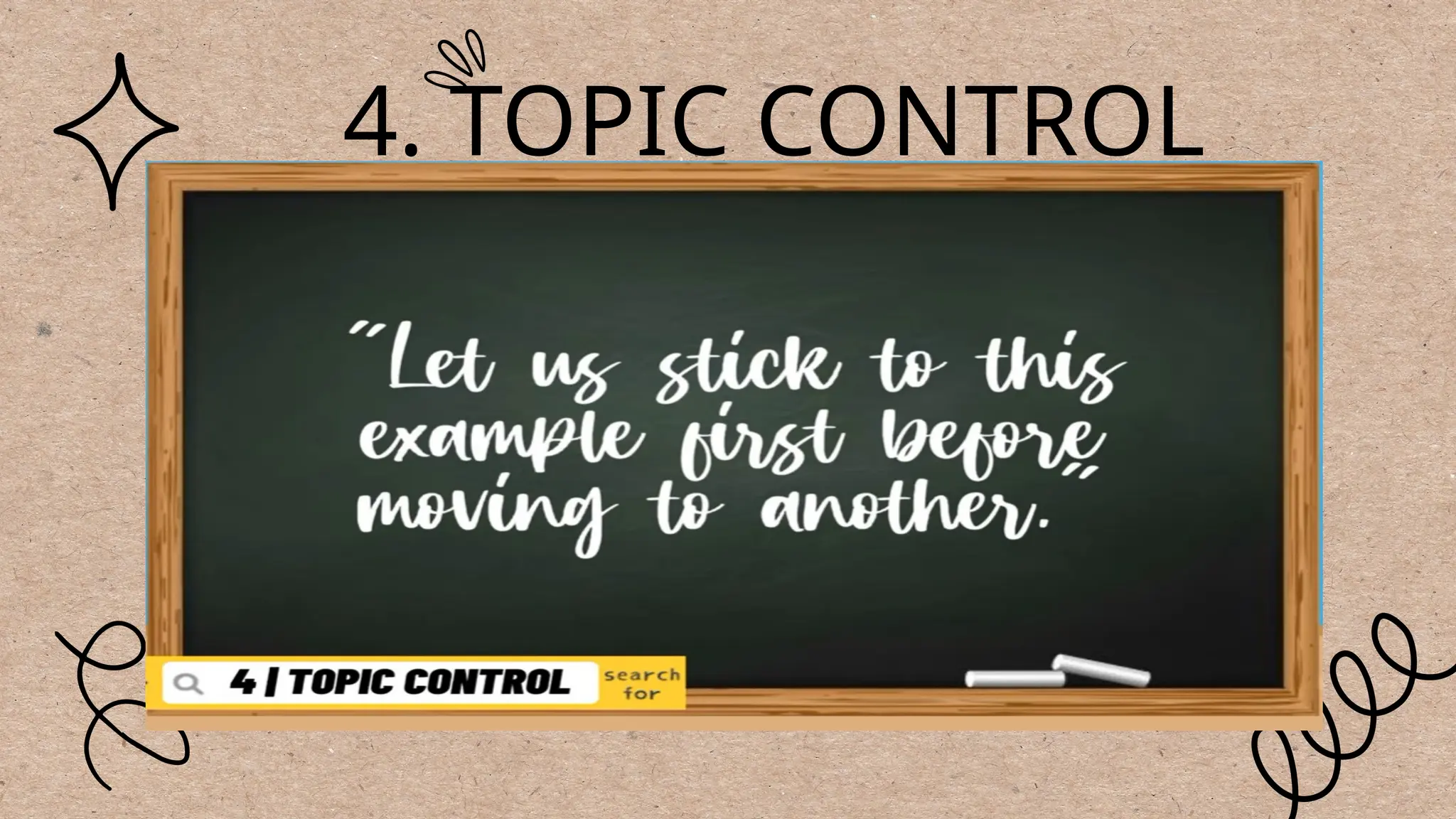
Oh, I think let’s go
back to topic
•Examples
In debate,
speakers do not
need to talk at
the same time.
4. TOPIC CONTROL
5. TOPIC SHIFTING
• Occurs when one
intentionally or
unintentionally changes
the direction of the flow
of ideas in a
conversation.
5. TOPIC SHIFTING
• One topic to another
• An ending should
mean as an new
beginning
• This should be done
without offending
others
5. TOPIC SHIFTING
6. REPAIR
• This refers to the act of
fixing the violations in a
communication situation
6. REPAIR
7. TERMINATION
• This refers to the act of
ending a conversation
7. TERMINATION
SHORT
QUIZ
INSTRUCTIONS: What communicative
strategy is used in the following statement
below: Explain your work. (3 points each)
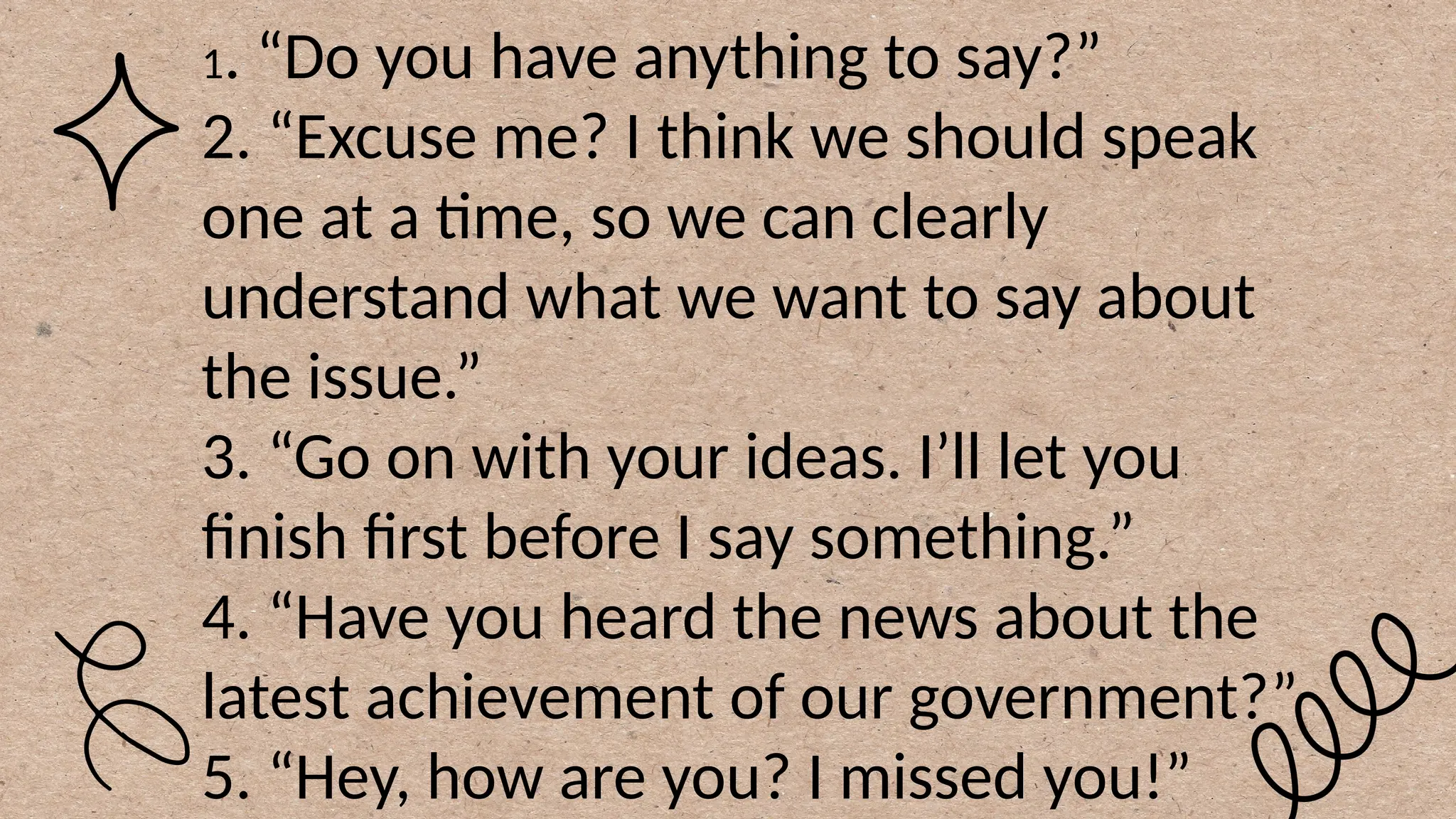
1. “Do you have anything to say?”
2. “Excuse me? I think we should speak
one at a time, so we can clearly
understand what we want to say about
the issue.”
3. “Go on with your ideas. I’ll let you
finish first before I say something.”
4. “Have you heard the news about the
latest achievement of our government?”
5. “Hey, how are you? I missed you!”
6. “Best regards to your parents! See you around!”
7. Speaking of summer, do you even feel how hot it
is outside?
8. The correct pronunciation of Nike is
not nayk but nayki.
9. Please hear me out, I need to tell you
something.
10. We need to work together for this project.
William, you're good in making good visuals, yes?
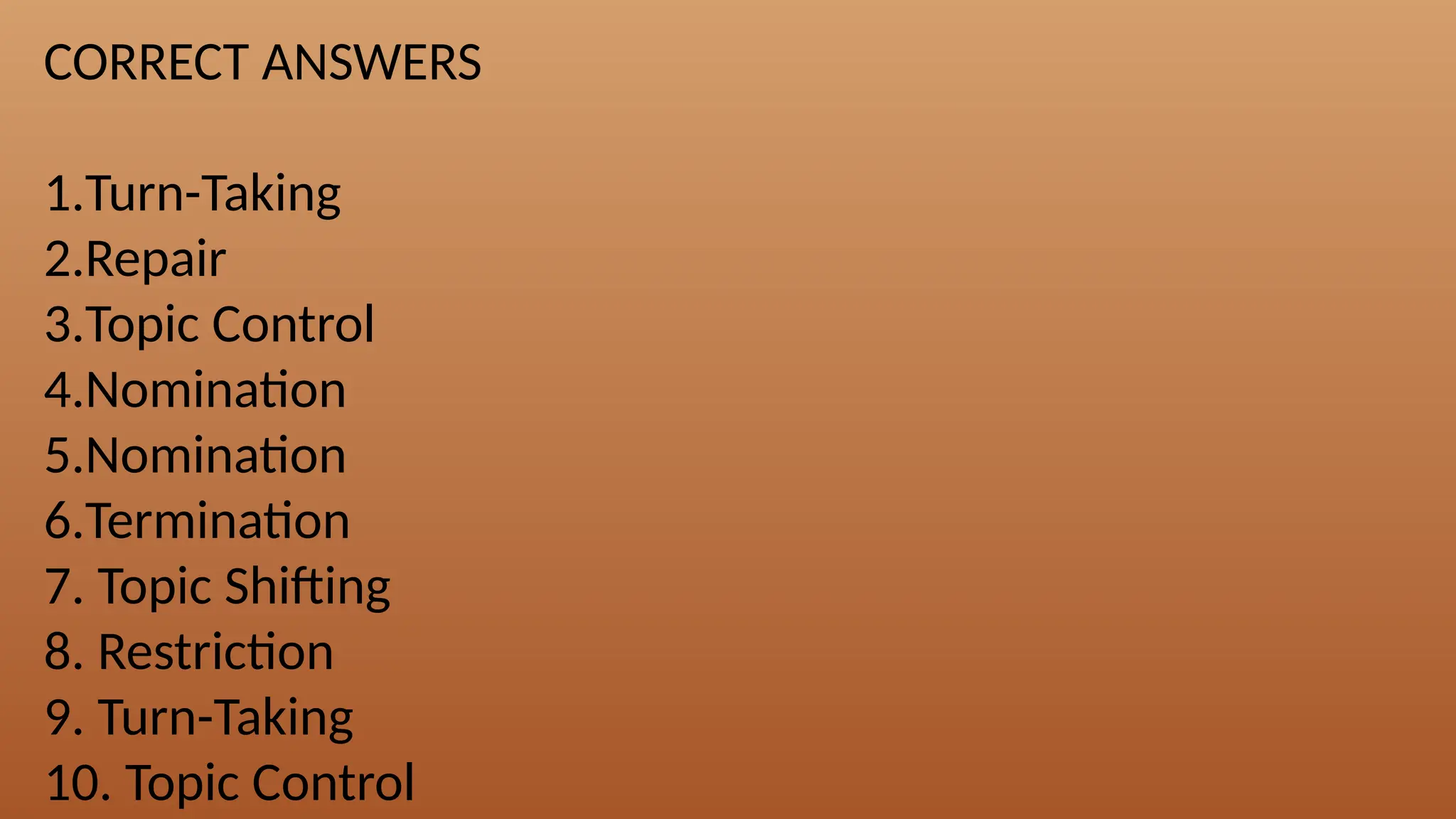
CORRECT ANSWERS
1.Turn-Taking
2.Repair
3.Topic Control
4.Nomination
5.Nomination
6.Termination
7. Topic Shifting
8. Restriction
9. Turn-Taking
10. Topic Control

Oral Communication_COMMUNICATIVE STRATEGIES.pptx

Editor's Notes

  • #3 Let’s start with priming activity entitled 4pic-one word. Look at the pictures and guess the word.