



Communication:
Infrastructure Facilities
Dr. Rahul B. Pandit
Faculty of Nursing
Sassoon General Hospital, Pune
Introduction
 Communication is very essential for
human survival.
 The only verbal communication is not
important.
 A country can enhance peoples health,
relationship within and out of country by
possessing effective infrastructure.
Introduction
For Example
A farmer cannot show much production
without power supply, transport facility
and credits.
Communication Infrastructure
 Infrastructure is the fundamental facility.
 Basic infrastructure is essential for
growth and smooth function.
 Basic facilities likes road, airway,
railways, waterways are the essential
means of communication.
 Well functioning of infrastructure are
required for rapid growth of the country.
Basic Infrastructure facilities
 Railways
 Bridges
 Runway
 Electricity
 Telecommunication
 Port Facilities/Waterways
 Postal Communication
 Well Organizational Set up
Transport Sector
 Transport is an essential for
communication and enhance economic
development.
 Transport system is one of the core
element of the communication and overall
development.
 Population mobility, transportation of
goods and flow of information
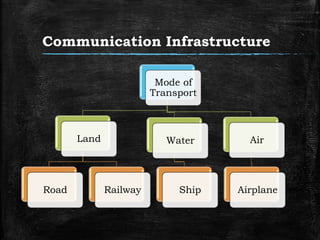
Communication Infrastructure
Mode of
Transport
Land
Road Railway
Water
Ship
Air
Airplane
Importance of Transport
 Transport enhance trade and commerce
by transporting commodities.
 Facilitates movements of people from one
place to another place.
 Facilitates effective change in life.
Communication
 The word communication originates from
a Greek word ‘communis’, meaning ‘to
make common’.
Communication
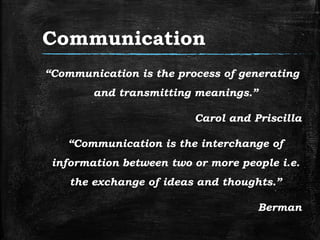
“Communication is the process of generating
and transmitting meanings.”
Carol and Priscilla
“Communication is the interchange of
information between two or more people i.e.
the exchange of ideas and thoughts.”
Berman
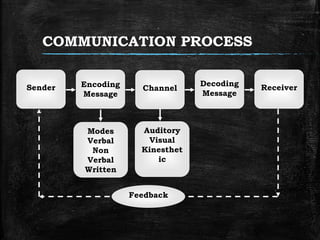
COMMUNICATION PROCESS
Sender Encoding
Message
Channel Receiver
Decoding
Message
Modes
Verbal
Non
Verbal
Written
Auditory
Visual
Kinesthet
ic
Feedback
Sender
 The communication process begins when a person,
known as the sender, generates a message.
 In communication sender is the source of message or
information which has to exchange.
 Sender encodes the message and transfers the
information which he wants to communicate.
 The effect of message or information will depend on
the sender’s knowledge, skill, attitude, social status
and the prestige in the society.
Message
 Message is the any information, ideas and feelings
that exchanged between communicators.
 Encoding involves the use of language and other
specific signs and symbols for sending messages.
 The message may be in the form of words, pictures
and signs.
 The sender exchanging the information to
audience to receive understands, accept and act
upon it.
Message
 The message must be meaningful, clear,
understandable, specific, accurate,
timely, adequate, interesting, and suitable
to audience, culturally and socially
appropriate.
Channel
 The Channel is the space/medium in which the
message is transmitted.
 There are various channel can be used to send
and receive the message E.g. Visual, Hearing,
touching etc.
 Channel can be verbal and non verbal E.g. TV,
Brochure, Email etc
 The proper selection and use of channels
results in successful communication.
Receiver
 The receiver is the person or audience who
receives the message or information from
sender.
 The receiver decoding the message and
interpret the meaning of message and giving
feedback to sender.
 The level of comprehension depends on their
topic of the knowledge, the trust and
relationship between receiver and the sender.
Feedback
 It is the flow of information from receiver
to the sender.
 Feedback is the receiver reaction to the
message sent by sender.
 Feedback may be verbal or non verbal.
 Feedback is essential to knowing whether
the receiver understands the message
correctly.
IMPORTANCE OF
COMMUNICATION IN NURSING
 A good communication is a critical component
of nursing practices.
 A good communication generate trust between
nurse and patients
 A good communication provides a professional
satisfaction.
 A good communication bringing a change
IMPORTANCE OF
COMMUNICATION IN NURSING
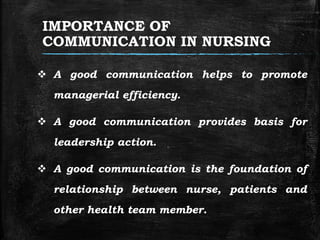
 A good communication helps to promote
managerial efficiency.
 A good communication provides basis for
leadership action.
 A good communication is the foundation of
relationship between nurse, patients and
other health team member.
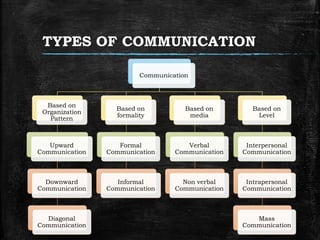
TYPES OF COMMUNICATION
Communication
Based on
Organization
Pattern
Upward
Communication
Downward
Communication
Diagonal
Communication
Based on
formality
Formal
Communication
Informal
Communication
Based on
media
Verbal
Communication
Non verbal
Communication
Based on
Level
Interpersonal
Communication
Intrapersonal
Communication
Mass
Communication
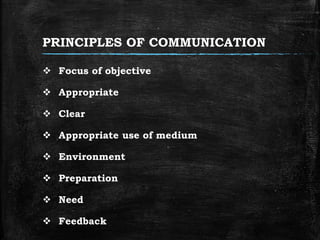
PRINCIPLES OF COMMUNICATION
 Focus of objective
 Appropriate
 Clear
 Appropriate use of medium
 Environment
 Preparation
 Need
 Feedback
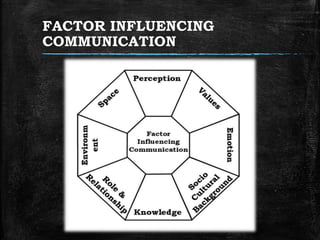
FACTOR INFLUENCING
COMMUNICATION
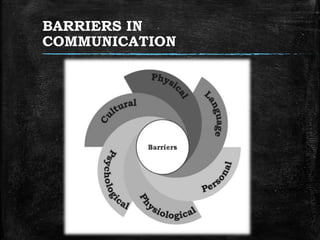
BARRIERS IN
COMMUNICATION
Introduction
 Add your first bullet point here

Communication: Infrasructure facility

  • 1.
    Communication: Infrastructure Facilities Dr. RahulB. Pandit Faculty of Nursing Sassoon General Hospital, Pune
  • 2.
    Introduction  Communication isvery essential for human survival.  The only verbal communication is not important.  A country can enhance peoples health, relationship within and out of country by possessing effective infrastructure.
  • 3.
    Introduction For Example A farmercannot show much production without power supply, transport facility and credits.
  • 4.
    Communication Infrastructure  Infrastructureis the fundamental facility.  Basic infrastructure is essential for growth and smooth function.  Basic facilities likes road, airway, railways, waterways are the essential means of communication.  Well functioning of infrastructure are required for rapid growth of the country.
  • 5.
    Basic Infrastructure facilities Railways  Bridges  Runway  Electricity  Telecommunication  Port Facilities/Waterways  Postal Communication  Well Organizational Set up
  • 6.
    Transport Sector  Transportis an essential for communication and enhance economic development.  Transport system is one of the core element of the communication and overall development.  Population mobility, transportation of goods and flow of information
  • 7.
  • 8.
    Importance of Transport Transport enhance trade and commerce by transporting commodities.  Facilitates movements of people from one place to another place.  Facilitates effective change in life.
  • 9.
    Communication  The wordcommunication originates from a Greek word ‘communis’, meaning ‘to make common’.
  • 10.
    Communication “Communication is theprocess of generating and transmitting meanings.” Carol and Priscilla “Communication is the interchange of information between two or more people i.e. the exchange of ideas and thoughts.” Berman
  • 11.
    COMMUNICATION PROCESS Sender Encoding Message ChannelReceiver Decoding Message Modes Verbal Non Verbal Written Auditory Visual Kinesthet ic Feedback
  • 12.
    Sender  The communicationprocess begins when a person, known as the sender, generates a message.  In communication sender is the source of message or information which has to exchange.  Sender encodes the message and transfers the information which he wants to communicate.  The effect of message or information will depend on the sender’s knowledge, skill, attitude, social status and the prestige in the society.
  • 13.
    Message  Message isthe any information, ideas and feelings that exchanged between communicators.  Encoding involves the use of language and other specific signs and symbols for sending messages.  The message may be in the form of words, pictures and signs.  The sender exchanging the information to audience to receive understands, accept and act upon it.
  • 14.
    Message  The messagemust be meaningful, clear, understandable, specific, accurate, timely, adequate, interesting, and suitable to audience, culturally and socially appropriate.
  • 15.
    Channel  The Channelis the space/medium in which the message is transmitted.  There are various channel can be used to send and receive the message E.g. Visual, Hearing, touching etc.  Channel can be verbal and non verbal E.g. TV, Brochure, Email etc  The proper selection and use of channels results in successful communication.
  • 16.
    Receiver  The receiveris the person or audience who receives the message or information from sender.  The receiver decoding the message and interpret the meaning of message and giving feedback to sender.  The level of comprehension depends on their topic of the knowledge, the trust and relationship between receiver and the sender.
  • 17.
    Feedback  It isthe flow of information from receiver to the sender.  Feedback is the receiver reaction to the message sent by sender.  Feedback may be verbal or non verbal.  Feedback is essential to knowing whether the receiver understands the message correctly.
  • 18.
    IMPORTANCE OF COMMUNICATION INNURSING  A good communication is a critical component of nursing practices.  A good communication generate trust between nurse and patients  A good communication provides a professional satisfaction.  A good communication bringing a change
  • 19.
    IMPORTANCE OF COMMUNICATION INNURSING  A good communication helps to promote managerial efficiency.  A good communication provides basis for leadership action.  A good communication is the foundation of relationship between nurse, patients and other health team member.
  • 20.
    TYPES OF COMMUNICATION Communication Basedon Organization Pattern Upward Communication Downward Communication Diagonal Communication Based on formality Formal Communication Informal Communication Based on media Verbal Communication Non verbal Communication Based on Level Interpersonal Communication Intrapersonal Communication Mass Communication
  • 21.
    PRINCIPLES OF COMMUNICATION Focus of objective  Appropriate  Clear  Appropriate use of medium  Environment  Preparation  Need  Feedback
  • 22.
  • 23.
  • 24.
    Introduction  Add yourfirst bullet point here