
Bushra Hussein Ali BDS
Supervised by:
Haitham Tawfeek Ms.C
(Prosthodontist)
Challenge
One of the most challenging dental
management is the oral rehabilitation of
cases with lost teeth
which is known as
Kelly syndrome
Anterior hyper
function
History
kelly in 1972 was the first to
coin the term combination
syndrome for this oral condition
and its associated clinical feature
Combination
syndrome
Combination Syndrome
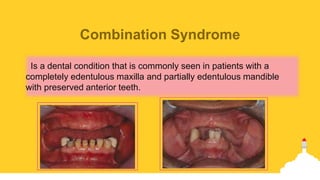
Is a dental condition that is commonly seen in patients with a
completely edentulous maxilla and partially edentulous mandible
with preserved anterior teeth.
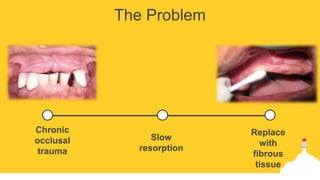
The Problem
Chronic
occlusal
trauma
Slow
resorption
Replace
with
fibrous
tissue
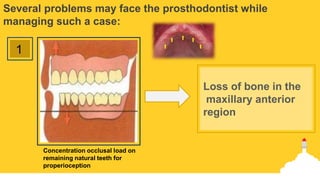
Several problems may face the prosthodontist while
managing such a case:
Concentration occlusal load on
remaining natural teeth for
properioception
1
Loss of bone in the
maxillary anterior
region
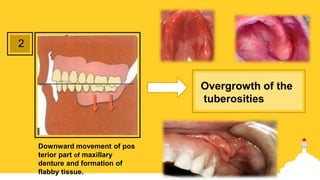
Downward movement of pos
terior part of maxillary
denture and formation of
flabby tissue.
2
Overgrowth of the
tuberosities
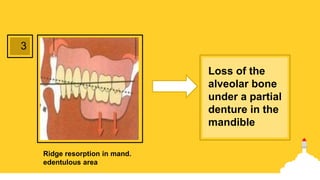
Ridge resorption in mand.
edentulous area
3
Loss of the
alveolar bone
under a partial
denture in the
mandible
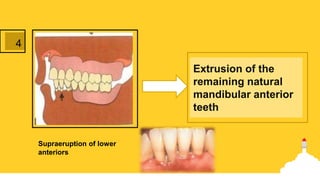
Supraeruption of lower
anteriors
4
Extrusion of the
remaining natural
mandibular anterior
teeth
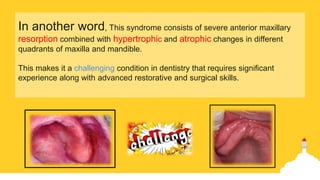
In another word, This syndrome consists of severe anterior maxillary
resorption combined with hypertrophic and atrophic changes in different
quadrants of maxilla and mandible.
This makes it a challenging condition in dentistry that requires significant
experience along with advanced restorative and surgical skills.
Conventional treatment:
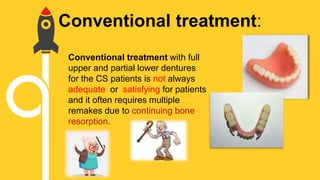
Conventional treatment with full
upper and partial lower dentures
for the CS patients is not always
adequate or satisfying for patients
and it often requires multiple
remakes due to continuing bone
resorption.
The success of the prosthetic rehabilitation:
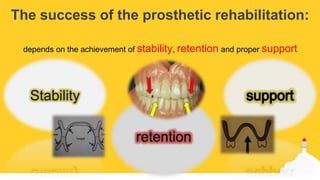
depends on the achievement of stability, retention and proper support
Stability
retention
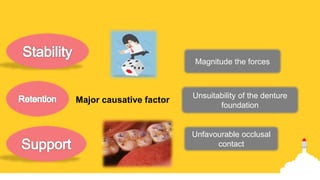
Major causative factor
Magnitude the forces
Unsuitability of the denture
foundation
Unfavourable occlusal
contact
Other objectives
•The occlusal scheme should be at a proper vertical
and centric relation position.
•Anterior teeth should be used for cosmetic
and phonetic purpose only.
•Patient education and frequent recall and
maintenance care are essential, if the
development of this insidious syndrome is to
be avoided.
Treatment
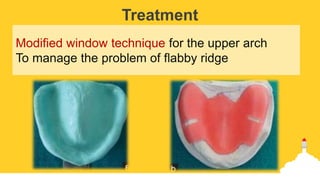
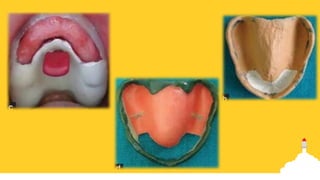
Modified window technique for the upper arch
To manage the problem of flabby ridge
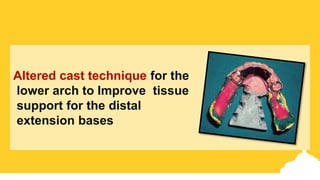
Altered cast technique for the
lower arch to Improve tissue
support for the distal
extension bases
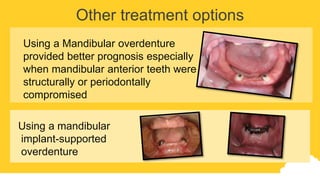
Other treatment options
Using a Mandibular overdenture
provided better prognosis especially
when mandibular anterior teeth were
structurally or periodontally
compromised
Using a mandibular
implant-supported
overdenture
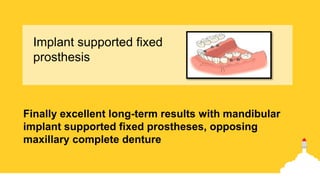
Finally excellent long-term results with mandibular
implant supported fixed prostheses, opposing
maxillary complete denture
Implant supported fixed
prosthesis
Insert the title of your subtitle Here
Conclusion
Combination syndrome is a challenge for
every dentist and need a great skills
because of difficulty of gaining stability,
retention and support.
The recent studies show that long-term
results can get by using mandibular
implant supported fixed prostheses,
opposing maxillary complete denture.
Thank you

Combination syndrome

  • 1.
    Bushra Hussein AliBDS Supervised by: Haitham Tawfeek Ms.C (Prosthodontist)
  • 2.
    Challenge One of themost challenging dental management is the oral rehabilitation of cases with lost teeth which is known as Kelly syndrome Anterior hyper function
  • 3.
    History kelly in 1972was the first to coin the term combination syndrome for this oral condition and its associated clinical feature Combination syndrome
  • 4.
    Combination Syndrome Is adental condition that is commonly seen in patients with a completely edentulous maxilla and partially edentulous mandible with preserved anterior teeth.
  • 5.
  • 6.
    Several problems mayface the prosthodontist while managing such a case: Concentration occlusal load on remaining natural teeth for properioception 1 Loss of bone in the maxillary anterior region
  • 7.
    Downward movement ofpos terior part of maxillary denture and formation of flabby tissue. 2 Overgrowth of the tuberosities
  • 8.
    Ridge resorption inmand. edentulous area 3 Loss of the alveolar bone under a partial denture in the mandible
  • 9.
    Supraeruption of lower anteriors 4 Extrusionof the remaining natural mandibular anterior teeth
  • 10.
    In another word,This syndrome consists of severe anterior maxillary resorption combined with hypertrophic and atrophic changes in different quadrants of maxilla and mandible. This makes it a challenging condition in dentistry that requires significant experience along with advanced restorative and surgical skills.
  • 11.
    Conventional treatment: Conventional treatmentwith full upper and partial lower dentures for the CS patients is not always adequate or satisfying for patients and it often requires multiple remakes due to continuing bone resorption.
  • 12.
    The success ofthe prosthetic rehabilitation: depends on the achievement of stability, retention and proper support Stability retention
  • 13.
    Major causative factor Magnitudethe forces Unsuitability of the denture foundation Unfavourable occlusal contact
  • 14.
    Other objectives •The occlusalscheme should be at a proper vertical and centric relation position. •Anterior teeth should be used for cosmetic and phonetic purpose only. •Patient education and frequent recall and maintenance care are essential, if the development of this insidious syndrome is to be avoided.
  • 15.
    Treatment Modified window techniquefor the upper arch To manage the problem of flabby ridge
  • 17.
    Altered cast techniquefor the lower arch to Improve tissue support for the distal extension bases
  • 18.
    Other treatment options Usinga Mandibular overdenture provided better prognosis especially when mandibular anterior teeth were structurally or periodontally compromised Using a mandibular implant-supported overdenture
  • 19.
    Finally excellent long-termresults with mandibular implant supported fixed prostheses, opposing maxillary complete denture Implant supported fixed prosthesis
  • 20.
    Insert the titleof your subtitle Here Conclusion Combination syndrome is a challenge for every dentist and need a great skills because of difficulty of gaining stability, retention and support. The recent studies show that long-term results can get by using mandibular implant supported fixed prostheses, opposing maxillary complete denture.
  • 21.