Sarah Aliah Ilham  2006 2005 02 Coma in diabetic patient
 
 
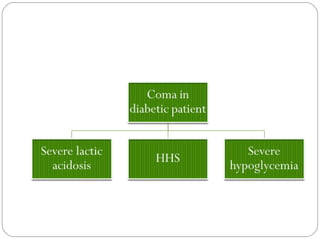
Diabetic coma Also known as hyperglycemic hyperosmolar nonketotic syndrome serious complication that can happen to a person with type 2 diabetes who is ill or stressed diabetic coma occurs most often among people who are older than 60. Most sufferers have a history of diabetes, but for some, the disease is undiagnosed or untreated.
blood sugar gets too high and the body becomes severely dehydrated.  No ketone formed Death rate – 50%
What Are the Early Symptoms of Diabetic Coma? Early symptoms that may lead to diabetic coma if not treated include: Increased thirst Increased urination Weakness Drowsiness Altered mental state Headache Restlessness Inability to speak Paralysis
Investigation  Plasma glucose ABG Urea and electrolyte ECG CXR Urinanalysis, culture and microscopic examination * calculate plasma osmolality 2 x (Na + K) + glucose  285 – 295 mOsmol/Kg Coma = > 400 mOsmol/Kg
Management  Aim: To correct the high osmolality with fluid and insulin over 48-72 hours Avoid fluid overload (central venous line)
Management  Manage as for DKA except: Initial resuscitation with colloid 0.9% saline for fluid replacement If [Na+] is > 150 mmol/L, use 5% dextrose Slow correction of Na Start insulin at 3 U/hr Anticoagulate
CBD if Serum creatinine is high Oliguria When blood glucose is <10 mmol/L – 5% dextrose  Stabilized -  stop insulin therapy, start OHA or diet control
Hypoglycemic  coma Dxt Management : 75 ml 20% glucose IV or 1mg glucagon IM Once recovered give bread or biscuits Should regain consciousness within 10 minutes If not repeat blood glucose and consider other cause of coma Alcohol intox. Post ictal state  Cerebral hemorrhage Consider cerebral edema after blood glucose is restored to normal
Admit if the cause is long –acting SU or long acting insulin Continuous infusion of 10% dextrose (1L / 8hrly)  Check glucose hourly

Coma In Diabetic Patient

  • 1.
    Sarah Aliah Ilham 2006 2005 02 Coma in diabetic patient
  • 2.
  • 3.
  • 4.
    Diabetic coma Alsoknown as hyperglycemic hyperosmolar nonketotic syndrome serious complication that can happen to a person with type 2 diabetes who is ill or stressed diabetic coma occurs most often among people who are older than 60. Most sufferers have a history of diabetes, but for some, the disease is undiagnosed or untreated.
  • 5.
    blood sugar getstoo high and the body becomes severely dehydrated. No ketone formed Death rate – 50%
  • 6.
    What Are theEarly Symptoms of Diabetic Coma? Early symptoms that may lead to diabetic coma if not treated include: Increased thirst Increased urination Weakness Drowsiness Altered mental state Headache Restlessness Inability to speak Paralysis
  • 7.
    Investigation Plasmaglucose ABG Urea and electrolyte ECG CXR Urinanalysis, culture and microscopic examination * calculate plasma osmolality 2 x (Na + K) + glucose 285 – 295 mOsmol/Kg Coma = > 400 mOsmol/Kg
  • 8.
    Management Aim:To correct the high osmolality with fluid and insulin over 48-72 hours Avoid fluid overload (central venous line)
  • 9.
    Management Manageas for DKA except: Initial resuscitation with colloid 0.9% saline for fluid replacement If [Na+] is > 150 mmol/L, use 5% dextrose Slow correction of Na Start insulin at 3 U/hr Anticoagulate
  • 10.
    CBD if Serumcreatinine is high Oliguria When blood glucose is <10 mmol/L – 5% dextrose Stabilized - stop insulin therapy, start OHA or diet control
  • 11.
    Hypoglycemic comaDxt Management : 75 ml 20% glucose IV or 1mg glucagon IM Once recovered give bread or biscuits Should regain consciousness within 10 minutes If not repeat blood glucose and consider other cause of coma Alcohol intox. Post ictal state Cerebral hemorrhage Consider cerebral edema after blood glucose is restored to normal
  • 12.
    Admit if thecause is long –acting SU or long acting insulin Continuous infusion of 10% dextrose (1L / 8hrly) Check glucose hourly