Cerebrovascular
Accident(CVA) stroke
Muhammed Muhsin K K
Senior Staff Nurse (Neuro I C U)
AMRI HOSPITALS BHUBANESHWAR
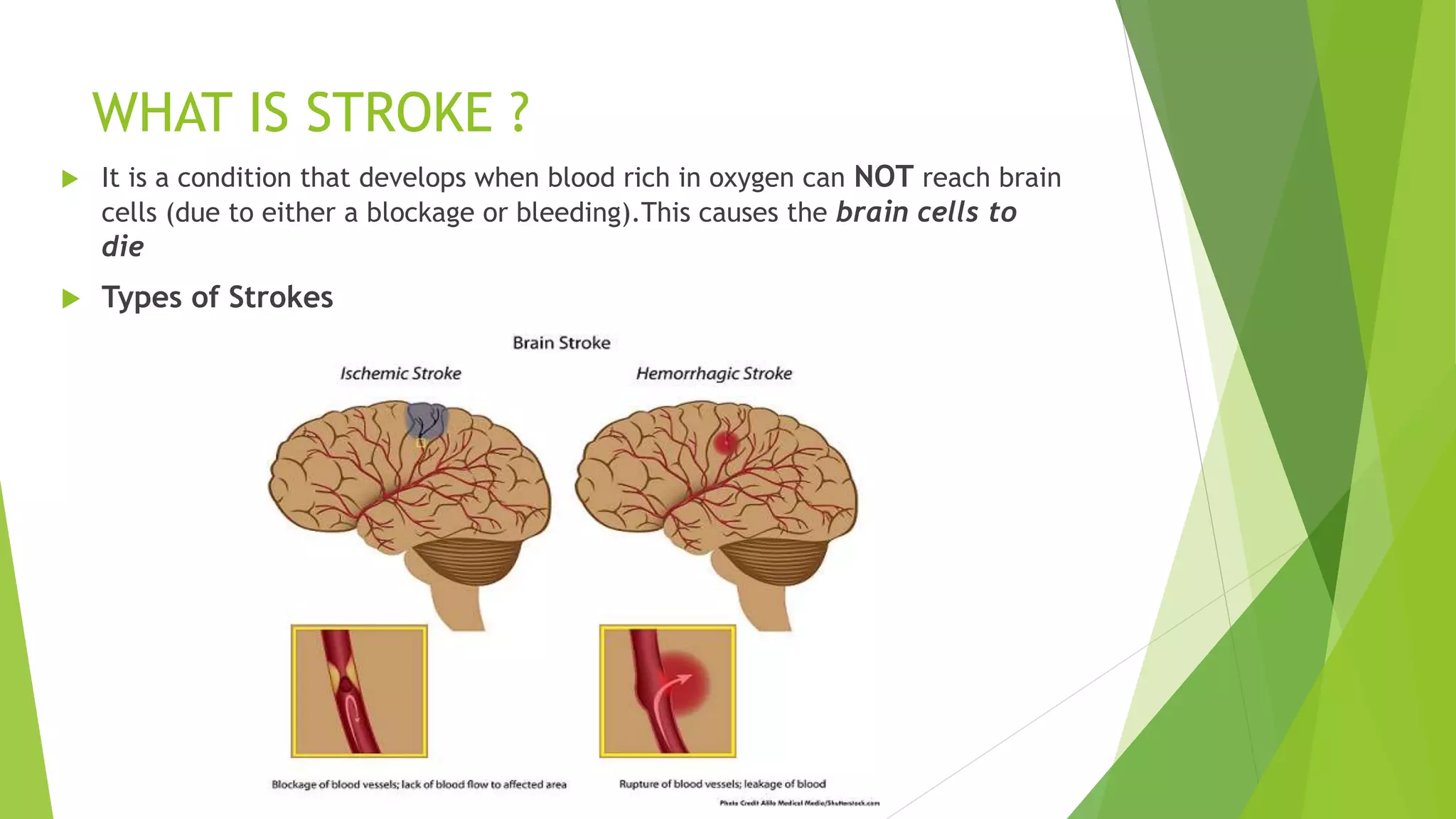
WHAT IS STROKE ?
 It is a condition that develops when blood rich in oxygen can NOT reach brain
cells (due to either a blockage or bleeding).This causes the brain cells to
die
 Types of Strokes
Happens Due to:
Embolism : a clot has left a part of
the body (example of heart: heart
valve problem or atrial fibrillation)
and travelled to the brain ,which
stops blood flow.
Thrombosis: Clot within the artery
wall within the neck or brain….
seen patients with hyper lipidemia
or atherosclerosis
Happens Due to:
Bleeding in the brain due to a
break in blood vessel.
Leads to no blood to perfuse the
brain cells and excessive swelling
from the leakage of blood in the
brain.
Cause : a brain aneurysm bursts
,uncontrolled hypertension, old
age (vessels are NOT as resilient
BRAIN”S Functions & Anatomy
Blood supply to the brain
Carotid and vertebral arteries
Functions Of The Different Lobes Of The
Brain
creativity logical
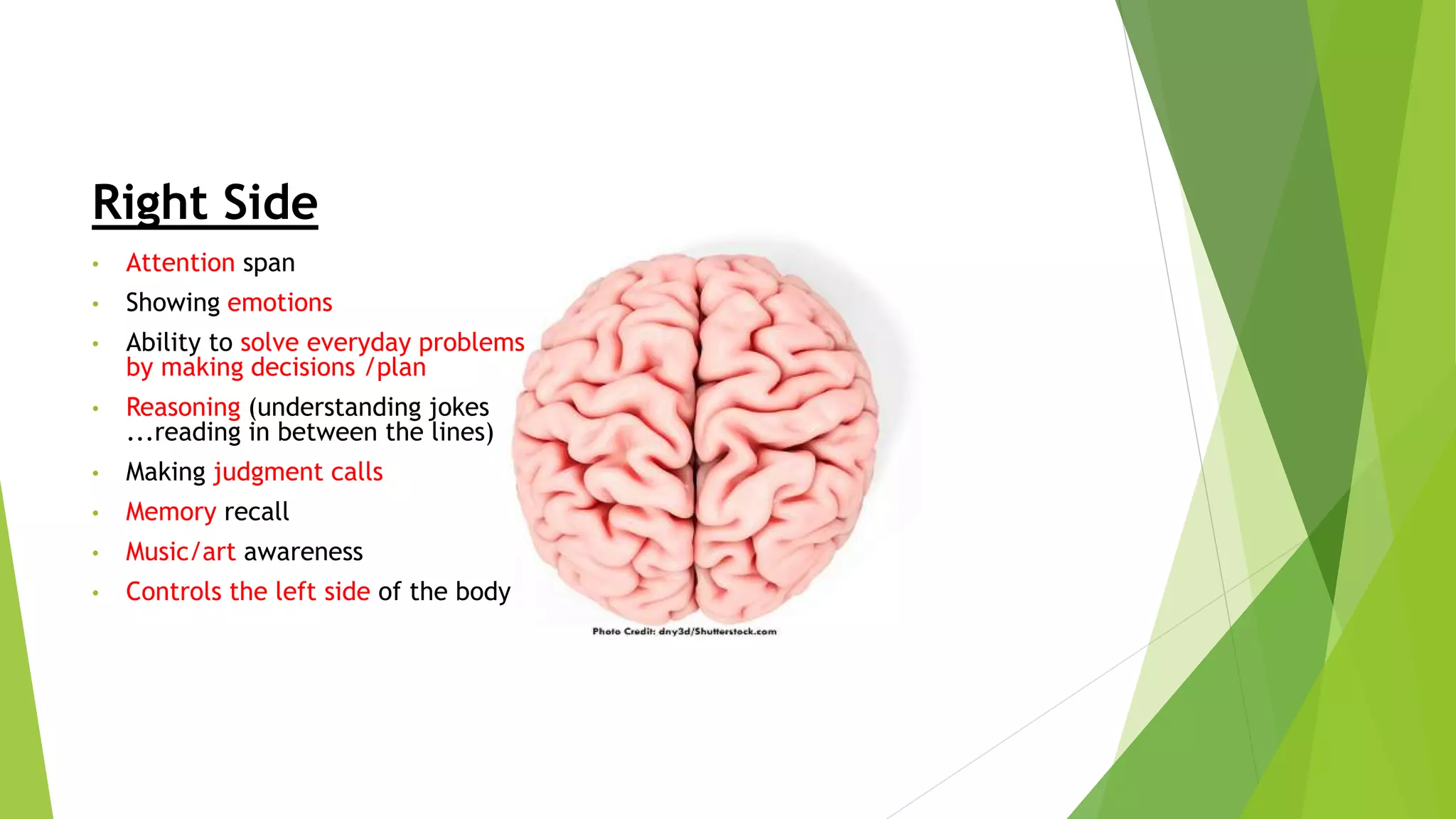
Right Side
• Attention span
• Showing emotions
• Ability to solve everyday problems
by making decisions /plan
• Reasoning (understanding jokes
...reading in between the lines)
• Making judgment calls
• Memory recall
• Music/art awareness
• Controls the left side of the body
Left Side
• Speaking
• Writing
• Reading
• Math skills
• Analyzing info
• planning
Right Brain Injury
Findings:
 Left side weakness: Hemiplegia
 Impairment of creativity
 Confused on date , time, place
 Cannot recognize faces or the
person’s name
 Loss of depth perception
 Trouble saying on topic when
talking
Left Brain Injury
Findings:
 Right side Hemiplegia
 Aphasia (trouble formulating
words
 Aware of their
limits…..experience
depression, anger ,frustration
 Trouble understanding written
text
 Issue in writing (agraphia)
 Issue with seeing right side
Risk factors
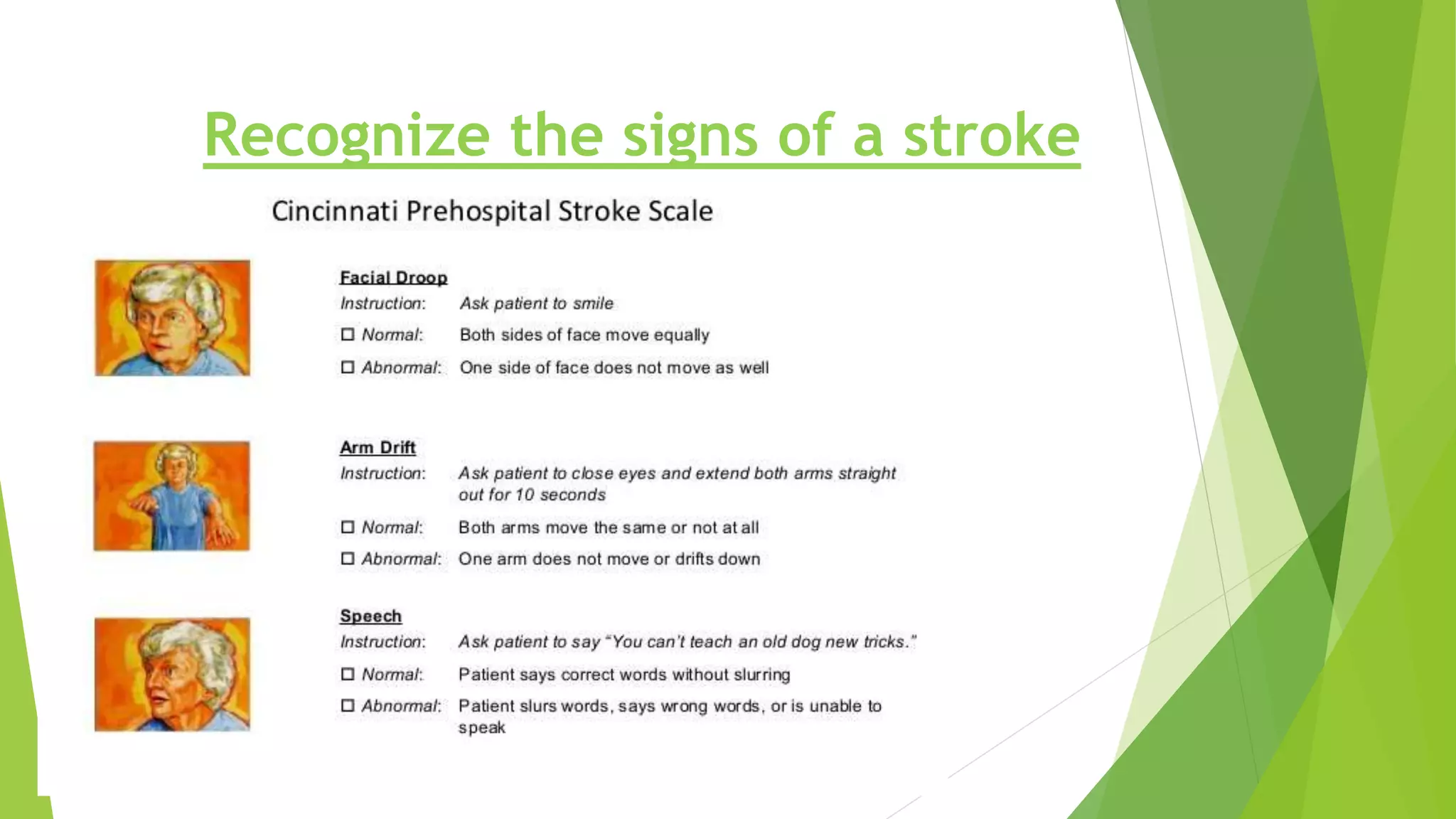
Recognize the signs of a stroke
Stroke Algorithm(AHA 2015)
If yes
tPA (tissue plasminogen Activator)
For ischemic stroke within 3hours from onset of sign and
symptoms
If negative
Labs value normal limit
BP controlled
Recently received
Administer heparin or other anti coagulants
Nursing interventions for tPA
 Check for bleeding
 Neurochecks around the clock
 Blood pressure medications if needed for hypertension
 Vital signs
 Labs values
 Glucose monitoring
 Preventing injury
 Avoid unnecessary venepunctures
Nursing interventions for stroke
 Monitor Vital Signs And Neurostatus:
 Blood Pressure (Notify RMO If Hypertensive)
 Airway (Difficulty Swallowing HOB 30
 Turn Every 2hours With Proper Alignement
 watch For Increased ICP
 Headache , nausea , vomiting Hypertension ,bradycardia ,
bradypnea,
 Low GCS And Pupils Reactions

Cerebrovascular accident(cva) stroke

  • 1.
    Cerebrovascular Accident(CVA) stroke Muhammed MuhsinK K Senior Staff Nurse (Neuro I C U) AMRI HOSPITALS BHUBANESHWAR
  • 2.
    WHAT IS STROKE?  It is a condition that develops when blood rich in oxygen can NOT reach brain cells (due to either a blockage or bleeding).This causes the brain cells to die  Types of Strokes
  • 3.
    Happens Due to: Embolism: a clot has left a part of the body (example of heart: heart valve problem or atrial fibrillation) and travelled to the brain ,which stops blood flow. Thrombosis: Clot within the artery wall within the neck or brain…. seen patients with hyper lipidemia or atherosclerosis
  • 4.
    Happens Due to: Bleedingin the brain due to a break in blood vessel. Leads to no blood to perfuse the brain cells and excessive swelling from the leakage of blood in the brain. Cause : a brain aneurysm bursts ,uncontrolled hypertension, old age (vessels are NOT as resilient
  • 5.
    BRAIN”S Functions &Anatomy Blood supply to the brain Carotid and vertebral arteries
  • 6.
    Functions Of TheDifferent Lobes Of The Brain
  • 7.
  • 8.
    Right Side • Attentionspan • Showing emotions • Ability to solve everyday problems by making decisions /plan • Reasoning (understanding jokes ...reading in between the lines) • Making judgment calls • Memory recall • Music/art awareness • Controls the left side of the body
  • 9.
    Left Side • Speaking •Writing • Reading • Math skills • Analyzing info • planning
  • 10.
    Right Brain Injury Findings: Left side weakness: Hemiplegia  Impairment of creativity  Confused on date , time, place  Cannot recognize faces or the person’s name  Loss of depth perception  Trouble saying on topic when talking Left Brain Injury Findings:  Right side Hemiplegia  Aphasia (trouble formulating words  Aware of their limits…..experience depression, anger ,frustration  Trouble understanding written text  Issue in writing (agraphia)  Issue with seeing right side
  • 11.
  • 12.
  • 14.
  • 15.
    If yes tPA (tissueplasminogen Activator) For ischemic stroke within 3hours from onset of sign and symptoms If negative Labs value normal limit BP controlled Recently received Administer heparin or other anti coagulants
  • 16.
    Nursing interventions fortPA  Check for bleeding  Neurochecks around the clock  Blood pressure medications if needed for hypertension  Vital signs  Labs values  Glucose monitoring  Preventing injury  Avoid unnecessary venepunctures
  • 17.
    Nursing interventions forstroke  Monitor Vital Signs And Neurostatus:  Blood Pressure (Notify RMO If Hypertensive)  Airway (Difficulty Swallowing HOB 30  Turn Every 2hours With Proper Alignement  watch For Increased ICP  Headache , nausea , vomiting Hypertension ,bradycardia , bradypnea,  Low GCS And Pupils Reactions