Cognitive Assistant for the Blind
Chieko Asakawa, 	
IBM Fellow,	
IBM Research	
	
Kris Kitani,	
Robotics Institute, 	
Carnegie Mellon University	
1
© 2016 IBM Corporation
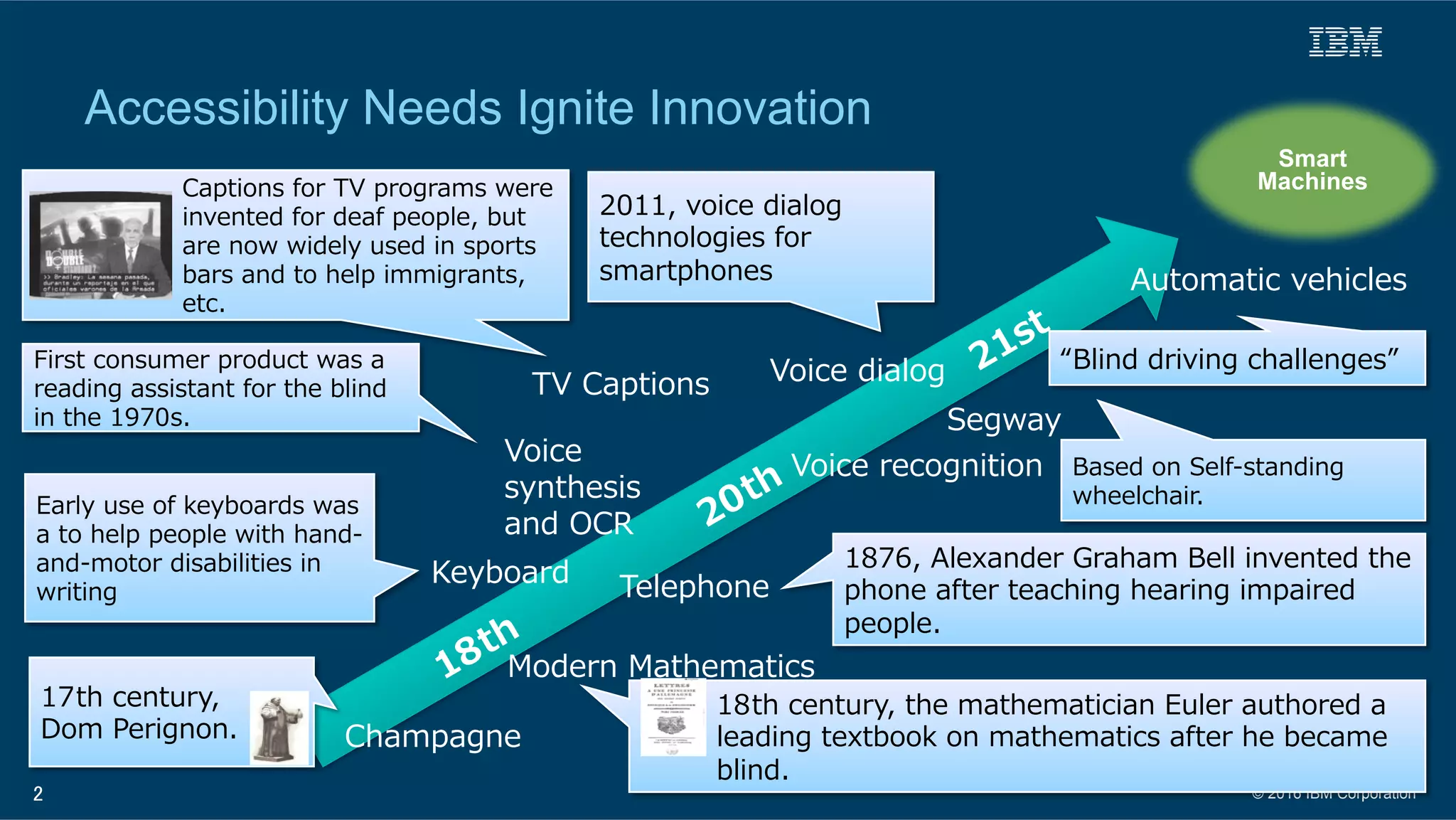
18th  century,  the  mathematician  Euler  authored  a  
leading  textbook  on  mathematics  after  he  became  
blind.
Captions  for  TV  programs  were  
invented  for  deaf  people,  but  
are  now  widely  used  in  sports  
bars  and  to  help  immigrants,  
etc.  
Based  on  Self-‐‑‒standing  
wheelchair.
2011,  voice  dialog  
technologies  for  
smartphones  
TelephoneKeyboard
Voice  recognition
Voice  dialogTV  Captions
Voice  
synthesis  
and  OCR
Modern  Mathematics
Automatic  vehicles
Segway
“Blind  driving  challenges”
Early  use  of  keyboards  was  
a  to  help  people  with  hand-‐‑‒
and-‐‑‒motor  disabilities  in  
writing  
First  consumer  product  was  a  
reading  assistant  for  the  blind  
in  the  1970s.
1876,  Alexander  Graham  Bell  invented  the  
phone  after  teaching  hearing  impaired  
people.
Smart
Machines
2
17th  century,  
Dom  Perignon.   Champagne
Accessibility Needs Ignite Innovation
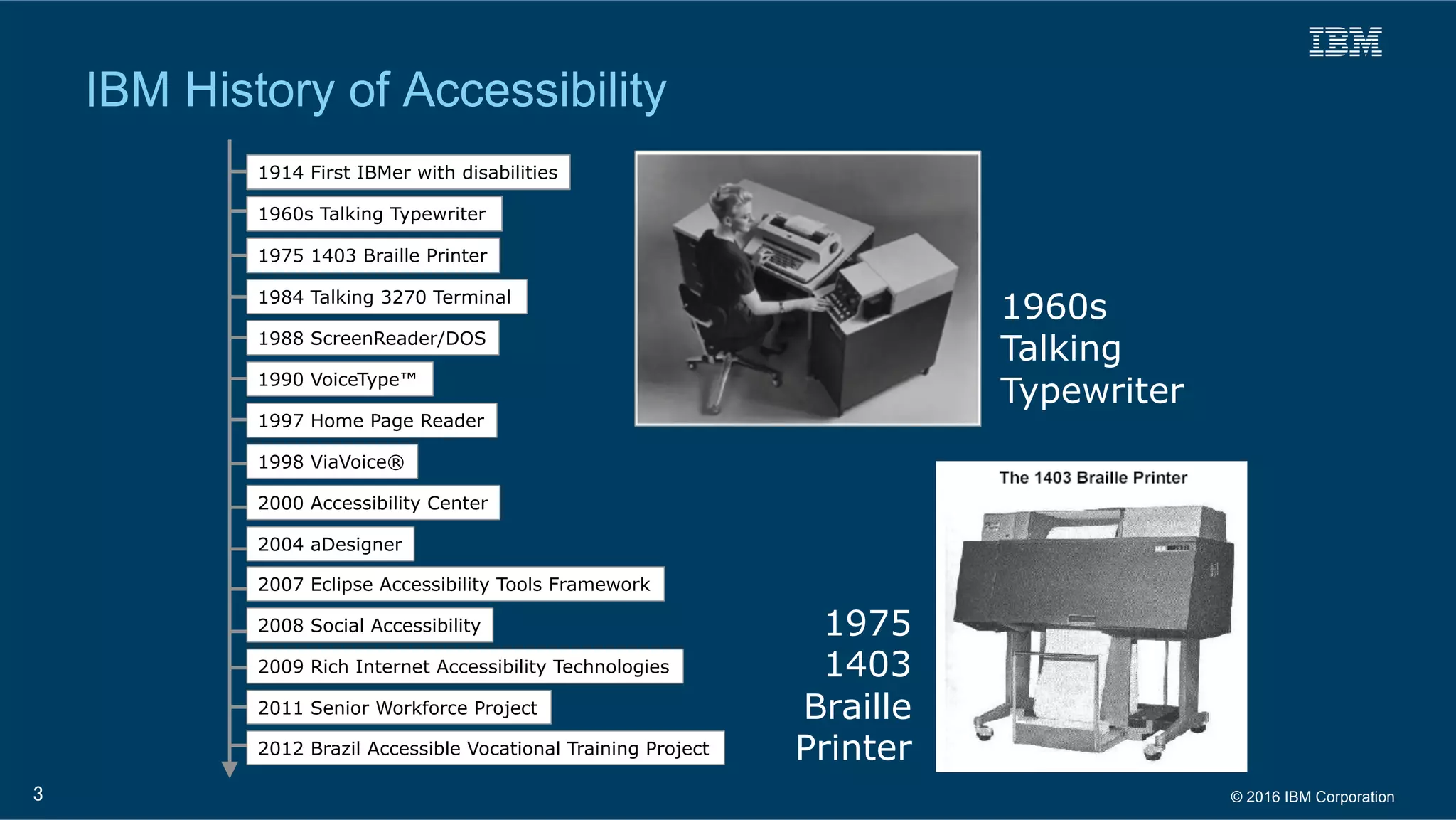
1960s
Talking
Typewriter
1960s Talking Typewriter
1975 1403 Braille Printer
1984 Talking 3270 Terminal
1990 VoiceType™
2008 Social Accessibility
1998 ViaVoice®
2000 Accessibility Center
1997 Home Page Reader
1988 ScreenReader/DOS
2004 aDesigner
2007 Eclipse Accessibility Tools Framework
2009 Rich Internet Accessibility Technologies
1914 First IBMer with disabilities
2012 Brazil Accessible Vocational Training Project
2011 Senior Workforce Project
1975	
1403
Braille
Printer	
IBM History of Accessibility
3 © 2016 IBM Corporation
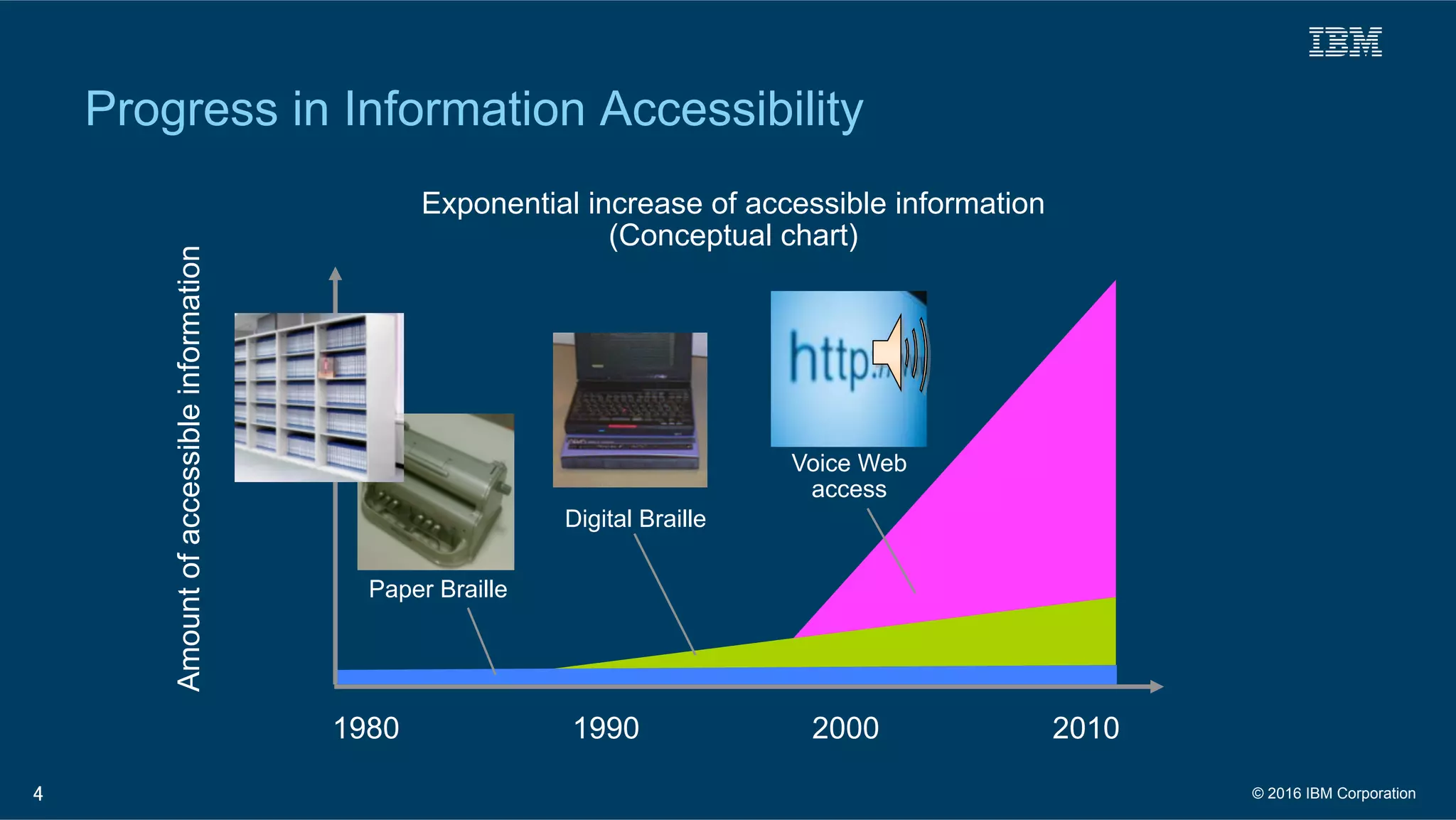
Progress in Information Accessibility
Exponential increase of accessible information
(Conceptual chart)
1980 1990 2000 2010
Paper Braille
Digital Braille
Voice Web
access
4
Amountofaccessibleinformation
© 2016 IBM Corporation
5
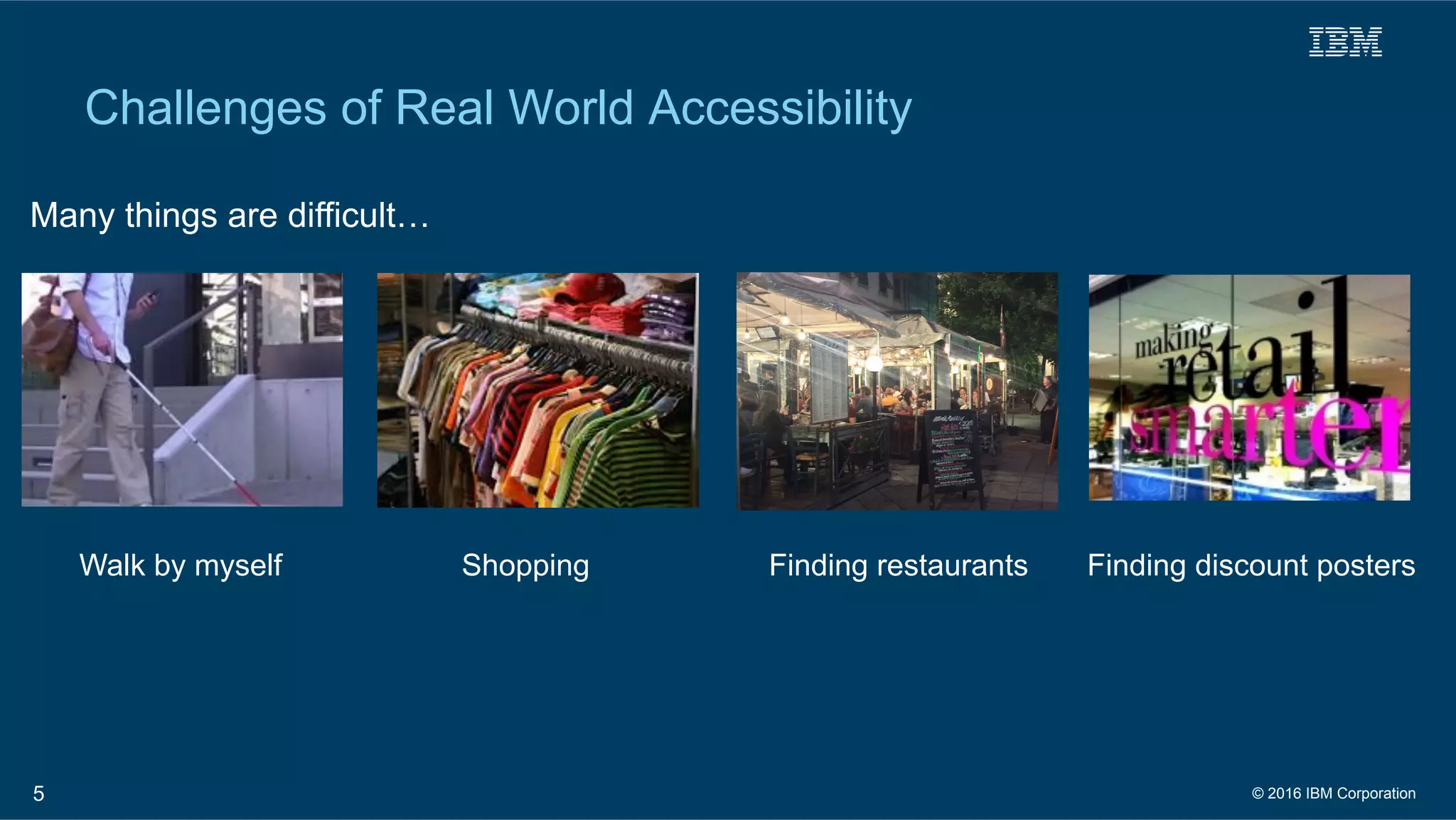
Walk by myself	
 Finding discount posters	
Finding restaurants	
Shopping	
Many things are difficult…	
Challenges of Real World Accessibility
© 2016 IBM Corporation
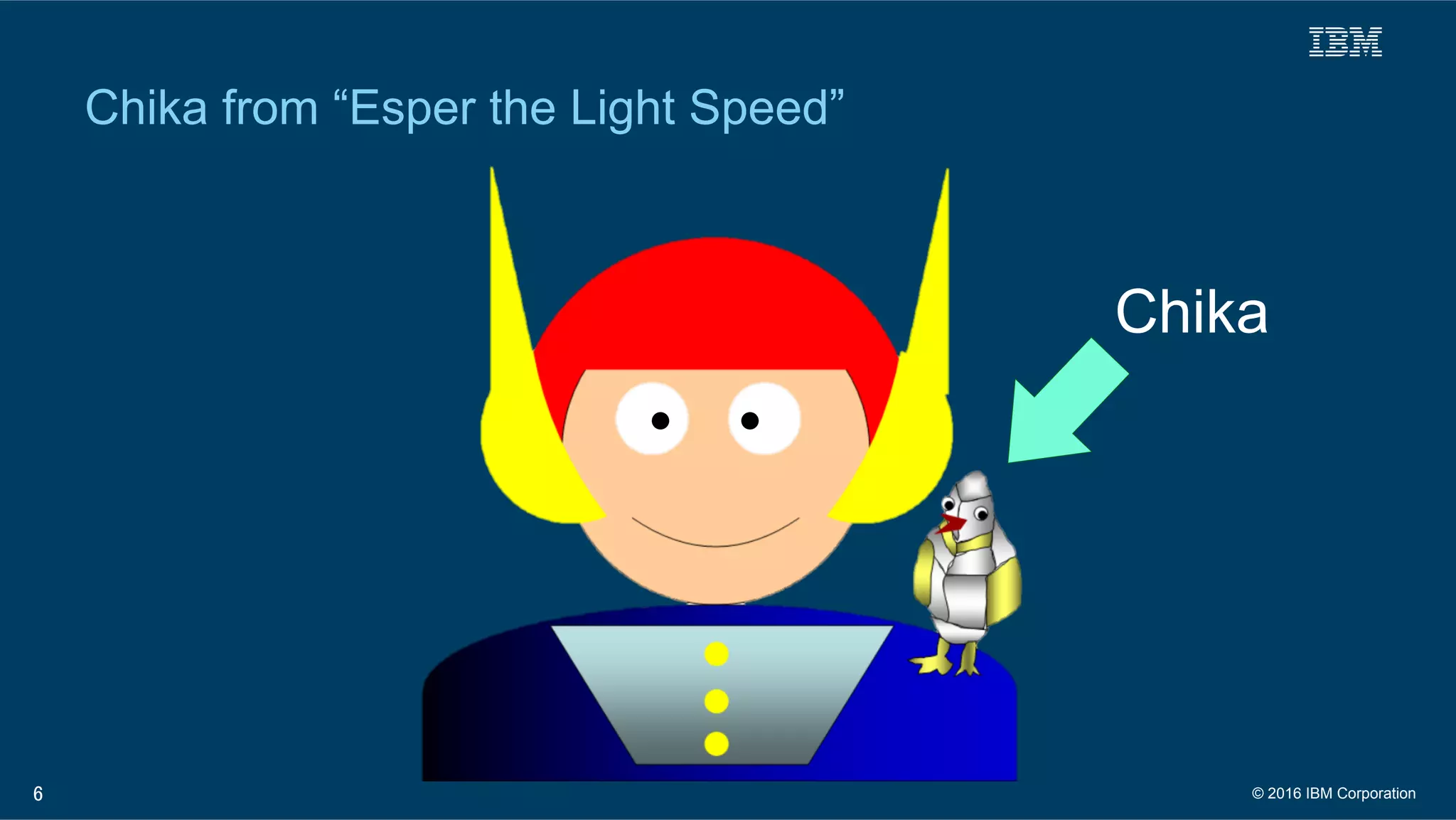
Chika	
6
Chika from “Esper the Light Speed”
© 2016 IBM Corporation
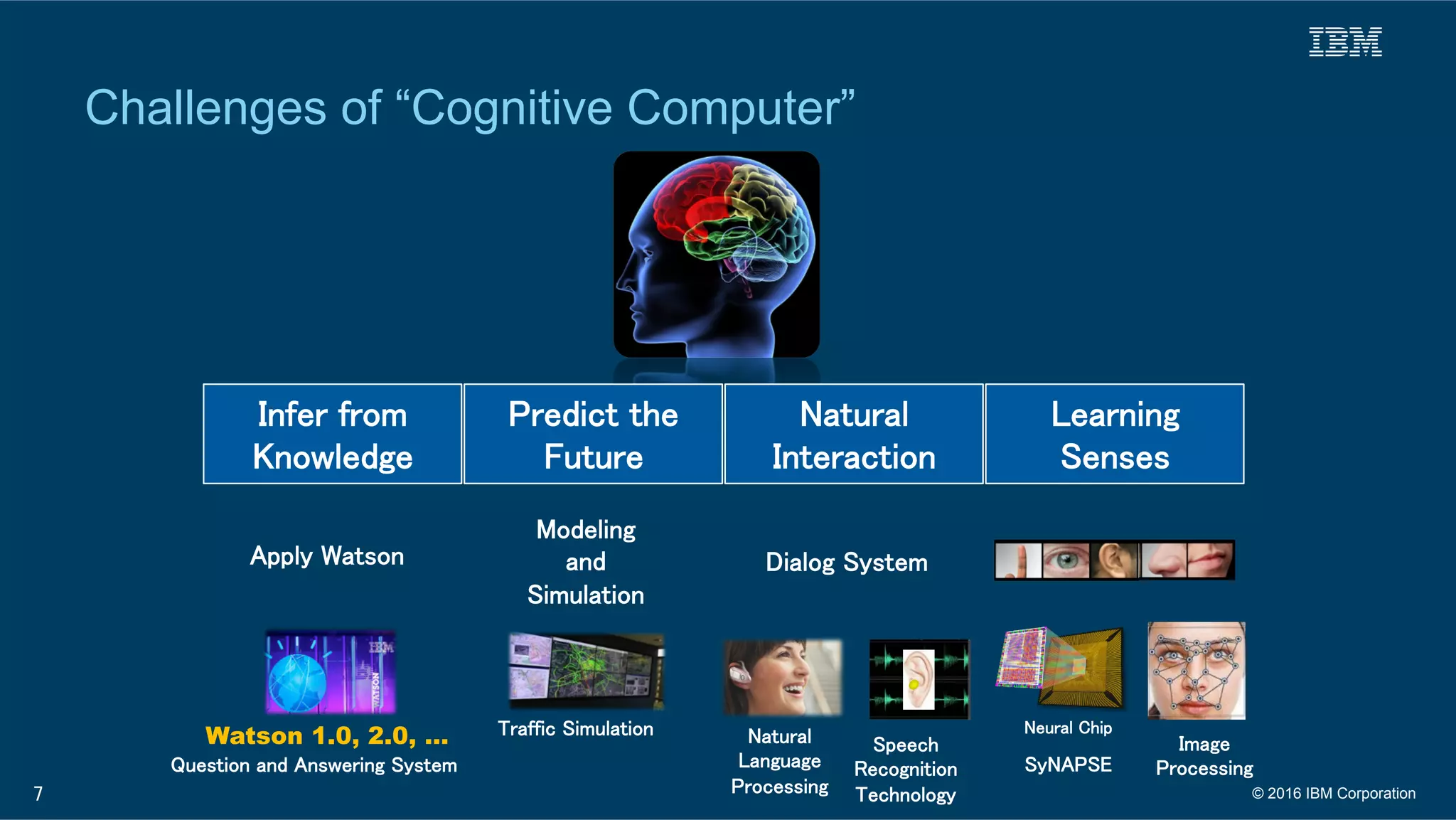
Natural
Language
Processing	
Infer from
Knowledge	
Predict the
Future	
Natural
Interaction	
Learning
Senses	
Watson 1.0, 2.0, …	
Apply Watson	
Modeling 	
and 	
Simulation	
Neural Chip	
SyNAPSE	
Image
Processing	
Speech
Recognition
Technology	
Traffic Simulation	
Dialog System	
Question and Answering System	
7
Challenges of “Cognitive Computer”
© 2016 IBM Corporation
8
Demonstration Video
© 2016 IBM Corporation
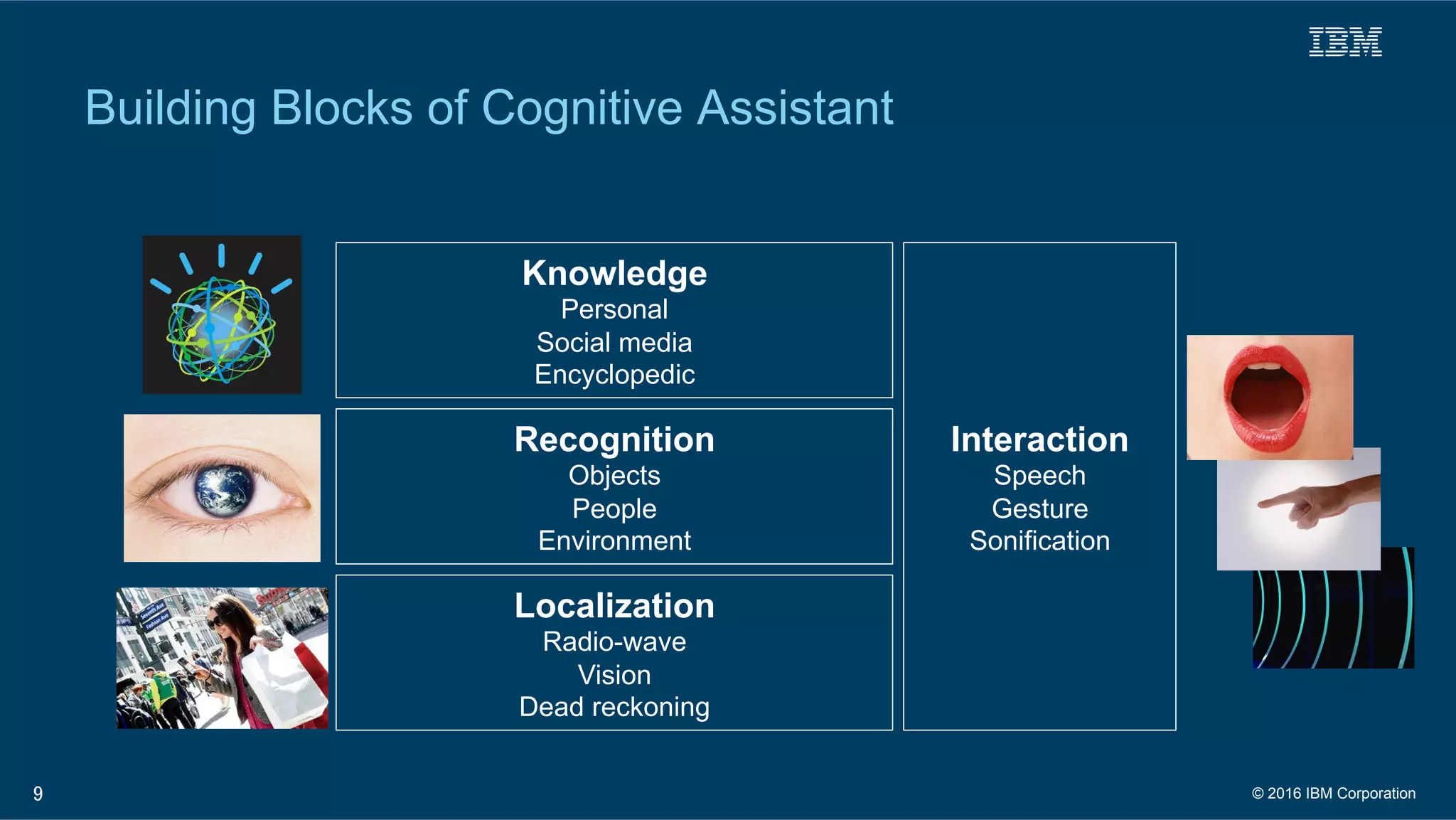
Localization
Radio-wave
Vision
Dead reckoning	
Recognition
Objects
People
Environment	
Knowledge
Personal
Social media
Encyclopedic
Interaction
Speech	
Gesture
Sonification
Building Blocks of Cognitive Assistant
9 © 2016 IBM Corporation
Understanding the Functionality of the Environment
Nick Rhinehart and Kris Kitani, CVPR 2016
© 2016 IBM Corporation
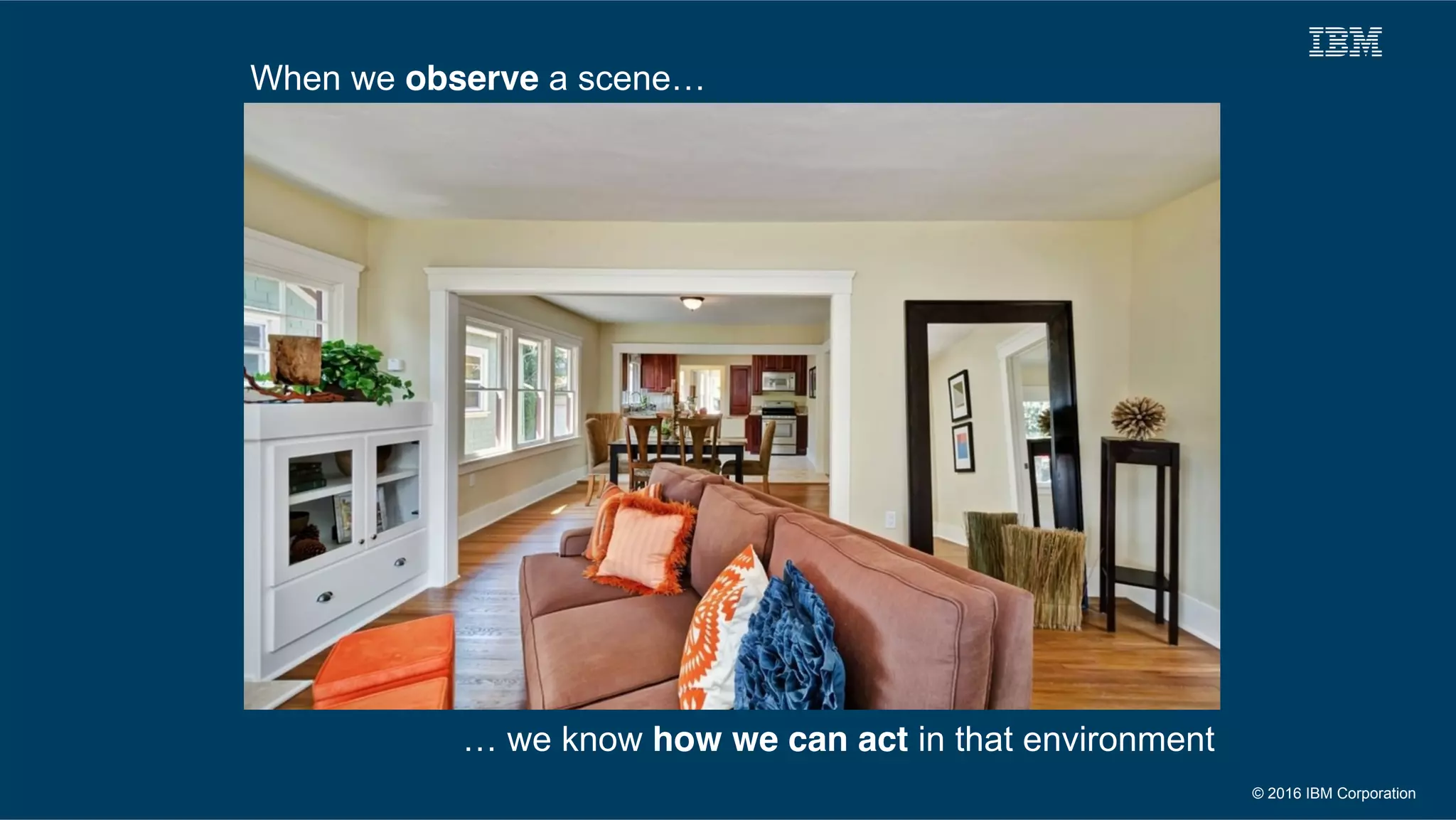
When we observe a scene…
… we know how we can act in that environment
© 2016 IBM Corporation
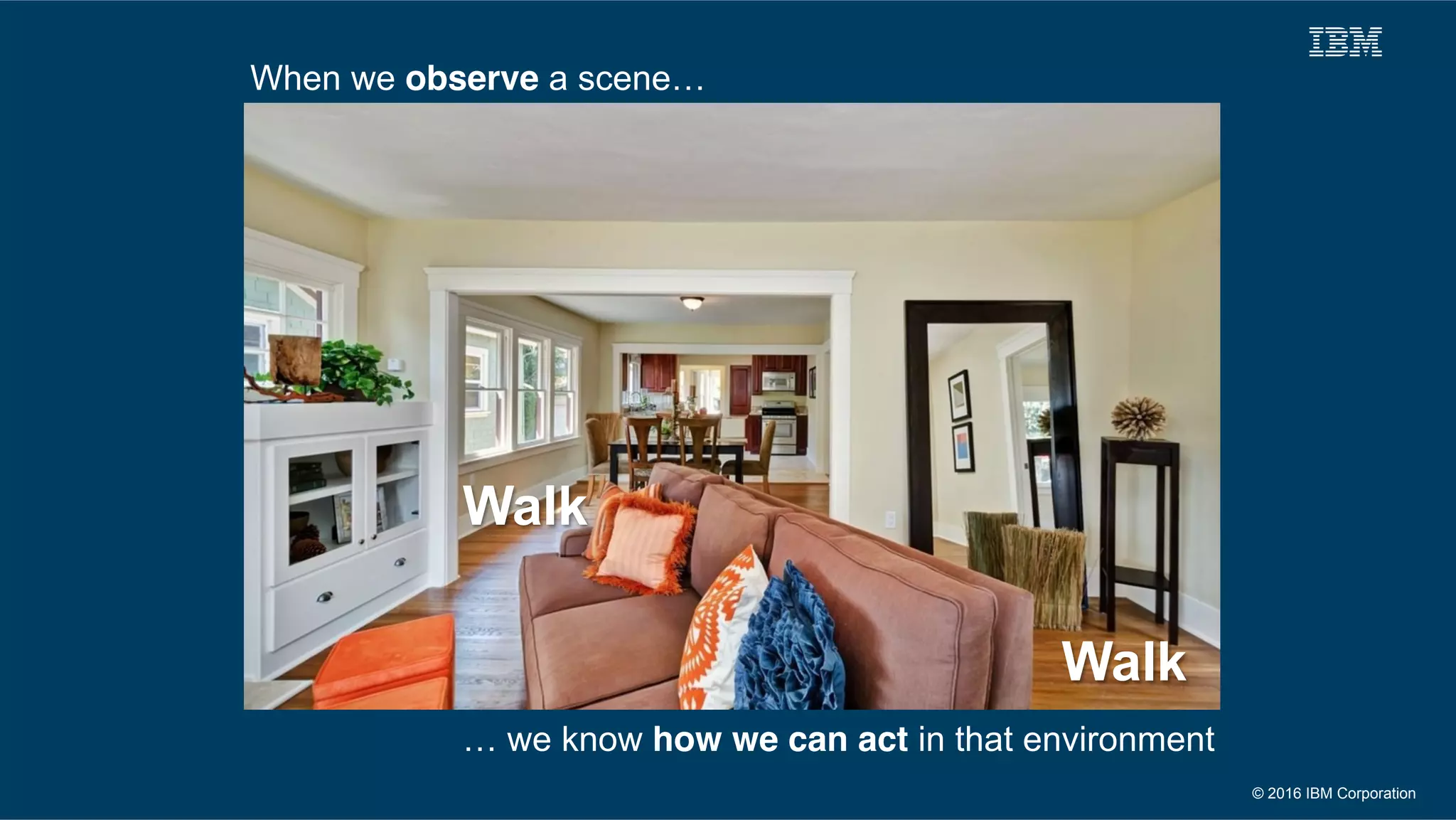
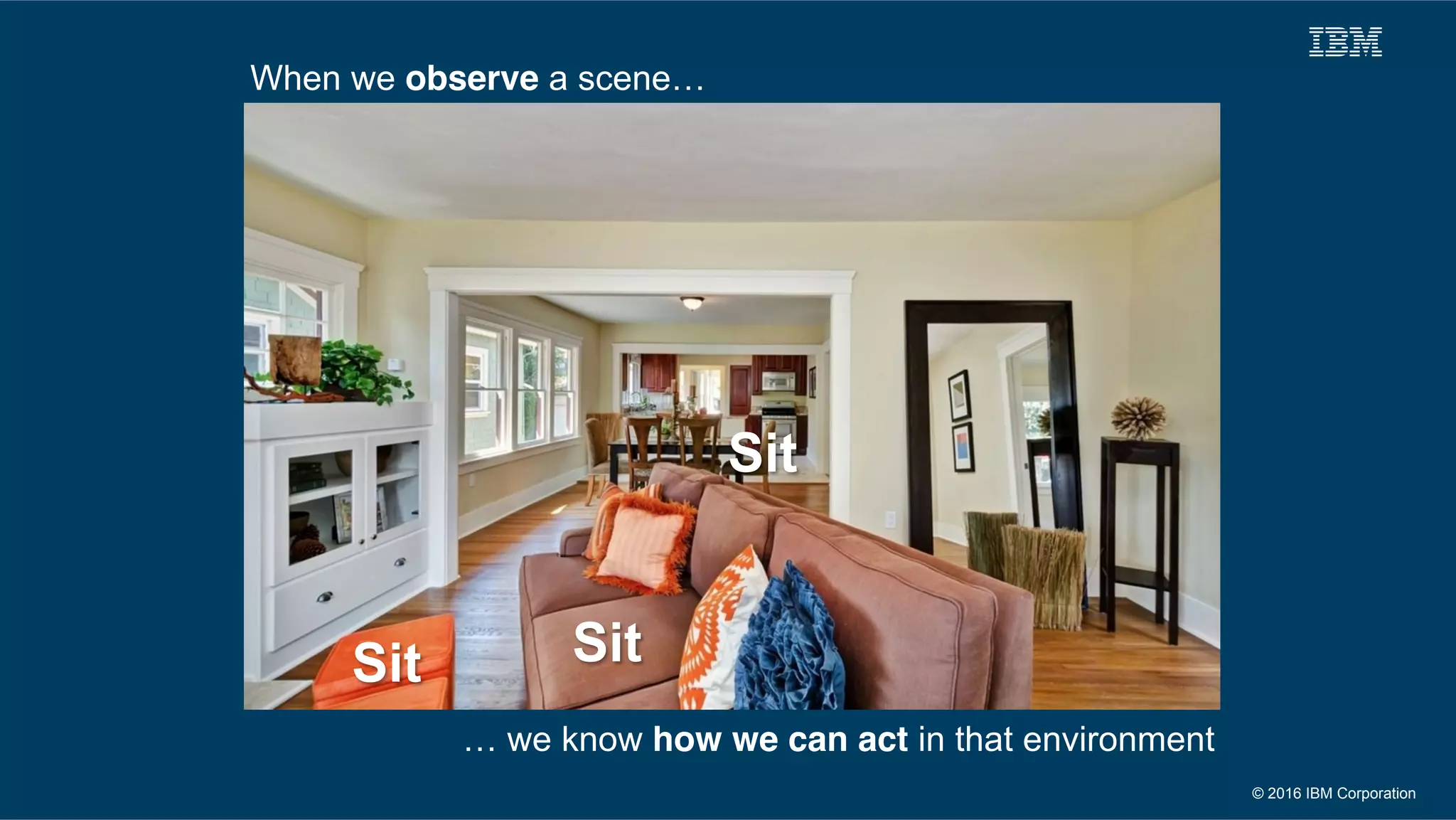
When we observe a scene…
… we know how we can act in that environment
Walk
Walk
© 2016 IBM Corporation
When we observe a scene…
… we know how we can act in that environment
Sit Sit
Sit
© 2016 IBM Corporation
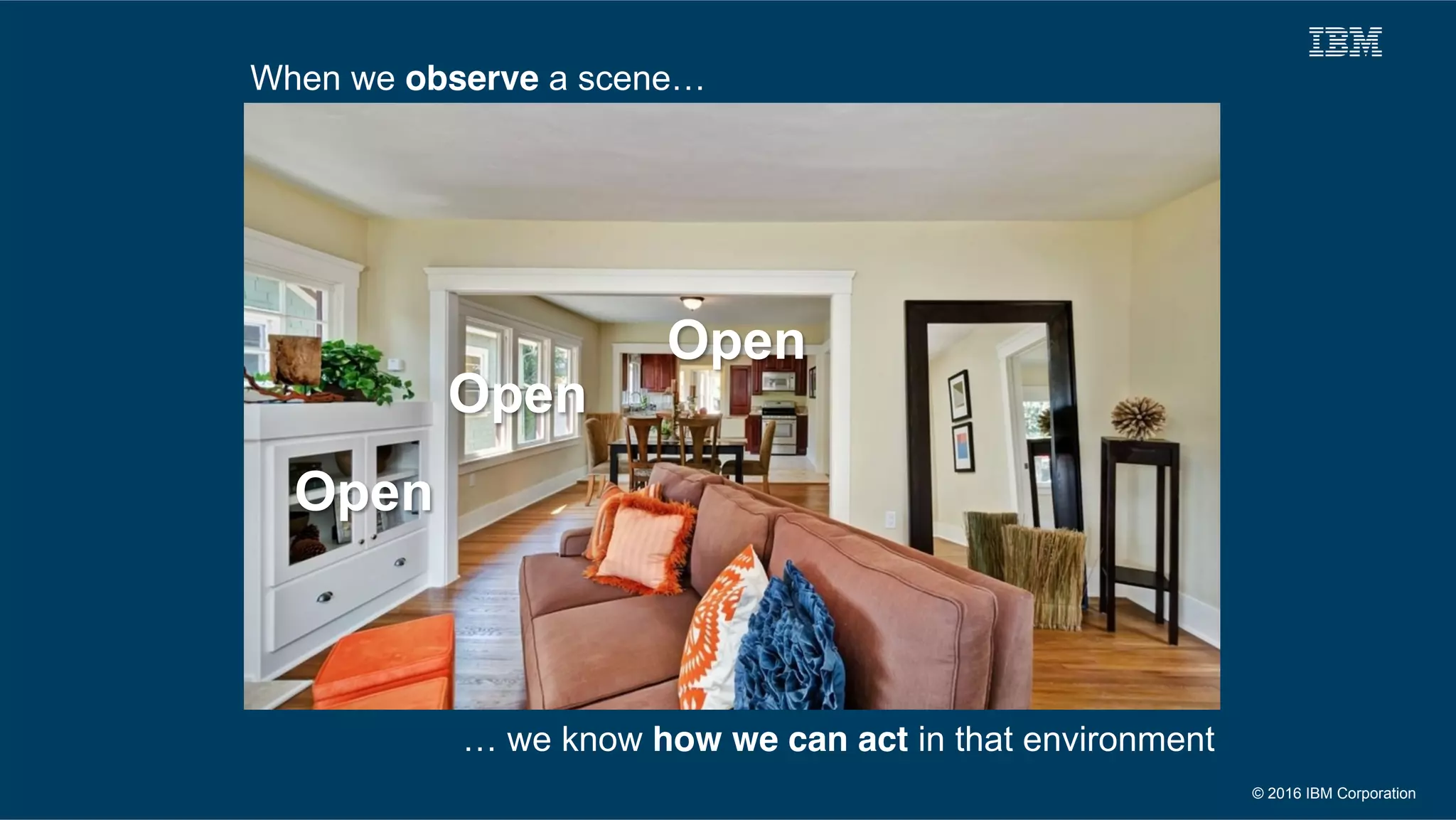
When we observe a scene…
… we know how we can act in that environment
Open
Open
Open
© 2016 IBM Corporation
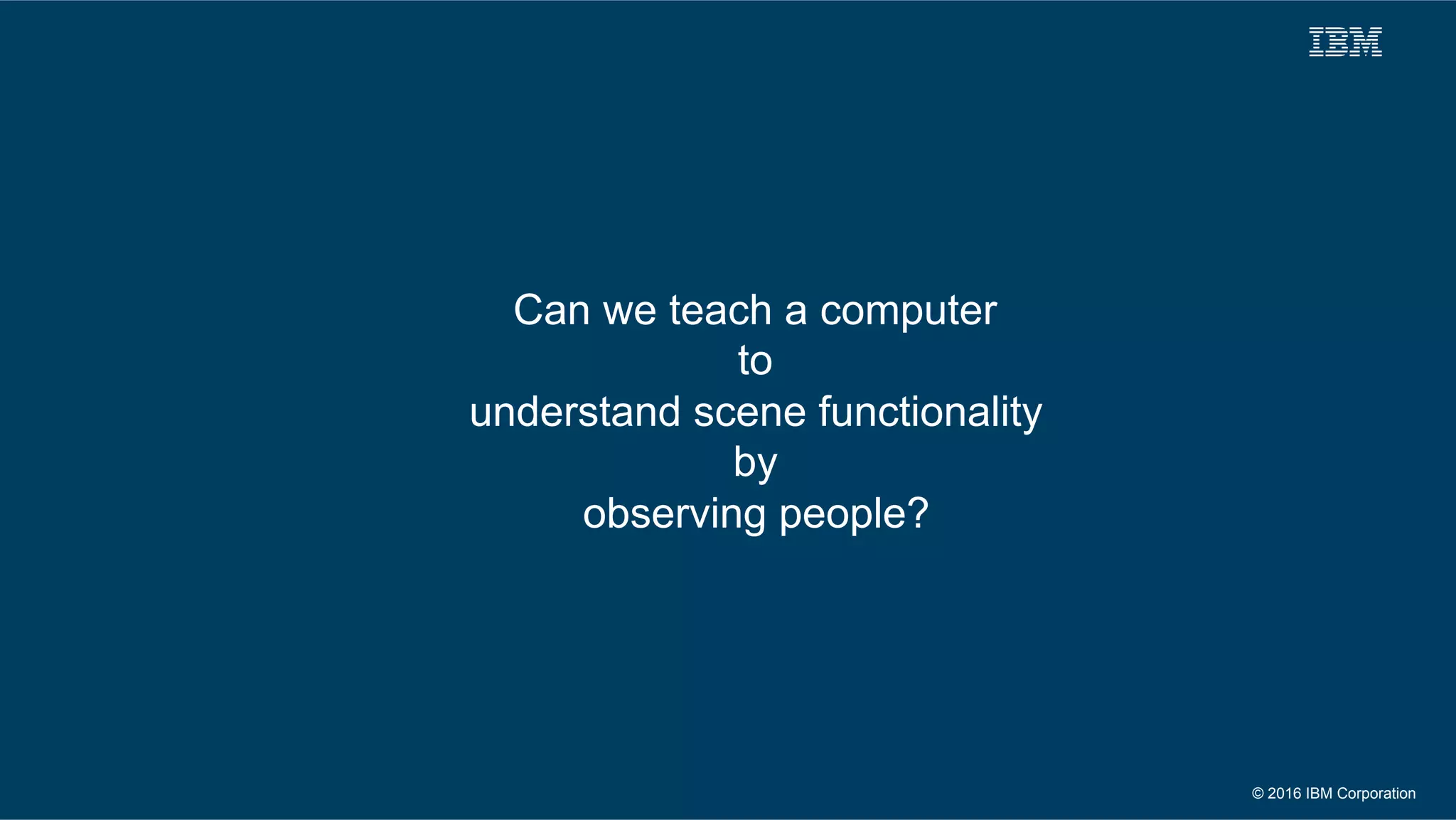
Can we teach a computer
to
understand scene functionality
by
observing people?
© 2016 IBM Corporation
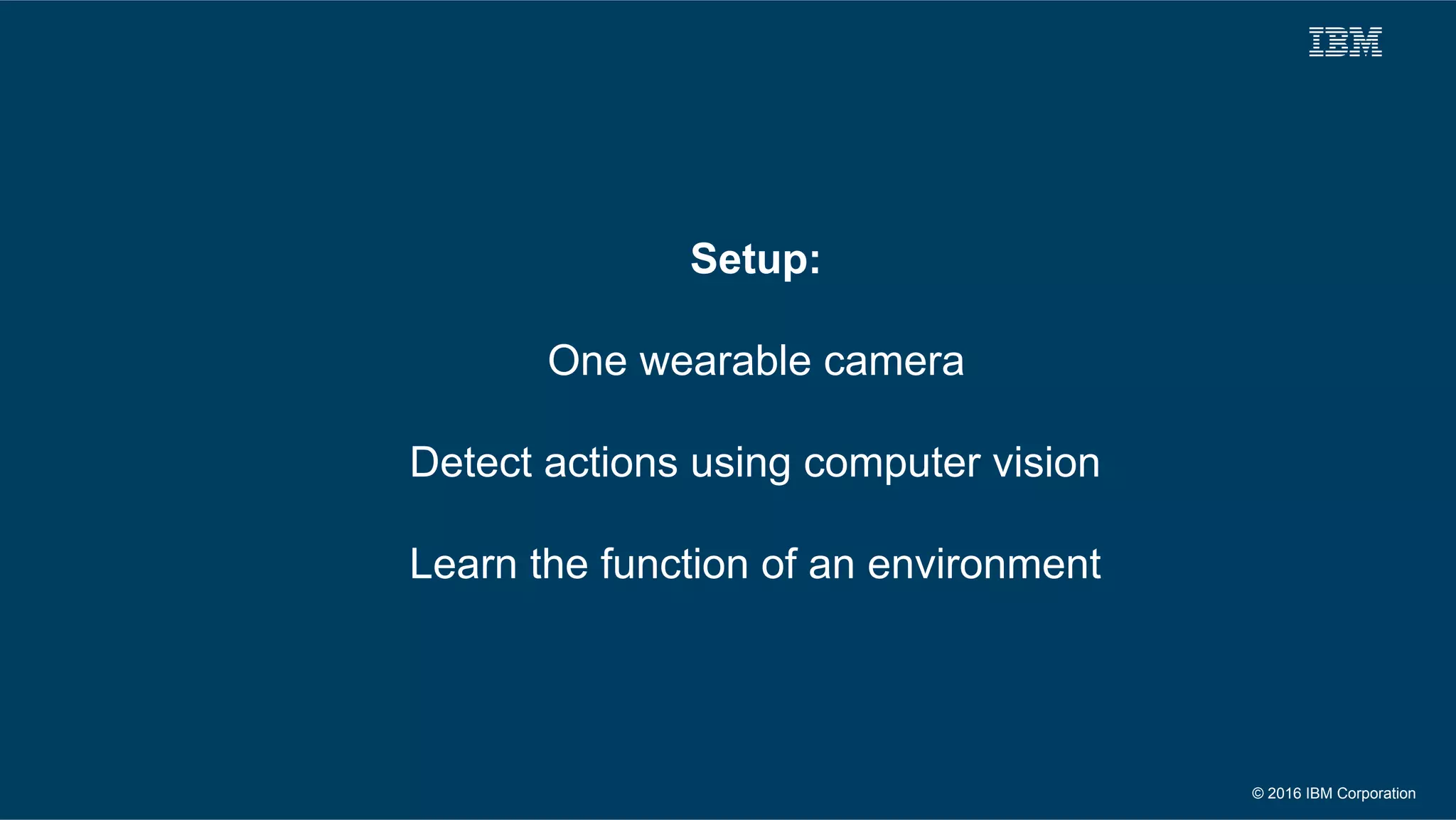
Setup:
One wearable camera
Detect actions using computer vision
Learn the function of an environment
© 2016 IBM Corporation
21
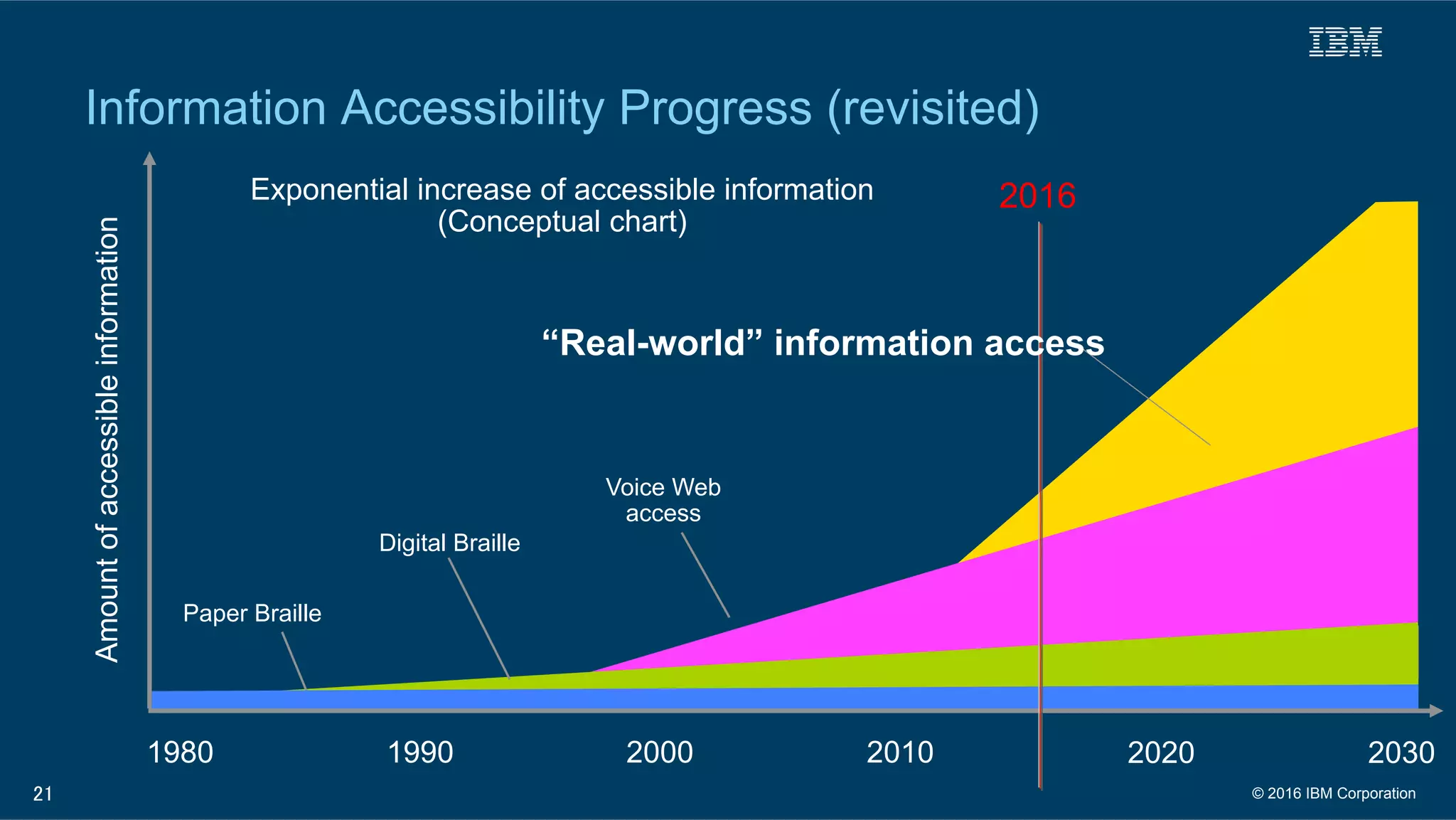
Information Accessibility Progress (revisited)
1980 1990 2000 2010
Paper Braille
Digital Braille
Voice Web
access
Amountofaccessibleinformation
Exponential increase of accessible information
(Conceptual chart)
2020 2030
2016	
© 2016 IBM Corporation
“Real-world” information access

Cognitive Assistant for the Blind

  • 1.
    Cognitive Assistant forthe Blind Chieko Asakawa, IBM Fellow, IBM Research Kris Kitani, Robotics Institute, Carnegie Mellon University 1
  • 2.
    © 2016 IBMCorporation 18th  century,  the  mathematician  Euler  authored  a   leading  textbook  on  mathematics  after  he  became   blind. Captions  for  TV  programs  were   invented  for  deaf  people,  but   are  now  widely  used  in  sports   bars  and  to  help  immigrants,   etc.   Based  on  Self-‐‑‒standing   wheelchair. 2011,  voice  dialog   technologies  for   smartphones   TelephoneKeyboard Voice  recognition Voice  dialogTV  Captions Voice   synthesis   and  OCR Modern  Mathematics Automatic  vehicles Segway “Blind  driving  challenges” Early  use  of  keyboards  was   a  to  help  people  with  hand-‐‑‒ and-‐‑‒motor  disabilities  in   writing   First  consumer  product  was  a   reading  assistant  for  the  blind   in  the  1970s. 1876,  Alexander  Graham  Bell  invented  the   phone  after  teaching  hearing  impaired   people. Smart Machines 2 17th  century,   Dom  Perignon.   Champagne Accessibility Needs Ignite Innovation
  • 3.
    1960s Talking Typewriter 1960s Talking Typewriter 19751403 Braille Printer 1984 Talking 3270 Terminal 1990 VoiceType™ 2008 Social Accessibility 1998 ViaVoice® 2000 Accessibility Center 1997 Home Page Reader 1988 ScreenReader/DOS 2004 aDesigner 2007 Eclipse Accessibility Tools Framework 2009 Rich Internet Accessibility Technologies 1914 First IBMer with disabilities 2012 Brazil Accessible Vocational Training Project 2011 Senior Workforce Project 1975 1403 Braille Printer IBM History of Accessibility 3 © 2016 IBM Corporation
  • 4.
    Progress in InformationAccessibility Exponential increase of accessible information (Conceptual chart) 1980 1990 2000 2010 Paper Braille Digital Braille Voice Web access 4 Amountofaccessibleinformation © 2016 IBM Corporation
  • 5.
    5 Walk by myself Finding discount posters Finding restaurants Shopping Many things are difficult… Challenges of Real World Accessibility © 2016 IBM Corporation
  • 6.
    Chika 6 Chika from “Esperthe Light Speed” © 2016 IBM Corporation
  • 7.
    Natural Language Processing Infer from Knowledge Predict the Future Natural Interaction Learning Senses Watson1.0, 2.0, … Apply Watson Modeling and Simulation Neural Chip SyNAPSE Image Processing Speech Recognition Technology Traffic Simulation Dialog System Question and Answering System 7 Challenges of “Cognitive Computer” © 2016 IBM Corporation
  • 8.
  • 9.
  • 10.
    Understanding the Functionalityof the Environment Nick Rhinehart and Kris Kitani, CVPR 2016
  • 11.
    © 2016 IBMCorporation When we observe a scene… … we know how we can act in that environment
  • 12.
    © 2016 IBMCorporation When we observe a scene… … we know how we can act in that environment Walk Walk
  • 13.
    © 2016 IBMCorporation When we observe a scene… … we know how we can act in that environment Sit Sit Sit
  • 14.
    © 2016 IBMCorporation When we observe a scene… … we know how we can act in that environment Open Open Open
  • 15.
    © 2016 IBMCorporation Can we teach a computer to understand scene functionality by observing people?
  • 16.
    © 2016 IBMCorporation Setup: One wearable camera Detect actions using computer vision Learn the function of an environment
  • 17.
    © 2016 IBMCorporation
  • 18.
    © 2016 IBMCorporation
  • 19.
    © 2016 IBMCorporation
  • 20.
    © 2016 IBMCorporation
  • 21.
    21 Information Accessibility Progress(revisited) 1980 1990 2000 2010 Paper Braille Digital Braille Voice Web access Amountofaccessibleinformation Exponential increase of accessible information (Conceptual chart) 2020 2030 2016 © 2016 IBM Corporation “Real-world” information access