1
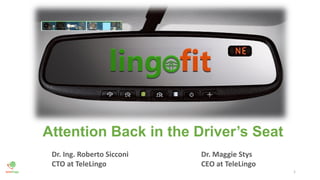
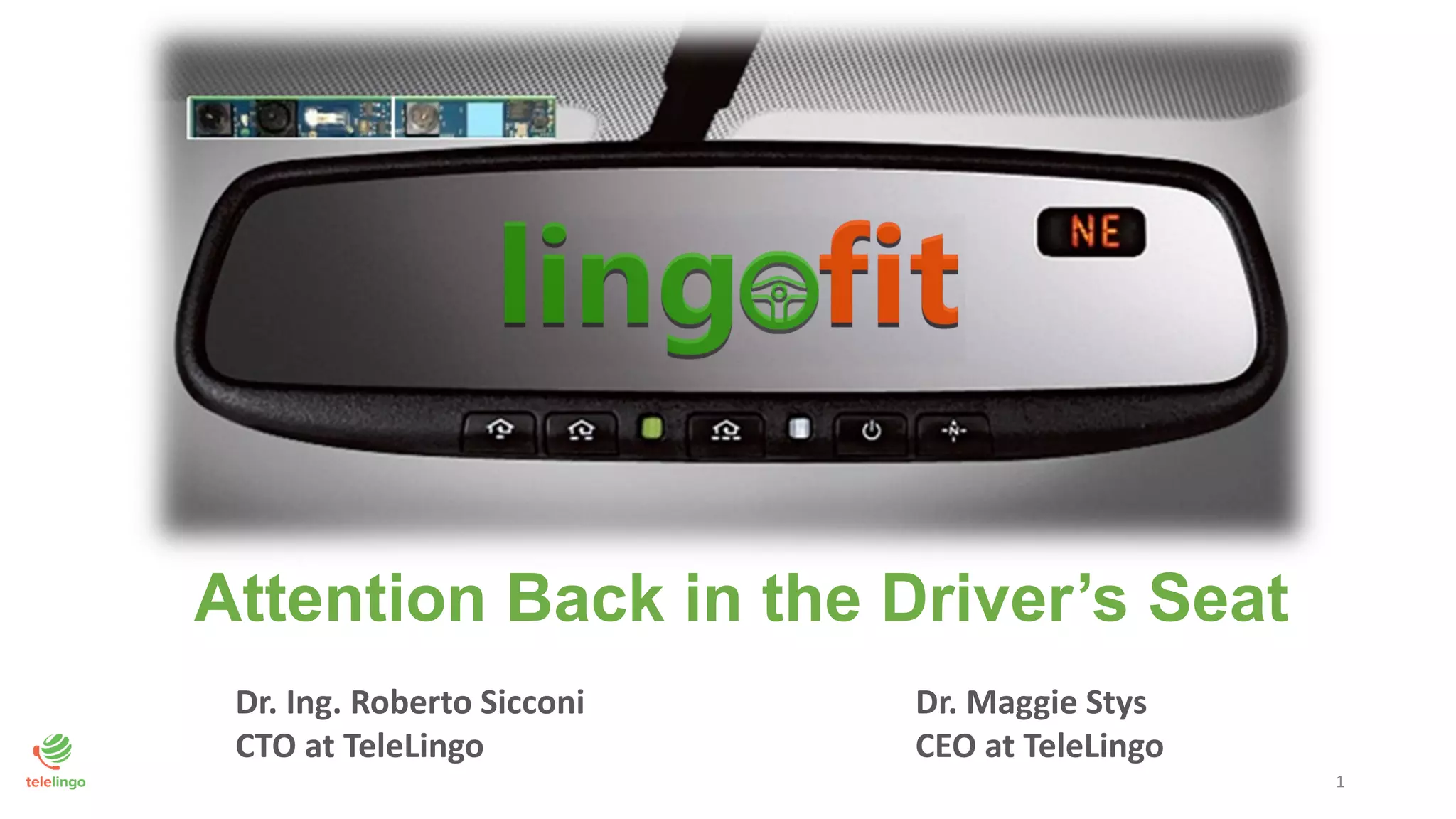
Attention Back in the Driver’s Seat
Dr. Ing. Roberto Sicconi
CTO at TeleLingo
Dr. Maggie Stys
CEO at TeleLingo
2
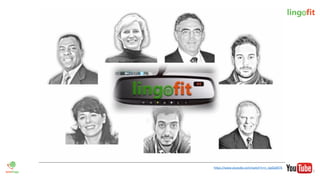
https://www.youtube.com/watch?v=n_zqdZp05Tk
3
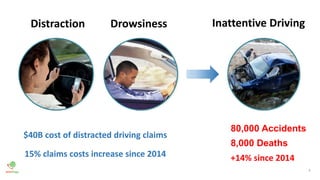
80,000 Accidents
8,000 Deaths
+14% since 2014
Distraction Inattentive DrivingDrowsiness
15% claims costs increase since 2014
$40B cost of distracted driving claims
Insufficient Driver
Attention
Risk of drowsiness on long
stretches and of losing
control of the vehicle
Drowsiness
Missed opportunity to make
daily commute stimulating
and productive
Frustration
TeleLingo Proprietary & Confidential
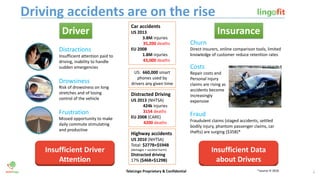
Driving accidents are on the rise
US: 660,000 smart
phones used by
drivers any given time
Distracted Driving
US 2013 (NHTSA)
424k injuries
3154 deaths
EU 2008 (CARE)
4200 deaths
Car accidents
US 2013
3.8M injuries
35,200 deaths
EU 2008
1.8M injuries
43,000 deaths
Insufficient Data
about Drivers
Distractions
Insufficient attention paid to
driving, inability to handle
sudden emergencies
Churn
Repair costs and
Personal Injury
claims are rising as
accidents become
increasingly
expensive
Costs
Fraudulent claims (staged accidents, settled
bodily injury, phantom passenger claims, car
thefts) are surging ($35B)*
Fraud
Direct insurers, online comparison tools, limited
knowledge of customer reduce retention rates
Driver Insurance
Highway accidents
US 2010 (NHTSA)
Total: $277B+$594B
(damages + societal harm)
Distracted driving
17% ($46B+$129B)
*source III 2016
4
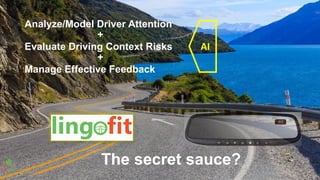
Analyze/Model Driver Attention
+
Evaluate Driving Context Risks
+
Manage Effective Feedback
AI
The secret sauce?
6
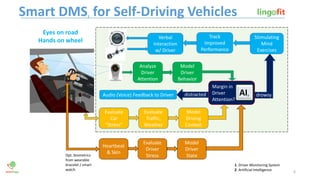
Analyze
Driver
Attention
Model
Driver
Behavior
Evaluate
Car
“Stress”
Audio (Voice) Feedback to Driver
Stimulating
Mind
Exercises
Evaluate
Traffic,
Weather
Model
Driving
Context
Verbal
Interaction
w/ Driver
distracted drowsy
Track
Improved
Performance
Margin in
Driver
Attention?
Eyes on road
Hands on wheel
Heartbeat
& Skin
Evaluate
Driver
Stress
Model
Driver
StateOpt. biometrics
from wearable
bracelet / smart
watch
Smart DMS1 for Self-Driving Vehicles
1: Driver Monitoring System
2: Artificial Intelligence
AI2
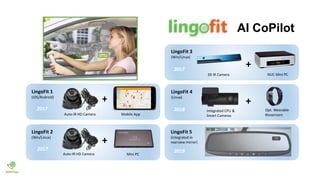
AI CoPilot
+
LingoFit 1
(iOS/Android)
Auto-IR HD Camera Mobile App
2017
+
LingoFit 2
(Win/Linux)
Auto-IR HD Camera Mini PC
2017
+
LingoFit 3
(Win/Linux)
3D IR Camera NUC Mini PC
2017
+
LingoFit 4
(Linux)
Integrated CPU &
Smart Cameras
Opt. Wearable
Biosensors
2018
LingoFit 5
(integrated in
rearview mirror)
2019
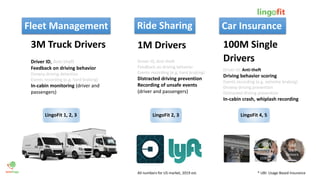
Car Insurance
38M
Attention
Monitoring
(UBI*)
9M
Teen
Drivers
100M Single
Drivers
Fleet Management
3M Truck Drivers
Ride Sharing
1M Drivers
All numbers for US market, 2019 est. * UBI: Usage Based Insurance
Driver ID, Anti-theft
Feedback on driving behavior
Drowsy driving detection
Events recording (e.g. hard braking)
In-cabin monitoring (driver and
passengers)
Driver ID, Anti-theft
Feedback on driving behavior
Events recording (e.g. hard braking)
Distracted driving prevention
Recording of unsafe events
(driver and passengers)
Driver ID, Anti-theft
Driving behavior scoring
Events recording (e.g. extreme braking)
Drowsy driving prevention
Distracted driving prevention
In-cabin crash, whiplash recording
LingoFit 2, 3LingoFit 1, 2, 3 LingoFit 4, 5
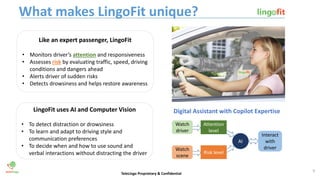
What makes LingoFit unique?
TeleLingo Proprietary & Confidential
Digital Assistant with Copilot Expertise
Like an expert passenger, LingoFit
• Monitors driver’s attention and responsiveness
• Assesses risk by evaluating traffic, speed, driving
conditions and dangers ahead
• Alerts driver of sudden risks
• Detects drowsiness and helps restore awareness
LingoFit uses AI and Computer Vision
• To detect distraction or drowsiness
• To learn and adapt to driving style and
communication preferences
• To decide when and how to use sound and
verbal interactions without distracting the driver
Watch
driver
Watch
scene
Attention
level
Risk level
AI
Interact
with
driver
9
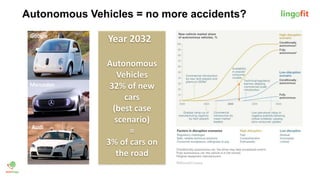
Autonomous Vehicles = no more accidents?
Year 2032
Autonomous
Vehicles
32% of new
cars
(best case
scenario)
=
3% of cars on
the road
Google
Mercedes
Audi
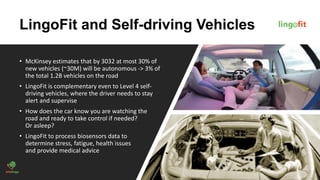
LingoFit and Self-driving Vehicles
• McKinsey estimates that by 3032 at most 30% of
new vehicles (~30M) will be autonomous -> 3% of
the total 1.2B vehicles on the road
• LingoFit is complementary even to Level 4 self-
driving vehicles, where the driver needs to stay
alert and supervise
• How does the car know you are watching the
road and ready to take control if needed?
Or asleep?
• LingoFit to process biosensors data to
determine stress, fatigue, health issues
and provide medical advice
Thank You!

Artificial Intellingence in the Car

  • 1.
    1 Attention Back inthe Driver’s Seat Dr. Ing. Roberto Sicconi CTO at TeleLingo Dr. Maggie Stys CEO at TeleLingo
  • 2.
  • 3.
    3 80,000 Accidents 8,000 Deaths +14%since 2014 Distraction Inattentive DrivingDrowsiness 15% claims costs increase since 2014 $40B cost of distracted driving claims
  • 4.
    Insufficient Driver Attention Risk ofdrowsiness on long stretches and of losing control of the vehicle Drowsiness Missed opportunity to make daily commute stimulating and productive Frustration TeleLingo Proprietary & Confidential Driving accidents are on the rise US: 660,000 smart phones used by drivers any given time Distracted Driving US 2013 (NHTSA) 424k injuries 3154 deaths EU 2008 (CARE) 4200 deaths Car accidents US 2013 3.8M injuries 35,200 deaths EU 2008 1.8M injuries 43,000 deaths Insufficient Data about Drivers Distractions Insufficient attention paid to driving, inability to handle sudden emergencies Churn Repair costs and Personal Injury claims are rising as accidents become increasingly expensive Costs Fraudulent claims (staged accidents, settled bodily injury, phantom passenger claims, car thefts) are surging ($35B)* Fraud Direct insurers, online comparison tools, limited knowledge of customer reduce retention rates Driver Insurance Highway accidents US 2010 (NHTSA) Total: $277B+$594B (damages + societal harm) Distracted driving 17% ($46B+$129B) *source III 2016 4
  • 5.
    Analyze/Model Driver Attention + EvaluateDriving Context Risks + Manage Effective Feedback AI The secret sauce?
  • 6.
    6 Analyze Driver Attention Model Driver Behavior Evaluate Car “Stress” Audio (Voice) Feedbackto Driver Stimulating Mind Exercises Evaluate Traffic, Weather Model Driving Context Verbal Interaction w/ Driver distracted drowsy Track Improved Performance Margin in Driver Attention? Eyes on road Hands on wheel Heartbeat & Skin Evaluate Driver Stress Model Driver StateOpt. biometrics from wearable bracelet / smart watch Smart DMS1 for Self-Driving Vehicles 1: Driver Monitoring System 2: Artificial Intelligence AI2
  • 7.
    AI CoPilot + LingoFit 1 (iOS/Android) Auto-IRHD Camera Mobile App 2017 + LingoFit 2 (Win/Linux) Auto-IR HD Camera Mini PC 2017 + LingoFit 3 (Win/Linux) 3D IR Camera NUC Mini PC 2017 + LingoFit 4 (Linux) Integrated CPU & Smart Cameras Opt. Wearable Biosensors 2018 LingoFit 5 (integrated in rearview mirror) 2019
  • 8.
    Car Insurance 38M Attention Monitoring (UBI*) 9M Teen Drivers 100M Single Drivers FleetManagement 3M Truck Drivers Ride Sharing 1M Drivers All numbers for US market, 2019 est. * UBI: Usage Based Insurance Driver ID, Anti-theft Feedback on driving behavior Drowsy driving detection Events recording (e.g. hard braking) In-cabin monitoring (driver and passengers) Driver ID, Anti-theft Feedback on driving behavior Events recording (e.g. hard braking) Distracted driving prevention Recording of unsafe events (driver and passengers) Driver ID, Anti-theft Driving behavior scoring Events recording (e.g. extreme braking) Drowsy driving prevention Distracted driving prevention In-cabin crash, whiplash recording LingoFit 2, 3LingoFit 1, 2, 3 LingoFit 4, 5
  • 9.
    What makes LingoFitunique? TeleLingo Proprietary & Confidential Digital Assistant with Copilot Expertise Like an expert passenger, LingoFit • Monitors driver’s attention and responsiveness • Assesses risk by evaluating traffic, speed, driving conditions and dangers ahead • Alerts driver of sudden risks • Detects drowsiness and helps restore awareness LingoFit uses AI and Computer Vision • To detect distraction or drowsiness • To learn and adapt to driving style and communication preferences • To decide when and how to use sound and verbal interactions without distracting the driver Watch driver Watch scene Attention level Risk level AI Interact with driver 9
  • 10.
    Autonomous Vehicles =no more accidents? Year 2032 Autonomous Vehicles 32% of new cars (best case scenario) = 3% of cars on the road Google Mercedes Audi
  • 11.
    LingoFit and Self-drivingVehicles • McKinsey estimates that by 3032 at most 30% of new vehicles (~30M) will be autonomous -> 3% of the total 1.2B vehicles on the road • LingoFit is complementary even to Level 4 self- driving vehicles, where the driver needs to stay alert and supervise • How does the car know you are watching the road and ready to take control if needed? Or asleep? • LingoFit to process biosensors data to determine stress, fatigue, health issues and provide medical advice
  • 12.