VOICE BASED EMAIL FOR BLINDS
INTRODUCTION
 Dictation

using speech recognition could
potentially serve as an efficient input method
for mailing devices for blind.

 However,

dictation systems follows a speech
interaction model
 We

introduce Voice Typing, a new speech
interaction model where blinds, utterances are
transcribed as they produce them to enable
real-time error identification

 Voice

Typing aspires to create an experience to
having a secure type for you, while you monitor.
DESIGN AND IMPLEMENTATION
 This

project is designed using some set of
APIs.

 SNMTP(Simple

Network Mail Transmission
Protocol) has been used for mailing
servicing.

 Voice

Typing and Dictation Speech
Interaction Models are designed using the
Windows 7 LVCSR dictation engine.
 In

order to control speech accuracy, we
turned off the (default) MLLR acoustic
adaptation.

 Error

Correction Methods are
implemented using the Windows 7 API’s
and Windows Presentation Foundation
(WPF).
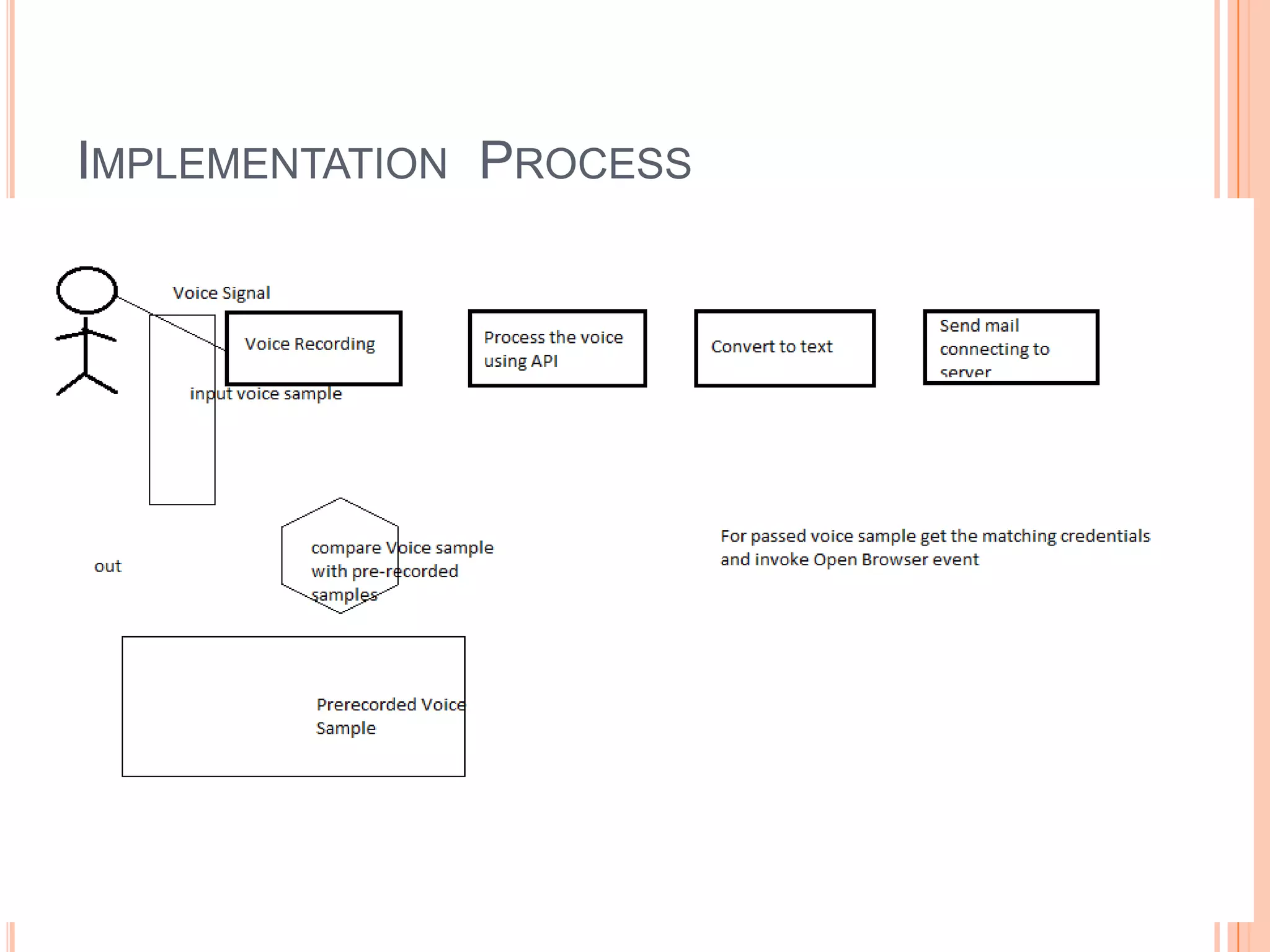
IMPLEMENTATION PROCESS
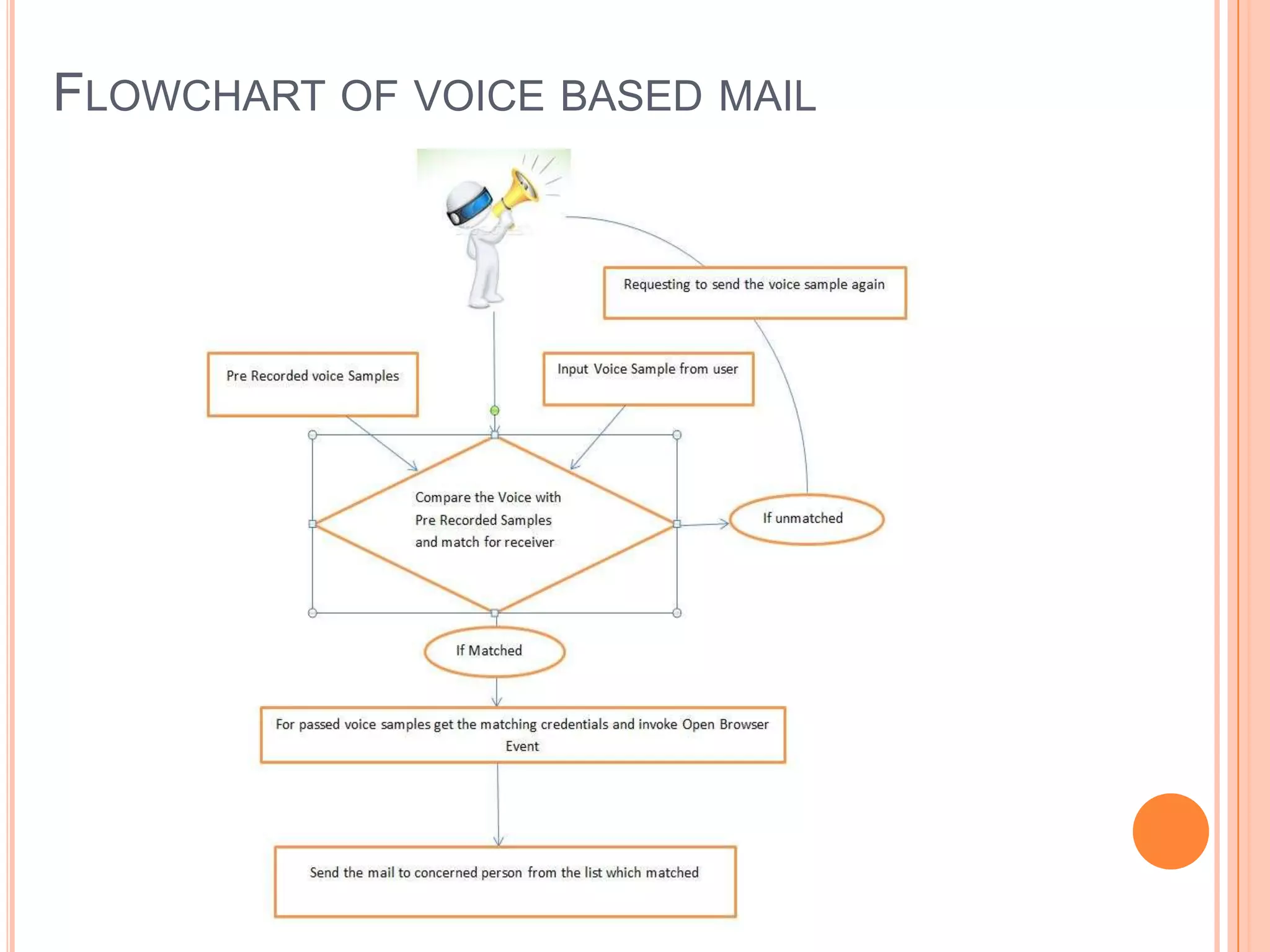
FLOWCHART OF VOICE BASED MAIL
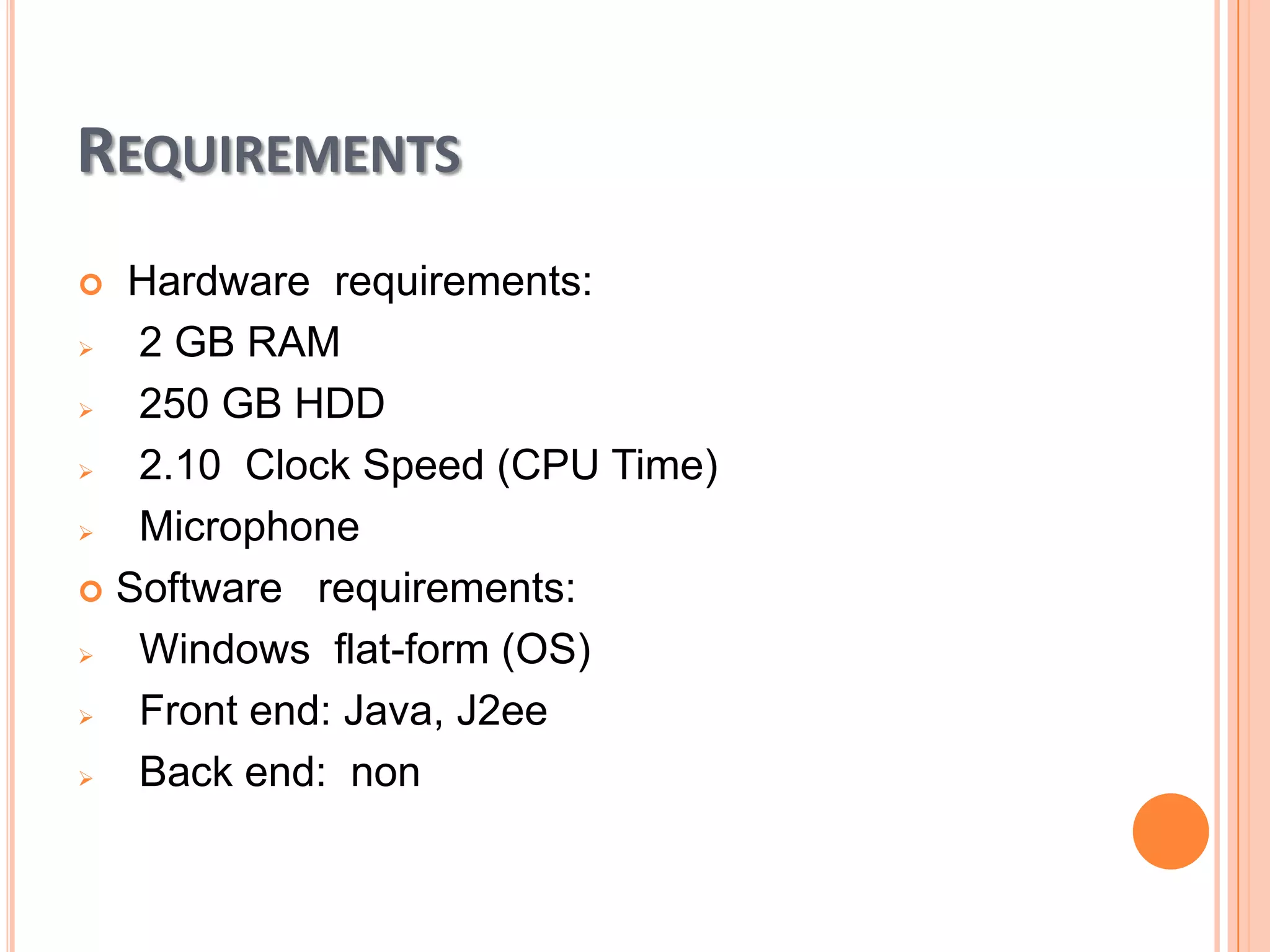
REQUIREMENTS
Hardware requirements:

2 GB RAM

250 GB HDD

2.10 Clock Speed (CPU Time)

Microphone
 Software requirements:

Windows flat-form (OS)

Front end: Java, J2ee

Back end: non

EXISTING SYSTEMS AND PROBLEMS
 Outdoor communication is becoming a harder task for

blind and visually impaired people in the
complex urban world.
 Advances in technology are causing the blind to fall

behind, sometimes even putting their lives at risk


314 million visually impaired people in the world today



45 million blind are there.
CHALLENGES WE FACE


Real-time guidance



Portability



Power limitations



Privacy preservation



Continuous availability



No dependence on infrastructure



Low-cost solution



Minimal training
Voice based email for blinds

Voice based email for blinds

  • 1.
  • 2.
    INTRODUCTION  Dictation using speechrecognition could potentially serve as an efficient input method for mailing devices for blind.  However, dictation systems follows a speech interaction model
  • 3.
     We introduce VoiceTyping, a new speech interaction model where blinds, utterances are transcribed as they produce them to enable real-time error identification  Voice Typing aspires to create an experience to having a secure type for you, while you monitor.
  • 4.
    DESIGN AND IMPLEMENTATION This project is designed using some set of APIs.  SNMTP(Simple Network Mail Transmission Protocol) has been used for mailing servicing.  Voice Typing and Dictation Speech Interaction Models are designed using the Windows 7 LVCSR dictation engine.
  • 5.
     In order tocontrol speech accuracy, we turned off the (default) MLLR acoustic adaptation.  Error Correction Methods are implemented using the Windows 7 API’s and Windows Presentation Foundation (WPF).
  • 6.
  • 7.
  • 9.
    REQUIREMENTS Hardware requirements:  2 GBRAM  250 GB HDD  2.10 Clock Speed (CPU Time)  Microphone  Software requirements:  Windows flat-form (OS)  Front end: Java, J2ee  Back end: non 
  • 10.
    EXISTING SYSTEMS ANDPROBLEMS  Outdoor communication is becoming a harder task for blind and visually impaired people in the complex urban world.  Advances in technology are causing the blind to fall behind, sometimes even putting their lives at risk  314 million visually impaired people in the world today  45 million blind are there.
  • 11.
    CHALLENGES WE FACE  Real-timeguidance  Portability  Power limitations  Privacy preservation  Continuous availability  No dependence on infrastructure  Low-cost solution  Minimal training