Coaching &
Leadership
How does a successful team environment work?
Maria Ruokonen & Lauri Holja,
Less Miserables
Contents
How is leadership changing?
Leading is not just vertical action
What is coaching in leadership`
How to use it in practice?
Leadership is changing?
Main Responisibilities of the Team Leader:
• Leading by example
• Guiding, inspiring and motivating the team
• Listen and try to understand the people you lead. Interact with them
as individuals
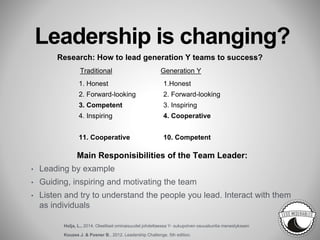
Research: How to lead generation Y teams to success?
1. Honest 1.Honest
2. Forward-looking 2. Forward-looking
3. Competent 3. Inspiring
4. Inspiring 4. Cooperative
11. Cooperative 10. Competent
Traditional Generation Y
Holja, L., 2014. Oleelliset ominaisuudet johdettaessa Y- sukupolven osuuskuntia menestykseen
Kouzes J. & Posner B., 2012. Leadership Challenge. 5th edition.
Who to lead?
Self (55%)
Starting point of change
Understand your own characteristics(swot)
Peers (20%)
Help people to shine around you, think how you can help
Solve challenges together
Together more than the sum of parts
Supervisors(20%)
Help your supervisor in making decision through transparency
Creating goals and objectives together
“Subordinates” (5%)
Create new leaders
Don’t assume you know best, get ideas from people around you
Share the power, lead by example, listen and coach
Hock, Dee "The Art of Chaordic Leadership" Leader to Leader
What is coaching in leadership?
“ Honesty is the most important part of the supervisor-
employee interaction. ”
-Kouzes J. & Posner B., 2012. Leadership Challenge.
1. Building the Trust
Connect words with action
Decision on following the leader
Trust requires active building form both parties
2. Purpose of the Actions
Transparency
“Why are we doing this?”
Willingness to know what we are doing
“How is this a part of the bigger picture?”
3. Feedback
Constructive feedback
Receiving feedback needs parctising
Complaining or suggesting better option
Safe and supportive environment
Leaders are people like everyone else
4. What Motivates?
Reward / Fear / Responisibility
OR
Experiencing the importance of the work
Daniel Pink: “Carrots & sticks are so last century. Drive
says for 21st century work, we need to upgrade to
autonomy, mastery & purpose.”
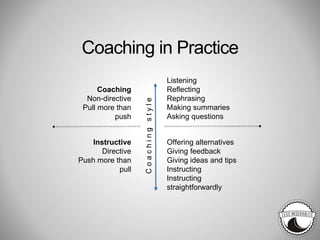
Coaching in Practice
Listening
Reflecting
Rephrasing
Making summaries
Asking questions
Offering alternatives
Giving feedback
Giving ideas and tips
Instructing
Instructing
straightforwardly
Coaching
Non-directive
Pull more than
push
Instructive
Directive
Push more than
pull
Coachingstyle
What is Dialogue?
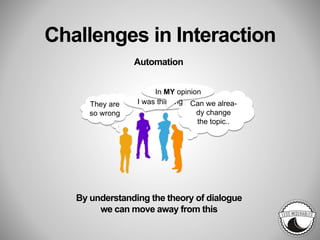
Challenges in Interaction
Automation
By understanding the theory of dialogue
we can move away from this
They are
so wrong
I was thinking Can we alrea-
dy change
the topic..
In MY opinion
Dialogue
1. Listening
2. Respecting
3. Voicing
4. Waiting
Isaacs, W (1999) - Dialogue and the art of thinking together
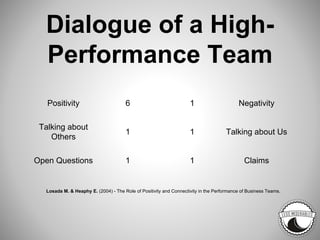
Dialogue of a High-
Performance Team
Positivity 6 1 Negativity
Talking about
Others
1 1 Talking about Us
Open Questions 1 1 Claims
Losada M. & Heaphy E. (2004) - The Role of Positivity and Connectivity in the Performance of Business Teams.
Dialogue
The Coach enables the dialogue
Understanding the basics of dialogue
Thinking together
Individuals responisibility of the dialogue
Thanks!
Lauri Holja
lauri@lessmiserables.com
0440 622 130
www.lessmiserables.com
Lets Discuss!
What was new / most interesting?
What would you like to change in your place of work?

Coaching Leadership

  • 1.
    Coaching & Leadership How doesa successful team environment work? Maria Ruokonen & Lauri Holja, Less Miserables
  • 2.
    Contents How is leadershipchanging? Leading is not just vertical action What is coaching in leadership` How to use it in practice?
  • 3.
    Leadership is changing? MainResponisibilities of the Team Leader: • Leading by example • Guiding, inspiring and motivating the team • Listen and try to understand the people you lead. Interact with them as individuals Research: How to lead generation Y teams to success? 1. Honest 1.Honest 2. Forward-looking 2. Forward-looking 3. Competent 3. Inspiring 4. Inspiring 4. Cooperative 11. Cooperative 10. Competent Traditional Generation Y Holja, L., 2014. Oleelliset ominaisuudet johdettaessa Y- sukupolven osuuskuntia menestykseen Kouzes J. & Posner B., 2012. Leadership Challenge. 5th edition.
  • 4.
    Who to lead? Self(55%) Starting point of change Understand your own characteristics(swot) Peers (20%) Help people to shine around you, think how you can help Solve challenges together Together more than the sum of parts Supervisors(20%) Help your supervisor in making decision through transparency Creating goals and objectives together “Subordinates” (5%) Create new leaders Don’t assume you know best, get ideas from people around you Share the power, lead by example, listen and coach Hock, Dee "The Art of Chaordic Leadership" Leader to Leader
  • 5.
    What is coachingin leadership? “ Honesty is the most important part of the supervisor- employee interaction. ” -Kouzes J. & Posner B., 2012. Leadership Challenge.
  • 6.
    1. Building theTrust Connect words with action Decision on following the leader Trust requires active building form both parties
  • 7.
    2. Purpose ofthe Actions Transparency “Why are we doing this?” Willingness to know what we are doing “How is this a part of the bigger picture?”
  • 8.
    3. Feedback Constructive feedback Receivingfeedback needs parctising Complaining or suggesting better option Safe and supportive environment Leaders are people like everyone else
  • 9.
    4. What Motivates? Reward/ Fear / Responisibility OR Experiencing the importance of the work Daniel Pink: “Carrots & sticks are so last century. Drive says for 21st century work, we need to upgrade to autonomy, mastery & purpose.”
  • 10.
    Coaching in Practice Listening Reflecting Rephrasing Makingsummaries Asking questions Offering alternatives Giving feedback Giving ideas and tips Instructing Instructing straightforwardly Coaching Non-directive Pull more than push Instructive Directive Push more than pull Coachingstyle
  • 11.
  • 12.
    Challenges in Interaction Automation Byunderstanding the theory of dialogue we can move away from this They are so wrong I was thinking Can we alrea- dy change the topic.. In MY opinion
  • 13.
    Dialogue 1. Listening 2. Respecting 3.Voicing 4. Waiting Isaacs, W (1999) - Dialogue and the art of thinking together
  • 14.
    Dialogue of aHigh- Performance Team Positivity 6 1 Negativity Talking about Others 1 1 Talking about Us Open Questions 1 1 Claims Losada M. & Heaphy E. (2004) - The Role of Positivity and Connectivity in the Performance of Business Teams.
  • 15.
    Dialogue The Coach enablesthe dialogue Understanding the basics of dialogue Thinking together Individuals responisibility of the dialogue
  • 16.
  • 17.
    Lets Discuss! What wasnew / most interesting? What would you like to change in your place of work?

Editor's Notes

  • #2 Tiimioppimisen ja -yrittäjyyden tausta Tutkimus nuorten y-sukupolven johtamisesta
  • #5 Itseä: Omaa tarkoitusta, etiikkaa, motivaatiota ym, oma käyttäytyminen Johtajia: Kerro mitä teet, jotta heidän ei tarvitse miettiä sitä vaan voivat suunnata katseensa tulevaisuuteen. “Alaisia” : Johtaja-asema on ansaittava, fasilitoi, delegoi, kehitä ihmisten potentiaalia, aseta tavoitteita Ja jos valtaa on käytettävä paljon, ei sitä välttämättä olekaan paljoa (ei seuraajia) Kapellimestariesimerkki (vaihda dia samalla)
  • #6 Yksi toimivaksi malliksi todettu mm. nuorten keskuudessa, Johtaja valmentaa tiimin toimimaan 110% teholla ja pyrkimään jatkuvaan oppimiseen.
  • #8 Oman toiminnan merkitys kokonaisuuden kannalta!
  • #9 Oikeaan aikaa, oikealla tavalla, oikeista asioista, mahdollisimman konkreettisesti Turvallinen ympäristö, jossa uskaltaa tuoda aloitteita Molemminpuolista vuorovaikutusta Hyvät kysymykset, jolla saadaan oikeat asiat esille. Tavoitteena saada kokonaiskuva todellisuudesta. Haasteiden ytimen etsiminen.
  • #10 Lyhyt vai pitkä motivaatio? Mastery: Koulutus jatkuvaa, tunnistetaan työntekijöiden vahvuudet ja tarjotaan mahdollisuus kehittää niitä osa-alueita, jossa koetaan mahdollisuus kehittyä eteenpäin Purpose: Miksi olen alalla? Arvomaailma, kutsumusammatti, halu auttaa vanhuksia löytämään oikeita palveluita, saamaan hyvää ja asiantuntevaa palvelua
  • #11 Reflektointi, aiempaan palaamista käytäntöön sidottuna, peilaten esim. asiakkaan näkökulmaan Palaute yleisellä tasolla, tiimin kokonaiskuvan käsittelyä, Motorola: mikä meni hyvin, mikä ei mennyt hyvin, mitä opin ja mitä vien käytäntöön ensi kerralla? Kengännauhaesimerkki
  • #14 Dialogi tulee kreikan kielestä ja sen kantasanat ovat dia, joka tarkoittaa läpi, ja logos, joka tarkoittaa merkitystä. Merkitys virtaa siis puheen läpi tai kautta. Yhdessä ajattelua. Kun käydään läpi asiakaskokemuksia tai yritetään luoda tietoa tiimin sisällä.