


“ EFFECTIVE COMMUNICATION FOR LEADERSHIP ‘’
ENHANCING LEADERSHIP THROUGH COMMUNICATION
Presentation By : Rahul Gautam –
L&D
INTRODUCTION & OBJECTIVES
Introduction :
• Effective communication sets great leaders apart from good ones.
• Influences decision-making, team dynamics, and overall success.
• Leaders must create connections and foster an environment of openness and trust.
Objectives :
• Key Communication styles in Leadership
• Active Listening & Empathy
• Managing Conflict & Feedback
IMPORTANCE OF COMMUNICATION IN LEADERSHIP
"Leadership is not about being in charge. It's about taking care of those in your charge." — Simon Sinek
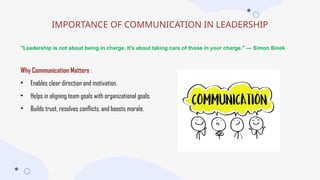
Why Communication Matters :
• Enables clear direction and motivation.
• Helps in aligning team goals with organizational goals.
• Builds trust, resolves conflicts, and boosts morale.
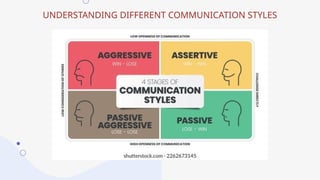
UNDERSTANDING DIFFERENT COMMUNICATION STYLES
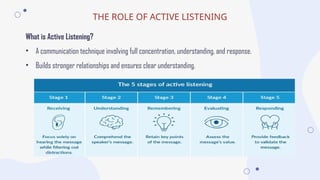
THE ROLE OF ACTIVE LISTENING
What is Active Listening?
• A communication technique involving full concentration, understanding, and response.
• Builds stronger relationships and ensures clear understanding.
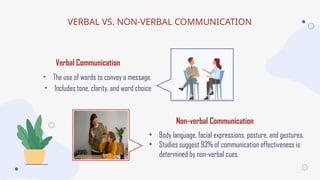
• The use of words to convey a message.
• Includes tone, clarity, and word choice
Verbal Communication
VERBAL VS. NON-VERBAL COMMUNICATION
Non-verbal Communication
• Body language, facial expressions, posture, and gestures.
• Studies suggest 93% of communication effectiveness is
determined by non-verbal cues.
Let’s Play Team
Game –
Communication
the ART of
Exchange !
"The art of communication is the language of leadership."
— James Humes
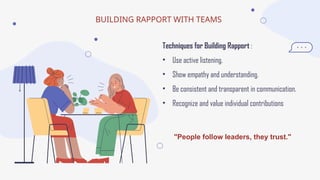
BUILDING RAPPORT WITH TEAMS
Techniques for Building Rapport :
• Use active listening.
• Show empathy and understanding.
• Be consistent and transparent in communication.
• Recognize and value individual contributions
"People follow leaders, they trust."
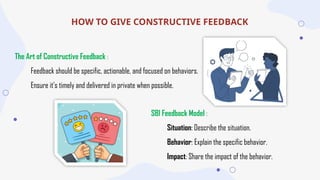
The Art of Constructive Feedback :
Feedback should be specific, actionable, and focused on behaviors.
Ensure it's timely and delivered in private when possible.
HOW TO GIVE CONSTRUCTIVE FEEDBACK
SBI Feedback Model :
Situation: Describe the situation.
Behavior: Explain the specific behavior.
Impact: Share the impact of the behavior.
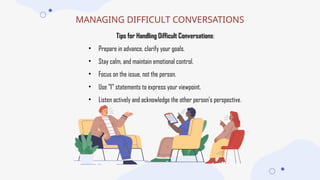
MANAGING DIFFICULT CONVERSATIONS
Tips for Handling Difficult Conversations:
• Prepare in advance, clarify your goals.
• Stay calm, and maintain emotional control.
• Focus on the issue, not the person.
• Use "I" statements to express your viewpoint.
• Listen actively and acknowledge the other person's perspective.
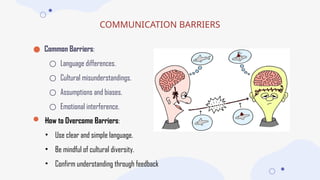
COMMUNICATION BARRIERS
● Common Barriers:
○ Language differences.
○ Cultural misunderstandings.
○ Assumptions and biases.
○ Emotional interference.
● .How to Overcome Barriers:
• Use clear and simple language.
• Be mindful of cultural diversity.
• Confirm understanding through feedback
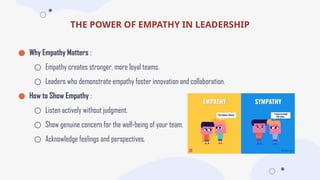
THE POWER OF EMPATHY IN LEADERSHIP
● Why Empathy Matters :
○ Empathy creates stronger, more loyal teams.
○ Leaders who demonstrate empathy foster innovation and collaboration.
● How to Show Empathy :
○ Listen actively without judgment.
○ Show genuine concern for the well-being of your team.
○ Acknowledge feelings and perspectives.
CONFLICT RESOLUTION TECHNIQUES
● Methods of Conflict Resolution:
○ Collaboration : Working together to find a win-win solution.
○ Compromise : Finding a middle ground.
○ Avoidance : Delaying or sidestepping the issue.
○ Accommodation : Prioritizing the other party's concerns.
○ Competition : Asserting one’s viewpoint at the expense of others.
CREDITS: This presentation template was created by
Slidesgo, and includes icons by Flaticon, and infographics &
images by Freepik
Thanks!
Do you have any questions?

Effective Communication for leadership.pptx

  • 1.
    “ EFFECTIVE COMMUNICATIONFOR LEADERSHIP ‘’ ENHANCING LEADERSHIP THROUGH COMMUNICATION Presentation By : Rahul Gautam – L&D
  • 2.
    INTRODUCTION & OBJECTIVES Introduction: • Effective communication sets great leaders apart from good ones. • Influences decision-making, team dynamics, and overall success. • Leaders must create connections and foster an environment of openness and trust. Objectives : • Key Communication styles in Leadership • Active Listening & Empathy • Managing Conflict & Feedback
  • 3.
    IMPORTANCE OF COMMUNICATIONIN LEADERSHIP "Leadership is not about being in charge. It's about taking care of those in your charge." — Simon Sinek Why Communication Matters : • Enables clear direction and motivation. • Helps in aligning team goals with organizational goals. • Builds trust, resolves conflicts, and boosts morale.
  • 4.
  • 5.
    THE ROLE OFACTIVE LISTENING What is Active Listening? • A communication technique involving full concentration, understanding, and response. • Builds stronger relationships and ensures clear understanding.
  • 6.
    • The useof words to convey a message. • Includes tone, clarity, and word choice Verbal Communication VERBAL VS. NON-VERBAL COMMUNICATION Non-verbal Communication • Body language, facial expressions, posture, and gestures. • Studies suggest 93% of communication effectiveness is determined by non-verbal cues.
  • 7.
    Let’s Play Team Game– Communication the ART of Exchange !
  • 8.
    "The art ofcommunication is the language of leadership." — James Humes
  • 9.
    BUILDING RAPPORT WITHTEAMS Techniques for Building Rapport : • Use active listening. • Show empathy and understanding. • Be consistent and transparent in communication. • Recognize and value individual contributions "People follow leaders, they trust."
  • 10.
    The Art ofConstructive Feedback : Feedback should be specific, actionable, and focused on behaviors. Ensure it's timely and delivered in private when possible. HOW TO GIVE CONSTRUCTIVE FEEDBACK SBI Feedback Model : Situation: Describe the situation. Behavior: Explain the specific behavior. Impact: Share the impact of the behavior.
  • 11.
    MANAGING DIFFICULT CONVERSATIONS Tipsfor Handling Difficult Conversations: • Prepare in advance, clarify your goals. • Stay calm, and maintain emotional control. • Focus on the issue, not the person. • Use "I" statements to express your viewpoint. • Listen actively and acknowledge the other person's perspective.
  • 12.
    COMMUNICATION BARRIERS ● CommonBarriers: ○ Language differences. ○ Cultural misunderstandings. ○ Assumptions and biases. ○ Emotional interference. ● .How to Overcome Barriers: • Use clear and simple language. • Be mindful of cultural diversity. • Confirm understanding through feedback
  • 13.
    THE POWER OFEMPATHY IN LEADERSHIP ● Why Empathy Matters : ○ Empathy creates stronger, more loyal teams. ○ Leaders who demonstrate empathy foster innovation and collaboration. ● How to Show Empathy : ○ Listen actively without judgment. ○ Show genuine concern for the well-being of your team. ○ Acknowledge feelings and perspectives.
  • 14.
    CONFLICT RESOLUTION TECHNIQUES ●Methods of Conflict Resolution: ○ Collaboration : Working together to find a win-win solution. ○ Compromise : Finding a middle ground. ○ Avoidance : Delaying or sidestepping the issue. ○ Accommodation : Prioritizing the other party's concerns. ○ Competition : Asserting one’s viewpoint at the expense of others.
  • 15.
    CREDITS: This presentationtemplate was created by Slidesgo, and includes icons by Flaticon, and infographics & images by Freepik Thanks! Do you have any questions?

Editor's Notes

  • #2  1. Key Communication Styles in Leadership: Explore assertive, passive, and persuasive communication. Understand how to adapt communication based on context and audience. 2. Active Listening & Empathy: Learn how listening attentively builds trust. Discover how empathy fosters collaboration and team success. 3. Managing Conflict & Feedback: Strategies for resolving conflicts and maintaining team harmony. Deliver constructive feedback that promotes growth and positive change. 4. Measuring Communication Effectiveness: Tools to assess how well leaders communicate. Use feedback loops, self-assessments, and performance me
  • #3 Why Communication Matters: Enables clear direction and motivation: Effective communication ensures that team members understand their roles and responsibilities, helping them stay motivated and aligned with the team’s objectives. Aligns team goals with organizational goals: Leaders can effectively connect the team's efforts with broader organizational targets, ensuring everyone works towards the same vision. Builds trust, resolves conflicts, and boosts morale: Open communication fosters trust within the team, encourages conflict resolution through understanding, and ultimately leads to higher morale and engagement.
  • #4 1. Assertive: Clear, direct, and respectful. Example: A leader clearly sets expectations while listening to team input, promoting openness. 2. Passive: Avoids confrontation, unclear communication. Example: A leader avoids discussing a team member's underperformance, leading to unresolved issues. 3. Aggressive: Dominating and hostile. Example: A leader demands results without listening to concerns, causing fear and resentment. 4. Passive-Aggressive: Indirect, sarcastic, avoids direct conflict. Example: A leader agrees in meetings but makes sarcastic comments afterward, undermining the plan.
  • #5 What is Active Listening? Active listening is a powerful communication technique where the listener fully focuses on the speaker, seeks to understand their message, and responds thoughtfully. Unlike passive hearing, active listening involves giving the speaker undivided attention, both mentally and physically. This skill is essential in leadership because it helps build trust, enhances relationships, and ensures a clear understanding of ideas, concerns, and feedback. Leaders who practice active listening foster better communication and collaboration within their teams.
  • #8 This quote encapsulates the essence of effective leadership through communication. James Humes emphasizes that communication is not merely a skill but an art form that is fundamental to successful leadership. Leaders who master the art of communication can inspire, motivate, and engage their teams effectively.
  • #9 Building rapport with teams fosters trust and collaboration. Leaders can achieve this through active listening, showing empathy, maintaining consistent and transparent communication, and recognizing individual contributions. These practices create a positive, motivated, and cohesive team environment.Techniques for Building Rapport: Use Active Listening: Listen attentively to team members, showing genuine interest in their ideas and concerns. Show Empathy and Understanding: Put yourself in their shoes to understand their perspectives, creating a stronger emotional connection. Be Consistent and Transparent in Communication: Regularly communicate openly and honestly, ensuring there are no surprises and that trust is built over time. Recognize and Value Individual Contributions: Acknowledge each team member’s efforts and achievements, making them feel appreciated and motivated.
  • #11 Managing difficult conversations is a critical skill for effective leadership. To navigate these challenging discussions successfully, preparation is key; clarify your goals and desired outcomes beforehand.