Cloud Computing
A Working Definition of Cloud Computing
 Cloud computing is a model for enabling convenient, on-demand network access
to a shared pool of configurable computing resources (e.g., networks, servers,
storage, applications, and services) that can be rapidly provisioned and released
with minimal management effort or service provider interaction.
 This cloud model promotes availability and is composed of five essential
characteristics, three service models, and four deployment models.
.
Objectives of Cloud Computing
 Elasticity: Ability to scale virtual machines resources up or down
 On-demand usage: Ability to add or delete computing power (CPU, memory),
and storage according to demand
 Pay-per-use: Pay only for what you use
 Multitenancy: Ability to have multiplecustomers access their servers in the data
center in an isolated manner
.
5 Essential Cloud Characteristics
 On-demand self-service
 Broad network access
 Resource pooling
 Location independence
 Rapid elasticity
 Measured service
.
3 Cloud Service Models
 Cloud Software as a Service (SaaS)
 The capability provided to the consumer is to use the provider’s applications running on a cloud infrastructure and accessible from various
client devices through a thin client interface such as a Web browser (e.g., web-based email). The consumer does not manage or control the
underlying cloud infrastructure, network, servers, operating systems, storage, or even individual application capabilities, with the possible exception
of limited user-specific application configuration settings.
 Cloud Platform as a Service (PaaS)
 The capability provided to the consumer is to deploy onto the cloud infrastructure consumer-created applications using programming
languages and tools supported by the provider (e.g., Java, Python, .Net). The consumer does not manage or control the underlying cloud
infrastructure, network, servers, operating systems, or storage, but the consumer has control over the deployed applications and possibly application
hosting environment configurations.
 Cloud Infrastructure as a Service (IaaS)
 The capability provided to the consumer is to rent processing, storage, networks, and other fundamental computing resources where the
consumer is able to deploy and run arbitrary software, which can include operating systems and applications. The consumer does not manage or
control the underlying cloud infrastructure but has control over operating systems, storage, deployed applications, and possibly select networking
components (e.g., firewalls, load balancers).
 To be considered “cloud” they must be deployed on top of cloud infrastructure that has the key characteristics
.
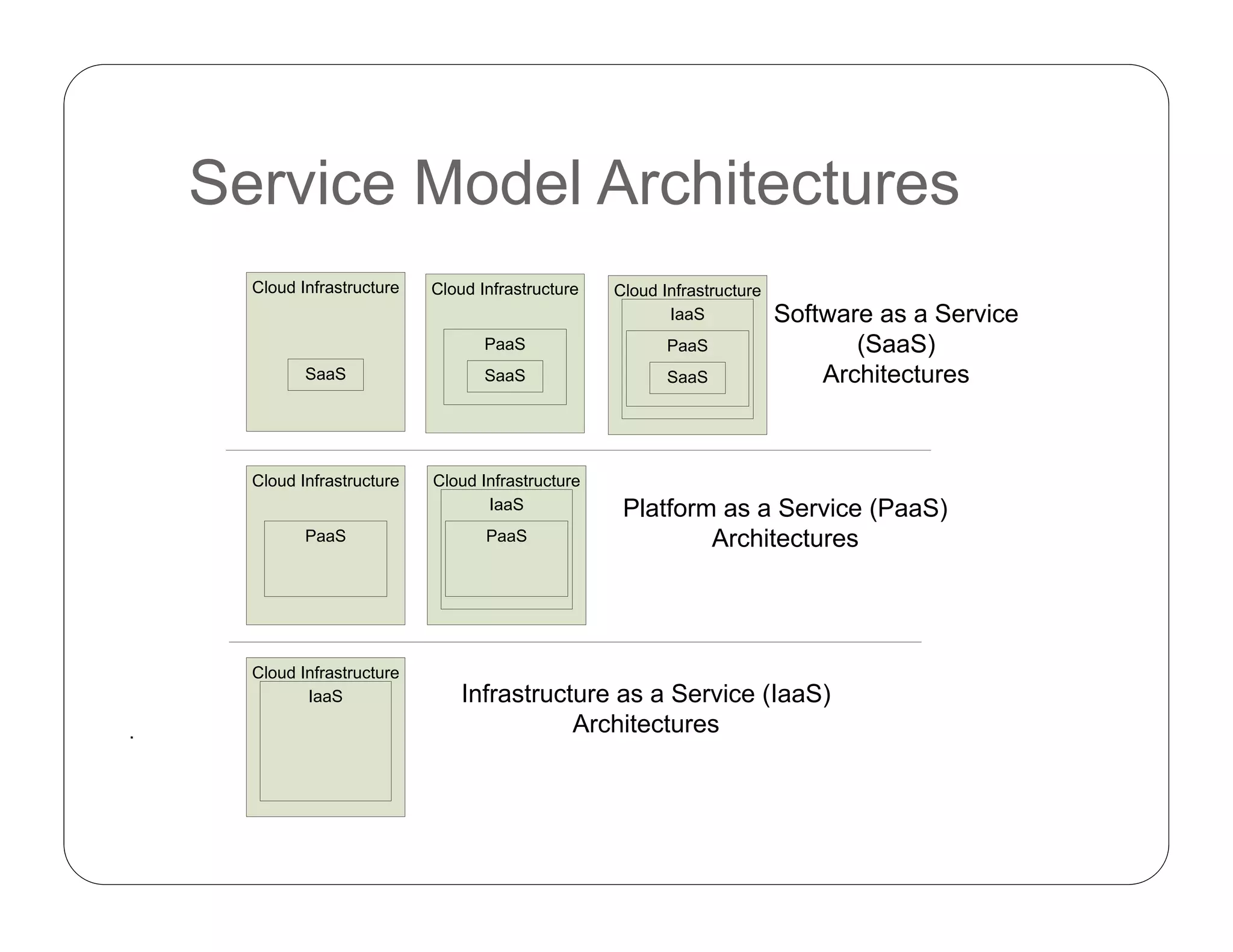
Service Model Architectures
.
Cloud Infrastructure
IaaS
PaaS
SaaS
Infrastructure as a Service (IaaS)
Architectures
Platform as a Service (PaaS)
Architectures
Software as a Service
(SaaS)
Architectures
Cloud Infrastructure
SaaS
Cloud Infrastructure
PaaS
SaaS
Cloud Infrastructure
IaaS
PaaS
Cloud Infrastructure
PaaS
Cloud Infrastructure
IaaS
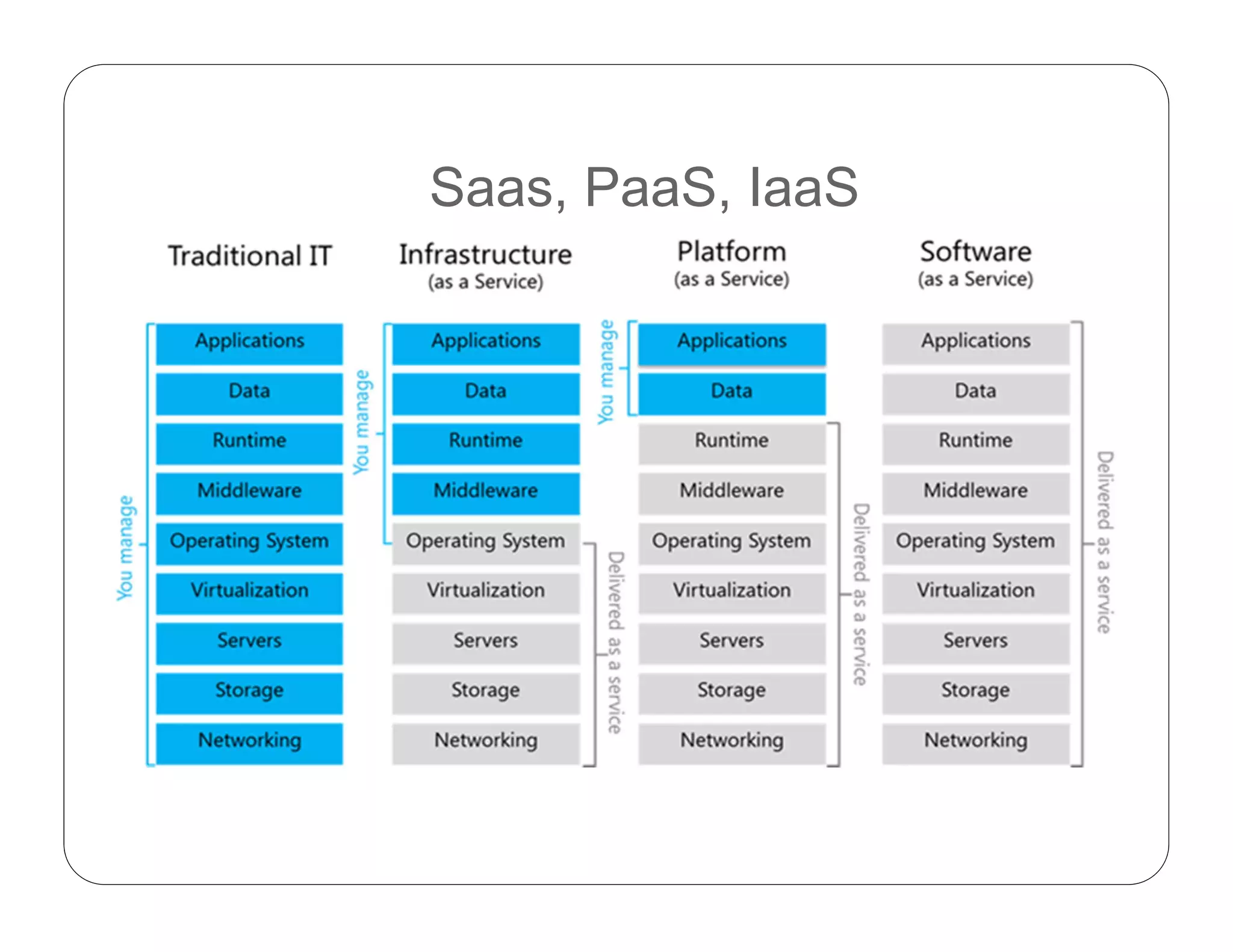
Saas, PaaS, IaaS

.
3 Features of
Mature SaaS Applications
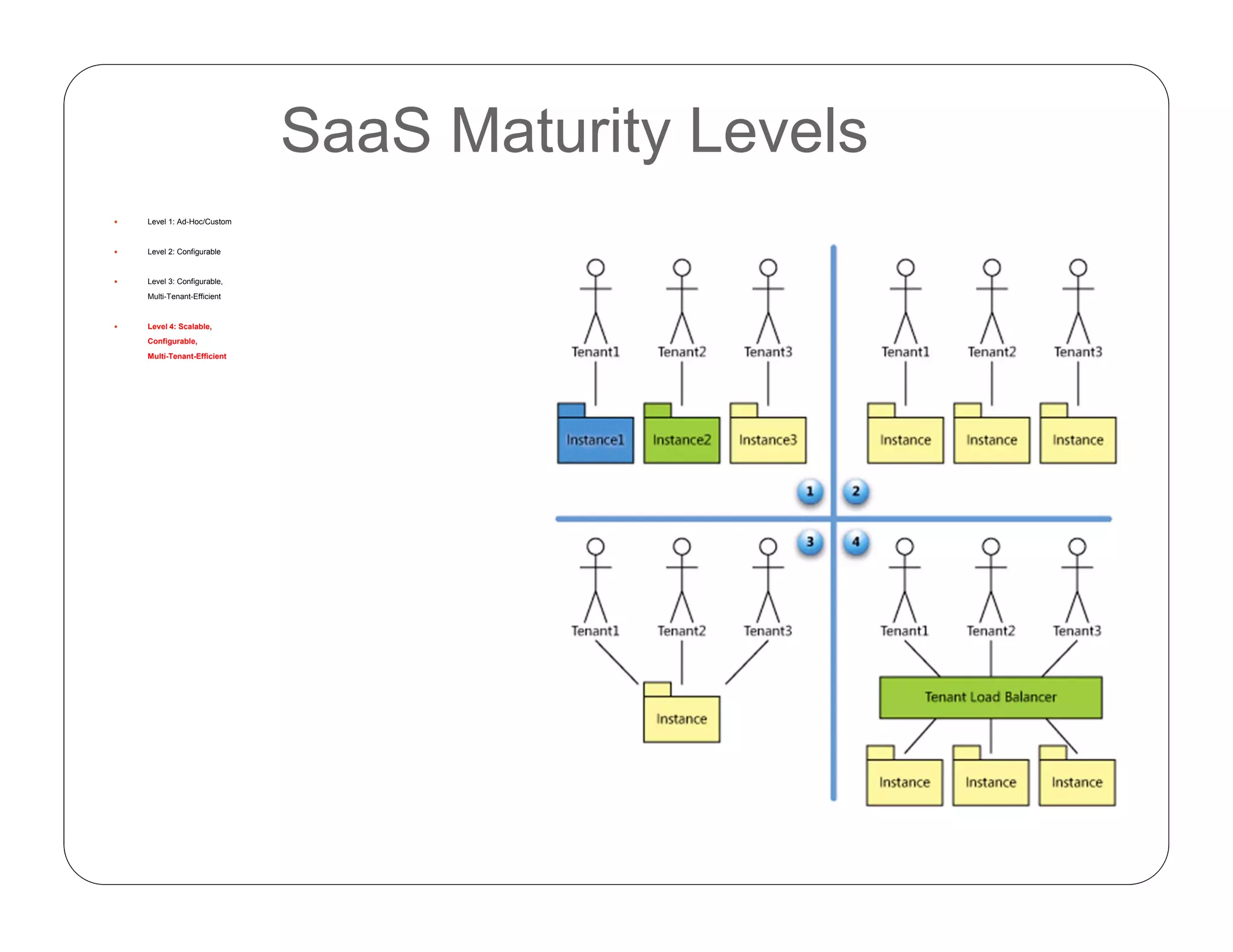
 SaaS is hosting applications on the Internet as a service (both consumer and enterprise)
 Features of Mature Saas applications:
 Scalable
 Handle growing amounts of work in a graceful manner
 Multi-tenancy
 One application instance may be serving hundreds of companies
 Opposite of multi-instance where each customer is provisioned their own server running one instance
 Metadata driven configurability
 Instead of customizing the application for a customer (requiring code changes), one allows the user to
configure the application through metadata
.
SaaS Maturity Levels
 Level 1: Ad-Hoc/Custom
 Level 2: Configurable
 Level 3: Configurable,
Multi-Tenant-Efficient
 Level 4: Scalable,
Configurable,
Multi-Tenant-Efficient
Source: Microsoft MSDN Architecture Center
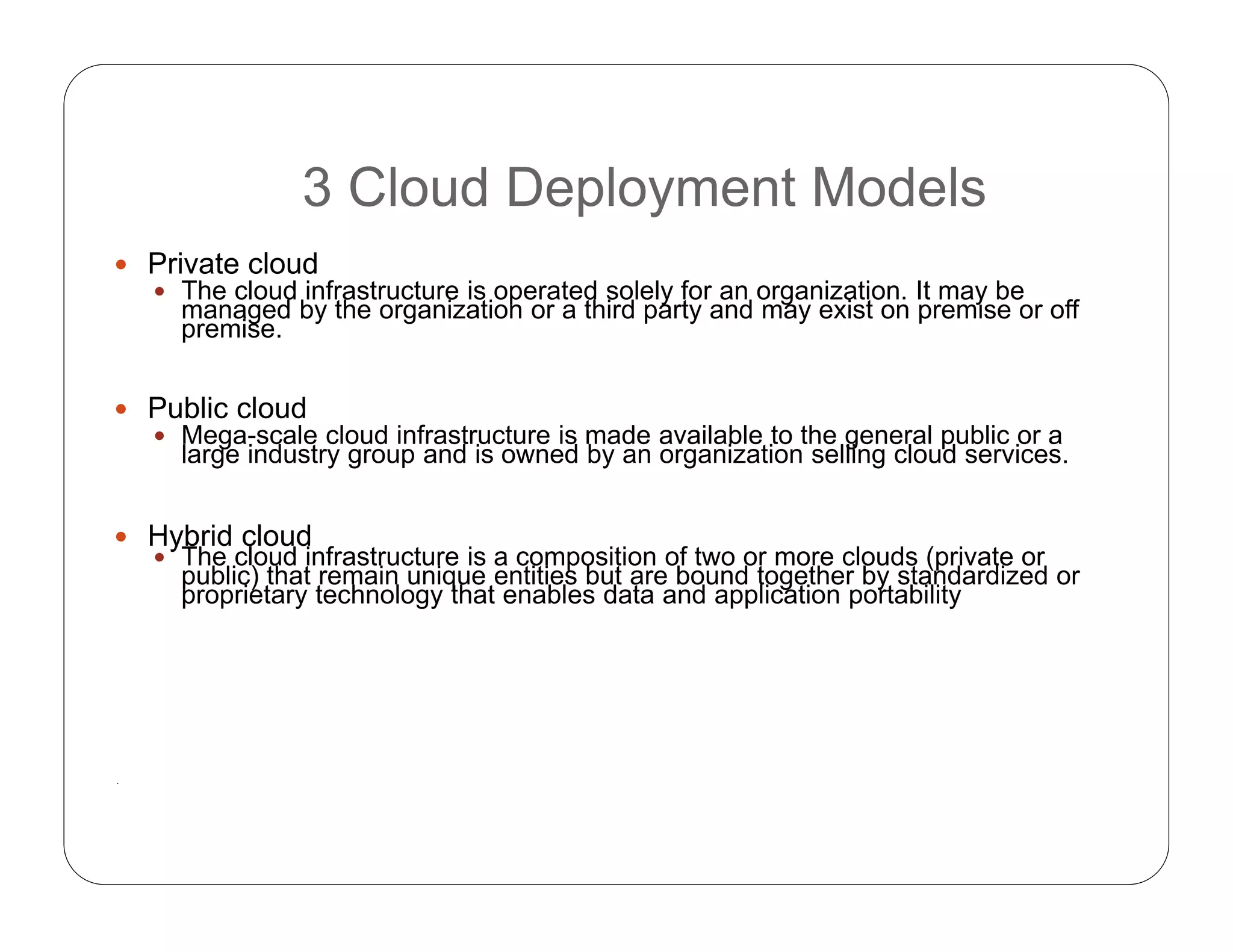
3 Cloud Deployment Models
 Private cloud
 The cloud infrastructure is operated solely for an organization. It may be
managed by the organization or a third party and may exist on premise or off
premise.
 Public cloud
 Mega-scale cloud infrastructure is made available to the general public or a
large industry group and is owned by an organization selling cloud services.
 Hybrid cloud
 The cloud infrastructure is a composition of two or more clouds (private or
public) that remain unique entities but are bound together by standardized or
proprietary technology that enables data and application portability
.
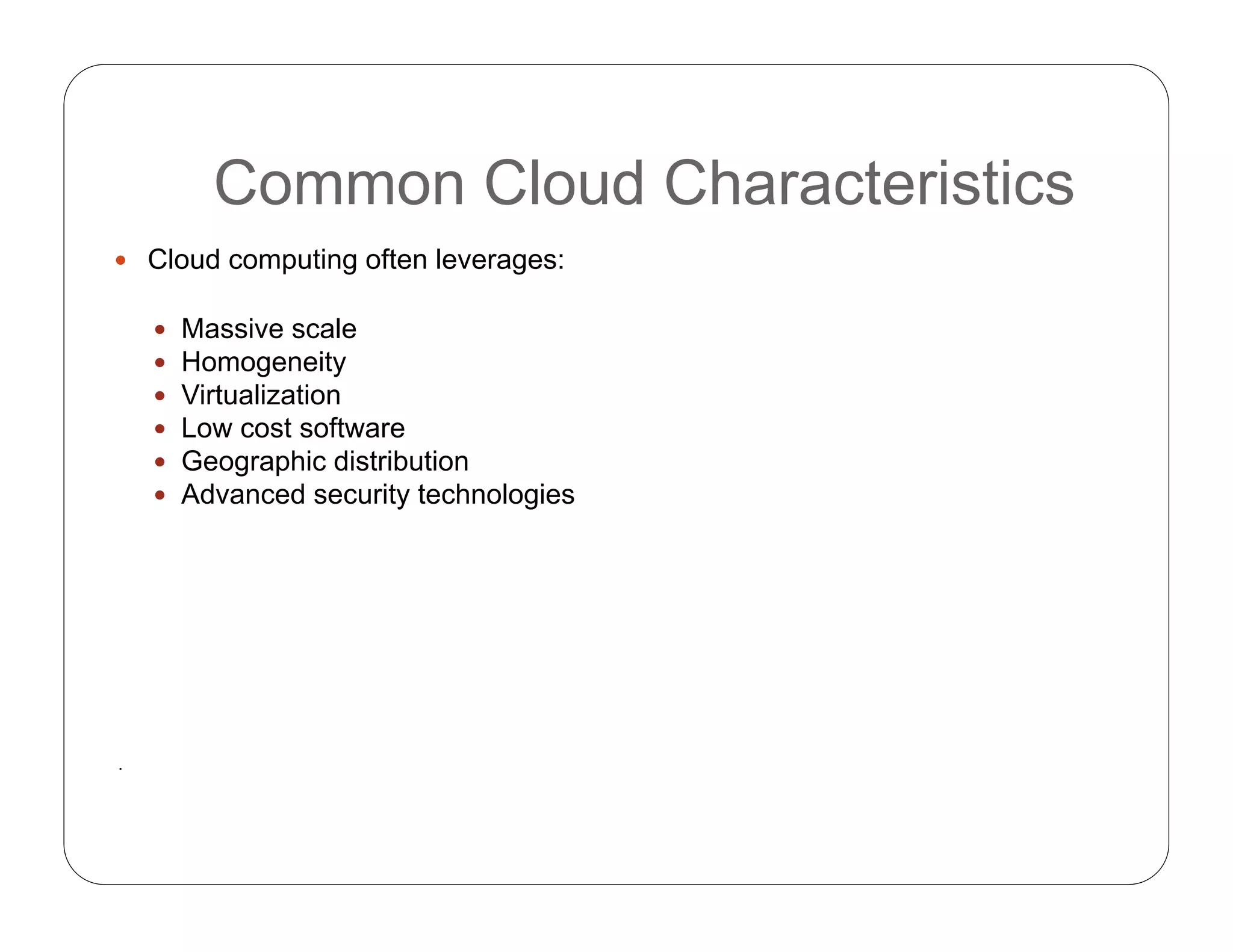
Common Cloud Characteristics
 Cloud computing often leverages:
 Massive scale
 Homogeneity
 Virtualization
 Low cost software
 Geographic distribution
 Advanced security technologies
.
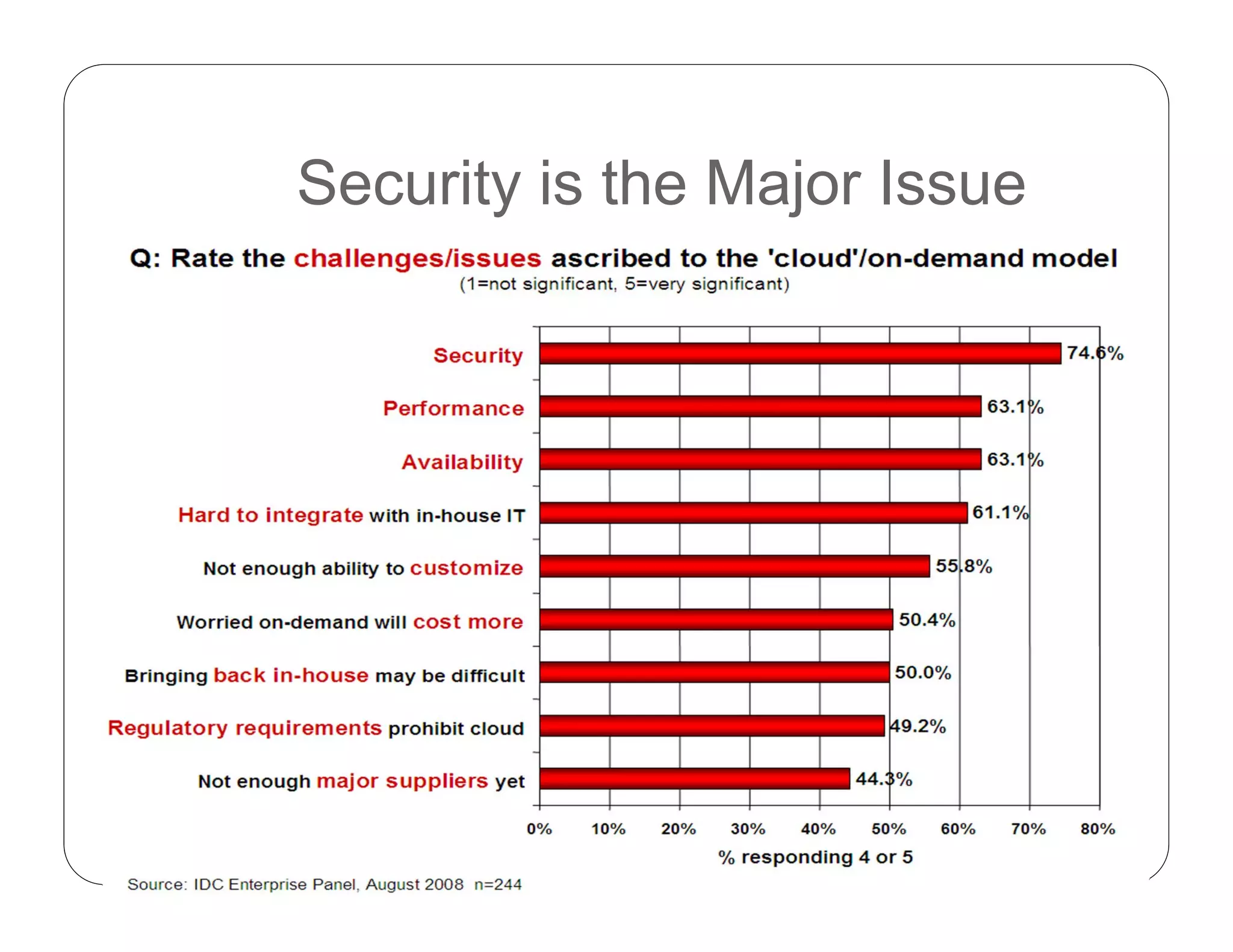
Security is the Major Issue
 Cloud computing often leverages:
 Massive scale
 Homogeneity
 Virtualization
 Low cost software
 Geographic distribution
 Advanced security technologies
.
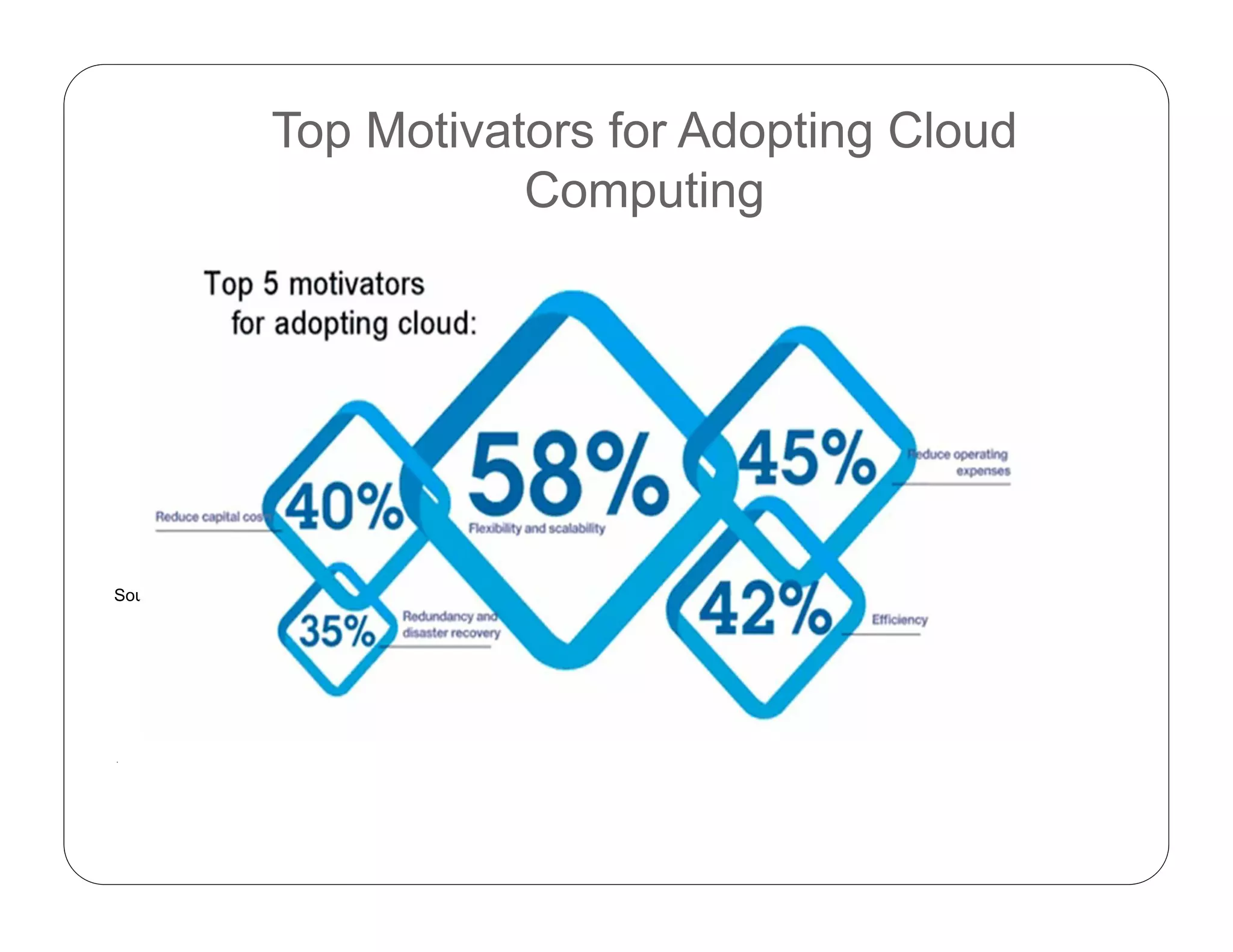
Top Motivators for Adopting Cloud
Computing
Source: IBM Tech Trends Report 2011
.
Cloud Security Advantages
 Shifting public data to a external cloud reduces the exposure of the internal sensitive
data
 Dedicated Security Team
 Greater Investment in Security Infrastructure
 Cloud homogeneity makes security auditing/testing simpler
 Clouds enable automated security management and real-time detection of system
tampering
 Rapid Re-Constitution of Services
 Redundancy / Disaster Recovery
.

Cloudmod4

  • 1.
  • 2.
    A Working Definitionof Cloud Computing  Cloud computing is a model for enabling convenient, on-demand network access to a shared pool of configurable computing resources (e.g., networks, servers, storage, applications, and services) that can be rapidly provisioned and released with minimal management effort or service provider interaction.  This cloud model promotes availability and is composed of five essential characteristics, three service models, and four deployment models. .
  • 3.
    Objectives of CloudComputing  Elasticity: Ability to scale virtual machines resources up or down  On-demand usage: Ability to add or delete computing power (CPU, memory), and storage according to demand  Pay-per-use: Pay only for what you use  Multitenancy: Ability to have multiplecustomers access their servers in the data center in an isolated manner .
  • 4.
    5 Essential CloudCharacteristics  On-demand self-service  Broad network access  Resource pooling  Location independence  Rapid elasticity  Measured service .
  • 5.
    3 Cloud ServiceModels  Cloud Software as a Service (SaaS)  The capability provided to the consumer is to use the provider’s applications running on a cloud infrastructure and accessible from various client devices through a thin client interface such as a Web browser (e.g., web-based email). The consumer does not manage or control the underlying cloud infrastructure, network, servers, operating systems, storage, or even individual application capabilities, with the possible exception of limited user-specific application configuration settings.  Cloud Platform as a Service (PaaS)  The capability provided to the consumer is to deploy onto the cloud infrastructure consumer-created applications using programming languages and tools supported by the provider (e.g., Java, Python, .Net). The consumer does not manage or control the underlying cloud infrastructure, network, servers, operating systems, or storage, but the consumer has control over the deployed applications and possibly application hosting environment configurations.  Cloud Infrastructure as a Service (IaaS)  The capability provided to the consumer is to rent processing, storage, networks, and other fundamental computing resources where the consumer is able to deploy and run arbitrary software, which can include operating systems and applications. The consumer does not manage or control the underlying cloud infrastructure but has control over operating systems, storage, deployed applications, and possibly select networking components (e.g., firewalls, load balancers).  To be considered “cloud” they must be deployed on top of cloud infrastructure that has the key characteristics .
  • 6.
    Service Model Architectures . CloudInfrastructure IaaS PaaS SaaS Infrastructure as a Service (IaaS) Architectures Platform as a Service (PaaS) Architectures Software as a Service (SaaS) Architectures Cloud Infrastructure SaaS Cloud Infrastructure PaaS SaaS Cloud Infrastructure IaaS PaaS Cloud Infrastructure PaaS Cloud Infrastructure IaaS
  • 7.
  • 8.
    3 Features of MatureSaaS Applications  SaaS is hosting applications on the Internet as a service (both consumer and enterprise)  Features of Mature Saas applications:  Scalable  Handle growing amounts of work in a graceful manner  Multi-tenancy  One application instance may be serving hundreds of companies  Opposite of multi-instance where each customer is provisioned their own server running one instance  Metadata driven configurability  Instead of customizing the application for a customer (requiring code changes), one allows the user to configure the application through metadata .
  • 9.
    SaaS Maturity Levels Level 1: Ad-Hoc/Custom  Level 2: Configurable  Level 3: Configurable, Multi-Tenant-Efficient  Level 4: Scalable, Configurable, Multi-Tenant-Efficient Source: Microsoft MSDN Architecture Center
  • 10.
    3 Cloud DeploymentModels  Private cloud  The cloud infrastructure is operated solely for an organization. It may be managed by the organization or a third party and may exist on premise or off premise.  Public cloud  Mega-scale cloud infrastructure is made available to the general public or a large industry group and is owned by an organization selling cloud services.  Hybrid cloud  The cloud infrastructure is a composition of two or more clouds (private or public) that remain unique entities but are bound together by standardized or proprietary technology that enables data and application portability .
  • 11.
    Common Cloud Characteristics Cloud computing often leverages:  Massive scale  Homogeneity  Virtualization  Low cost software  Geographic distribution  Advanced security technologies .
  • 12.
    Security is theMajor Issue  Cloud computing often leverages:  Massive scale  Homogeneity  Virtualization  Low cost software  Geographic distribution  Advanced security technologies .
  • 13.
    Top Motivators forAdopting Cloud Computing Source: IBM Tech Trends Report 2011 .
  • 14.
    Cloud Security Advantages Shifting public data to a external cloud reduces the exposure of the internal sensitive data  Dedicated Security Team  Greater Investment in Security Infrastructure  Cloud homogeneity makes security auditing/testing simpler  Clouds enable automated security management and real-time detection of system tampering  Rapid Re-Constitution of Services  Redundancy / Disaster Recovery .