Cloud security
Introduction
Achmad Mardiansyah
Agenda
● Cyber security
● Security incidents
● Cloud Computing
● Cloud Security
● Q & A
2
Cyber Security introduction
3
What is Cyber security
Cybersecurity is the art of protecting networks, devices, and data from
unauthorized access or criminal use and the practice of ensuring confidentiality,
integrity, and availability of information.
Security is a very subjective terms.
Every person has their own definition of security, that’s why there are many
standards in security
4
Types of Security
● Computer Security - generic name for the collection of tools designed to
protect data and to thwart hackers
● Network Security - measures to protect data during their transmission
● Internet Security - measures to protect data during their transmission over a
collec)on of interconnected networks
5
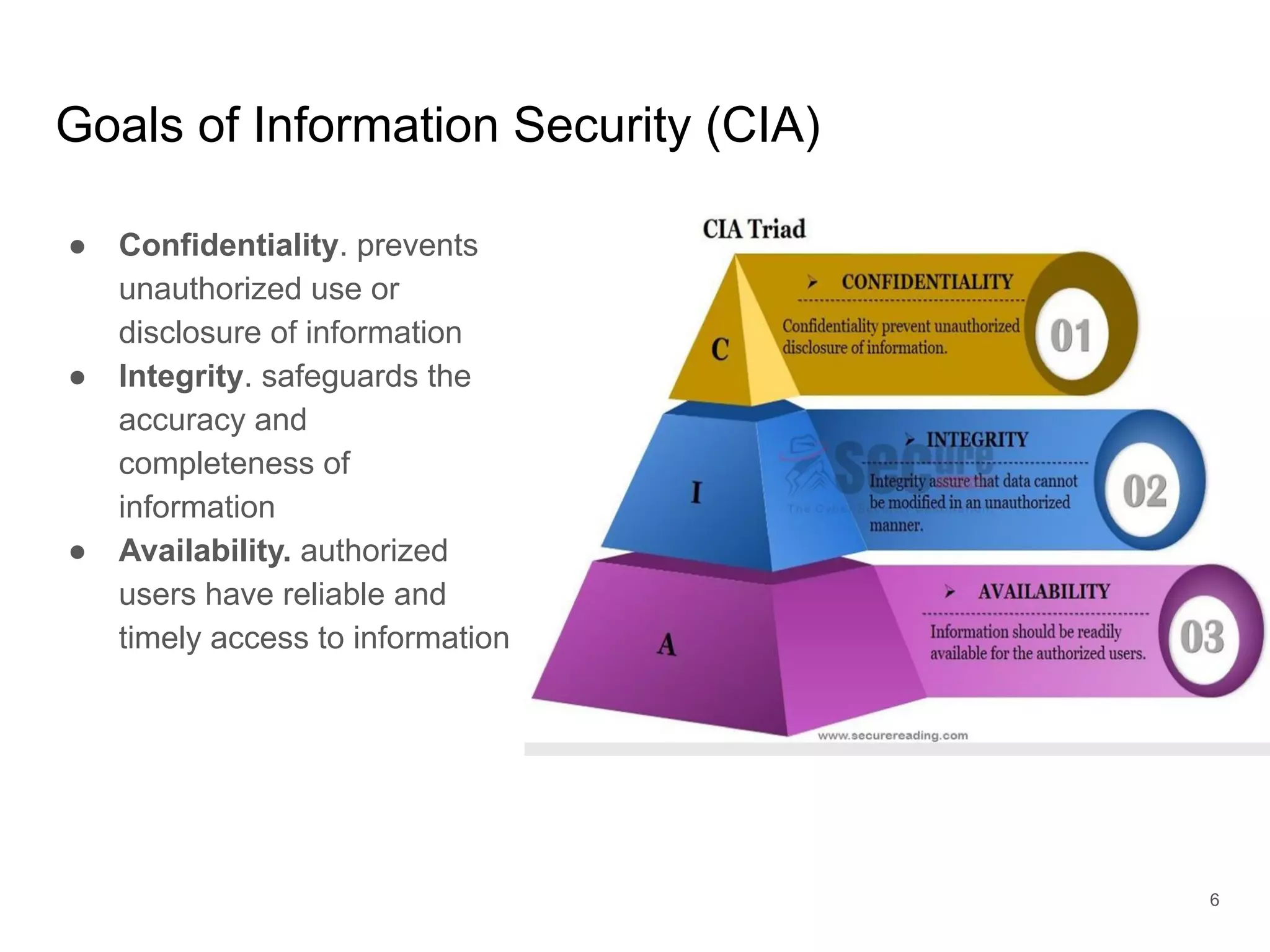
Goals of Information Security (CIA)
● Confidentiality. prevents
unauthorized use or
disclosure of information
● Integrity. safeguards the
accuracy and
completeness of
information
● Availability. authorized
users have reliable and
timely access to information
6
Access Control
● Ability to permit or deny the use of an object by a
subject.
● It provides 3 essential services (AAA):
○ Authentication and Identification (who can login)
■ What you know
■ What you have
■ What you are
○ Authorization (what authorized users can do)
○ Accountability (keep track what a user did)
7
Vulnerability
A weakness in security procedures,
network design, or implementation that can
be exploited to violate a corporate security
policy
● Software bugs
● Configuration mistakes
● Network design flaw
Exploit
● Taking advantage of a vulnerability
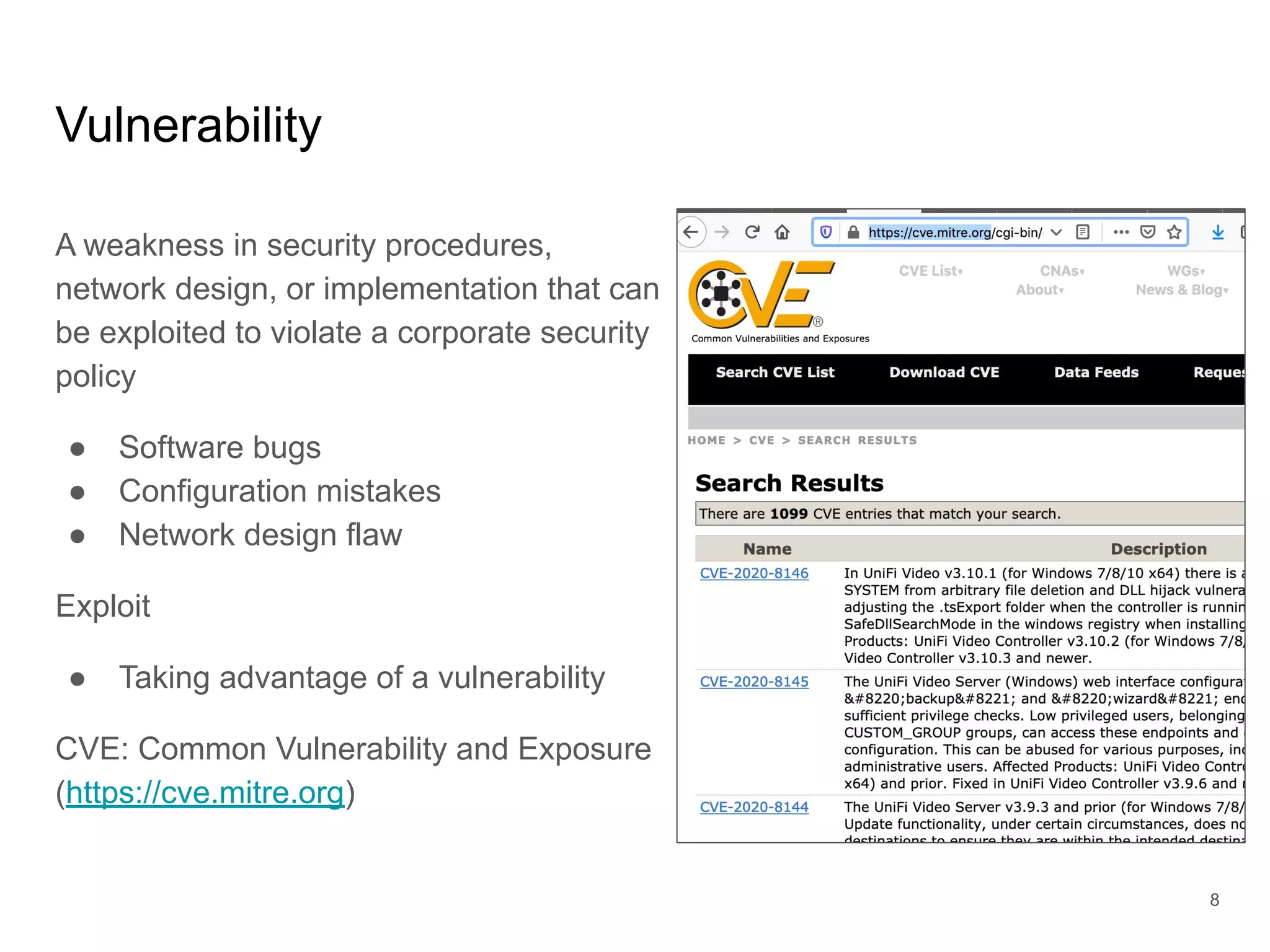
CVE: Common Vulnerability and Exposure
(https://cve.mitre.org)
8
Threat
Any circumstance or event with the potential to cause harm to a networked system
● Denial of service (DOS): make computer resources (e.g., bandwidth, disk
space, or CPU ) unavailable to its intended users
● Unauthorised access: Access without of permission issued by a rightul
owner of devices or networks
● Impersonation
○ Identity theft
● Worms
● Viruses
● Malware
9
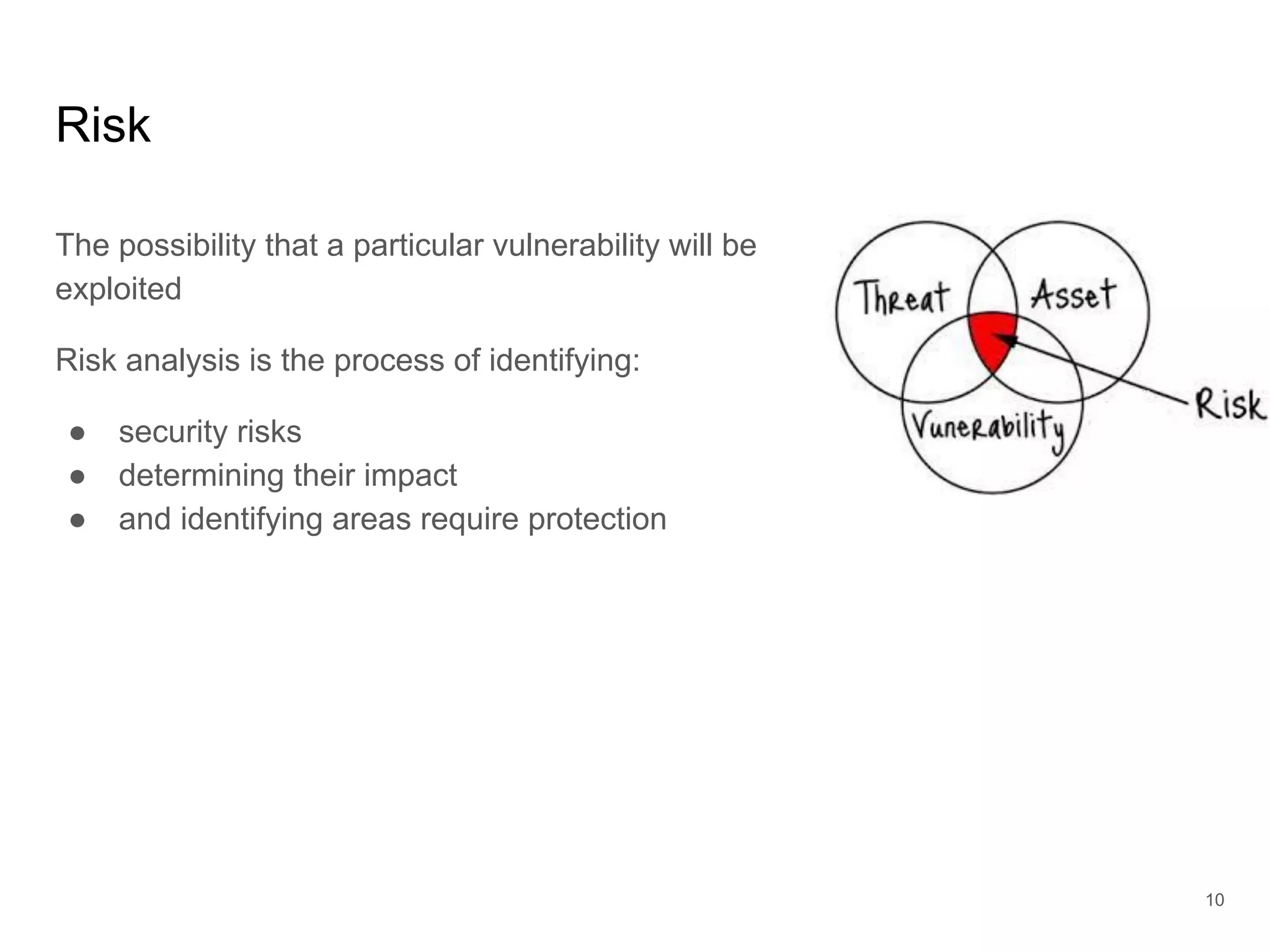
The possibility that a particular vulnerability will be
exploited
Risk analysis is the process of identifying:
● security risks
● determining their impact
● and identifying areas require protection
Risk
10
Security incidents
11
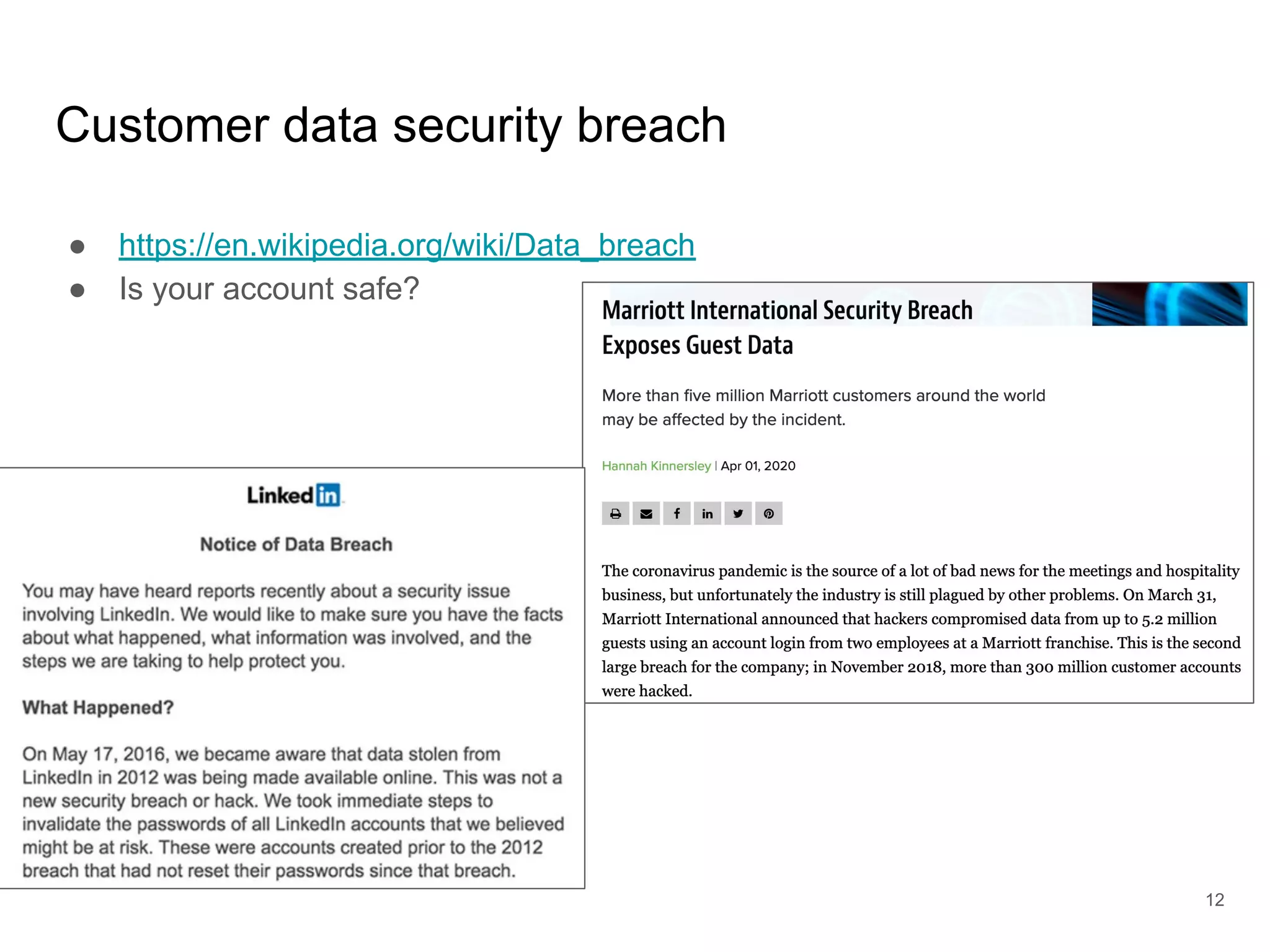
Customer data security breach
● https://en.wikipedia.org/wiki/Data_breach
● Is your account safe?
12
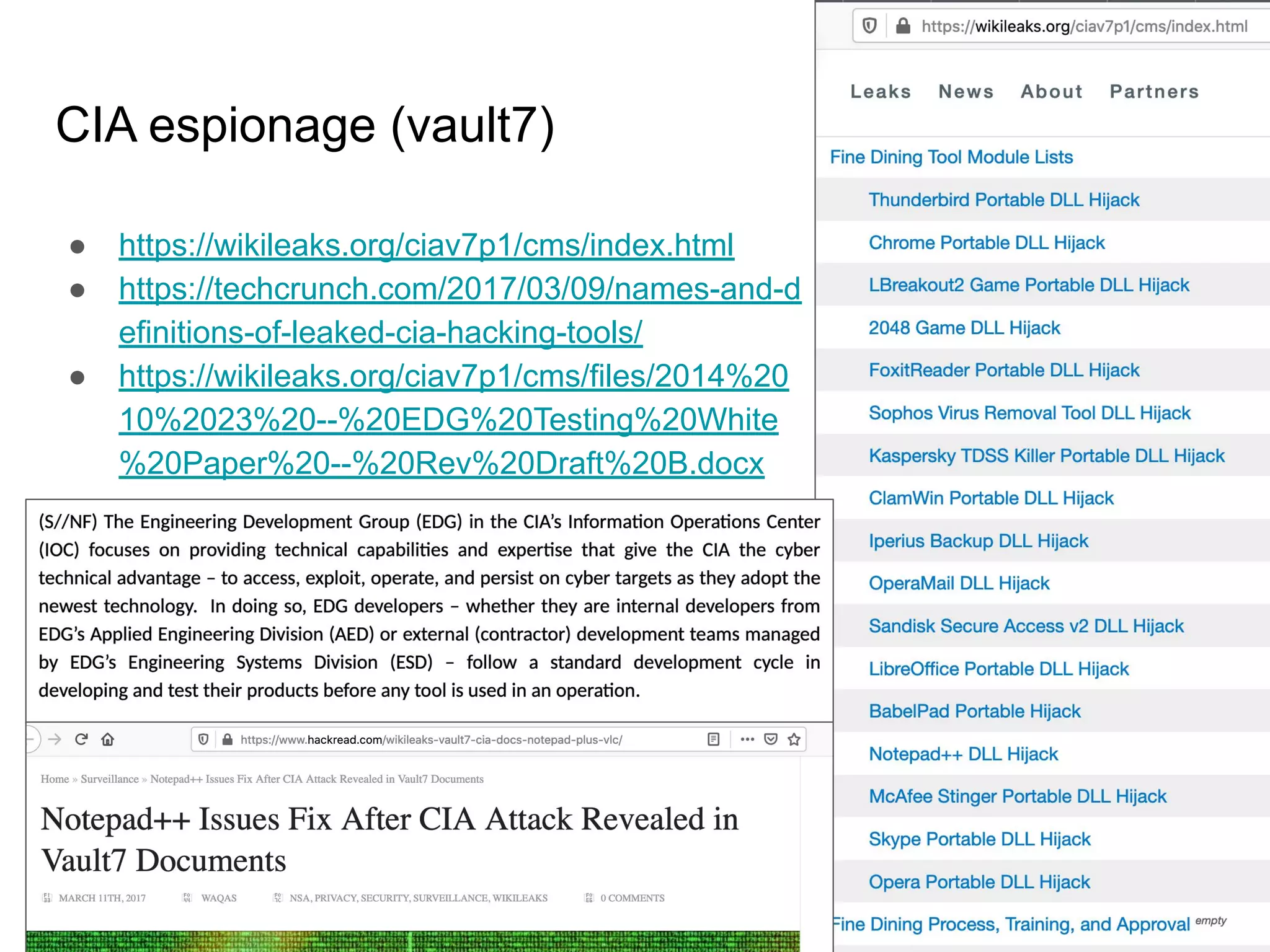
CIA espionage (vault7)
● https://wikileaks.org/ciav7p1/cms/index.html
● https://techcrunch.com/2017/03/09/names-and-d
efinitions-of-leaked-cia-hacking-tools/
● https://wikileaks.org/ciav7p1/cms/files/2014%20
10%2023%20--%20EDG%20Testing%20White
%20Paper%20--%20Rev%20Draft%20B.docx
●
13
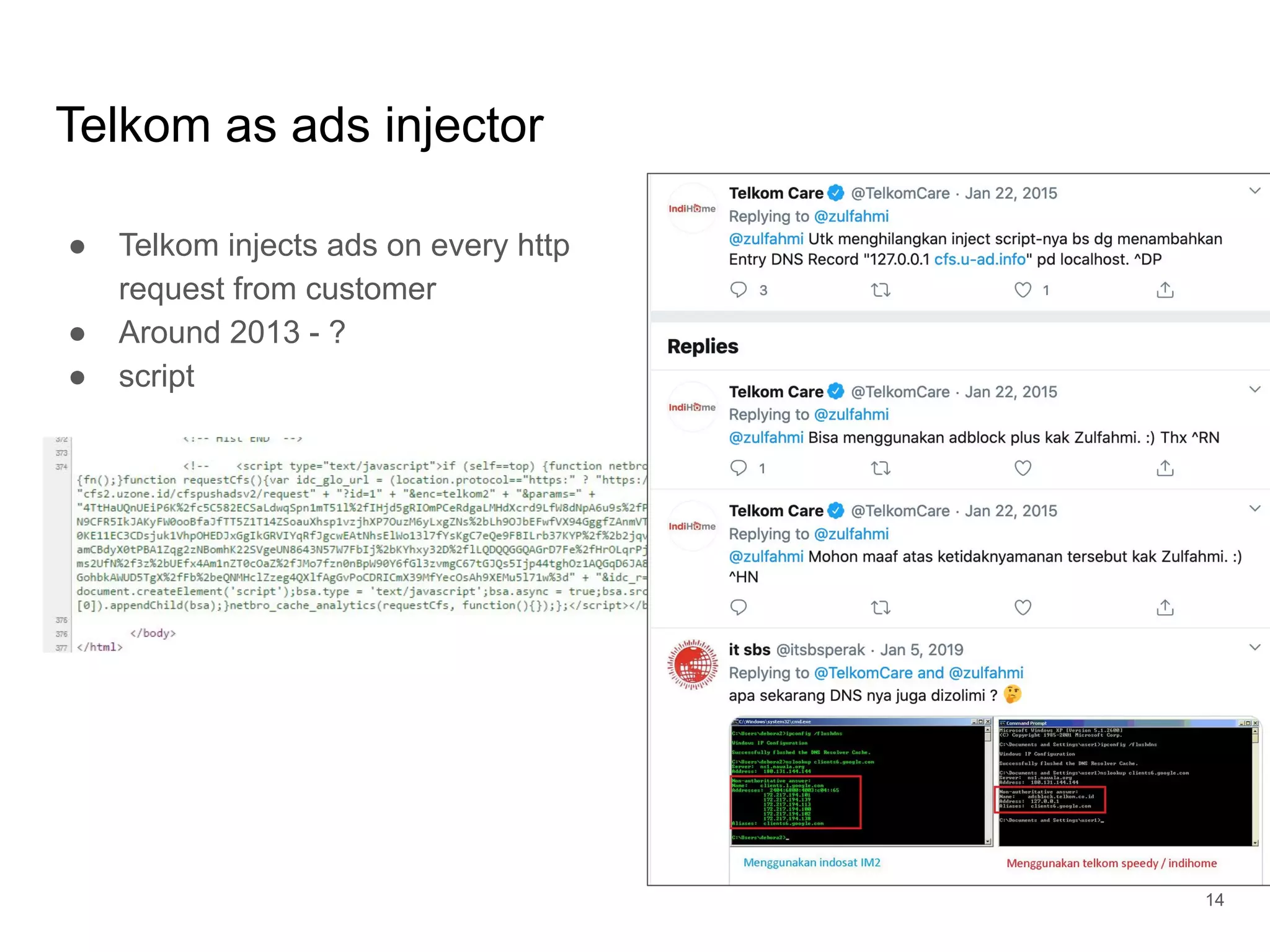
Telkom as ads injector
● Telkom injects ads on every http
request from customer
● Around 2013 - ?
● script
14
Cloud computing
15
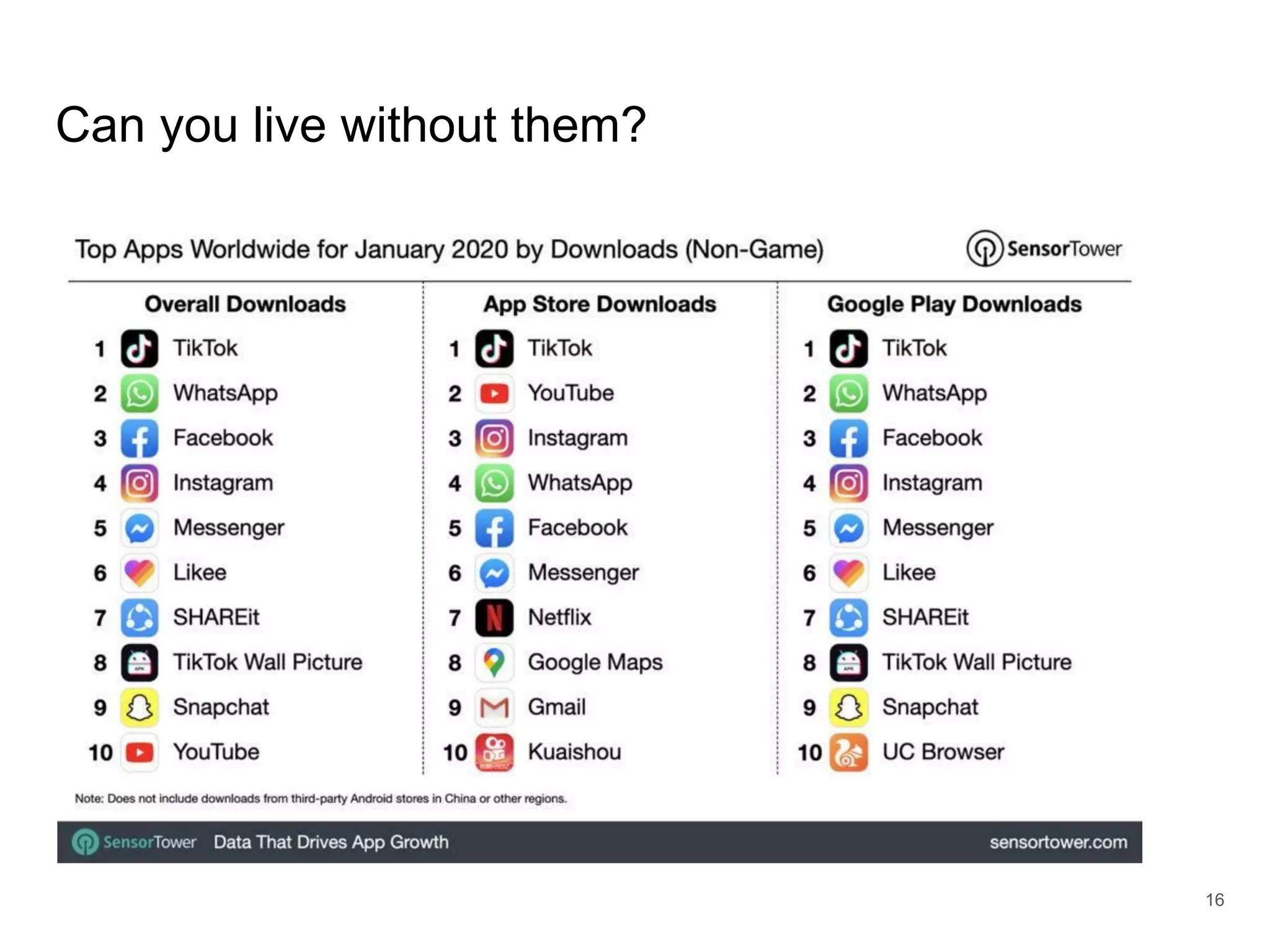
Can you live without them?
16
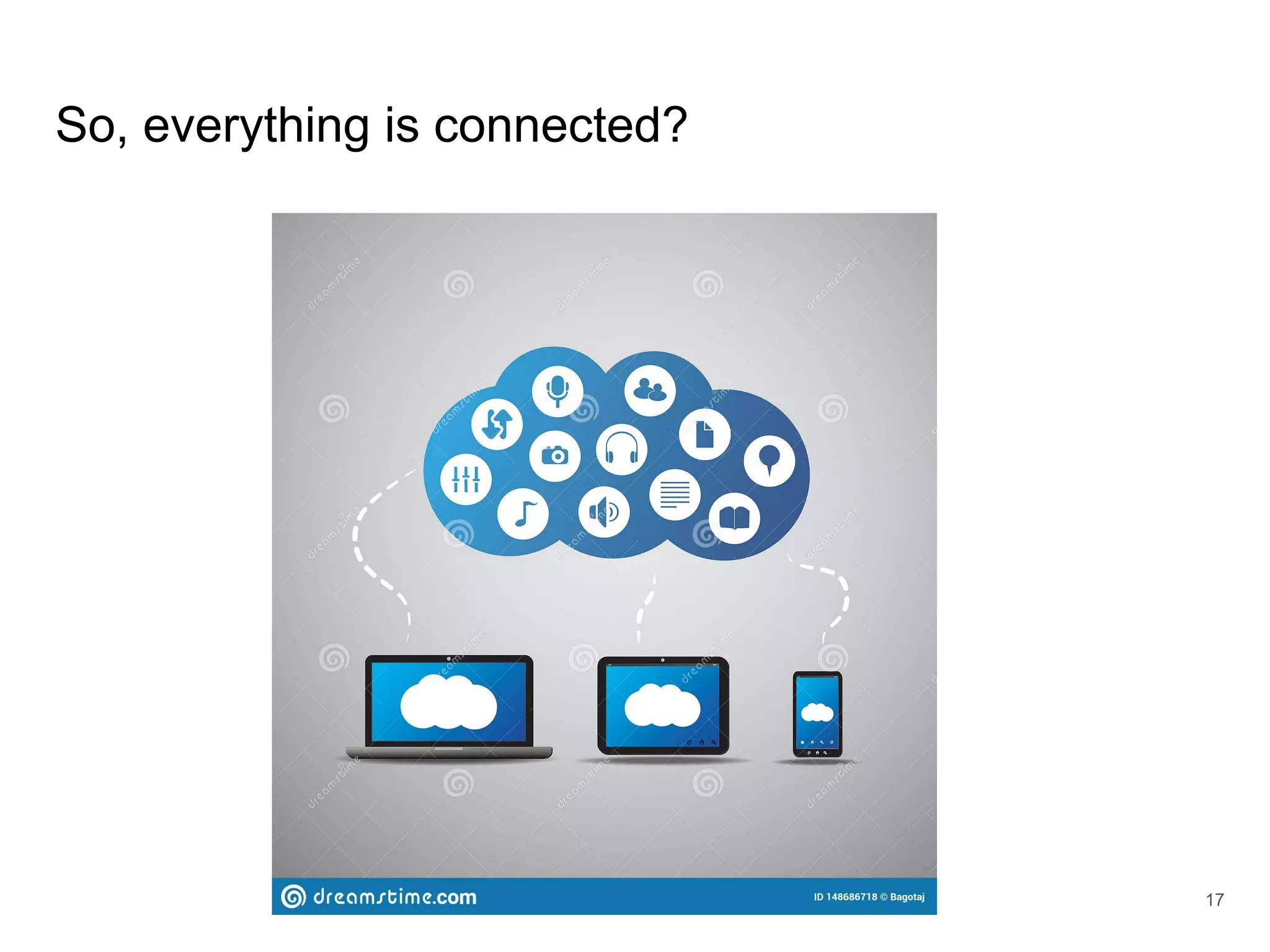
So, everything is connected?
17
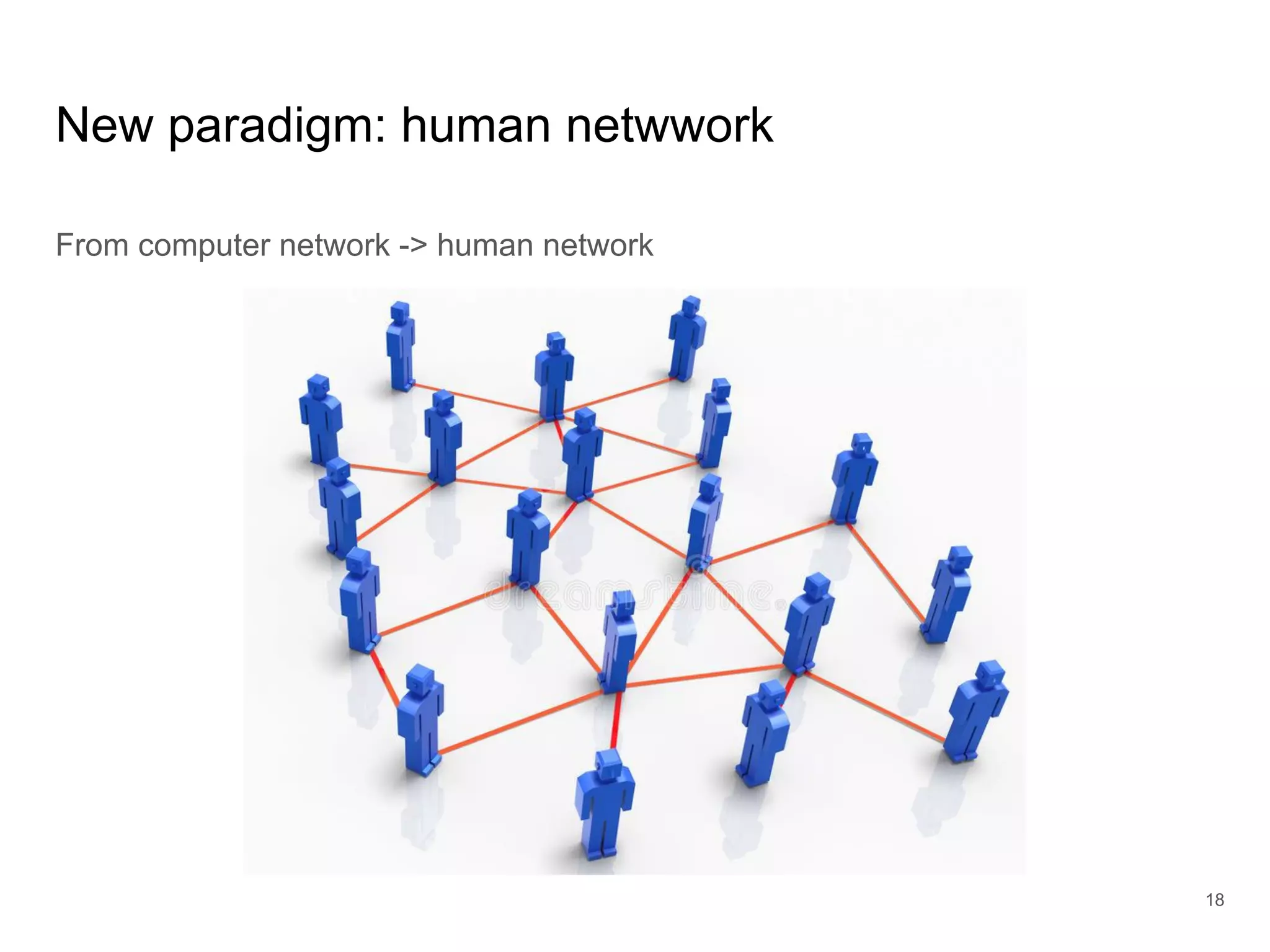
New paradigm: human netwwork
From computer network -> human network
18
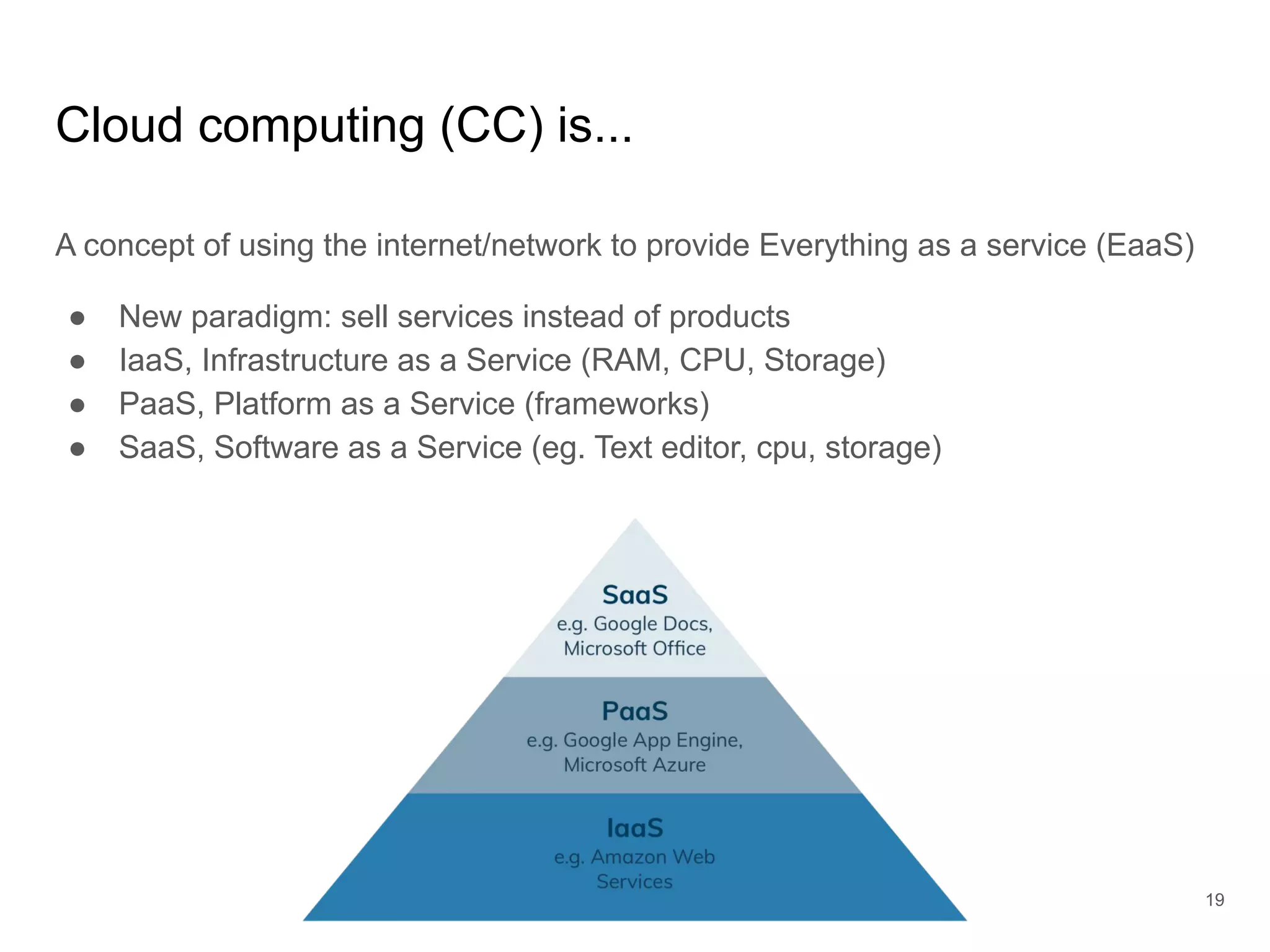
Cloud computing (CC) is...
A concept of using the internet/network to provide Everything as a service (EaaS)
● New paradigm: sell services instead of products
● IaaS, Infrastructure as a Service (RAM, CPU, Storage)
● PaaS, Platform as a Service (frameworks)
● SaaS, Software as a Service (eg. Text editor, cpu, storage)
19
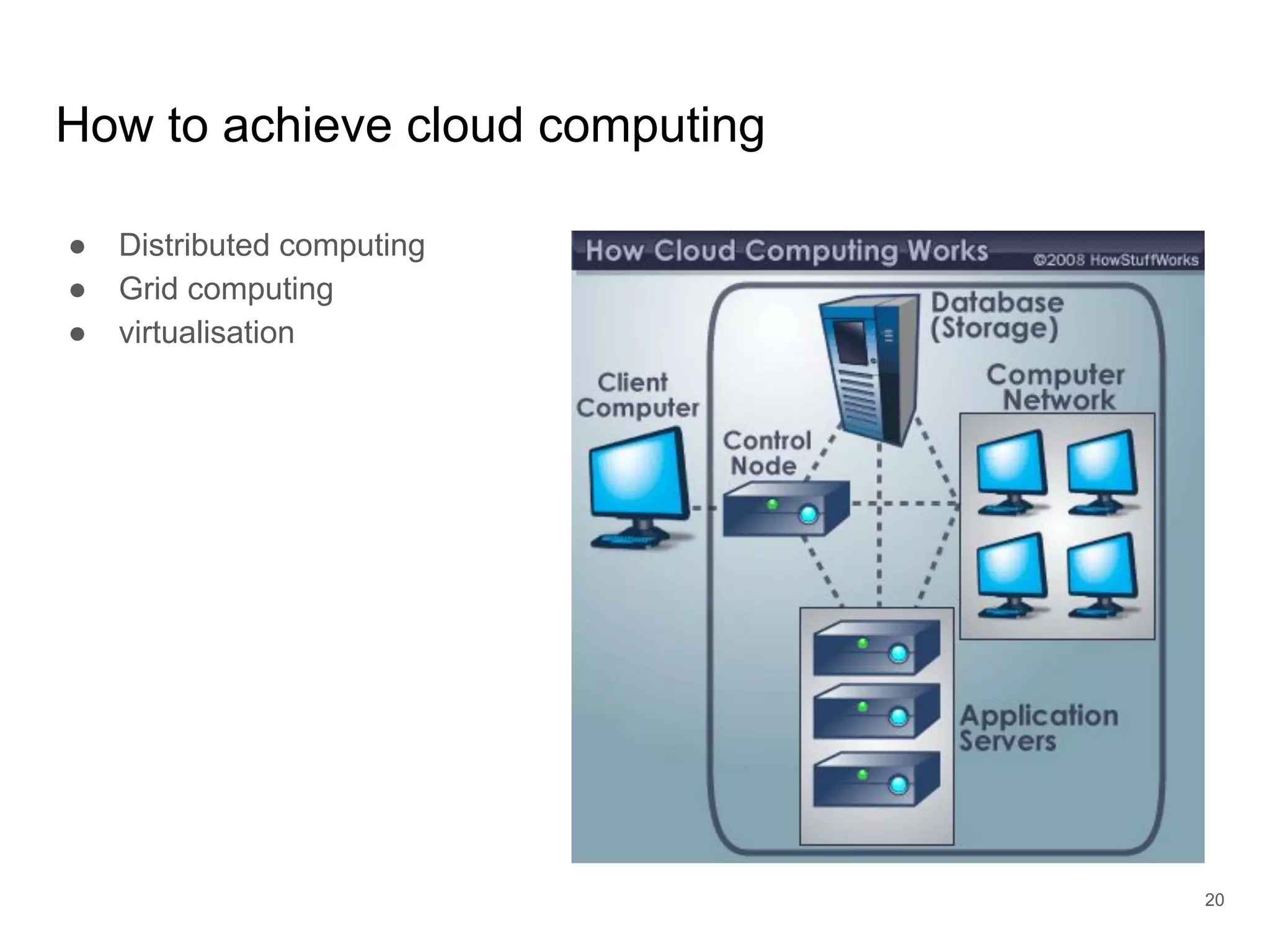
How to achieve cloud computing
● Distributed computing
● Grid computing
● virtualisation
20
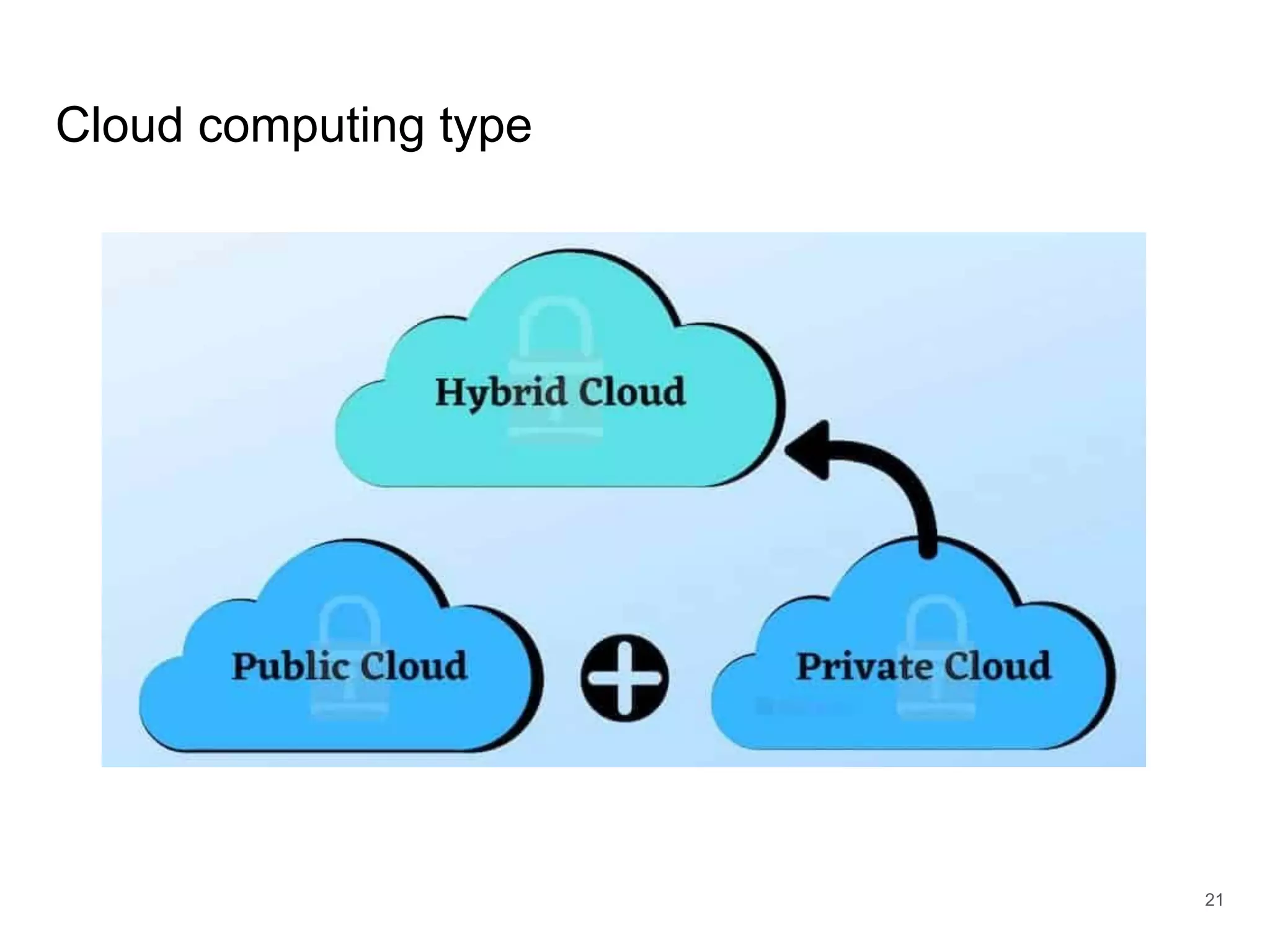
Cloud computing type
21
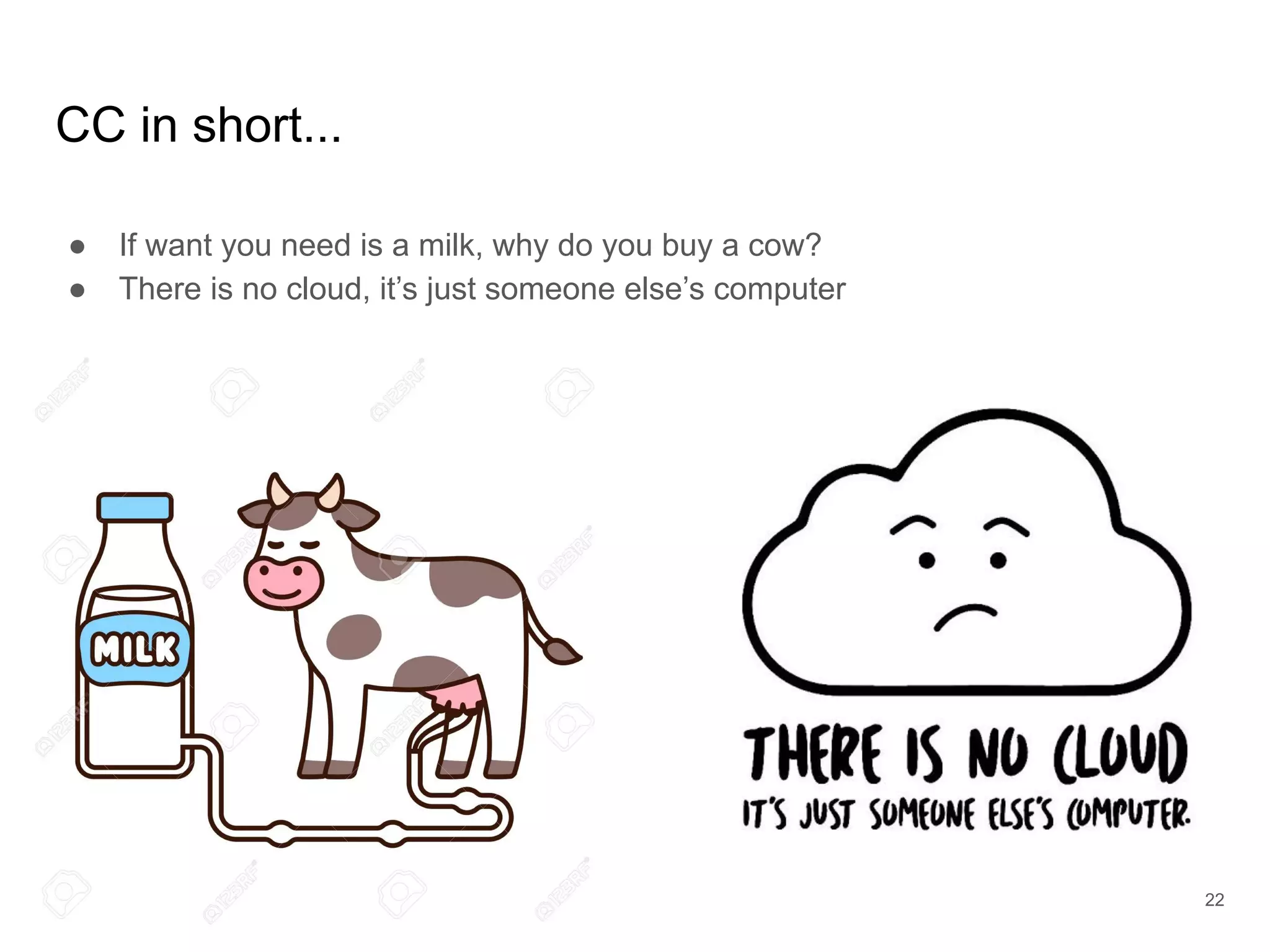
CC in short...
● If want you need is a milk, why do you buy a cow?
● There is no cloud, it’s just someone else’s computer
22
Cloud Security
23
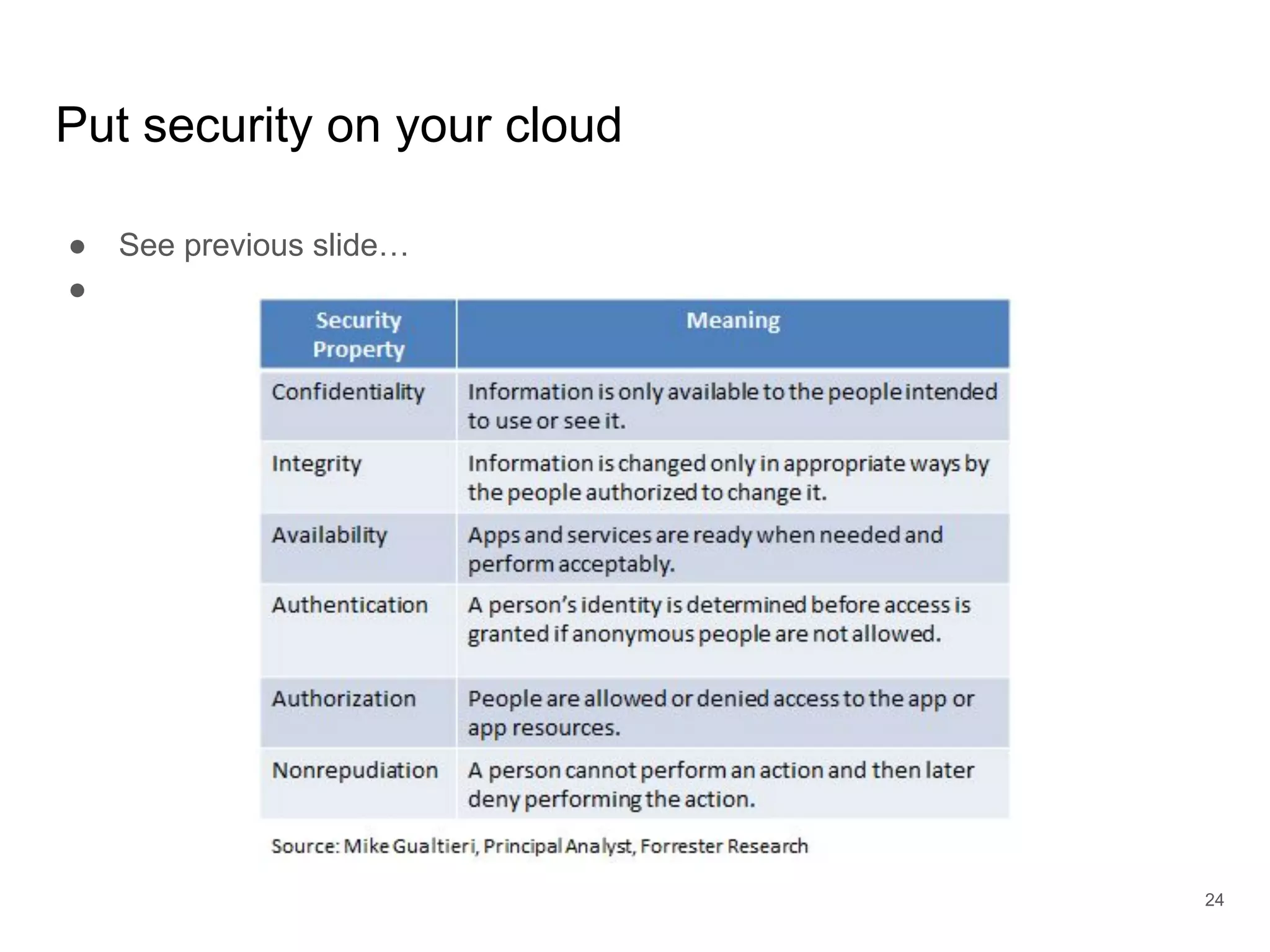
Put security on your cloud
● See previous slide…
●
24
Some examples
25
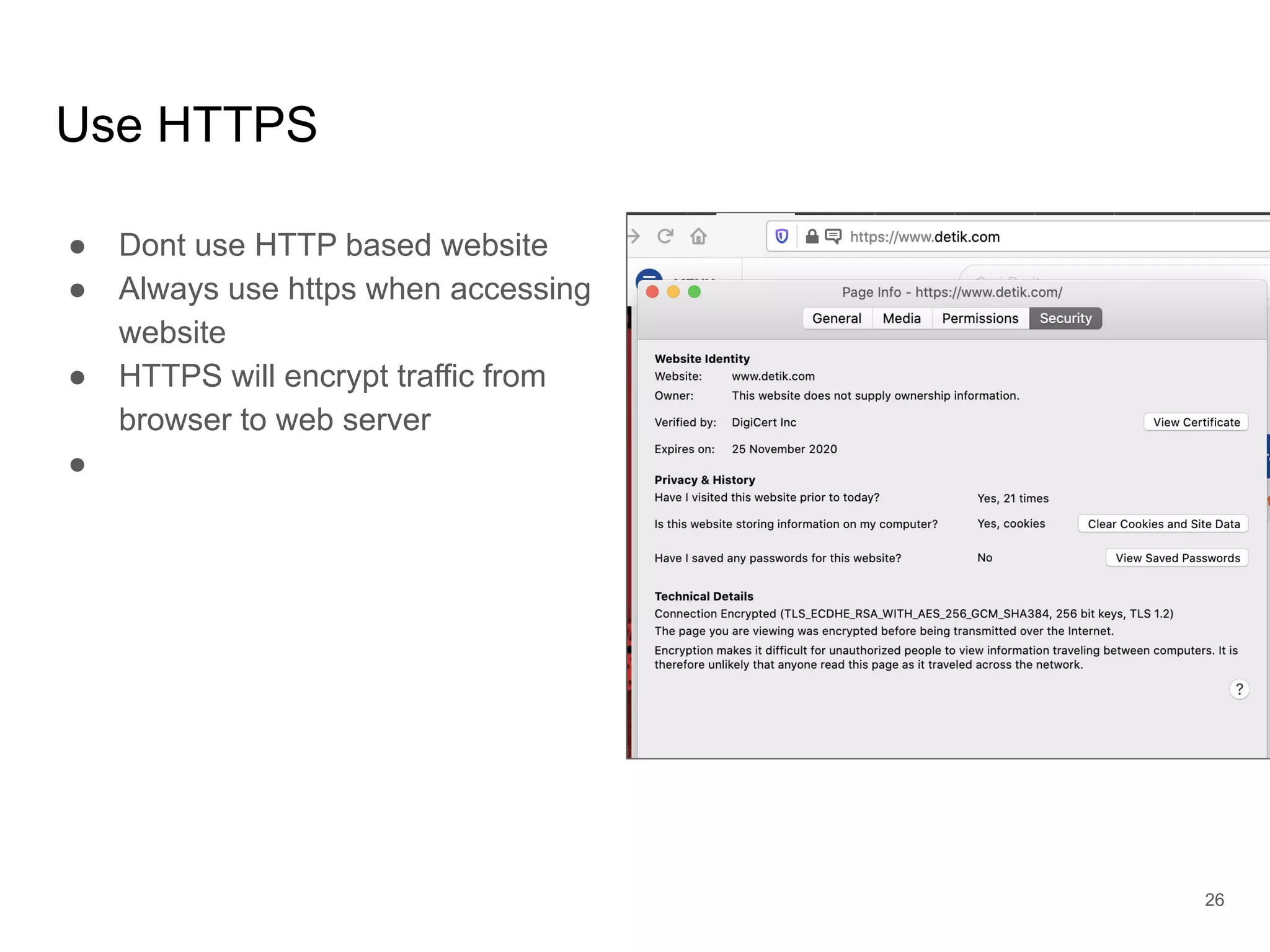
Use HTTPS
● Dont use HTTP based website
● Always use https when accessing
website
● HTTPS will encrypt traffic from
browser to web server
●
26
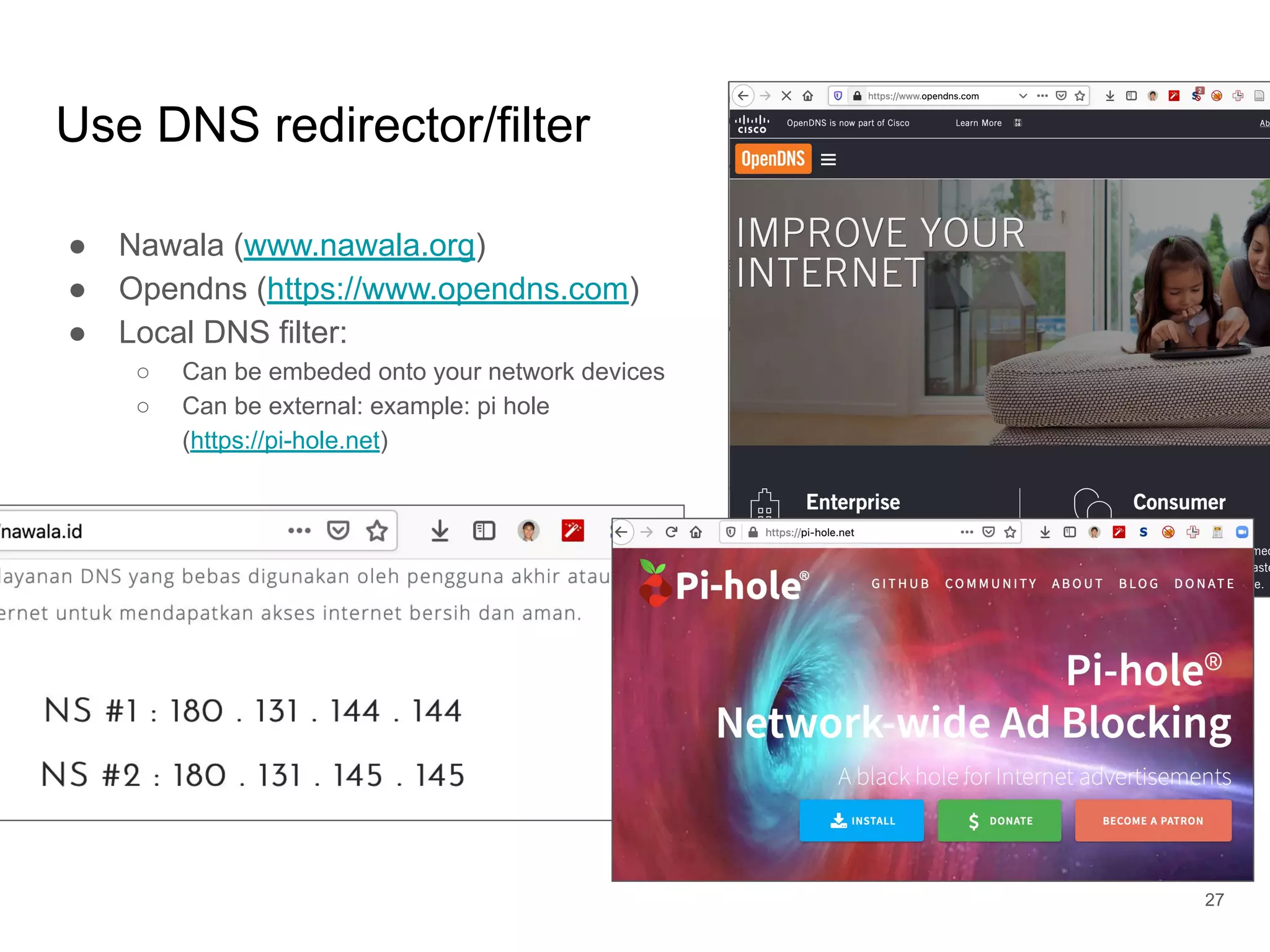
Use DNS redirector/filter
● Nawala (www.nawala.org)
● Opendns (https://www.opendns.com)
● Local DNS filter:
○ Can be embeded onto your network devices
○ Can be external: example: pi hole
(https://pi-hole.net)
27
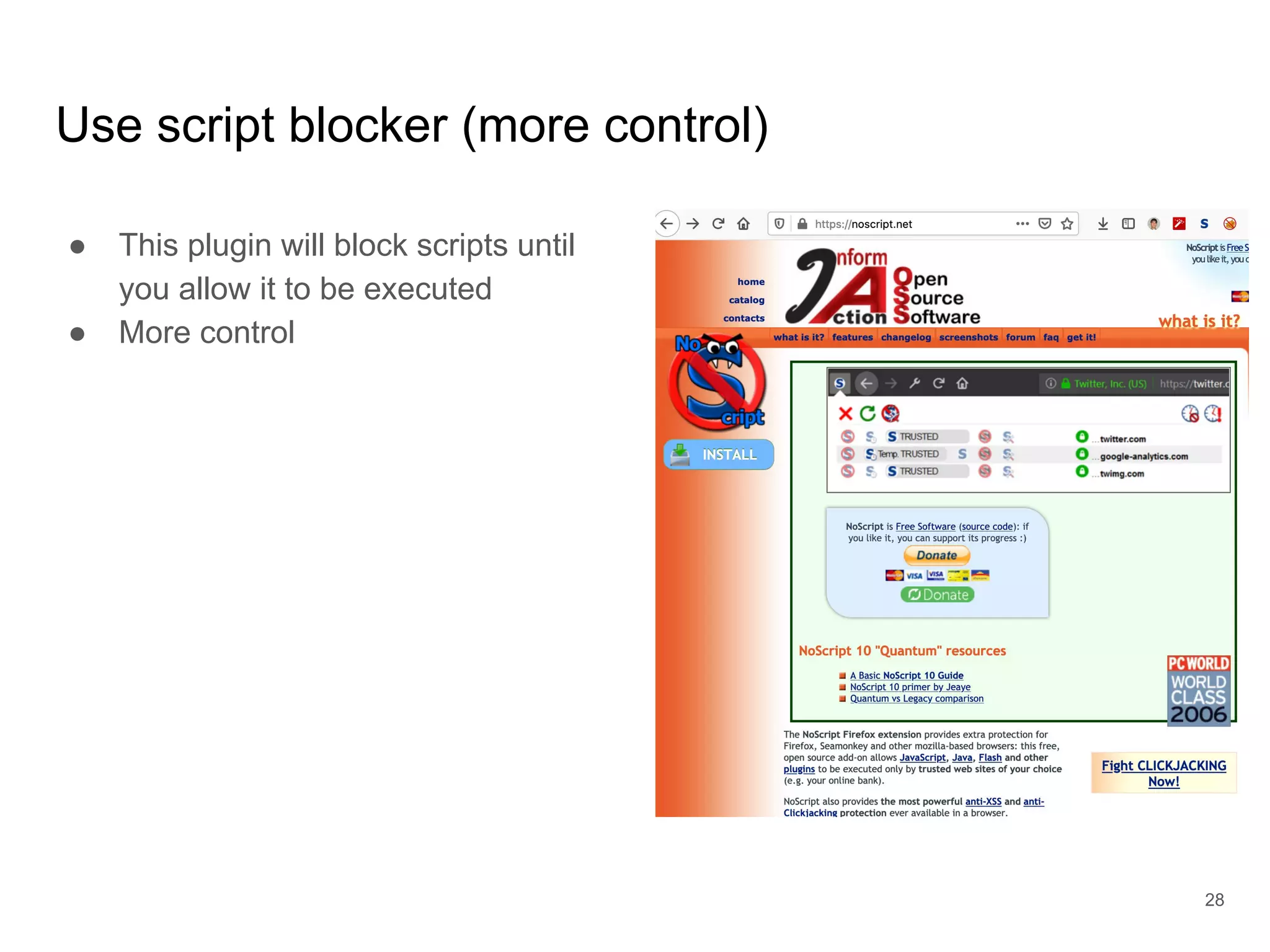
Use script blocker (more control)
● This plugin will block scripts until
you allow it to be executed
● More control
28
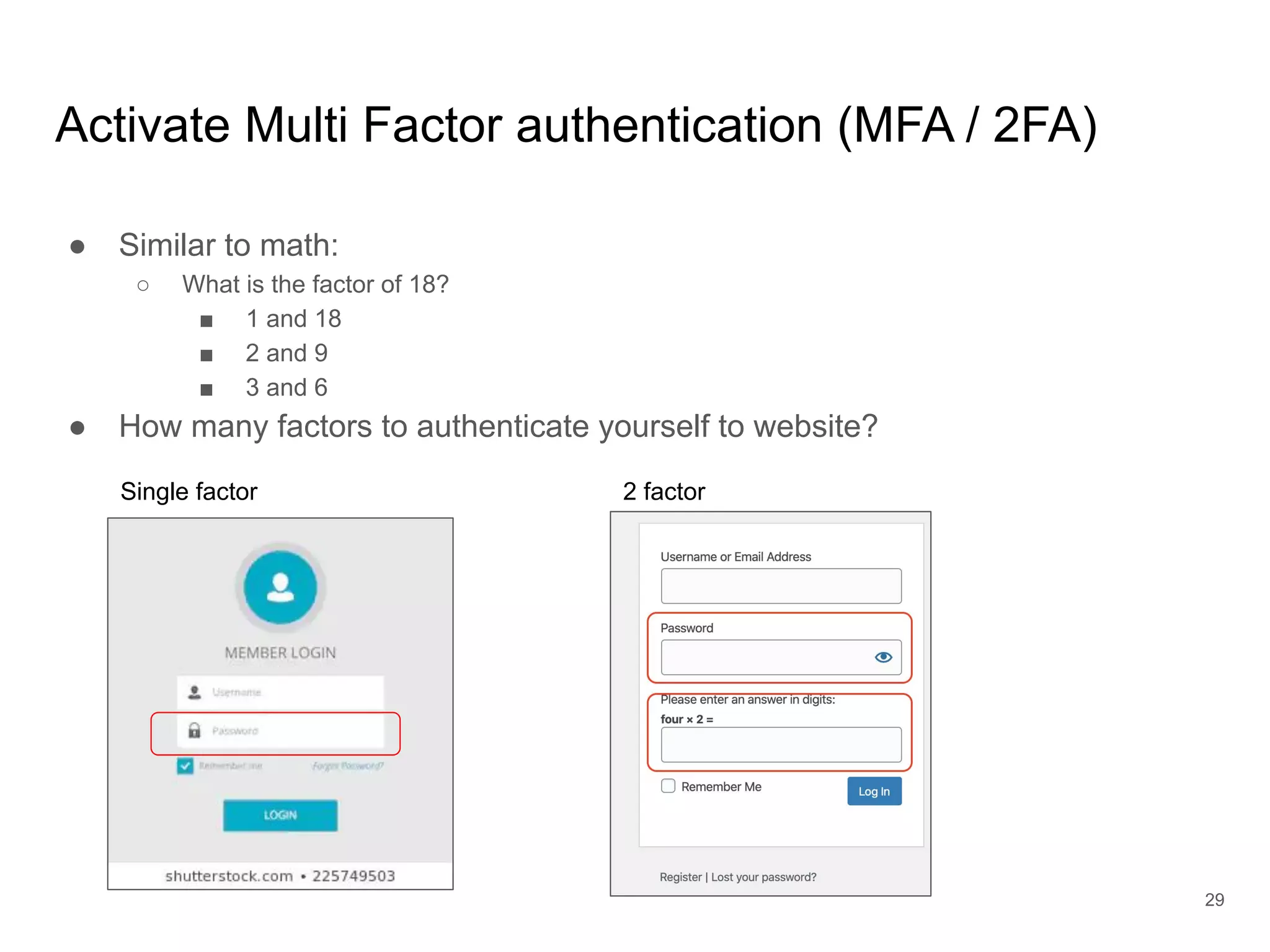
Activate Multi Factor authentication (MFA / 2FA)
● Similar to math:
○ What is the factor of 18?
■ 1 and 18
■ 2 and 9
■ 3 and 6
● How many factors to authenticate yourself to website?
29
Single factor 2 factor
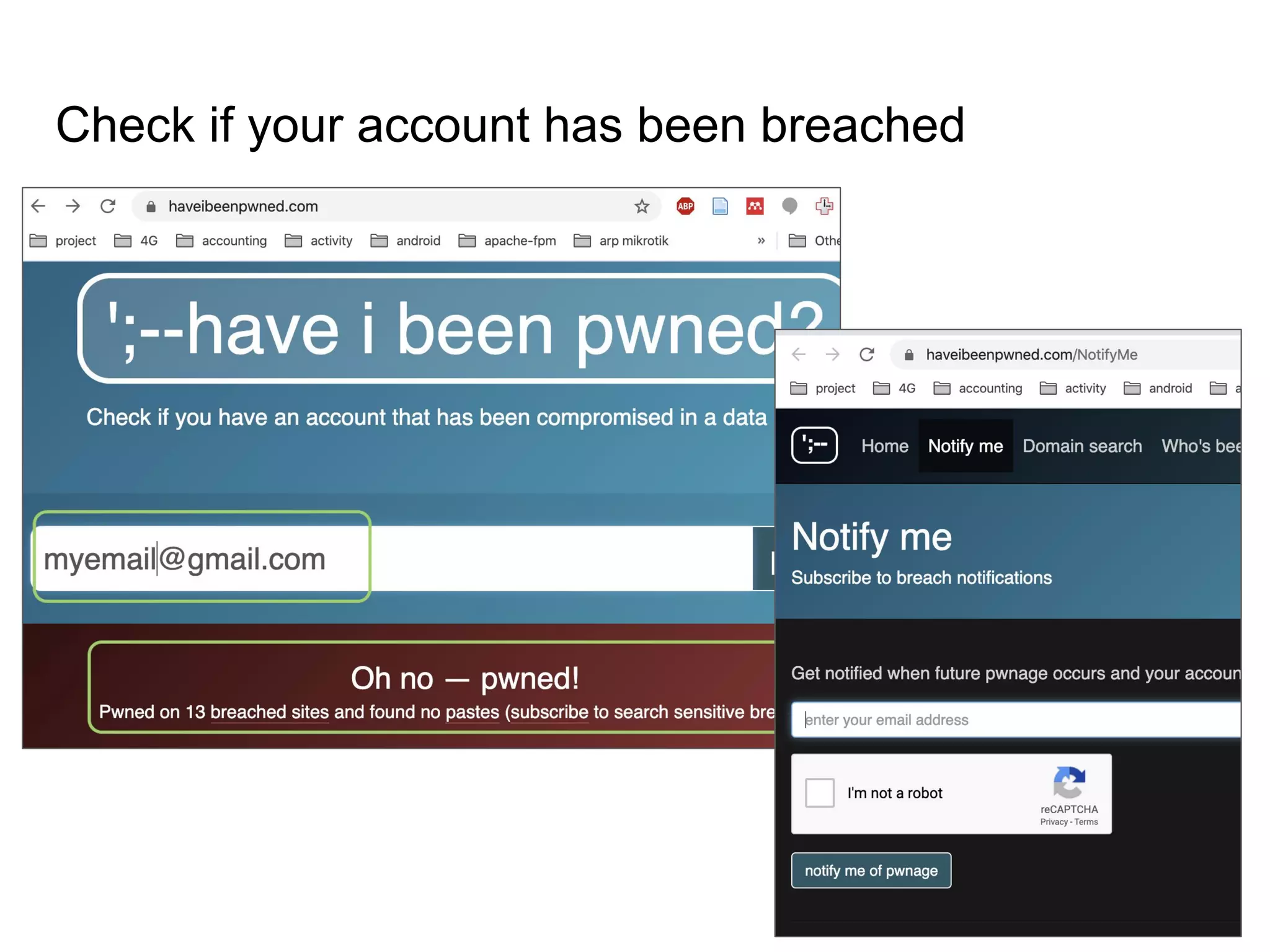
Check if your account has been breached
30
Vendor support
● Security incident
● Security updates
● Always communicate with vendor to make sure always get support for
security
●
31
summary
● The strength of security depends on the weakest link of the chains
● Always upgrade skill and knowledge
● Be humble when speak about security. Do not attract attention
32
QA
33
End of slides
● Thank you for your attention
●
34

Cloud Security Introduction

  • 1.
  • 2.
    Agenda ● Cyber security ●Security incidents ● Cloud Computing ● Cloud Security ● Q & A 2
  • 3.
  • 4.
    What is Cybersecurity Cybersecurity is the art of protecting networks, devices, and data from unauthorized access or criminal use and the practice of ensuring confidentiality, integrity, and availability of information. Security is a very subjective terms. Every person has their own definition of security, that’s why there are many standards in security 4
  • 5.
    Types of Security ●Computer Security - generic name for the collection of tools designed to protect data and to thwart hackers ● Network Security - measures to protect data during their transmission ● Internet Security - measures to protect data during their transmission over a collec)on of interconnected networks 5
  • 6.
    Goals of InformationSecurity (CIA) ● Confidentiality. prevents unauthorized use or disclosure of information ● Integrity. safeguards the accuracy and completeness of information ● Availability. authorized users have reliable and timely access to information 6
  • 7.
    Access Control ● Abilityto permit or deny the use of an object by a subject. ● It provides 3 essential services (AAA): ○ Authentication and Identification (who can login) ■ What you know ■ What you have ■ What you are ○ Authorization (what authorized users can do) ○ Accountability (keep track what a user did) 7
  • 8.
    Vulnerability A weakness insecurity procedures, network design, or implementation that can be exploited to violate a corporate security policy ● Software bugs ● Configuration mistakes ● Network design flaw Exploit ● Taking advantage of a vulnerability CVE: Common Vulnerability and Exposure (https://cve.mitre.org) 8
  • 9.
    Threat Any circumstance orevent with the potential to cause harm to a networked system ● Denial of service (DOS): make computer resources (e.g., bandwidth, disk space, or CPU ) unavailable to its intended users ● Unauthorised access: Access without of permission issued by a rightul owner of devices or networks ● Impersonation ○ Identity theft ● Worms ● Viruses ● Malware 9
  • 10.
    The possibility thata particular vulnerability will be exploited Risk analysis is the process of identifying: ● security risks ● determining their impact ● and identifying areas require protection Risk 10
  • 11.
  • 12.
    Customer data securitybreach ● https://en.wikipedia.org/wiki/Data_breach ● Is your account safe? 12
  • 13.
    CIA espionage (vault7) ●https://wikileaks.org/ciav7p1/cms/index.html ● https://techcrunch.com/2017/03/09/names-and-d efinitions-of-leaked-cia-hacking-tools/ ● https://wikileaks.org/ciav7p1/cms/files/2014%20 10%2023%20--%20EDG%20Testing%20White %20Paper%20--%20Rev%20Draft%20B.docx ● 13
  • 14.
    Telkom as adsinjector ● Telkom injects ads on every http request from customer ● Around 2013 - ? ● script 14
  • 15.
  • 16.
    Can you livewithout them? 16
  • 17.
    So, everything isconnected? 17
  • 18.
    New paradigm: humannetwwork From computer network -> human network 18
  • 19.
    Cloud computing (CC)is... A concept of using the internet/network to provide Everything as a service (EaaS) ● New paradigm: sell services instead of products ● IaaS, Infrastructure as a Service (RAM, CPU, Storage) ● PaaS, Platform as a Service (frameworks) ● SaaS, Software as a Service (eg. Text editor, cpu, storage) 19
  • 20.
    How to achievecloud computing ● Distributed computing ● Grid computing ● virtualisation 20
  • 21.
  • 22.
    CC in short... ●If want you need is a milk, why do you buy a cow? ● There is no cloud, it’s just someone else’s computer 22
  • 23.
  • 24.
    Put security onyour cloud ● See previous slide… ● 24
  • 25.
  • 26.
    Use HTTPS ● Dontuse HTTP based website ● Always use https when accessing website ● HTTPS will encrypt traffic from browser to web server ● 26
  • 27.
    Use DNS redirector/filter ●Nawala (www.nawala.org) ● Opendns (https://www.opendns.com) ● Local DNS filter: ○ Can be embeded onto your network devices ○ Can be external: example: pi hole (https://pi-hole.net) 27
  • 28.
    Use script blocker(more control) ● This plugin will block scripts until you allow it to be executed ● More control 28
  • 29.
    Activate Multi Factorauthentication (MFA / 2FA) ● Similar to math: ○ What is the factor of 18? ■ 1 and 18 ■ 2 and 9 ■ 3 and 6 ● How many factors to authenticate yourself to website? 29 Single factor 2 factor
  • 30.
    Check if youraccount has been breached 30
  • 31.
    Vendor support ● Securityincident ● Security updates ● Always communicate with vendor to make sure always get support for security ● 31
  • 32.
    summary ● The strengthof security depends on the weakest link of the chains ● Always upgrade skill and knowledge ● Be humble when speak about security. Do not attract attention 32
  • 33.
  • 34.
    End of slides ●Thank you for your attention ● 34