Building secure
Cloud architecture
Moshe Ferber
CCSK, CCSP, CCAK, ACSP
When the winds of change blow, some people
build walls and others build windmills.
- Chinese Proverb
About myself
 Information security professional for over 20 years
 Founder, partner and investor at various cyber initiatives and startups
 Popular industry speaker & lecturer (DEFCON, RSA, BLACKHAT, INFOSEC and more)
 Co-hosting the Silverlining IL podcast – security engineering
 Founding committee member for ISC2 CCSP , CSA CCSK, ISACA CCAK certifications
 Member of the board at Macshava Tova – Narrowing societal gaps
 Chairman of the Board, Cloud Security Alliance, Israeli Chapter
Cloud Security Course Schedule can be found at:
http://www.onlinecloudsec.com/course-schedule
So, what is cloud?
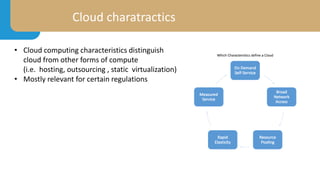
Cloud characteristics:
• Cloud computing characteristics distinguish
cloud from other forms of compute
(i.e. hosting, outsourcing , static virtualization)
• Mostly relevant for certain regulations
Cloud charatractics
Cloud Services are very different in nature
SaaS
PaaS
IaaS
Private Hybrid Public
The shared responsibility model
Physical Security
Network & Data Center
Security
Hypervisors Security
Virtual Machines & OS
security
Data layer & development
platform
Application
Identity Management
DATA
Audit & Monitoring
IaaS PaaS SaaS
Consumer
responsibility
Provider
responsibility
The CISO Challenge
SaaS
PaaS
IaaS
Gain the
expertise for
building
secure
applications
Evaluate our
providers
correctly
Very hard to
provide best
practices
Terminology
AWS IaaS PaaS
Instance Image Snapshot
ELB
Root
Account
IAM user
Architecting for availability
US WEST
AZ1 AZ2
AZ3 AZ4
Singapore
AZ1 AZ2
AZ3 AZ4
Mumbai
AZ1 AZ2
AZ3 AZ4
Regions vs. Availability Zones
Architecting for availability
DB
Mumbai AZ-1
DB DB
Internet
Load Balancer
Redundancy in one region
Mumbai AZ-2
WWW
WWW WWW
Mumbai AZ-3
Architecting for availability
DB
US-EAST1
DB DB
External
CDN
US-EAST2 2nd provider
Redundancy in multiple regions/clouds
WWW
WWW
WWW
C o m p l i a n c e
SOC2 ISO27001
Privacy regulations
• HIPAA
• PCI
• COPPA
Industry
specific
• Fedramp
• BSI
• MTCS
Geographic
location
Advance
certifications
•ISO27017 / 18
•STAR Level 2,3
P r i v a c y b a s i c s
Data Subject
• Owner of the
data
Data controller
• Responsible
for collecting
and securing
the data
Data processor
• Responsible
for storing &
processing
Personal Identifiable Information
Architecting for availability
• External CDN providers can add resiliency,
flexibility & redundancy
• Look for vendors who can add functionality:
DDOS protection
Web application firewall
Load Balancing
DNS management
Architecting for network separation
Mumbai AZ-2 Mumbai AZ-3
Mumbai AZ-1
DB
WWW WWW
WWW
DB
DB
Understanding VPC (Virtual Private Cloud) / Virtual Network
DB
WWW WWW
WWW
DB
DB
VPC A: Production
VPC B: Test
DB Subnet MNGT subnet
Web SUBNET
WWW
WWW
Understanding VPC (Virtual Private Cloud) / Virtual Network
WWW
Router
DB
DB
DB
MQ
Monitoring
Logs
Production VPC 192.168.0.0
192.168.2.0
192.168.1.0
203.0.115.0
192.168.3.0
Architecting for network separation
Understanding VPC (Virtual Private Cloud) / Virtual Network
• VPC is logical grouping of subnets &
instances, virtualizing physical data
center features
• VPC setting include private & public IP
segments, routing, internet
connectivity, adding external WAF /
Firewall, DHCP , VPN & more
• VPC’s can be used to separate test from
production, application services and
more
Architecting for network separation
Understanding Security groups
Mumbai AZ-2 Mumbai AZ-3
Mumbai AZ-1
WWW WWW
WWW
DB
DB DB
Security Group: web-servers Allow: 80/443
Security Group: DB-servers Allow: 3306 (MYSQL)
Architecting for network separation
The advantages of Micro Segmentation
Architecting for network separation
Traditional Micro segmentation
Architecting for network separation
Additional VPC tools
Architecting for network separation
NAT
Instance
Direct
Connect
Firewall
VPN
Gateway
Network
ACLs
Flow logs
Architecting for network separation
Router
Test VPC
WWW
Application
DB
Production VPC
WWW
Application
DB
NAT
Gatewa
y
Corporate
network
VPN / Dedicated line
Access VPC
Bastion Host / Jump Server
S3 EndPoint
Architecting for IT access
Test VPC
Architecting for network separation
Router
Access VPC
Architecting for users' access (SASE, SDP, ZTA)
Test VPC
Users
controller
IDP
SaaS
Access VM
IaaS/PaaS
Web Application Firewall options
Architecting for application protection
3rd party as a
service
3rd Party as
Proxy
Provider
service
WAF client on
web instances
Limiting blast Radius
Organizations / Subscriptions
Root Account
IAM
Admin
Securi
ty
Audito
r
Billing
Admin
Super Admin
Service
1 Admin
Service
2 Admin
Root Account
IAM
Admin
Securi
ty
Audito
r
Billing
Admin
Super Admin
Service
1 Admin
Service
2 Admin
Root Account
IAM
Admin
Securi
ty
Audito
r
Billing
Admin
Super Admin
Service
1 Admin
Service
2 Admin
OU A OU B OU C
Limiting blast Radius
Identity Federation
Identity
Provider
Saas Enterprise
Applications
(SAML)
Integrating social media
accounts
(OpenID)
API / Mobile
Authentication
(OAuth)
MFA,
Conditional access
Limiting blast Radius
Secrets management
inside the cloud ,
accessing cloud
services
• Use dynamic token (STS)
Inside the cloud,
access 3rd party
services
• Use Secret store (vault, AWS secret store, Azure
Keyvault)
Outside the cloud,
accessing cloud
services
• Vault or similar solution
• Config file if no choice, stored in a specific location
Limiting blast Radius
Containers
Source: https://cloudblogs.microsoft.com/opensource/2019/07/15/how-to-get-started-containers-docker-
kubernetes/
Containers management
Kubernetes (K8s’)
Compute
scheduling
Self-healing
Horizontal
scaling
Volume
management
Service
discovery &
load balancing
Automated
rollouts &
rollbacks
Secret &
configuration
management
Source: https://cloudblogs.microsoft.com/opensource/2019/07/15/how-to-get-started-containers-docker-
kubernetes/
Serverless
Source: Tech Target – what is serverless
Serverless threats
Source: how to design secure servless applications – CSA serverless working group
Architecting for application separation
Source: Cloud Security Alliance CCSK certification
Architecting for application separation
Front End
Back End
Queue
Service
Build application separation
Architecting for application separation
Utilize MQ services to
separate application
components
Use API Gateways &
Endpoints
Understanding storage options
Architecting for data security
Volume Storage
• Attached to a single
instance
• Not shared, accessible
only from the instance
• Useful in storing
instance OS
environment ,
application binaries ,
DB files and anything
instances need to
operate
Object Storage
• Provider managed
• Files are placed in
buckets
• Versioning & meta data
kept for all objects
• Files are accessible by
API or HTTP
• Independent from AZ
or instances
dependencies
• Useful for storing static
applications data,
backups, source code
and config files
Database service
• Provider managed
• Files are accessible by
DB API
• Vary between different
services: (structured,
unstructured and
more)
• Usually, customer has
no access to underlying
DB infrastructure
CDN
• Cloud provider
proprietary service or
external 3rd party
services
• Provide flexibility and
resiliency
• Useful in serving static
content at late latency
• Usually accompanied
by additional services:
WAF, DDOS protection,
Load balancer…
Volume storage
Architecting for data security
Backups
• Usually snapshots
• Customer
responsibility to keep
snapshots
inaccessible
• Don’t keep
application secrets
on disk
Redundancy
• Not redundant
• Access is made by a
service on the
instance OS (web
service I.e)
• If service fails, no
access
Encryption
• Storage encryption
with provider service
(i.e. AWS KMS, Azure
keyvault)
• Or OS Level
encryption software
(i.e. truecrypt,
bitlocker)
Object storage
Architecting for data security
Backups
• Keeps versioning
system of files
• External backups
are recommended
(explore provider
services)
Redundancy
• Availability is
responsibility of
the provider
• Increased
availability can be
achieved by
replicating to other
regions
Encryption
• Service side:
Storage encryption
with provider
service (i.e. AWS
KMS, Azure key
vault)
• Or Client side using
provider SDK
Database Storage (Database as a service)
Architecting for data security
Backups
• Automated backups
are made by provider
• External exports and
backups should be
made periodically,
just as any other
database
Redundancy
• Availability is
responsibility of the
provider but managed
by customer
• Architect multiple AZ
Encryption
• Service side: Storage
encryption with
provider service
usually at the
database level
• TDE can be used here
as well to encrypt at
table/ column level
Encryption
Architecting for data security
OS
Storage
DB
Application
Encryption Layer
TDE
Storage Encryption
Volume Encryption
Shared KMS
Dedicated
HSM
Virtual
instance
KEYS
A r c h i t e c t i n g f o r C I / C D
Source: CCAK certification, Module 8
A r c h i t e c t i n g f o r C I / C D
• Detecting vulnerable packages
• Licensing and usability
SCA
• Examine the static code
• Whitebox testing
SAST
• Testing the actual runtime
• Blackbox testing
DAST
• misconfiguration
• Application secrets
IaaC
inspection
M o n i t o r i n g To o l s e t
CWPP - Cloud
Workload Protection
Platform
•Protect Workloads
(VM’s, Containers,
serverless
•Traditional end-
point security (AV,
VA )
•Additional features
for containers and
serverless
CSPM Cloud Security
Posture Management
•Protect
management
dashboard
•Monitor for
Compliance breaks,
misconfiguration,
Identity permissions
CIEM - Cloud Identity
& entitlement
management
•Monitor Identity
data
•Identity include
services, machines
CASB - Cloud Access
Security Broker
•Design for SaaS
•Detect threats
•eDiscovery + DLP
•Shadow IT detection
SSPM – SaaS security
posture management
•CASB next
generation
•Evaluating SaaS
providers
•Focus on posture
and compliance
Cloud native application protection
platform (CNAPP)
IaaS/PaaS SaaS
Security
Center
Logs
Posture &
configuration
Workloads
vulnerabilities
Threat
intelligence
Identity data
Monitoring Tool set
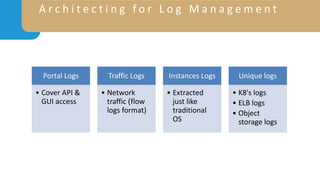
A r c h i t e c t i n g f o r L o g M a n a g e m e n t
Portal Logs
• Cover API &
GUI access
Traffic Logs
• Network
traffic )flow
logs format)
Instances Logs
• Extracted
just like
traditional
OS
Unique logs
• K8's logs
• ELB logs
• Object
storage logs
OS Logs
A r c h i t e c t i n g f o r l o g m a n a g e m e n t
Cloud
Trail
S3
SIEM
Agent
Cloud WATCH
(Rules & Alerts)
SNS
(notifications)
VPC Flow
Logs
KEEP IN TOUCH
Cloud Security Course Schedule can be find at:
http://www.onlinecloudsec.com/course-schedule
Questions?

Cloud Security Architecture.pptx

  • 1.
    Building secure Cloud architecture MosheFerber CCSK, CCSP, CCAK, ACSP When the winds of change blow, some people build walls and others build windmills. - Chinese Proverb
  • 2.
    About myself  Informationsecurity professional for over 20 years  Founder, partner and investor at various cyber initiatives and startups  Popular industry speaker & lecturer (DEFCON, RSA, BLACKHAT, INFOSEC and more)  Co-hosting the Silverlining IL podcast – security engineering  Founding committee member for ISC2 CCSP , CSA CCSK, ISACA CCAK certifications  Member of the board at Macshava Tova – Narrowing societal gaps  Chairman of the Board, Cloud Security Alliance, Israeli Chapter Cloud Security Course Schedule can be found at: http://www.onlinecloudsec.com/course-schedule
  • 3.
  • 4.
    Cloud characteristics: • Cloudcomputing characteristics distinguish cloud from other forms of compute (i.e. hosting, outsourcing , static virtualization) • Mostly relevant for certain regulations Cloud charatractics
  • 5.
    Cloud Services arevery different in nature SaaS PaaS IaaS Private Hybrid Public
  • 6.
    The shared responsibilitymodel Physical Security Network & Data Center Security Hypervisors Security Virtual Machines & OS security Data layer & development platform Application Identity Management DATA Audit & Monitoring IaaS PaaS SaaS Consumer responsibility Provider responsibility
  • 7.
    The CISO Challenge SaaS PaaS IaaS Gainthe expertise for building secure applications Evaluate our providers correctly Very hard to provide best practices
  • 8.
    Terminology AWS IaaS PaaS InstanceImage Snapshot ELB Root Account IAM user
  • 9.
    Architecting for availability USWEST AZ1 AZ2 AZ3 AZ4 Singapore AZ1 AZ2 AZ3 AZ4 Mumbai AZ1 AZ2 AZ3 AZ4 Regions vs. Availability Zones
  • 10.
    Architecting for availability DB MumbaiAZ-1 DB DB Internet Load Balancer Redundancy in one region Mumbai AZ-2 WWW WWW WWW Mumbai AZ-3
  • 11.
    Architecting for availability DB US-EAST1 DBDB External CDN US-EAST2 2nd provider Redundancy in multiple regions/clouds WWW WWW WWW
  • 12.
    C o mp l i a n c e SOC2 ISO27001 Privacy regulations • HIPAA • PCI • COPPA Industry specific • Fedramp • BSI • MTCS Geographic location Advance certifications •ISO27017 / 18 •STAR Level 2,3
  • 13.
    P r iv a c y b a s i c s Data Subject • Owner of the data Data controller • Responsible for collecting and securing the data Data processor • Responsible for storing & processing Personal Identifiable Information
  • 14.
    Architecting for availability •External CDN providers can add resiliency, flexibility & redundancy • Look for vendors who can add functionality: DDOS protection Web application firewall Load Balancing DNS management
  • 15.
    Architecting for networkseparation Mumbai AZ-2 Mumbai AZ-3 Mumbai AZ-1 DB WWW WWW WWW DB DB Understanding VPC (Virtual Private Cloud) / Virtual Network DB WWW WWW WWW DB DB VPC A: Production VPC B: Test
  • 16.
    DB Subnet MNGTsubnet Web SUBNET WWW WWW Understanding VPC (Virtual Private Cloud) / Virtual Network WWW Router DB DB DB MQ Monitoring Logs Production VPC 192.168.0.0 192.168.2.0 192.168.1.0 203.0.115.0 192.168.3.0 Architecting for network separation
  • 17.
    Understanding VPC (VirtualPrivate Cloud) / Virtual Network • VPC is logical grouping of subnets & instances, virtualizing physical data center features • VPC setting include private & public IP segments, routing, internet connectivity, adding external WAF / Firewall, DHCP , VPN & more • VPC’s can be used to separate test from production, application services and more Architecting for network separation
  • 18.
    Understanding Security groups MumbaiAZ-2 Mumbai AZ-3 Mumbai AZ-1 WWW WWW WWW DB DB DB Security Group: web-servers Allow: 80/443 Security Group: DB-servers Allow: 3306 (MYSQL) Architecting for network separation
  • 19.
    The advantages ofMicro Segmentation Architecting for network separation Traditional Micro segmentation Architecting for network separation
  • 20.
    Additional VPC tools Architectingfor network separation NAT Instance Direct Connect Firewall VPN Gateway Network ACLs Flow logs
  • 21.
    Architecting for networkseparation Router Test VPC WWW Application DB Production VPC WWW Application DB NAT Gatewa y Corporate network VPN / Dedicated line Access VPC Bastion Host / Jump Server S3 EndPoint Architecting for IT access Test VPC
  • 22.
    Architecting for networkseparation Router Access VPC Architecting for users' access (SASE, SDP, ZTA) Test VPC Users controller IDP SaaS Access VM IaaS/PaaS
  • 23.
    Web Application Firewalloptions Architecting for application protection 3rd party as a service 3rd Party as Proxy Provider service WAF client on web instances
  • 24.
    Limiting blast Radius Limitingblast Radius Organizations / Subscriptions Root Account IAM Admin Securi ty Audito r Billing Admin Super Admin Service 1 Admin Service 2 Admin Root Account IAM Admin Securi ty Audito r Billing Admin Super Admin Service 1 Admin Service 2 Admin Root Account IAM Admin Securi ty Audito r Billing Admin Super Admin Service 1 Admin Service 2 Admin OU A OU B OU C
  • 25.
    Limiting blast Radius IdentityFederation Identity Provider Saas Enterprise Applications (SAML) Integrating social media accounts (OpenID) API / Mobile Authentication (OAuth) MFA, Conditional access
  • 26.
    Limiting blast Radius Secretsmanagement inside the cloud , accessing cloud services • Use dynamic token (STS) Inside the cloud, access 3rd party services • Use Secret store (vault, AWS secret store, Azure Keyvault) Outside the cloud, accessing cloud services • Vault or similar solution • Config file if no choice, stored in a specific location
  • 27.
    Limiting blast Radius Containers Source:https://cloudblogs.microsoft.com/opensource/2019/07/15/how-to-get-started-containers-docker- kubernetes/
  • 28.
    Containers management Kubernetes (K8s’) Compute scheduling Self-healing Horizontal scaling Volume management Service discovery& load balancing Automated rollouts & rollbacks Secret & configuration management Source: https://cloudblogs.microsoft.com/opensource/2019/07/15/how-to-get-started-containers-docker- kubernetes/
  • 29.
    Serverless Source: Tech Target– what is serverless
  • 30.
    Serverless threats Source: howto design secure servless applications – CSA serverless working group
  • 31.
    Architecting for applicationseparation Source: Cloud Security Alliance CCSK certification
  • 32.
    Architecting for applicationseparation Front End Back End Queue Service
  • 33.
    Build application separation Architectingfor application separation Utilize MQ services to separate application components Use API Gateways & Endpoints
  • 34.
    Understanding storage options Architectingfor data security Volume Storage • Attached to a single instance • Not shared, accessible only from the instance • Useful in storing instance OS environment , application binaries , DB files and anything instances need to operate Object Storage • Provider managed • Files are placed in buckets • Versioning & meta data kept for all objects • Files are accessible by API or HTTP • Independent from AZ or instances dependencies • Useful for storing static applications data, backups, source code and config files Database service • Provider managed • Files are accessible by DB API • Vary between different services: (structured, unstructured and more) • Usually, customer has no access to underlying DB infrastructure CDN • Cloud provider proprietary service or external 3rd party services • Provide flexibility and resiliency • Useful in serving static content at late latency • Usually accompanied by additional services: WAF, DDOS protection, Load balancer…
  • 35.
    Volume storage Architecting fordata security Backups • Usually snapshots • Customer responsibility to keep snapshots inaccessible • Don’t keep application secrets on disk Redundancy • Not redundant • Access is made by a service on the instance OS (web service I.e) • If service fails, no access Encryption • Storage encryption with provider service (i.e. AWS KMS, Azure keyvault) • Or OS Level encryption software (i.e. truecrypt, bitlocker)
  • 36.
    Object storage Architecting fordata security Backups • Keeps versioning system of files • External backups are recommended (explore provider services) Redundancy • Availability is responsibility of the provider • Increased availability can be achieved by replicating to other regions Encryption • Service side: Storage encryption with provider service (i.e. AWS KMS, Azure key vault) • Or Client side using provider SDK
  • 37.
    Database Storage (Databaseas a service) Architecting for data security Backups • Automated backups are made by provider • External exports and backups should be made periodically, just as any other database Redundancy • Availability is responsibility of the provider but managed by customer • Architect multiple AZ Encryption • Service side: Storage encryption with provider service usually at the database level • TDE can be used here as well to encrypt at table/ column level
  • 38.
    Encryption Architecting for datasecurity OS Storage DB Application Encryption Layer TDE Storage Encryption Volume Encryption Shared KMS Dedicated HSM Virtual instance KEYS
  • 39.
    A r ch i t e c t i n g f o r C I / C D Source: CCAK certification, Module 8
  • 40.
    A r ch i t e c t i n g f o r C I / C D • Detecting vulnerable packages • Licensing and usability SCA • Examine the static code • Whitebox testing SAST • Testing the actual runtime • Blackbox testing DAST • misconfiguration • Application secrets IaaC inspection
  • 41.
    M o ni t o r i n g To o l s e t CWPP - Cloud Workload Protection Platform •Protect Workloads (VM’s, Containers, serverless •Traditional end- point security (AV, VA ) •Additional features for containers and serverless CSPM Cloud Security Posture Management •Protect management dashboard •Monitor for Compliance breaks, misconfiguration, Identity permissions CIEM - Cloud Identity & entitlement management •Monitor Identity data •Identity include services, machines CASB - Cloud Access Security Broker •Design for SaaS •Detect threats •eDiscovery + DLP •Shadow IT detection SSPM – SaaS security posture management •CASB next generation •Evaluating SaaS providers •Focus on posture and compliance Cloud native application protection platform (CNAPP) IaaS/PaaS SaaS
  • 42.
  • 43.
    A r ch i t e c t i n g f o r L o g M a n a g e m e n t Portal Logs • Cover API & GUI access Traffic Logs • Network traffic )flow logs format) Instances Logs • Extracted just like traditional OS Unique logs • K8's logs • ELB logs • Object storage logs
  • 44.
    OS Logs A rc h i t e c t i n g f o r l o g m a n a g e m e n t Cloud Trail S3 SIEM Agent Cloud WATCH (Rules & Alerts) SNS (notifications) VPC Flow Logs
  • 45.
    KEEP IN TOUCH CloudSecurity Course Schedule can be find at: http://www.onlinecloudsec.com/course-schedule
  • 46.