

Climate Control System in
Automotives
BY
ARAVINDUMAR B
Introduction
• Automatic climate control is the ability to
monitor and influence the temperature of a
specified space without manual intervention.
• The primary purpose of automatic climate
control is to manage the temperature of a
given area based on settings by a user of the
system.
• This climate control capability can be found in
many cars, boats, and airplanes.
Why Climate Control?
• Prior to climate control, a heating and cooling system
could only be engaged by manually selecting one of the
mechanisms.
• While a user could select a general temperature via a
sliding warmer or cooler control, the system would not
automatically switch from air conditioning to heating
without manual intervention.
• The creation of the automatic climate control system
has advanced the overall comfort for automobiles, as
users are not forced to constantly move the controls to
adjust the temperature of the compartment.
Climate Control in Automotives
• Adjustable temperature in the vehicle cabin.
• Heat must be available as soon as possible.
• Distribute heat to various parts of the vehicle.
• Ventilate with fresh air with minimum noise.
• Facilitate the demisting of all windows.
• Ease of control operation.
Overview
Mechanism
• The mechanics of automated climate control
require sensors to be placed into the
compartment of the area to be managed.
• These sensors read the current temperature of
the area.
• These readings are then matched to the setting
defined by the occupants through the computer
system within the vehicle, and the heating and
cooling are adjusted appropriately.
Mechanism
• An automatic climate control system also includes
a computer that regulates the entire air system
within the compartment.
• This computer system regulates the fan speed,
engagement of air conditioning compressor, and
overall air temperature to be disbursed into the
compartment.
• Typically, these processes are integrated into the
overall computer system within modern
automobiles.
Representation of comfortable
temperature
Ventilation
• To allow fresh air from outside the vehicle to be
circulated inside the cabin, a pressure difference
must be created.
• This is achieved by using a plenum chamber
which holds air at a pressure higher than the
ambient pressure.
• The plenum chamber on a vehicle is situated just
below the windscreen, behind the bonnet hood.
• When the vehicle is moving, the air flow over the
vehicle will cause a higher pressure in this area.
Plenum chamber effect
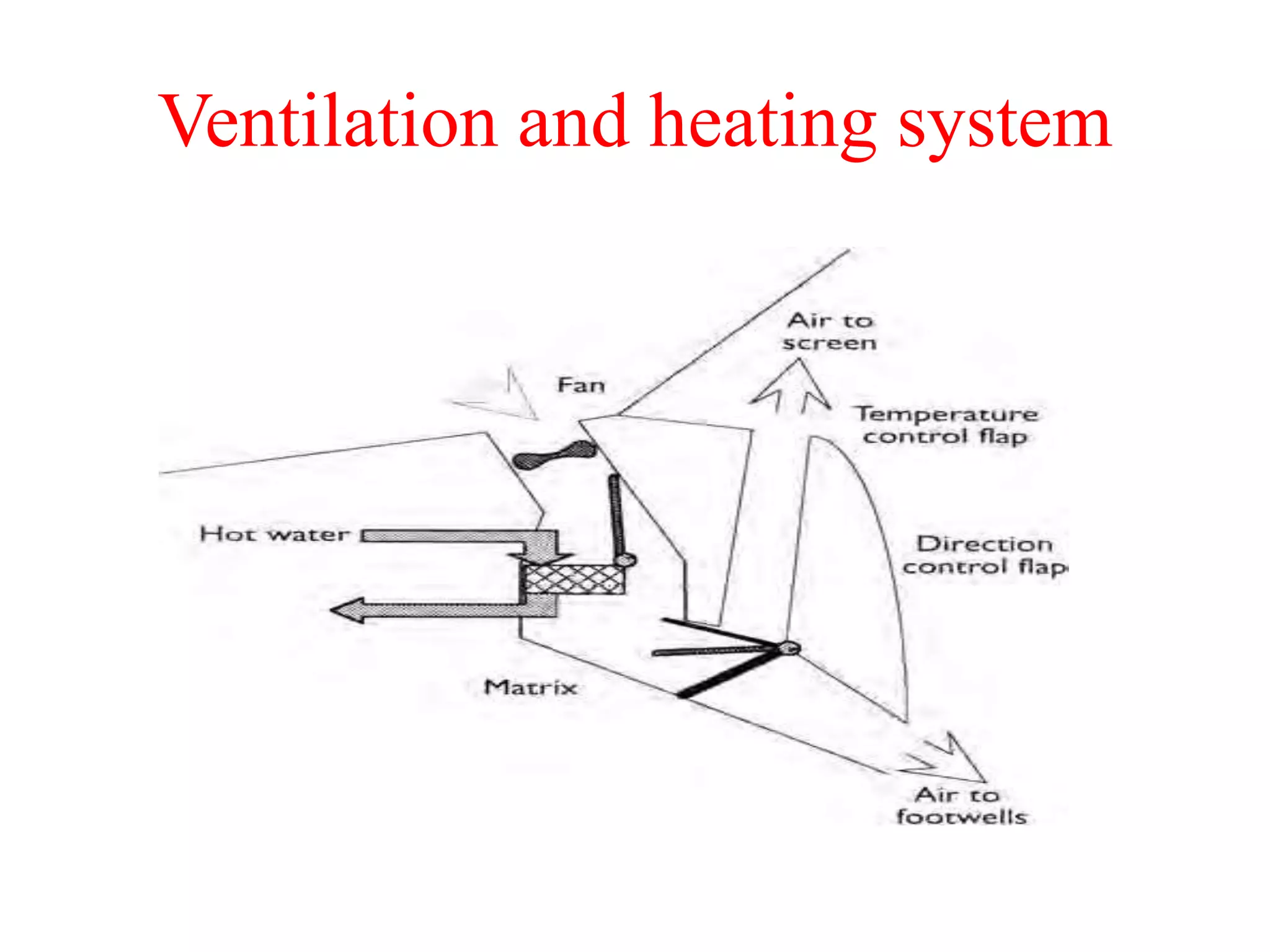
Heating system
Heat from the engine is utilized to increase the
temperature of the car interior. This is achieved by
use of a heat exchanger, called the heater matrix.
Due to the action of the thermostat in the engine
cooling system the water temperature remains
broadly constant. This allows for the air being
passed over the heater matrix to be heated by a set
amount depending on the outside air temperature
and the rate of air flow.
A source of hot air is therefore available for heating
the vehicle interior.
• Some form of control is required over how much heat
is required.
• The method used on most modern vehicles is the
blending technique. This is simply a control flap,
which determines how much of the air being passed
into the vehicle is directed over the heater matrix.
• The main drawback of this system is the change in air
flow with vehicle speed. Some systems use a valve to
control the hot coolant flowing to the heater matrix.
Heating system
Ventilation and heating system
Heater blower motors
• The motors used to increase air flow. They are
simple permanent magnet two-brush motors.
• The blower fan is often the centrifugal type and in
many cases, the blades are positioned
asymmetrically to reduce resonant noise.
• Varying the voltage supplied controls motor
speed. his is achieved by using dropping resistors.
• The speed in some cases is made ‘infinitely’
variable by the use of a variable resistor.
• In most cases the motor is controlled to three or
four set speeds.
Electronic heating control
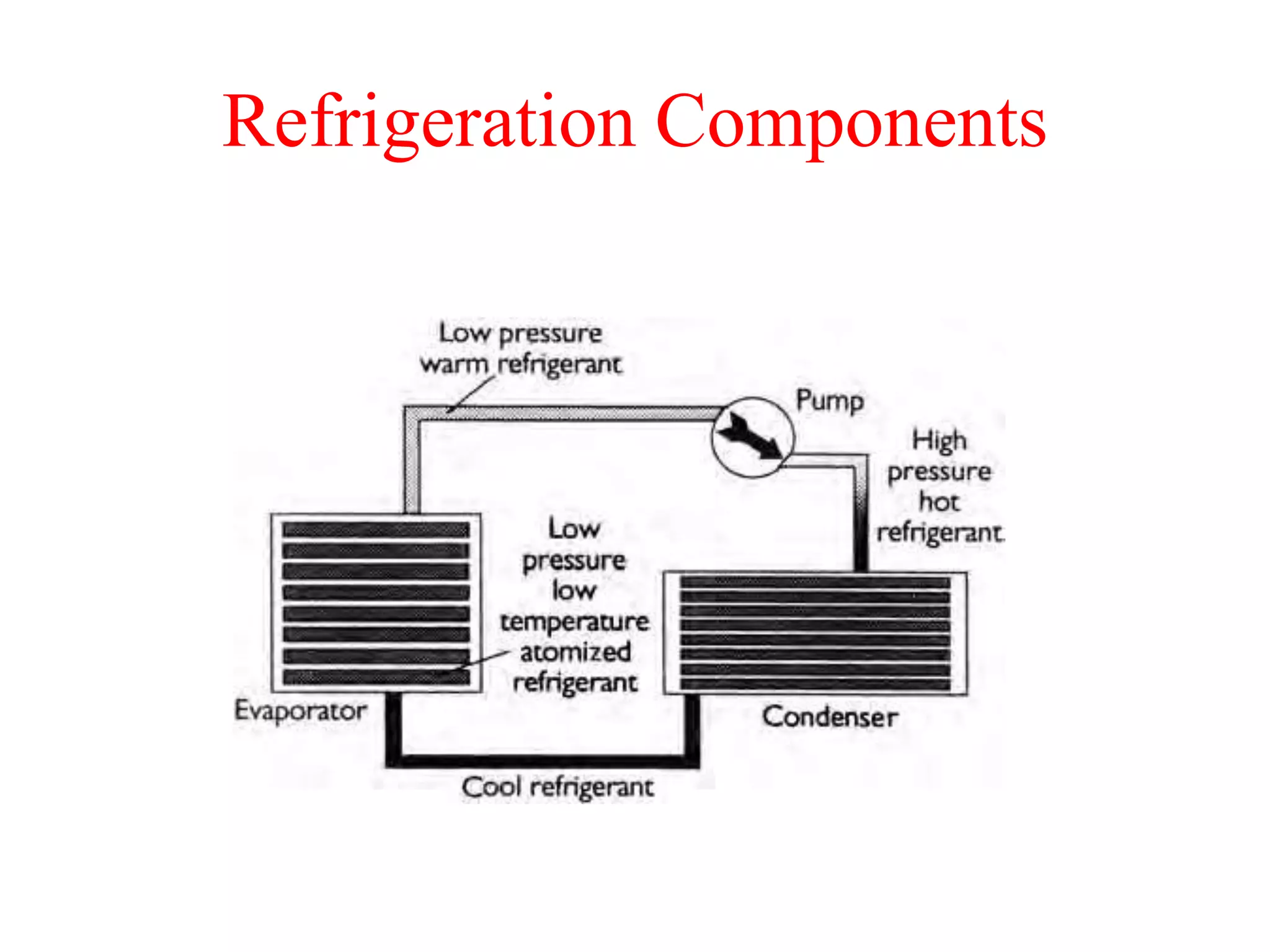
Air conditioning
• A vehicle fitted with air conditioning allows
the temperature of the cabin to be controlled to
the ideal or most comfortable value determined
by the ambient conditions.
• The system as a whole still utilizes the
standard heating and ventilation components,
but with the important addition of an
evaporator, which both cools and dehumidifies
the air.
Refrigeration Components
Advances
• Advances in automatic climate control in
automobiles have evolved into zoned climate
control.
• In this type of implementation, each occupant
can adjust the temperature of the seating area
in which he or she is seated.
• Each area within the defined zones has a
separate climate control sensor that reads the
current temperature of the specified area.
Advantages
• Increases comfort of occupants by allowing the perfect
in-car temperature to be selected and maintained
• Protects from pollution, smog and traffic fumes
• Constantly filters air-borne pollutants like pollen and
dust from entering the car
• Enjoy warmth without stuffiness in winter
• Clean fresh air even in the heaviest traffic
• Remain cool, calm and collected regardless of the
external temperature or humidity
Conclusion
• These types of systems are not limited to
automobiles.
• Automatic climate control systems can also be
found in many boats and airplanes.
• While the implementation is unique for each
type, the overall concept is the same.
Thank You!!!

Climate control system in Automotives

  • 1.
    Climate Control Systemin Automotives BY ARAVINDUMAR B
  • 2.
    Introduction • Automatic climatecontrol is the ability to monitor and influence the temperature of a specified space without manual intervention. • The primary purpose of automatic climate control is to manage the temperature of a given area based on settings by a user of the system. • This climate control capability can be found in many cars, boats, and airplanes.
  • 3.
    Why Climate Control? •Prior to climate control, a heating and cooling system could only be engaged by manually selecting one of the mechanisms. • While a user could select a general temperature via a sliding warmer or cooler control, the system would not automatically switch from air conditioning to heating without manual intervention. • The creation of the automatic climate control system has advanced the overall comfort for automobiles, as users are not forced to constantly move the controls to adjust the temperature of the compartment.
  • 4.
    Climate Control inAutomotives • Adjustable temperature in the vehicle cabin. • Heat must be available as soon as possible. • Distribute heat to various parts of the vehicle. • Ventilate with fresh air with minimum noise. • Facilitate the demisting of all windows. • Ease of control operation.
  • 5.
  • 6.
    Mechanism • The mechanicsof automated climate control require sensors to be placed into the compartment of the area to be managed. • These sensors read the current temperature of the area. • These readings are then matched to the setting defined by the occupants through the computer system within the vehicle, and the heating and cooling are adjusted appropriately.
  • 7.
    Mechanism • An automaticclimate control system also includes a computer that regulates the entire air system within the compartment. • This computer system regulates the fan speed, engagement of air conditioning compressor, and overall air temperature to be disbursed into the compartment. • Typically, these processes are integrated into the overall computer system within modern automobiles.
  • 8.
  • 9.
    Ventilation • To allowfresh air from outside the vehicle to be circulated inside the cabin, a pressure difference must be created. • This is achieved by using a plenum chamber which holds air at a pressure higher than the ambient pressure. • The plenum chamber on a vehicle is situated just below the windscreen, behind the bonnet hood. • When the vehicle is moving, the air flow over the vehicle will cause a higher pressure in this area.
  • 10.
  • 11.
    Heating system Heat fromthe engine is utilized to increase the temperature of the car interior. This is achieved by use of a heat exchanger, called the heater matrix. Due to the action of the thermostat in the engine cooling system the water temperature remains broadly constant. This allows for the air being passed over the heater matrix to be heated by a set amount depending on the outside air temperature and the rate of air flow. A source of hot air is therefore available for heating the vehicle interior.
  • 12.
    • Some formof control is required over how much heat is required. • The method used on most modern vehicles is the blending technique. This is simply a control flap, which determines how much of the air being passed into the vehicle is directed over the heater matrix. • The main drawback of this system is the change in air flow with vehicle speed. Some systems use a valve to control the hot coolant flowing to the heater matrix. Heating system
  • 13.
  • 14.
    Heater blower motors •The motors used to increase air flow. They are simple permanent magnet two-brush motors. • The blower fan is often the centrifugal type and in many cases, the blades are positioned asymmetrically to reduce resonant noise. • Varying the voltage supplied controls motor speed. his is achieved by using dropping resistors. • The speed in some cases is made ‘infinitely’ variable by the use of a variable resistor. • In most cases the motor is controlled to three or four set speeds.
  • 15.
  • 16.
    Air conditioning • Avehicle fitted with air conditioning allows the temperature of the cabin to be controlled to the ideal or most comfortable value determined by the ambient conditions. • The system as a whole still utilizes the standard heating and ventilation components, but with the important addition of an evaporator, which both cools and dehumidifies the air.
  • 17.
  • 18.
    Advances • Advances inautomatic climate control in automobiles have evolved into zoned climate control. • In this type of implementation, each occupant can adjust the temperature of the seating area in which he or she is seated. • Each area within the defined zones has a separate climate control sensor that reads the current temperature of the specified area.
  • 19.
    Advantages • Increases comfortof occupants by allowing the perfect in-car temperature to be selected and maintained • Protects from pollution, smog and traffic fumes • Constantly filters air-borne pollutants like pollen and dust from entering the car • Enjoy warmth without stuffiness in winter • Clean fresh air even in the heaviest traffic • Remain cool, calm and collected regardless of the external temperature or humidity
  • 20.
    Conclusion • These typesof systems are not limited to automobiles. • Automatic climate control systems can also be found in many boats and airplanes. • While the implementation is unique for each type, the overall concept is the same.
  • 21.