Introduction
• A liquid like water or alcohol absorbs the heat in its vicinity as it evaporates.

• When alcohol is put on your skin, you feel chilly.

• This happens because, when the alcohol evaporates, it removes heat from
  your skin.

• On the air conditioner cycle, by using the above principle and refrigerant which
  is easier to evaporate than alcohol, takes place.

• An application of this principle is refrigeration.

• The higher the vaporizing capacity, the larger the heat absorbing power and
  the higher the refrigerating capacity.
Function
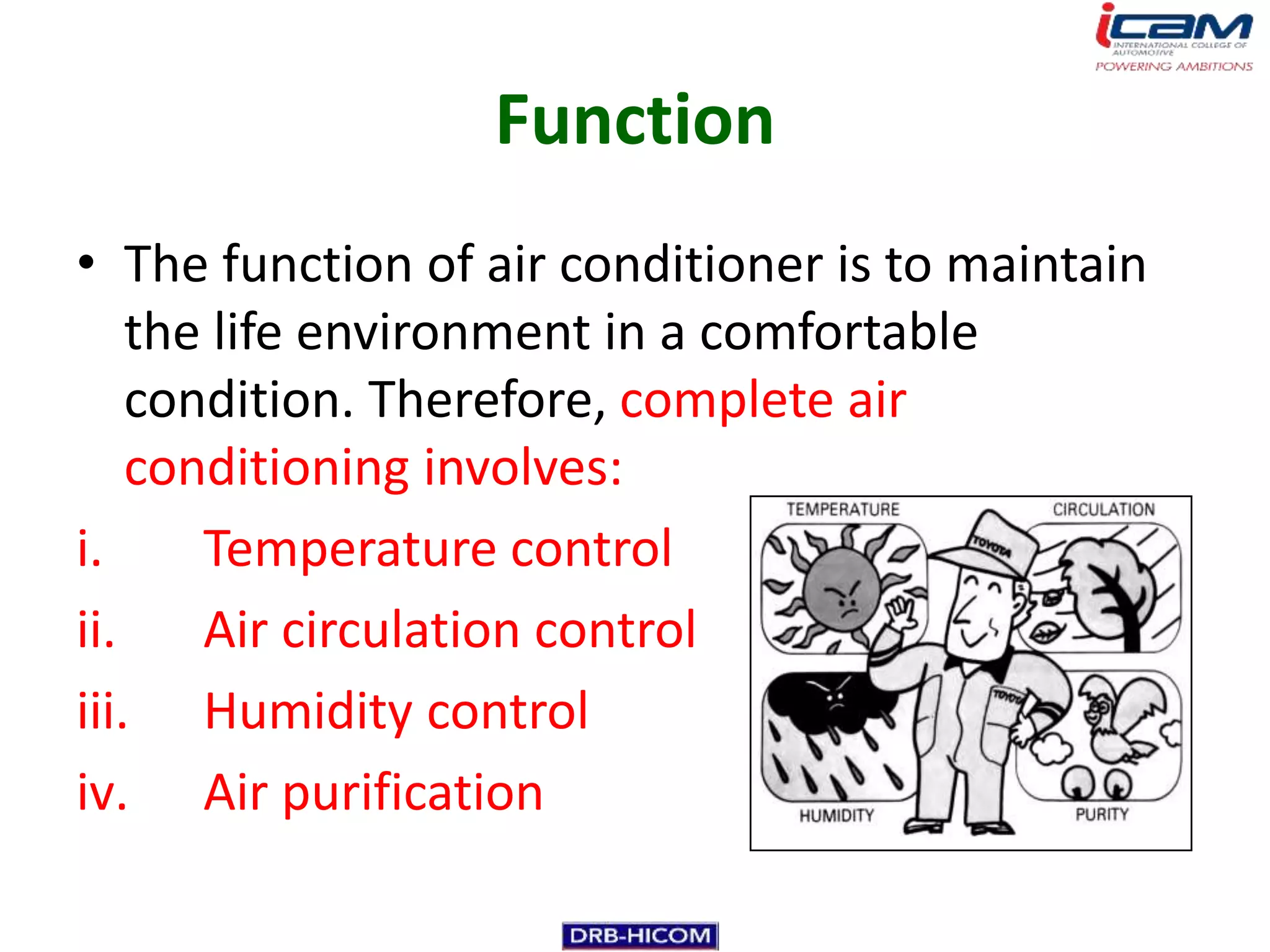
• The function of air conditioner is to maintain
    the life environment in a comfortable
    condition. Therefore, complete air
    conditioning involves:
i.     Temperature control
ii.    Air circulation control
iii. Humidity control
iv. Air purification
The air conditioner for an automobile generally
consists of a:
i. heating unit
ii. cooling unit
iii. moisture remover
iv. ventilator
Basic Cooling System

Refrigeration System
• A device that cools or dehumidifies the air in
  the car of fresh outside air drawn into the car
  so as to produce comfortable air.
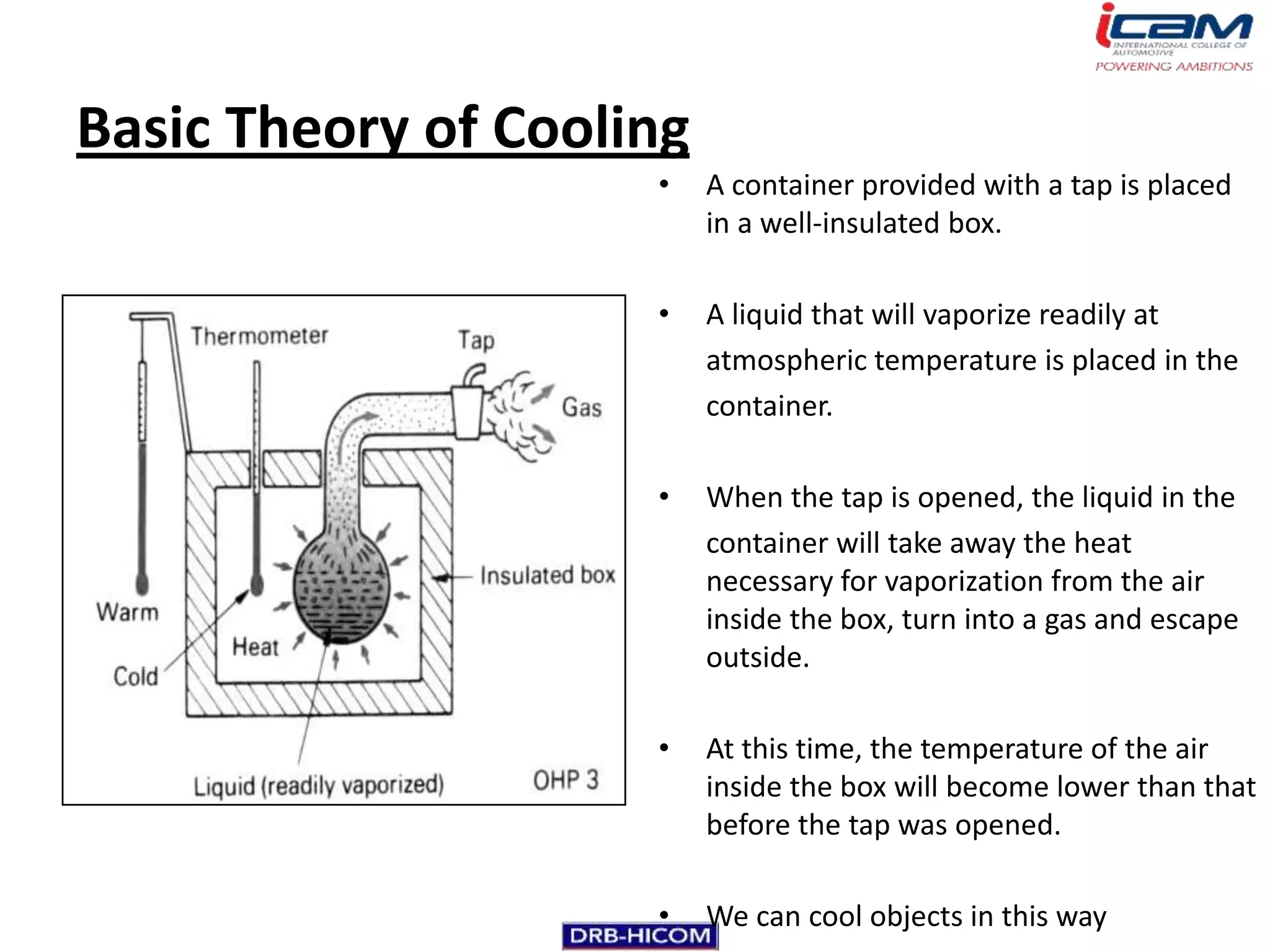
Basic Theory of Cooling
                     •    A container provided with a tap is placed
                          in a well-insulated box.

                     •    A liquid that will vaporize readily at
                          atmospheric temperature is placed in the
                          container.

                     •    When the tap is opened, the liquid in the
                          container will take away the heat
                          necessary for vaporization from the air
                          inside the box, turn into a gas and escape
                          outside.

                     •    At this time, the temperature of the air
                          inside the box will become lower than that
                          before the tap was opened.

                     •    We can cool objects in this way
Refrigerant
• The refrigerant is used to absorb, transfer and
    release heat in the air-conditioning circuit. A
    refrigerant must be :
i. Non-flammable
ii. Non-explosive
iii. Non-poisonous
iv. Non-corrosive
v. Odorless
R-12
• Substance known as Dichlorodifluoromethane commonly referred to as
  Freon or R-12.

• R-12 has the following properties:
i.    non-flammable
ii. non-toxic
iii. stable at all temperatures
iv. does not react with aluminium, steel or copper,
v. soluble in mineral oils
vi. low boiling point
vii. vaporizes at minus 30°C
viii. harmful to the environment
R-13-a
• It is an HFC or Hydrofluorocarbon.

• R-134a has a boiling point of minus 26.2°C.

• All its other refrigerant characteristics are similar to R-12
   EXCEPT
i. Its operating pressures and temperatures in the evaporator
    and condenser are slightly higher than for R-12.
ii. R-134a is not soluble in mineral oils (so new compressor
    lubricating oils have been developed)
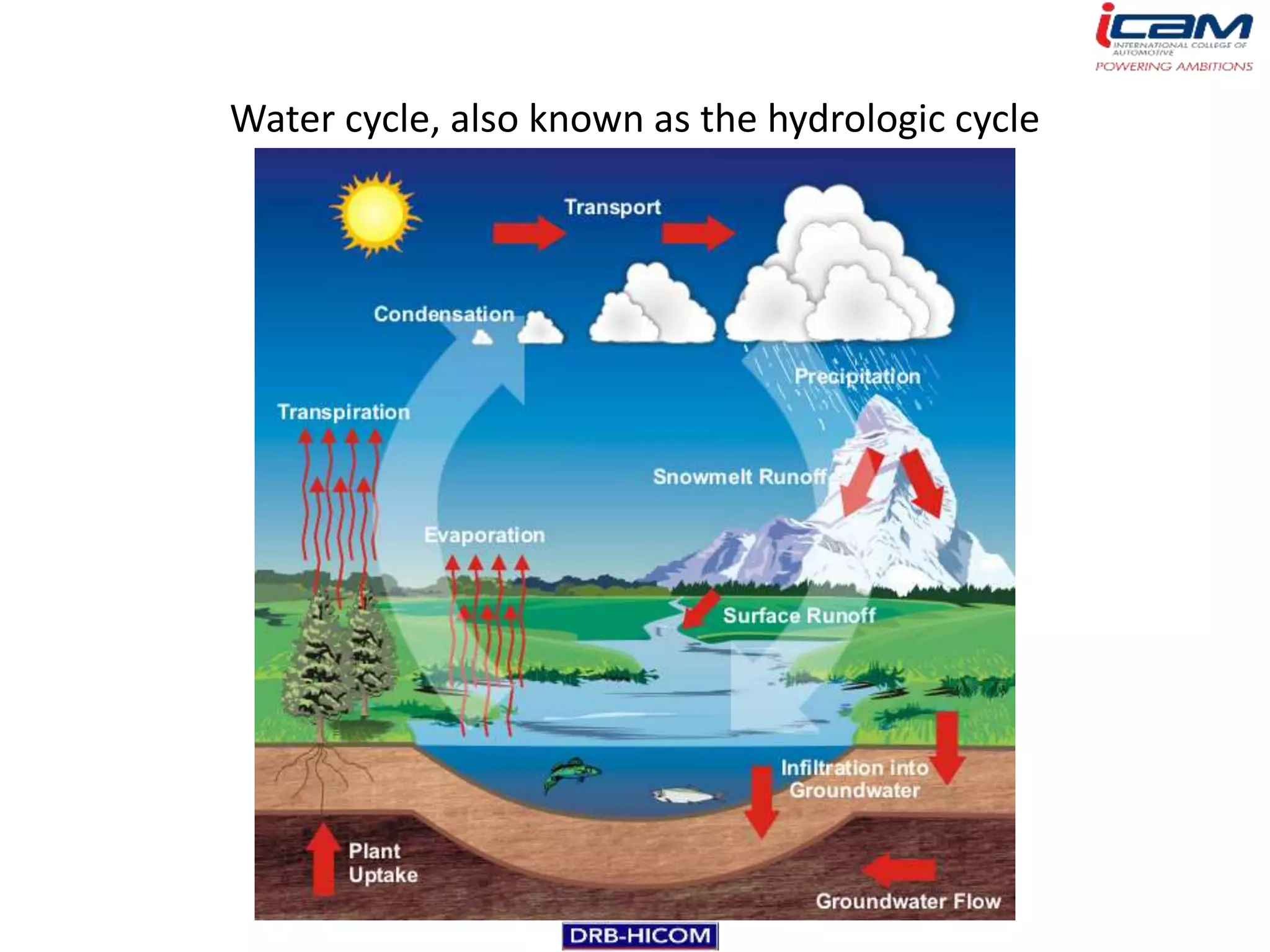
Water cycle, also known as the hydrologic cycle
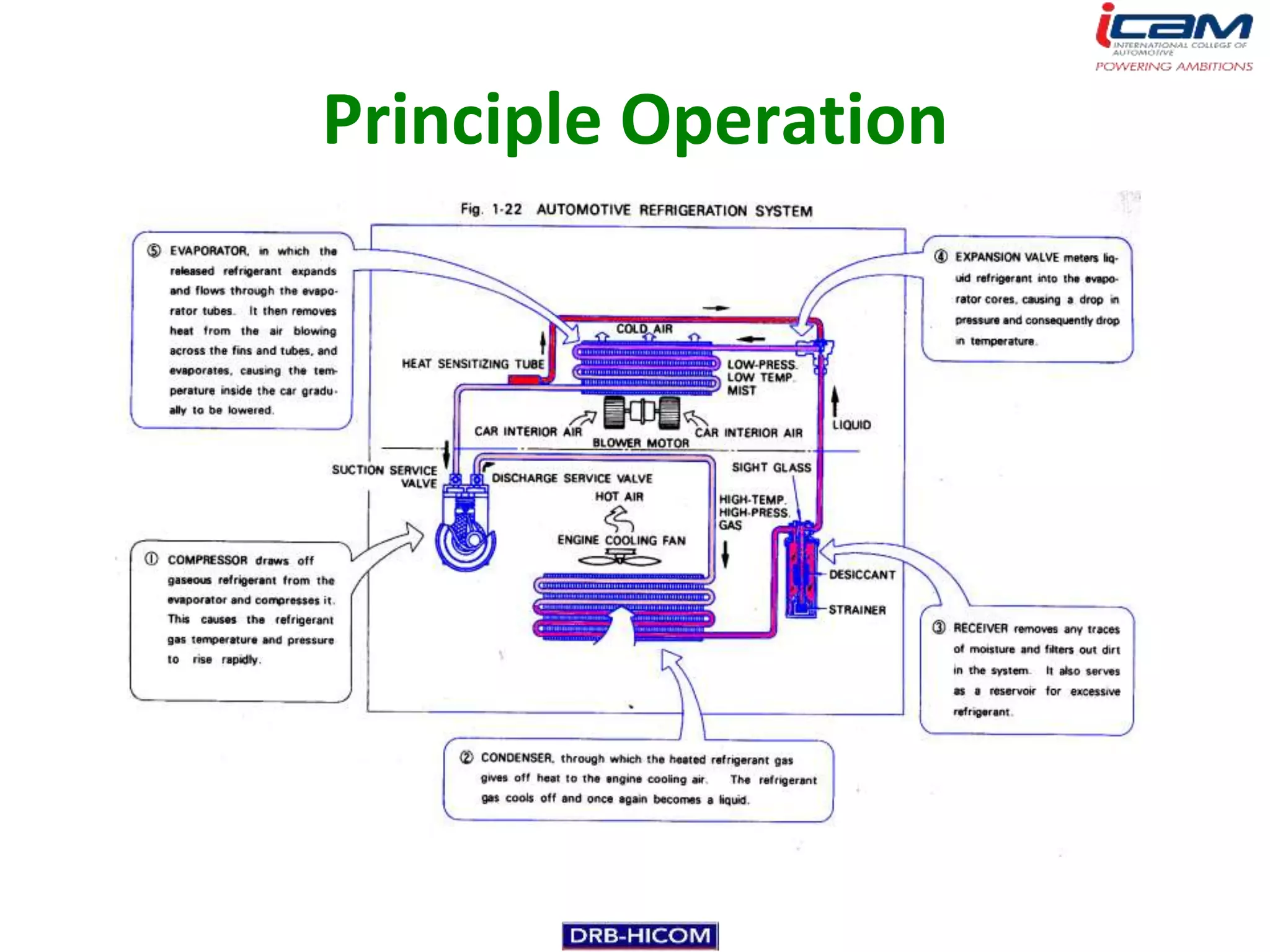
Principle Operation
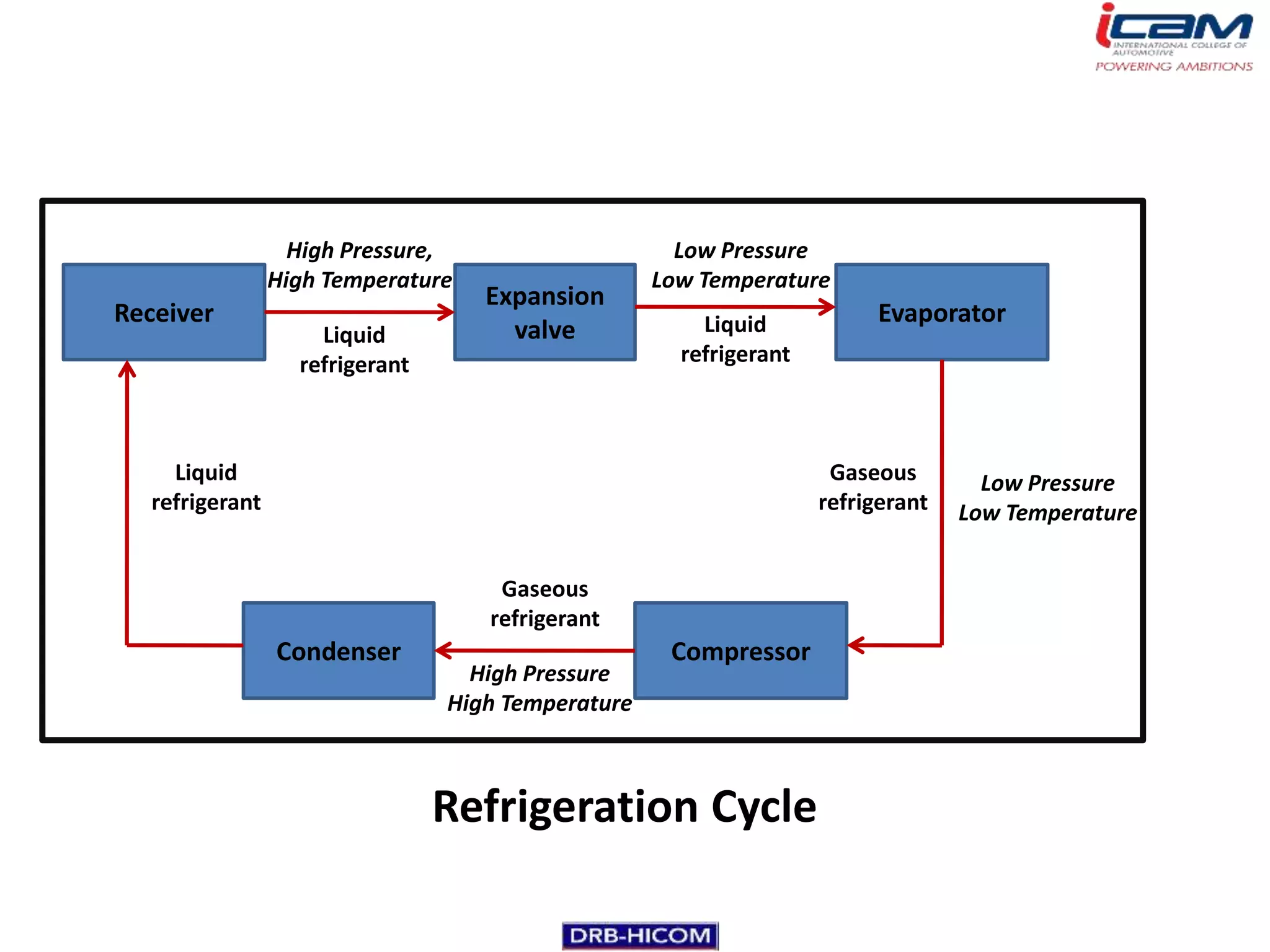
High Pressure,                     Low Pressure
                High Temperature                   Low Temperature
                                   Expansion
Receiver                                               Liquid           Evaporator
                    Liquid           valve
                  refrigerant                        refrigerant


    Liquid                                                          Gaseous        Low Pressure
  refrigerant                                                      refrigerant   Low Temperature


                                    Gaseous
                                   refrigerant
                Condenser                           Compressor
                                  High Pressure
                                High Temperature


                                Refrigeration Cycle
Types of Air Conditioner

Car air conditioners are classified according to
the air conditioner unit mounting location
and by the functions of the air conditioner.
Mounting Location
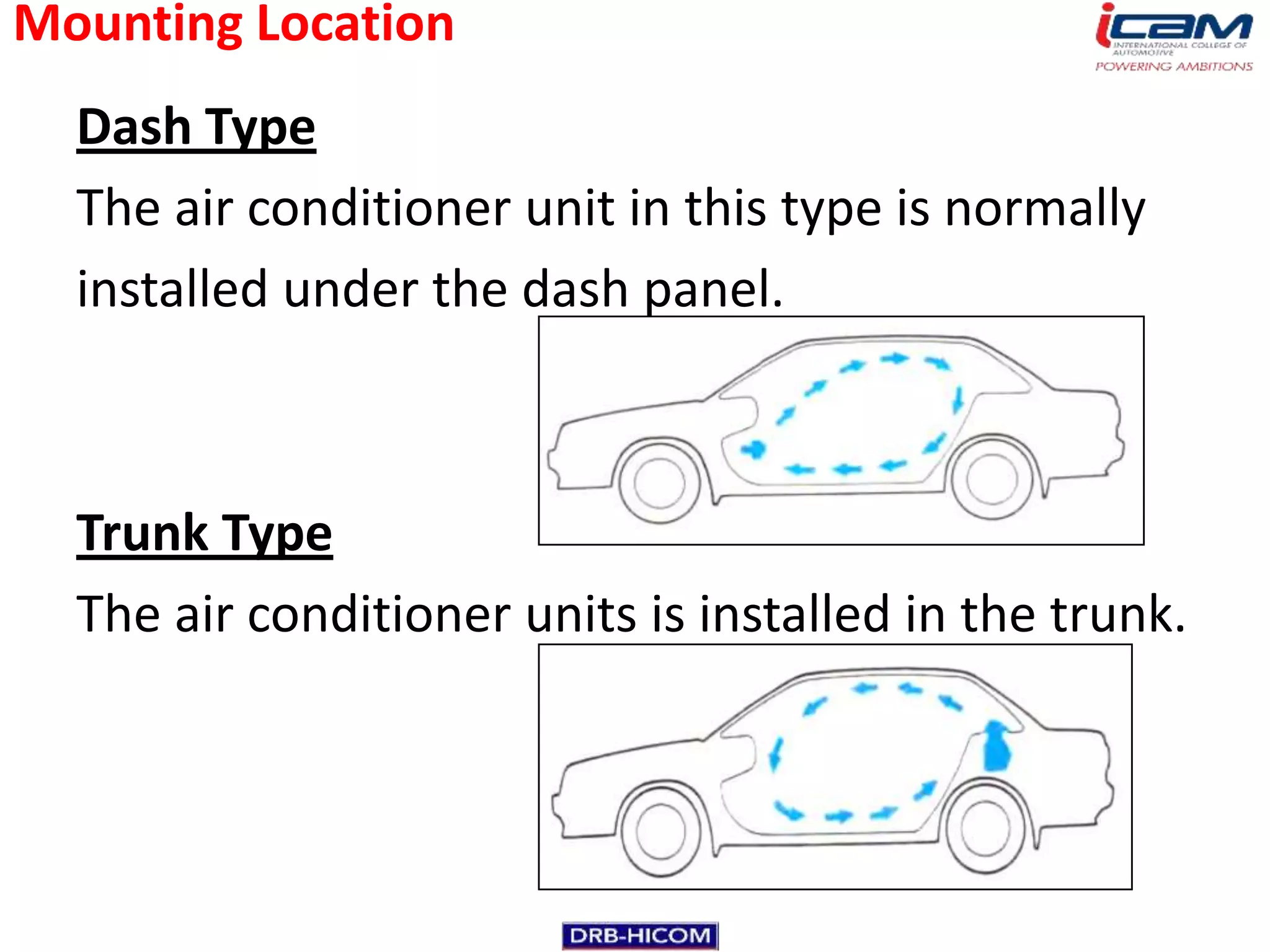
  Dash Type
  The air conditioner unit in this type is normally
  installed under the dash panel.


  Trunk Type
  The air conditioner units is installed in the trunk.
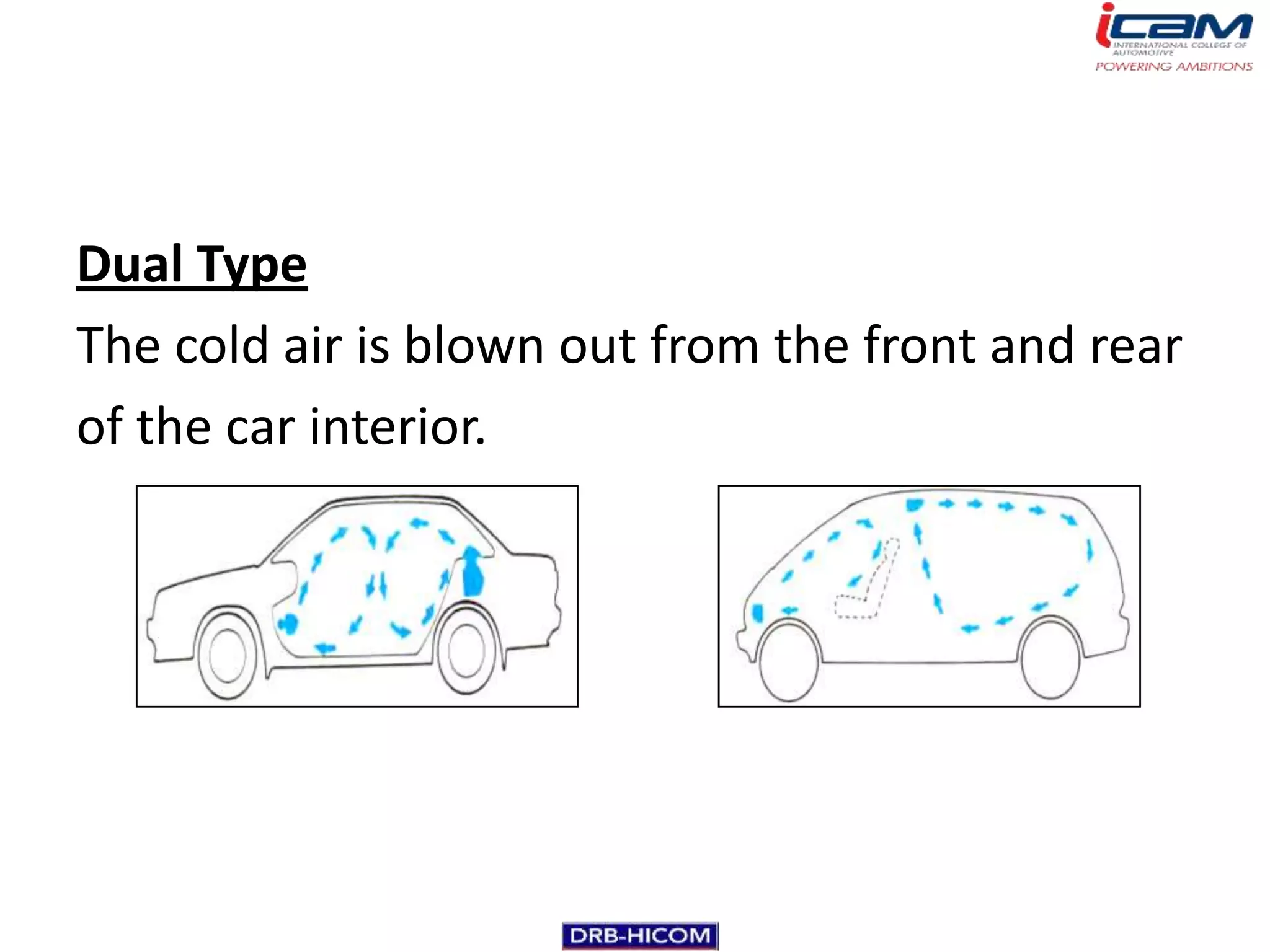
Dual Type
The cold air is blown out from the front and rear
of the car interior.
Function
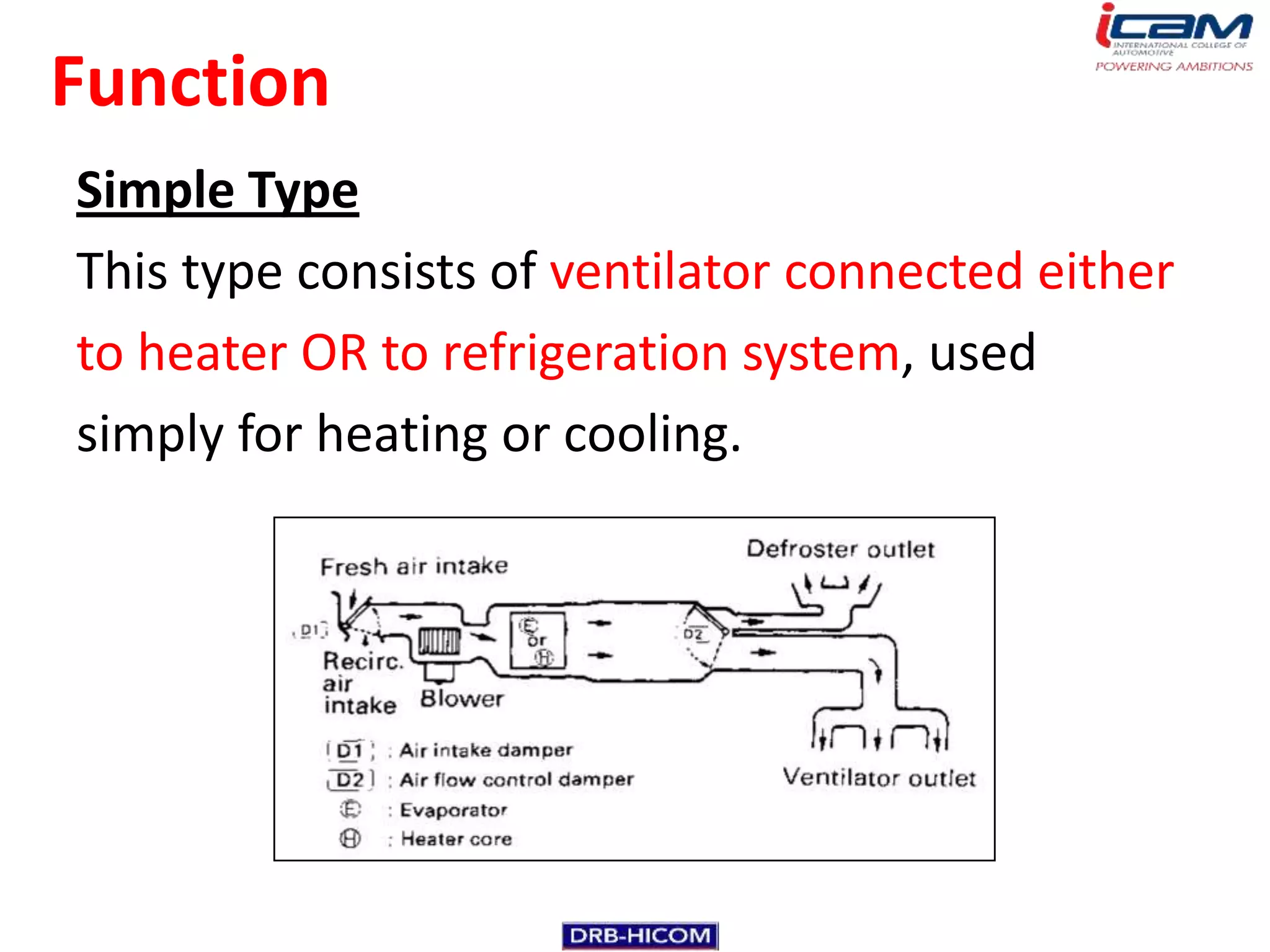
Simple Type
This type consists of ventilator connected either
to heater OR to refrigeration system, used
simply for heating or cooling.
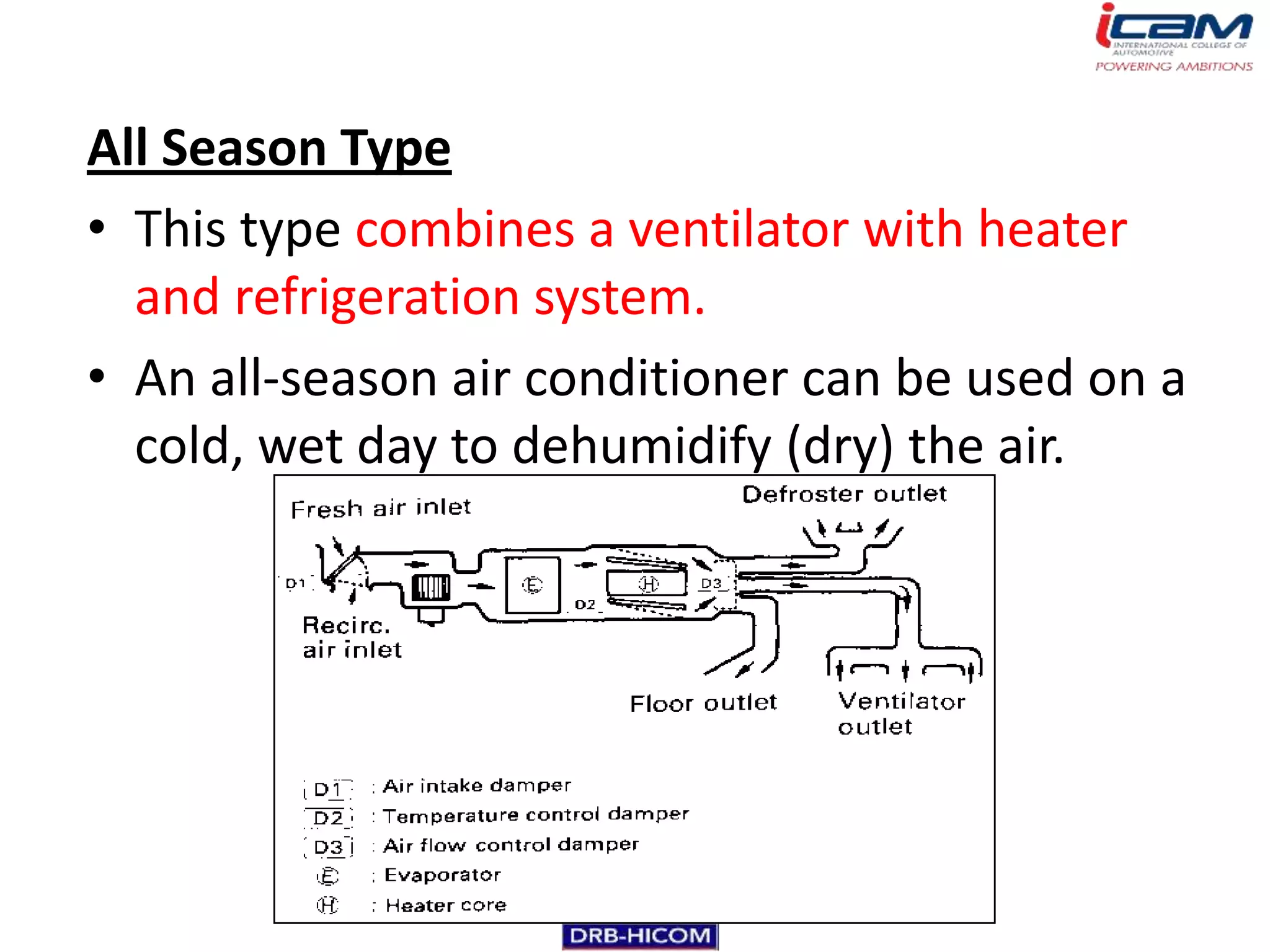
All Season Type
• This type combines a ventilator with heater
  and refrigeration system.
• An all-season air conditioner can be used on a
  cold, wet day to dehumidify (dry) the air.
Ventilator


 A device for leading the fresh
outside air into the car, that also
  serves for ventilating the car.
Types of Ventilator
 Natural flow-through ventilator
  Intake of external air into the vehicle’s interior due to
  the air pressure generated by the vehicle’s
  movement
 Forced air ventilator (Boost Ventilator)
  An electric fan or similar device is used to force air
  through the vehicle
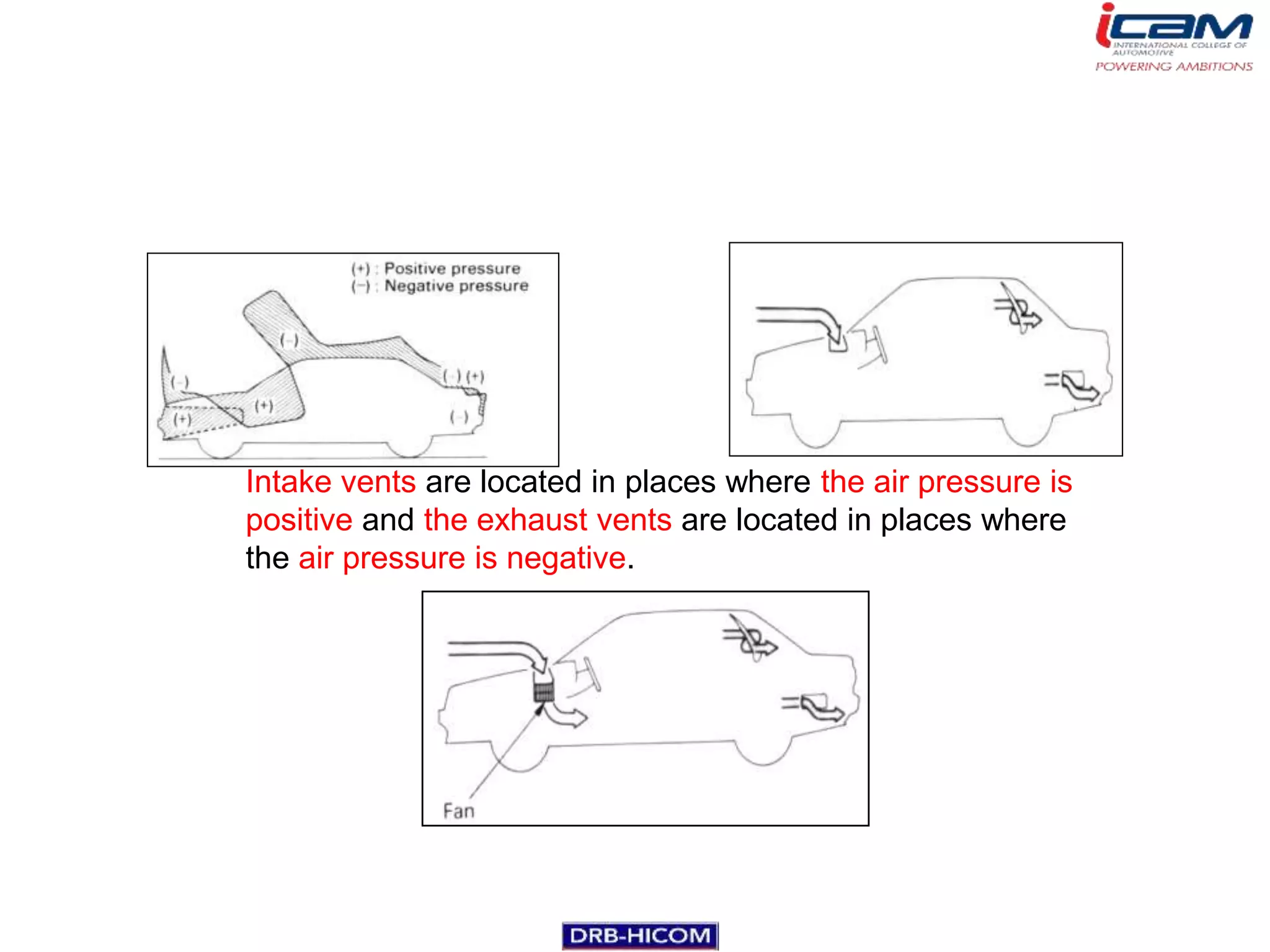
Intake vents are located in places where the air pressure is
positive and the exhaust vents are located in places where
the air pressure is negative.
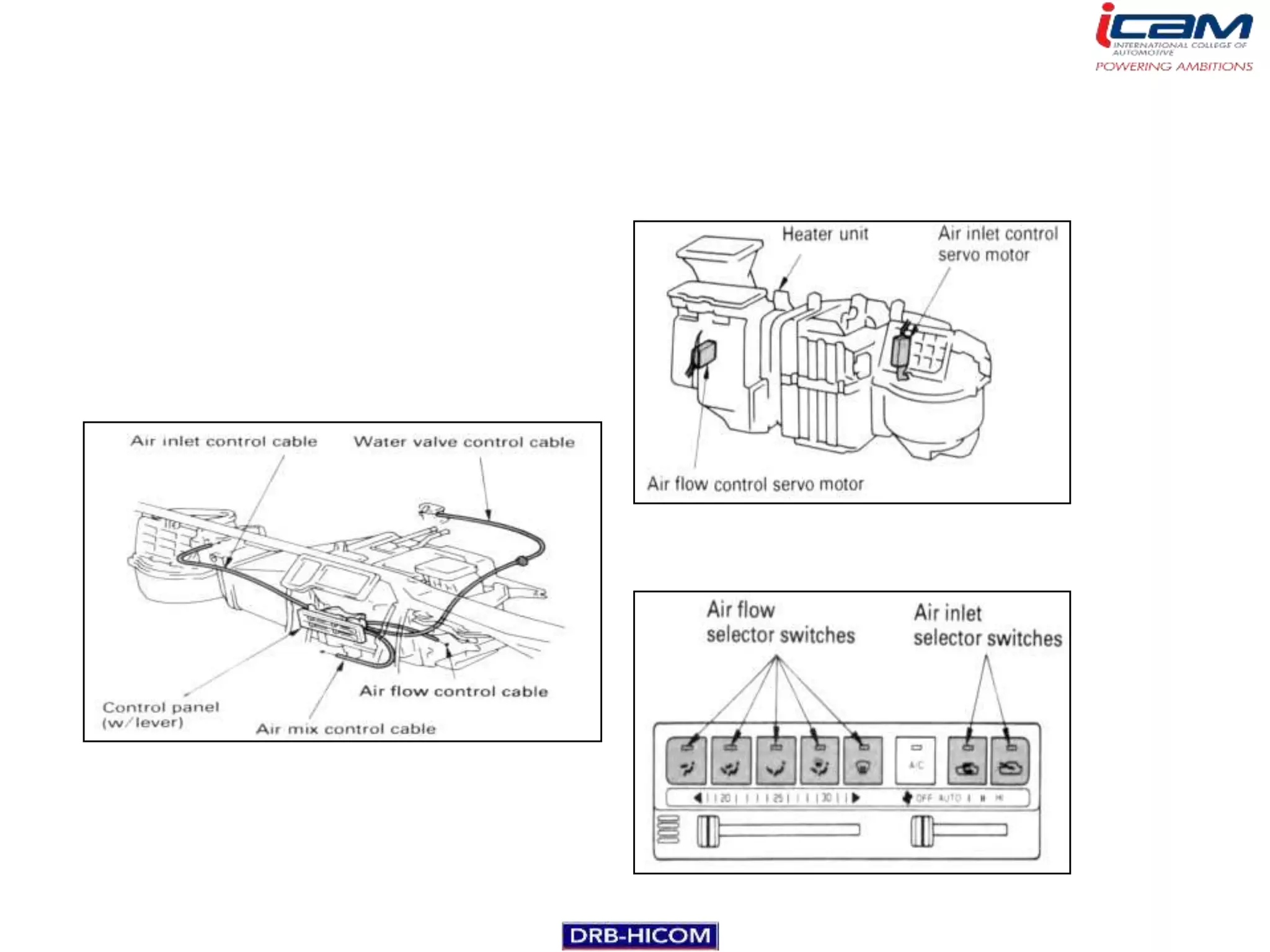
Operation of Dampers
Two types of damper operation used are:
1. Lever type
A lever on the control panel is connected to a cable which
moves the damper when the lever is moved.


2. Push-button type
Pressing a push-button on the control panel causes a servo
motor to operate, moving the damper.
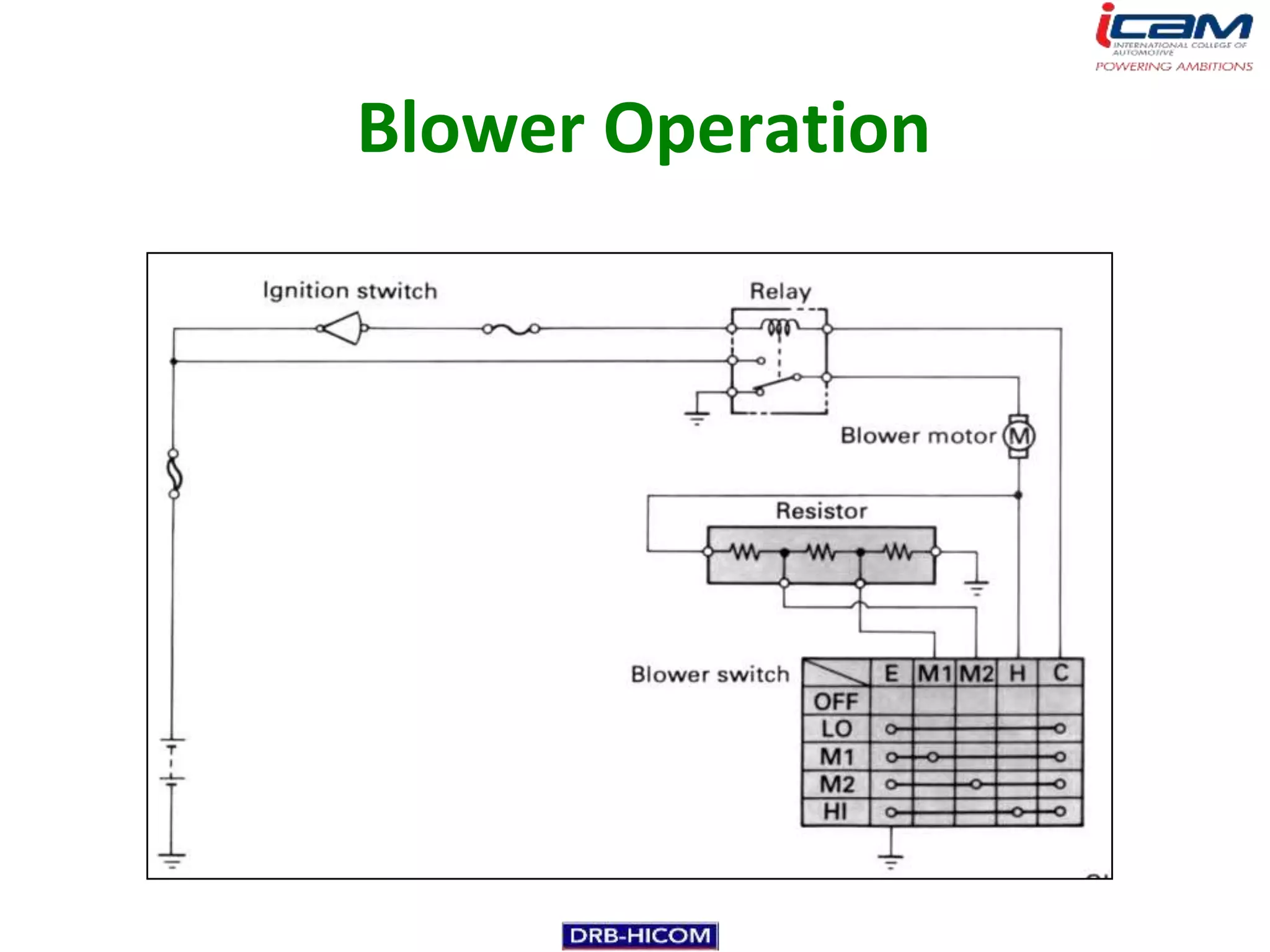
Blower Operation
• Fresh air or re circulated air drawn in by the
  blower.
• In figure below, blower speed control lever on the
  control panel can change the blower speed in four
  steps, from LO to HI.
• The blower speed is controlled by passing current
  through resistors with different resistance values
  to change the voltage to the blower motor, thus
  changing the blower speed.
Blower Operation
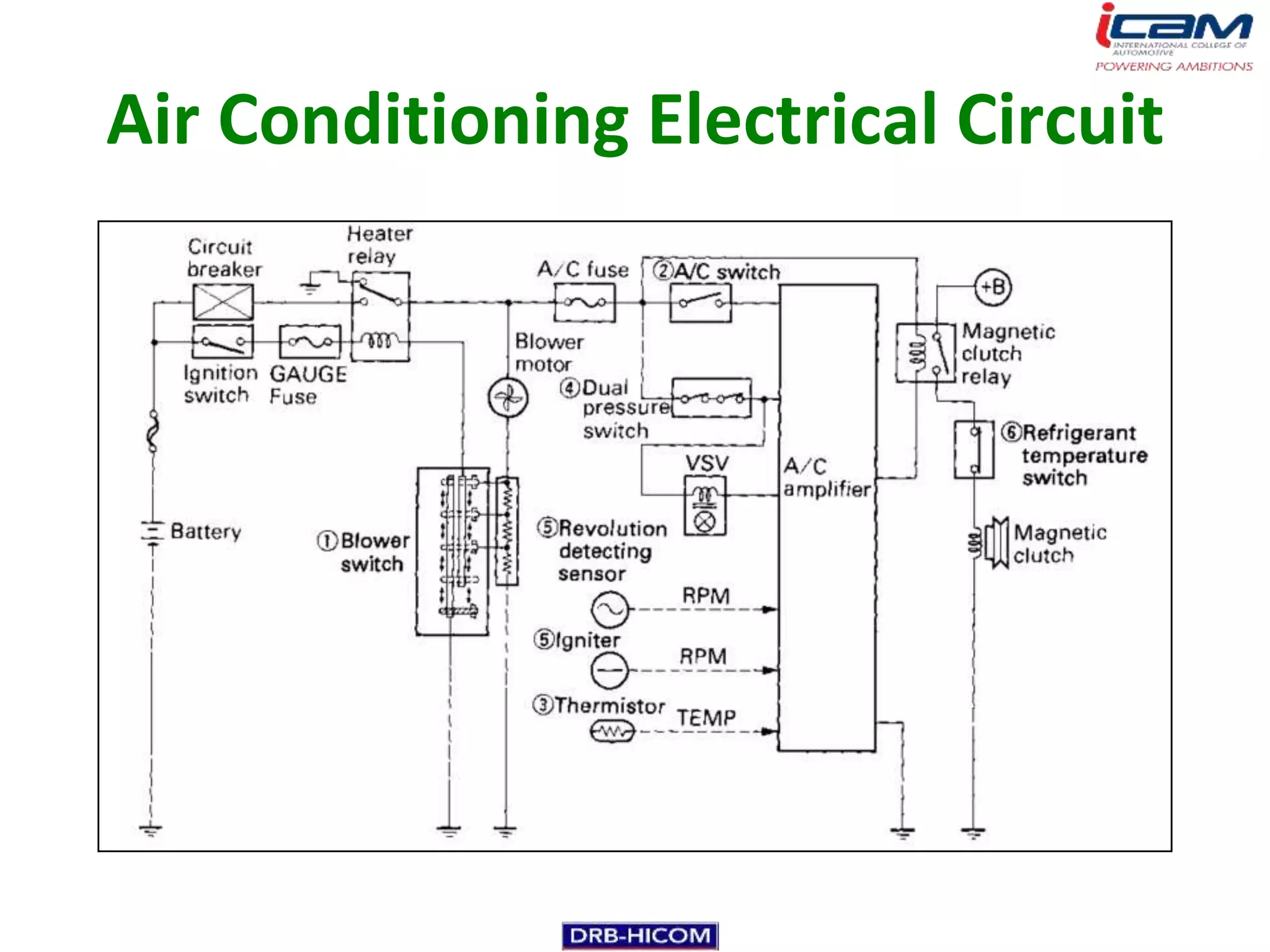
Air Conditioning Electrical Circuit
Magnetic Clutch Control

When the ignition switch is turned ON with blower
switch in any position except OFF, the heater relay goes
ON. If the air conditioner switch is then turned
ON, the magnetic clutch relay is turned ON by the A/C
amplifier. This causes the magnetic clutch to be
engaged. However, the magnetic clutch is disengaged,
and the compressor goes off, under the following
condition.
1. Blower Switch OFF
When the blower switch is turned OFF, the heater relay goes OFF, and power is no longer supply to
the air conditioner.

2. A/C Switch OFF
The main power of the A/C amplifier, which is controls the magnetic clutch relay, is cut off.

3. Evaporator Temperature Too Low
If the temperature at the surface of the evaporator falls to 3°C or below, the A/C amplifier shut off
the magnetic clutch relay

4. Dual Pressure Switch OFF
 If the pressure in the high-pressure side of the refrigeration circuit is extremely high or extremely
low, this switch goes OFF. The A/C amplifier senses this, and shuts off the magnetic clutch relay.

5. Compressor Lock-up
If the difference between the compressor speed and the engine speed rises above a certain value,
the A/C amplifier judges that the compressor has locked up, and shuts off the magnetic clutch
relay.

6. Refrigerant Temperature Too High
If the refrigerant temperature in the compressor rises above certain specified level, the temperature
switch goes OFF.

Automotive air conditioning system chapter 1

  • 2.
    Introduction • A liquidlike water or alcohol absorbs the heat in its vicinity as it evaporates. • When alcohol is put on your skin, you feel chilly. • This happens because, when the alcohol evaporates, it removes heat from your skin. • On the air conditioner cycle, by using the above principle and refrigerant which is easier to evaporate than alcohol, takes place. • An application of this principle is refrigeration. • The higher the vaporizing capacity, the larger the heat absorbing power and the higher the refrigerating capacity.
  • 3.
    Function • The functionof air conditioner is to maintain the life environment in a comfortable condition. Therefore, complete air conditioning involves: i. Temperature control ii. Air circulation control iii. Humidity control iv. Air purification
  • 4.
    The air conditionerfor an automobile generally consists of a: i. heating unit ii. cooling unit iii. moisture remover iv. ventilator
  • 5.
    Basic Cooling System RefrigerationSystem • A device that cools or dehumidifies the air in the car of fresh outside air drawn into the car so as to produce comfortable air.
  • 6.
    Basic Theory ofCooling • A container provided with a tap is placed in a well-insulated box. • A liquid that will vaporize readily at atmospheric temperature is placed in the container. • When the tap is opened, the liquid in the container will take away the heat necessary for vaporization from the air inside the box, turn into a gas and escape outside. • At this time, the temperature of the air inside the box will become lower than that before the tap was opened. • We can cool objects in this way
  • 7.
    Refrigerant • The refrigerantis used to absorb, transfer and release heat in the air-conditioning circuit. A refrigerant must be : i. Non-flammable ii. Non-explosive iii. Non-poisonous iv. Non-corrosive v. Odorless
  • 8.
    R-12 • Substance knownas Dichlorodifluoromethane commonly referred to as Freon or R-12. • R-12 has the following properties: i. non-flammable ii. non-toxic iii. stable at all temperatures iv. does not react with aluminium, steel or copper, v. soluble in mineral oils vi. low boiling point vii. vaporizes at minus 30°C viii. harmful to the environment
  • 9.
    R-13-a • It isan HFC or Hydrofluorocarbon. • R-134a has a boiling point of minus 26.2°C. • All its other refrigerant characteristics are similar to R-12 EXCEPT i. Its operating pressures and temperatures in the evaporator and condenser are slightly higher than for R-12. ii. R-134a is not soluble in mineral oils (so new compressor lubricating oils have been developed)
  • 10.
    Water cycle, alsoknown as the hydrologic cycle
  • 11.
  • 12.
    High Pressure, Low Pressure High Temperature Low Temperature Expansion Receiver Liquid Evaporator Liquid valve refrigerant refrigerant Liquid Gaseous Low Pressure refrigerant refrigerant Low Temperature Gaseous refrigerant Condenser Compressor High Pressure High Temperature Refrigeration Cycle
  • 13.
    Types of AirConditioner Car air conditioners are classified according to the air conditioner unit mounting location and by the functions of the air conditioner.
  • 14.
    Mounting Location Dash Type The air conditioner unit in this type is normally installed under the dash panel. Trunk Type The air conditioner units is installed in the trunk.
  • 15.
    Dual Type The coldair is blown out from the front and rear of the car interior.
  • 16.
    Function Simple Type This typeconsists of ventilator connected either to heater OR to refrigeration system, used simply for heating or cooling.
  • 17.
    All Season Type •This type combines a ventilator with heater and refrigeration system. • An all-season air conditioner can be used on a cold, wet day to dehumidify (dry) the air.
  • 18.
    Ventilator A devicefor leading the fresh outside air into the car, that also serves for ventilating the car.
  • 19.
    Types of Ventilator Natural flow-through ventilator Intake of external air into the vehicle’s interior due to the air pressure generated by the vehicle’s movement  Forced air ventilator (Boost Ventilator) An electric fan or similar device is used to force air through the vehicle
  • 20.
    Intake vents arelocated in places where the air pressure is positive and the exhaust vents are located in places where the air pressure is negative.
  • 21.
    Operation of Dampers Twotypes of damper operation used are: 1. Lever type A lever on the control panel is connected to a cable which moves the damper when the lever is moved. 2. Push-button type Pressing a push-button on the control panel causes a servo motor to operate, moving the damper.
  • 23.
    Blower Operation • Freshair or re circulated air drawn in by the blower. • In figure below, blower speed control lever on the control panel can change the blower speed in four steps, from LO to HI. • The blower speed is controlled by passing current through resistors with different resistance values to change the voltage to the blower motor, thus changing the blower speed.
  • 24.
  • 25.
  • 26.
    Magnetic Clutch Control Whenthe ignition switch is turned ON with blower switch in any position except OFF, the heater relay goes ON. If the air conditioner switch is then turned ON, the magnetic clutch relay is turned ON by the A/C amplifier. This causes the magnetic clutch to be engaged. However, the magnetic clutch is disengaged, and the compressor goes off, under the following condition.
  • 27.
    1. Blower SwitchOFF When the blower switch is turned OFF, the heater relay goes OFF, and power is no longer supply to the air conditioner. 2. A/C Switch OFF The main power of the A/C amplifier, which is controls the magnetic clutch relay, is cut off. 3. Evaporator Temperature Too Low If the temperature at the surface of the evaporator falls to 3°C or below, the A/C amplifier shut off the magnetic clutch relay 4. Dual Pressure Switch OFF If the pressure in the high-pressure side of the refrigeration circuit is extremely high or extremely low, this switch goes OFF. The A/C amplifier senses this, and shuts off the magnetic clutch relay. 5. Compressor Lock-up If the difference between the compressor speed and the engine speed rises above a certain value, the A/C amplifier judges that the compressor has locked up, and shuts off the magnetic clutch relay. 6. Refrigerant Temperature Too High If the refrigerant temperature in the compressor rises above certain specified level, the temperature switch goes OFF.