SUBMITTED BY:
VEERENDRA. M -RAM/2018-07
SHRAVIKA. L -RAM/2018-08
Climate change
&
food security
SUBMITTED BY:
VEERENDRA. M-RAM/2018-07
SHRAVIKA. L- RAM/2018-08
The World Food Summit in 1996 defined food security as: “Food
security exists when all people, at all times, have physical, social
and economic access to sufficient, safe and nutritious food which
meets their dietary needs and food preferences for an active and
healthy life.”
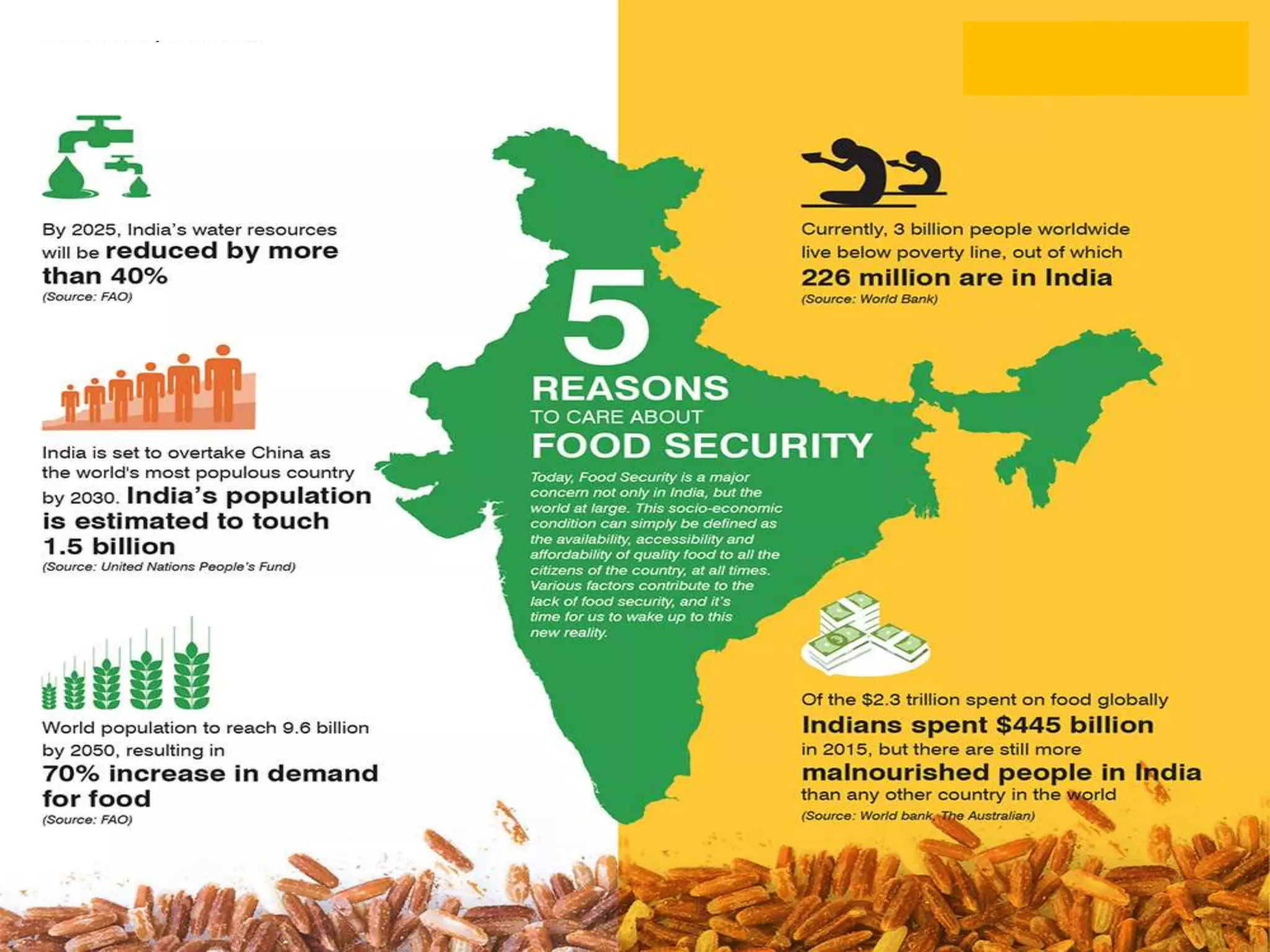
Food security is one of the leading concerns associated with
climate change. Climate change affects food security in complex
ways and can cause grave social and economic consequences in
the form of reduced incomes, eroded livelihoods, trade
disruption and adverse health impacts
It will become more difficult to ensure food security under the
changing climate for India where more than one third of the
population is estimated to be absolutely poor and one half of all
children are malnourished - (Dev and Sharma, 2010).
INTRODUCTION
• India has many reasons to be concerned about climate change,
because majority of population depends on climate sensitive
sector i.e. agriculture, forestry and fishing for livelihood.
• The existing problem of food security in our country, if not
addressed in time, will become more acute due to change in the
climate.
• It will become more difficult to ensure food security under the
changing climate for country like India where more than one third
of the population is estimated to be absolutely poor and one half
of all children are malnourished in one way or another (Dev and
Sharma, 2010).
• To examine the impact of climate change on Indian agriculture
sector is quite complex as several factors are concerned in this
phenomena.
INTRODUCTION
• According to the Fourth Assessment Report of the IPCC,
depending on the climate change scenario, 200 to 600
million people globally could suffer from hunger by 2080
(Yohe et al., 2007).
• According to World Bank estimates, based on the
International Energy Agency’s current policy scenario and
other energy sector economic models, for a global mean
warming of 4°C, there will be a 10-percent increase in
annual mean monsoon intensity and a 15-percent increase
in year-to-year variability in monsoon precipitation.
• The World Bank (2013) also predicts that droughts will pose
an increasing risk in the north-western part of India while
southern India will experience an increase in wetness.
Figure 1 : A graph showing that women are more likely than men to be effected by
food insecurity.
Source: FAO, (2018)
Figure 2: Impact of climate change on the four dimensions of food security
Figure 3. Ground water level in india ( in metres below the ground level)
(2018)
Figure 4: Changes in Global average surface temperature
Source: IPCC, (2017)
• By 2030, heat stress can cause significant reductions in rice
production quantity in South and Southeast Asia. Incidents of
warmer night temperatures have a greater negative effect on
rice yield. +1°C above critical temperature (> 24°C) may lead
to 10 per cent reduction in both grain yield and biomass.
Figure 5: Comparison of temperature rise on crop yields in temperate and tropical regions
Source: IPCC, (2007); Nichollus et al.,(2008)
Table 2 : Effect of change in temperature on germination percentage of different rice
varieties
Source: Farhadi et al., (2012)
Genotype
s of Rice
Temperature (oC)
12oC 16o
C 20oC 25oC 27oC 30oC 33oC 36oC 40oC
Sadri 0 80 92 94 95 98 93 65 0
Ahlami
Tarom
0 93 97 96 100 96 92 72 0
Neda 0 92 97 94 100 98 96 70 0
Fajr 0 88 97 100 97 100 95 72 0
IR 42 0 65 91 86 97 98 94 62 0
Nearmat 0 80 95 96 93 99 95 68 0
IR 58 0 87 99 98 98 94 94 66 0
IR 8 0 66 93 92 99 96 93 64 0
Rashti 0 85 90 94 99 96 96 68 0
Salari 0 84 90 87 97 96 93 64 0
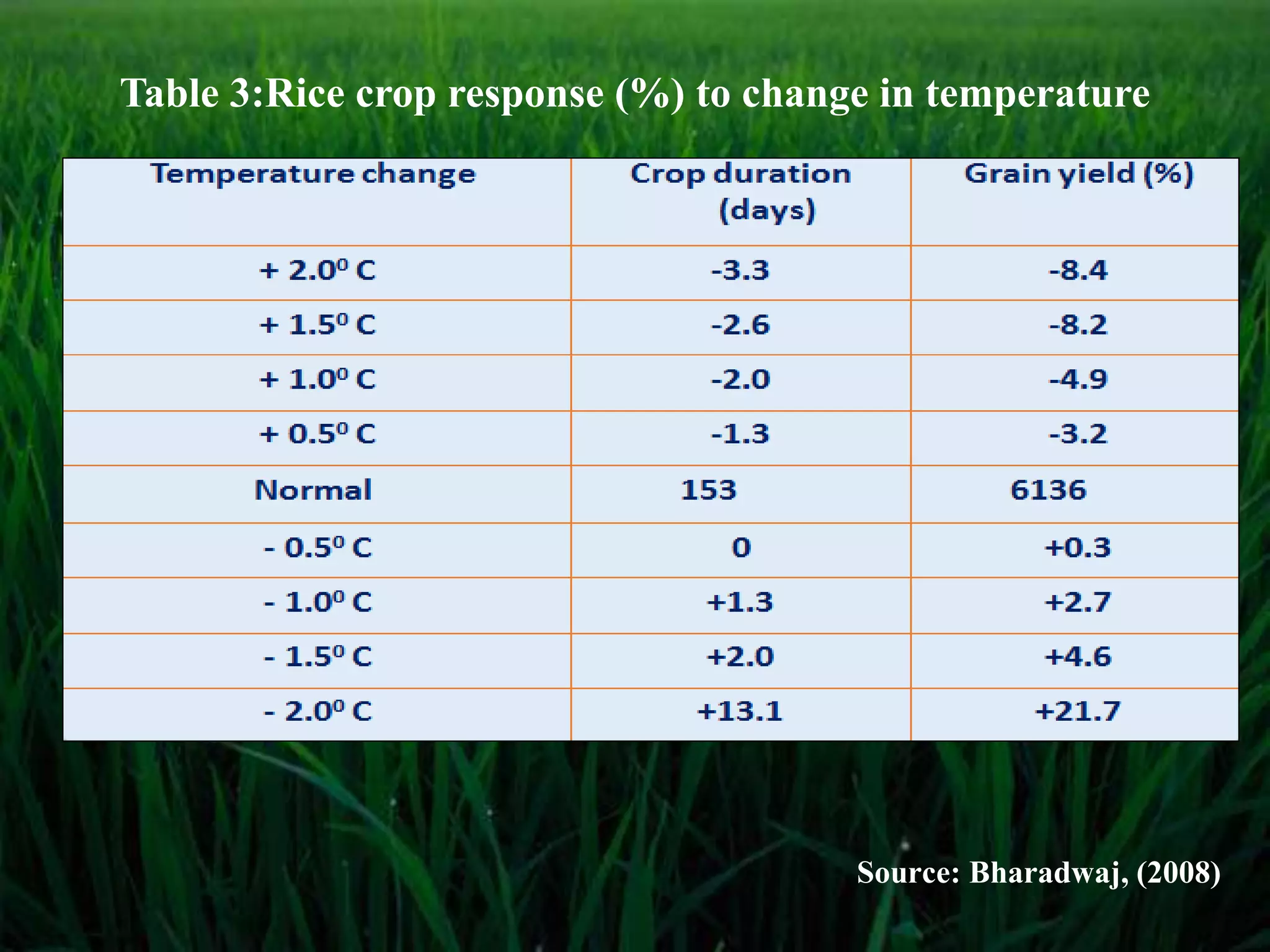
Table 3:Rice crop response (%) to change in temperature
Source: Bharadwaj, (2008)
Table 4: Wheat crop response to variation in temperature
Source: Prabhjyot et al., 2006
Figure 5: Projected impact of climate change on wheat production (total yield
in million tonnes) estimates for India.
Source :Agarwal et al., (2002)
Table 5. Importance of major abiotic stresses affecting pulse crops.
***very important, **important, *not important
Sultana et al., (2014)
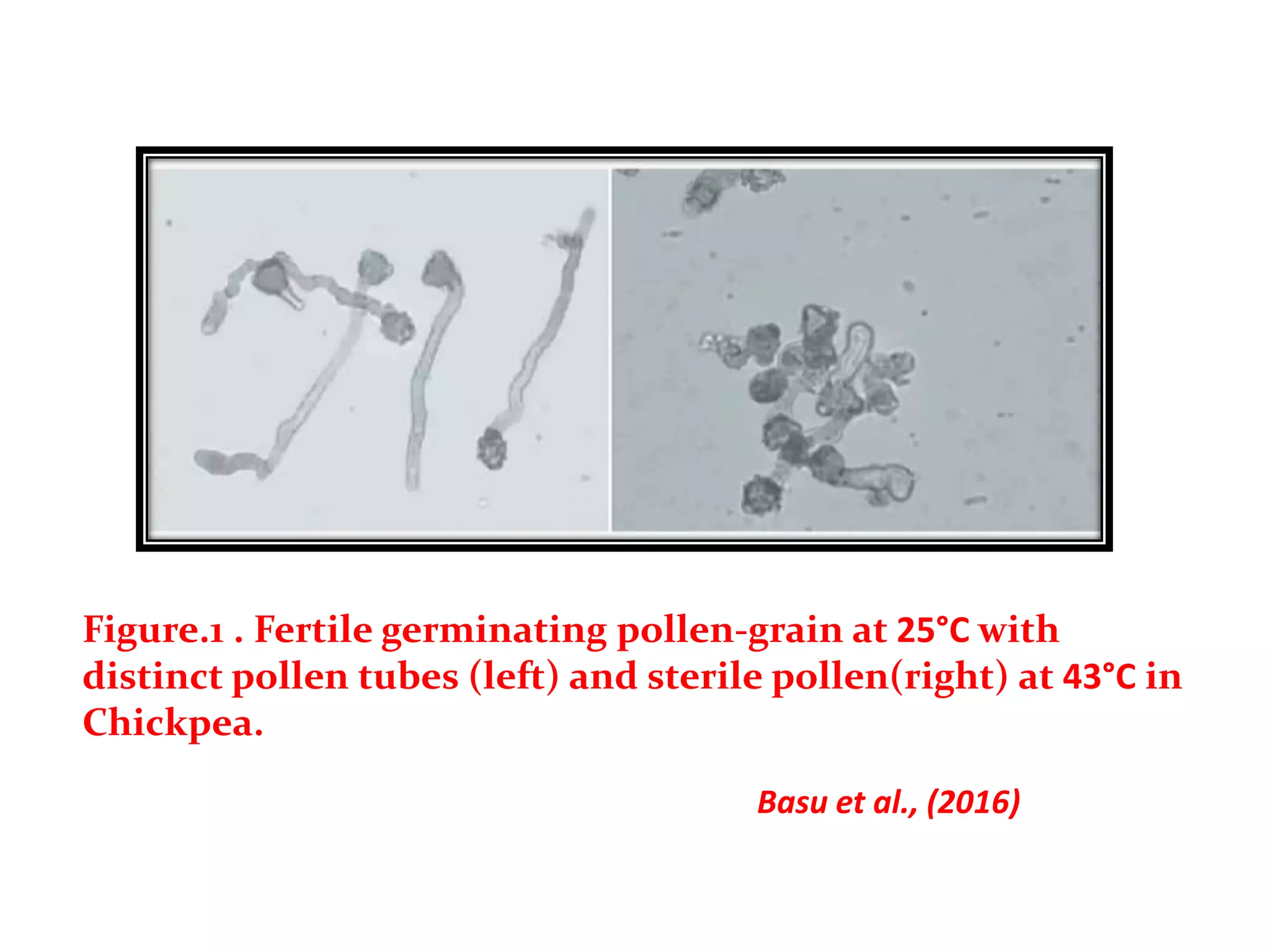
Figure.1 . Fertile germinating pollen-grain at 25°C with
distinct pollen tubes (left) and sterile pollen(right) at 43°C in
Chickpea.
Basu et al., (2016)
Figure 6: Vulnerability of Indian agriculture to Climate Change (2021-2050)
Source: Rama Rao et al (2013)
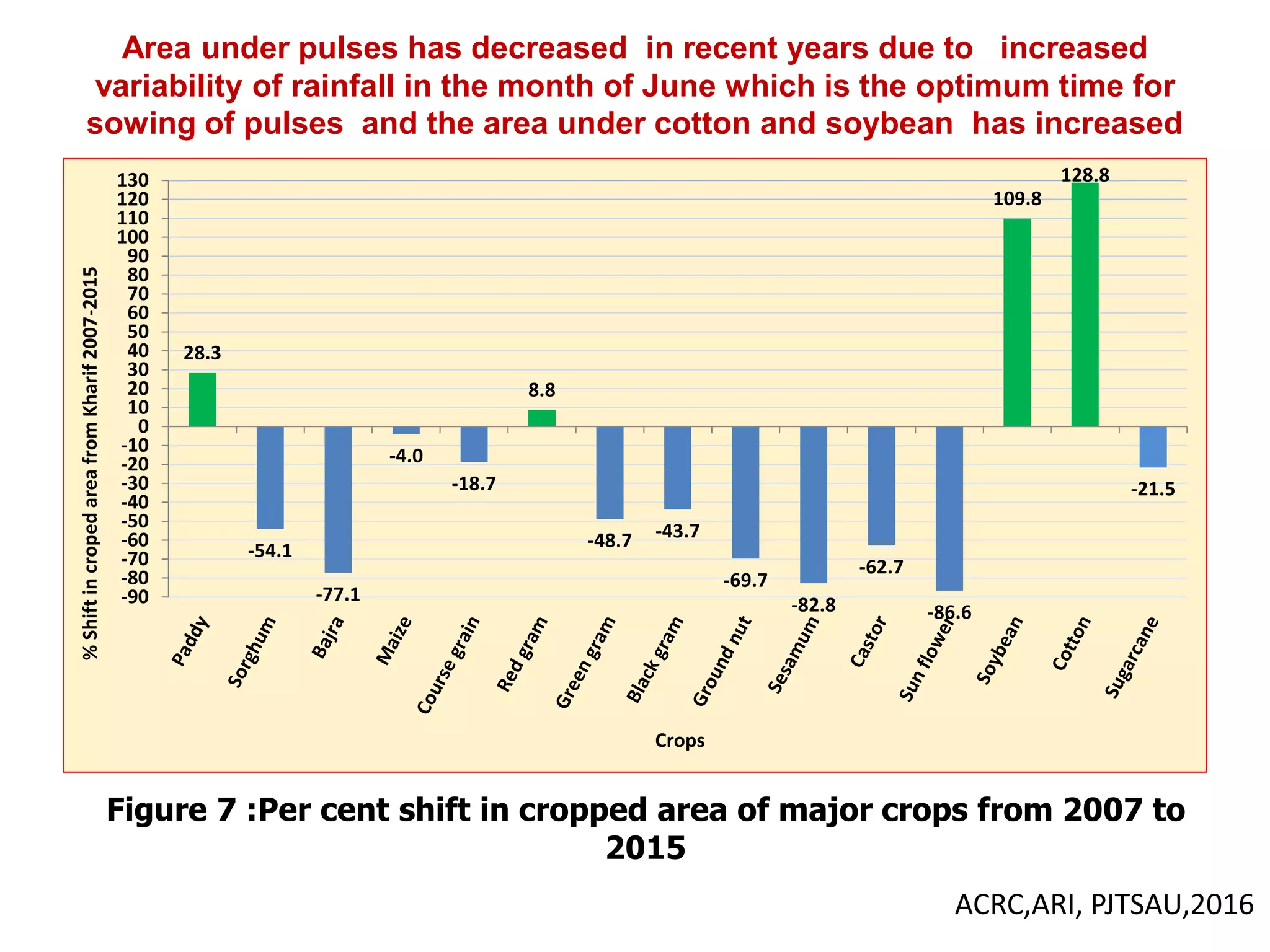
Area under pulses has decreased in recent years due to increased
variability of rainfall in the month of June which is the optimum time for
sowing of pulses and the area under cotton and soybean has increased
28.3
-54.1
-77.1
-4.0
-18.7
8.8
-48.7 -43.7
-69.7
-82.8
-62.7
-86.6
109.8
128.8
-21.5
-90
-80
-70
-60
-50
-40
-30
-20
-10
0
10
20
30
40
50
60
70
80
90
100
110
120
130
%ShiftincropedareafromKharif2007-2015
Crops
Figure 7 :Per cent shift in cropped area of major crops from 2007 to
2015
ACRC,ARI, PJTSAU,2016
LSD 0.05 CO2 : 0.70; interaction : 1.40
Table 5 : Effect of carbon-dioxide concentration on sprouting in potato
stored at 25 c
Source : Brajesh et al., (2006)
Table 6: Growth rate of yield per hectare (%) of food grains
Source: Reserve Bank of India database
Table7: Per Capita Net Availability of Food grains (Per Day) in India. (Grams/Day)
Source: Directorate of Economics and Statistics
WAYS TO ACHIEVE
FOOD SECURITY…..
SOLUTIONS
Climate resilient crops
Agroforestry measures
Increasing area under irrigation
Integrated farming system
Adoption of sustainable agricultural practices
Need for more impact assessment studies
Contingency crop planning
Long-term relief measures in the event of
natural disasters
Climate resilient crops
Resilience : the capacity to recover quickly from
difficulties
 Climate resilient crop varieties, with enhanced tolerance
to heat, drought, flooding, chilling and salinity stresses are
essential in order to sustain and improve crop yields to
cope with the challenges of climate change
 Millets are considered as nutri cereals .
These crops are grown in a variety of agro-ecological
situations like plains , coast and hills as well as in diverse soils
and varied rainfall.
Rich diversity of small millets crops has made them well
suited for contingency crop planning and also address the
issues of climate change.
These small millets contribute to the balanced diet , and can
ensure nutritional security through regular consumption.
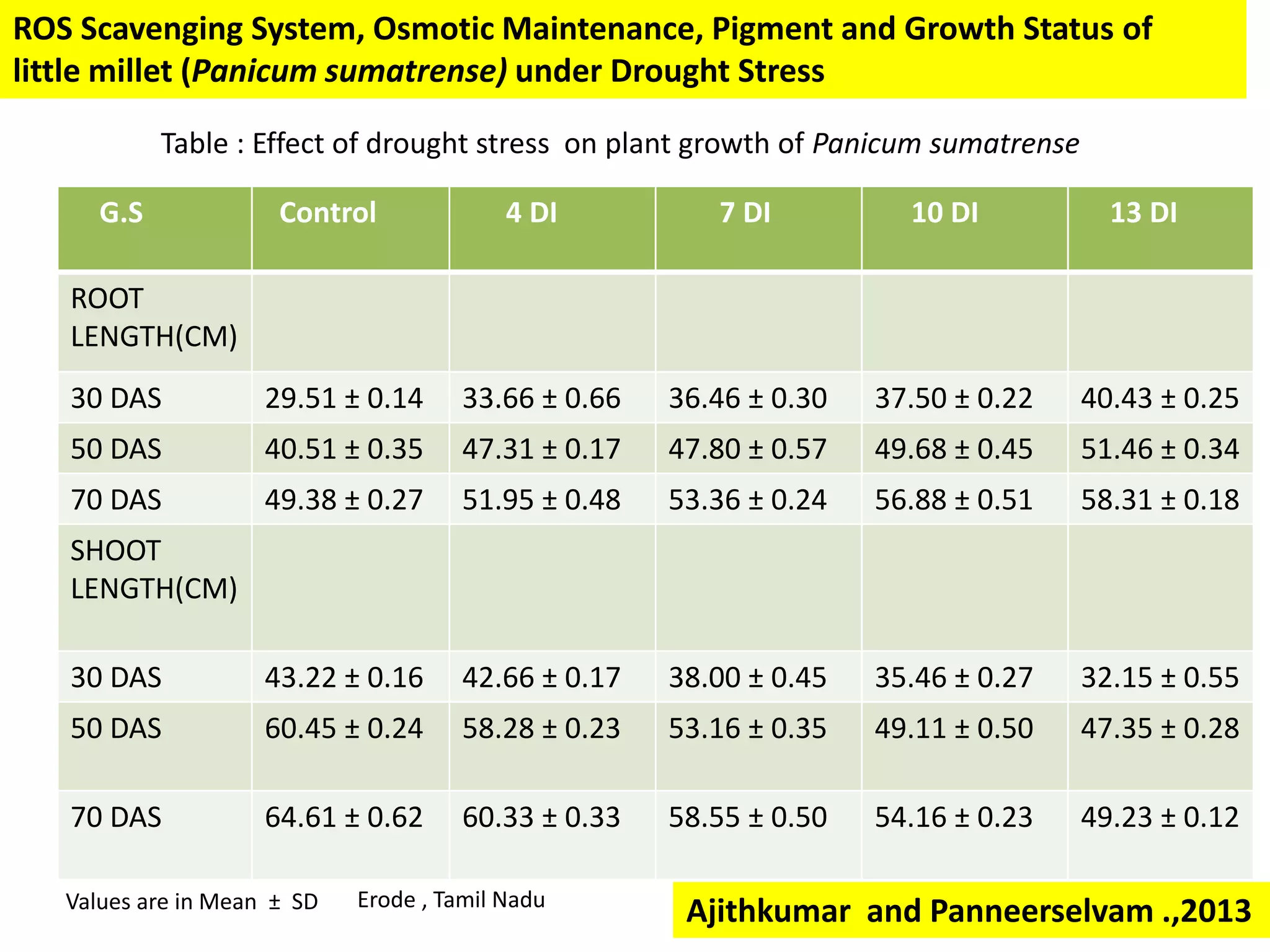
G.S Control 4 DI 7 DI 10 DI 13 DI
ROOT
LENGTH(CM)
30 DAS 29.51 ± 0.14 33.66 ± 0.66 36.46 ± 0.30 37.50 ± 0.22 40.43 ± 0.25
50 DAS 40.51 ± 0.35 47.31 ± 0.17 47.80 ± 0.57 49.68 ± 0.45 51.46 ± 0.34
70 DAS 49.38 ± 0.27 51.95 ± 0.48 53.36 ± 0.24 56.88 ± 0.51 58.31 ± 0.18
SHOOT
LENGTH(CM)
30 DAS 43.22 ± 0.16 42.66 ± 0.17 38.00 ± 0.45 35.46 ± 0.27 32.15 ± 0.55
50 DAS 60.45 ± 0.24 58.28 ± 0.23 53.16 ± 0.35 49.11 ± 0.50 47.35 ± 0.28
70 DAS 64.61 ± 0.62 60.33 ± 0.33 58.55 ± 0.50 54.16 ± 0.23 49.23 ± 0.12
Values are in Mean ± SD
Table : Effect of drought stress on plant growth of Panicum sumatrense
Ajithkumar and Panneerselvam .,2013
ROS Scavenging System, Osmotic Maintenance, Pigment and Growth Status of
little millet (Panicum sumatrense) under Drought Stress
Erode , Tamil Nadu
A)
B)
C) D)
A) Activity of Super oxide dismutase (SOD), expressed in Unit mg-1 protein
B) Activity of Catalase (CAT), expressed in μ mol H2O2 g-1 protein
C) Activity of Ascorbate peroxidase (APX), μ mol H2O2 g-1 protein.
D) Activity of Glutathione reductase (GR), μ mol NADPH g-1 protein
[Data is means ± SD (n=3) and error bars are significantly different at p<0.05].
Figure:Effect of drought stress on antioxidative enzymes in finger millet(Sri Chaitanya VR-847 )
leaves response to drought from day 1-7
-Viswanath et al., 2014
Response of antioxidative enzymes and lipoxygenase to drought stress in finger millet leaves
(Eluesine coracana)
Vizaya Nagaram, Andhra Pradesh
Table: Multiple range test of grain yield and yield components under control (CC) and
waterlogging treatment (TT) of four millets at harvest.
CC = control, TT= Waterlogging treatment from the 17 days after sowing till harvest.
Means with the same letter are not significantly different according to tukey–Kramer
multiple range test (5%).
Effect of pre- and post-heading waterlogging on growth and grain yield of four millets
- Matsuura et al., 2016
kumamoto, Japan
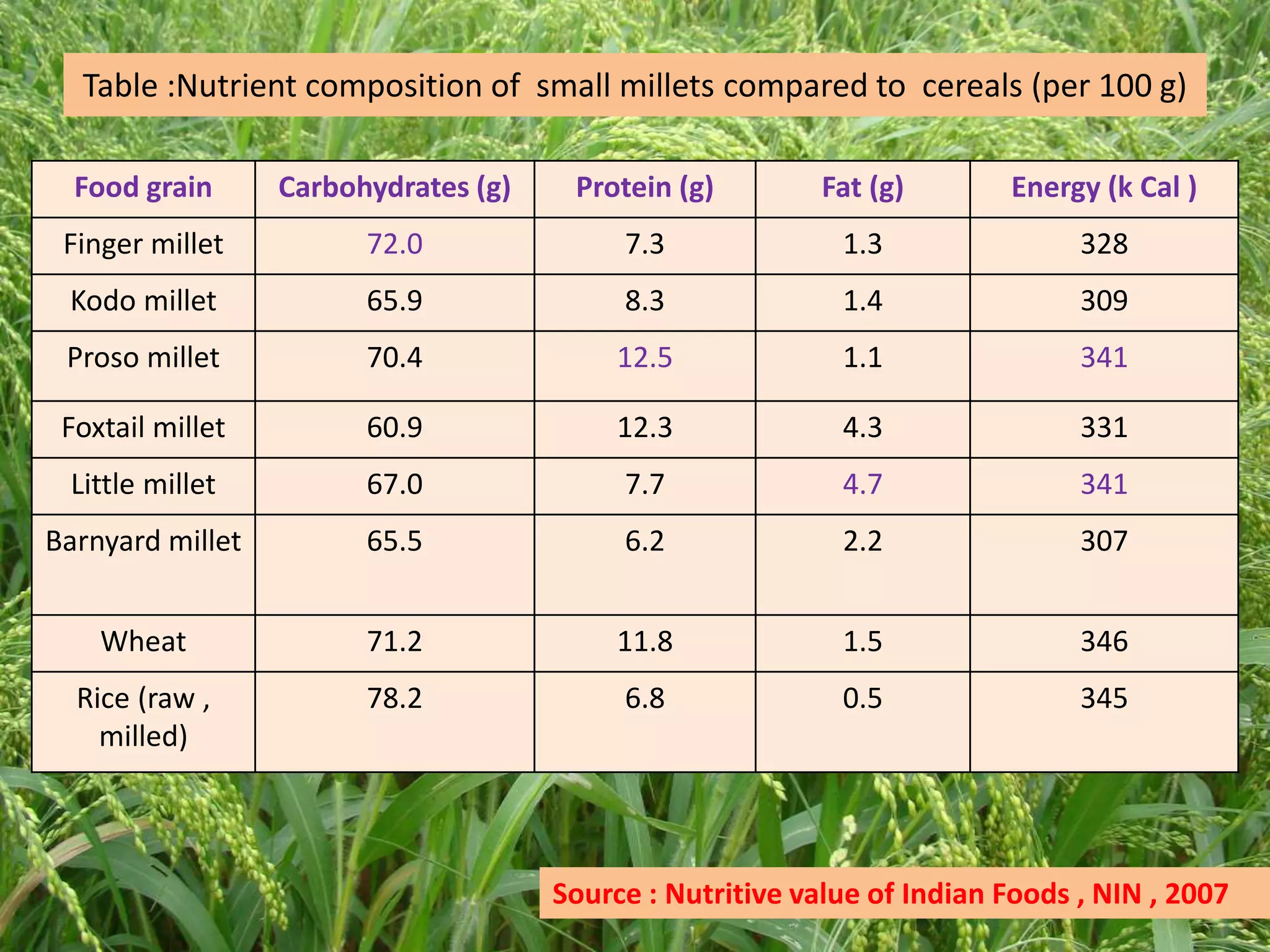
Table :Nutrient composition of small millets compared to cereals (per 100 g)
Food grain Carbohydrates (g) Protein (g) Fat (g) Energy (k Cal )
Finger millet 72.0 7.3 1.3 328
Kodo millet 65.9 8.3 1.4 309
Proso millet 70.4 12.5 1.1 341
Foxtail millet 60.9 12.3 4.3 331
Little millet 67.0 7.7 4.7 341
Barnyard millet 65.5 6.2 2.2 307
Wheat 71.2 11.8 1.5 346
Rice (raw ,
milled)
78.2 6.8 0.5 345
Source : Nutritive value of Indian Foods , NIN , 2007
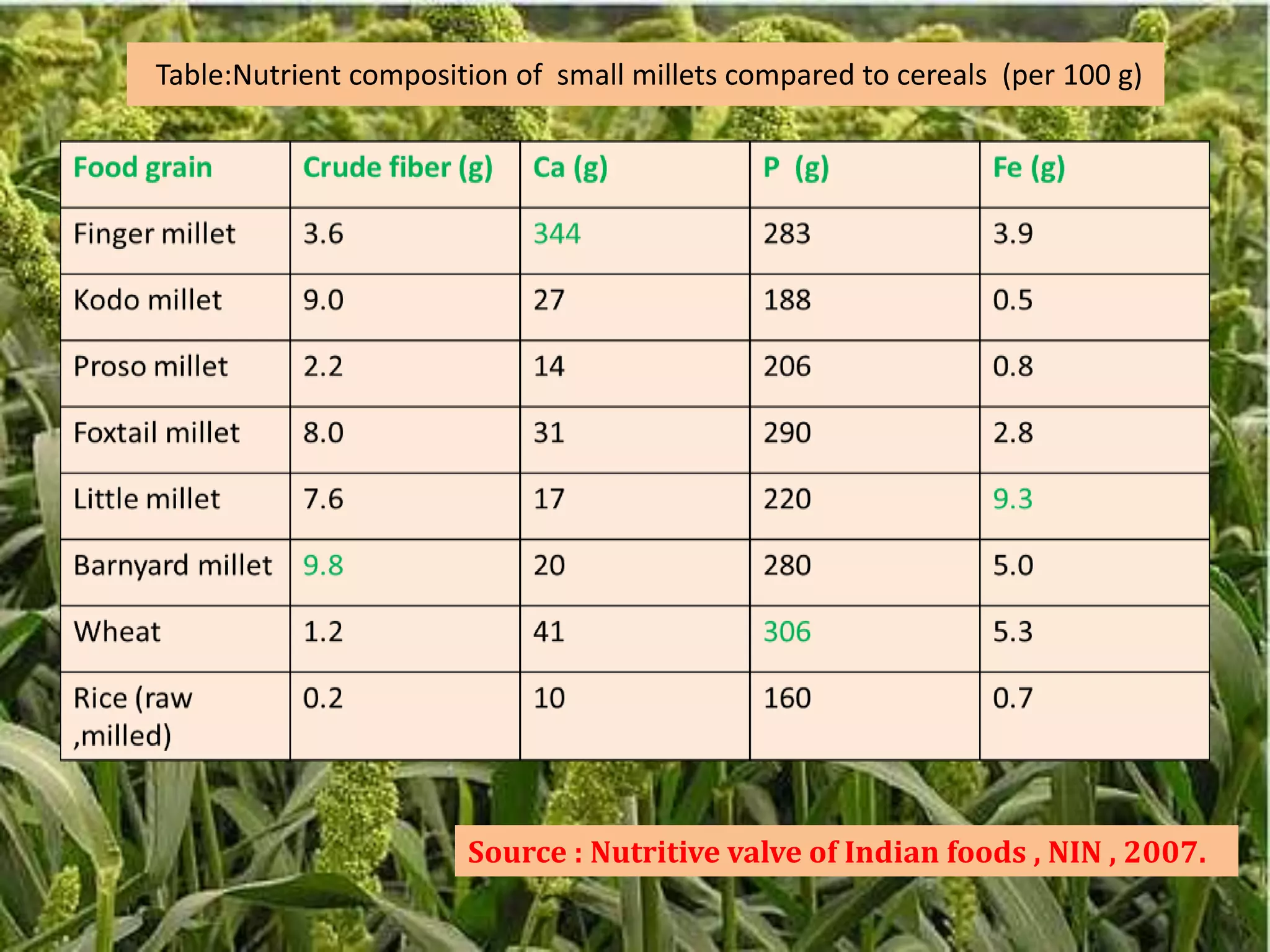
Table:Nutrient composition of small millets compared to cereals (per 100 g)
Source : Nutritive valve of Indian foods , NIN , 2007.
• In the present scenario of climate change, Agroforestry products
can make a major contribution to the economic development of
the millions of poor farmers by enhancing food security and
alleviating poverty through tree-crop diversification than alone
cultivation of sole agricultural crops
• It plays a crucial role in climate change mitigation especially due
to its tree component. Trees accumulate CO2(which is the most
predominant GHG) in their biomass through a process called
carbon sequestration.
• It creates microclimatic condition which favors wide flora and
fauna.
• Agroforestry system enhances the overall farm productivity, soil
enrichment through litter fall, phytoremediation, watershed
protection and biodiversity conservation
Agroforestry- the right tree in the right place for right purpose
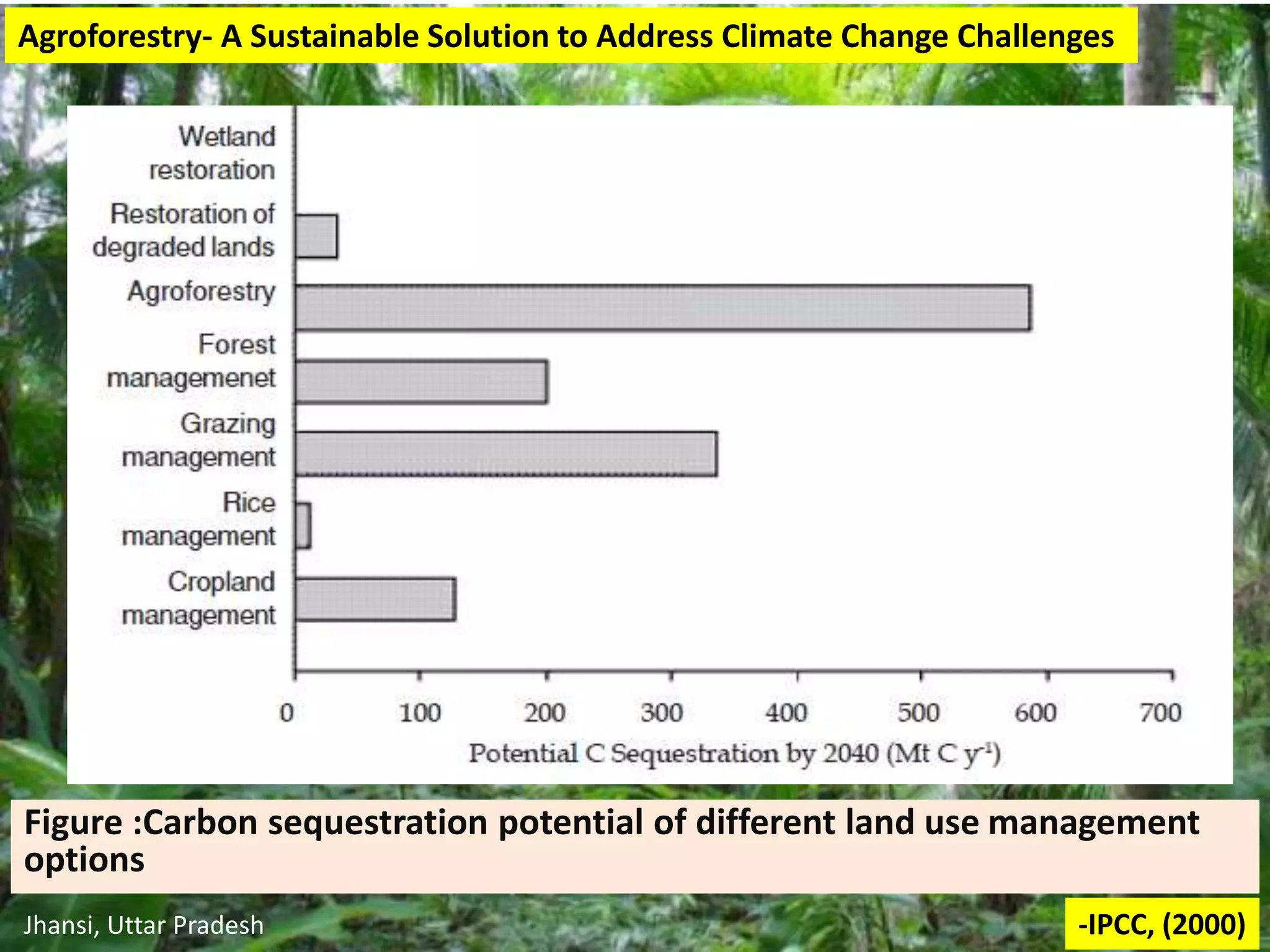
Agroforestry- A Sustainable Solution to Address Climate Change Challenges
Figure :Carbon sequestration potential of different land use management
options
-IPCC, (2000)Jhansi, Uttar Pradesh
Table : Total C storage under agroforestry systems in some regions of the country
- Newaj et al., 2014
Agroforestry- A Sustainable Solution to Address Climate Change Challenges
Could No-Till Farming Reverse Climate Change?
• "If all the land farmed around the world was in no-till, we could probably
reverse climate change,"
• Management of soil carbon can increase the amount of carbon in soil
organic matter, which reduces carbon dioxide (CO2) in the atmosphere and
improves soil health
• Reducing CO2 emissions is important for mitigating the extent and impacts
of climate change.
• Conservation tillage is any method of soil cultivation that leaves the
previous year’s crop residue (such as corn stalks or wheat stubble) on
fields before and after planting the next crop to reduce soil erosion and
runoff, as well as other benefits such as carbon sequestration (MDA,
2011).
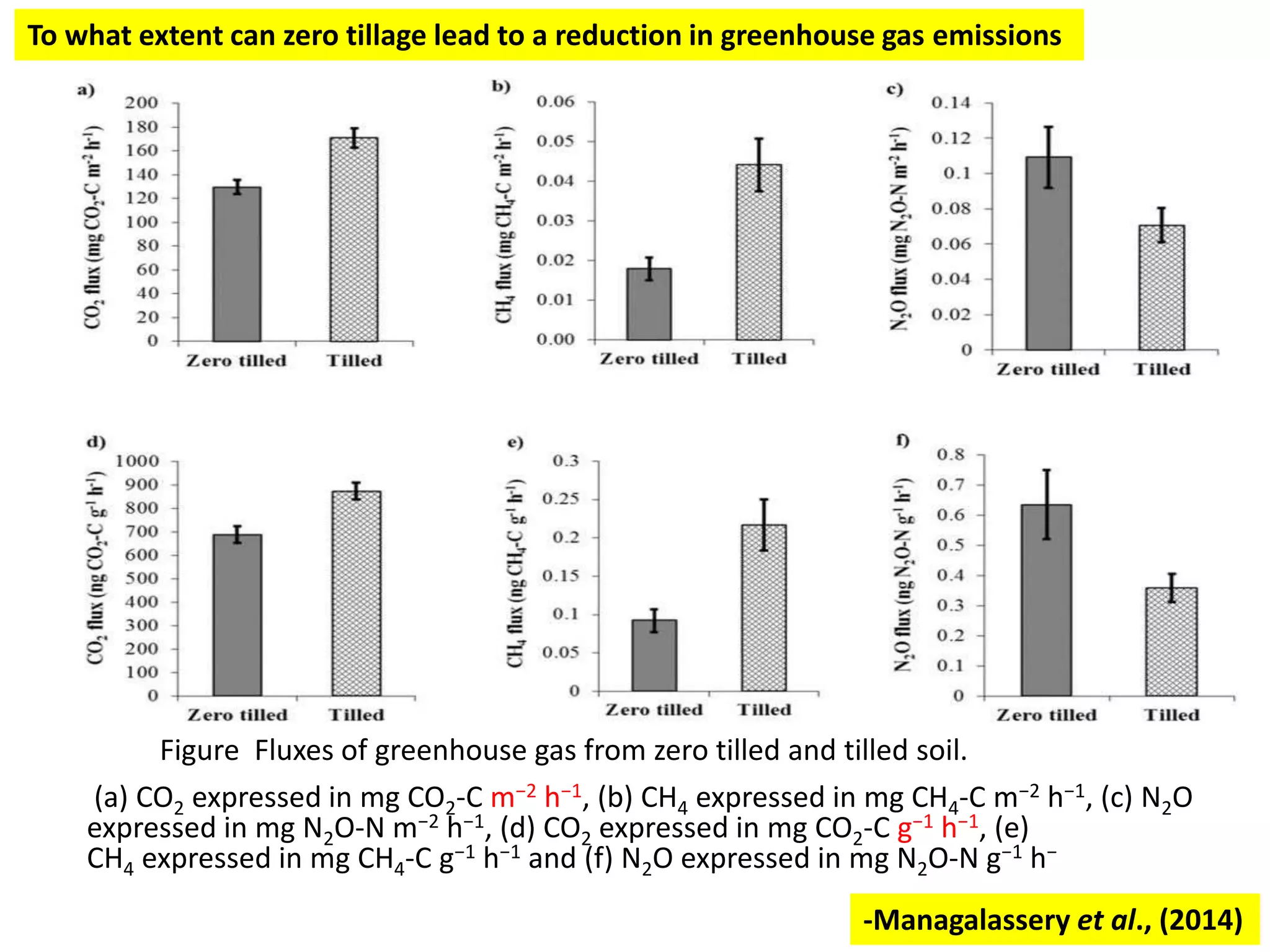
(a) CO2 expressed in mg CO2-C m−2 h−1, (b) CH4 expressed in mg CH4-C m−2 h−1, (c) N2O
expressed in mg N2O-N m−2 h−1, (d) CO2 expressed in mg CO2-C g−1 h−1, (e)
CH4 expressed in mg CH4-C g−1 h−1 and (f) N2O expressed in mg N2O-N g−1 h−
-Managalassery et al., (2014)
Figure Fluxes of greenhouse gas from zero tilled and tilled soil.
To what extent can zero tillage lead to a reduction in greenhouse gas emissions
Figure : Global warming potential under zero tilled and tilled soils.
(Average values for different sites and standard error of the mean are shown, n = 33).
(a) GWP expressed in terms of mg m-2h-1
(b) GWP expressed in terms of ng g-1 h-1
To what extent can zero tillage lead to a reduction in greenhouse gas emissions
-Managalassery et al., (2014)
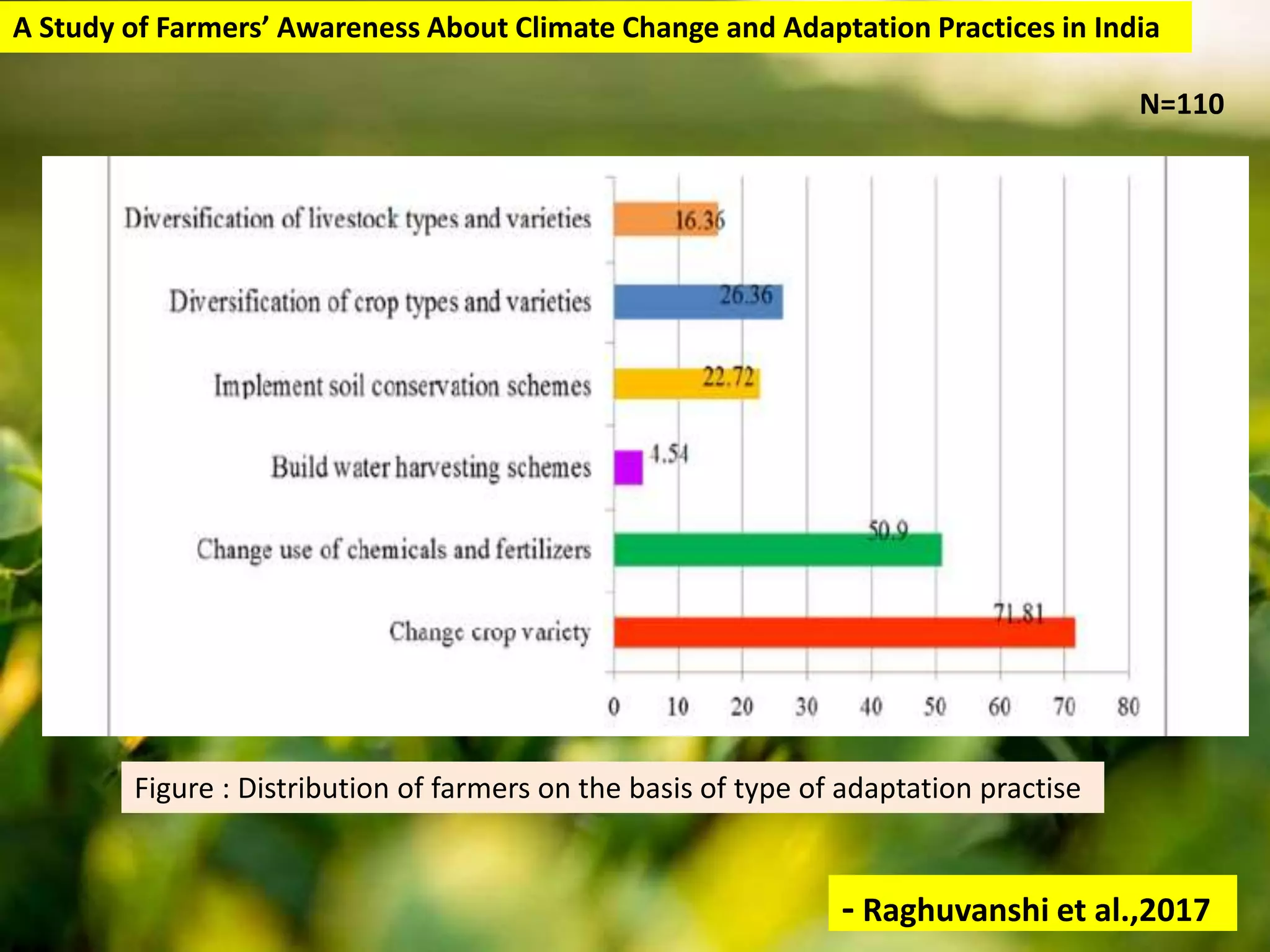
A Study of Farmers’ Awareness About Climate Change and Adaptation Practices in India
N=110
Figure : Distribution of farmers on the basis of type of adaptation practise
- Raghuvanshi et al.,2017
Crop varieties suitable for cultivation under drought stress
-NICRA, 2015
Crop varieties suitable for cultivation under flooding and submergence
-NICRA, 2015
• Making climate smart through integrated approach is also
an ideal solution to ensure the food security of the ever-
increasing global population at a time when there are twin
problems of land degradation and carbon emissions.
• Within the broad concept of sustainable agriculture
"Integrated Farming Systems" hold special position as in
this system nothing is wasted, the byproduct of one system
becomes the input for other.
• It refers to agricultural systems that integrate livestock and
crop production.
• Moreover, the system help poor small farmers, who have
very small land
Integrated farming can fight climate change to ensure the
food security
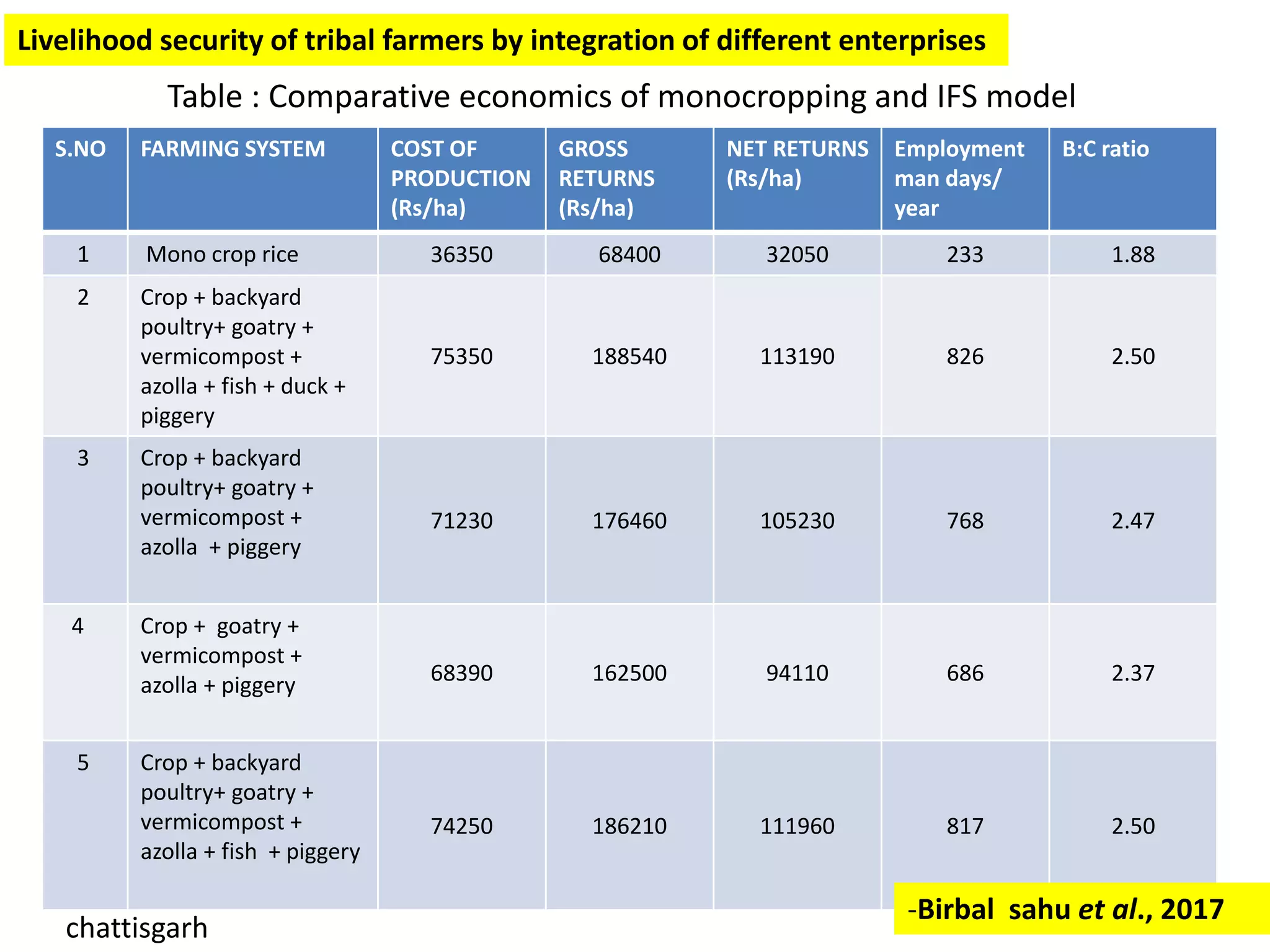
S.NO FARMING SYSTEM COST OF
PRODUCTION
(Rs/ha)
GROSS
RETURNS
(Rs/ha)
NET RETURNS
(Rs/ha)
Employment
man days/
year
B:C ratio
1 Mono crop rice 36350 68400 32050 233 1.88
2 Crop + backyard
poultry+ goatry +
vermicompost +
azolla + fish + duck +
piggery
75350 188540 113190 826 2.50
3 Crop + backyard
poultry+ goatry +
vermicompost +
azolla + piggery
71230 176460 105230 768 2.47
4 Crop + goatry +
vermicompost +
azolla + piggery 68390 162500 94110 686 2.37
5 Crop + backyard
poultry+ goatry +
vermicompost +
azolla + fish + piggery
74250 186210 111960 817 2.50
Table : Comparative economics of monocropping and IFS model
-Birbal sahu et al., 2017
Livelihood security of tribal farmers by integration of different enterprises
chattisgarh
Remote sensing – an impact assessment tool
Satellite remote sensing has provided major advances
in understanding the climate system and its changes, by
quantifying processes and spatio-temporal states of the
atmosphere, land and oceans.
Several indices are used to monitor droughts and floods
such as NDVI , VCI , TCI etc …
Figure :VCI map for different fortnights of kharif crops of drought(2002) and
normal (2003) years
• It was found that severe drought condition prevailed during kharif season
of the year 2002 over a large area of Rajasthan. The onset and extent of
drought can be clearly observed from the VCI maps.
• The average VCI values were found to be < 50 in all the districts and <35 in
most of the districts indicating severe drought.
- Diapanwita et al., 2014
Assessment of agricultural drought in Rajasthan (India) using remote sensing derived Vegetation Condition
Index (VCI) and Standardized Precipitation Index (SPI)
Rajasthan
Dry direct-seeding of rice for mitigating greenhouse gas emission
Figure :Global warming potential of transplanted and direct-seeded rice
GWP (kg /ha CO2 eq.)= CH4 kg/ ha* 25+ N2O kg/ha *298+ CO2 kg/ ha
-Pathak et al., 2012Jalandhar , Punjab
MICRO IRRIGATION…..!
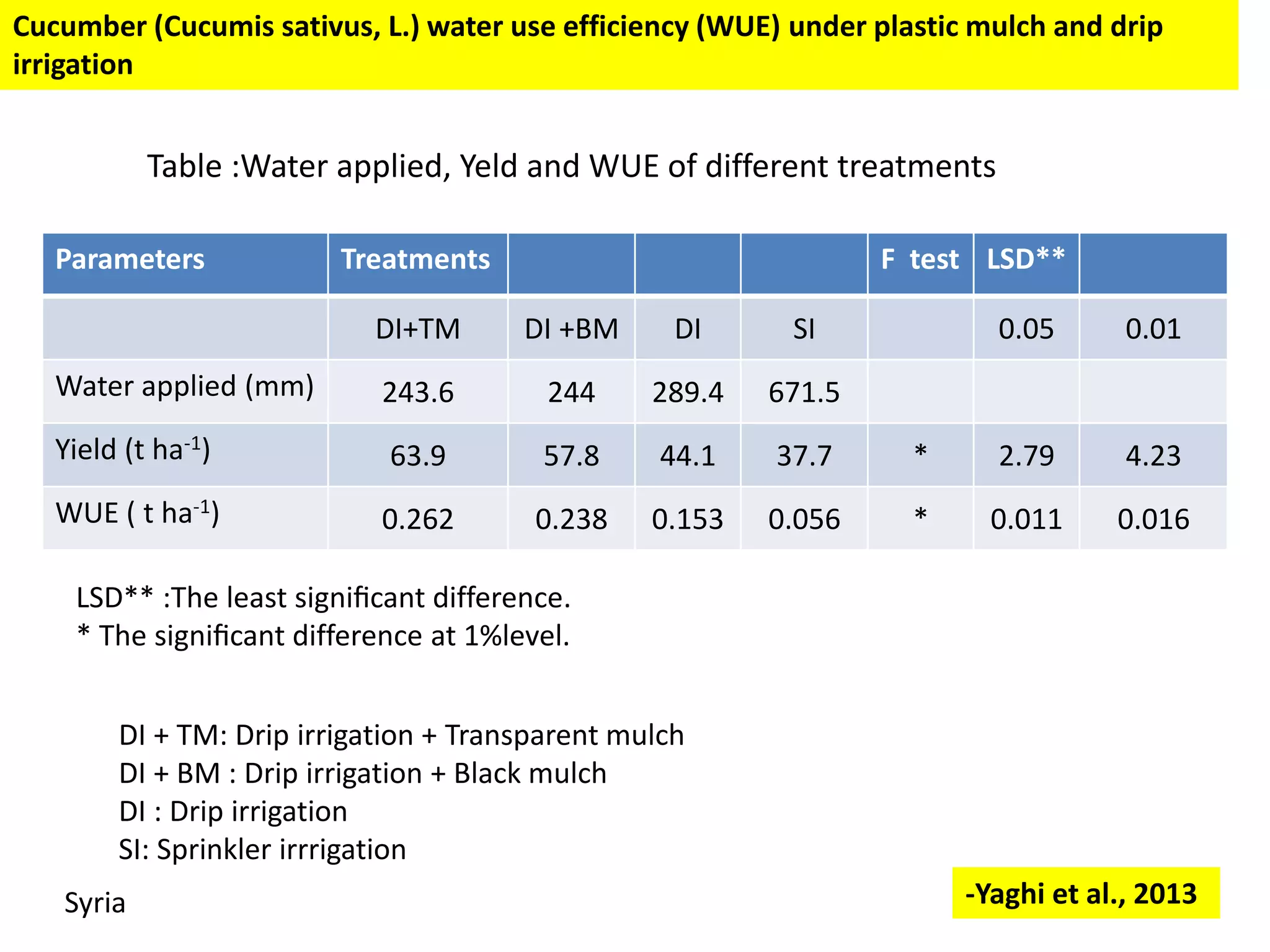
Parameters Treatments F test LSD**
DI+TM DI +BM DI SI 0.05 0.01
Water applied (mm) 243.6 244 289.4 671.5
Yield (t ha-1) 63.9 57.8 44.1 37.7 * 2.79 4.23
WUE ( t ha-1) 0.262 0.238 0.153 0.056 * 0.011 0.016
LSD** :The least significant difference.
* The significant difference at 1%level.
Table :Water applied, Yeld and WUE of different treatments
Cucumber (Cucumis sativus, L.) water use efficiency (WUE) under plastic mulch and drip
irrigation
-Yaghi et al., 2013
DI + TM: Drip irrigation + Transparent mulch
DI + BM : Drip irrigation + Black mulch
DI : Drip irrigation
SI: Sprinkler irrrigation
Syria
Future action plan for achieving food security:
• Promote the cultivation of less water requirement crops
(millets) and cultivars.
• Completion of incomplete irrigation projects and
reclamation of water-logged areas.
• By 2030, there is a plan to put 69 million ha under
micro–irrigation.
• Technologies such as conservative agriculture should be
popularized.
• Diversification in cropping system (Agro– forestry and
Agri–horticulture) for saving water and for efficient water
management
• Promotion of alternative planting methods such as a
system of rice intensification and direct seeded rice can
lead to water saving and productivity increases.
• Promote the cultivation of drought–tolerant crops and
cultivars.
• Developing Weather Insurance products specific to
regions and crops.
• Community Seed Banks should be created for drought–
prone rainy seasons.
• Need more accurate impact assessment studies
• Increasing area under forests etc;
CONCLUSION
In developing countries like India, climate change
has been the most burning issue for agriculture
practices. The changing temperature and rainfall
patterns and increasing carbon dioxide level will
definitely have significant effects on agriculture and
thus on food security of India. Unbalanced use of
nutrients, low water use efficiency, changes in
pest/disease patterns, soil erosion, degradation and
poor health, etc. would further worsen the situation.
Climate smart agriculture, using drought resistant
varieties, micro irrigation system, agroforestry,
integrated farming system etc; will helps in food
security.
climate change and food security in india

climate change and food security in india

  • 1.
    SUBMITTED BY: VEERENDRA. M-RAM/2018-07 SHRAVIKA. L -RAM/2018-08 Climate change & food security SUBMITTED BY: VEERENDRA. M-RAM/2018-07 SHRAVIKA. L- RAM/2018-08
  • 2.
    The World FoodSummit in 1996 defined food security as: “Food security exists when all people, at all times, have physical, social and economic access to sufficient, safe and nutritious food which meets their dietary needs and food preferences for an active and healthy life.” Food security is one of the leading concerns associated with climate change. Climate change affects food security in complex ways and can cause grave social and economic consequences in the form of reduced incomes, eroded livelihoods, trade disruption and adverse health impacts It will become more difficult to ensure food security under the changing climate for India where more than one third of the population is estimated to be absolutely poor and one half of all children are malnourished - (Dev and Sharma, 2010). INTRODUCTION
  • 3.
    • India hasmany reasons to be concerned about climate change, because majority of population depends on climate sensitive sector i.e. agriculture, forestry and fishing for livelihood. • The existing problem of food security in our country, if not addressed in time, will become more acute due to change in the climate. • It will become more difficult to ensure food security under the changing climate for country like India where more than one third of the population is estimated to be absolutely poor and one half of all children are malnourished in one way or another (Dev and Sharma, 2010). • To examine the impact of climate change on Indian agriculture sector is quite complex as several factors are concerned in this phenomena. INTRODUCTION
  • 5.
    • According tothe Fourth Assessment Report of the IPCC, depending on the climate change scenario, 200 to 600 million people globally could suffer from hunger by 2080 (Yohe et al., 2007). • According to World Bank estimates, based on the International Energy Agency’s current policy scenario and other energy sector economic models, for a global mean warming of 4°C, there will be a 10-percent increase in annual mean monsoon intensity and a 15-percent increase in year-to-year variability in monsoon precipitation. • The World Bank (2013) also predicts that droughts will pose an increasing risk in the north-western part of India while southern India will experience an increase in wetness.
  • 6.
    Figure 1 :A graph showing that women are more likely than men to be effected by food insecurity.
  • 7.
  • 9.
    Figure 2: Impactof climate change on the four dimensions of food security
  • 10.
    Figure 3. Groundwater level in india ( in metres below the ground level) (2018)
  • 11.
    Figure 4: Changesin Global average surface temperature Source: IPCC, (2017)
  • 13.
    • By 2030,heat stress can cause significant reductions in rice production quantity in South and Southeast Asia. Incidents of warmer night temperatures have a greater negative effect on rice yield. +1°C above critical temperature (> 24°C) may lead to 10 per cent reduction in both grain yield and biomass. Figure 5: Comparison of temperature rise on crop yields in temperate and tropical regions Source: IPCC, (2007); Nichollus et al.,(2008)
  • 14.
    Table 2 :Effect of change in temperature on germination percentage of different rice varieties Source: Farhadi et al., (2012) Genotype s of Rice Temperature (oC) 12oC 16o C 20oC 25oC 27oC 30oC 33oC 36oC 40oC Sadri 0 80 92 94 95 98 93 65 0 Ahlami Tarom 0 93 97 96 100 96 92 72 0 Neda 0 92 97 94 100 98 96 70 0 Fajr 0 88 97 100 97 100 95 72 0 IR 42 0 65 91 86 97 98 94 62 0 Nearmat 0 80 95 96 93 99 95 68 0 IR 58 0 87 99 98 98 94 94 66 0 IR 8 0 66 93 92 99 96 93 64 0 Rashti 0 85 90 94 99 96 96 68 0 Salari 0 84 90 87 97 96 93 64 0
  • 15.
    Table 3:Rice cropresponse (%) to change in temperature Source: Bharadwaj, (2008)
  • 16.
    Table 4: Wheatcrop response to variation in temperature Source: Prabhjyot et al., 2006
  • 17.
    Figure 5: Projectedimpact of climate change on wheat production (total yield in million tonnes) estimates for India. Source :Agarwal et al., (2002)
  • 19.
    Table 5. Importanceof major abiotic stresses affecting pulse crops. ***very important, **important, *not important Sultana et al., (2014)
  • 20.
    Figure.1 . Fertilegerminating pollen-grain at 25°C with distinct pollen tubes (left) and sterile pollen(right) at 43°C in Chickpea. Basu et al., (2016)
  • 21.
    Figure 6: Vulnerabilityof Indian agriculture to Climate Change (2021-2050) Source: Rama Rao et al (2013)
  • 22.
    Area under pulseshas decreased in recent years due to increased variability of rainfall in the month of June which is the optimum time for sowing of pulses and the area under cotton and soybean has increased 28.3 -54.1 -77.1 -4.0 -18.7 8.8 -48.7 -43.7 -69.7 -82.8 -62.7 -86.6 109.8 128.8 -21.5 -90 -80 -70 -60 -50 -40 -30 -20 -10 0 10 20 30 40 50 60 70 80 90 100 110 120 130 %ShiftincropedareafromKharif2007-2015 Crops Figure 7 :Per cent shift in cropped area of major crops from 2007 to 2015 ACRC,ARI, PJTSAU,2016
  • 23.
    LSD 0.05 CO2: 0.70; interaction : 1.40 Table 5 : Effect of carbon-dioxide concentration on sprouting in potato stored at 25 c Source : Brajesh et al., (2006)
  • 24.
    Table 6: Growthrate of yield per hectare (%) of food grains Source: Reserve Bank of India database
  • 25.
    Table7: Per CapitaNet Availability of Food grains (Per Day) in India. (Grams/Day) Source: Directorate of Economics and Statistics
  • 26.
    WAYS TO ACHIEVE FOODSECURITY…..
  • 27.
    SOLUTIONS Climate resilient crops Agroforestrymeasures Increasing area under irrigation Integrated farming system Adoption of sustainable agricultural practices Need for more impact assessment studies Contingency crop planning Long-term relief measures in the event of natural disasters
  • 28.
    Climate resilient crops Resilience: the capacity to recover quickly from difficulties  Climate resilient crop varieties, with enhanced tolerance to heat, drought, flooding, chilling and salinity stresses are essential in order to sustain and improve crop yields to cope with the challenges of climate change  Millets are considered as nutri cereals . These crops are grown in a variety of agro-ecological situations like plains , coast and hills as well as in diverse soils and varied rainfall. Rich diversity of small millets crops has made them well suited for contingency crop planning and also address the issues of climate change. These small millets contribute to the balanced diet , and can ensure nutritional security through regular consumption.
  • 30.
    G.S Control 4DI 7 DI 10 DI 13 DI ROOT LENGTH(CM) 30 DAS 29.51 ± 0.14 33.66 ± 0.66 36.46 ± 0.30 37.50 ± 0.22 40.43 ± 0.25 50 DAS 40.51 ± 0.35 47.31 ± 0.17 47.80 ± 0.57 49.68 ± 0.45 51.46 ± 0.34 70 DAS 49.38 ± 0.27 51.95 ± 0.48 53.36 ± 0.24 56.88 ± 0.51 58.31 ± 0.18 SHOOT LENGTH(CM) 30 DAS 43.22 ± 0.16 42.66 ± 0.17 38.00 ± 0.45 35.46 ± 0.27 32.15 ± 0.55 50 DAS 60.45 ± 0.24 58.28 ± 0.23 53.16 ± 0.35 49.11 ± 0.50 47.35 ± 0.28 70 DAS 64.61 ± 0.62 60.33 ± 0.33 58.55 ± 0.50 54.16 ± 0.23 49.23 ± 0.12 Values are in Mean ± SD Table : Effect of drought stress on plant growth of Panicum sumatrense Ajithkumar and Panneerselvam .,2013 ROS Scavenging System, Osmotic Maintenance, Pigment and Growth Status of little millet (Panicum sumatrense) under Drought Stress Erode , Tamil Nadu
  • 31.
    A) B) C) D) A) Activityof Super oxide dismutase (SOD), expressed in Unit mg-1 protein B) Activity of Catalase (CAT), expressed in μ mol H2O2 g-1 protein C) Activity of Ascorbate peroxidase (APX), μ mol H2O2 g-1 protein. D) Activity of Glutathione reductase (GR), μ mol NADPH g-1 protein [Data is means ± SD (n=3) and error bars are significantly different at p<0.05]. Figure:Effect of drought stress on antioxidative enzymes in finger millet(Sri Chaitanya VR-847 ) leaves response to drought from day 1-7 -Viswanath et al., 2014 Response of antioxidative enzymes and lipoxygenase to drought stress in finger millet leaves (Eluesine coracana) Vizaya Nagaram, Andhra Pradesh
  • 32.
    Table: Multiple rangetest of grain yield and yield components under control (CC) and waterlogging treatment (TT) of four millets at harvest. CC = control, TT= Waterlogging treatment from the 17 days after sowing till harvest. Means with the same letter are not significantly different according to tukey–Kramer multiple range test (5%). Effect of pre- and post-heading waterlogging on growth and grain yield of four millets - Matsuura et al., 2016 kumamoto, Japan
  • 33.
    Table :Nutrient compositionof small millets compared to cereals (per 100 g) Food grain Carbohydrates (g) Protein (g) Fat (g) Energy (k Cal ) Finger millet 72.0 7.3 1.3 328 Kodo millet 65.9 8.3 1.4 309 Proso millet 70.4 12.5 1.1 341 Foxtail millet 60.9 12.3 4.3 331 Little millet 67.0 7.7 4.7 341 Barnyard millet 65.5 6.2 2.2 307 Wheat 71.2 11.8 1.5 346 Rice (raw , milled) 78.2 6.8 0.5 345 Source : Nutritive value of Indian Foods , NIN , 2007
  • 34.
    Table:Nutrient composition ofsmall millets compared to cereals (per 100 g) Source : Nutritive valve of Indian foods , NIN , 2007.
  • 35.
    • In thepresent scenario of climate change, Agroforestry products can make a major contribution to the economic development of the millions of poor farmers by enhancing food security and alleviating poverty through tree-crop diversification than alone cultivation of sole agricultural crops • It plays a crucial role in climate change mitigation especially due to its tree component. Trees accumulate CO2(which is the most predominant GHG) in their biomass through a process called carbon sequestration. • It creates microclimatic condition which favors wide flora and fauna. • Agroforestry system enhances the overall farm productivity, soil enrichment through litter fall, phytoremediation, watershed protection and biodiversity conservation Agroforestry- the right tree in the right place for right purpose
  • 36.
    Agroforestry- A SustainableSolution to Address Climate Change Challenges Figure :Carbon sequestration potential of different land use management options -IPCC, (2000)Jhansi, Uttar Pradesh
  • 37.
    Table : TotalC storage under agroforestry systems in some regions of the country - Newaj et al., 2014 Agroforestry- A Sustainable Solution to Address Climate Change Challenges
  • 38.
    Could No-Till FarmingReverse Climate Change? • "If all the land farmed around the world was in no-till, we could probably reverse climate change," • Management of soil carbon can increase the amount of carbon in soil organic matter, which reduces carbon dioxide (CO2) in the atmosphere and improves soil health • Reducing CO2 emissions is important for mitigating the extent and impacts of climate change. • Conservation tillage is any method of soil cultivation that leaves the previous year’s crop residue (such as corn stalks or wheat stubble) on fields before and after planting the next crop to reduce soil erosion and runoff, as well as other benefits such as carbon sequestration (MDA, 2011).
  • 39.
    (a) CO2 expressedin mg CO2-C m−2 h−1, (b) CH4 expressed in mg CH4-C m−2 h−1, (c) N2O expressed in mg N2O-N m−2 h−1, (d) CO2 expressed in mg CO2-C g−1 h−1, (e) CH4 expressed in mg CH4-C g−1 h−1 and (f) N2O expressed in mg N2O-N g−1 h− -Managalassery et al., (2014) Figure Fluxes of greenhouse gas from zero tilled and tilled soil. To what extent can zero tillage lead to a reduction in greenhouse gas emissions
  • 40.
    Figure : Globalwarming potential under zero tilled and tilled soils. (Average values for different sites and standard error of the mean are shown, n = 33). (a) GWP expressed in terms of mg m-2h-1 (b) GWP expressed in terms of ng g-1 h-1 To what extent can zero tillage lead to a reduction in greenhouse gas emissions -Managalassery et al., (2014)
  • 41.
    A Study ofFarmers’ Awareness About Climate Change and Adaptation Practices in India N=110 Figure : Distribution of farmers on the basis of type of adaptation practise - Raghuvanshi et al.,2017
  • 42.
    Crop varieties suitablefor cultivation under drought stress -NICRA, 2015
  • 43.
    Crop varieties suitablefor cultivation under flooding and submergence -NICRA, 2015
  • 44.
    • Making climatesmart through integrated approach is also an ideal solution to ensure the food security of the ever- increasing global population at a time when there are twin problems of land degradation and carbon emissions. • Within the broad concept of sustainable agriculture "Integrated Farming Systems" hold special position as in this system nothing is wasted, the byproduct of one system becomes the input for other. • It refers to agricultural systems that integrate livestock and crop production. • Moreover, the system help poor small farmers, who have very small land Integrated farming can fight climate change to ensure the food security
  • 45.
    S.NO FARMING SYSTEMCOST OF PRODUCTION (Rs/ha) GROSS RETURNS (Rs/ha) NET RETURNS (Rs/ha) Employment man days/ year B:C ratio 1 Mono crop rice 36350 68400 32050 233 1.88 2 Crop + backyard poultry+ goatry + vermicompost + azolla + fish + duck + piggery 75350 188540 113190 826 2.50 3 Crop + backyard poultry+ goatry + vermicompost + azolla + piggery 71230 176460 105230 768 2.47 4 Crop + goatry + vermicompost + azolla + piggery 68390 162500 94110 686 2.37 5 Crop + backyard poultry+ goatry + vermicompost + azolla + fish + piggery 74250 186210 111960 817 2.50 Table : Comparative economics of monocropping and IFS model -Birbal sahu et al., 2017 Livelihood security of tribal farmers by integration of different enterprises chattisgarh
  • 47.
    Remote sensing –an impact assessment tool Satellite remote sensing has provided major advances in understanding the climate system and its changes, by quantifying processes and spatio-temporal states of the atmosphere, land and oceans. Several indices are used to monitor droughts and floods such as NDVI , VCI , TCI etc …
  • 48.
    Figure :VCI mapfor different fortnights of kharif crops of drought(2002) and normal (2003) years • It was found that severe drought condition prevailed during kharif season of the year 2002 over a large area of Rajasthan. The onset and extent of drought can be clearly observed from the VCI maps. • The average VCI values were found to be < 50 in all the districts and <35 in most of the districts indicating severe drought. - Diapanwita et al., 2014 Assessment of agricultural drought in Rajasthan (India) using remote sensing derived Vegetation Condition Index (VCI) and Standardized Precipitation Index (SPI) Rajasthan
  • 49.
    Dry direct-seeding ofrice for mitigating greenhouse gas emission Figure :Global warming potential of transplanted and direct-seeded rice GWP (kg /ha CO2 eq.)= CH4 kg/ ha* 25+ N2O kg/ha *298+ CO2 kg/ ha -Pathak et al., 2012Jalandhar , Punjab
  • 50.
  • 51.
    Parameters Treatments Ftest LSD** DI+TM DI +BM DI SI 0.05 0.01 Water applied (mm) 243.6 244 289.4 671.5 Yield (t ha-1) 63.9 57.8 44.1 37.7 * 2.79 4.23 WUE ( t ha-1) 0.262 0.238 0.153 0.056 * 0.011 0.016 LSD** :The least significant difference. * The significant difference at 1%level. Table :Water applied, Yeld and WUE of different treatments Cucumber (Cucumis sativus, L.) water use efficiency (WUE) under plastic mulch and drip irrigation -Yaghi et al., 2013 DI + TM: Drip irrigation + Transparent mulch DI + BM : Drip irrigation + Black mulch DI : Drip irrigation SI: Sprinkler irrrigation Syria
  • 52.
    Future action planfor achieving food security: • Promote the cultivation of less water requirement crops (millets) and cultivars. • Completion of incomplete irrigation projects and reclamation of water-logged areas. • By 2030, there is a plan to put 69 million ha under micro–irrigation. • Technologies such as conservative agriculture should be popularized. • Diversification in cropping system (Agro– forestry and Agri–horticulture) for saving water and for efficient water management • Promotion of alternative planting methods such as a system of rice intensification and direct seeded rice can lead to water saving and productivity increases.
  • 53.
    • Promote thecultivation of drought–tolerant crops and cultivars. • Developing Weather Insurance products specific to regions and crops. • Community Seed Banks should be created for drought– prone rainy seasons. • Need more accurate impact assessment studies • Increasing area under forests etc;
  • 54.
    CONCLUSION In developing countrieslike India, climate change has been the most burning issue for agriculture practices. The changing temperature and rainfall patterns and increasing carbon dioxide level will definitely have significant effects on agriculture and thus on food security of India. Unbalanced use of nutrients, low water use efficiency, changes in pest/disease patterns, soil erosion, degradation and poor health, etc. would further worsen the situation. Climate smart agriculture, using drought resistant varieties, micro irrigation system, agroforestry, integrated farming system etc; will helps in food security.