


&
CLIMATE SMART
AGRICULTURE
Presented by:
Subodh Khanal
Asst. Professor
Paklihawa Campus
Institute of Agriculture and Animal
Science
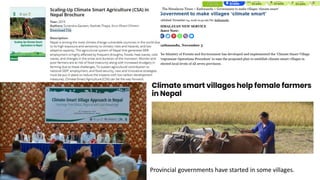
Provincial governments have started in some villages.
Weather and climate are not the same thing
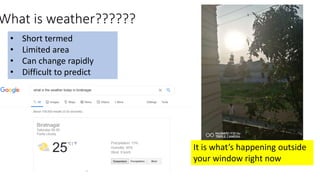
What is weather??????
• Short termed
• Limited area
• Can change rapidly
• Difficult to predict
It is what’s happening outside
your window right now
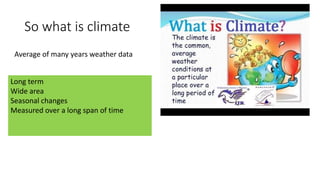
So what is climate
Average of many years weather data
Long term
Wide area
Seasonal changes
Measured over a long span of time
What is
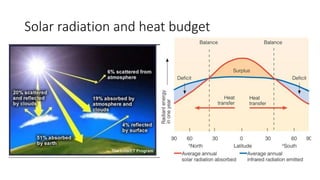
Solar radiation and heat budget
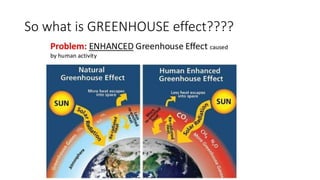
So what is GREENHOUSE effect????
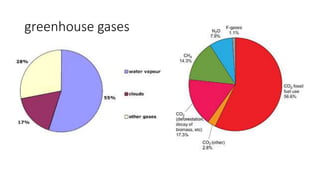
greenhouse gases
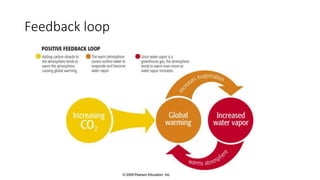
Feedback loop
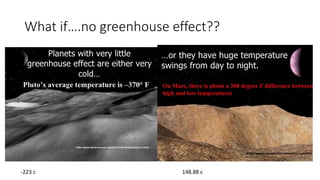
What if….no greenhouse effect??
-223 c 148.88 c
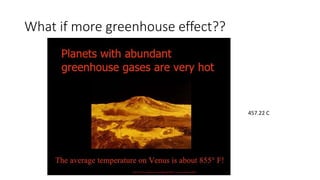
What if more greenhouse effect??
457.22 C
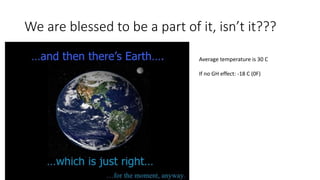
We are blessed to be a part of it, isn’t it???
Average temperature is 30 C
If no GH effect: -18 C (0F)
Remember
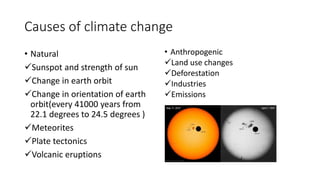
Causes of climate change
• Natural
Sunspot and strength of sun
Change in earth orbit
Change in orientation of earth
orbit(every 41000 years from
22.1 degrees to 24.5 degrees )
Meteorites
Plate tectonics
Volcanic eruptions
• Anthropogenic
Land use changes
Deforestation
Industries
Emissions
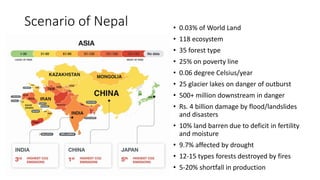
Scenario of Nepal • 0.03% of World Land
• 118 ecosystem
• 35 forest type
• 25% on poverty line
• 0.06 degree Celsius/year
• 25 glacier lakes on danger of outburst
• 500+ million downstream in danger
• Rs. 4 billion damage by flood/landslides
and disasters
• 10% land barren due to deficit in fertility
and moisture
• 9.7% affected by drought
• 12-15 types forests destroyed by fires
• 5-20% shortfall in production
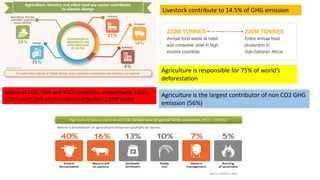
Agriculture is responsible for 75% of world’s
deforestation
Agriculture is the largest contributor of non CO2 GHG
emission (56%)
Livestock contribute to 14.5% of GHG emission
values of CO2, CH4 and N2O constitute, respectively, 146%,
257% and 122% of pre-industrial (before 1750) levels.
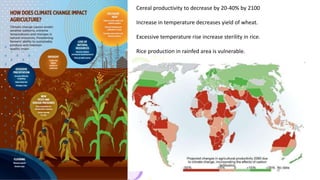
Cereal productivity to decrease by 20-40% by 2100
Increase in temperature decreases yield of wheat.
Excessive temperature rise increase sterility in rice.
Rice production in rainfed area is vulnerable.
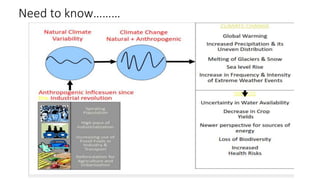
Need to know………
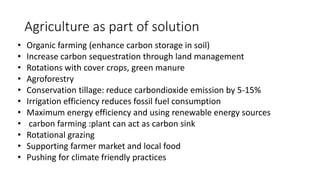
Agriculture as part of solution
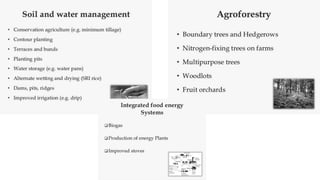
• Organic farming (enhance carbon storage in soil)
• Increase carbon sequestration through land management
• Rotations with cover crops, green manure
• Agroforestry
• Conservation tillage: reduce carbondioxide emission by 5-15%
• Irrigation efficiency reduces fossil fuel consumption
• Maximum energy efficiency and using renewable energy sources
• carbon farming :plant can act as carbon sink
• Rotational grazing
• Supporting farmer market and local food
• Pushing for climate friendly practices
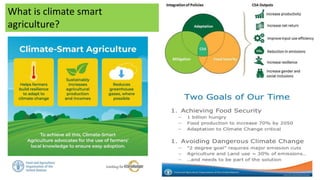
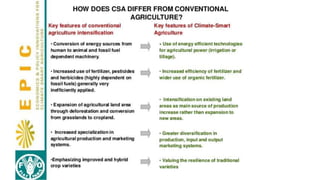
What is climate smart
agriculture?
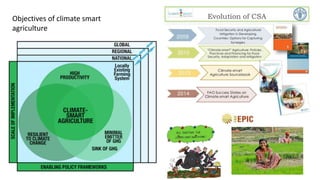
Objectives of climate smart
agriculture
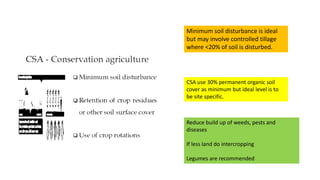
Minimum soil disturbance is ideal
but may involve controlled tillage
where <20% of soil is disturbed.
CSA use 30% permanent organic soil
cover as minimum but ideal level is to
be site specific.
Reduce build up of weeds, pests and
diseases
If less land do intercropping
Legumes are recommended
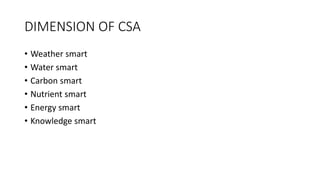
DIMENSION OF CSA
• Weather smart
• Water smart
• Carbon smart
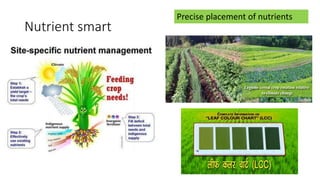
• Nutrient smart
• Energy smart
• Knowledge smart
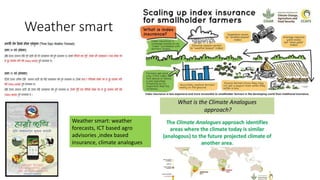
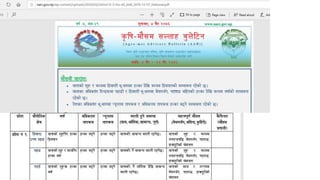
Weather smart
Weather smart: weather
forecasts, ICT based agro
advisories ,index based
insurance, climate analogues
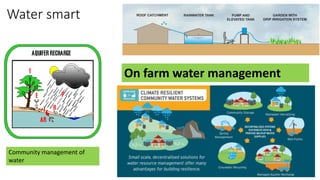
Water smart
On farm water management
Community management of
water
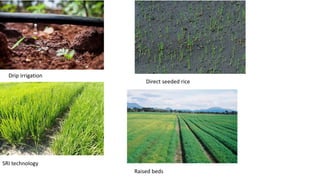
SRI technology
Drip irrigation
Direct seeded rice
Raised beds
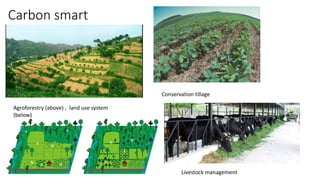
Carbon smart
Agroforestry (above) , land use system
(below)
Conservation tillage
Livestock management
Nutrient smart
Precise placement of nutrients
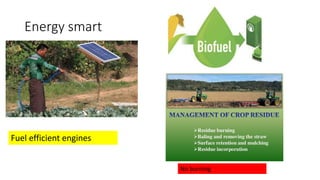
Energy smart
No burning
Fuel efficient engines
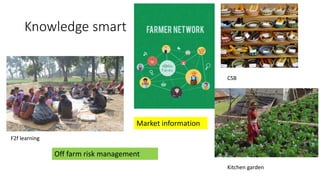
Knowledge smart
F2f learning
CSB
Kitchen garden
Off farm risk management
Market information
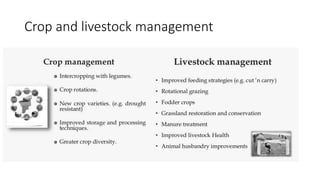
Crop and livestock management
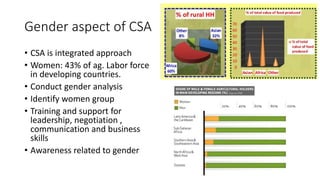
Gender aspect of CSA
• CSA is integrated approach
• Women: 43% of ag. Labor force
in developing countries.
• Conduct gender analysis
• Identify women group
• Training and support for
leadership, negotiation ,
communication and business
skills
• Awareness related to gender
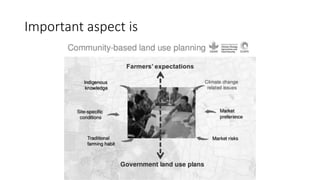
Important aspect is
THANK YOU !!!!!
Sources
• https://www.un.org/pga/71/wp-content/uploads/sites/40/2017/02/IPCC-
PowerPoint-presentation.pdf
• https://www.slideshare.net/pacorz/climate-change-powerpoint
• https://www.slideshare.net/virenderchhachhiya/climate-change-40874811
• https://www.slideshare.net/haneefahmad2/green-house-effect-
presentation-70503894
• https://www.slideshare.net/Nabiilah/causes-and-effects-of-climate-change
• https://www.slideshare.net/tmthatchupeacefeul/climate-smart-
agriculture-74290266
• https://ccafs.cgiar.org/bigfacts/#theme=food-emissions
• Documents & twitter from Food and agricultural organization

Climate smart agriculture

  • 1.
  • 2.
    CLIMATE SMART AGRICULTURE Presented by: SubodhKhanal Asst. Professor Paklihawa Campus Institute of Agriculture and Animal Science
  • 3.
    Provincial governments havestarted in some villages.
  • 4.
    Weather and climateare not the same thing
  • 5.
    What is weather?????? •Short termed • Limited area • Can change rapidly • Difficult to predict It is what’s happening outside your window right now
  • 6.
    So what isclimate Average of many years weather data Long term Wide area Seasonal changes Measured over a long span of time
  • 7.
  • 8.
  • 9.
    So what isGREENHOUSE effect????
  • 10.
  • 11.
  • 12.
    What if….no greenhouseeffect?? -223 c 148.88 c
  • 13.
    What if moregreenhouse effect?? 457.22 C
  • 14.
    We are blessedto be a part of it, isn’t it??? Average temperature is 30 C If no GH effect: -18 C (0F)
  • 15.
  • 18.
    Causes of climatechange • Natural Sunspot and strength of sun Change in earth orbit Change in orientation of earth orbit(every 41000 years from 22.1 degrees to 24.5 degrees ) Meteorites Plate tectonics Volcanic eruptions • Anthropogenic Land use changes Deforestation Industries Emissions
  • 21.
    Scenario of Nepal• 0.03% of World Land • 118 ecosystem • 35 forest type • 25% on poverty line • 0.06 degree Celsius/year • 25 glacier lakes on danger of outburst • 500+ million downstream in danger • Rs. 4 billion damage by flood/landslides and disasters • 10% land barren due to deficit in fertility and moisture • 9.7% affected by drought • 12-15 types forests destroyed by fires • 5-20% shortfall in production
  • 23.
    Agriculture is responsiblefor 75% of world’s deforestation Agriculture is the largest contributor of non CO2 GHG emission (56%) Livestock contribute to 14.5% of GHG emission values of CO2, CH4 and N2O constitute, respectively, 146%, 257% and 122% of pre-industrial (before 1750) levels.
  • 24.
    Cereal productivity todecrease by 20-40% by 2100 Increase in temperature decreases yield of wheat. Excessive temperature rise increase sterility in rice. Rice production in rainfed area is vulnerable.
  • 25.
  • 27.
    Agriculture as partof solution • Organic farming (enhance carbon storage in soil) • Increase carbon sequestration through land management • Rotations with cover crops, green manure • Agroforestry • Conservation tillage: reduce carbondioxide emission by 5-15% • Irrigation efficiency reduces fossil fuel consumption • Maximum energy efficiency and using renewable energy sources • carbon farming :plant can act as carbon sink • Rotational grazing • Supporting farmer market and local food • Pushing for climate friendly practices
  • 28.
    What is climatesmart agriculture?
  • 29.
    Objectives of climatesmart agriculture
  • 31.
    Minimum soil disturbanceis ideal but may involve controlled tillage where <20% of soil is disturbed. CSA use 30% permanent organic soil cover as minimum but ideal level is to be site specific. Reduce build up of weeds, pests and diseases If less land do intercropping Legumes are recommended
  • 32.
    DIMENSION OF CSA •Weather smart • Water smart • Carbon smart • Nutrient smart • Energy smart • Knowledge smart
  • 33.
    Weather smart Weather smart:weather forecasts, ICT based agro advisories ,index based insurance, climate analogues
  • 35.
    Water smart On farmwater management Community management of water
  • 36.
  • 37.
    Carbon smart Agroforestry (above), land use system (below) Conservation tillage Livestock management
  • 38.
  • 39.
  • 40.
    Knowledge smart F2f learning CSB Kitchengarden Off farm risk management Market information
  • 41.
  • 43.
    Gender aspect ofCSA • CSA is integrated approach • Women: 43% of ag. Labor force in developing countries. • Conduct gender analysis • Identify women group • Training and support for leadership, negotiation , communication and business skills • Awareness related to gender
  • 46.
  • 47.
  • 48.
    Sources • https://www.un.org/pga/71/wp-content/uploads/sites/40/2017/02/IPCC- PowerPoint-presentation.pdf • https://www.slideshare.net/pacorz/climate-change-powerpoint •https://www.slideshare.net/virenderchhachhiya/climate-change-40874811 • https://www.slideshare.net/haneefahmad2/green-house-effect- presentation-70503894 • https://www.slideshare.net/Nabiilah/causes-and-effects-of-climate-change • https://www.slideshare.net/tmthatchupeacefeul/climate-smart- agriculture-74290266 • https://ccafs.cgiar.org/bigfacts/#theme=food-emissions • Documents & twitter from Food and agricultural organization

Editor's Notes

  • #37 SRI is reported to reduce greenhouse gases emissions up to 40%, water saving 25-65%, reduction in incidence of major rice pests and diseases, resistance to storm damage and drought, high economic return and shorter crop cycle Productivity of DSR is 5-10% more than the yield of transplanted rice. It offers a very exhilarating opportunity to improve water and environmental sustainability. Methane gas emissions is lower in DSR than with conventionally tilled transplanted puddle rice