Clean Milk Production a Way to
Improve Profitability of Dairy Farmer
• “Clean milk” – raw milk drawn from the udder
of healthy animals, which is collected in clean,
dry milking pail and free from extraneous matter
like dirt, dust, flies, hay, manure etc.”
• Clean milk has a normal flavour with low
bacterial count and is safe for human
consumption.
• Milk from udder – normally sterile
• Ideal medium for rapid proliferation of harmful
micro-organism
• Needs to be protected from all possible sources
of contamination
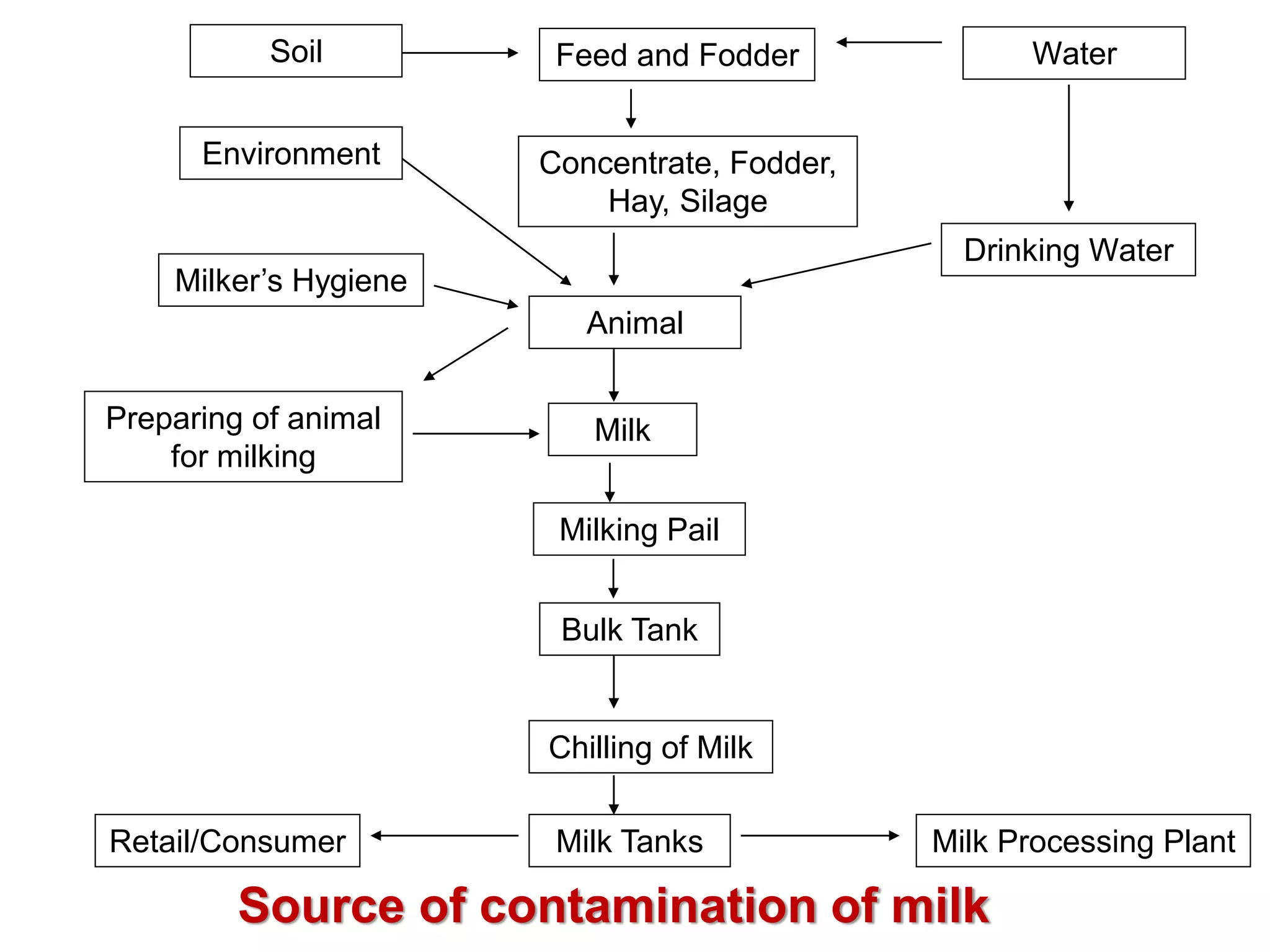
Source of contamination of milk
Milk Tanks Milk Processing Plant
Retail/Consumer
Chilling of Milk
Bulk Tank
Milking Pail
Milk
Preparing of animal
for milking
Animal
Milker’s Hygiene
Environment
Drinking Water
Soil Feed and Fodder Water
Concentrate, Fodder,
Hay, Silage
 Safe for human consumption
 Better keeping quality
 High commercial value
 Dirty milk is a rich medium for the transmission
of food borne and zoonotic diseases.
 Helps to produce good quality dairy products
 Transportation over long distances
Importance of CMP
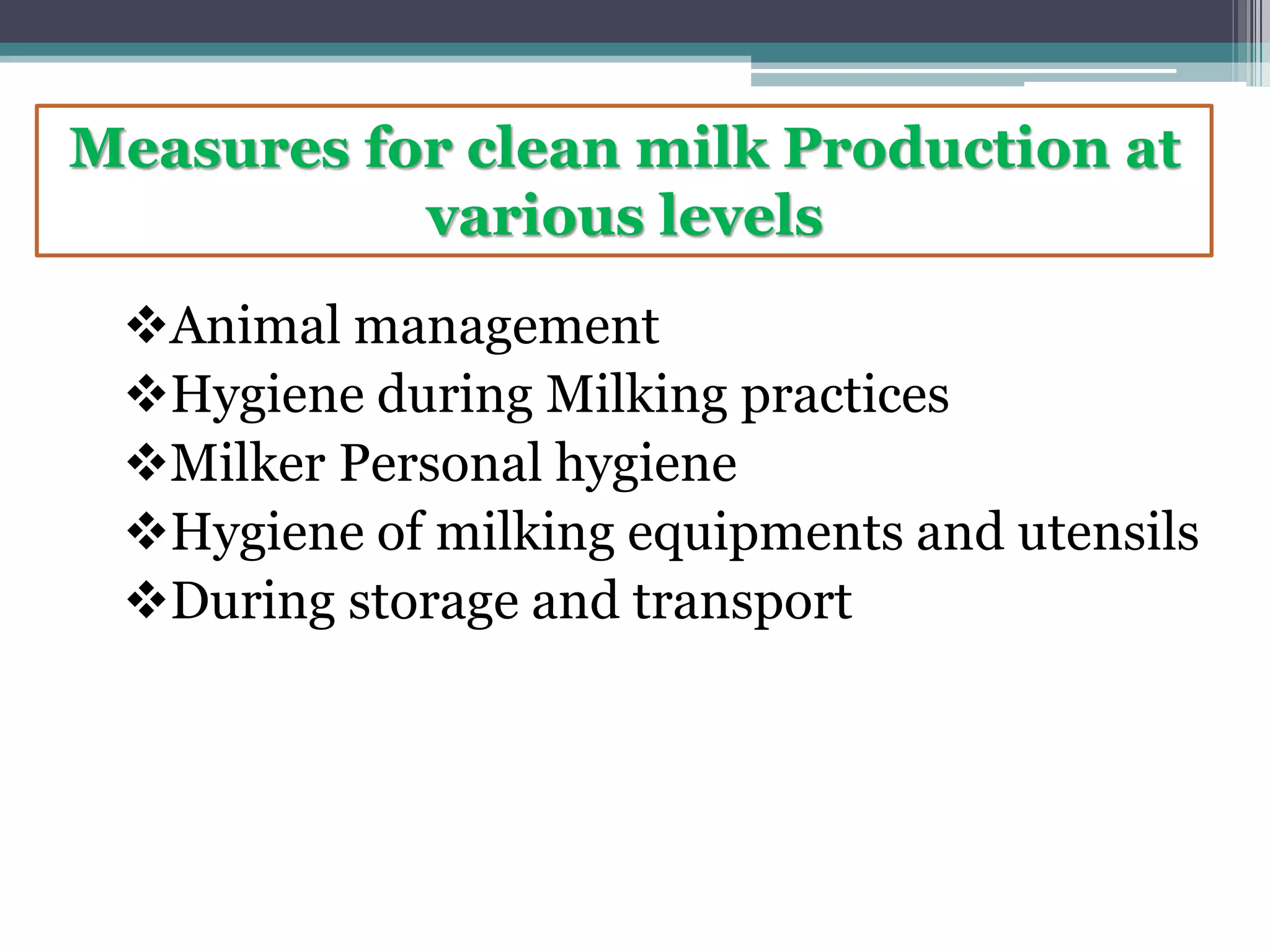
Animal management
Hygiene during Milking practices
Milker Personal hygiene
Hygiene of milking equipments and utensils
During storage and transport
Measures for clean milk Production at
various levels
Housing
• Animal shed - main sources of contamination
• Mud, urine, faeces and feed residues should be regularly
removed from the shed
• Shed should have proper drainage, sufficient ventilation and
lighting
• Appropriate arrangement for disposal of animal waste
(manure pit or biogas plant) and left over feed & fodder
• Floor sweeping just before milking should be avoided
Animal management
Feeding
• During milking, non-dusty concentrate can be provided
to keep animals busy
• Silage and wet crop residues should not be fed at milking
place as it may impart foul odour to the milk
• Good quality straw and supply of adequate minerals and
vitamins
• Feeding should be made one hour before milking
Animal Health
• Pre-requisite for CMP – healthy herd
• Routine examination of cattle for diseases like TB,
Brucellosis etc.
• Diseased animals should be kept separate
• Sanitary precautions to prevent and control diseases
should be adopted
• Check for udder wounds and mastitis.
• Vaccination of animals against FMD, Anthrax, etc.
should be done regularly
Cleanliness of Animals
• Clean and high quality milk can only be
produced by healthy cows, i.e., cows free of
udder infection managed and milked under
clean and hygienic environment.
• Hind quarters and thighs of cows should be
brushed, and washed if lot of filth-is
accumulating on them.
• Clean the udder and teats with warm water and
wipe with clean cloth or towel.
Hygiene during Milking Practice
• Stripping and full-hand milking are the two
commonly used methods of milking.
• Many milkers tend to bend their thumb in,
against the teat while milking, known as
knuckling.
• The hind quarters and thighs of cows should be
brushed, and washed if lot of filth-is
accumulating on them
• Milking should be done gently, quietly, quickly,
cleanly and completely.
• Fore stripping should be collected in separate
utensil/cup and should be discarded to avoid flies and
insects
• Pre-milking teat stimulation of 10 to 20 sec is generally
considered adequate to achieve efficient milk let down
and removal
• Complete milking has to be done, least the residual milk
may act an inducer for mastitis causing organisms & the
overall yield may also be less.
• Complete the process from washing to milking within 8
minutes.
• Animals that have recently calved & animals giving more
milk should be milked first then the animals giving less
milk or in the last phase of lactation.
• Animals with diseases or with mastitis should be milked
separately at the end.
• Keeping cows standing after milking seemed to be
associated with lower Somatic Cell Count
• Clipping of udder hairs
• Methods of Pre-milking Teat Sanitation:
 Washing by spraying water and wiping of teats
 Washing of teats with a cloth immersed in warm disinfectant
solution & drying with a dry cloth
 Immersing of teats in disinfectant and wiping with a paper cloth.
• Effective pre-milking udder hygiene is essential for the
production of high quality milk with reduced incidence
of mastitis.
• Applying teat dip to every quarter of every cow after
every milking.
• Wet milking (moistening hand in milk or water or oil)
should be prevented
• Milk should be strained using a clean cloth or a strainer.
The cloth should be washed and dried daily
Personal Hygiene of Milker
Free from communicable diseases
Should wear clean clothes, nails trimmed
Should neither eat or spit anything
• Before milking, milker should clean his hands
with soap, potable water and then wipe with
clean cloth or towel
• Clean the udder and teats with luke warm water
and wipe with clean cloth or towel
Milking equipment and storage
• Milk vessels should be cleaned before and after each
milking
• Detergents used for cleaning should be non-injurious,
non-toxic to health like Teepol
• Use of ash or mud not recommended
• Cleaned vessels should be kept in inverted position
• Milking pail with dome shaped top should be used
• Open buckets should not be used
• Facilities for cooling milk on receipt and after heat
treatment to 4 ̊C should be kept.
• Bacterial growth is retarded by cooling the milk within 2
hours of milking
Hygienic
Practices
Bacterial
Load
Conclusion
• Dairy animal should be healthy and clean especially the
hindquarter and udder.
• Hygienic practice at the time of milking and post milking
handling of milk is important
• Freshly drawn milk should be immediately cooled to 5°C
within 4 hours
• Housing of dairy animals should be designed to provide
clean, dry, well ventilation, sufficient lights and comfort
environment.
• Awareness and training programme related to CMP
should be organizing.
Udder Disinfectants
• Iodophor solution containing 0.1 to 1.0% available
iodine.
• Chlorhexidine 0.5 or 1% in polyvinyl pyrrolidone
solution or as 0.3% aqueous solution
• Sodium hypochlorite (4% solution).
• Linear dodecyl-benzene sulphonic acid (LDBS) (1.94% )
• Quaternary Ammonium Compounds (100 ppm to 400
ppm)
• Per-oxy-acetic acid (100 to 200 ppm) & Hydrogen
Peroxide (80 to 600 ppm).

Clean milk production

  • 1.
    Clean Milk Productiona Way to Improve Profitability of Dairy Farmer
  • 2.
    • “Clean milk”– raw milk drawn from the udder of healthy animals, which is collected in clean, dry milking pail and free from extraneous matter like dirt, dust, flies, hay, manure etc.” • Clean milk has a normal flavour with low bacterial count and is safe for human consumption. • Milk from udder – normally sterile • Ideal medium for rapid proliferation of harmful micro-organism • Needs to be protected from all possible sources of contamination
  • 3.
    Source of contaminationof milk Milk Tanks Milk Processing Plant Retail/Consumer Chilling of Milk Bulk Tank Milking Pail Milk Preparing of animal for milking Animal Milker’s Hygiene Environment Drinking Water Soil Feed and Fodder Water Concentrate, Fodder, Hay, Silage
  • 4.
     Safe forhuman consumption  Better keeping quality  High commercial value  Dirty milk is a rich medium for the transmission of food borne and zoonotic diseases.  Helps to produce good quality dairy products  Transportation over long distances Importance of CMP
  • 5.
    Animal management Hygiene duringMilking practices Milker Personal hygiene Hygiene of milking equipments and utensils During storage and transport Measures for clean milk Production at various levels
  • 6.
    Housing • Animal shed- main sources of contamination • Mud, urine, faeces and feed residues should be regularly removed from the shed • Shed should have proper drainage, sufficient ventilation and lighting • Appropriate arrangement for disposal of animal waste (manure pit or biogas plant) and left over feed & fodder • Floor sweeping just before milking should be avoided Animal management
  • 7.
    Feeding • During milking,non-dusty concentrate can be provided to keep animals busy • Silage and wet crop residues should not be fed at milking place as it may impart foul odour to the milk • Good quality straw and supply of adequate minerals and vitamins • Feeding should be made one hour before milking
  • 8.
    Animal Health • Pre-requisitefor CMP – healthy herd • Routine examination of cattle for diseases like TB, Brucellosis etc. • Diseased animals should be kept separate • Sanitary precautions to prevent and control diseases should be adopted • Check for udder wounds and mastitis. • Vaccination of animals against FMD, Anthrax, etc. should be done regularly
  • 9.
    Cleanliness of Animals •Clean and high quality milk can only be produced by healthy cows, i.e., cows free of udder infection managed and milked under clean and hygienic environment. • Hind quarters and thighs of cows should be brushed, and washed if lot of filth-is accumulating on them. • Clean the udder and teats with warm water and wipe with clean cloth or towel.
  • 10.
    Hygiene during MilkingPractice • Stripping and full-hand milking are the two commonly used methods of milking. • Many milkers tend to bend their thumb in, against the teat while milking, known as knuckling. • The hind quarters and thighs of cows should be brushed, and washed if lot of filth-is accumulating on them • Milking should be done gently, quietly, quickly, cleanly and completely.
  • 12.
    • Fore strippingshould be collected in separate utensil/cup and should be discarded to avoid flies and insects • Pre-milking teat stimulation of 10 to 20 sec is generally considered adequate to achieve efficient milk let down and removal • Complete milking has to be done, least the residual milk may act an inducer for mastitis causing organisms & the overall yield may also be less. • Complete the process from washing to milking within 8 minutes.
  • 13.
    • Animals thathave recently calved & animals giving more milk should be milked first then the animals giving less milk or in the last phase of lactation. • Animals with diseases or with mastitis should be milked separately at the end. • Keeping cows standing after milking seemed to be associated with lower Somatic Cell Count • Clipping of udder hairs
  • 14.
    • Methods ofPre-milking Teat Sanitation:  Washing by spraying water and wiping of teats  Washing of teats with a cloth immersed in warm disinfectant solution & drying with a dry cloth  Immersing of teats in disinfectant and wiping with a paper cloth. • Effective pre-milking udder hygiene is essential for the production of high quality milk with reduced incidence of mastitis. • Applying teat dip to every quarter of every cow after every milking. • Wet milking (moistening hand in milk or water or oil) should be prevented • Milk should be strained using a clean cloth or a strainer. The cloth should be washed and dried daily
  • 19.
    Personal Hygiene ofMilker Free from communicable diseases Should wear clean clothes, nails trimmed Should neither eat or spit anything • Before milking, milker should clean his hands with soap, potable water and then wipe with clean cloth or towel • Clean the udder and teats with luke warm water and wipe with clean cloth or towel
  • 20.
    Milking equipment andstorage • Milk vessels should be cleaned before and after each milking • Detergents used for cleaning should be non-injurious, non-toxic to health like Teepol • Use of ash or mud not recommended • Cleaned vessels should be kept in inverted position • Milking pail with dome shaped top should be used • Open buckets should not be used • Facilities for cooling milk on receipt and after heat treatment to 4 ̊C should be kept. • Bacterial growth is retarded by cooling the milk within 2 hours of milking
  • 21.
  • 23.
    Conclusion • Dairy animalshould be healthy and clean especially the hindquarter and udder. • Hygienic practice at the time of milking and post milking handling of milk is important • Freshly drawn milk should be immediately cooled to 5°C within 4 hours • Housing of dairy animals should be designed to provide clean, dry, well ventilation, sufficient lights and comfort environment. • Awareness and training programme related to CMP should be organizing.
  • 24.
    Udder Disinfectants • Iodophorsolution containing 0.1 to 1.0% available iodine. • Chlorhexidine 0.5 or 1% in polyvinyl pyrrolidone solution or as 0.3% aqueous solution • Sodium hypochlorite (4% solution). • Linear dodecyl-benzene sulphonic acid (LDBS) (1.94% ) • Quaternary Ammonium Compounds (100 ppm to 400 ppm) • Per-oxy-acetic acid (100 to 200 ppm) & Hydrogen Peroxide (80 to 600 ppm).