ICAR - NDRI , Karnal
Seminar on
Clean Milk Production Practices and its Management
PRESENTED BY-
Sunil meena
M.Tech. (Dairy technology)
• “Clean milk” – milk drawn from the udder of healthy animals, which is
collected in clean, dry milking pail and free from extraneous matter like dirt,
dust, flies, hay, manure etc.”
• Clean milk has a normal flavour with low bacterial count and is safe for
human consumption.
CONCEPT OF CMP
• Milk from udder – normally sterile
• Contains protein, lipid, lactose, minerals etc.
• Ideal medium for rapid proliferation of harmful micro-organism
• Needs to be protected from all possible sources of contamination
• Employment of hygienic practice at the time of milking – important
• Safe for human consumption
• Better keeping quality
• High commercial value
• Protection against diseases like typhoid, dysentery, septic sore throat etc.
• Helps to produce good quality dairy products
• Transportation over long distances
CMP – beneficial to both producers and consumers
FACTORS AFFECTING CMP
• Milk – source of protein and calcium
• Milk – most easily perishable and contaminated commodity
• Milk should be stored/chilled immediately after milking
• Hygienic practice from milking to factory
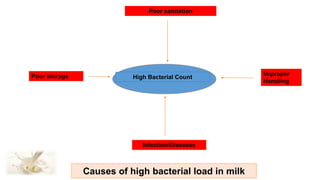
High Bacterial Count
Infection/Diseases
Poor sanitation
Improper
Handling
Poor storage
Causes of high bacterial load in milk
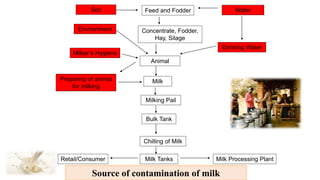
Source of contamination of milk
Milk Tanks Milk Processing PlantRetail/Consumer
Chilling of Milk
Bulk Tank
Milking Pail
MilkPreparing of animal
for milking
Animal
Milker’s Hygiene
Environment
Drinking Water
Soil Feed and Fodder Water
Concentrate, Fodder,
Hay, Silage
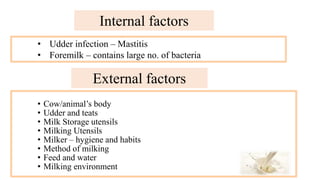
• Cow/animal’s body
• Udder and teats
• Milk Storage utensils
• Milking Utensils
• Milker – hygiene and habits
• Method of milking
• Feed and water
• Milking environment
Internal factors
• Udder infection – Mastitis
• Foremilk – contains large no. of bacteria
External factors
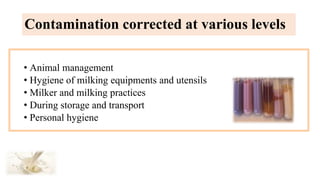
• Animal management
• Hygiene of milking equipments and utensils
• Milker and milking practices
• During storage and transport
• Personal hygiene
Contamination corrected at various levels
1. Animal Management at farm level
 Feeding
 Housing
 Animal Health
2.Cleanliness of Milking equipments
3. Hygienic milking practices
4. Cooling
The following measures should be taken care for the
production of clean milk
ANIMAL MANAGEMENT
• Milk from healthy udder – relatively free from harmful bacteria
• High bacterial count reduces the keeping quality of milk
• Animal management involves the feeding, housing and health
• Balanced feed with appropriate quantities of green fodder straw and
concentrates having essential nutrients and minerals is important
• Feed ingredients should be stored in moisture-free conditions
• Feed and fodder should be free from industrial and environmental
contaminants, pesticides, insecticides, fungicides, fumigants, pathogenic
agents, aflatoxins as well as heavy metals
FEEDING
• Good quality straw and supply of adequate minerals and vitamins
• Feeding should be made one hour before milking
• During milking, non-dusty concentrate can be provided to keep animals busy
• Silage and wet crop residues should not be fed at milking place as it may
impart foul odour to the milk
HOUSING
• Protects animals against micro-organisms, people, wind, rain, heat etc.
• Mud, urine, faeces and feed residues should be regularly removed from the
shed
• Shed should have proper drainage, sufficient ventilation and lighting
• Sufficient water facility should be available for drinking as well as washing
the shed and animal
• Shed : well-roofed, well ventilated, dry and comfortable with adequate
elevation
• Appropriate arrangement for disposal of animal waste (manure pit or biogas
plant) and left over feed & fodder
• Protection from flies and insect which are potential sources of contamination
• Piggery and poultry farming should be avoided near the animal premises
ANIMAL HEALTH
• Pre-requisite for CMP – healthy herd
• Routine examination of cattle for diseases like TB, Brucellosis etc.
• Diseased animals should be kept separate
• Sanitary precautions to prevent and control diseases should be adopted
• Using inducer drugs should be avoided
• Check for udder wounds and mastitis.
• Vaccination of animals against FMD, Anthrax, etc. should be done regularly
• Milking equipments : Milking pails, milking machine, milk cans, milk
pipeline recorder, bulk, strainer, chiller, Bulk tank and storage tank etc.
• Residual milk in utensil – growth of microorganisms
• Proper cleaning removes germs and dirt
• Milk vessels should be cleaned before and after each milking rendering
bacteria-free
CLEANLINESS OF MILKING EQUIPMENTS AND UTENSILS
• Detergents/chemicals used for cleaning should be non-injurious, non-toxic to
health like Teepol
• Use of ash or mud not recommended
• Cleaned and sanitized vessels should be kept in inverted position
• Open buckets should not be used
HYGIENIC MILKING
• Some organism may enter milk during hand milking and machine milking
• Floor sweeping just before milking should be avoided
• Milker’s Hygiene
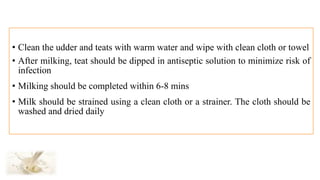
• Before milking, milker should clean his hands with soap, potable water and
then wipe with clean cloth or towel
• Clean the udder and teats with warm water and wipe with clean cloth or towel
• After milking, teat should be dipped in antiseptic solution to minimize risk of
infection
• Milking should be completed within 6-8 mins
• Milk should be strained using a clean cloth or a strainer. The cloth should be
washed and dried daily
COOLING
• To preserve the keeping quality of milk, it should be cooled as soon
as possible to a temp. below 5°C in a refrigerator
• The sooner the milk is cooled after removal, the better is the quality
• Bacterial growth is retarded by cooling the milk within 2 hours of
milking
• Delivery of milk to the factory or consumers should be as frequent as
possible
THANK YOU

Clean Milk Production Practices and its Management in India by Sunil Meena

  • 1.
    ICAR - NDRI, Karnal Seminar on Clean Milk Production Practices and its Management PRESENTED BY- Sunil meena M.Tech. (Dairy technology)
  • 2.
    • “Clean milk”– milk drawn from the udder of healthy animals, which is collected in clean, dry milking pail and free from extraneous matter like dirt, dust, flies, hay, manure etc.” • Clean milk has a normal flavour with low bacterial count and is safe for human consumption. CONCEPT OF CMP
  • 3.
    • Milk fromudder – normally sterile • Contains protein, lipid, lactose, minerals etc. • Ideal medium for rapid proliferation of harmful micro-organism • Needs to be protected from all possible sources of contamination • Employment of hygienic practice at the time of milking – important
  • 4.
    • Safe forhuman consumption • Better keeping quality • High commercial value • Protection against diseases like typhoid, dysentery, septic sore throat etc. • Helps to produce good quality dairy products • Transportation over long distances CMP – beneficial to both producers and consumers
  • 5.
    FACTORS AFFECTING CMP •Milk – source of protein and calcium • Milk – most easily perishable and contaminated commodity • Milk should be stored/chilled immediately after milking • Hygienic practice from milking to factory
  • 6.
    High Bacterial Count Infection/Diseases Poorsanitation Improper Handling Poor storage Causes of high bacterial load in milk
  • 7.
    Source of contaminationof milk Milk Tanks Milk Processing PlantRetail/Consumer Chilling of Milk Bulk Tank Milking Pail MilkPreparing of animal for milking Animal Milker’s Hygiene Environment Drinking Water Soil Feed and Fodder Water Concentrate, Fodder, Hay, Silage
  • 8.
    • Cow/animal’s body •Udder and teats • Milk Storage utensils • Milking Utensils • Milker – hygiene and habits • Method of milking • Feed and water • Milking environment Internal factors • Udder infection – Mastitis • Foremilk – contains large no. of bacteria External factors
  • 9.
    • Animal management •Hygiene of milking equipments and utensils • Milker and milking practices • During storage and transport • Personal hygiene Contamination corrected at various levels
  • 10.
    1. Animal Managementat farm level  Feeding  Housing  Animal Health 2.Cleanliness of Milking equipments 3. Hygienic milking practices 4. Cooling The following measures should be taken care for the production of clean milk
  • 11.
    ANIMAL MANAGEMENT • Milkfrom healthy udder – relatively free from harmful bacteria • High bacterial count reduces the keeping quality of milk • Animal management involves the feeding, housing and health
  • 12.
    • Balanced feedwith appropriate quantities of green fodder straw and concentrates having essential nutrients and minerals is important • Feed ingredients should be stored in moisture-free conditions • Feed and fodder should be free from industrial and environmental contaminants, pesticides, insecticides, fungicides, fumigants, pathogenic agents, aflatoxins as well as heavy metals FEEDING
  • 13.
    • Good qualitystraw and supply of adequate minerals and vitamins • Feeding should be made one hour before milking • During milking, non-dusty concentrate can be provided to keep animals busy • Silage and wet crop residues should not be fed at milking place as it may impart foul odour to the milk
  • 14.
    HOUSING • Protects animalsagainst micro-organisms, people, wind, rain, heat etc. • Mud, urine, faeces and feed residues should be regularly removed from the shed • Shed should have proper drainage, sufficient ventilation and lighting • Sufficient water facility should be available for drinking as well as washing the shed and animal
  • 15.
    • Shed :well-roofed, well ventilated, dry and comfortable with adequate elevation • Appropriate arrangement for disposal of animal waste (manure pit or biogas plant) and left over feed & fodder • Protection from flies and insect which are potential sources of contamination • Piggery and poultry farming should be avoided near the animal premises
  • 16.
    ANIMAL HEALTH • Pre-requisitefor CMP – healthy herd • Routine examination of cattle for diseases like TB, Brucellosis etc. • Diseased animals should be kept separate • Sanitary precautions to prevent and control diseases should be adopted • Using inducer drugs should be avoided • Check for udder wounds and mastitis. • Vaccination of animals against FMD, Anthrax, etc. should be done regularly
  • 17.
    • Milking equipments: Milking pails, milking machine, milk cans, milk pipeline recorder, bulk, strainer, chiller, Bulk tank and storage tank etc. • Residual milk in utensil – growth of microorganisms • Proper cleaning removes germs and dirt • Milk vessels should be cleaned before and after each milking rendering bacteria-free CLEANLINESS OF MILKING EQUIPMENTS AND UTENSILS
  • 18.
    • Detergents/chemicals usedfor cleaning should be non-injurious, non-toxic to health like Teepol • Use of ash or mud not recommended • Cleaned and sanitized vessels should be kept in inverted position • Open buckets should not be used
  • 19.
    HYGIENIC MILKING • Someorganism may enter milk during hand milking and machine milking • Floor sweeping just before milking should be avoided • Milker’s Hygiene • Before milking, milker should clean his hands with soap, potable water and then wipe with clean cloth or towel
  • 20.
    • Clean theudder and teats with warm water and wipe with clean cloth or towel • After milking, teat should be dipped in antiseptic solution to minimize risk of infection • Milking should be completed within 6-8 mins • Milk should be strained using a clean cloth or a strainer. The cloth should be washed and dried daily
  • 21.
    COOLING • To preservethe keeping quality of milk, it should be cooled as soon as possible to a temp. below 5°C in a refrigerator • The sooner the milk is cooled after removal, the better is the quality • Bacterial growth is retarded by cooling the milk within 2 hours of milking • Delivery of milk to the factory or consumers should be as frequent as possible
  • 22.