Introduction to sociology
Sociology:
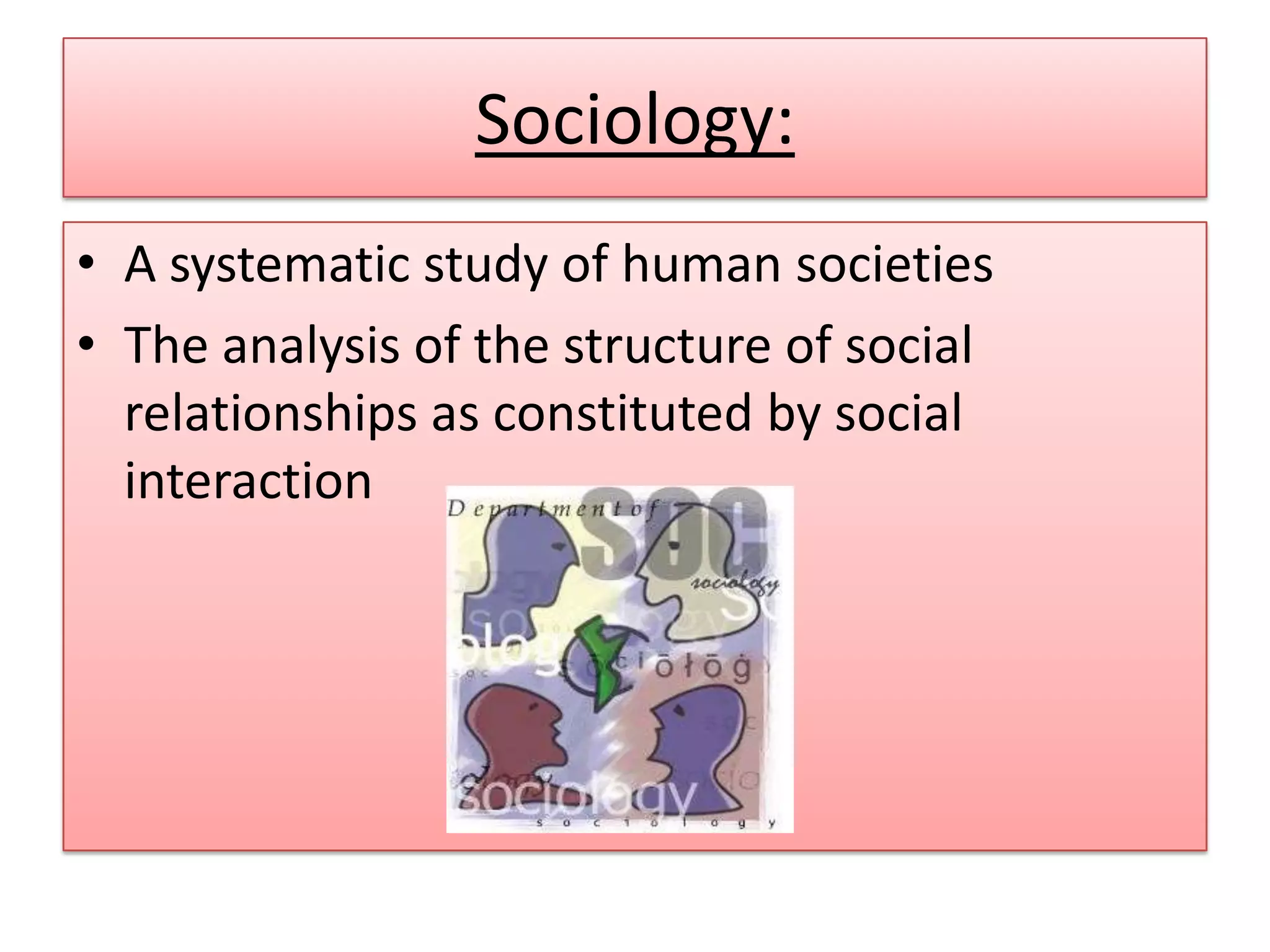
• A systematic study of human societies
• The analysis of the structure of social
  relationships as constituted by social
  interaction
Ideology

• Refers to a set of beliefs covering everything
  from scientific knowledge, to religion, to every
  day beliefs about proper conduct irrespective
  of whether it is true or false.
• Ideology can be defined as a tightly knit body
  of beliefs organized around a few central
  values.
Dominant Ideology


• A set of beliefs about the social world and the
  way it works or should work
• These beliefs tend to benefit the powerful and
  have the capacity to “distort reality”
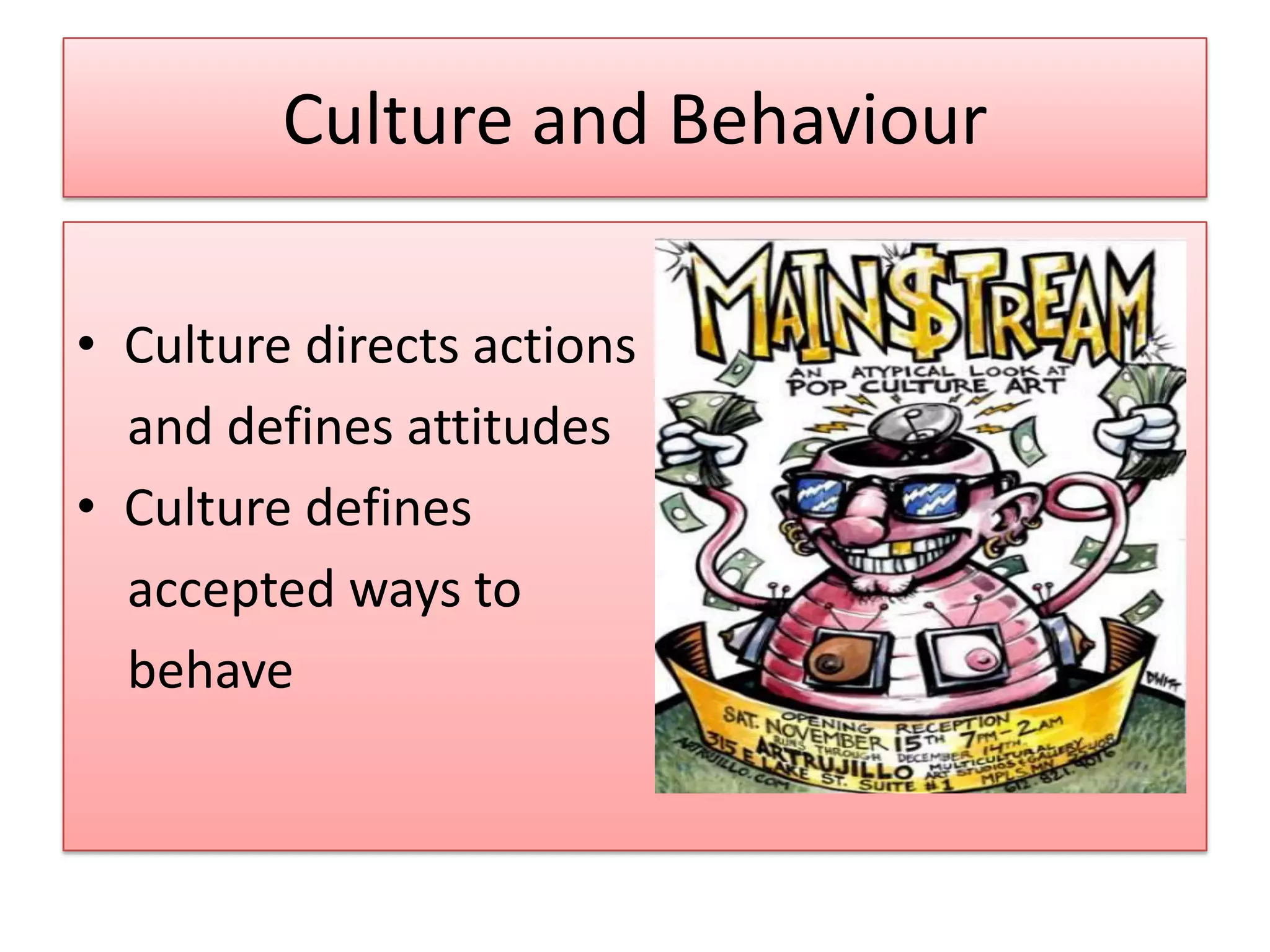
Culture and Behaviour

• Culture directs actions
  and defines attitudes
• Culture defines
  accepted ways to
  behave
Socialisation
• This is the process by which the individual
  learns the culture of their society
• Primary Socialisation- FAMILY
• Other socialisation agents –Peers, educational
  system, the media, gender, occupational
  group, social class and stratification.
Norms
• These are guidelines which direct conduct in
  particular situations.e.g dress codes
• Norms are enforced by “positive” (rewards) and
  “negative”(punishment) sanctions
• Norms can be sanctioned informally
• Formalised norms can be Laws enforced by official
  sanctions. These sanctions are mechanisms of social
  control and are used to maintain order.
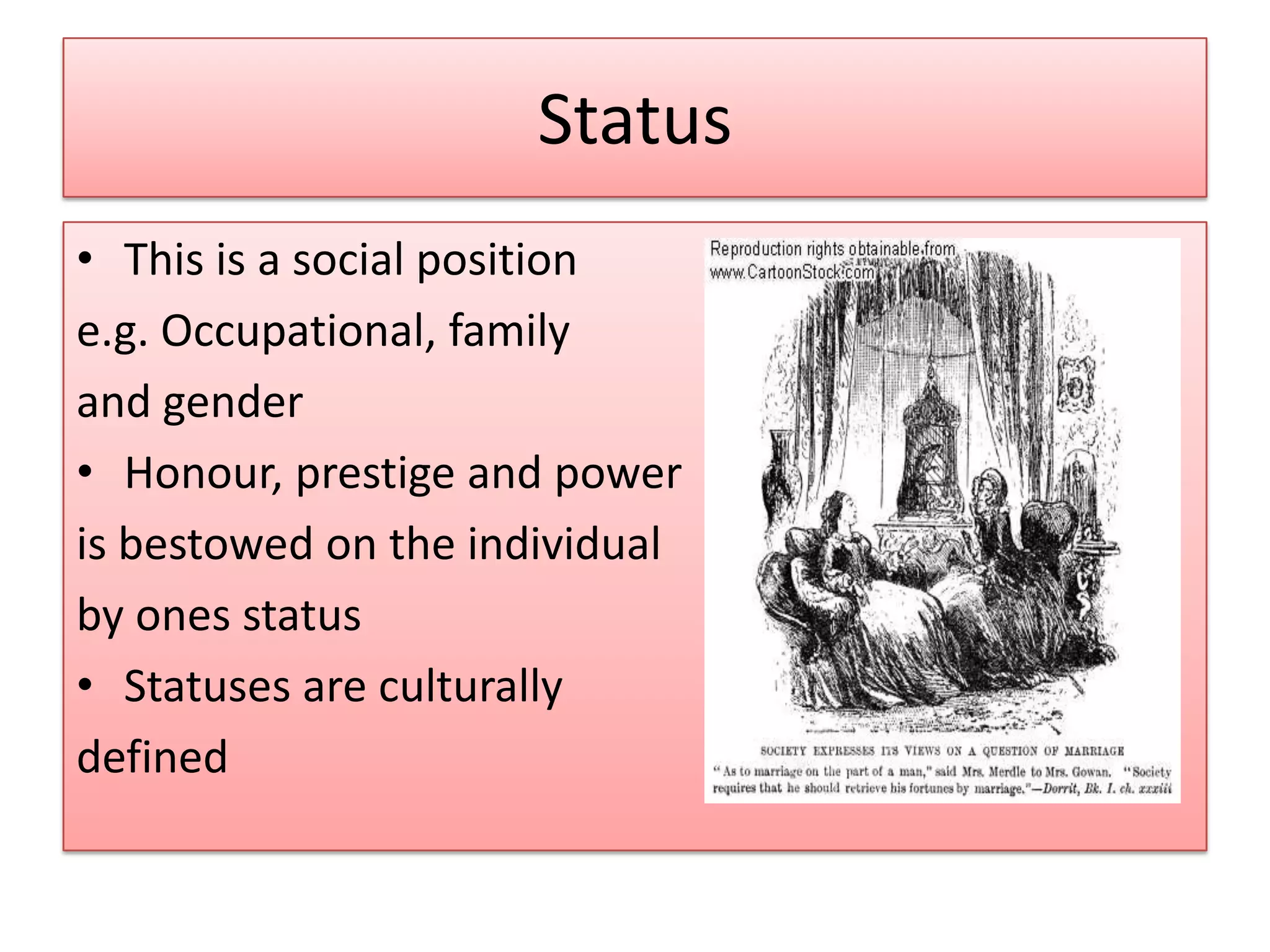
Status
• This is a social position
e.g. Occupational, family
and gender
• Honour, prestige and power
is bestowed on the individual
by ones status
• Statuses are culturally
defined
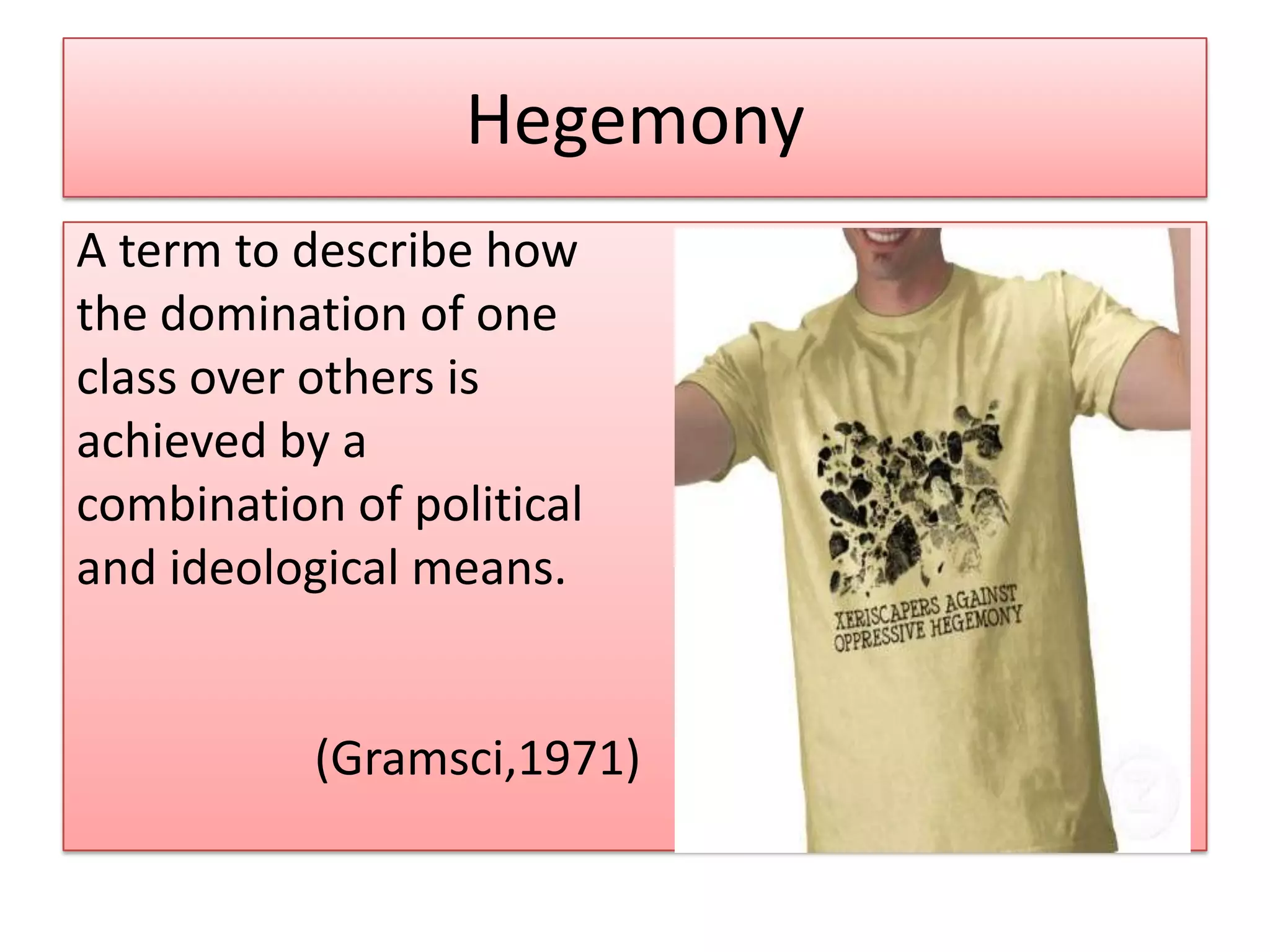
Hegemony
A term to describe how
the domination of one
class over others is
achieved by a
combination of political
and ideological means.


           (Gramsci,1971)

Cld514 a session 1 intro to sociology

  • 1.
  • 2.
    Sociology: • A systematicstudy of human societies • The analysis of the structure of social relationships as constituted by social interaction
  • 3.
    Ideology • Refers toa set of beliefs covering everything from scientific knowledge, to religion, to every day beliefs about proper conduct irrespective of whether it is true or false. • Ideology can be defined as a tightly knit body of beliefs organized around a few central values.
  • 4.
    Dominant Ideology • Aset of beliefs about the social world and the way it works or should work • These beliefs tend to benefit the powerful and have the capacity to “distort reality”
  • 5.
    Culture and Behaviour •Culture directs actions and defines attitudes • Culture defines accepted ways to behave
  • 6.
    Socialisation • This isthe process by which the individual learns the culture of their society • Primary Socialisation- FAMILY • Other socialisation agents –Peers, educational system, the media, gender, occupational group, social class and stratification.
  • 7.
    Norms • These areguidelines which direct conduct in particular situations.e.g dress codes • Norms are enforced by “positive” (rewards) and “negative”(punishment) sanctions • Norms can be sanctioned informally • Formalised norms can be Laws enforced by official sanctions. These sanctions are mechanisms of social control and are used to maintain order.
  • 8.
    Status • This isa social position e.g. Occupational, family and gender • Honour, prestige and power is bestowed on the individual by ones status • Statuses are culturally defined
  • 9.
    Hegemony A term todescribe how the domination of one class over others is achieved by a combination of political and ideological means. (Gramsci,1971)