Session 1 Introduction
Learning Outcome:
Provide an overview of the Learning &
assessment Strategies
Identify & list basic concepts of advocacy and
community development


                                                 1
RESISTANT

   “I‟m part of my community and
    I‟m not going to change”

   only doing course because of
    requirements

   not open to changing patterns of
    learning

   resist changing values and
    attitudes


                                       2
   “The bastards won‟t beat me –
    I‟m going to get this
    qualification”

    often begin many courses or
    same course many times, but
    then get defeated.

    have perhaps been told in the
    past they were not good enough
    academically.


                                     3
   “I‟m not sure how I fit in here
    but I'm trying out different hats
    to see how they work”

   an uncomfortable phase

   student wants to be part of the
    course but know it requires a
    change in them

    could have history of lurching
    from thinking they could achieve
    to being put down; getting big
    for their boots
   mentors help here

                                        4
   “I can handle anything now; I
    know I belong”

   student is comfortable with
    their place in the system

   student is able to negotiate
    what they need in order to learn

   students has a sense of „agency‟
    – they know they have
    challenges but believe they can
    and should be in the learning
    environment.


                                       5
   Purpose

   Networks – bonding, bridging
    and linking ties, social capital,
    family links

   Identity resource – ability to
    articulate and present self;
    accepting constructive criticism,
    etc

   Processes – negotiating system;
    better able to do this at the
    „enacted‟ phase


                                        6
   Family
   Community
   Workplace
   TAFE

   Students need to manage
    different identities in order to
    be successful learners

   Identities can get in the way if
    they don‟t support the learning.


                                       7
   Community development
    strategies are often used when
    advocating for clients or causes.

   Below are the steps in the
    advocacy process.

   You can see how community
    development strategies are used
    in advocacy.


                                        8
   Identify the issue/s

   Undertake research to determine the
    nature of the issue and who is
    responsible for it.

   Determine if the issue is best managed
    by advocacy and or community
    development strategies.

   Determine a goal for the advocacy and
    or community development strategies

   Draft a work plan to achieve the goal.

This work plan is likely to include a
range of community development
strategies including, community research
reports, lobbying the media and using
the legal and political system to achieve
an advocacy goal.

                                             9
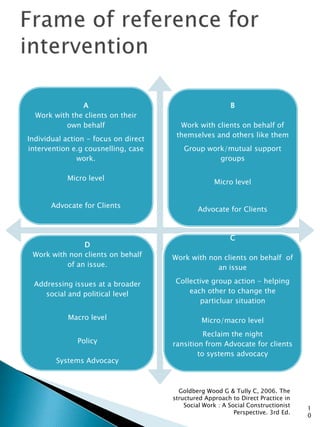
A                                          B
  Work with the clients on their
          own behalf                    Work with clients on behalf of
                                       themselves and others like them
Individual action - focus on direct
intervention e.g cousnelling, case       Group work/mutual support
               work.                              groups

           Micro level
                                                    Micro level


       Advocate for Clients
                                              Advocate for Clients


                                                          C
               D
 Work with non clients on behalf      Work with non clients on behalf of
          of an issue.                            an issue

 Addressing issues at a broader        Collective group action - helping
    social and political level             each other to change the
                                              particluar situation

            Macro level                         Micro/macro level
                                                Reclaim the night
              Policy                  ransition from Advocate for clients
                                              to systems advocacy
        Systems Advocacy


                                        Goldberg Wood G & Tully C, 2006. The
                                      structured Approach to Direct Practice in
                                          Social Work : A Social Constructionist
                                                                                   1
                                                            Perspective. 3rd Ed.
                                                                                   0

Session 1 introduction

  • 1.
    Session 1 Introduction LearningOutcome: Provide an overview of the Learning & assessment Strategies Identify & list basic concepts of advocacy and community development 1
  • 2.
    RESISTANT  “I‟m part of my community and I‟m not going to change”  only doing course because of requirements  not open to changing patterns of learning  resist changing values and attitudes 2
  • 3.
    “The bastards won‟t beat me – I‟m going to get this qualification”  often begin many courses or same course many times, but then get defeated.  have perhaps been told in the past they were not good enough academically. 3
  • 4.
    “I‟m not sure how I fit in here but I'm trying out different hats to see how they work”  an uncomfortable phase  student wants to be part of the course but know it requires a change in them  could have history of lurching from thinking they could achieve to being put down; getting big for their boots  mentors help here 4
  • 5.
    “I can handle anything now; I know I belong”  student is comfortable with their place in the system  student is able to negotiate what they need in order to learn  students has a sense of „agency‟ – they know they have challenges but believe they can and should be in the learning environment. 5
  • 6.
    Purpose  Networks – bonding, bridging and linking ties, social capital, family links  Identity resource – ability to articulate and present self; accepting constructive criticism, etc  Processes – negotiating system; better able to do this at the „enacted‟ phase 6
  • 7.
    Family  Community  Workplace  TAFE  Students need to manage different identities in order to be successful learners  Identities can get in the way if they don‟t support the learning. 7
  • 8.
    Community development strategies are often used when advocating for clients or causes.  Below are the steps in the advocacy process.  You can see how community development strategies are used in advocacy. 8
  • 9.
    Identify the issue/s  Undertake research to determine the nature of the issue and who is responsible for it.  Determine if the issue is best managed by advocacy and or community development strategies.  Determine a goal for the advocacy and or community development strategies  Draft a work plan to achieve the goal. This work plan is likely to include a range of community development strategies including, community research reports, lobbying the media and using the legal and political system to achieve an advocacy goal. 9
  • 10.
    A B Work with the clients on their own behalf Work with clients on behalf of themselves and others like them Individual action - focus on direct intervention e.g cousnelling, case Group work/mutual support work. groups Micro level Micro level Advocate for Clients Advocate for Clients C D Work with non clients on behalf Work with non clients on behalf of of an issue. an issue Addressing issues at a broader Collective group action - helping social and political level each other to change the particluar situation Macro level Micro/macro level Reclaim the night Policy ransition from Advocate for clients to systems advocacy Systems Advocacy Goldberg Wood G & Tully C, 2006. The structured Approach to Direct Practice in Social Work : A Social Constructionist 1 Perspective. 3rd Ed. 0