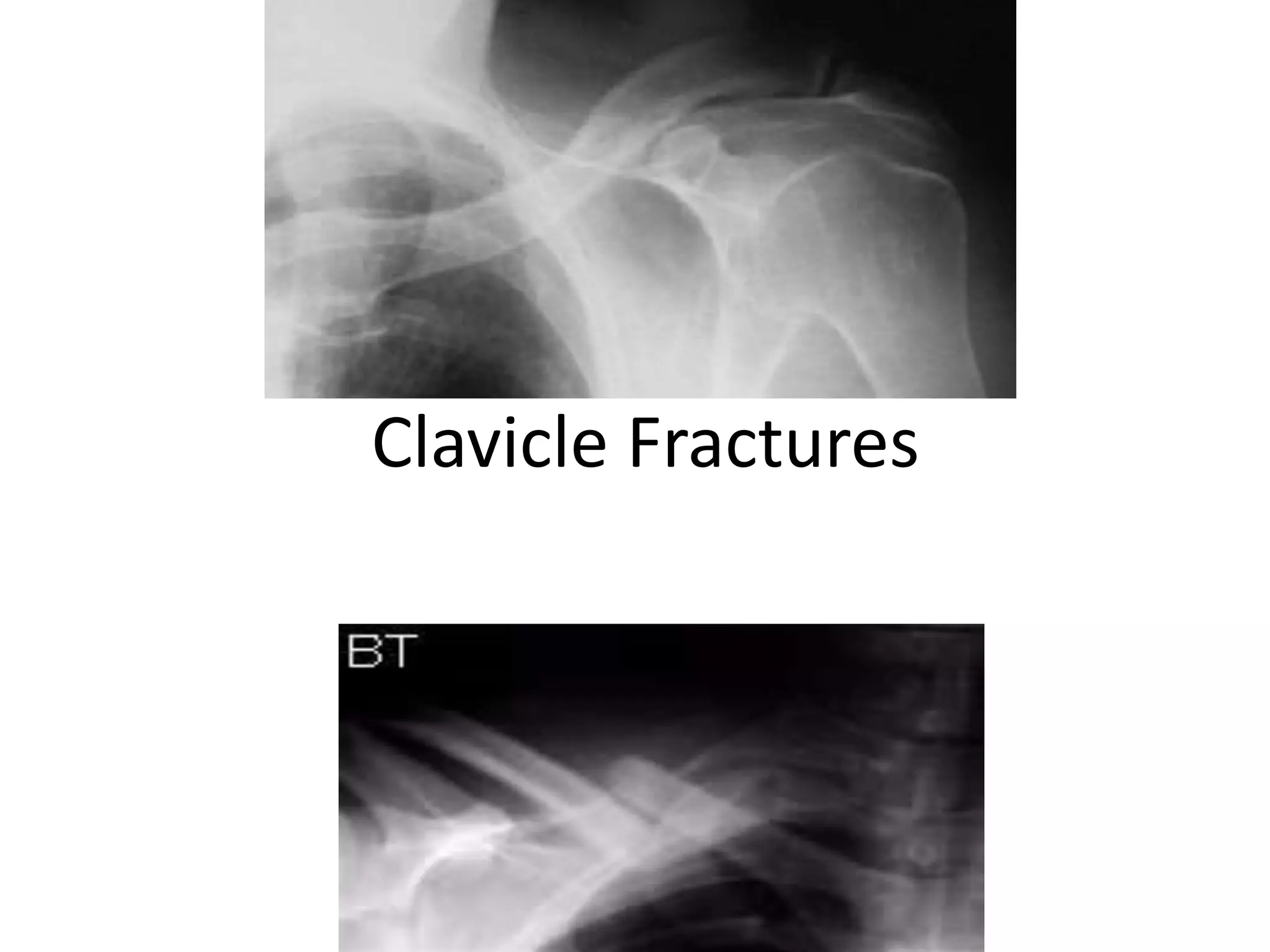
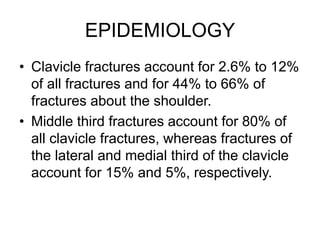
Clavicle Fractures
EPIDEMIOLOGY
• Clavicle fractures account for 2.6% to 12%
of all fractures and for 44% to 66% of
fractures about the shoulder.
• Middle third fractures account for 80% of
all clavicle fractures, whereas fractures of
the lateral and medial third of the clavicle
account for 15% and 5%, respectively.
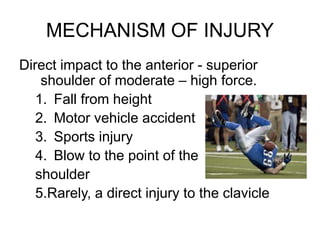
MECHANISM OF INJURY
Direct impact to the anterior - superior
shoulder of moderate – high force.
1. Fall from height
2. Motor vehicle accident
3. Sports injury
4. Blow to the point of the
shoulder
5.Rarely, a direct injury to the clavicle
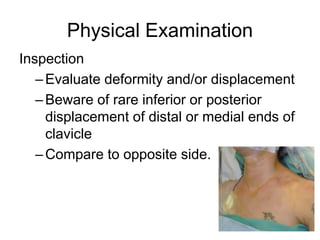
Physical Examination
Inspection
–Evaluate deformity and/or displacement
–Beware of rare inferior or posterior
displacement of distal or medial ends of
clavicle
–Compare to opposite side.
Palpation
Evaluate pain
Look for instability with stress
Neurovascular examination
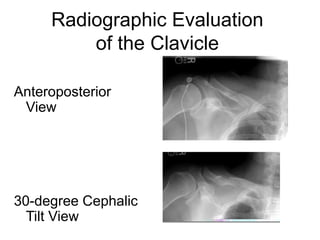
Radiographic Evaluation
of the Clavicle
Anteroposterior
View
30-degree Cephalic
Tilt View
Classification
• Craig’s classification.
• Group I: fracture of the middle third
(80%).
• Group II: fracture of the lateral one
third(15%).
• This is subclassified according to the
location of the coracoclavicular ligaments
relative to the fracture:
• Type I: Minimal displacement:
interligamentous fracture between the
coracoclavicular and AC ligaments;
ligaments still intact
• Type II: Displaced secondary to a fracture
medial to the coracoclavicular ligaments:
higher incidence of nonunion
• Type III: Fracture of the articular surface
• Type IV: ligament intact to the periostium,
with displacement of proximal fragment
• Type V: communited
• Group III: fracture of the medial one third
(5%).
• Type I: Minimal displacement
• Type II: Displaced
• Type III: Intraarticular
• Type IV: Epiphyseal separation
• Type V: Comminuted
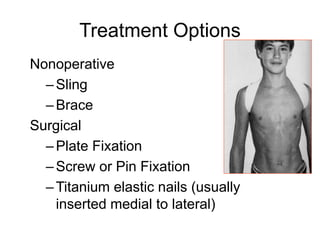
Treatment Options
Nonoperative
–Sling
–Brace
Surgical
–Plate Fixation
–Screw or Pin Fixation
–Titanium elastic nails (usually
inserted medial to lateral)
Physiotherapy for a clavicle
fracture
• Physiotherapy treatment for patients with
this condition is important to ensure an
optimal outcome and allow a safe return to
activity. Treatment may comprise:
• education
• rest from aggravating activities
• the use of a sling or figure-of-8 bandage
• electrotherapy
• protective and postural taping
• exercises to improve posture, flexibility
and strength
• activity modification advice
• a graduated return to activity plan
• soft tissue massage
• joint mobilization
Thank You

Clavicle fractures

  • 1.
  • 2.
    EPIDEMIOLOGY • Clavicle fracturesaccount for 2.6% to 12% of all fractures and for 44% to 66% of fractures about the shoulder. • Middle third fractures account for 80% of all clavicle fractures, whereas fractures of the lateral and medial third of the clavicle account for 15% and 5%, respectively.
  • 3.
    MECHANISM OF INJURY Directimpact to the anterior - superior shoulder of moderate – high force. 1. Fall from height 2. Motor vehicle accident 3. Sports injury 4. Blow to the point of the shoulder 5.Rarely, a direct injury to the clavicle
  • 4.
    Physical Examination Inspection –Evaluate deformityand/or displacement –Beware of rare inferior or posterior displacement of distal or medial ends of clavicle –Compare to opposite side.
  • 5.
    Palpation Evaluate pain Look forinstability with stress Neurovascular examination
  • 6.
    Radiographic Evaluation of theClavicle Anteroposterior View 30-degree Cephalic Tilt View
  • 7.
    Classification • Craig’s classification. •Group I: fracture of the middle third (80%). • Group II: fracture of the lateral one third(15%). • This is subclassified according to the location of the coracoclavicular ligaments relative to the fracture:
  • 8.
    • Type I:Minimal displacement: interligamentous fracture between the coracoclavicular and AC ligaments; ligaments still intact • Type II: Displaced secondary to a fracture medial to the coracoclavicular ligaments: higher incidence of nonunion • Type III: Fracture of the articular surface • Type IV: ligament intact to the periostium, with displacement of proximal fragment • Type V: communited
  • 9.
    • Group III:fracture of the medial one third (5%). • Type I: Minimal displacement • Type II: Displaced • Type III: Intraarticular • Type IV: Epiphyseal separation • Type V: Comminuted
  • 10.
    Treatment Options Nonoperative –Sling –Brace Surgical –Plate Fixation –Screwor Pin Fixation –Titanium elastic nails (usually inserted medial to lateral)
  • 11.
    Physiotherapy for aclavicle fracture • Physiotherapy treatment for patients with this condition is important to ensure an optimal outcome and allow a safe return to activity. Treatment may comprise: • education • rest from aggravating activities • the use of a sling or figure-of-8 bandage • electrotherapy
  • 12.
    • protective andpostural taping • exercises to improve posture, flexibility and strength • activity modification advice • a graduated return to activity plan • soft tissue massage • joint mobilization
  • 13.