Group 7 Chapter 4 Classroom Research – Interaction Analysis  Group Members… ~ Anita PGP110010 ~Cassandra PGP110022 ~Safiyah PGP110009
 
Doing Second language  research: Chapter 4 Classroom Research Interaction Analysis
Wilson Mizner, 1876-1933 ( an American dramatist and wit)  .  ……If you steal from another author it’s plagiarism: if you steal from many, it’s researc h Marson Bates, 1906-1974 ( an American writer)  … .. is what I’m doing when I don’t know what I’m doing
Research
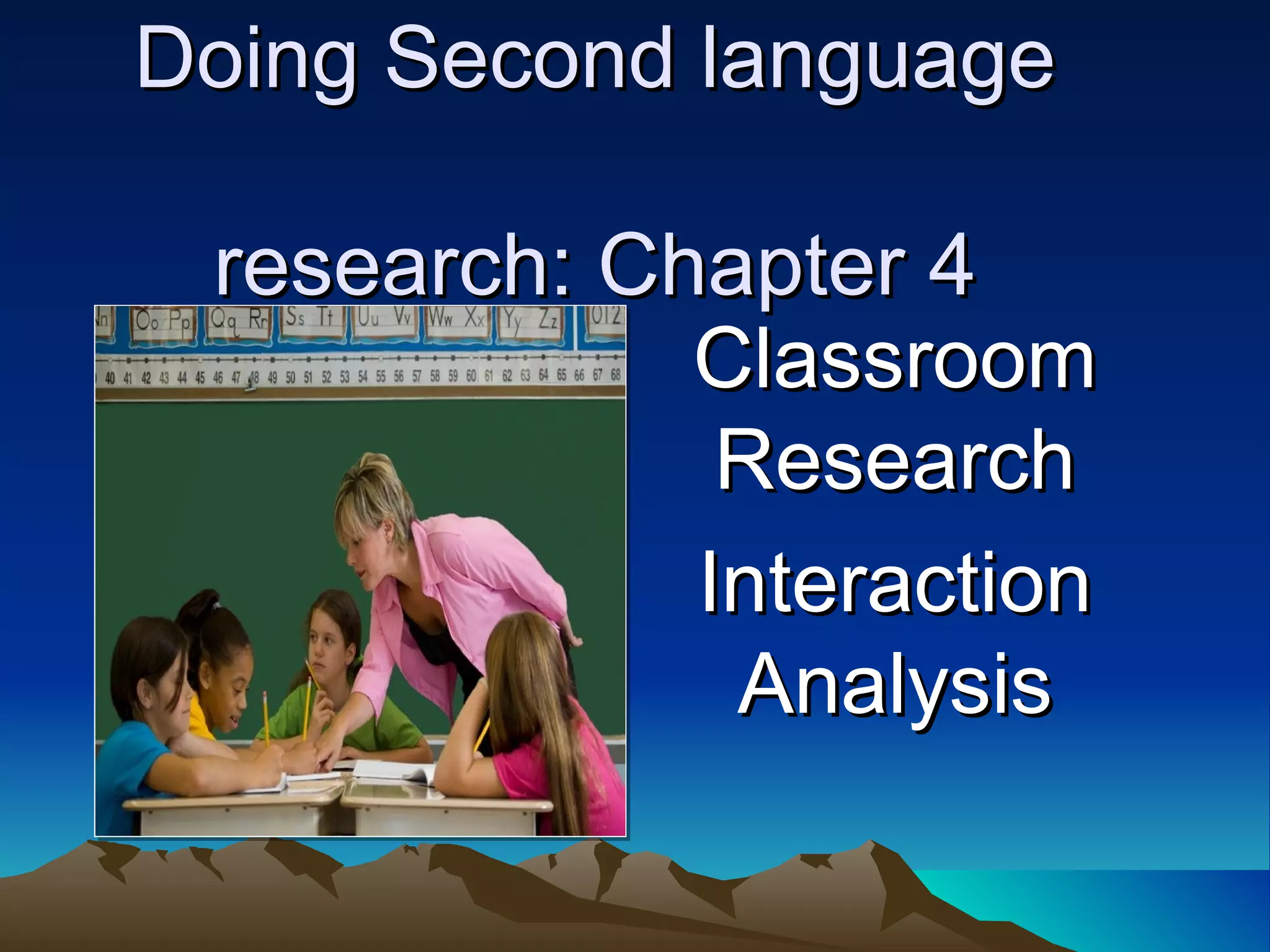
Classroom refers to a wide range of learning contexts where learners and teachers meet in the context of second language acquisition ex: classes in school, one-to-one tutoring,    distance learning, multi media labs and so on Classroom Research
Is a study/research on the interaction between teachers and learners or learners and learners in classroom. The term interaction is used with a variety of senses and has been used with respect to  - theories of linguistics, models of second language acquisition, instructional exchanges between T&L, task completion conversation between L&L and the internal conversations between authors & readers. Classroom interaction research
1. Go to schools 2. Collecting data from your own classes 3. Doing a recording or videos featuring a lot of schools 4. Generating classroom interaction data in the roles of teachers and learners Ways to carry out classroom research
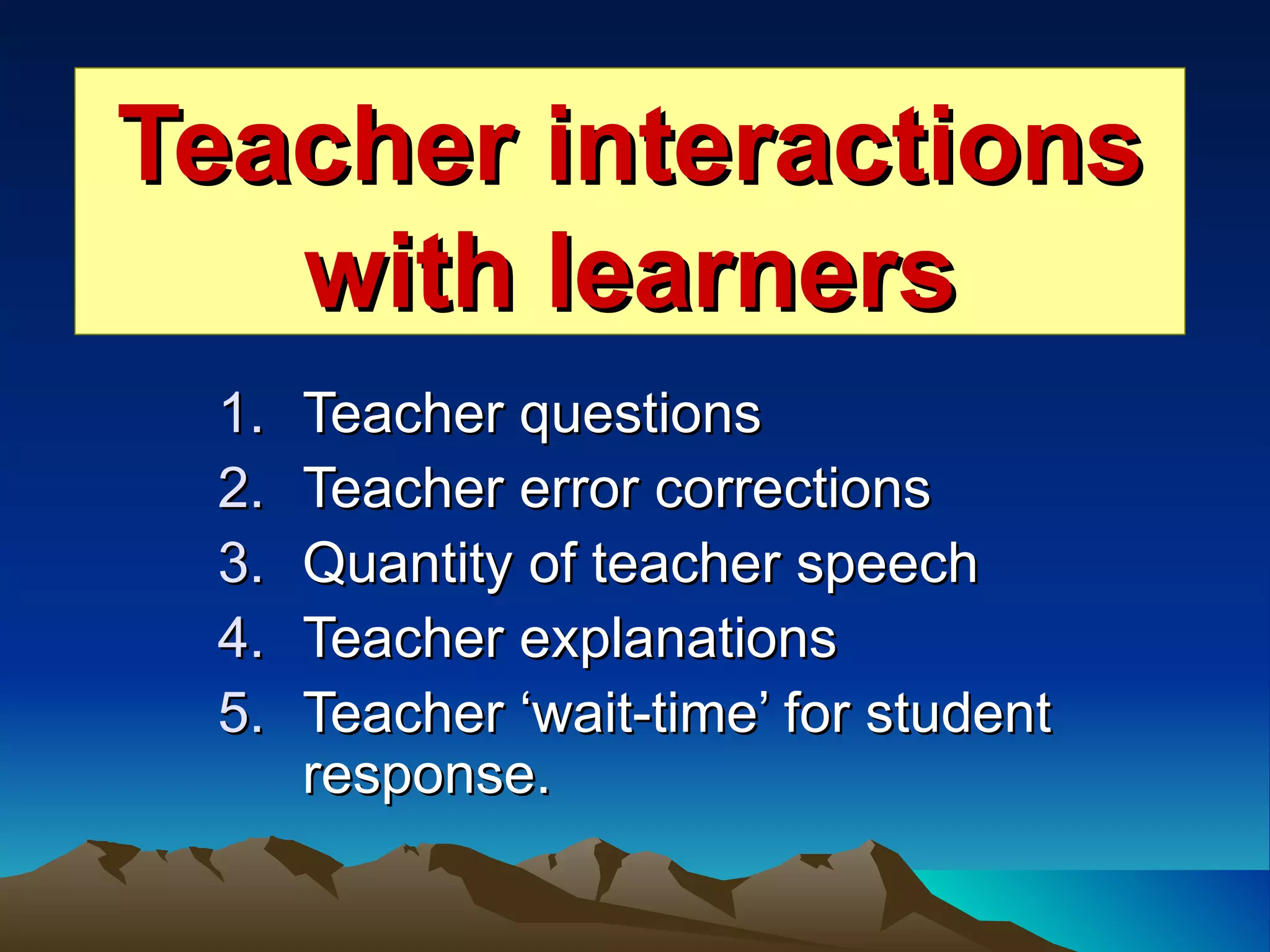
Teacher interactions with learners Teacher questions Teacher error corrections Quantity of teacher speech Teacher explanations Teacher ‘wait-time’ for student response.
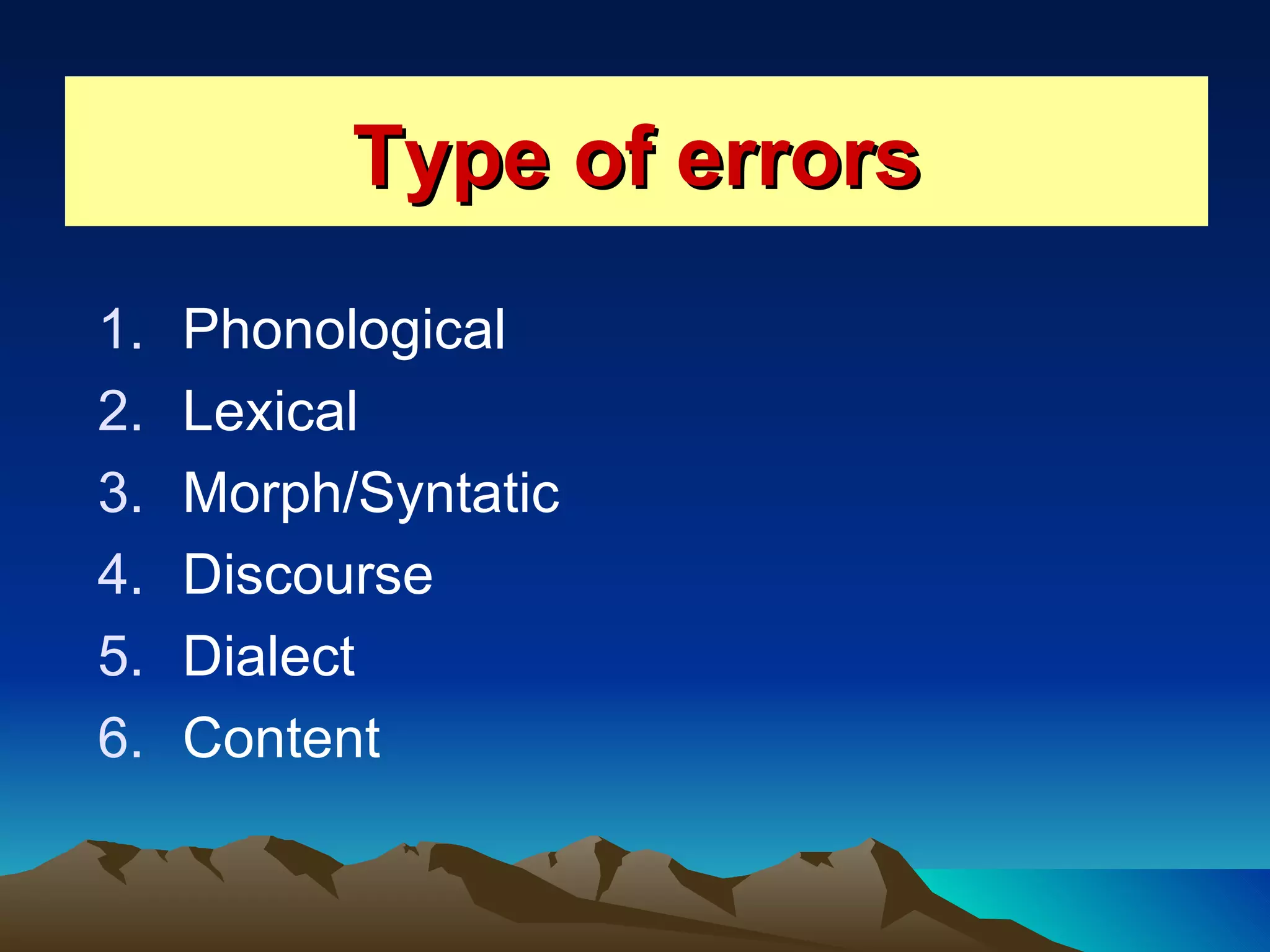
Type of errors Phonological Lexical Morph/Syntatic Discourse Dialect Content
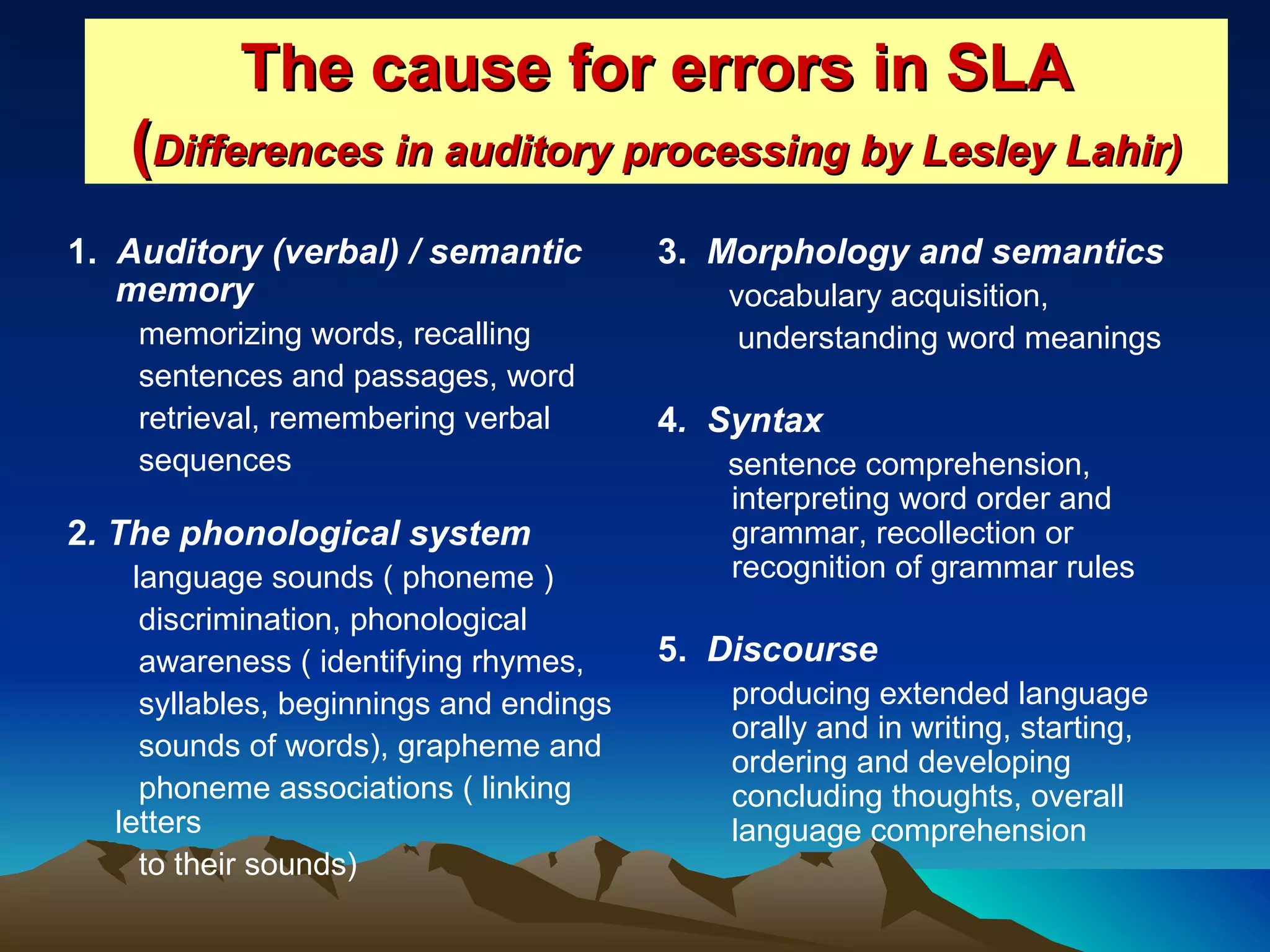
The cause for errors in SLA ( Differences in auditory processing by Lesley Lahir) 1.  Auditory (verbal) / semantic memory memorizing words, recalling  sentences and passages, word  retrieval, remembering verbal  sequences 2 . The phonological system   language sounds ( phoneme )  discrimination, phonological  awareness ( identifying rhymes,  syllables, beginnings and endings  sounds of words), grapheme and  phoneme associations ( linking letters  to their sounds) 3.  Morphology and semantics vocabulary acquisition, understanding word meanings  4 .  Syntax sentence comprehension, interpreting word order and grammar, recollection or recognition of grammar rules 5.  Discourse producing extended language orally and in writing, starting, ordering and developing concluding thoughts, overall language comprehension
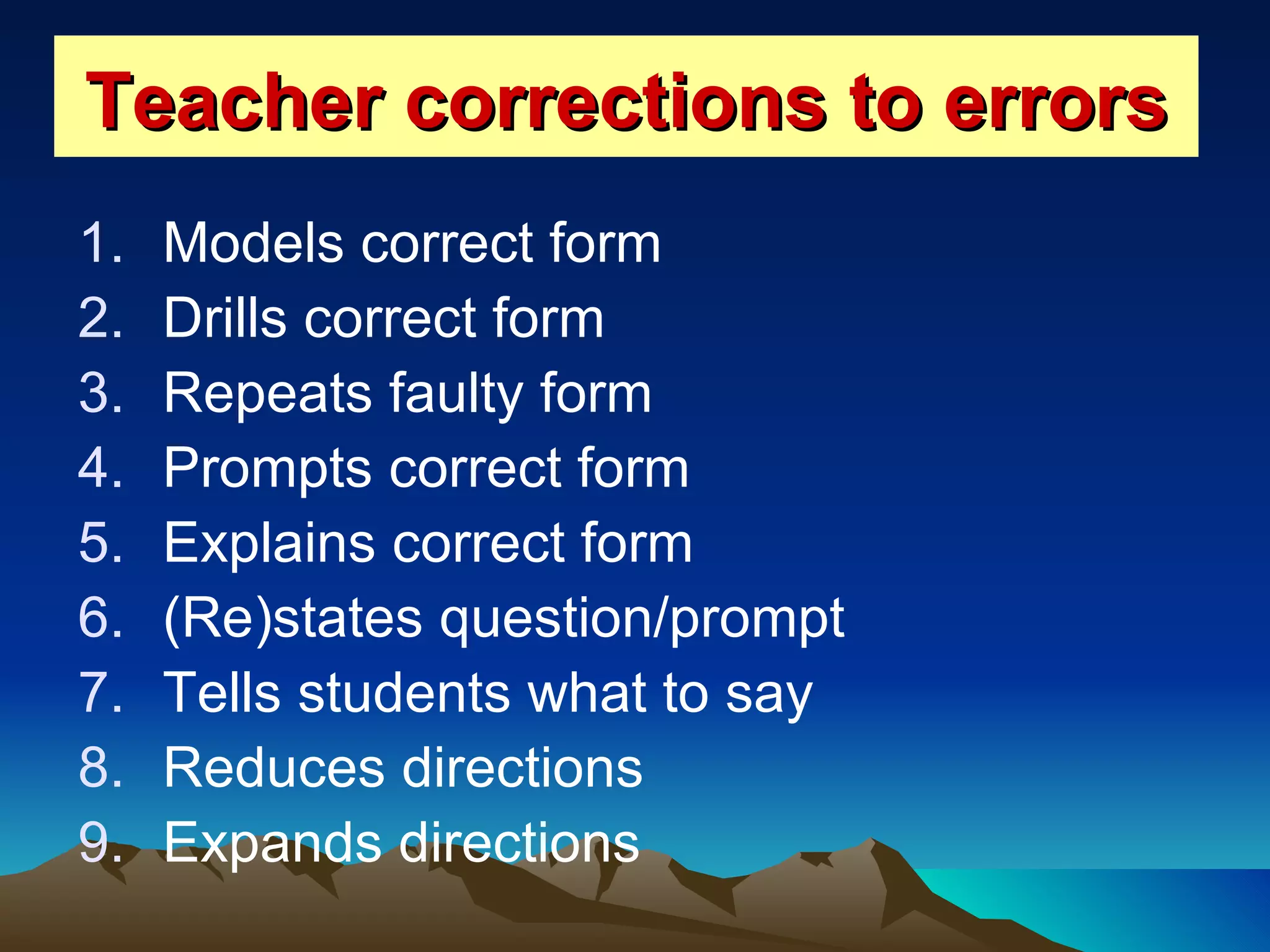
Teacher corrections to errors Models correct form Drills correct form Repeats faulty form Prompts correct form Explains correct form (Re)states question/prompt Tells students what to say Reduces directions Expands directions
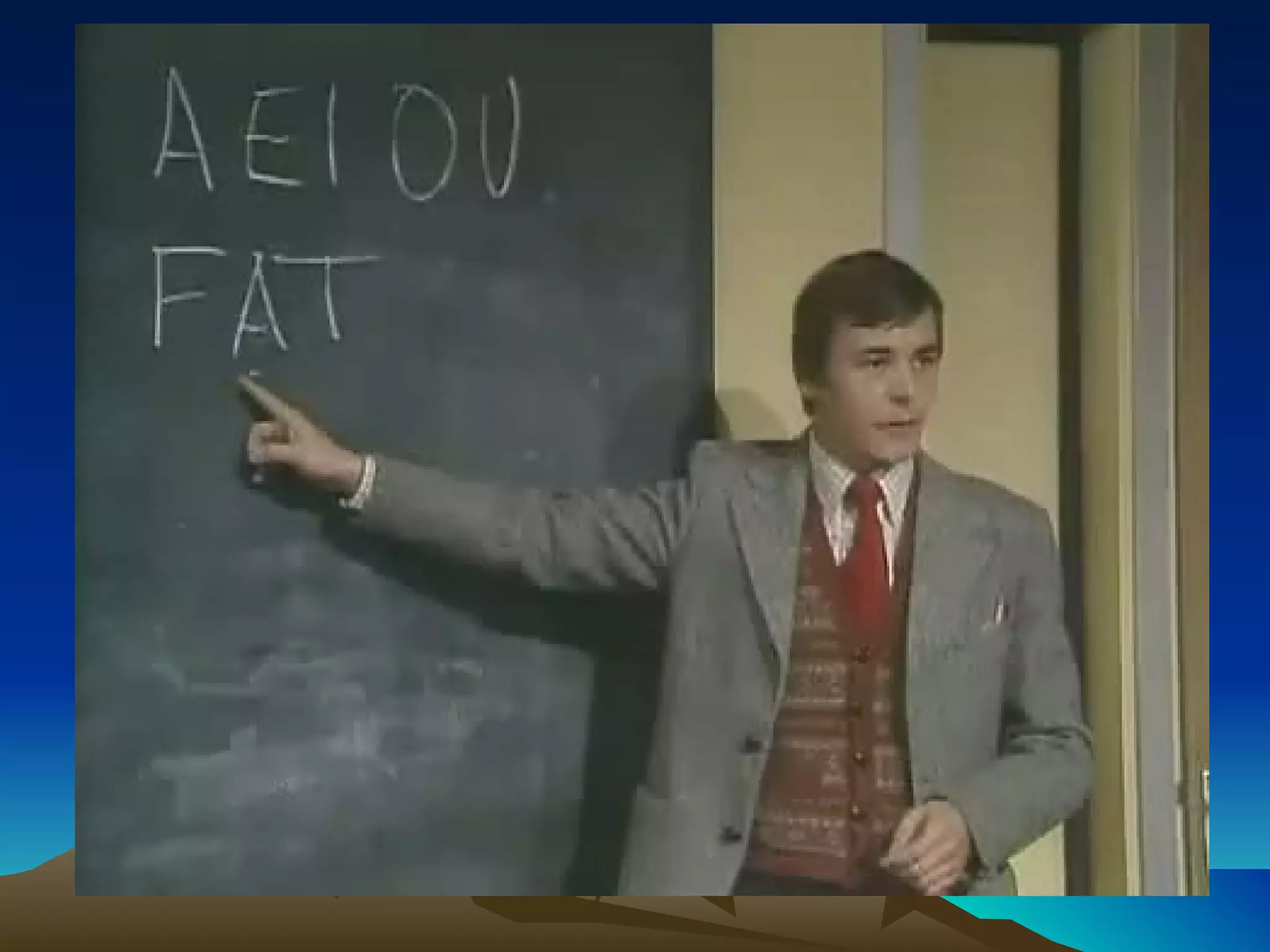
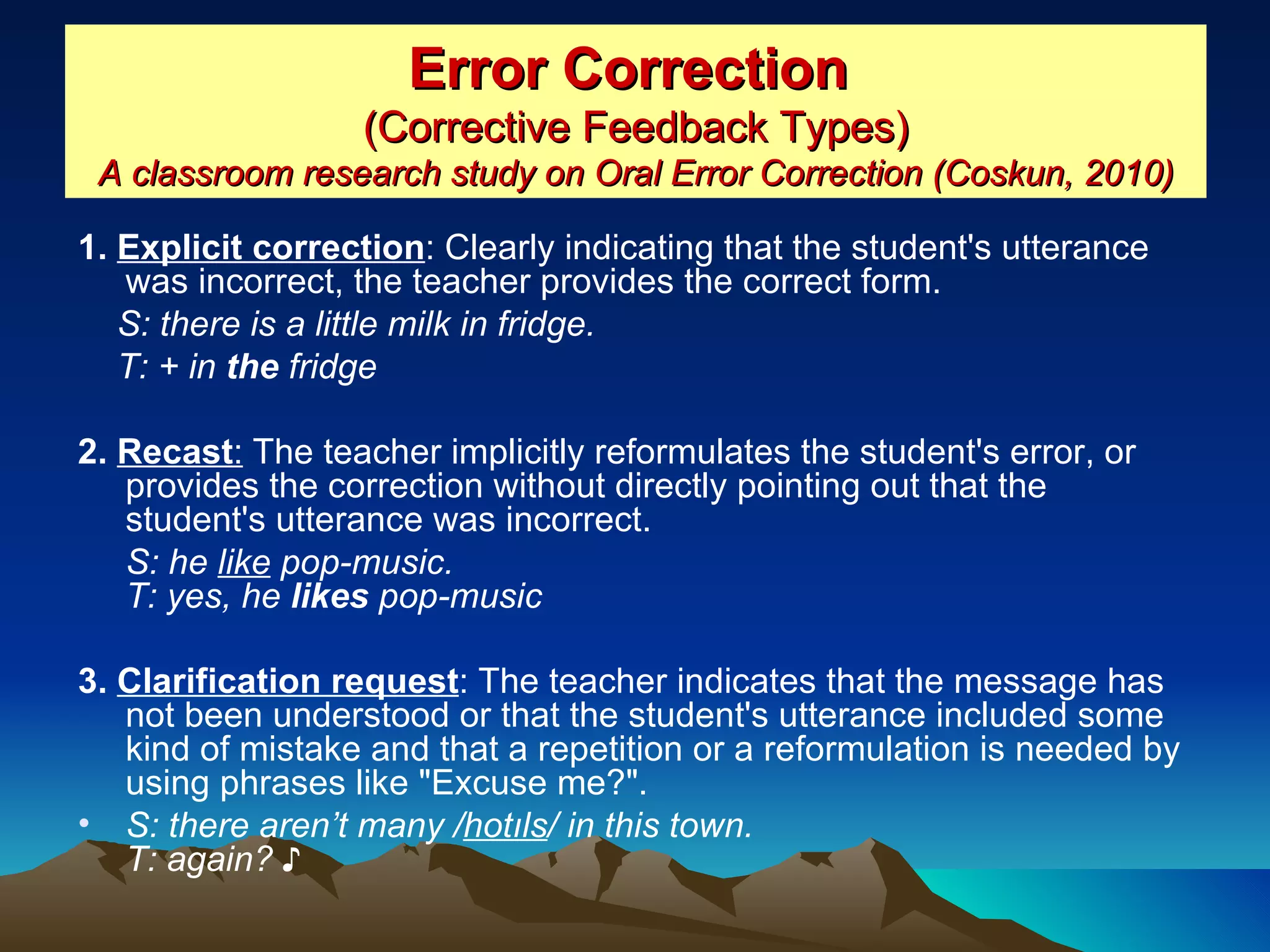
Error Correction   (Corrective Feedback Types) A classroom research study on Oral Error Correction (Coskun, 2010) 1.  Explicit correction : Clearly indicating that the student's utterance was incorrect, the teacher provides the correct form.  S: there is a little milk in fridge. T: + in  the  fridge   2.  Recast :  The teacher implicitly reformulates the student's error, or provides the correction without directly pointing out that the student's utterance was incorrect.  S: he  like  pop-music. T: yes, he  likes  pop-music   3.  Clarification request : The teacher indicates that the message has not been understood or that the student's utterance included some kind of mistake and that a repetition or a reformulation is needed by using phrases like "Excuse me?".  S: there aren’t many / hotıls / in this town. T: again? ♪
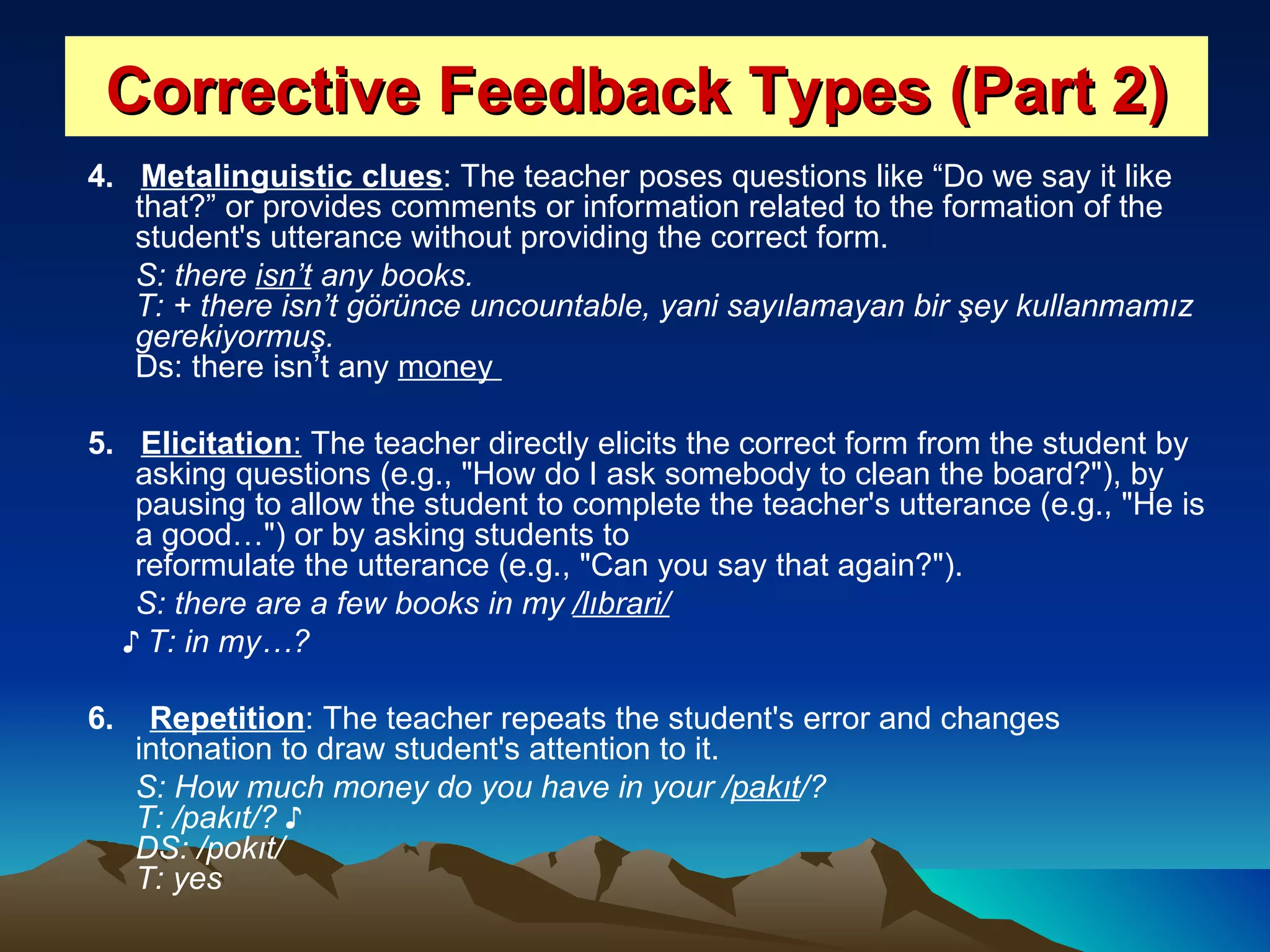
Corrective Feedback Types (Part 2) 4.  Metalinguistic clues : The teacher poses questions like “Do we say it like that?” or provides comments or information related to the formation of the student's utterance without providing the correct form.  S: there  isn’t  any books. T: + there isn’t görünce uncountable, yani sayılamayan bir şey kullanmamız gerekiyormuş.  Ds: there isn’t any  money  5.  Elicitation :  The teacher directly elicits the correct form from the student by asking questions (e.g., "How do I ask somebody to clean the board?"), by pausing to allow the student to complete the teacher's utterance (e.g., "He is a good…") or by asking students to reformulate the utterance (e.g., "Can you say that again?").  S: there are a few books in my  /lıbrari/ ♪  T: in my…?   6.  Repetition : The teacher repeats the student's error and changes intonation to draw student's attention to it.  S: How much money do you have in your / pakıt /? T: /pakıt/? ♪ DS: /pokıt/ T: yes
Learner to learner interactions - Another major type of classroom interaction
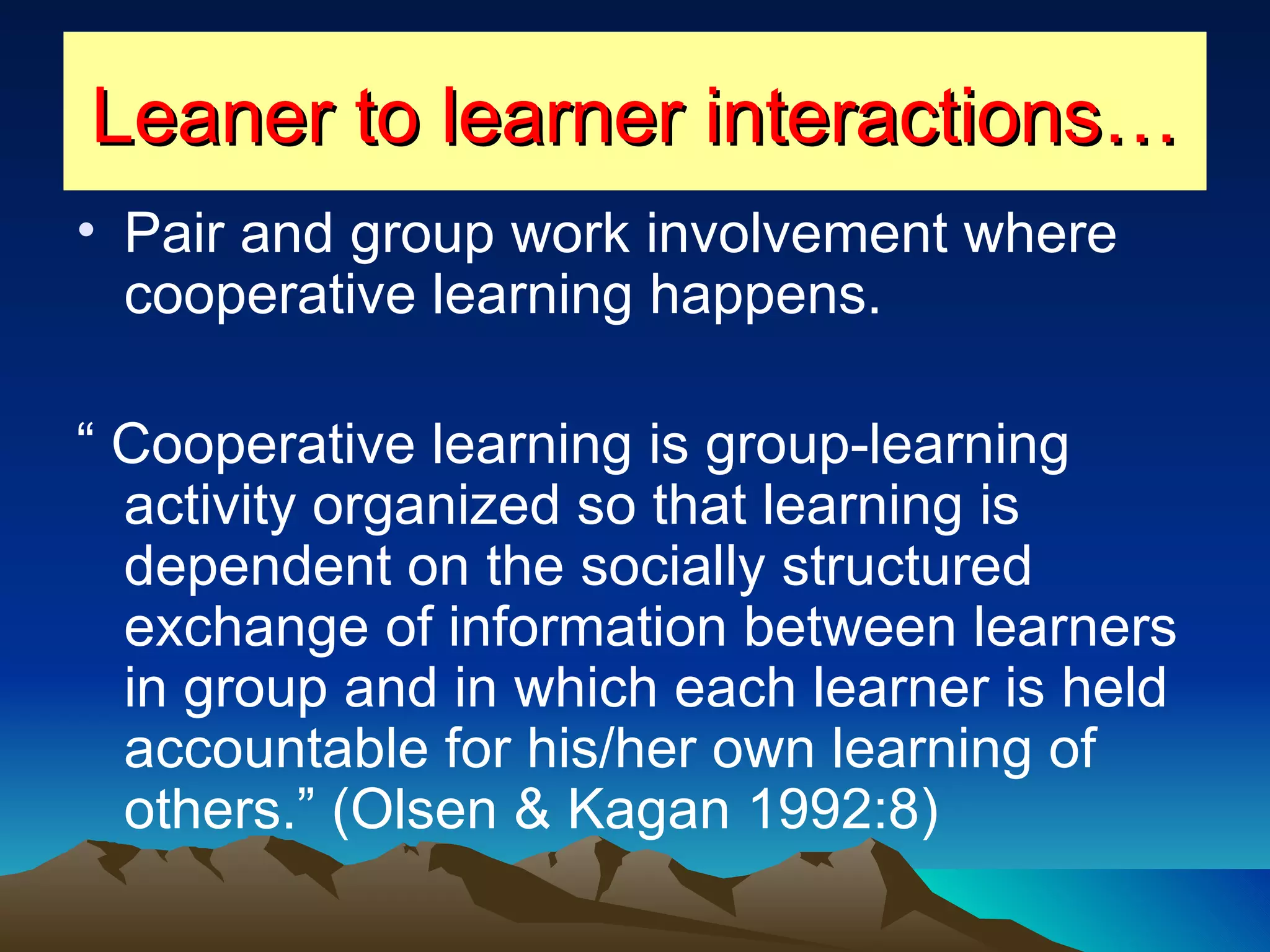
Leaner to learner interactions… Pair and group work involvement where cooperative learning happens. “  Cooperative learning is group-learning activity organized so that learning is dependent on the socially structured exchange of information between learners in group and in which each learner is held accountable for his/her own learning of others.” (Olsen & Kagan 1992:8)
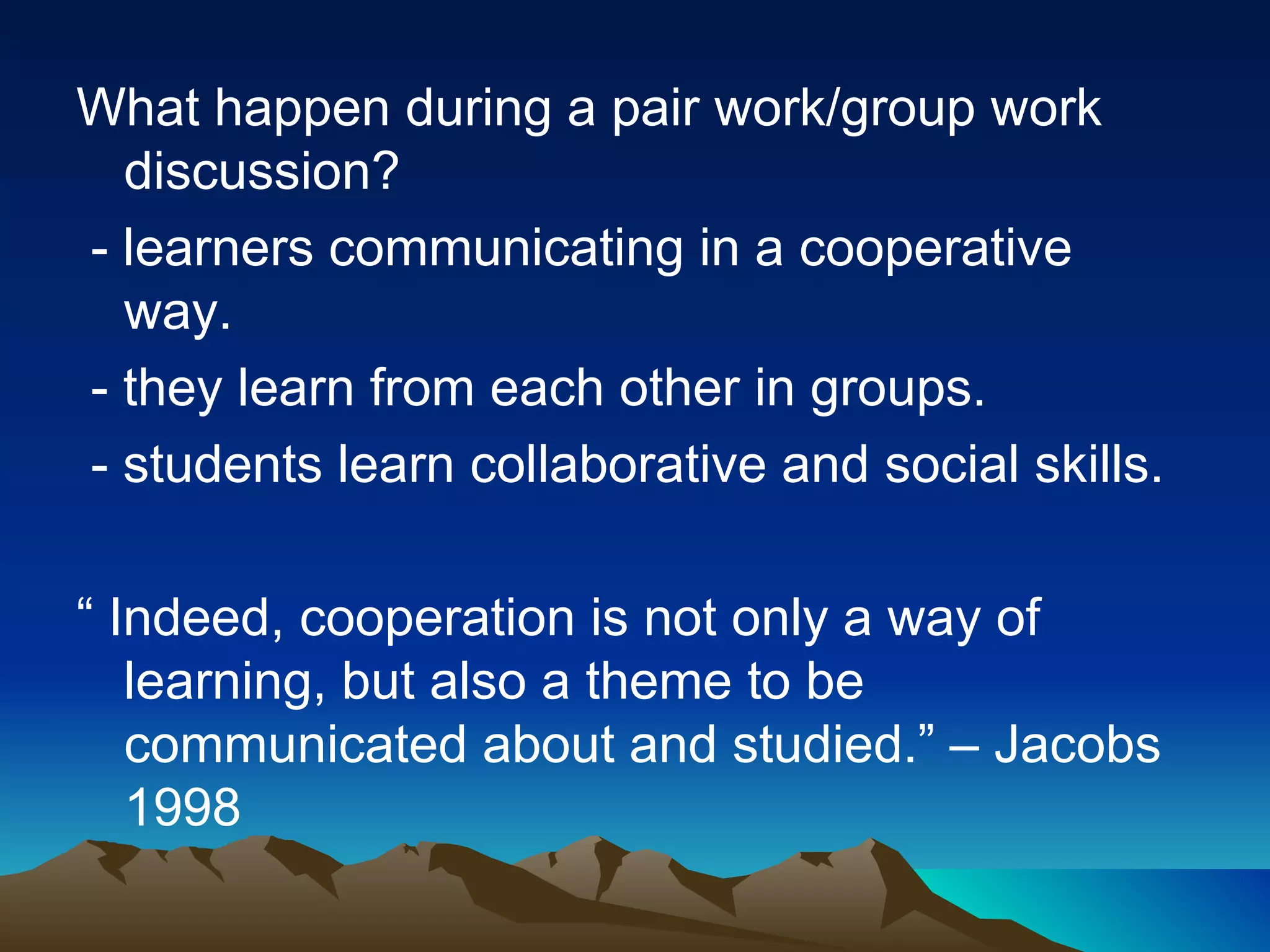
What happen during a pair work/group work discussion? - learners communicating in a cooperative way. - they learn from each other in groups. - students learn collaborative and social skills. “  Indeed, cooperation is not only a way of learning, but also a theme to be communicated about and studied.” – Jacobs 1998
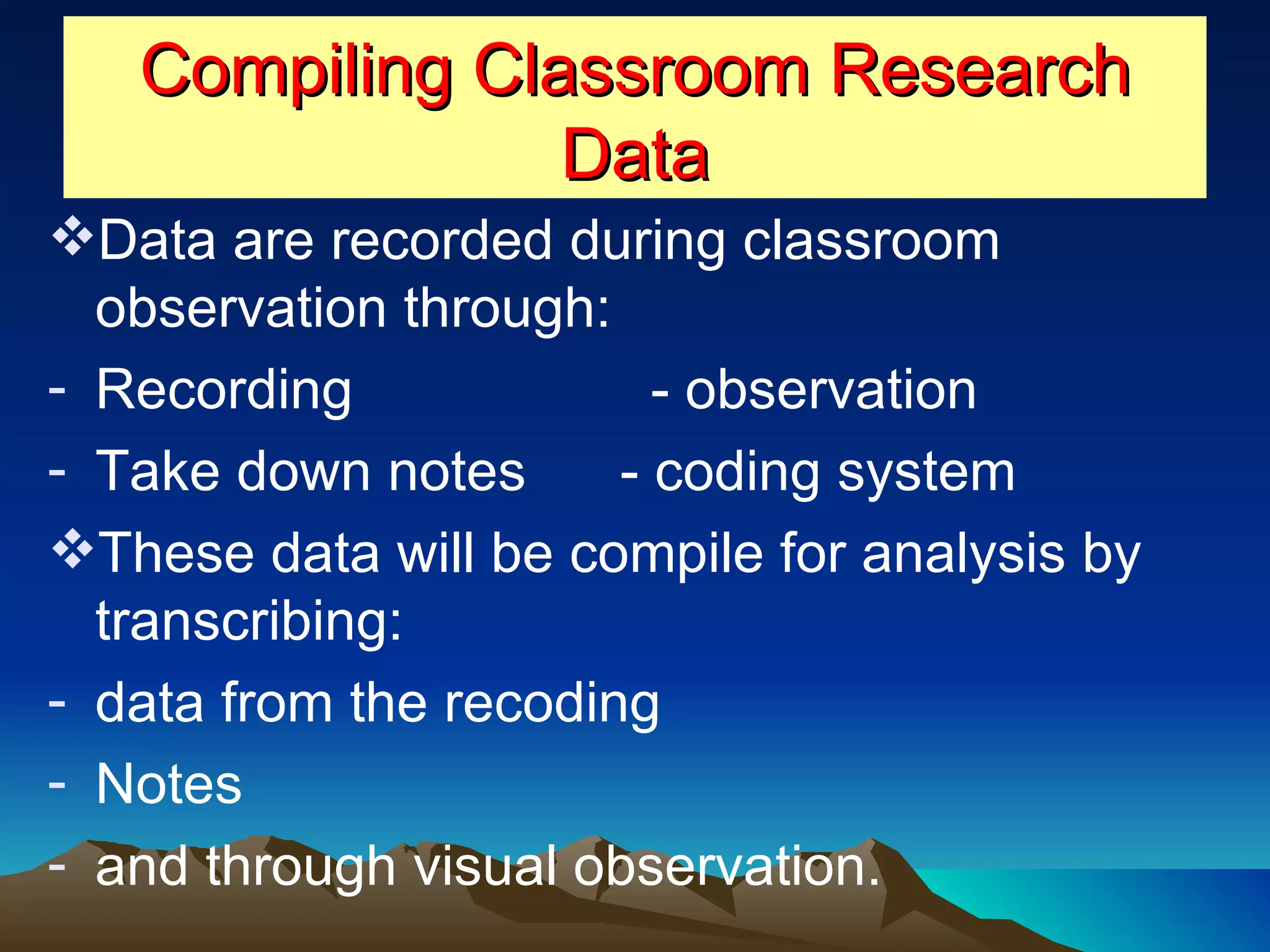
Compiling Classroom Research Data Data are recorded during classroom observation through:  Recording  - observation Take down notes  - coding system These data will be compile for analysis by transcribing: data from the recoding Notes  and through visual observation.
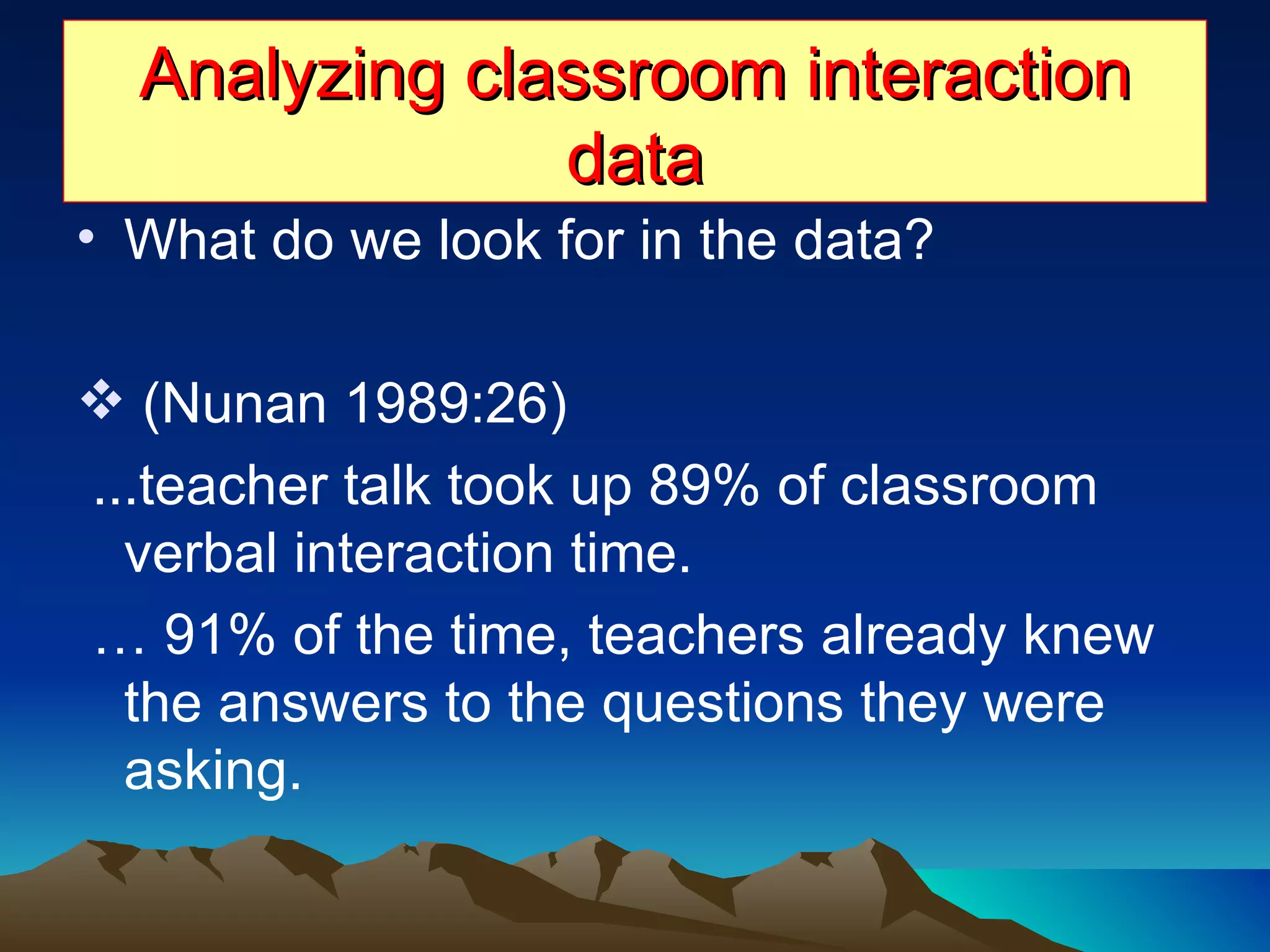
Analyzing classroom interaction data What do we look for in the data? (Nunan 1989:26)  ...teacher talk took up 89% of classroom verbal interaction time. …  91% of the time, teachers already knew the answers to the questions they were asking.
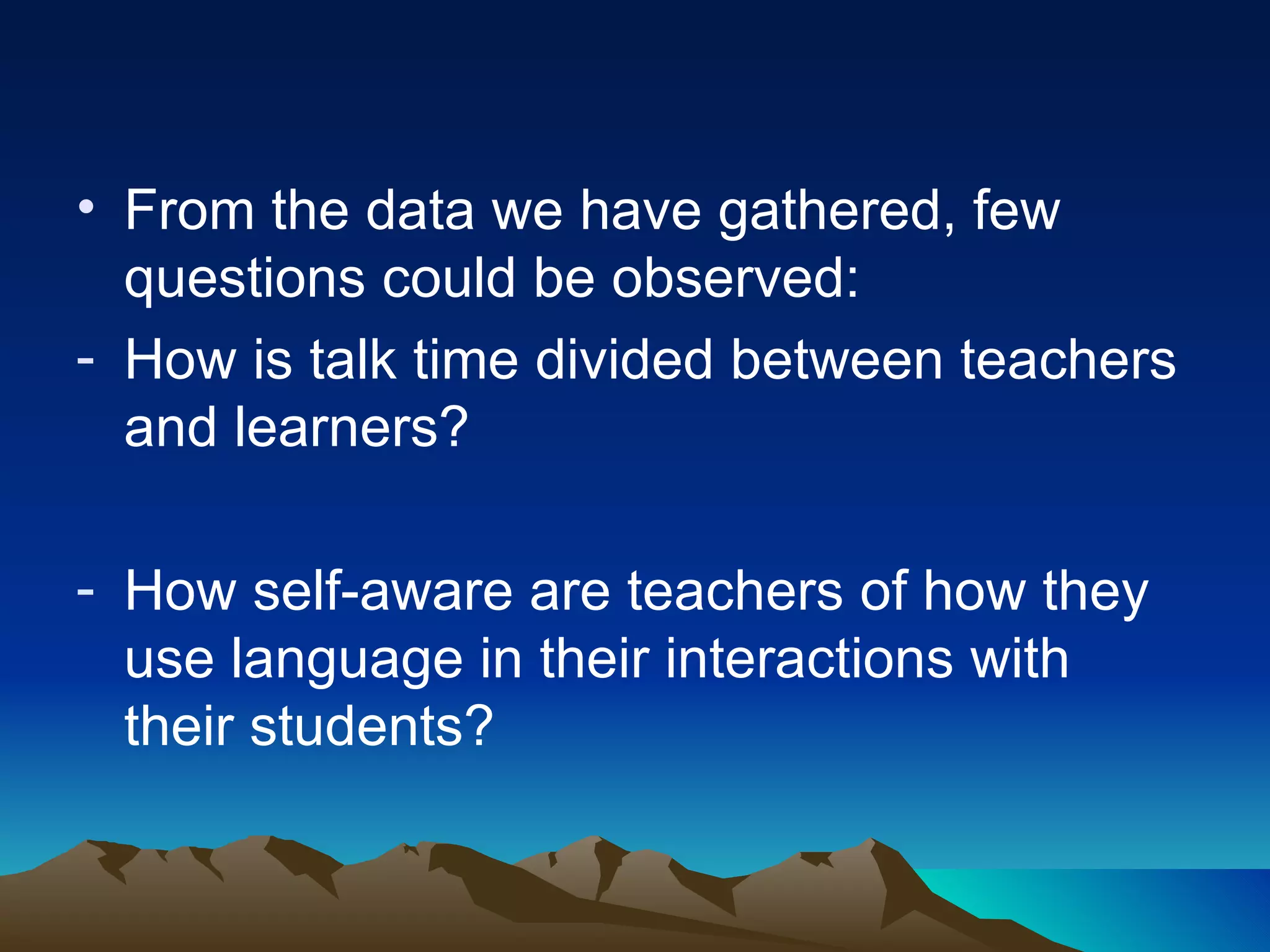
From the data we have gathered, few questions could be observed:  How is talk time divided between teachers and learners? How self-aware are teachers of how they use language in their interactions with their students?
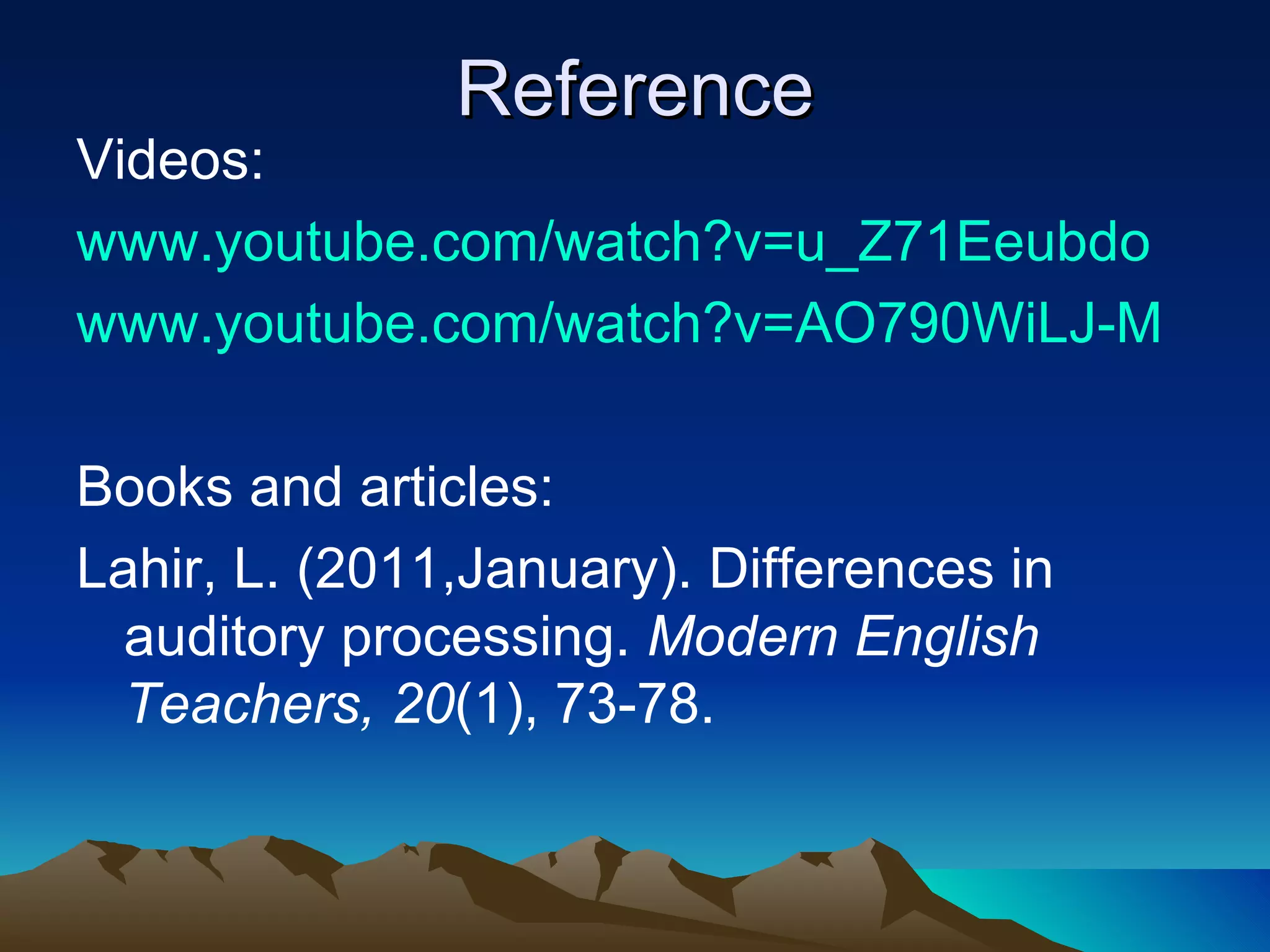
Reference Videos: www.youtube.com/watch?v=u_Z71Eeubdo www.youtube.com/watch?v=AO790WiLJ-M Books and articles: Lahir, L. (2011,January). Differences in auditory processing.  Modern English Teachers, 20 (1), 73-78.
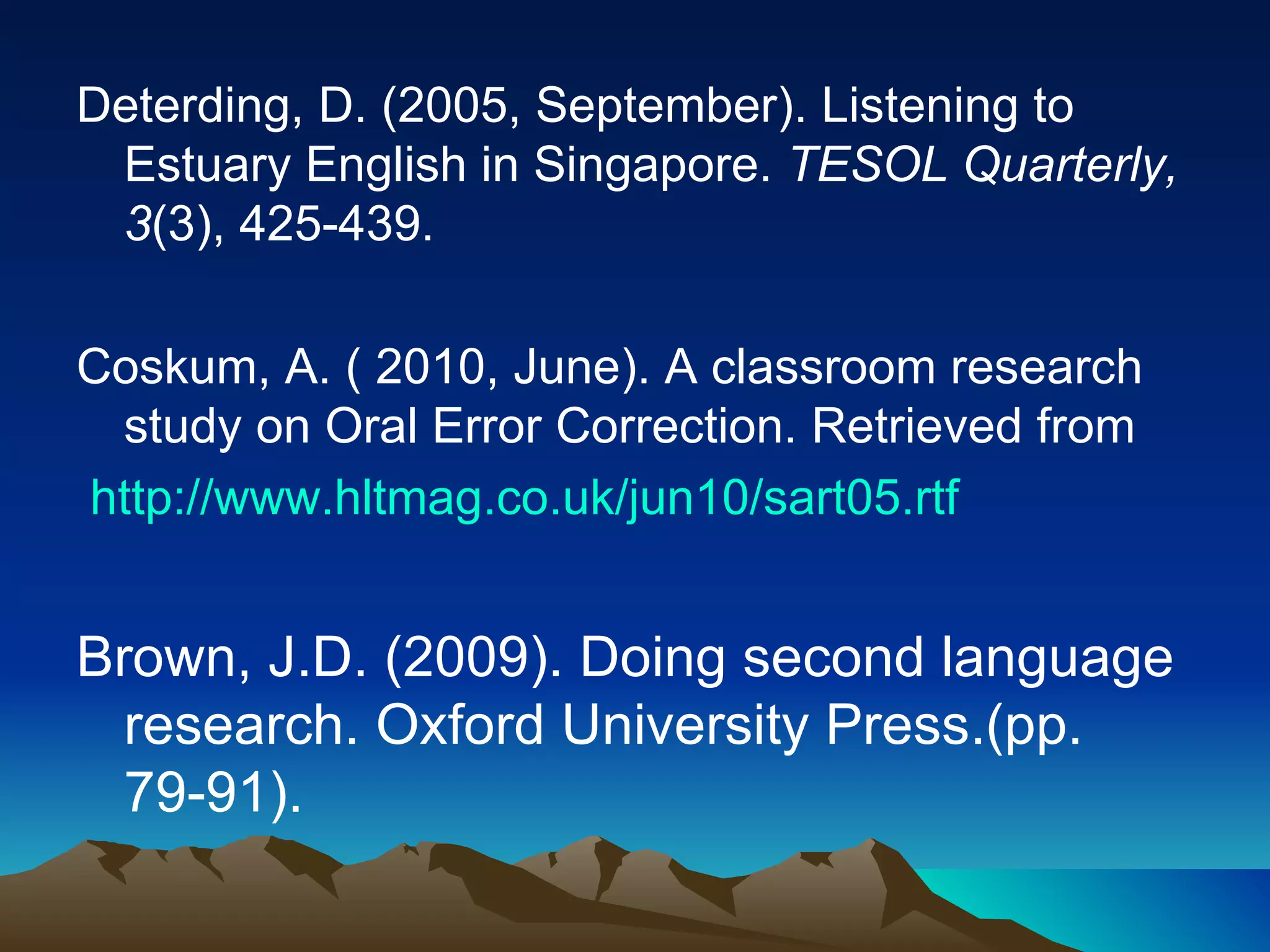
Deterding, D. (2005, September). Listening to Estuary English in Singapore.  TESOL Quarterly, 3 (3), 425-439. Coskum, A. ( 2010, June). A classroom research study on Oral Error Correction. Retrieved from   http://www.hltmag.co.uk/jun10/sart05.rtf Brown, J.D. (2009). Doing second language research. Oxford University Press.(pp. 79-91).

Classroom research error correction (2)

  • 1.
    Group 7 Chapter4 Classroom Research – Interaction Analysis Group Members… ~ Anita PGP110010 ~Cassandra PGP110022 ~Safiyah PGP110009
  • 2.
  • 3.
    Doing Second language research: Chapter 4 Classroom Research Interaction Analysis
  • 4.
    Wilson Mizner, 1876-1933( an American dramatist and wit) . ……If you steal from another author it’s plagiarism: if you steal from many, it’s researc h Marson Bates, 1906-1974 ( an American writer) … .. is what I’m doing when I don’t know what I’m doing
  • 5.
  • 6.
    Classroom refers toa wide range of learning contexts where learners and teachers meet in the context of second language acquisition ex: classes in school, one-to-one tutoring, distance learning, multi media labs and so on Classroom Research
  • 7.
    Is a study/researchon the interaction between teachers and learners or learners and learners in classroom. The term interaction is used with a variety of senses and has been used with respect to - theories of linguistics, models of second language acquisition, instructional exchanges between T&L, task completion conversation between L&L and the internal conversations between authors & readers. Classroom interaction research
  • 8.
    1. Go toschools 2. Collecting data from your own classes 3. Doing a recording or videos featuring a lot of schools 4. Generating classroom interaction data in the roles of teachers and learners Ways to carry out classroom research
  • 9.
    Teacher interactions withlearners Teacher questions Teacher error corrections Quantity of teacher speech Teacher explanations Teacher ‘wait-time’ for student response.
  • 10.
    Type of errorsPhonological Lexical Morph/Syntatic Discourse Dialect Content
  • 11.
    The cause forerrors in SLA ( Differences in auditory processing by Lesley Lahir) 1. Auditory (verbal) / semantic memory memorizing words, recalling sentences and passages, word retrieval, remembering verbal sequences 2 . The phonological system language sounds ( phoneme ) discrimination, phonological awareness ( identifying rhymes, syllables, beginnings and endings sounds of words), grapheme and phoneme associations ( linking letters to their sounds) 3. Morphology and semantics vocabulary acquisition, understanding word meanings 4 . Syntax sentence comprehension, interpreting word order and grammar, recollection or recognition of grammar rules 5. Discourse producing extended language orally and in writing, starting, ordering and developing concluding thoughts, overall language comprehension
  • 12.
    Teacher corrections toerrors Models correct form Drills correct form Repeats faulty form Prompts correct form Explains correct form (Re)states question/prompt Tells students what to say Reduces directions Expands directions
  • 13.
    Error Correction (Corrective Feedback Types) A classroom research study on Oral Error Correction (Coskun, 2010) 1. Explicit correction : Clearly indicating that the student's utterance was incorrect, the teacher provides the correct form. S: there is a little milk in fridge. T: + in the fridge 2. Recast : The teacher implicitly reformulates the student's error, or provides the correction without directly pointing out that the student's utterance was incorrect. S: he like pop-music. T: yes, he likes pop-music 3. Clarification request : The teacher indicates that the message has not been understood or that the student's utterance included some kind of mistake and that a repetition or a reformulation is needed by using phrases like "Excuse me?". S: there aren’t many / hotıls / in this town. T: again? ♪
  • 14.
    Corrective Feedback Types(Part 2) 4. Metalinguistic clues : The teacher poses questions like “Do we say it like that?” or provides comments or information related to the formation of the student's utterance without providing the correct form. S: there isn’t any books. T: + there isn’t görünce uncountable, yani sayılamayan bir şey kullanmamız gerekiyormuş. Ds: there isn’t any money 5. Elicitation : The teacher directly elicits the correct form from the student by asking questions (e.g., "How do I ask somebody to clean the board?"), by pausing to allow the student to complete the teacher's utterance (e.g., "He is a good…") or by asking students to reformulate the utterance (e.g., "Can you say that again?"). S: there are a few books in my /lıbrari/ ♪  T: in my…? 6. Repetition : The teacher repeats the student's error and changes intonation to draw student's attention to it. S: How much money do you have in your / pakıt /? T: /pakıt/? ♪ DS: /pokıt/ T: yes
  • 15.
    Learner to learnerinteractions - Another major type of classroom interaction
  • 16.
    Leaner to learnerinteractions… Pair and group work involvement where cooperative learning happens. “ Cooperative learning is group-learning activity organized so that learning is dependent on the socially structured exchange of information between learners in group and in which each learner is held accountable for his/her own learning of others.” (Olsen & Kagan 1992:8)
  • 17.
    What happen duringa pair work/group work discussion? - learners communicating in a cooperative way. - they learn from each other in groups. - students learn collaborative and social skills. “ Indeed, cooperation is not only a way of learning, but also a theme to be communicated about and studied.” – Jacobs 1998
  • 18.
    Compiling Classroom ResearchData Data are recorded during classroom observation through: Recording - observation Take down notes - coding system These data will be compile for analysis by transcribing: data from the recoding Notes and through visual observation.
  • 19.
    Analyzing classroom interactiondata What do we look for in the data? (Nunan 1989:26) ...teacher talk took up 89% of classroom verbal interaction time. … 91% of the time, teachers already knew the answers to the questions they were asking.
  • 20.
    From the datawe have gathered, few questions could be observed: How is talk time divided between teachers and learners? How self-aware are teachers of how they use language in their interactions with their students?
  • 21.
    Reference Videos: www.youtube.com/watch?v=u_Z71Eeubdowww.youtube.com/watch?v=AO790WiLJ-M Books and articles: Lahir, L. (2011,January). Differences in auditory processing.  Modern English Teachers, 20 (1), 73-78.
  • 22.
    Deterding, D. (2005,September). Listening to Estuary English in Singapore.  TESOL Quarterly, 3 (3), 425-439. Coskum, A. ( 2010, June). A classroom research study on Oral Error Correction. Retrieved from   http://www.hltmag.co.uk/jun10/sart05.rtf Brown, J.D. (2009). Doing second language research. Oxford University Press.(pp. 79-91).

Editor's Notes

  • #12 Differences in auditory processing by Lesley Lahir (MET 2005)