Downloaded 311 times
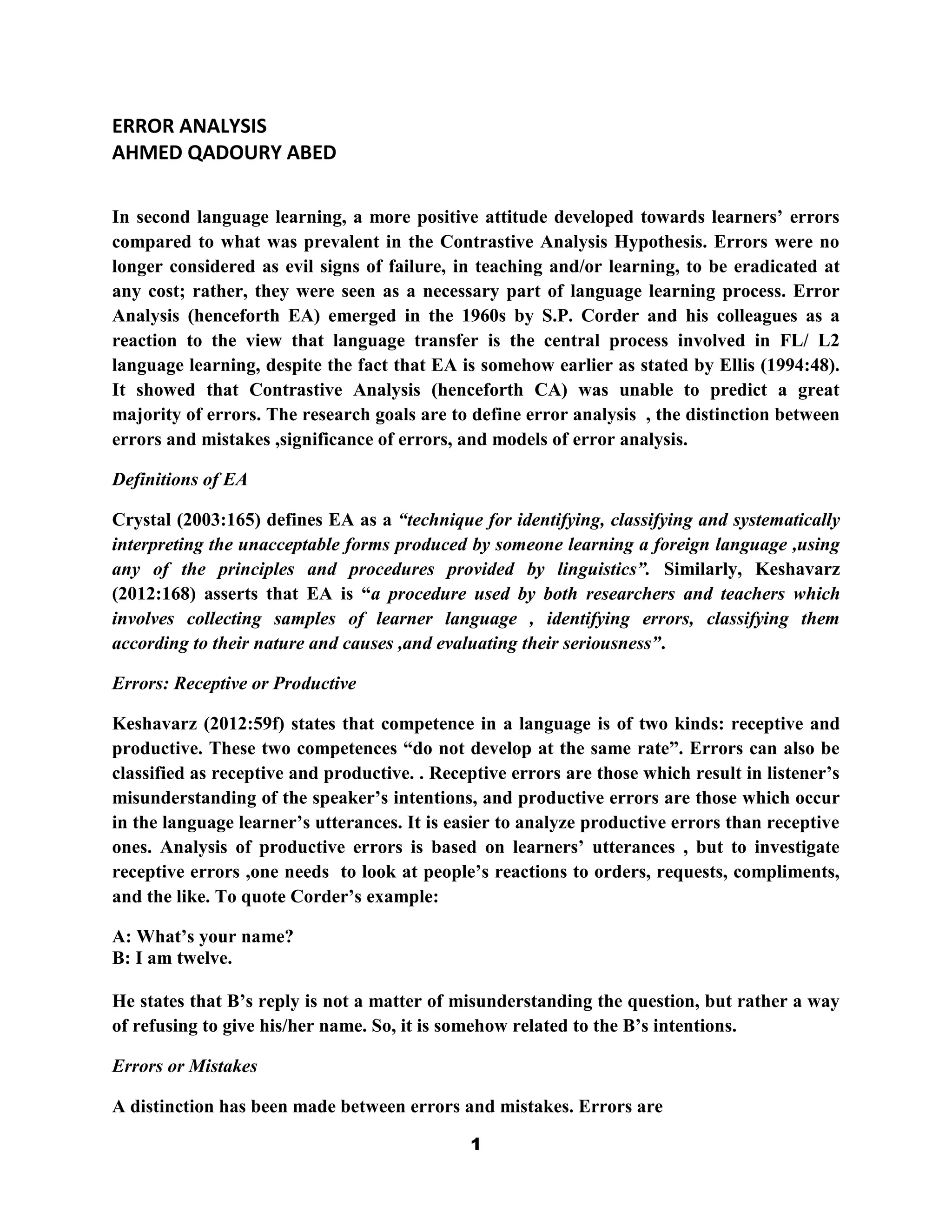
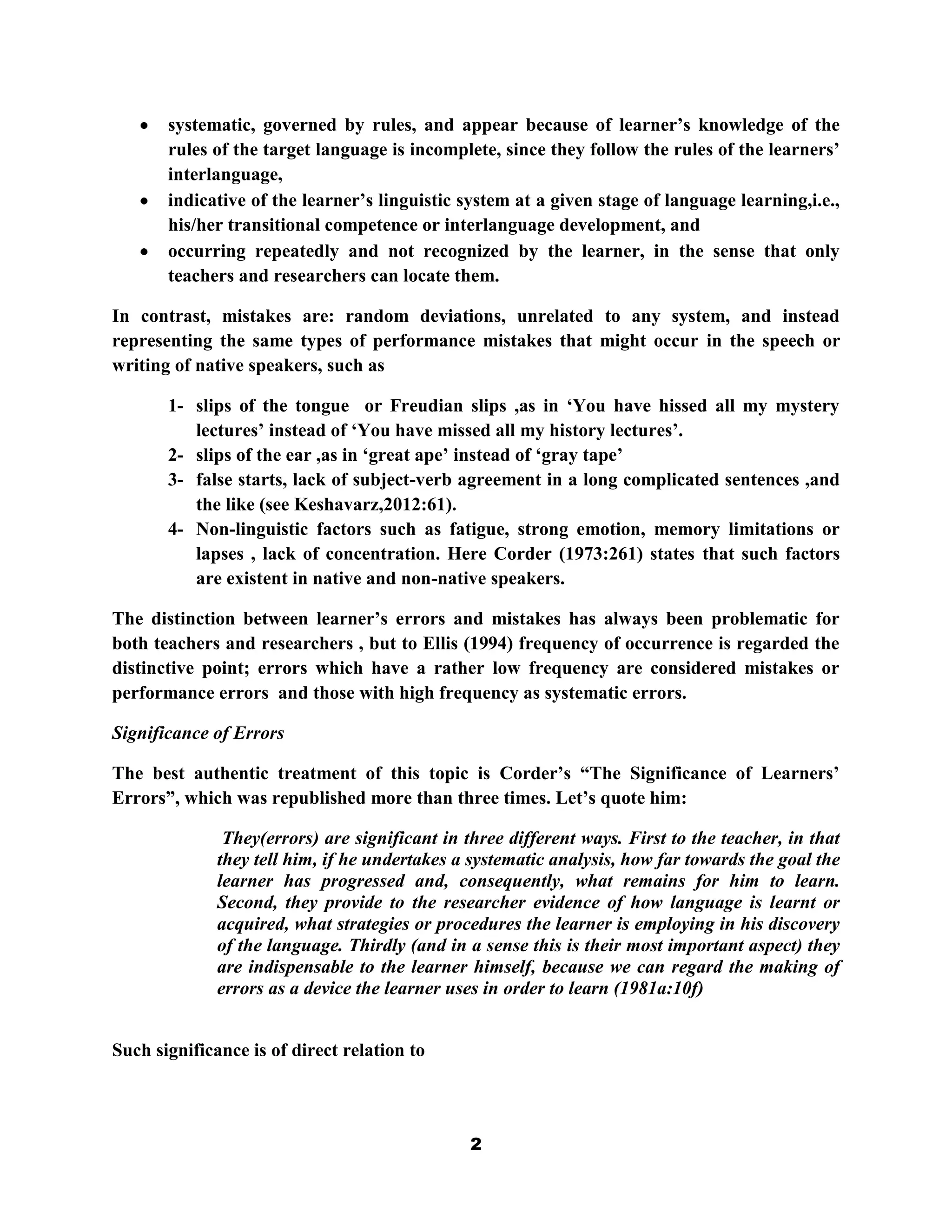
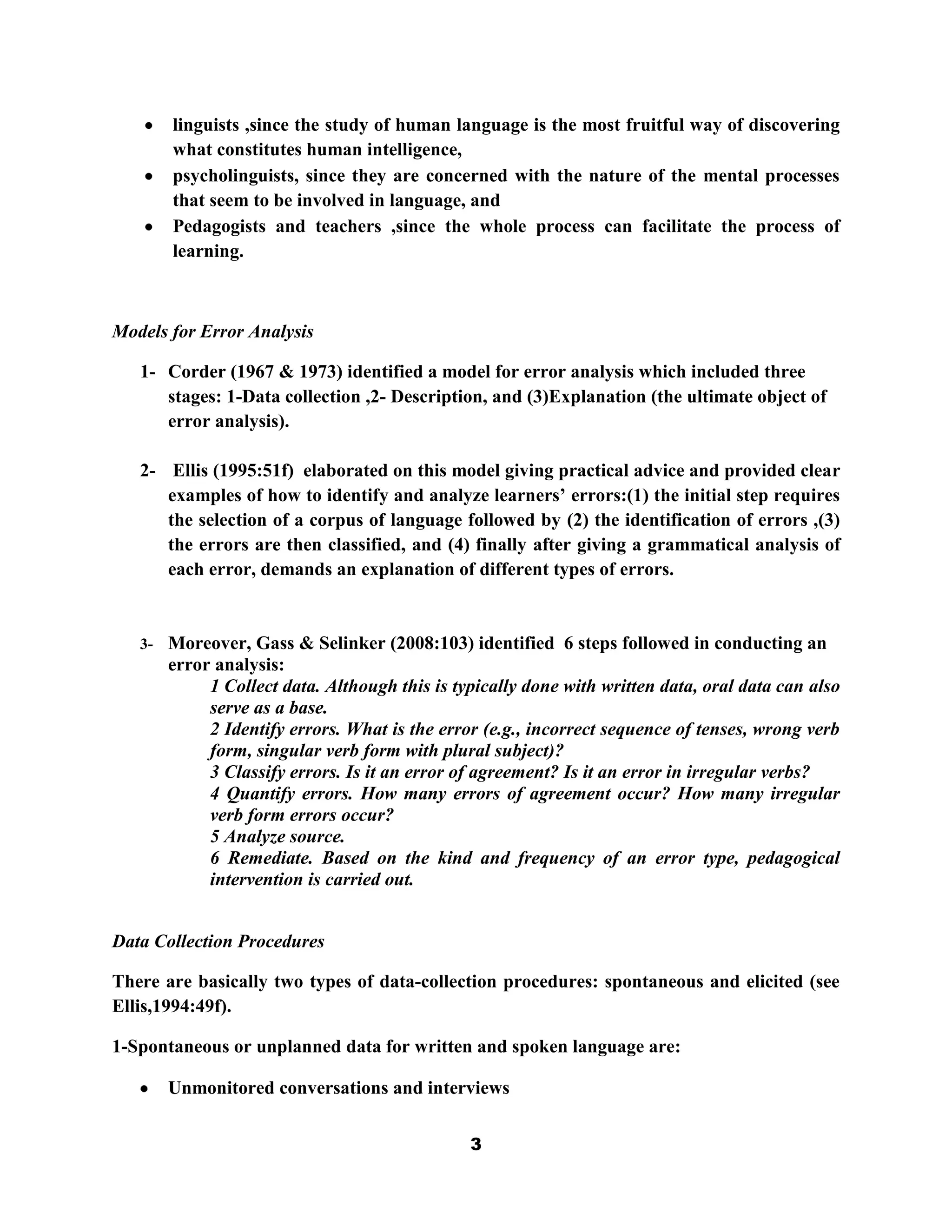
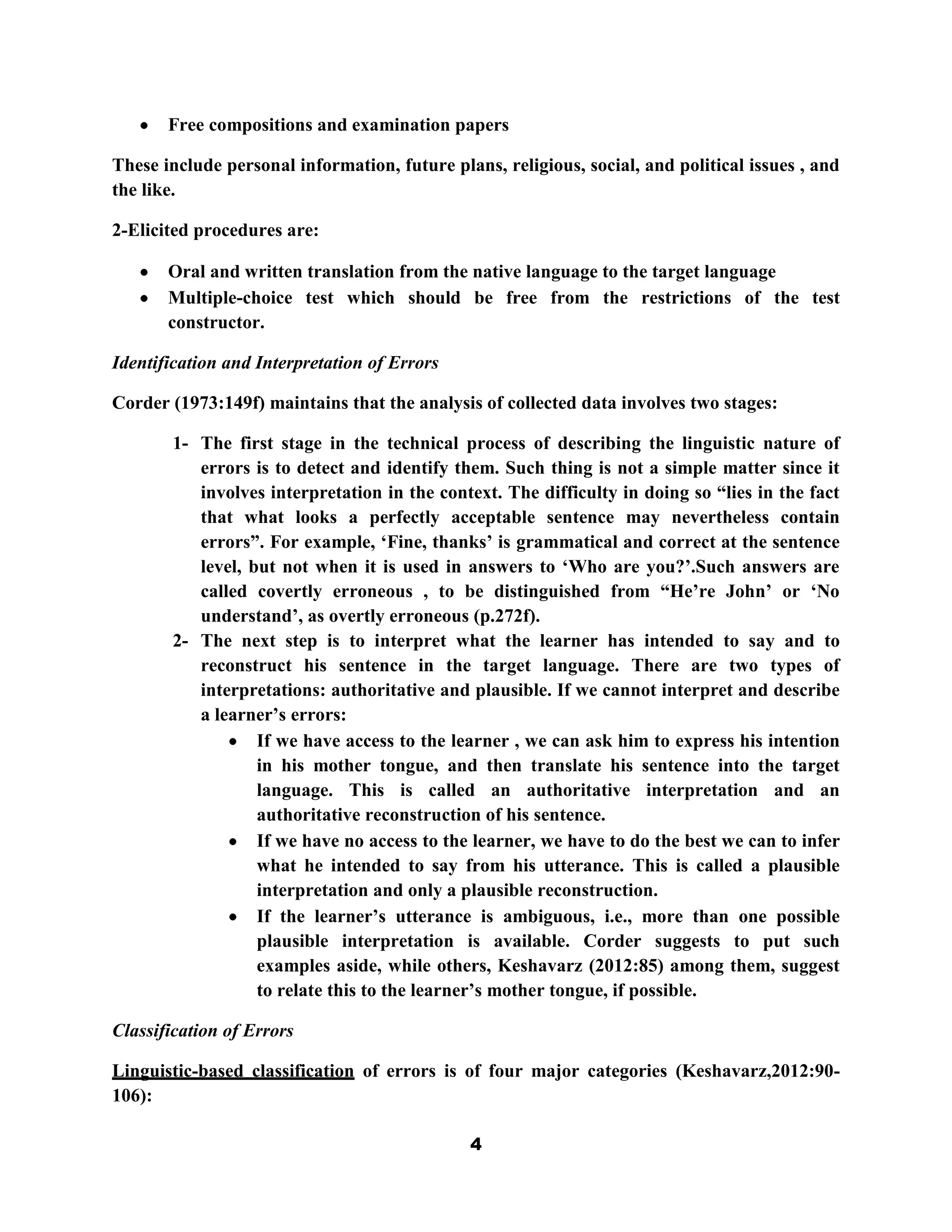
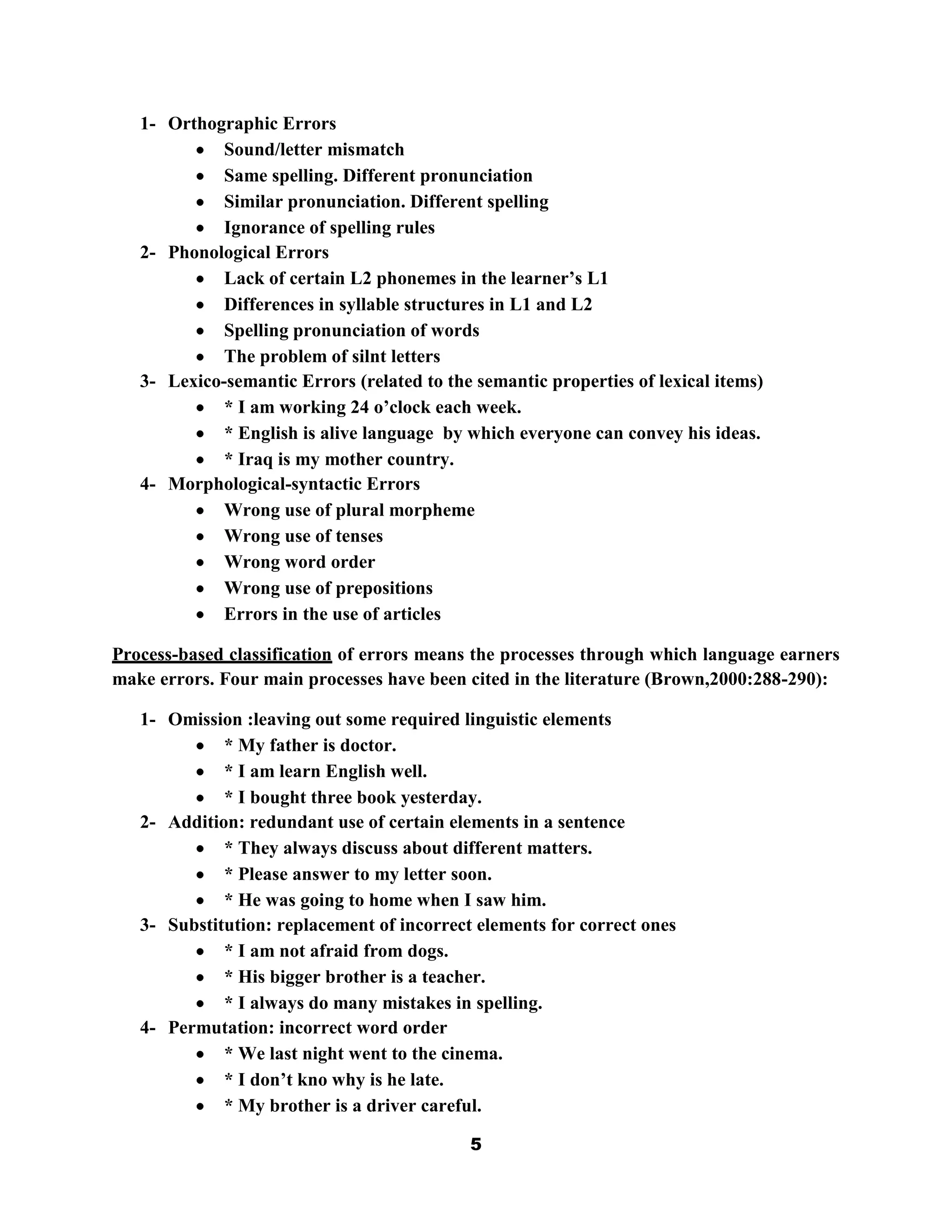
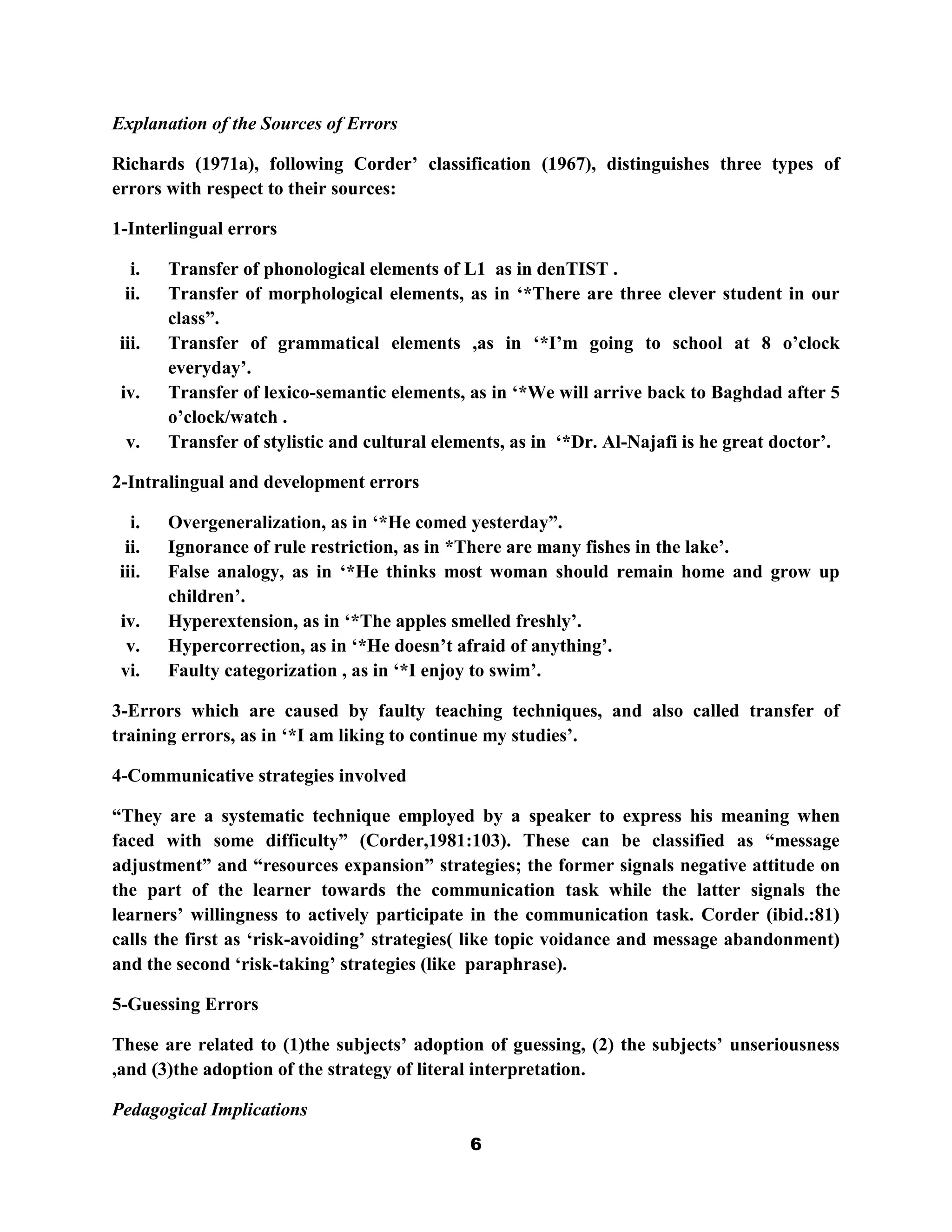
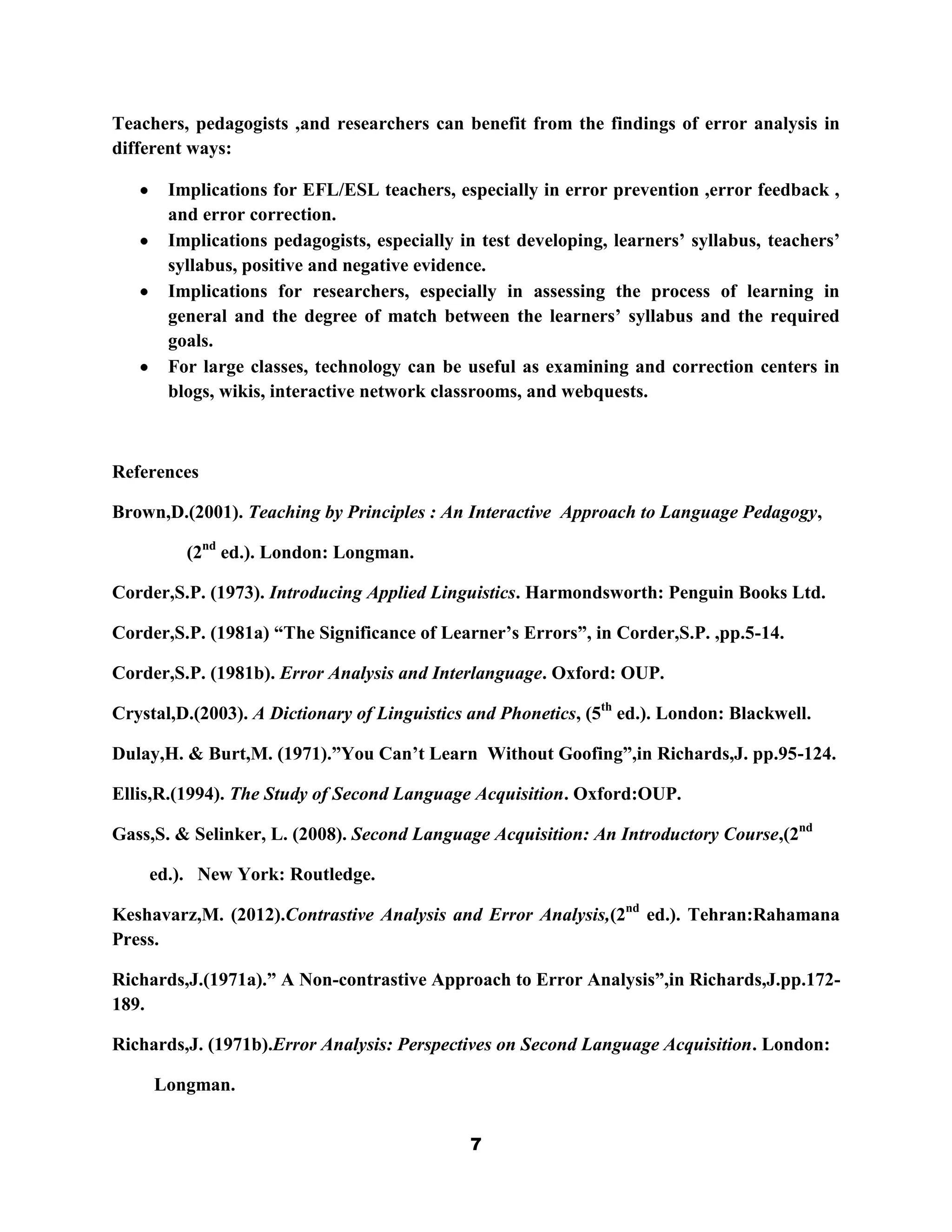

1. Error analysis emerged in the 1960s as a reaction to the view of contrastive analysis that language transfer is the central process in second language learning. It showed that contrastive analysis was unable to predict many learner errors. 2. There are different approaches to defining and classifying errors, including distinguishing between errors and mistakes, receptive vs. productive errors, and linguistic-based vs. process-based classifications. 3. Learner errors are significant for teachers, researchers, and learners themselves as they provide insight into the learner's progress and language acquisition process.


