Language As s e s sment Ta sk 
Classroom Language Test : 
Aptitude Tests, Proficiency Tests, Placement 
Tests, Diagnostic Tests, Achievement Tests 
A r r a n g e d B y : 
E n e n g S y a m s i a h 
K i n k i n S u s a n s i 
N u r V i a P a h l a w a n i t a 
2014
T E S T I S … 
A method measuring student knowledge, 
ability and understanding about the 
materials also their performance in learning 
process. 
In learning language, there are kinds of tests 
to measure students achievements from what 
they have learned in the classroom. Each test 
has its own characteristics, usability, and 
certain purposes that surely beneficial for the 
improvement of the students. 
2
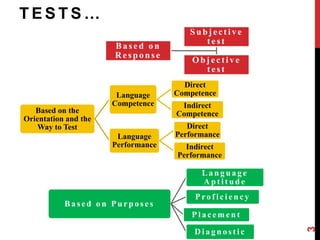
T E S T S … 
3 
Ba s e d o n 
Re s p o n s e 
S u b j e c t i v e 
t e s t 
Ob j e c t i v e 
t e s t 
Based on the 
Orientation and the 
Way to Test 
Language 
Competence 
Direct 
Competence 
Indirect 
Competence 
Language 
Performance 
Direct 
Performance 
Indirect 
Performance 
Ba s e d o n P u r p o s e s 
La n g u a g e 
Ap t i t u d e 
P r o f i c i e n c y 
P l a c eme n t 
Di a g n o s t i c
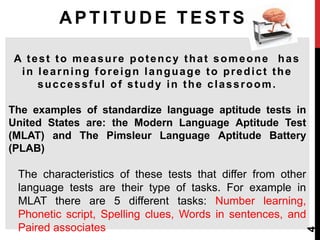
APTITUDE TESTS 
A test to measure potency that someone has 
in learning foreign language to predict the 
successful of study in the classroom. 
The examples of standardize language aptitude tests in 
United States are: the Modern Language Aptitude Test 
(MLAT) and The Pimsleur Language Aptitude Battery 
(PLAB) 
The characteristics of these tests that differ from other 
language tests are their type of tasks. For example in 
MLAT there are 5 different tasks: Number learning, 
Phonetic script, Spelling clues, Words in sentences, and 
Paired associates 
4
PROFICIENCY TESTS 
W h a t i s p r o f i c i e n c y t e s t ? 
A comprehensive tests to measures a learner’s level of 
language that includes all aspects such as listening, 
speaking, reading, grammar and writing. 
W h e r e i s i t h e l d ? 
I t is implemented in educat ional inst i tut ions, 
embassies, government of f ices, and companies. 
W h a t i s i t f o r ? 
One of the requi rement in many companies for 
employees who are sent to at tend seminars, 
courses or t raining using Engl ish as the 
language. 
• The resul t is accurate and highly rel iable . 
• For example: TOEFL and IELTS 
5
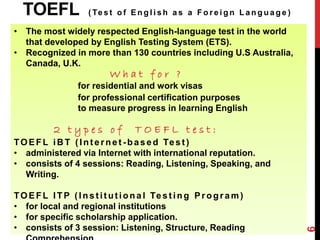
TOEFL ( Te s t o f En g l i s h a s a F o r e i g n L a n g u a g e ) 
• The most widely respected English-language test in the world 
that developed by English Testing System (ETS). 
• Recognized in more than 130 countries including U.S Australia, 
Canada, U.K. 
W h a t f o r ? 
for residential and work visas 
for professional certification purposes 
to measure progress in learning English 
2 t y p e s o f T O E F L t e s t : 
TOEFL iBT ( Int e rne t -ba s ed Te s t ) 
• administered via Internet with international reputation. 
• consists of 4 sessions: Reading, Listening, Speaking, and 
Writing. 
TOEFL ITP ( Ins t i tut iona l Te s t ing Progr am) 
• for local and regional institutions 
• for specific scholarship application. 
• consists of 3 session: Listening, Structure, Reading 
Comprehension. 
6
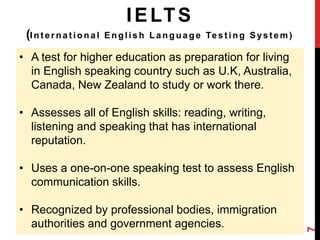
IELTS 
(Int e rna t iona l Engl i sh Language Te s t ing Sys t em) 
• A test for higher education as preparation for living 
in English speaking country such as U.K, Australia, 
Canada, New Zealand to study or work there. 
• Assesses all of English skills: reading, writing, 
listening and speaking that has international 
reputation. 
• Uses a one-on-one speaking test to assess English 
communication skills. 
• Recognized by professional bodies, immigration 
authorities and government agencies. 
7
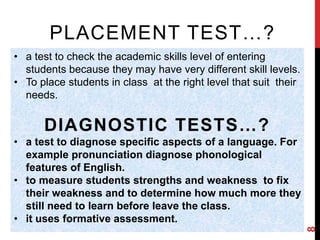
PLACEMENT TEST…? 
• a test to check the academic skills level of entering 
students because they may have very different skill levels. 
• To place students in class at the right level that suit their 
needs. 
DIAGNOSTIC TESTS…? 
• a test to diagnose specific aspects of a language. For 
example pronunciation diagnose phonological 
features of English. 
• to measure students strengths and weakness to fix 
their weakness and to determine how much more they 
still need to learn before leave the class. 
• it uses formative assessment. 
8
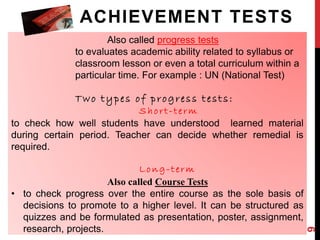
ACHIEVEMENT TESTS 
Also called progress tests 
to evaluates academic ability related to syllabus or 
classroom lesson or even a total curriculum within a 
particular time. For example : UN (National Test) 
Two typ e s of p r ogr e s s t e s t s : 
Sh o r t - t e rm 
to check how well students have understood learned material 
during certain period. Teacher can decide whether remedial is 
required. 
Long - t e rm 
Also called Course Tests 
• to check progress over the entire course as the sole basis of 
decisions to promote to a higher level. It can be structured as 
quizzes and be formulated as presentation, poster, assignment, 
research, projects. 
9
CONCLUSIONS… 
A test with its different forms, standardized or non-standardized 
test, administered formally or informally has 
significant purposes for students. Through test, teachers will 
know the proficiency of students, identify their strengths and 
weakness in study, their comprehension to the materials, find 
problems in learning process, and for achievement as well. 
Whatever the results, teacher should encourage the 
students to be better and better next time and make some 
progresses. Teachers should make effort to recognize their 
students strengths, aptitude, and maximize their potency as 
a guidance for students future. Above all, tests should be for 
the benefit of the students, not the teacher, school, district, 
or state . 
10
SOURCES 
Brown, H. Douglas (2013). Language Assessment Principles 
And Classroom Practices. 
www.learnnc.org/lp/editions/linguafolio/6305 
http://thejoyoflanguageassessment.wordpress.com/2012/12/ 
19/kind-of-test/ 
11

Classroom Language Test

  • 1.
    Language As se s sment Ta sk Classroom Language Test : Aptitude Tests, Proficiency Tests, Placement Tests, Diagnostic Tests, Achievement Tests A r r a n g e d B y : E n e n g S y a m s i a h K i n k i n S u s a n s i N u r V i a P a h l a w a n i t a 2014
  • 2.
    T E ST I S … A method measuring student knowledge, ability and understanding about the materials also their performance in learning process. In learning language, there are kinds of tests to measure students achievements from what they have learned in the classroom. Each test has its own characteristics, usability, and certain purposes that surely beneficial for the improvement of the students. 2
  • 3.
    T E ST S … 3 Ba s e d o n Re s p o n s e S u b j e c t i v e t e s t Ob j e c t i v e t e s t Based on the Orientation and the Way to Test Language Competence Direct Competence Indirect Competence Language Performance Direct Performance Indirect Performance Ba s e d o n P u r p o s e s La n g u a g e Ap t i t u d e P r o f i c i e n c y P l a c eme n t Di a g n o s t i c
  • 4.
    APTITUDE TESTS Atest to measure potency that someone has in learning foreign language to predict the successful of study in the classroom. The examples of standardize language aptitude tests in United States are: the Modern Language Aptitude Test (MLAT) and The Pimsleur Language Aptitude Battery (PLAB) The characteristics of these tests that differ from other language tests are their type of tasks. For example in MLAT there are 5 different tasks: Number learning, Phonetic script, Spelling clues, Words in sentences, and Paired associates 4
  • 5.
    PROFICIENCY TESTS Wh a t i s p r o f i c i e n c y t e s t ? A comprehensive tests to measures a learner’s level of language that includes all aspects such as listening, speaking, reading, grammar and writing. W h e r e i s i t h e l d ? I t is implemented in educat ional inst i tut ions, embassies, government of f ices, and companies. W h a t i s i t f o r ? One of the requi rement in many companies for employees who are sent to at tend seminars, courses or t raining using Engl ish as the language. • The resul t is accurate and highly rel iable . • For example: TOEFL and IELTS 5
  • 6.
    TOEFL ( Tes t o f En g l i s h a s a F o r e i g n L a n g u a g e ) • The most widely respected English-language test in the world that developed by English Testing System (ETS). • Recognized in more than 130 countries including U.S Australia, Canada, U.K. W h a t f o r ? for residential and work visas for professional certification purposes to measure progress in learning English 2 t y p e s o f T O E F L t e s t : TOEFL iBT ( Int e rne t -ba s ed Te s t ) • administered via Internet with international reputation. • consists of 4 sessions: Reading, Listening, Speaking, and Writing. TOEFL ITP ( Ins t i tut iona l Te s t ing Progr am) • for local and regional institutions • for specific scholarship application. • consists of 3 session: Listening, Structure, Reading Comprehension. 6
  • 7.
    IELTS (Int erna t iona l Engl i sh Language Te s t ing Sys t em) • A test for higher education as preparation for living in English speaking country such as U.K, Australia, Canada, New Zealand to study or work there. • Assesses all of English skills: reading, writing, listening and speaking that has international reputation. • Uses a one-on-one speaking test to assess English communication skills. • Recognized by professional bodies, immigration authorities and government agencies. 7
  • 8.
    PLACEMENT TEST…? •a test to check the academic skills level of entering students because they may have very different skill levels. • To place students in class at the right level that suit their needs. DIAGNOSTIC TESTS…? • a test to diagnose specific aspects of a language. For example pronunciation diagnose phonological features of English. • to measure students strengths and weakness to fix their weakness and to determine how much more they still need to learn before leave the class. • it uses formative assessment. 8
  • 9.
    ACHIEVEMENT TESTS Alsocalled progress tests to evaluates academic ability related to syllabus or classroom lesson or even a total curriculum within a particular time. For example : UN (National Test) Two typ e s of p r ogr e s s t e s t s : Sh o r t - t e rm to check how well students have understood learned material during certain period. Teacher can decide whether remedial is required. Long - t e rm Also called Course Tests • to check progress over the entire course as the sole basis of decisions to promote to a higher level. It can be structured as quizzes and be formulated as presentation, poster, assignment, research, projects. 9
  • 10.
    CONCLUSIONS… A testwith its different forms, standardized or non-standardized test, administered formally or informally has significant purposes for students. Through test, teachers will know the proficiency of students, identify their strengths and weakness in study, their comprehension to the materials, find problems in learning process, and for achievement as well. Whatever the results, teacher should encourage the students to be better and better next time and make some progresses. Teachers should make effort to recognize their students strengths, aptitude, and maximize their potency as a guidance for students future. Above all, tests should be for the benefit of the students, not the teacher, school, district, or state . 10
  • 11.
    SOURCES Brown, H.Douglas (2013). Language Assessment Principles And Classroom Practices. www.learnnc.org/lp/editions/linguafolio/6305 http://thejoyoflanguageassessment.wordpress.com/2012/12/ 19/kind-of-test/ 11