


Presented by Ena Athaide
MSc -1,Sem-2
Institute of Science, Mumbai
oAnimals have two systems of
internal communication and
regulation:
•The nervous system
•The endocrine system
o The Nervous system conveys high-speed
electrical signals along specialized units
called Neurons.
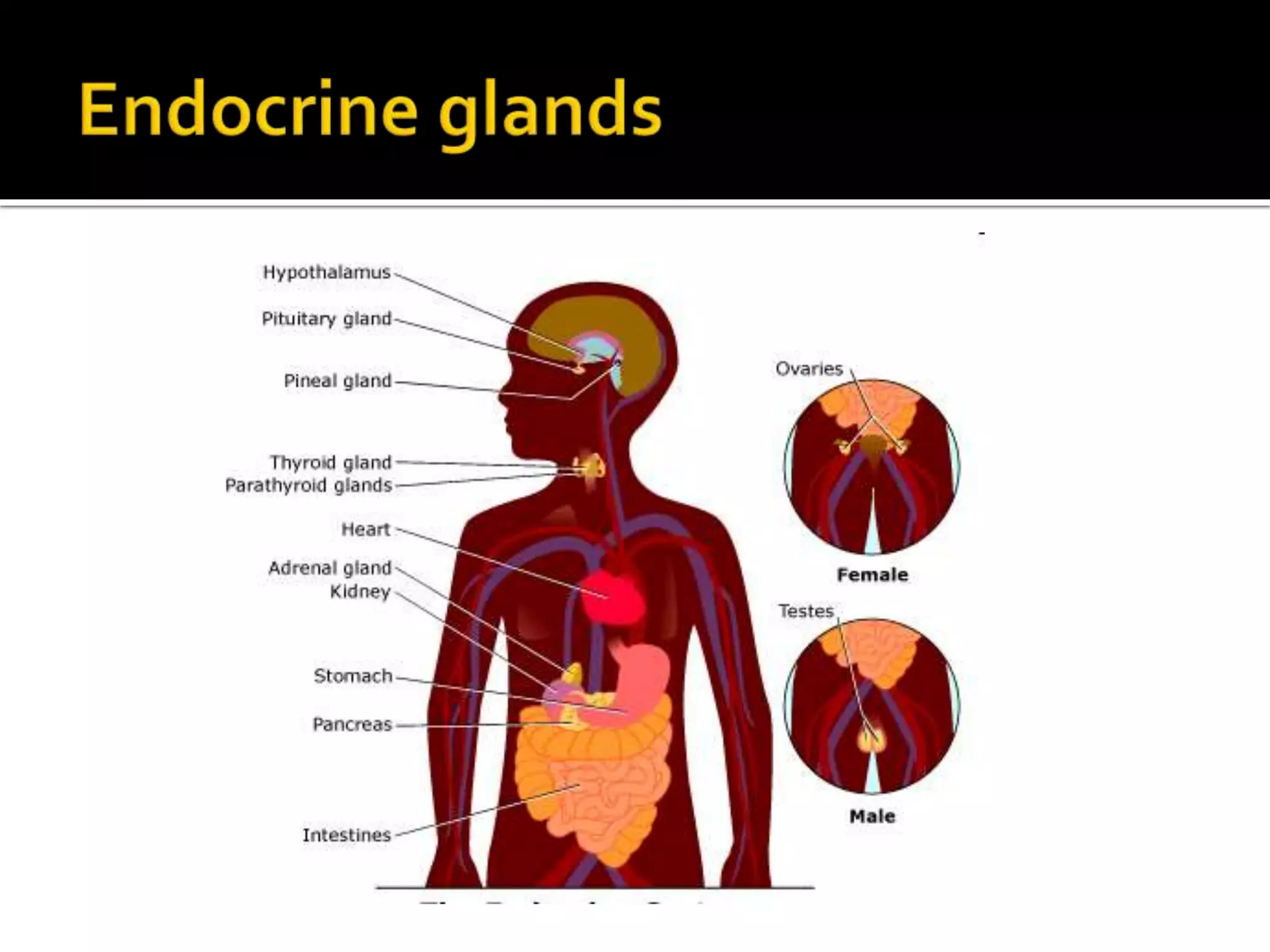
o The Endocrine system, made up of endocrine
glands, secretes hormones that coordinate
slower but longer-acting responses to stimuli.
o A Hormone is a chemical signal that is
secreted into the circulatory system and
communicates regulatory messages
within the body.
o Hormones may reach all parts of the
body, but only certain types of cells,
target cells, are equipped to respond.
o Signaling by any of these molecules involves
three key events
-Reception
-Signal transduction
-Response
o Steroids
o Non steroid
-Protein and polypeptides
-Tyrosine-derived
-Eicosanoids
-Vitamins
o Steroid Hormones:
-Lipid soluble
-Diffuse through cell membranes
-Endocrine organs
-Adrenal cortex
-Ovaries
-Testes
-Placenta
o Non-steroid Hormones:
-Not lipid soluble
-Received by receptors external to the cell
membrane
-Endocrine organs
-Thyroid gland
-Parathyroid gland
-Adrenal medulla
-Pituitary gland
-Pancreas
o Group 1 Hormones- binds to Intracellular
receptors, to form receptor complexes,
mediate biochemical functions. Mostly
lipophilic in nature.
o Group 2 Hormones- binds to cell surface
receptors and stimulate the release of
secondary messengers which in turn perform
biochemical functions.Thus, hormones itself
is the first messengers.
o Group 2 hormones are subdivided into three
categories based on chemical nature of the
second messenger .i.e. cAMP and
phosphatidylinositol/calcium ,
o Some cases second messenger is unknown.
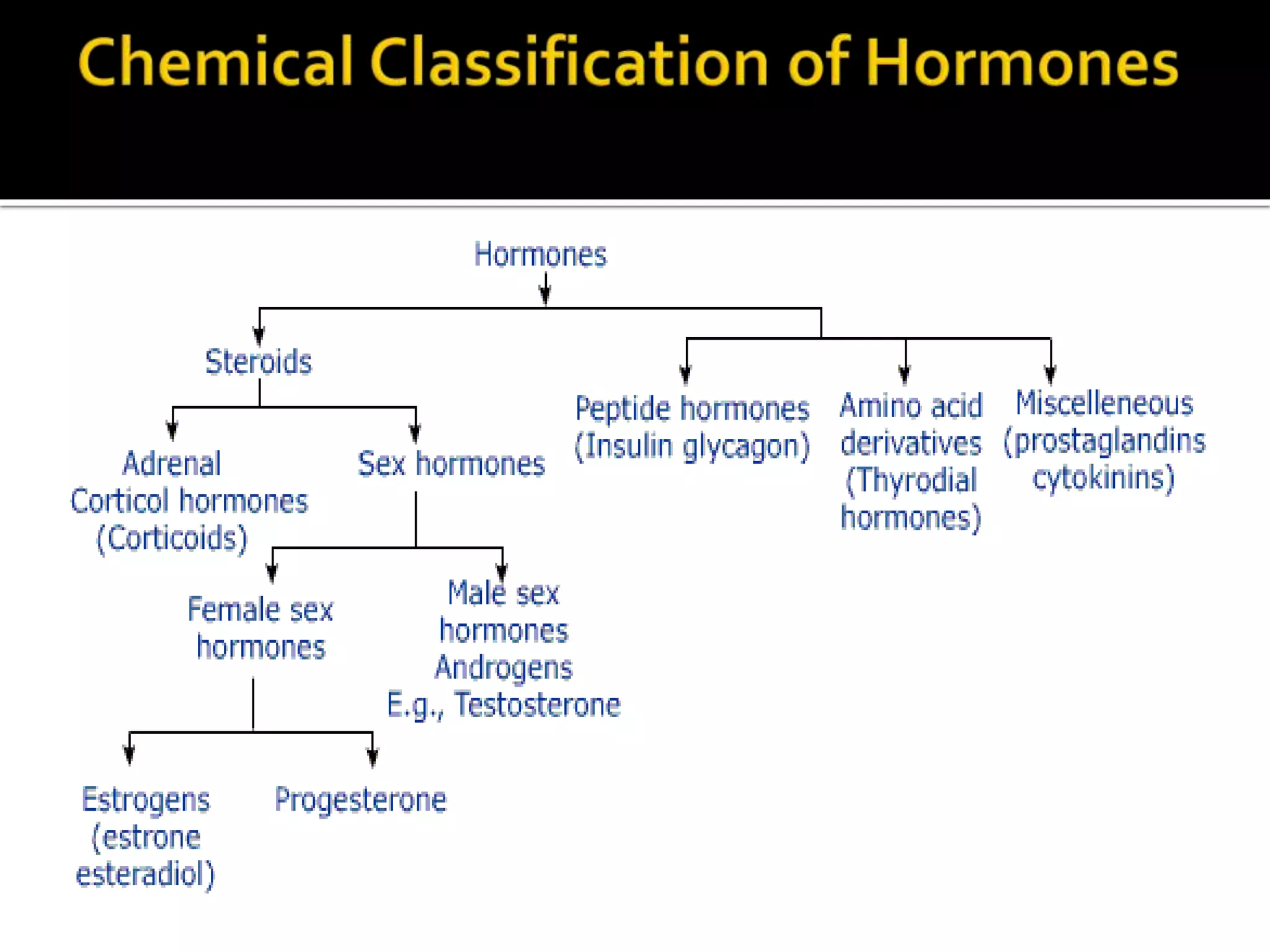
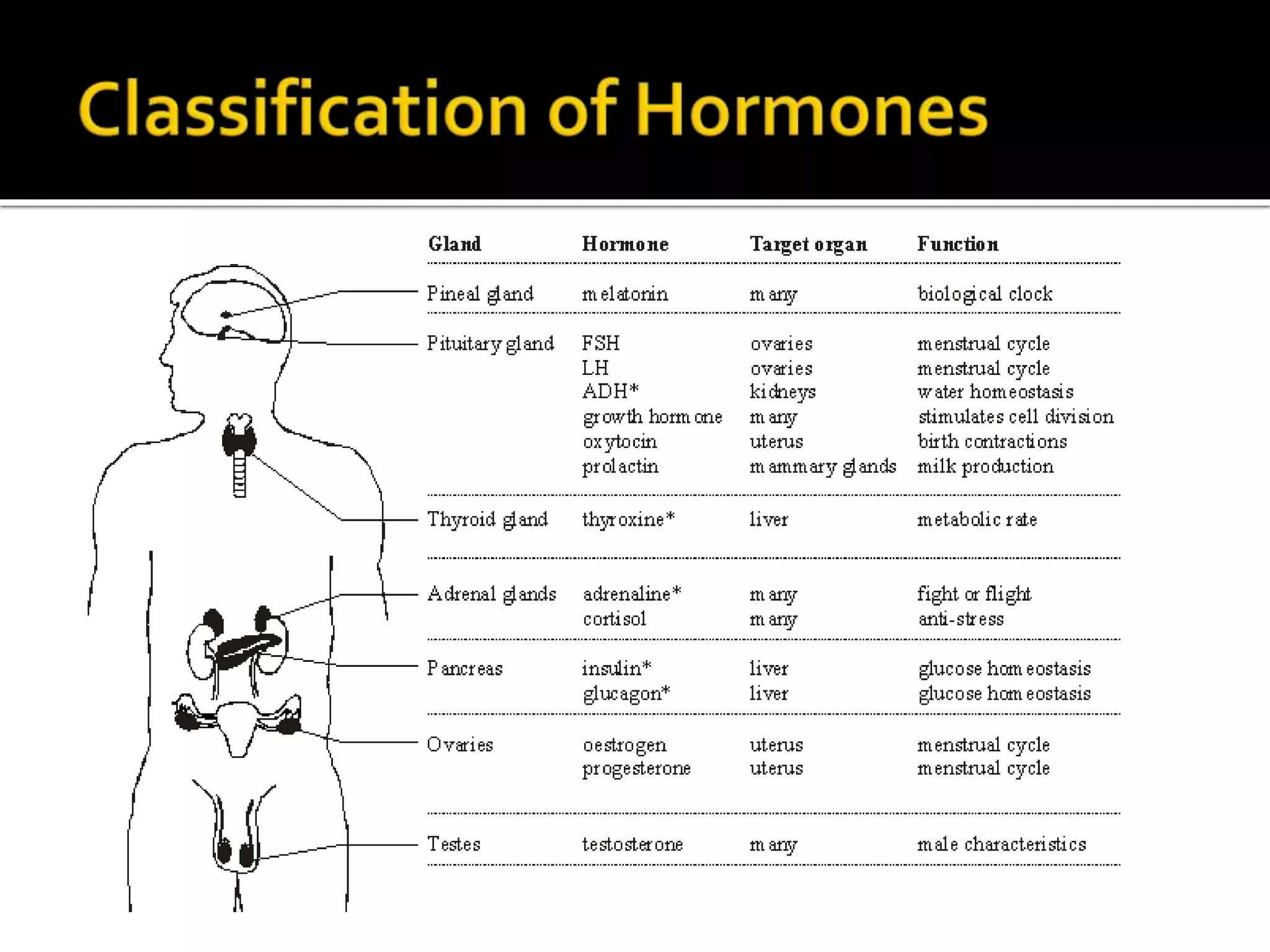
Classification of Hormones

Classification of Hormones

  • 1.
    Presented by EnaAthaide MSc -1,Sem-2 Institute of Science, Mumbai
  • 2.
    oAnimals have twosystems of internal communication and regulation: •The nervous system •The endocrine system
  • 3.
    o The Nervoussystem conveys high-speed electrical signals along specialized units called Neurons. o The Endocrine system, made up of endocrine glands, secretes hormones that coordinate slower but longer-acting responses to stimuli.
  • 5.
    o A Hormoneis a chemical signal that is secreted into the circulatory system and communicates regulatory messages within the body. o Hormones may reach all parts of the body, but only certain types of cells, target cells, are equipped to respond.
  • 6.
    o Signaling byany of these molecules involves three key events -Reception -Signal transduction -Response
  • 7.
    o Steroids o Nonsteroid -Protein and polypeptides -Tyrosine-derived -Eicosanoids -Vitamins
  • 8.
    o Steroid Hormones: -Lipidsoluble -Diffuse through cell membranes -Endocrine organs -Adrenal cortex -Ovaries -Testes -Placenta
  • 9.
    o Non-steroid Hormones: -Notlipid soluble -Received by receptors external to the cell membrane -Endocrine organs -Thyroid gland -Parathyroid gland -Adrenal medulla -Pituitary gland -Pancreas
  • 11.
    o Group 1Hormones- binds to Intracellular receptors, to form receptor complexes, mediate biochemical functions. Mostly lipophilic in nature. o Group 2 Hormones- binds to cell surface receptors and stimulate the release of secondary messengers which in turn perform biochemical functions.Thus, hormones itself is the first messengers.
  • 12.
    o Group 2hormones are subdivided into three categories based on chemical nature of the second messenger .i.e. cAMP and phosphatidylinositol/calcium , o Some cases second messenger is unknown.