Dr. RAGHU PRASADA M S
MBBS,MD
ASSISTANT PROFESSOR
DEPT. OF PHARMACOLOGY
SSIMS & RC.
1
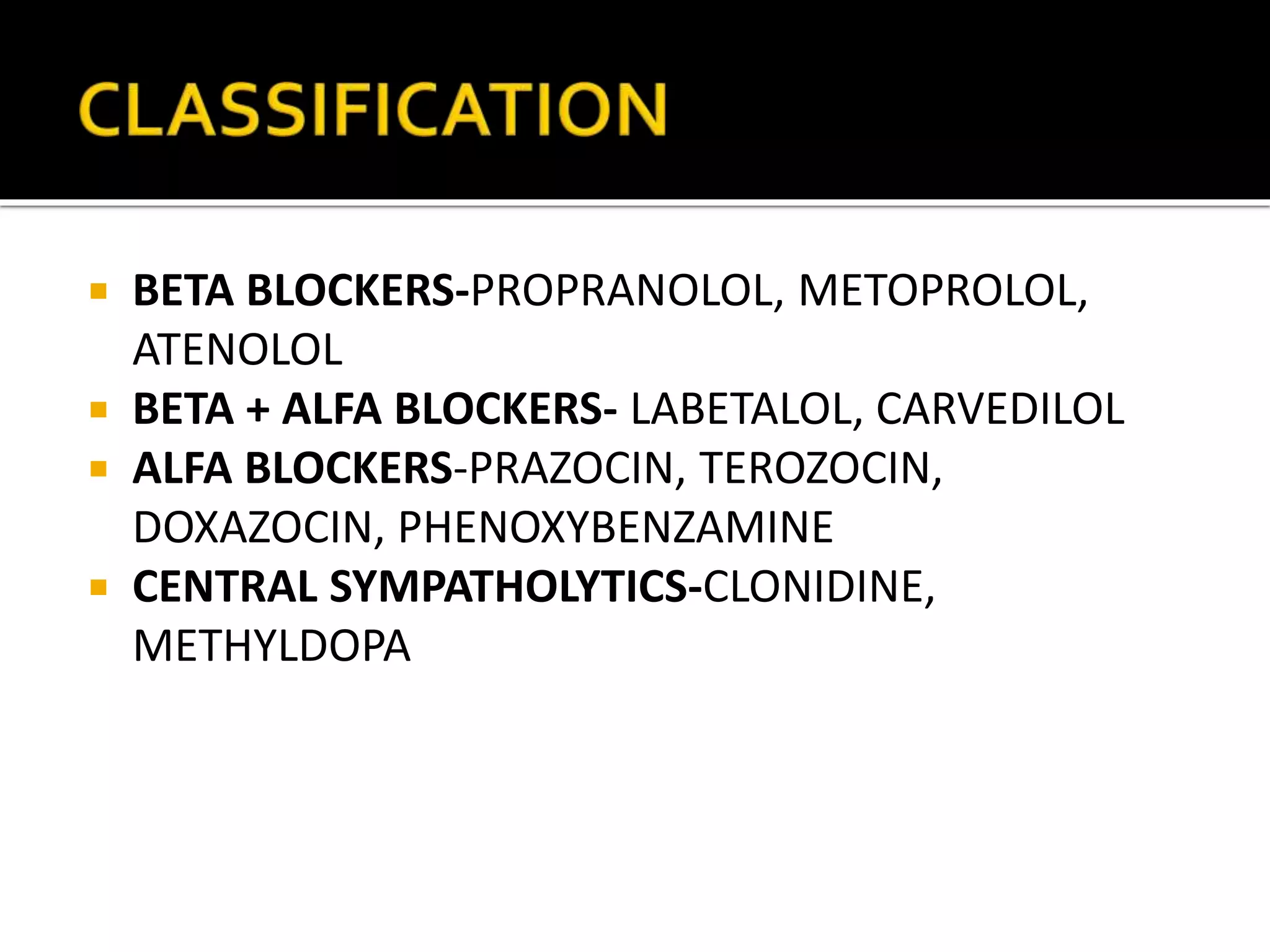
 BETA BLOCKERS-PROPRANOLOL, METOPROLOL,
ATENOLOL
 BETA + ALFA BLOCKERS- LABETALOL, CARVEDILOL
 ALFA BLOCKERS-PRAZOCIN, TEROZOCIN,
DOXAZOCIN, PHENOXYBENZAMINE
 CENTRAL SYMPATHOLYTICS-CLONIDINE,
METHYLDOPA
 GANGLION BLOCKERS-TRIMETHOPHAN
 DIURETICS- THIAZIDES-HYDROCHLORTHIAZIDE
 HIGH CEILING-FUROSEMIDE
 K SPARING –SPIRONOLACTONE, TRIAMTERINE,
AMILORIDE
 ACE INHIBITORS-ENALAPRIL, LISINOPRIL
 AT1 ANTAGONISTS- LOSARTAN,
 CANDESARTAN, IRBESARTAN
 CALCIUM CHANNEL BLOCKERS-VERAPAMIL,
 DILTIAZEM, NIFEDIPINE, AMLODIPINE
 VASODILATORS- ARTERIOLAR-HYDRALAZINE,
 MINOXIDIL, DIAZOXIDE
 ARTERIOLAR+VENOUS- SODIUM
 NITROPRUSSIDE
 OTHERS- RESERPINE, GUANETHIDINE
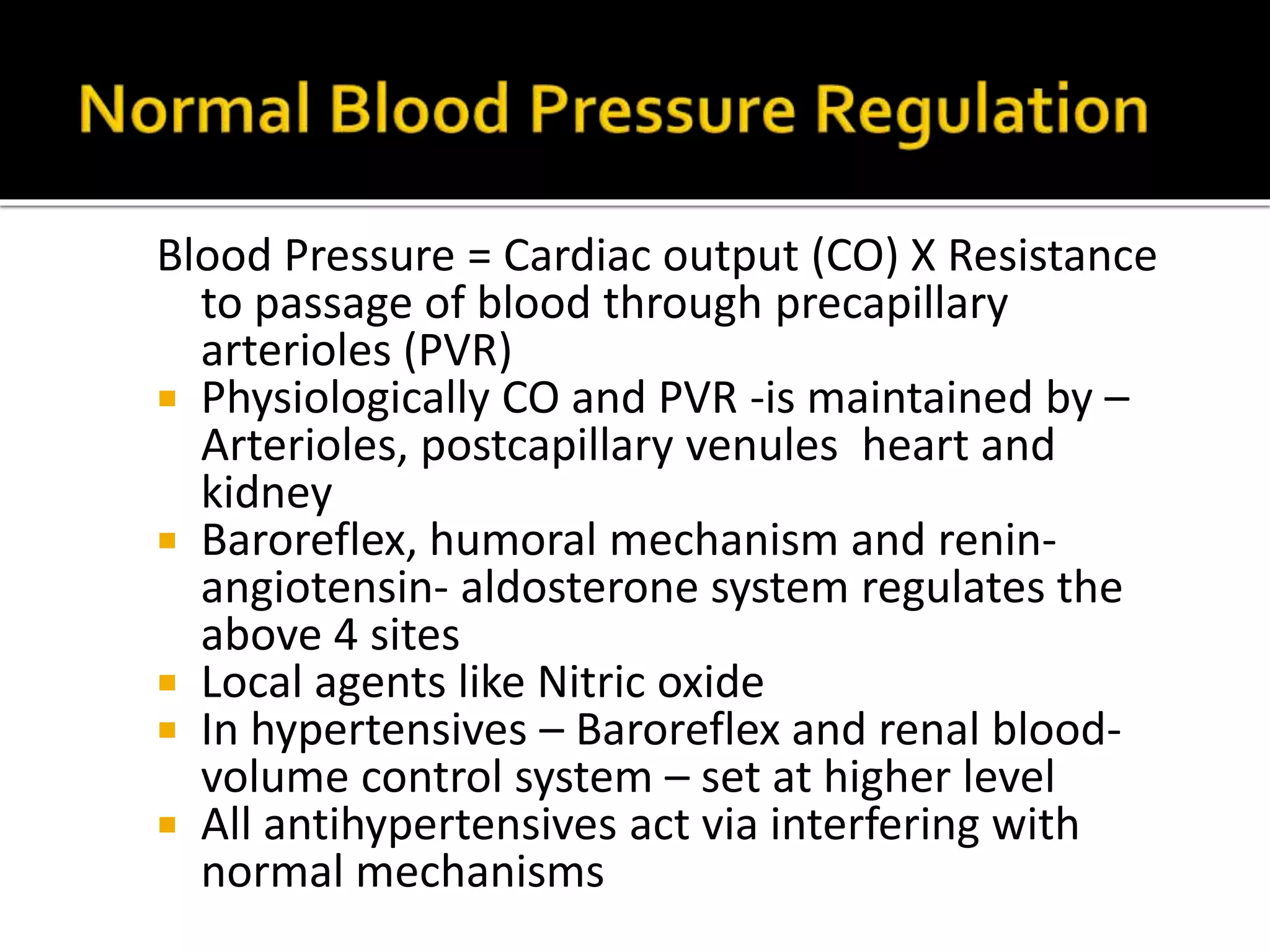
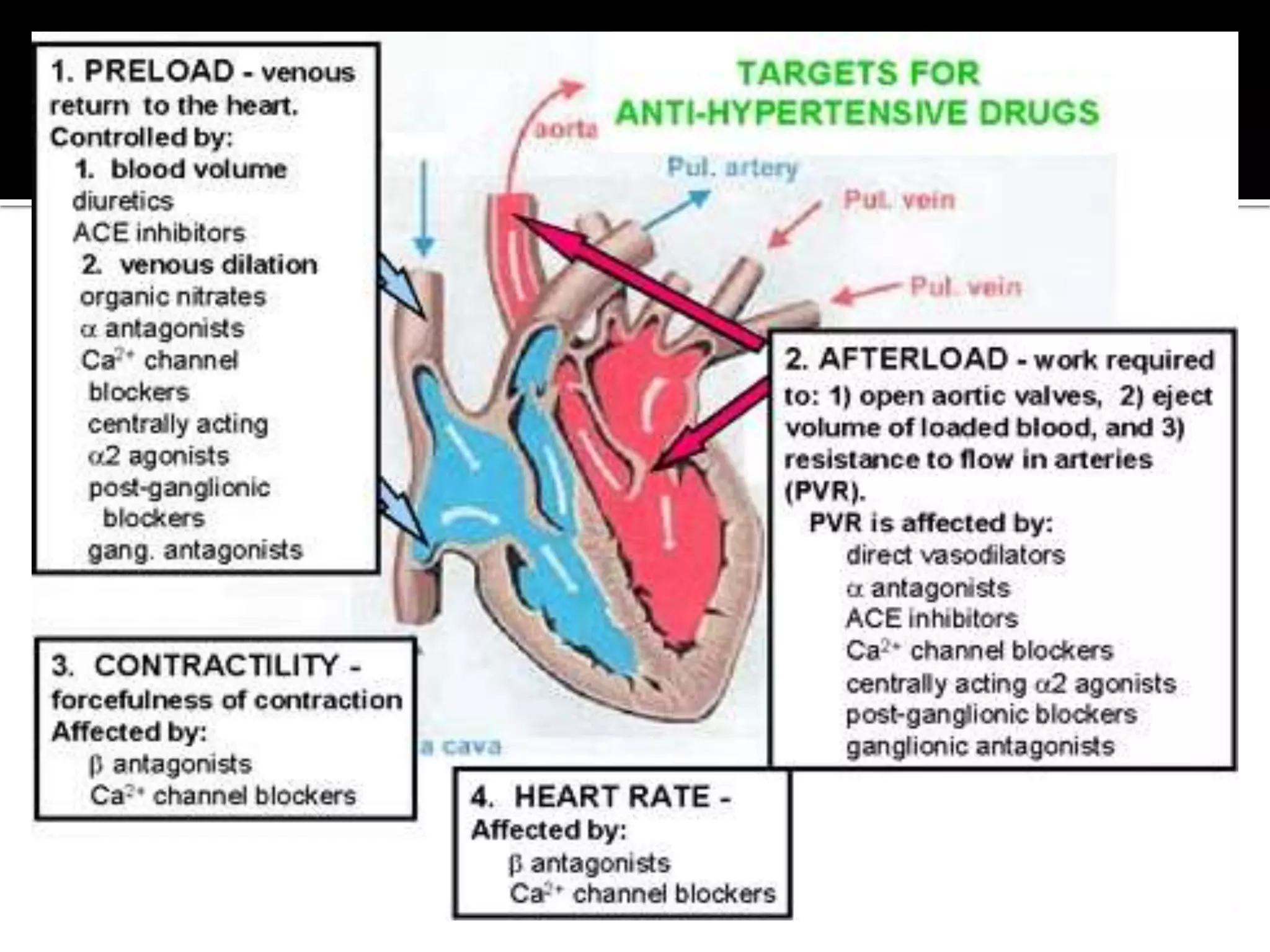
Blood Pressure = Cardiac output (CO) X Resistance
to passage of blood through precapillary
arterioles (PVR)
 Physiologically CO and PVR -is maintained by –
Arterioles, postcapillary venules heart and
kidney
 Baroreflex, humoral mechanism and renin-
angiotensin- aldosterone system regulates the
above 4 sites
 Local agents like Nitric oxide
 In hypertensives – Baroreflex and renal blood-
volume control system – set at higher level
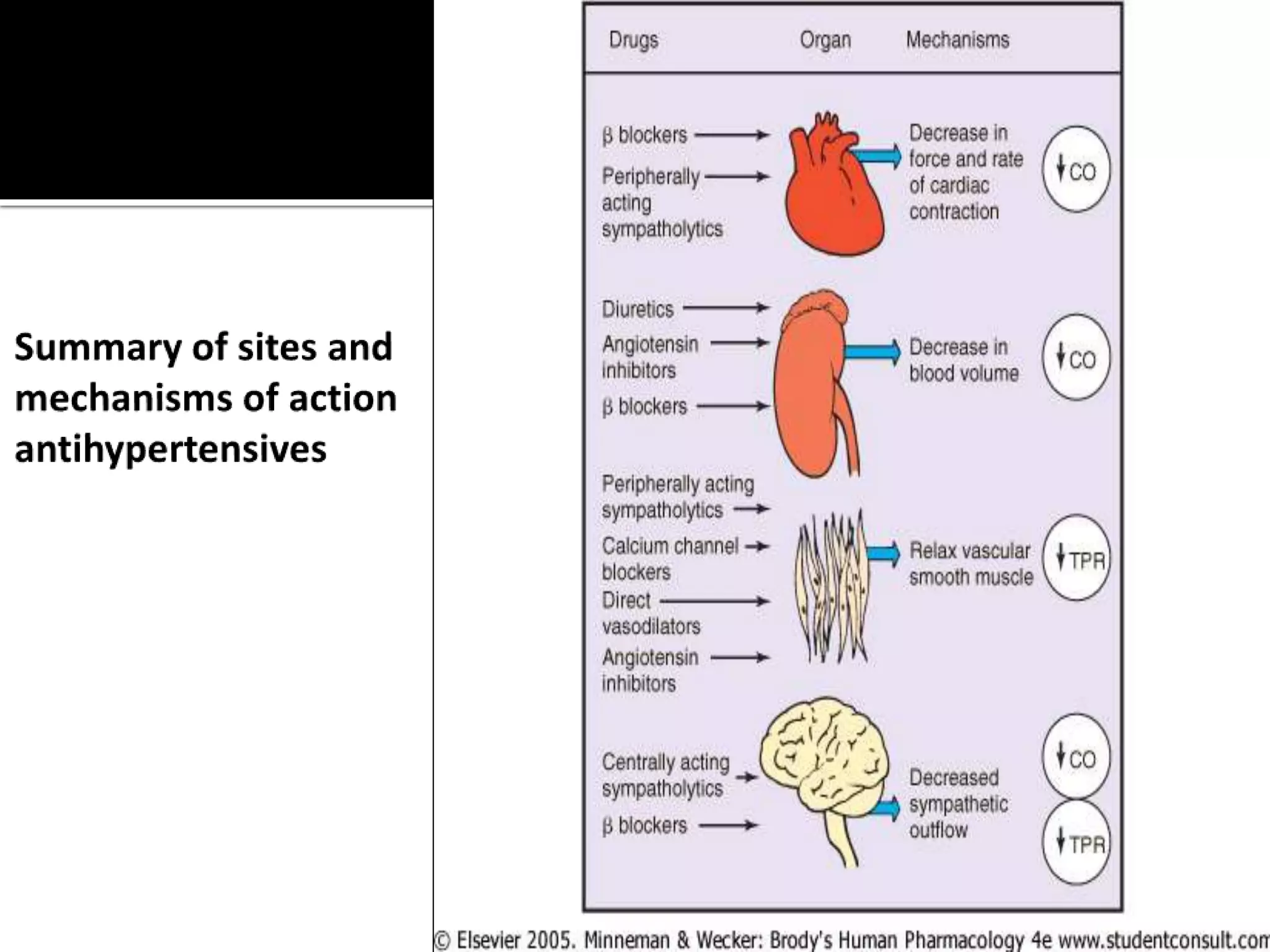
 All antihypertensives act via interfering with
normal mechanisms
 Essential or primary— a disorder of unknown origin-
-Contributors include: salt sensitivity, insulin
resistance, genetics, environmental factors,others
 Secondary—renal, adrenal, coarctation of the aorta,
steroids, pregnancy
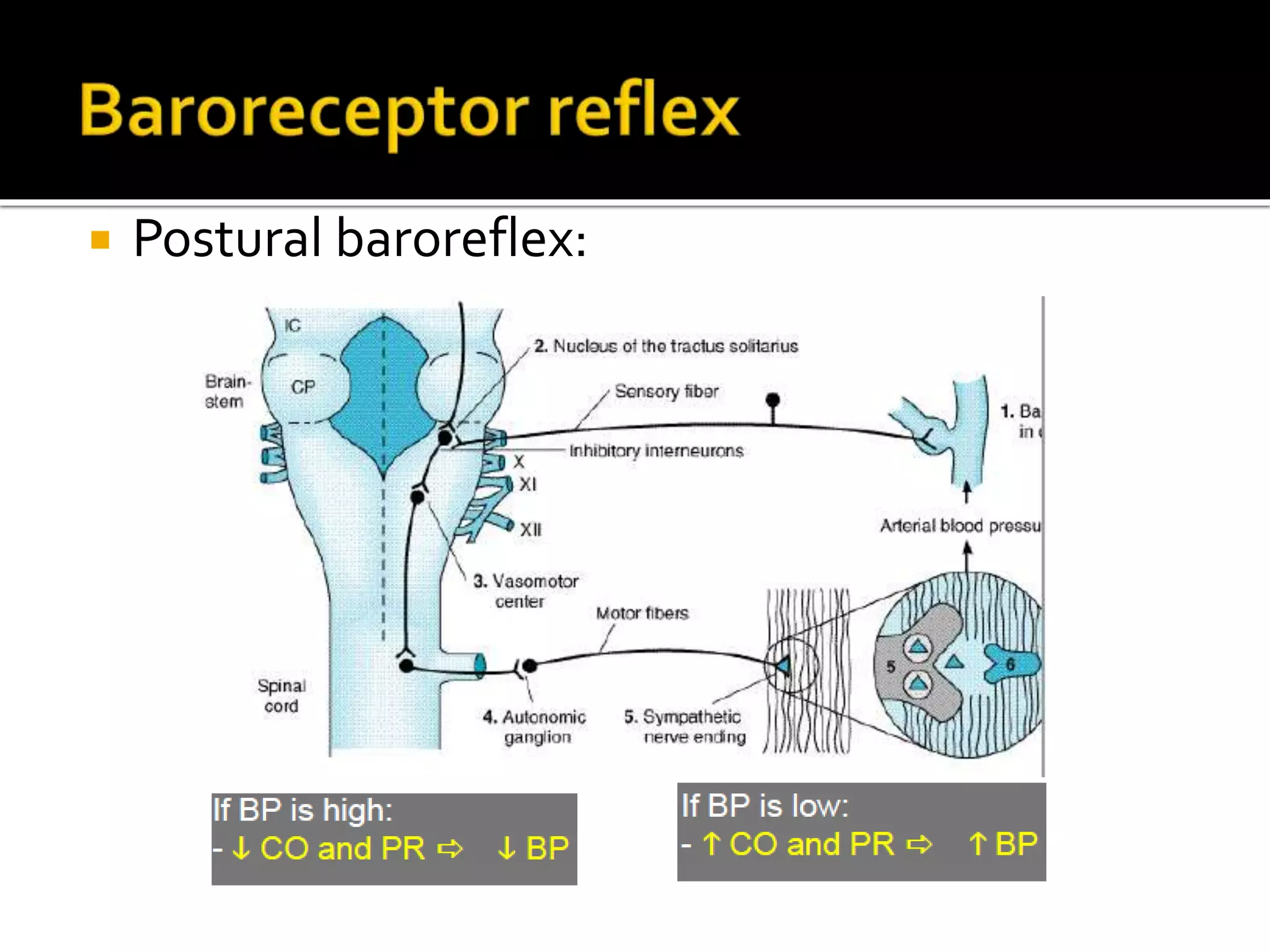
 Postural baroreflex:
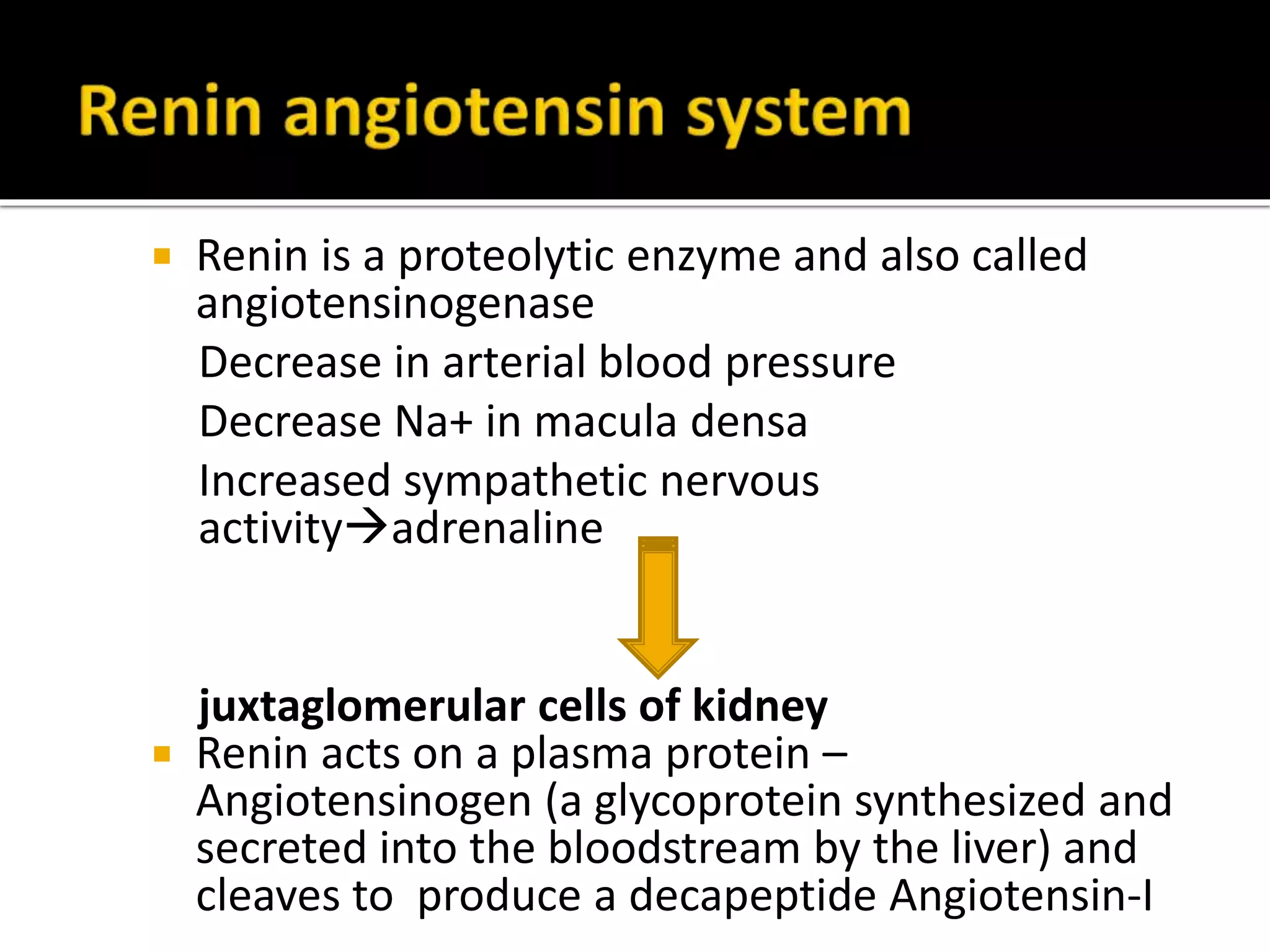
 Renin is a proteolytic enzyme and also called
angiotensinogenase
Decrease in arterial blood pressure
Decrease Na+ in macula densa
Increased sympathetic nervous
activityadrenaline
juxtaglomerular cells of kidney
 Renin acts on a plasma protein –
Angiotensinogen (a glycoprotein synthesized and
secreted into the bloodstream by the liver) and
cleaves to produce a decapeptide Angiotensin-I
 Angiotensin-I is rapidly converted to Angiotensin-II
(octapeptide) by ACE (present in luminal surface of
vascular endothelium)
 Furthermore degradation of Angiotensin-II by
peptidases produce Angiotensin-III
 Both Angiotensin-II and Angiotensin-III stimulates
Aldosterone secretion from Adrenal Cortex
(equipotent)
 AT-II has very short half life – 1 min
Vasoconstriction
Art+venous
Na+ & water
retention
(Adrenal cortex)
Kidney
Increased
Blood Vol.
Rise in BP
Increased
veonous
return, EDV
1. Powerful vasoconstrictor particularly arteriolar –
direct action and release of Adr/NA release
 Promotes movement of fluid from vascular to
extravascular
 More potent vasopressor agent than NA –
promotes Na+ and water reabsorption
 It increases myocardial force of contraction
(CA++ influx promotion) and increases heart rate
by sympathetic activity, but reflex bradycardia
occurs
Cardiac output is reduced and cardiac work
increases
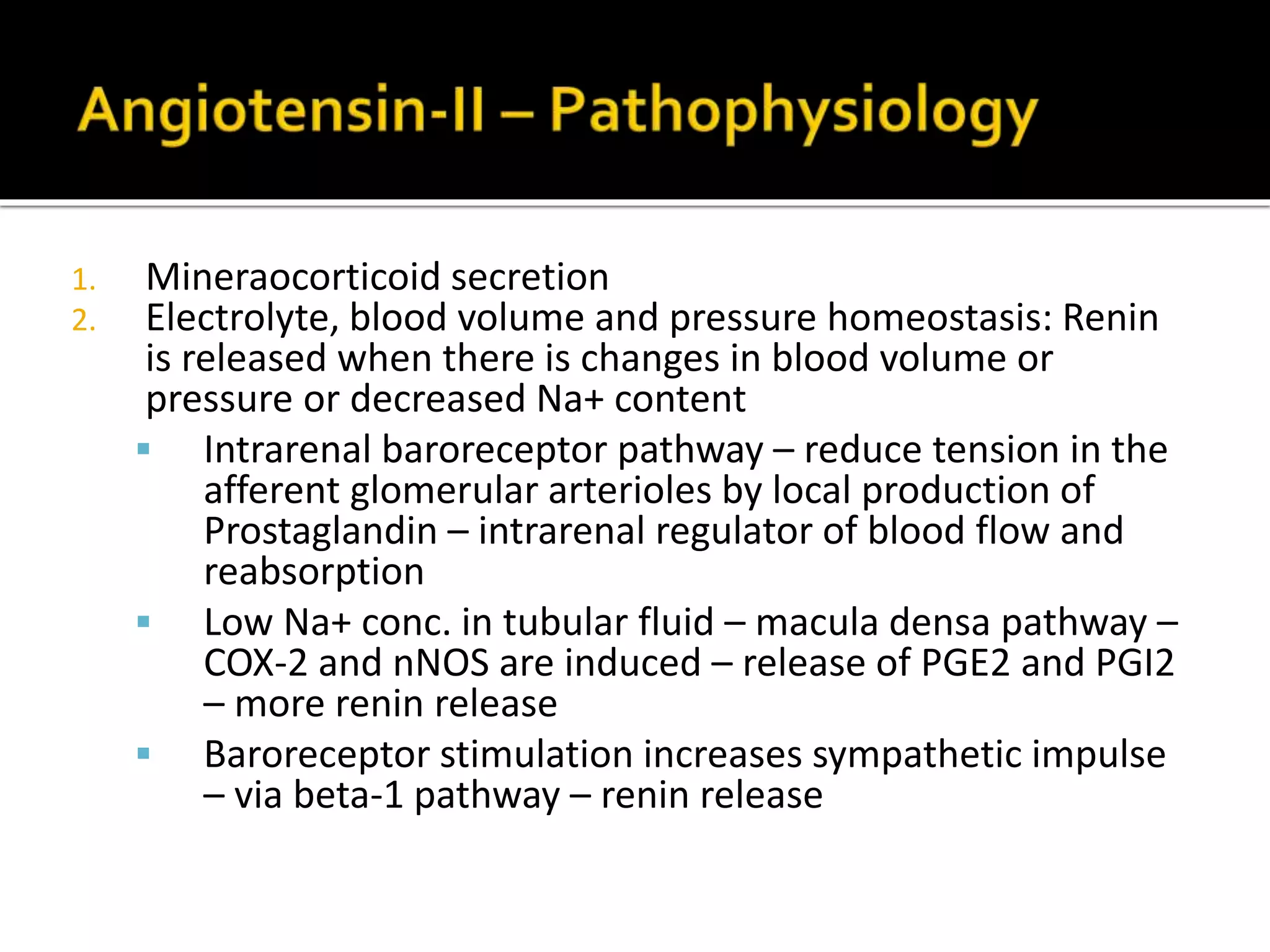
1. Mineraocorticoid secretion
2. Electrolyte, blood volume and pressure homeostasis: Renin
is released when there is changes in blood volume or
pressure or decreased Na+ content
 Intrarenal baroreceptor pathway – reduce tension in the
afferent glomerular arterioles by local production of
Prostaglandin – intrarenal regulator of blood flow and
reabsorption
 Low Na+ conc. in tubular fluid – macula densa pathway –
COX-2 and nNOS are induced – release of PGE2 and PGI2
– more renin release
 Baroreceptor stimulation increases sympathetic impulse
– via beta-1 pathway – renin release
 Renin release – increased Angiotensin II production
– vasoconstriction and increased Na+ and water
reabsorption
 Long term stabilization of BP is achieved – long-loop
negative feedback and short-loop negative feedback
mechanism
3. Hypertension
4. Secondary hyperaldosteronism
 Sulfhydryl containing dipeptide and abolishes
pressor action of Angiotensin-I and not Angiotensin-
II and does not block AT receptors
 Pharmacokinetics:
 Available only orally, 70% - 75% is absorbed
 Partly absorbed and partly excreted unchanged in
urine
 Food interferes with its absorption
 Half life: 2 Hrs, but action stays for 6-12 Hrs
 No postural hypotension or electrolyte imbalance (no
fatigue or weakness)
 Safe in asthmatics and diabetics
 Prevention of secondary hyperaldosteronism and K+ loss
 Renal perfusion well maintained
 Reverse the ventricular hypertrophy and increase in lumen
size of vessel
 No hyperurecemia or deleterious effect on plasma lipid
profile
 No rebound hypertension
 Minimal worsening of quality of life – general well being,
sleep and work performance etc.
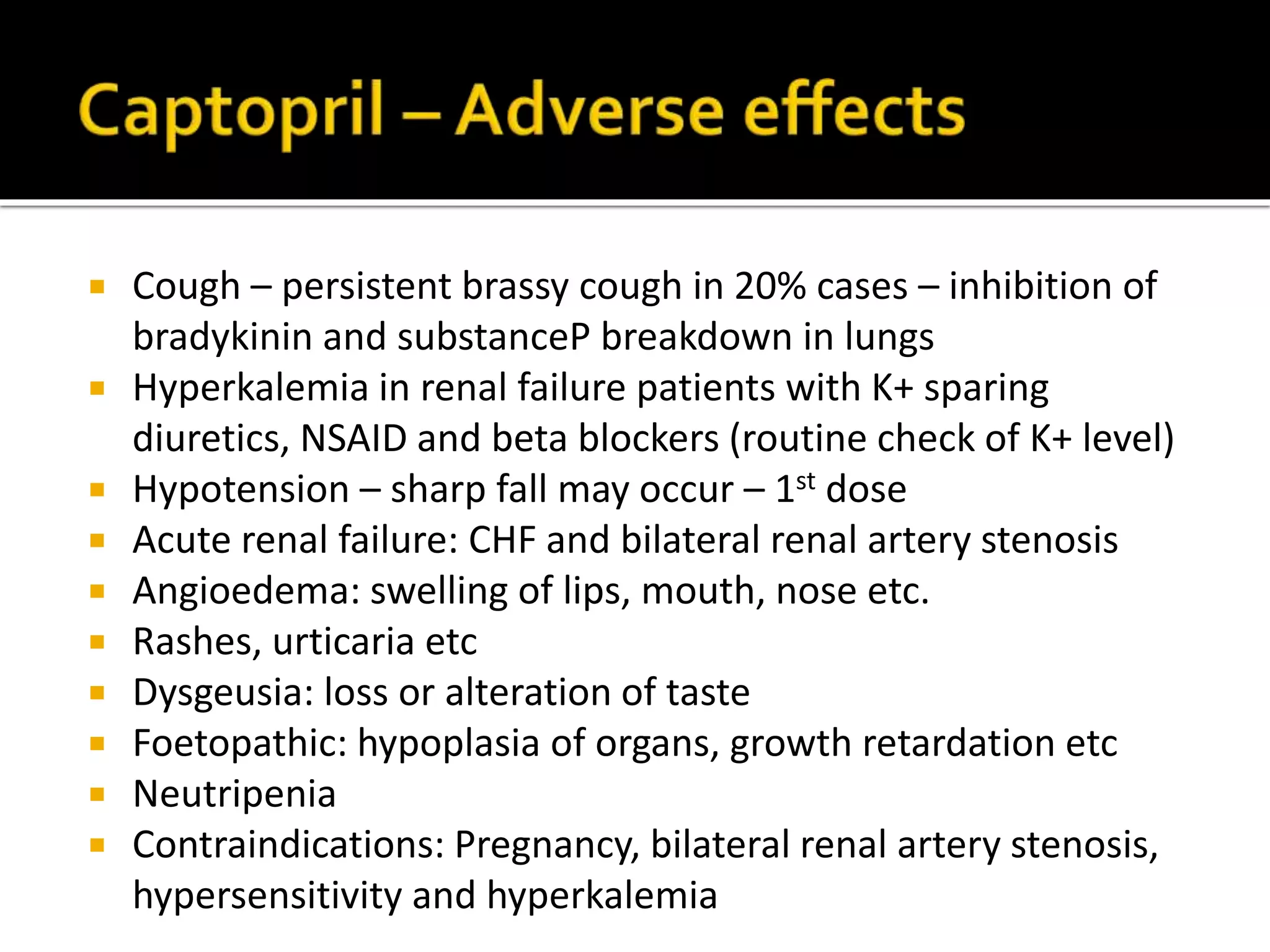
 Cough – persistent brassy cough in 20% cases – inhibition of
bradykinin and substanceP breakdown in lungs
 Hyperkalemia in renal failure patients with K+ sparing
diuretics, NSAID and beta blockers (routine check of K+ level)
 Hypotension – sharp fall may occur – 1st dose
 Acute renal failure: CHF and bilateral renal artery stenosis
 Angioedema: swelling of lips, mouth, nose etc.
 Rashes, urticaria etc
 Dysgeusia: loss or alteration of taste
 Foetopathic: hypoplasia of organs, growth retardation etc
 Neutripenia
 Contraindications: Pregnancy, bilateral renal artery stenosis,
hypersensitivity and hyperkalemia
Competitive antagonist and inverse agonist of AT1
receptor Complete inhibition of AT1 – alternative
remains with ACEs
 Result in indirect activation of AT2 – vasodilatation
(additional benefit)
 Clinical benefit of ARBs over ACEIs – not known
 Does not interfere with other receptors except TXA2
 Blocks all the actions of A-II - vasoconstriction,
sympathetic stimulation, aldosterone release and
renal actions of salt and water reabsorption
 No inhibition of ACE
Cough is rare – no interference with bradykinin and
other ACE substrates
 However, losartan decreases BP in hypertensive
which is for long period (24 Hrs)
Heart rate remains unchanged and cvs reflxes are
not interfered
No significant effect in plasma lipid profile, insulin
sensitivity and carbohydrate tolerance etc
 Mild uricosuric effect
 Pharmacokinetic:
 Absorption not affected by food but unlike ACEIs
its bioavailability is low
 High first pass metabolism
 Highly bound to plasma protein
 Do not enter brain
 Adverse effects:
 Foetopathic like ACEIs
 Low dysgeusia and dry cough
 Lower incidence of angioedema
 Available as 25 and 50 mg tablets
 Three types Ca+ channels in smooth muscles – Voltage
sensitive, receptor operated and leak channel
 Voltage sensitive are again 3 types – L-Type, T-Type and N-
Type
 Normally, L-Type of channels admit Ca+ and causes
depolarization – excitation-contraction coupling through
phosphorylation of myosin light chain – contraction of
vascular smooth muscle – elevation of BP
 CCBs block L-Type channel: Smooth Muscle relaxation
 Negative ionotropic and chronotropic effects in heart
 DHPs have highest smooth muscle relaxation and vasodilator
action followed by verapamil and diltiazem
 CCBs block L-Type channel: Smooth Muscle relaxation
Negative ionotropic and chronotropic effects in heart
Coronary vasodilatation and reduction in peripheral artiery
resistance
DHPs and Non-DHPs
 DHPs have highest smooth muscle relaxation and vasodilator
action followed by verapamil and diltiazem
 Non-DHPs cause nodal depression more than peripheral
vasodilation decrease HR decrease myocardial O2
demand helpful in angina
 Non-DHPs contra-indicated in heart failure and ventricular
tachycardia
1. Helpful in low renin hypertensive patients,
2. Unlike diuretics no adverse metabolic effects-
independent of Na intake or concurrent use of
NSAIDs
3. Do not compromise haemodynamics – no
impairment of work capacity
4. No sedation or CNS effect
5. Can be given to asthma, angina and PVD patients
6. Hypertension with nephropathy- non-DHPs better
than DHPs in reducing the blood pressure
7. Diabetic hypertensives-long acting DHPs are better
8. No renal and male sexual function impairment
9. No adverse fetal effects and can be given in
pregnancy
1. Unstable angina-abrupt vasodilation with short
acting CCBs reflex sympathetic activation
tachycardia increased ischemia
2. Heart failure, obstructive cardiomyopathy
3. Hypotension
4. Post infarct cases
5. Severe aortic stenosis
Preparation and dosage: Amlodipine – 2.5, 5 and 10 mg
Nimodipine – 30 mg tab and 10 mg/50 ml
 Non Selective: Propranolol Nadolol, Timolol, Pindolol,
Labetolol
 Cardioselective: Metoprolol Atenolol, Esmolol, Betaxolol
 Reduction in CO but no change in BP initially Adaptation
by resistance vessels to chronically reduced CO
antihypertensive action
 Decreased renin release from kidney (beta-1 mediated)
 Reduced NA release and central sympathetic outflow
reduction
 Non-selective ones – reduction in g.f.r but not with
selective ones
 Drugs with intrinsic sympathomimetic activity may cause
less reduction in HR and CO
 Advantages:
 No postural hypotension, No salt and water retention
 Low incidence of side effects, Low cost
 Once a day regime
 Preferred in young non-obese patients, prevention of
sudden cardiac death in post infarction patients and
progression of CHF
 Side effects:
 Fatigue, lethargy (low CO?) – decreased work capacity
 Loss of libido – impotence, Cognitive defects –
forgetfulness, rebound hypertension, altered lipid profile
C/I-Asthma, IDDM, COPD, Raynauds phenomenon, variant
angina, chronic congestive heart failure
 Non selective alpha blockers are not used in chronic
essential hypertension (phenoxybenzamine,
phentolamine), only used sometimes as in
phaechromocytoma
 Specific alpha-1 blockers like prazosin, terazosin and
doxazosine are usedless tachycardia presynaptic
auto (alpha-2) receptors are not inhibited –
autoregulation of NA release remains intact
 PRAZOSIN is the prototype of the alpha-blockers
 Reduction in t.p.r and mean BP – also reduction in
venomotor tone and pooling – reduction in CO
 Several advantages – improvement of carbohydrate
metabolism – diabetics, lowers LDL and increases
HDL, symptomatic improvement in BHP, patients
with gout
Adverse effects: Prazosin causes postural hypotension
– start 0.5 mg at bed time with increasing dose and
upto 10 mg daily
 Fluid retention in monotherapy
 Headache, dry mouth, weakness, dry mouth,
blurred vision, rash, drowsiness and failure of
ejaculation in males
Doses: Available as 0.5 mg, 1 mg, 2.5 mg, 5 mg etc.
dose:1-4 mg thrice daily, Tera, Doxo- OD
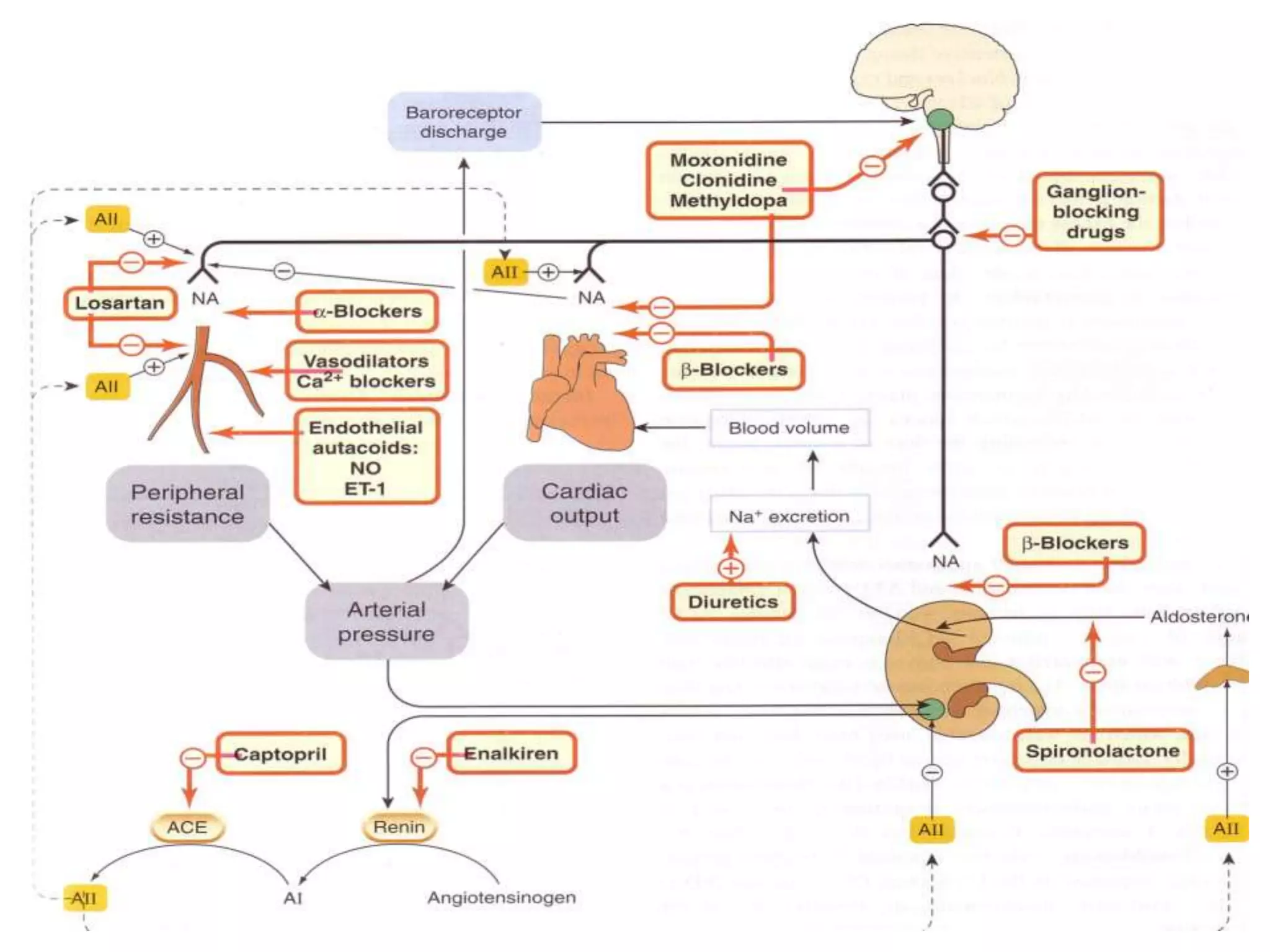
 Precursor of Dopamine and NA
 MOA: Converted to alpha methyl noradrenaline which acts
on alpha-2 receptors in brain and causes inhibition of
adrenergic discharge in medulla – fall in PVR and fall in BP
 CLONIDINE: Imidazoline derivative, partial agonist of central
alpha-2 receptor
 Not frequently used now because of tolerance and
rebound hypertension
Adverse effects – cognitive impairement, postural
hypotension, – Not used therapeutically now except in
Hypertension during pregnancy
 Mechanism Initially: diuresis – depletion of Na+ and body
fluid volume – decrease in cardiac output
 Subsequently after 4 - 6 weeks, Na+ balance and CO is
regained by 95%, but BP remains low
 Reduction in total peripheral resistance (TPR) due to deficit
of little amount of Na+ and water (Na+ causes vascular
stiffness)
 Similar effect is seen with sodium restriction (low sodium
diet)
Hypokalaemia – muscle pain and fatigue
Hyperglycemia: Inhibition of insulin release due to K+
depletion (proinsulin to insulin) – precipitation of
diabetes
Hyperlipidemia: rise in total LDL level – risk of stroke
Hyperurecaemia: inhibition of urate excretion
Sudden cardiac death – tosades de pointes
(hypokalaemia)
All the above metabolic side effects – higher doses (50 –
100 mg per day)
But, its observed that these adverse effects are minimal
with low doses (12.5 to 25 mg) - Average fall in BP is 10
mm of Hg
 Powerful vasodilator, mainly 2 major uses – antihypertensive
and alopecia
 MOA: Prodrugminoxidil sulphateactivates K channels
hyperpolarization relaxation of SM – leading to hydralazine
like effects (longer than hydralazine)
 Enhanced microcirculation around hair follicles and also by
direct stimulation of follicles
 Rarely in hypertension -life threatening ones
 More often in alopecia to promote hair growth
 Orally not used any more
 Topically as 2-5% lotion/gel and takes months to get effects
 MOA: Activates K channels and receptors in the
endothelium of arterioles – NO release – relaxation
of vascular smooth muscle fall in BPCardiac
stimulation producing palpitation and rise in CO
even in IHD and patients – anginal attack,
Tachycardia, Increased Renin secretion – Na+
retention countered by beta blockers and
diuretics
 Uses: 1) Moderate hypertension when 1st line fails –
with beta-blockers and diuretics 2) Hypertension in
Pregnancy, Dose 25-50 mg OD
 Caution-slow acetylators
 MOA: RBCs convert nitroprusside to NO cGMP
relaxation of vascular smooth muscles
 Rapidly and consistently acting vasodilator
 Relaxes both resistance and capacitance vessels and
reduces t.p.r and CO (decrease in venous
return)reducing preload
 Less cardiac work and no reflex tachycardia.
 Uses: Hypertensive Emergencies
 Adverse effects:
 (thiocyanate) – palpitation, pain abdomen,
disorientation, psychosis, weakness and lactic
acidosis.
 Diuretics, CCBs, ACE inhibitors and vasodilators +
beta blockers (blocks renin release)
 Hydralazine and CCBs + beta-blockers (tachycardia
countered)
 Sympathetic inhibitors (not beta-blockers) and
vasodilators + diuretics
 ACE inhibitors + diuretics
 Tripple Drug combinations: CCB+ACE/ARB+diuretic;
CCB+Beta blocker+ diuretic; ACEI/ARB+ beta
blocker+diuretic
 Never combine:
 Alpha or beta blocker and clonidine - antagonism
 Nifedepine and diuretic synergism
 Hydralazine with DHP or prazosin – same type of action
 Diltiazem and verapamil with beta blocker – bradycardia
 Methyldopa and clonidine
 Hypertension and pregnancy:
 No drug is safe in pregnancy
 Avoid diuretics, propranolol, ACE inhibitors, Sodium
nitroprusside
 Safer drugs: Hydralazine, Methyldopa, cardioselective beta
blockers and prazosin
 Weight reduction
 Exercise
 Salt restriction in diet
 Stress reduction
 Eating plan
 Moderation in alcohol intake
THE CHOICE OF THE ANTIHYPERTENSIVE
IN PATIENTS WITH CONCOMITANT
DISEASES.
Concomitant
disease
Antihypertensive drug
Diuretics ß-block. Ca-
block.
ACE-
inhibitor
Diabetes
C.I AVOID OK INDI
CATED
Gout
AVOID -- -- --
Dyslipidemia
C.I AVOID -- --
Angina pectoris
-- I I --
Cardiac failure
I judicious OK I
Pregnancy C.I Cautious OK AVOID
 H.encephalopathy, H.nephropathy, Intracranial
haemorrhage, pre-eclampsia
 Sodium nitroprusside
 Labetolol
 Esmolol
 Fenoldopam-IV infusion
 Phentolamine-
 Diaxoxide
 Hydralazine
 Diuretics
THANKYOU
Download slides from
Authorstream/presentations/raghuprasada
Slideshare/presentations/raghuprasada
Youtube/raghuprasada

Class antihypertensives

  • 1.
    Dr. RAGHU PRASADAM S MBBS,MD ASSISTANT PROFESSOR DEPT. OF PHARMACOLOGY SSIMS & RC. 1
  • 2.
     BETA BLOCKERS-PROPRANOLOL,METOPROLOL, ATENOLOL  BETA + ALFA BLOCKERS- LABETALOL, CARVEDILOL  ALFA BLOCKERS-PRAZOCIN, TEROZOCIN, DOXAZOCIN, PHENOXYBENZAMINE  CENTRAL SYMPATHOLYTICS-CLONIDINE, METHYLDOPA
  • 3.
     GANGLION BLOCKERS-TRIMETHOPHAN DIURETICS- THIAZIDES-HYDROCHLORTHIAZIDE  HIGH CEILING-FUROSEMIDE  K SPARING –SPIRONOLACTONE, TRIAMTERINE, AMILORIDE  ACE INHIBITORS-ENALAPRIL, LISINOPRIL  AT1 ANTAGONISTS- LOSARTAN,  CANDESARTAN, IRBESARTAN
  • 4.
     CALCIUM CHANNELBLOCKERS-VERAPAMIL,  DILTIAZEM, NIFEDIPINE, AMLODIPINE  VASODILATORS- ARTERIOLAR-HYDRALAZINE,  MINOXIDIL, DIAZOXIDE  ARTERIOLAR+VENOUS- SODIUM  NITROPRUSSIDE  OTHERS- RESERPINE, GUANETHIDINE
  • 5.
    Blood Pressure =Cardiac output (CO) X Resistance to passage of blood through precapillary arterioles (PVR)  Physiologically CO and PVR -is maintained by – Arterioles, postcapillary venules heart and kidney  Baroreflex, humoral mechanism and renin- angiotensin- aldosterone system regulates the above 4 sites  Local agents like Nitric oxide  In hypertensives – Baroreflex and renal blood- volume control system – set at higher level  All antihypertensives act via interfering with normal mechanisms
  • 6.
     Essential orprimary— a disorder of unknown origin- -Contributors include: salt sensitivity, insulin resistance, genetics, environmental factors,others  Secondary—renal, adrenal, coarctation of the aorta, steroids, pregnancy
  • 7.
  • 10.
     Renin isa proteolytic enzyme and also called angiotensinogenase Decrease in arterial blood pressure Decrease Na+ in macula densa Increased sympathetic nervous activityadrenaline juxtaglomerular cells of kidney  Renin acts on a plasma protein – Angiotensinogen (a glycoprotein synthesized and secreted into the bloodstream by the liver) and cleaves to produce a decapeptide Angiotensin-I
  • 11.
     Angiotensin-I israpidly converted to Angiotensin-II (octapeptide) by ACE (present in luminal surface of vascular endothelium)  Furthermore degradation of Angiotensin-II by peptidases produce Angiotensin-III  Both Angiotensin-II and Angiotensin-III stimulates Aldosterone secretion from Adrenal Cortex (equipotent)  AT-II has very short half life – 1 min
  • 12.
    Vasoconstriction Art+venous Na+ & water retention (Adrenalcortex) Kidney Increased Blood Vol. Rise in BP Increased veonous return, EDV
  • 13.
    1. Powerful vasoconstrictorparticularly arteriolar – direct action and release of Adr/NA release  Promotes movement of fluid from vascular to extravascular  More potent vasopressor agent than NA – promotes Na+ and water reabsorption  It increases myocardial force of contraction (CA++ influx promotion) and increases heart rate by sympathetic activity, but reflex bradycardia occurs Cardiac output is reduced and cardiac work increases
  • 14.
    1. Mineraocorticoid secretion 2.Electrolyte, blood volume and pressure homeostasis: Renin is released when there is changes in blood volume or pressure or decreased Na+ content  Intrarenal baroreceptor pathway – reduce tension in the afferent glomerular arterioles by local production of Prostaglandin – intrarenal regulator of blood flow and reabsorption  Low Na+ conc. in tubular fluid – macula densa pathway – COX-2 and nNOS are induced – release of PGE2 and PGI2 – more renin release  Baroreceptor stimulation increases sympathetic impulse – via beta-1 pathway – renin release
  • 15.
     Renin release– increased Angiotensin II production – vasoconstriction and increased Na+ and water reabsorption  Long term stabilization of BP is achieved – long-loop negative feedback and short-loop negative feedback mechanism 3. Hypertension 4. Secondary hyperaldosteronism
  • 16.
     Sulfhydryl containingdipeptide and abolishes pressor action of Angiotensin-I and not Angiotensin- II and does not block AT receptors  Pharmacokinetics:  Available only orally, 70% - 75% is absorbed  Partly absorbed and partly excreted unchanged in urine  Food interferes with its absorption  Half life: 2 Hrs, but action stays for 6-12 Hrs
  • 17.
     No posturalhypotension or electrolyte imbalance (no fatigue or weakness)  Safe in asthmatics and diabetics  Prevention of secondary hyperaldosteronism and K+ loss  Renal perfusion well maintained  Reverse the ventricular hypertrophy and increase in lumen size of vessel  No hyperurecemia or deleterious effect on plasma lipid profile  No rebound hypertension  Minimal worsening of quality of life – general well being, sleep and work performance etc.
  • 18.
     Cough –persistent brassy cough in 20% cases – inhibition of bradykinin and substanceP breakdown in lungs  Hyperkalemia in renal failure patients with K+ sparing diuretics, NSAID and beta blockers (routine check of K+ level)  Hypotension – sharp fall may occur – 1st dose  Acute renal failure: CHF and bilateral renal artery stenosis  Angioedema: swelling of lips, mouth, nose etc.  Rashes, urticaria etc  Dysgeusia: loss or alteration of taste  Foetopathic: hypoplasia of organs, growth retardation etc  Neutripenia  Contraindications: Pregnancy, bilateral renal artery stenosis, hypersensitivity and hyperkalemia
  • 20.
    Competitive antagonist andinverse agonist of AT1 receptor Complete inhibition of AT1 – alternative remains with ACEs  Result in indirect activation of AT2 – vasodilatation (additional benefit)  Clinical benefit of ARBs over ACEIs – not known  Does not interfere with other receptors except TXA2  Blocks all the actions of A-II - vasoconstriction, sympathetic stimulation, aldosterone release and renal actions of salt and water reabsorption  No inhibition of ACE
  • 21.
    Cough is rare– no interference with bradykinin and other ACE substrates  However, losartan decreases BP in hypertensive which is for long period (24 Hrs) Heart rate remains unchanged and cvs reflxes are not interfered No significant effect in plasma lipid profile, insulin sensitivity and carbohydrate tolerance etc  Mild uricosuric effect
  • 22.
     Pharmacokinetic:  Absorptionnot affected by food but unlike ACEIs its bioavailability is low  High first pass metabolism  Highly bound to plasma protein  Do not enter brain  Adverse effects:  Foetopathic like ACEIs  Low dysgeusia and dry cough  Lower incidence of angioedema  Available as 25 and 50 mg tablets
  • 24.
     Three typesCa+ channels in smooth muscles – Voltage sensitive, receptor operated and leak channel  Voltage sensitive are again 3 types – L-Type, T-Type and N- Type  Normally, L-Type of channels admit Ca+ and causes depolarization – excitation-contraction coupling through phosphorylation of myosin light chain – contraction of vascular smooth muscle – elevation of BP  CCBs block L-Type channel: Smooth Muscle relaxation  Negative ionotropic and chronotropic effects in heart  DHPs have highest smooth muscle relaxation and vasodilator action followed by verapamil and diltiazem
  • 25.
     CCBs blockL-Type channel: Smooth Muscle relaxation Negative ionotropic and chronotropic effects in heart Coronary vasodilatation and reduction in peripheral artiery resistance DHPs and Non-DHPs  DHPs have highest smooth muscle relaxation and vasodilator action followed by verapamil and diltiazem  Non-DHPs cause nodal depression more than peripheral vasodilation decrease HR decrease myocardial O2 demand helpful in angina  Non-DHPs contra-indicated in heart failure and ventricular tachycardia
  • 26.
    1. Helpful inlow renin hypertensive patients, 2. Unlike diuretics no adverse metabolic effects- independent of Na intake or concurrent use of NSAIDs 3. Do not compromise haemodynamics – no impairment of work capacity 4. No sedation or CNS effect 5. Can be given to asthma, angina and PVD patients
  • 27.
    6. Hypertension withnephropathy- non-DHPs better than DHPs in reducing the blood pressure 7. Diabetic hypertensives-long acting DHPs are better 8. No renal and male sexual function impairment 9. No adverse fetal effects and can be given in pregnancy
  • 28.
    1. Unstable angina-abruptvasodilation with short acting CCBs reflex sympathetic activation tachycardia increased ischemia 2. Heart failure, obstructive cardiomyopathy 3. Hypotension 4. Post infarct cases 5. Severe aortic stenosis Preparation and dosage: Amlodipine – 2.5, 5 and 10 mg Nimodipine – 30 mg tab and 10 mg/50 ml
  • 29.
     Non Selective:Propranolol Nadolol, Timolol, Pindolol, Labetolol  Cardioselective: Metoprolol Atenolol, Esmolol, Betaxolol  Reduction in CO but no change in BP initially Adaptation by resistance vessels to chronically reduced CO antihypertensive action  Decreased renin release from kidney (beta-1 mediated)  Reduced NA release and central sympathetic outflow reduction  Non-selective ones – reduction in g.f.r but not with selective ones  Drugs with intrinsic sympathomimetic activity may cause less reduction in HR and CO
  • 30.
     Advantages:  Nopostural hypotension, No salt and water retention  Low incidence of side effects, Low cost  Once a day regime  Preferred in young non-obese patients, prevention of sudden cardiac death in post infarction patients and progression of CHF  Side effects:  Fatigue, lethargy (low CO?) – decreased work capacity  Loss of libido – impotence, Cognitive defects – forgetfulness, rebound hypertension, altered lipid profile C/I-Asthma, IDDM, COPD, Raynauds phenomenon, variant angina, chronic congestive heart failure
  • 31.
     Non selectivealpha blockers are not used in chronic essential hypertension (phenoxybenzamine, phentolamine), only used sometimes as in phaechromocytoma  Specific alpha-1 blockers like prazosin, terazosin and doxazosine are usedless tachycardia presynaptic auto (alpha-2) receptors are not inhibited – autoregulation of NA release remains intact  PRAZOSIN is the prototype of the alpha-blockers  Reduction in t.p.r and mean BP – also reduction in venomotor tone and pooling – reduction in CO
  • 32.
     Several advantages– improvement of carbohydrate metabolism – diabetics, lowers LDL and increases HDL, symptomatic improvement in BHP, patients with gout Adverse effects: Prazosin causes postural hypotension – start 0.5 mg at bed time with increasing dose and upto 10 mg daily  Fluid retention in monotherapy  Headache, dry mouth, weakness, dry mouth, blurred vision, rash, drowsiness and failure of ejaculation in males Doses: Available as 0.5 mg, 1 mg, 2.5 mg, 5 mg etc. dose:1-4 mg thrice daily, Tera, Doxo- OD
  • 33.
     Precursor ofDopamine and NA  MOA: Converted to alpha methyl noradrenaline which acts on alpha-2 receptors in brain and causes inhibition of adrenergic discharge in medulla – fall in PVR and fall in BP  CLONIDINE: Imidazoline derivative, partial agonist of central alpha-2 receptor  Not frequently used now because of tolerance and rebound hypertension Adverse effects – cognitive impairement, postural hypotension, – Not used therapeutically now except in Hypertension during pregnancy
  • 34.
     Mechanism Initially:diuresis – depletion of Na+ and body fluid volume – decrease in cardiac output  Subsequently after 4 - 6 weeks, Na+ balance and CO is regained by 95%, but BP remains low  Reduction in total peripheral resistance (TPR) due to deficit of little amount of Na+ and water (Na+ causes vascular stiffness)  Similar effect is seen with sodium restriction (low sodium diet)
  • 35.
    Hypokalaemia – musclepain and fatigue Hyperglycemia: Inhibition of insulin release due to K+ depletion (proinsulin to insulin) – precipitation of diabetes Hyperlipidemia: rise in total LDL level – risk of stroke Hyperurecaemia: inhibition of urate excretion Sudden cardiac death – tosades de pointes (hypokalaemia) All the above metabolic side effects – higher doses (50 – 100 mg per day) But, its observed that these adverse effects are minimal with low doses (12.5 to 25 mg) - Average fall in BP is 10 mm of Hg
  • 36.
     Powerful vasodilator,mainly 2 major uses – antihypertensive and alopecia  MOA: Prodrugminoxidil sulphateactivates K channels hyperpolarization relaxation of SM – leading to hydralazine like effects (longer than hydralazine)  Enhanced microcirculation around hair follicles and also by direct stimulation of follicles  Rarely in hypertension -life threatening ones  More often in alopecia to promote hair growth  Orally not used any more  Topically as 2-5% lotion/gel and takes months to get effects
  • 37.
     MOA: ActivatesK channels and receptors in the endothelium of arterioles – NO release – relaxation of vascular smooth muscle fall in BPCardiac stimulation producing palpitation and rise in CO even in IHD and patients – anginal attack, Tachycardia, Increased Renin secretion – Na+ retention countered by beta blockers and diuretics  Uses: 1) Moderate hypertension when 1st line fails – with beta-blockers and diuretics 2) Hypertension in Pregnancy, Dose 25-50 mg OD  Caution-slow acetylators
  • 38.
     MOA: RBCsconvert nitroprusside to NO cGMP relaxation of vascular smooth muscles  Rapidly and consistently acting vasodilator  Relaxes both resistance and capacitance vessels and reduces t.p.r and CO (decrease in venous return)reducing preload  Less cardiac work and no reflex tachycardia.  Uses: Hypertensive Emergencies  Adverse effects:  (thiocyanate) – palpitation, pain abdomen, disorientation, psychosis, weakness and lactic acidosis.
  • 40.
     Diuretics, CCBs,ACE inhibitors and vasodilators + beta blockers (blocks renin release)  Hydralazine and CCBs + beta-blockers (tachycardia countered)  Sympathetic inhibitors (not beta-blockers) and vasodilators + diuretics  ACE inhibitors + diuretics  Tripple Drug combinations: CCB+ACE/ARB+diuretic; CCB+Beta blocker+ diuretic; ACEI/ARB+ beta blocker+diuretic
  • 41.
     Never combine: Alpha or beta blocker and clonidine - antagonism  Nifedepine and diuretic synergism  Hydralazine with DHP or prazosin – same type of action  Diltiazem and verapamil with beta blocker – bradycardia  Methyldopa and clonidine  Hypertension and pregnancy:  No drug is safe in pregnancy  Avoid diuretics, propranolol, ACE inhibitors, Sodium nitroprusside  Safer drugs: Hydralazine, Methyldopa, cardioselective beta blockers and prazosin
  • 42.
     Weight reduction Exercise  Salt restriction in diet  Stress reduction  Eating plan  Moderation in alcohol intake
  • 43.
    THE CHOICE OFTHE ANTIHYPERTENSIVE IN PATIENTS WITH CONCOMITANT DISEASES. Concomitant disease Antihypertensive drug Diuretics ß-block. Ca- block. ACE- inhibitor Diabetes C.I AVOID OK INDI CATED Gout AVOID -- -- -- Dyslipidemia C.I AVOID -- -- Angina pectoris -- I I -- Cardiac failure I judicious OK I Pregnancy C.I Cautious OK AVOID
  • 44.
     H.encephalopathy, H.nephropathy,Intracranial haemorrhage, pre-eclampsia  Sodium nitroprusside  Labetolol  Esmolol  Fenoldopam-IV infusion  Phentolamine-  Diaxoxide  Hydralazine  Diuretics
  • 45.