Pharmacology of ACE inhibitors ARBs and CCBs Ed Sheridan, Pharm.D.
Pharmacology ACEi, ARBs, CCB Review the Mechanism of Action Review Safety  Review Efficacy Hypertension
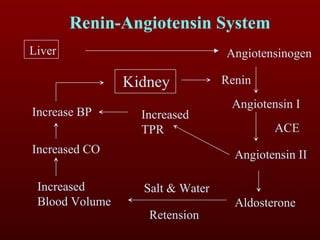
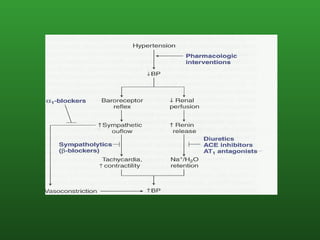
The Renin-Angiotensin System Renin release from the juxtaglomerular cell Sympathetic nerve stimulation – beta-1 receptor Low blood sodium Low renal artery pressure Renin acts upon angiotensinogen to form angiotensin I Angiotensin I is converted to Angiotensin II by a converting enzyme called ACE
The Renin-Angiotensin System Angiotensin II is one of the most potent vasoconstrictors known to man Angiotensin II releases aldosterone from the adrenal cortex Aldosterone enhances sodium and water retention and potassium loss from the kidney Blood volume and BP increase as a result
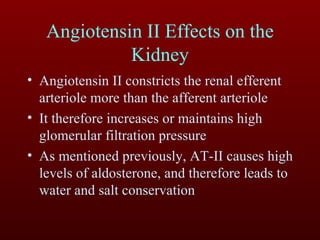
Angiotensin II Effects on the Kidney Angiotensin II constricts the renal efferent arteriole more than the afferent arteriole It therefore increases or maintains high glomerular filtration pressure As mentioned previously, AT-II causes high levels of aldosterone, and therefore leads to water and salt conservation
Liver Angiotensinogen Angiotensin I Angiotensin II Aldosterone Increased Blood Volume Increase BP Kidney Renin ACE Renin-Angiotensin System Increased TPR Increased CO Salt & Water Retension
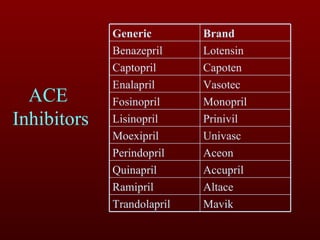
ACE  Inhibitors Brand Generic Mavik Trandolapril Altace Ramipril Accupril Quinapril Aceon Perindopril Univasc Moexipril Prinivil Lisinopril Monopril Fosinopril Vasotec Enalapril Capoten Captopril Lotensin Benazepril
Not to be confused with those of you who voted Ace Young off  American Idol
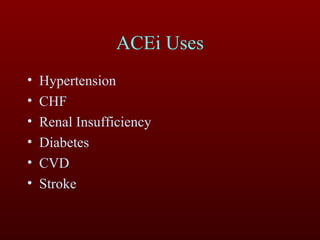
ACEi Uses Hypertension CHF Renal Insufficiency Diabetes CVD Stroke
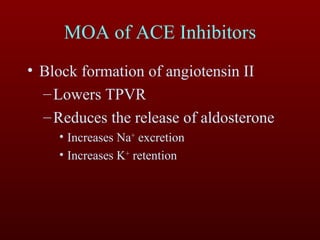
MOA of ACE Inhibitors Block formation of angiotensin II Lowers TPVR Reduces the release of aldosterone Increases Na +  excretion Increases K +  retention
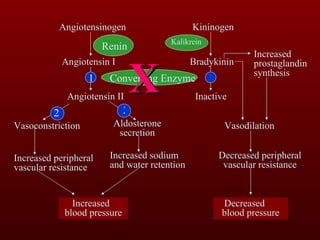
Angiotensinogen Angiotensin I Angiotensin II Vasoconstriction Increased peripheral vascular resistance Increased   blood pressure Aldosterone secretion Increased sodium and water retention Kininogen Bradykinin Inactive Increased prostaglandin synthesis Vasodilation Decreased peripheral vascular resistance Decreased  blood pressure Kalikrein Converting Enzyme 2 2 1 1 X Renin
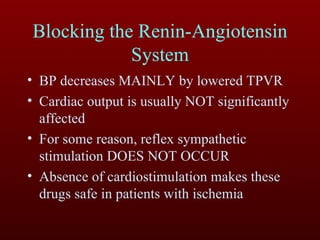
Blocking the Renin-Angiotensin System BP decreases MAINLY by lowered TPVR Cardiac output is usually NOT significantly affected For some reason, reflex sympathetic stimulation DOES NOT OCCUR Absence of cardiostimulation makes these drugs safe in patients with ischemia
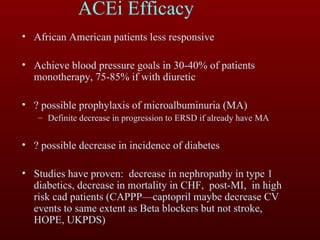
ACEi Efficacy African American patients less responsive Achieve blood pressure goals in 30-40% of patients monotherapy, 75-85% if with diuretic ? possible prophylaxis of microalbuminuria (MA) Definite decrease in progression to ERSD if already have MA ? possible decrease in incidence of diabetes Studies have proven:  decrease in nephropathy in type 1 diabetics, decrease in mortality in CHF,  post-MI,  in high risk cad patients (CAPPP—captopril maybe decrease CV events to same extent as Beta blockers but not stroke, HOPE, UKPDS)
ACE Inhibitors- Side Effects Angioedema possible (0.1%) Hypotension (especially with diuretics) Acute renal failure in patients with renal artery stenosis (what with NSAIDs) Hyperkalemia in patients taking potassium supplements or potassium sparing diuretics
ACE Inhibitors- Side Effects Dry, non-productive cough – 25% incidence Alteration of taste Allergic skin rashes, drug fevers Absolutely contraindicated during 2 nd  and 3 rd  trimesters of pregnancy Fetal hypotension Fetal renal failure Fetal malformation or death
Captopril :   sulfhydryl may be responsible for rash, blood dyscrasias. Oral bid, tid;1- 2hr before meal, t1/2= 2-3hr Enalapril et al :  PRODRUGS activated in liver or small intestines. Oral once or bid; t1/2= 11hr Lisinopril :   lysine derivative of enalaprilat  the active form of Enalapril Once daily; t1/2 = 12hr ACE Inhibitors- Comments
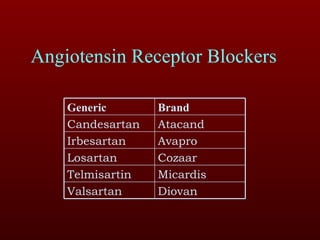
Angiotensin Receptor Blockers Brand Generic Diovan Valsartan Micardis Telmisartin Cozaar Losartan Avapro Irbesartan Atacand Candesartan
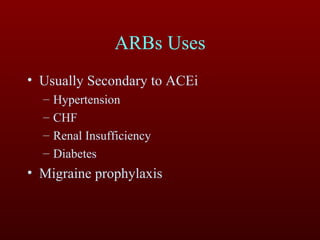
ARBs Uses Usually Secondary to ACEi Hypertension CHF Renal Insufficiency Diabetes Migraine prophylaxis
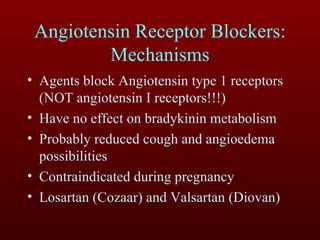
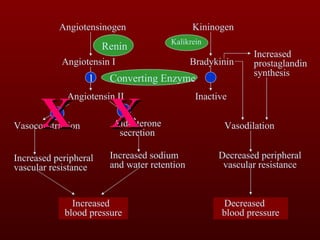
Angiotensin Receptor Blockers: Mechanisms Agents block Angiotensin type 1 receptors (NOT angiotensin I receptors!!!) Have no effect on bradykinin metabolism Probably reduced cough and angioedema possibilities Contraindicated during pregnancy Losartan (Cozaar) and Valsartan (Diovan)
Angiotensinogen Angiotensin I Angiotensin II Vasoconstriction Increased peripheral vascular resistance Increased   blood pressure Aldosterone secretion Increased sodium and water retention Kininogen Bradykinin Inactive Increased prostaglandin synthesis Vasodilation Decreased peripheral vascular resistance Decreased  blood pressure Kalikrein Converting Enzyme 2 2 1 1 X X Renin
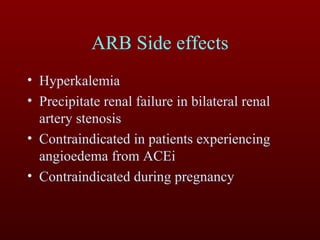
ARB Side effects Hyperkalemia Precipitate renal failure in bilateral renal artery stenosis Contraindicated in patients experiencing angioedema from ACEi Contraindicated during pregnancy
ARB Efficacy ADA recommends ARBs for type 2 diabetics with microalbuminuria As effective in blood pressure lowering as ACEi May reduce overall cardiovascular death in diabetics with LVH, and in non-deabetic hypertensives (LIFE) Decreases progression of microalbuminuria in type 2 diabetics Decreases mortality in CHF (ELITE)
Calcium Channel Blockers Divided into 2 groups chemically and pharmacologically Common property:  they all antagonize Ca ++  movement across cell membranes by blocking L type channels decrease frequency of opening in response to depolarization Also called:  Slow Ca ++  channel blockers Ca ++   channel antagonists  Ca ++   entry blockers
Two groups Diliazem (Cardizem), verapamil (Calan) -primary action on heart Dihydropyridines - primary action on arterioles nifedipine (Procardia) nimodipine (Nimotop) amlodipine (Norvac) felodipine (Plendil) isradipine (DynaCirc)
Cardiac effects Verapamil and diltiazem type reduce Ca ++  entry in the heart  Slow pacemaker activity - HR decreases Slows conduction between atria and ventricles  Lessens strength of contraction - decreased stroke volume Dihydropyridines have minimal effects on Ca ++  entry in heart muscle
Vascular effects dihydropyridines Arteries and arterioles dilate more than veins Fall in BP due to reduced TPVR Reflex tachycardia verapamil and diltiazem - lesser effect on arterioles and more depression of heart (no tachycardia)
CCB Efficacy As effective as other agents in reducing blood pressure 40-50% respond as monotherapy Especially effective in African Americans Morbidity and mortality?????  HOT trial at least may offer that CCB are not deleterious…Sys Eur trial/SHEP trial suggested CCB’s decrease cardiac and cerebrovascular outcomes in the elderly
CCB Safety DO NOT USE SHORT ACTING DHP’S!!!!!! DHP except plendil and norvasc may be detrimental in CHF Discontinue slowly tapering dose if used for angina Diltiaziem/verapamil contraindicated in sick sinus syndrome, 2 nd  or 3 rd  degree heart block, severe CHF, cardiogenic shock,  interact with statins…dramatically increasing levels (except pravachol and lescol)
Calcium Blockers Side effects Headache Edema (nifedipine) Constipation (verapamil) Gingival hyperplasia AV block & heart failure (verapamil and diltiazem) Drug interactions:  beta blockers (verapamil and diltiazem), cimetidine
Pharmacology ACEi, ARBs, CCB Review the Mechanism of Action Review Safety  Review Efficacy Hypertension
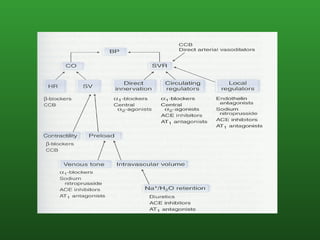
Treatment of Hypertension Ed Sheridan, PharmD *BP=CO x PVR
Treatment of Hypertension Brief introduction Review current hypertension guidelines Review choice of antihypertensive agents
Treatment of Hypertension Introduction Current guidelines, JNC VII, available at  www.nhlbi.org Now have evidence from clinical trials supporting the use of many pharmacologic classes Always remember:  Not all things that lower blood pressure prevent mortality to the same extent
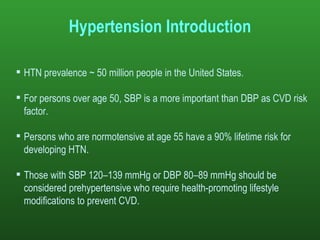
HTN prevalence ~ 50 million people in the United States.  For persons over age 50, SBP is a more important than DBP as CVD risk factor. Persons who are normotensive at age 55 have a 90% lifetime risk for developing HTN. Those with SBP 120–139 mmHg or DBP 80–89 mmHg should be considered prehypertensive who require health-promoting lifestyle modifications to prevent CVD. Hypertension Introduction
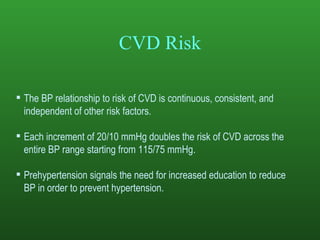
CVD Risk The BP relationship to risk of CVD is continuous, consistent, and independent of other risk factors. Each increment of 20/10 mmHg doubles the risk of CVD across the entire BP range starting from 115/75 mmHg. Prehypertension signals the need for increased education to reduce BP in order to prevent hypertension.
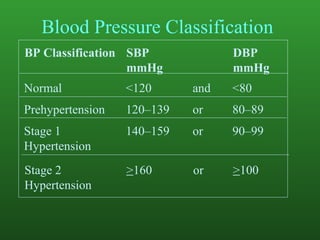
Blood Pressure Classification <80 and <120 Normal 80–89 or 120–139 Prehypertension 90–99 or 140–159 Stage 1 Hypertension > 100 or > 160 Stage 2 Hypertension DBP mmHg SBP mmHg BP Classification
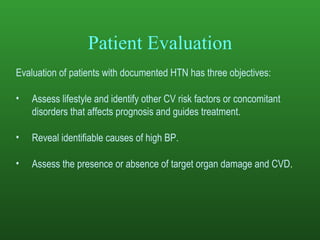
Patient Evaluation Evaluation of patients with documented HTN has three objectives:  Assess lifestyle and identify other CV risk factors or concomitant disorders that affects prognosis and guides treatment.  Reveal identifiable causes of high BP. Assess the presence or absence of target organ damage and CVD .
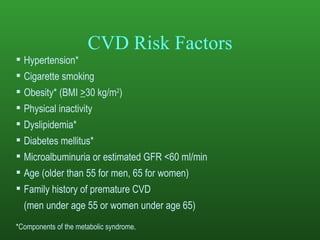
CVD Risk Factors Hypertension* Cigarette smoking Obesity* (BMI  > 30 kg/m 2 ) Physical inactivity Dyslipidemia* Diabetes mellitus* Microalbuminuria or estimated GFR <60 ml/min Age (older than 55 for men, 65 for women) Family history of premature CVD  (men under age 55 or women under age 65) * Components of the metabolic syndrome .
Identifiable  Causes of Hypertension Sleep apnea Drug-induced or related causes Chronic kidney disease Primary aldosteronism Renovascular disease Chronic steroid therapy and Cushing’s syndrome Pheochromocytoma Coarctation of the aorta Thyroid or parathyroid disease
Target Organ Damage   Heart Left ventricular hypertrophy Angina or prior myocardial infarction Prior coronary revascularization Heart failure Brain Stroke or transient ischemic attack Chronic kidney disease Peripheral arterial disease Retinopathy
Laboratory Tests Routine Tests Electrocardiogram  Urinalysis  Blood glucose, and hematocrit  Serum potassium, creatinine, or the corresponding estimated GFR,   and calcium Lipid profile, after 9- to 12-hour fast, that includes high-density and  low-density lipoprotein cholesterol, and triglycerides  Optional tests  Measurement of urinary albumin excretion or albumin/creatinine ratio  More extensive testing for identifiable causes is not generally indicated unless BP control is not achieved
Goals of Therapy Reduce CVD and renal morbidity and mortality.  Treat to BP <140/90 mmHg or BP <130/80 mmHg in patients  with diabetes or chronic kidney disease.  Achieve SBP goal especially in persons  > 50 years of age .
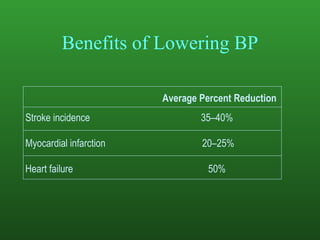
Benefits of Lowering BP Average Percent Reduction Stroke incidence  35–40%  Myocardial infarction  20–25%  Heart failure 50%
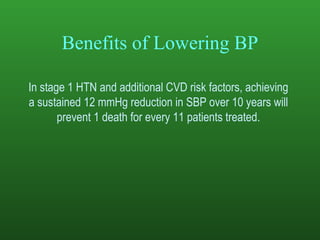
Benefits of Lowering BP In stage 1 HTN and additional CVD risk factors, achieving  a sustained 12 mmHg reduction in SBP over 10 years will  prevent 1 death for every 11 patients treated.
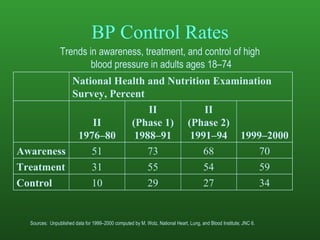
BP Control Rates Trends in awareness, treatment, and control of high  blood pressure in adults ages 18–74 Sources:  Unpublished data for 1999–2000 computed by M. Wolz, National Heart, Lung, and Blood Institute; JNC 6 . 34 27 29 10 Control 59 54 55 31 Treatment 70 68 73 51 Awareness 1999–2000 II (Phase 2) 1991–94 II (Phase 1) 1988–91 II 1976–80 National Health and Nutrition Examination Survey, Percent
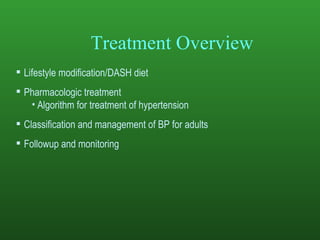
Treatment Overview Lifestyle modification/DASH diet Pharmacologic treatment Algorithm for treatment of hypertension Classification and management of BP for adults Followup and monitoring
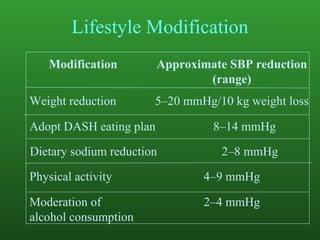
Lifestyle Modification Approximate SBP reduction (range) Modification 5–20 mmHg/10 kg weight loss Weight reduction   8–14 mmHg Adopt DASH eating plan   2–8 mmHg Dietary sodium reduction   4–9 mmHg Physical activity  2–4 mmHg Moderation of alcohol consumption
DASH Fact Sheet
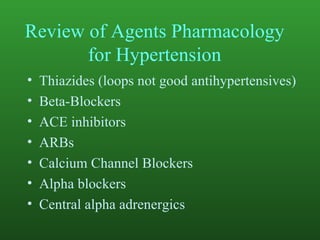
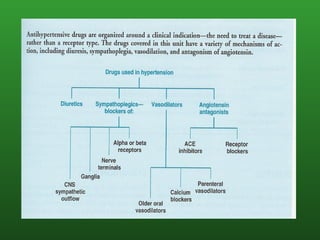
Review of Agents Pharmacology for Hypertension Thiazides (loops not good antihypertensives) Beta-Blockers ACE inhibitors ARBs Calcium Channel Blockers Alpha blockers Central alpha adrenergics
 
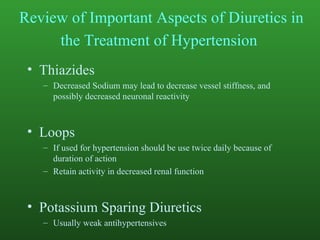
Review of Important Aspects of Diuretics in the Treatment of Hypertension   Thiazides Decreased Sodium may lead to decrease vessel stiffness, and possibly decreased neuronal reactivity Loops If used for hypertension should be use twice daily because of duration of action Retain activity in decreased renal function Potassium Sparing Diuretics Usually weak antihypertensives
Centrally Acting Drugs Mechanism Stimulates central alpha receptors Side Effects Tend to cause sedation Examples Methyldopa Clonidine (hypertensive crisis)
Adrenergic Neuron Blocking Agents Mechanism Prevent release of norepinephrine from postganglionic neurons Guanethidine replaces norepinephrine in neuron, decreases release Increases toxicity of sympathetic amines Postural hypertension Reserpine Irreversibly inhibit norepinephrine reuptake, creating general norepinephrine deficit sedation, depression parkinson’s like symptoms
Beta Receptor Blocking Agents Mechanism Decreased cardiac output or PVR Decreased stimulation of renin Side Effects Decreased heart rate Asthma exacerbation
Alpha Receptor Blockers Mechanism Block Alpha 1  Receptors in arterioles and venules First dose syncope
Vasodilators Hydralazine Dilates arteries, not veins Kinetics Absorption: 25% bioavailability Metabolism: bimodal acetylation, Half-life 4hrs Side Effects Headache, nausea, sweating, anorexia Reflex tachycardia lupus like reaction  ESPECIALLY IN SLOW ACETYLATORS
Vasodilators Minoxidil Mechanism opens potassium channels, stablizes membranes, decreases contraction dilates arterioles not  veins Side effects reflex salt and volume retention increased heart rate, palpitations, angina, edema, hirsutism
Vasodilators Sodium nitroprusside Mechanism activates guanylyl cyclase increases cGMP, relaxes smooth muscle dilates arterioles and veins Kinetics Absorption:IV Metabolism: RBC to cyanide, then to thiocyanate Elimination: Renal Toxicity: cyanide poisoning (tx with hydroxycobolamine)
Vasodilator Diazoxide Mechanism opens potassium channels kinetics Distribution: highly bound to protein Metabolism: Half life 24 hrs (duration of b/p effect only 4-12 hours)
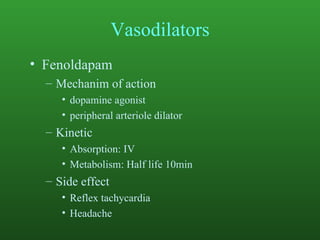
Vasodilators Fenoldapam Mechanim of action dopamine agonist peripheral arteriole dilator Kinetic Absorption: IV Metabolism: Half life 10min Side effect Reflex tachycardia Headache
 
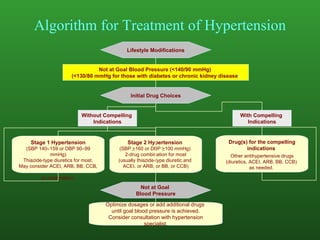
Algorithm for Treatment of Hypertension Not at Goal Blood Pressure (<140/90 mmHg)  (<130/80 mmHg for those with diabetes or chronic kidney disease ) Initial Drug Choices Lifestyle Modifications Drug(s) for the compelling indications  Other antihypertensive drugs (diuretics, ACEI, ARB, BB, CCB)  as needed.   With Compelling  Indications Stage 2 Hypertension   (SBP  > 160 or DBP  > 100 m mHg)  2-drug combination for most (usually thiazide-type diuretic and  ACEI, or ARB, or BB, or CCB) Stage 1 Hypertension (SBP 140 –159 or DBP 90–99 mmHg)  Thiazide-type diuretics for most.  May consider ACEI, ARB, BB, CCB,  or combination. Without Compelling  Indications Not at Goal  Blood Pressure Optimize dosages or add additional drugs  until goal blood pressure is achieved. Consider consultation with hypertension specialist.
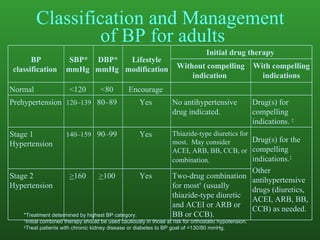
Classification and Management  of BP for adults * Treatment determined by highest BP category. † Initial combined therapy should be used cautiously in those at risk for orthostatic hypotension. ‡ Treat patients with chronic kidney disease or diabetes to BP goal of <130/80 mmHg.   Two-drug combination for most †  (usually thiazide-type diuretic and ACEI or ARB or BB or CCB).   Yes   > 100   > 160   Stage 2 Hypertension   Drug(s) for the compelling indications. ‡ Other antihypertensive drugs (diuretics, ACEI, ARB, BB, CCB) as needed.  Thiazide-type diuretics for most.  May consider ACEI, ARB, BB, CCB, or combination.   Yes   90–99   140–159   Stage 1 Hypertension   Drug(s) for compelling indications.  ‡   No antihypertensive drug indicated.   Yes   80–89   120–139   Prehypertension   Encourage   <80   <120   Normal   With compelling indications Without compelling indication  Initial drug therapy   Lifestyle modification   DBP*  mmHg   SBP* mmHg   BP classification
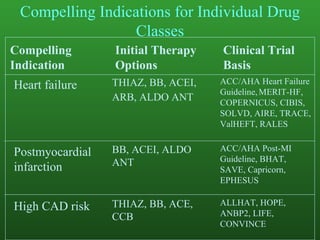
Compelling Indications for Individual Drug Classes Clinical Trial Basis Initial Therapy Options   Compelling Indication   ALLHAT, HOPE, ANBP2, LIFE, CONVINCE   ACC/AHA Post-MI Guideline, BHAT, SAVE, Capricorn, EPHESUS ACC/AHA Heart Failure Guideline,   MERIT-HF, COPERNICUS, CIBIS, SOLVD, AIRE, TRACE, ValHEFT, RALES   THIAZ, BB, ACE, CCB   BB, ACEI, ALDO ANT   THIAZ, BB, ACEI, ARB, ALDO ANT   High CAD risk   Postmyocardial infarction   Heart failure
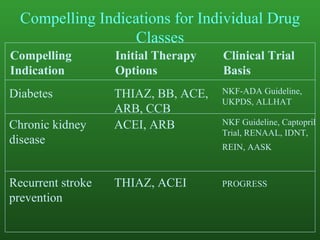
Compelling Indications for Individual Drug Classes Recurrent stroke prevention   Chronic kidney disease   Diabetes   Clinical Trial Basis Initial Therapy Options   Compelling Indication   PROGRESS   NKF Guideline, Captopril Trial, RENAAL, IDNT, REIN, AASK   NKF-ADA Guideline,   UKPDS, ALLHAT   THIAZ, ACEI   ACEI, ARB   THIAZ, BB, ACE, ARB, CCB
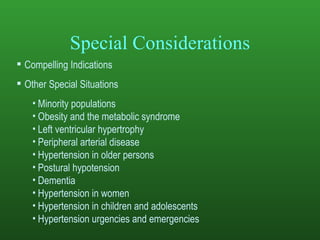
Special Considerations Compelling Indications Other Special Situations Minority populations Obesity and the metabolic syndrome Left ventricular hypertrophy Peripheral arterial disease Hypertension in older persons Postural hypotension Dementia Hypertension in women Hypertension in children and adolescents Hypertension urgencies and emergencies
Minority Populations In general, treatment similar for all demographic groups. Socioeconomic factors and lifestyle important barriers to BP control.  Prevalence, severity of HTN increased in African Americans.  African Americans demonstrate somewhat reduced BP responses to monotherapy with BBs, ACEIs, or ARBs compared to diuretics or CCBs.  These differences usually eliminated by adding adequate doses of a diuretic.
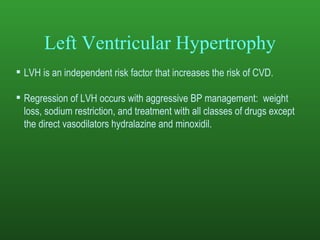
Left Ventricular Hypertrophy LVH is an independent risk factor that increases the risk of CVD.  Regression of LVH occurs with aggressive BP management:  weight loss, sodium restriction, and treatment with all classes of drugs except the direct vasodilators hydralazine and minoxidil.
Peripheral Arterial Disease (PAD) PAD is equivalent in risk to ischemic heart disease.  Any class of drugs can be used in most PAD patients.  Other risk factors should be managed aggressively. Aspirin should be used.
Hypertension in Older Persons More than two-thirds of people over 65 have HTN. This population has the lowest rates of BP control.   Treatment, including those who with isolated systolic HTN, should follow same principles outlined for general care of HTN.  Lower initial drug doses may be indicated to avoid symptoms; standard doses and multiple drugs will be needed to reach BP targets .
Postural Hypotension Decrease in standing SBP >10 mmHg, when associated with dizziness/fainting, more frequent in older SBP patients with diabetes, taking diuretics, venodilators, and some psychotropic drugs. BP in these individuals should be monitored in the upright position. Avoid volume depletion and excessively rapid dose titration of drugs.
Dementia Dementia and cognitive impairment occur more commonly in people with HTN.  Reduced progression of cognitive impairment occurs with effective antihypertensive therapy.
Hypertension in Women Oral contraceptives may increase BP, and BP should be checked regularly.  In contrast, HRT does not raise BP. Development of HTN—consider other forms of contraception. Pregnant women with HTN should be followed carefully.  Methyldopa, BBs, and vasodilators, preferred for the safety of the fetus.  ACEI and ARBs contraindicated in pregnancy.
Children and Adolescents HTN defined as BP—95th percentile or greater, adjusted for age, height, and gender. Use lifestyle interventions first, then drug therapy for higher levels of BP or if insufficient response to lifestyle modifications. Drug choices similar in children and adults, but effective doses are often smaller.  Uncomplicated HTN not a reason to restrict physical activity.
Hypertensive Urgencies  and Emergencies Patients with marked BP elevations and acute TOD (e.g., encephalopathy, myocardial infarction, unstable angina, pulmonary edema, eclampsia, stroke, head trauma, life-threatening arterial bleeding, or aortic dissection) require hospitalization and parenteral drug therapy. Patients with markedly elevated BP but without acute TOD usually do not require hospitalization, but should receive immediate combination oral antihypertensive therapy.
Additional Considerations in Antihypertensive Drug Choices Potential favorable effects Thiazide-type diuretics useful in slowing demineralization in osteoporosis. BBs useful in the treatment of atrial tachyarrhythmias/fibrillation, migraine, thyrotoxicosis (short-term), essential tremor, or perioperative HTN. CCBs useful in Raynaud’s syndrome and certain arrhythmias. Alpha-blockers useful in prostatism .
Additional Considerations in Antihypertensive Drug Choices Potential unfavorable effects Thiazide diuretics should be used cautiously in gout or a history of significant hyponatremia. BBs should be generally avoided in patients with asthma, reactive airways disease, or second- or third-degree heart block. ACEIs and ARBs are contraindicated in pregnant women or those likely to become pregnant. ACEIs should not be used in individuals with a history of angioedema. Aldosterone antagonists and potassium-sparing diuretics can cause hyperkalemia.
Followup and Monitoring Patients should return for followup and adjustment of medications until the BP goal is reached.  -(pharmacokinetics v. pharmacodynamics) More frequent visits for stage 2 HTN or with complicating comorbid conditions. Serum potassium and creatinine monitored 1–2 times per year .
Followup and Monitoring (continued) After BP at goal and stable, followup visits at 3- to 6-month intervals.  Comorbidities, such as heart failure, associated diseases, such as diabetes, and the need for laboratory tests influence the frequency  of visits.
 
Improving Hypertension Control Adherence to regimens Resistant hypertension
Strategies for Improving  Adherence to Regimens Clinician empathy increases patient trust, motivation, and adherence to therapy. Physicians should consider their patients’ cultural beliefs and individual attitudes in formulating therapy.
Causes of  Resistant Hypertension Improper BP measurement Excess sodium intake Inadequate diuretic therapy Medication Inadequate doses Drug actions and interactions (e.g., nonsteroidal anti-inflammatory  drugs (NSAIDs), illicit drugs, sympathomimetics, oral contraceptives) Over-the-counter ( OTC) drugs and herbal supplements Excess alcohol intake Identifiable causes of HTN
Treatment of Hypertension Brief introduction Review current hypertension guidelines Review choice of antihypertensive agents
Abbreviated References Principles of Pharmacology: The Pathophysiologic Basis of Drug Therapy, 2005, 1 st  edition. Basic and Clinical Pharmacology, 2004, 9 th  edition. The Pharmacological Basis of Therapeutics, 1996, 9 th  edition. AHFS Drug Information, 2004. Drug Facts and Comparisons, 2005. Pharmacology Examination and Board Review, 2005. High-Yield Pharmacology, 2004, 2 nd  edition

Htn05

  • 1.
    Pharmacology of ACEinhibitors ARBs and CCBs Ed Sheridan, Pharm.D.
  • 2.
    Pharmacology ACEi, ARBs,CCB Review the Mechanism of Action Review Safety Review Efficacy Hypertension
  • 3.
    The Renin-Angiotensin SystemRenin release from the juxtaglomerular cell Sympathetic nerve stimulation – beta-1 receptor Low blood sodium Low renal artery pressure Renin acts upon angiotensinogen to form angiotensin I Angiotensin I is converted to Angiotensin II by a converting enzyme called ACE
  • 4.
    The Renin-Angiotensin SystemAngiotensin II is one of the most potent vasoconstrictors known to man Angiotensin II releases aldosterone from the adrenal cortex Aldosterone enhances sodium and water retention and potassium loss from the kidney Blood volume and BP increase as a result
  • 5.
    Angiotensin II Effectson the Kidney Angiotensin II constricts the renal efferent arteriole more than the afferent arteriole It therefore increases or maintains high glomerular filtration pressure As mentioned previously, AT-II causes high levels of aldosterone, and therefore leads to water and salt conservation
  • 6.
    Liver Angiotensinogen AngiotensinI Angiotensin II Aldosterone Increased Blood Volume Increase BP Kidney Renin ACE Renin-Angiotensin System Increased TPR Increased CO Salt & Water Retension
  • 7.
    ACE InhibitorsBrand Generic Mavik Trandolapril Altace Ramipril Accupril Quinapril Aceon Perindopril Univasc Moexipril Prinivil Lisinopril Monopril Fosinopril Vasotec Enalapril Capoten Captopril Lotensin Benazepril
  • 8.
    Not to beconfused with those of you who voted Ace Young off American Idol
  • 9.
    ACEi Uses HypertensionCHF Renal Insufficiency Diabetes CVD Stroke
  • 10.
    MOA of ACEInhibitors Block formation of angiotensin II Lowers TPVR Reduces the release of aldosterone Increases Na + excretion Increases K + retention
  • 11.
    Angiotensinogen Angiotensin IAngiotensin II Vasoconstriction Increased peripheral vascular resistance Increased blood pressure Aldosterone secretion Increased sodium and water retention Kininogen Bradykinin Inactive Increased prostaglandin synthesis Vasodilation Decreased peripheral vascular resistance Decreased blood pressure Kalikrein Converting Enzyme 2 2 1 1 X Renin
  • 12.
    Blocking the Renin-AngiotensinSystem BP decreases MAINLY by lowered TPVR Cardiac output is usually NOT significantly affected For some reason, reflex sympathetic stimulation DOES NOT OCCUR Absence of cardiostimulation makes these drugs safe in patients with ischemia
  • 13.
    ACEi Efficacy AfricanAmerican patients less responsive Achieve blood pressure goals in 30-40% of patients monotherapy, 75-85% if with diuretic ? possible prophylaxis of microalbuminuria (MA) Definite decrease in progression to ERSD if already have MA ? possible decrease in incidence of diabetes Studies have proven: decrease in nephropathy in type 1 diabetics, decrease in mortality in CHF, post-MI, in high risk cad patients (CAPPP—captopril maybe decrease CV events to same extent as Beta blockers but not stroke, HOPE, UKPDS)
  • 14.
    ACE Inhibitors- SideEffects Angioedema possible (0.1%) Hypotension (especially with diuretics) Acute renal failure in patients with renal artery stenosis (what with NSAIDs) Hyperkalemia in patients taking potassium supplements or potassium sparing diuretics
  • 15.
    ACE Inhibitors- SideEffects Dry, non-productive cough – 25% incidence Alteration of taste Allergic skin rashes, drug fevers Absolutely contraindicated during 2 nd and 3 rd trimesters of pregnancy Fetal hypotension Fetal renal failure Fetal malformation or death
  • 16.
    Captopril : sulfhydryl may be responsible for rash, blood dyscrasias. Oral bid, tid;1- 2hr before meal, t1/2= 2-3hr Enalapril et al : PRODRUGS activated in liver or small intestines. Oral once or bid; t1/2= 11hr Lisinopril : lysine derivative of enalaprilat the active form of Enalapril Once daily; t1/2 = 12hr ACE Inhibitors- Comments
  • 17.
    Angiotensin Receptor BlockersBrand Generic Diovan Valsartan Micardis Telmisartin Cozaar Losartan Avapro Irbesartan Atacand Candesartan
  • 18.
    ARBs Uses UsuallySecondary to ACEi Hypertension CHF Renal Insufficiency Diabetes Migraine prophylaxis
  • 19.
    Angiotensin Receptor Blockers:Mechanisms Agents block Angiotensin type 1 receptors (NOT angiotensin I receptors!!!) Have no effect on bradykinin metabolism Probably reduced cough and angioedema possibilities Contraindicated during pregnancy Losartan (Cozaar) and Valsartan (Diovan)
  • 20.
    Angiotensinogen Angiotensin IAngiotensin II Vasoconstriction Increased peripheral vascular resistance Increased blood pressure Aldosterone secretion Increased sodium and water retention Kininogen Bradykinin Inactive Increased prostaglandin synthesis Vasodilation Decreased peripheral vascular resistance Decreased blood pressure Kalikrein Converting Enzyme 2 2 1 1 X X Renin
  • 21.
    ARB Side effectsHyperkalemia Precipitate renal failure in bilateral renal artery stenosis Contraindicated in patients experiencing angioedema from ACEi Contraindicated during pregnancy
  • 22.
    ARB Efficacy ADArecommends ARBs for type 2 diabetics with microalbuminuria As effective in blood pressure lowering as ACEi May reduce overall cardiovascular death in diabetics with LVH, and in non-deabetic hypertensives (LIFE) Decreases progression of microalbuminuria in type 2 diabetics Decreases mortality in CHF (ELITE)
  • 23.
    Calcium Channel BlockersDivided into 2 groups chemically and pharmacologically Common property: they all antagonize Ca ++ movement across cell membranes by blocking L type channels decrease frequency of opening in response to depolarization Also called: Slow Ca ++ channel blockers Ca ++ channel antagonists Ca ++ entry blockers
  • 24.
    Two groups Diliazem(Cardizem), verapamil (Calan) -primary action on heart Dihydropyridines - primary action on arterioles nifedipine (Procardia) nimodipine (Nimotop) amlodipine (Norvac) felodipine (Plendil) isradipine (DynaCirc)
  • 25.
    Cardiac effects Verapamiland diltiazem type reduce Ca ++ entry in the heart Slow pacemaker activity - HR decreases Slows conduction between atria and ventricles Lessens strength of contraction - decreased stroke volume Dihydropyridines have minimal effects on Ca ++ entry in heart muscle
  • 26.
    Vascular effects dihydropyridinesArteries and arterioles dilate more than veins Fall in BP due to reduced TPVR Reflex tachycardia verapamil and diltiazem - lesser effect on arterioles and more depression of heart (no tachycardia)
  • 27.
    CCB Efficacy Aseffective as other agents in reducing blood pressure 40-50% respond as monotherapy Especially effective in African Americans Morbidity and mortality????? HOT trial at least may offer that CCB are not deleterious…Sys Eur trial/SHEP trial suggested CCB’s decrease cardiac and cerebrovascular outcomes in the elderly
  • 28.
    CCB Safety DONOT USE SHORT ACTING DHP’S!!!!!! DHP except plendil and norvasc may be detrimental in CHF Discontinue slowly tapering dose if used for angina Diltiaziem/verapamil contraindicated in sick sinus syndrome, 2 nd or 3 rd degree heart block, severe CHF, cardiogenic shock, interact with statins…dramatically increasing levels (except pravachol and lescol)
  • 29.
    Calcium Blockers Sideeffects Headache Edema (nifedipine) Constipation (verapamil) Gingival hyperplasia AV block & heart failure (verapamil and diltiazem) Drug interactions: beta blockers (verapamil and diltiazem), cimetidine
  • 30.
    Pharmacology ACEi, ARBs,CCB Review the Mechanism of Action Review Safety Review Efficacy Hypertension
  • 31.
    Treatment of HypertensionEd Sheridan, PharmD *BP=CO x PVR
  • 32.
    Treatment of HypertensionBrief introduction Review current hypertension guidelines Review choice of antihypertensive agents
  • 33.
    Treatment of HypertensionIntroduction Current guidelines, JNC VII, available at www.nhlbi.org Now have evidence from clinical trials supporting the use of many pharmacologic classes Always remember: Not all things that lower blood pressure prevent mortality to the same extent
  • 34.
    HTN prevalence ~50 million people in the United States. For persons over age 50, SBP is a more important than DBP as CVD risk factor. Persons who are normotensive at age 55 have a 90% lifetime risk for developing HTN. Those with SBP 120–139 mmHg or DBP 80–89 mmHg should be considered prehypertensive who require health-promoting lifestyle modifications to prevent CVD. Hypertension Introduction
  • 35.
    CVD Risk TheBP relationship to risk of CVD is continuous, consistent, and independent of other risk factors. Each increment of 20/10 mmHg doubles the risk of CVD across the entire BP range starting from 115/75 mmHg. Prehypertension signals the need for increased education to reduce BP in order to prevent hypertension.
  • 36.
    Blood Pressure Classification<80 and <120 Normal 80–89 or 120–139 Prehypertension 90–99 or 140–159 Stage 1 Hypertension > 100 or > 160 Stage 2 Hypertension DBP mmHg SBP mmHg BP Classification
  • 37.
    Patient Evaluation Evaluationof patients with documented HTN has three objectives: Assess lifestyle and identify other CV risk factors or concomitant disorders that affects prognosis and guides treatment. Reveal identifiable causes of high BP. Assess the presence or absence of target organ damage and CVD .
  • 38.
    CVD Risk FactorsHypertension* Cigarette smoking Obesity* (BMI > 30 kg/m 2 ) Physical inactivity Dyslipidemia* Diabetes mellitus* Microalbuminuria or estimated GFR <60 ml/min Age (older than 55 for men, 65 for women) Family history of premature CVD (men under age 55 or women under age 65) * Components of the metabolic syndrome .
  • 39.
    Identifiable Causesof Hypertension Sleep apnea Drug-induced or related causes Chronic kidney disease Primary aldosteronism Renovascular disease Chronic steroid therapy and Cushing’s syndrome Pheochromocytoma Coarctation of the aorta Thyroid or parathyroid disease
  • 40.
    Target Organ Damage Heart Left ventricular hypertrophy Angina or prior myocardial infarction Prior coronary revascularization Heart failure Brain Stroke or transient ischemic attack Chronic kidney disease Peripheral arterial disease Retinopathy
  • 41.
    Laboratory Tests RoutineTests Electrocardiogram Urinalysis Blood glucose, and hematocrit Serum potassium, creatinine, or the corresponding estimated GFR, and calcium Lipid profile, after 9- to 12-hour fast, that includes high-density and low-density lipoprotein cholesterol, and triglycerides Optional tests Measurement of urinary albumin excretion or albumin/creatinine ratio More extensive testing for identifiable causes is not generally indicated unless BP control is not achieved
  • 42.
    Goals of TherapyReduce CVD and renal morbidity and mortality. Treat to BP <140/90 mmHg or BP <130/80 mmHg in patients with diabetes or chronic kidney disease. Achieve SBP goal especially in persons > 50 years of age .
  • 43.
    Benefits of LoweringBP Average Percent Reduction Stroke incidence 35–40% Myocardial infarction 20–25% Heart failure 50%
  • 44.
    Benefits of LoweringBP In stage 1 HTN and additional CVD risk factors, achieving a sustained 12 mmHg reduction in SBP over 10 years will prevent 1 death for every 11 patients treated.
  • 45.
    BP Control RatesTrends in awareness, treatment, and control of high blood pressure in adults ages 18–74 Sources: Unpublished data for 1999–2000 computed by M. Wolz, National Heart, Lung, and Blood Institute; JNC 6 . 34 27 29 10 Control 59 54 55 31 Treatment 70 68 73 51 Awareness 1999–2000 II (Phase 2) 1991–94 II (Phase 1) 1988–91 II 1976–80 National Health and Nutrition Examination Survey, Percent
  • 46.
    Treatment Overview Lifestylemodification/DASH diet Pharmacologic treatment Algorithm for treatment of hypertension Classification and management of BP for adults Followup and monitoring
  • 47.
    Lifestyle Modification ApproximateSBP reduction (range) Modification 5–20 mmHg/10 kg weight loss Weight reduction 8–14 mmHg Adopt DASH eating plan 2–8 mmHg Dietary sodium reduction 4–9 mmHg Physical activity 2–4 mmHg Moderation of alcohol consumption
  • 48.
  • 49.
    Review of AgentsPharmacology for Hypertension Thiazides (loops not good antihypertensives) Beta-Blockers ACE inhibitors ARBs Calcium Channel Blockers Alpha blockers Central alpha adrenergics
  • 50.
  • 51.
    Review of ImportantAspects of Diuretics in the Treatment of Hypertension Thiazides Decreased Sodium may lead to decrease vessel stiffness, and possibly decreased neuronal reactivity Loops If used for hypertension should be use twice daily because of duration of action Retain activity in decreased renal function Potassium Sparing Diuretics Usually weak antihypertensives
  • 52.
    Centrally Acting DrugsMechanism Stimulates central alpha receptors Side Effects Tend to cause sedation Examples Methyldopa Clonidine (hypertensive crisis)
  • 53.
    Adrenergic Neuron BlockingAgents Mechanism Prevent release of norepinephrine from postganglionic neurons Guanethidine replaces norepinephrine in neuron, decreases release Increases toxicity of sympathetic amines Postural hypertension Reserpine Irreversibly inhibit norepinephrine reuptake, creating general norepinephrine deficit sedation, depression parkinson’s like symptoms
  • 54.
    Beta Receptor BlockingAgents Mechanism Decreased cardiac output or PVR Decreased stimulation of renin Side Effects Decreased heart rate Asthma exacerbation
  • 55.
    Alpha Receptor BlockersMechanism Block Alpha 1 Receptors in arterioles and venules First dose syncope
  • 56.
    Vasodilators Hydralazine Dilatesarteries, not veins Kinetics Absorption: 25% bioavailability Metabolism: bimodal acetylation, Half-life 4hrs Side Effects Headache, nausea, sweating, anorexia Reflex tachycardia lupus like reaction ESPECIALLY IN SLOW ACETYLATORS
  • 57.
    Vasodilators Minoxidil Mechanismopens potassium channels, stablizes membranes, decreases contraction dilates arterioles not veins Side effects reflex salt and volume retention increased heart rate, palpitations, angina, edema, hirsutism
  • 58.
    Vasodilators Sodium nitroprussideMechanism activates guanylyl cyclase increases cGMP, relaxes smooth muscle dilates arterioles and veins Kinetics Absorption:IV Metabolism: RBC to cyanide, then to thiocyanate Elimination: Renal Toxicity: cyanide poisoning (tx with hydroxycobolamine)
  • 59.
    Vasodilator Diazoxide Mechanismopens potassium channels kinetics Distribution: highly bound to protein Metabolism: Half life 24 hrs (duration of b/p effect only 4-12 hours)
  • 60.
    Vasodilators Fenoldapam Mechanimof action dopamine agonist peripheral arteriole dilator Kinetic Absorption: IV Metabolism: Half life 10min Side effect Reflex tachycardia Headache
  • 61.
  • 62.
    Algorithm for Treatmentof Hypertension Not at Goal Blood Pressure (<140/90 mmHg) (<130/80 mmHg for those with diabetes or chronic kidney disease ) Initial Drug Choices Lifestyle Modifications Drug(s) for the compelling indications Other antihypertensive drugs (diuretics, ACEI, ARB, BB, CCB) as needed. With Compelling Indications Stage 2 Hypertension (SBP > 160 or DBP > 100 m mHg) 2-drug combination for most (usually thiazide-type diuretic and ACEI, or ARB, or BB, or CCB) Stage 1 Hypertension (SBP 140 –159 or DBP 90–99 mmHg) Thiazide-type diuretics for most. May consider ACEI, ARB, BB, CCB, or combination. Without Compelling Indications Not at Goal Blood Pressure Optimize dosages or add additional drugs until goal blood pressure is achieved. Consider consultation with hypertension specialist.
  • 63.
    Classification and Management of BP for adults * Treatment determined by highest BP category. † Initial combined therapy should be used cautiously in those at risk for orthostatic hypotension. ‡ Treat patients with chronic kidney disease or diabetes to BP goal of <130/80 mmHg. Two-drug combination for most † (usually thiazide-type diuretic and ACEI or ARB or BB or CCB). Yes > 100 > 160 Stage 2 Hypertension Drug(s) for the compelling indications. ‡ Other antihypertensive drugs (diuretics, ACEI, ARB, BB, CCB) as needed. Thiazide-type diuretics for most. May consider ACEI, ARB, BB, CCB, or combination. Yes 90–99 140–159 Stage 1 Hypertension Drug(s) for compelling indications. ‡ No antihypertensive drug indicated. Yes 80–89 120–139 Prehypertension Encourage <80 <120 Normal With compelling indications Without compelling indication Initial drug therapy Lifestyle modification DBP* mmHg SBP* mmHg BP classification
  • 64.
    Compelling Indications forIndividual Drug Classes Clinical Trial Basis Initial Therapy Options Compelling Indication ALLHAT, HOPE, ANBP2, LIFE, CONVINCE ACC/AHA Post-MI Guideline, BHAT, SAVE, Capricorn, EPHESUS ACC/AHA Heart Failure Guideline, MERIT-HF, COPERNICUS, CIBIS, SOLVD, AIRE, TRACE, ValHEFT, RALES THIAZ, BB, ACE, CCB BB, ACEI, ALDO ANT THIAZ, BB, ACEI, ARB, ALDO ANT High CAD risk Postmyocardial infarction Heart failure
  • 65.
    Compelling Indications forIndividual Drug Classes Recurrent stroke prevention Chronic kidney disease Diabetes Clinical Trial Basis Initial Therapy Options Compelling Indication PROGRESS NKF Guideline, Captopril Trial, RENAAL, IDNT, REIN, AASK NKF-ADA Guideline, UKPDS, ALLHAT THIAZ, ACEI ACEI, ARB THIAZ, BB, ACE, ARB, CCB
  • 66.
    Special Considerations CompellingIndications Other Special Situations Minority populations Obesity and the metabolic syndrome Left ventricular hypertrophy Peripheral arterial disease Hypertension in older persons Postural hypotension Dementia Hypertension in women Hypertension in children and adolescents Hypertension urgencies and emergencies
  • 67.
    Minority Populations Ingeneral, treatment similar for all demographic groups. Socioeconomic factors and lifestyle important barriers to BP control. Prevalence, severity of HTN increased in African Americans. African Americans demonstrate somewhat reduced BP responses to monotherapy with BBs, ACEIs, or ARBs compared to diuretics or CCBs. These differences usually eliminated by adding adequate doses of a diuretic.
  • 68.
    Left Ventricular HypertrophyLVH is an independent risk factor that increases the risk of CVD. Regression of LVH occurs with aggressive BP management: weight loss, sodium restriction, and treatment with all classes of drugs except the direct vasodilators hydralazine and minoxidil.
  • 69.
    Peripheral Arterial Disease(PAD) PAD is equivalent in risk to ischemic heart disease. Any class of drugs can be used in most PAD patients. Other risk factors should be managed aggressively. Aspirin should be used.
  • 70.
    Hypertension in OlderPersons More than two-thirds of people over 65 have HTN. This population has the lowest rates of BP control. Treatment, including those who with isolated systolic HTN, should follow same principles outlined for general care of HTN. Lower initial drug doses may be indicated to avoid symptoms; standard doses and multiple drugs will be needed to reach BP targets .
  • 71.
    Postural Hypotension Decreasein standing SBP >10 mmHg, when associated with dizziness/fainting, more frequent in older SBP patients with diabetes, taking diuretics, venodilators, and some psychotropic drugs. BP in these individuals should be monitored in the upright position. Avoid volume depletion and excessively rapid dose titration of drugs.
  • 72.
    Dementia Dementia andcognitive impairment occur more commonly in people with HTN. Reduced progression of cognitive impairment occurs with effective antihypertensive therapy.
  • 73.
    Hypertension in WomenOral contraceptives may increase BP, and BP should be checked regularly. In contrast, HRT does not raise BP. Development of HTN—consider other forms of contraception. Pregnant women with HTN should be followed carefully. Methyldopa, BBs, and vasodilators, preferred for the safety of the fetus. ACEI and ARBs contraindicated in pregnancy.
  • 74.
    Children and AdolescentsHTN defined as BP—95th percentile or greater, adjusted for age, height, and gender. Use lifestyle interventions first, then drug therapy for higher levels of BP or if insufficient response to lifestyle modifications. Drug choices similar in children and adults, but effective doses are often smaller. Uncomplicated HTN not a reason to restrict physical activity.
  • 75.
    Hypertensive Urgencies and Emergencies Patients with marked BP elevations and acute TOD (e.g., encephalopathy, myocardial infarction, unstable angina, pulmonary edema, eclampsia, stroke, head trauma, life-threatening arterial bleeding, or aortic dissection) require hospitalization and parenteral drug therapy. Patients with markedly elevated BP but without acute TOD usually do not require hospitalization, but should receive immediate combination oral antihypertensive therapy.
  • 76.
    Additional Considerations inAntihypertensive Drug Choices Potential favorable effects Thiazide-type diuretics useful in slowing demineralization in osteoporosis. BBs useful in the treatment of atrial tachyarrhythmias/fibrillation, migraine, thyrotoxicosis (short-term), essential tremor, or perioperative HTN. CCBs useful in Raynaud’s syndrome and certain arrhythmias. Alpha-blockers useful in prostatism .
  • 77.
    Additional Considerations inAntihypertensive Drug Choices Potential unfavorable effects Thiazide diuretics should be used cautiously in gout or a history of significant hyponatremia. BBs should be generally avoided in patients with asthma, reactive airways disease, or second- or third-degree heart block. ACEIs and ARBs are contraindicated in pregnant women or those likely to become pregnant. ACEIs should not be used in individuals with a history of angioedema. Aldosterone antagonists and potassium-sparing diuretics can cause hyperkalemia.
  • 78.
    Followup and MonitoringPatients should return for followup and adjustment of medications until the BP goal is reached. -(pharmacokinetics v. pharmacodynamics) More frequent visits for stage 2 HTN or with complicating comorbid conditions. Serum potassium and creatinine monitored 1–2 times per year .
  • 79.
    Followup and Monitoring(continued) After BP at goal and stable, followup visits at 3- to 6-month intervals. Comorbidities, such as heart failure, associated diseases, such as diabetes, and the need for laboratory tests influence the frequency of visits.
  • 80.
  • 81.
    Improving Hypertension ControlAdherence to regimens Resistant hypertension
  • 82.
    Strategies for Improving Adherence to Regimens Clinician empathy increases patient trust, motivation, and adherence to therapy. Physicians should consider their patients’ cultural beliefs and individual attitudes in formulating therapy.
  • 83.
    Causes of Resistant Hypertension Improper BP measurement Excess sodium intake Inadequate diuretic therapy Medication Inadequate doses Drug actions and interactions (e.g., nonsteroidal anti-inflammatory drugs (NSAIDs), illicit drugs, sympathomimetics, oral contraceptives) Over-the-counter ( OTC) drugs and herbal supplements Excess alcohol intake Identifiable causes of HTN
  • 84.
    Treatment of HypertensionBrief introduction Review current hypertension guidelines Review choice of antihypertensive agents
  • 85.
    Abbreviated References Principlesof Pharmacology: The Pathophysiologic Basis of Drug Therapy, 2005, 1 st edition. Basic and Clinical Pharmacology, 2004, 9 th edition. The Pharmacological Basis of Therapeutics, 1996, 9 th edition. AHFS Drug Information, 2004. Drug Facts and Comparisons, 2005. Pharmacology Examination and Board Review, 2005. High-Yield Pharmacology, 2004, 2 nd edition