(Continued)
Kyoto Protocol
 Binding Targets for Developed Country
  Parties: 5% Below 1990 Levels by 2012
 No Binding Targets for Developing Country
  Parties
 ‘Clean Development Mechanism’: Get Credit
  for Emissions Reductions by Paying for
  Emission Savings in Other Countries
 Seen as First Step: Little Net Emissions
  Reduction because Increased Emissions in
  Developing Countries Compensate for
  Decreased Emissions in Developed Countries
Underlying Ethical Issue: Who
     Should Pay the Costs of
    Precautionary Measures?
 Developing Countries Argue for More
  Time: the Advanced Countries Put the
  CO2 into the Atmosphere
  – LDC Annual Contribution has only just
    Caught Up with OECD Countries’
  – LDC Aggregate Contribution Catches up in
    ~2100
 OK, But We’re All on the Same Planet –
  and China is Now the #1 Emitter
US Senate (1998) Refuses (95-0) to Ratify Kyoto
     Protocol Unless LDCs Agree to
     Conservation Targets.
Newly Installed Bush Administration Abandons
Kyoto Protocol on the Grounds of
     Damage to Economy
     ‘Inadequate Science.’
     Little Net Reduction in Emissions
Refusal to Try to Improve Kyoto Furiously
     Resented by Europeans
Present Situation
 Kyoto Entered into Force,
 EU Has Instituted a Mandatory Trading Regime,
  and EU Members have Instituted Domestic
  Measures so as to Reach 2012 Targets
  – UK and Germany have an Advantage Because of
    Special Circumstances: UK Shrank Inefficient Coal
    Industry, Switched to Natural Gas. East Germany
    Closed Massively Inefficient Industry.
 Targets, However Modest, are Now Out of Reach
  for Nearly All Other Countries, Given 1990s
  Economic Boom.
  – US Target Would Require 30% Cut in Energy Use.
Policies for Reducing
               Emissions
 Regulated Emissions Reduction
 Market-Based Policy Instruments
  – Carbon Tax (i.e., a Tax on CO2 Emissions)
     Economically Logical but Politically Difficult
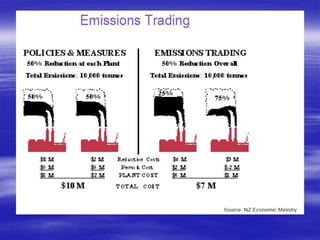
  – Emissions Trading (not formally a tax)
 A Cap-and-Trade Bill (Waxman-Markey) has
  Passed the House, is Pending in the Senate
  – Passage Not Assured: Impact is Especially
    Heavy on States Dependent on Coal for Power
Post-Kyoto Regime Now Being
         Negotiated
Cap-and-Trade Issues
 How is the Cap to be Set?
  – By Science? by Politics? or Both?
 How are Allowances to be Allocated?
  – By Auction? By Past CO2 Emissions?
 Are there to be Escape Clauses (‘Off-Ramps’) if
  Carbon Credits Become Too Expensive?
 Are International Transactions Allowed?
  – ‘Joint Implementation’? ‘Clean Development
    Mechanism’?
 How Will Free Riders be Dealt with?
  – Impose a ‘Border Adjustment’ on Imports from Non-
    Participating Countries? (It’s in the House Bill.)
  – This may or may not pass muster with WTO, and Would
    Threaten a Major Trade War
Existing Emissions Markets
 Public Systems
  – European Union, 2005
     Teething Troubles: Price Collapse in 2006 from
      Over-Allocation
 Private Sector
  – Internal Corporate Programs (BP)
  – Voluntary Multi-Corporation Programs
     Chicago Voluntary Exchange
 Voluntary Offsets
Technical Post-Kyoto Issues
 Collaboration on Technology Development
    Carbon Sequestration is Particularly Important, Since China and
     India Have Huge Coal Reserves
 Forests as Carbon Sinks
– Credit for Planting Forests
– Credit for ‘Avoided Deforestation’?
      How to Verify?
      Who Gets the Money?
           – Government?
           – Concessionaires?
           – Forest People?
 ‘Geoengineering’: Fertilizing the Ocean to Increase Carbon
  Capture by Plankton
– This May be within the Resources of Wealthy Individuals
– An International Legal Limbo
Post-Kyoto Non-Technical
            Issues
 Targets? – Binding or Not?
 ‘Measurable, Verifiable, Reportable’
  (MRP) Actions
 Money
Bali Action Plan (2008): Basis for
        Post-Kyoto Regime
 Small Adjustment Fund to Help LDCs Adjust to
  Global Warming
 Reduction of Emissions from Deforestation
  (REDD)
 Non-Binding National Action Plans for
  Developing countries
 Parallel Negotiating Tracks (Complicated!)
  – Technical Cooperation (Under UNFCC)
  – Working Group on Extending Kyoto
An International Conference in
 Copenhagen in December Begins
 to Negotiate Post-Kyoto Regime
 US Failure to Pass Waxman-Markey Hangs over
  Conference
 Developing Countries Refuse Binding Targets but
  Acknowledge Importance
 Progress on REDD, Less on Other Issues, No Formal
  Agreement
 Obama Negotiates Last-Minute ‘Accord’
  – Legal Status Unclear – But If Nations Comply, Who Cares?
 Major Economies Forum Will Continue Discussions
  and Technical Cooperation
  – Numerous Bilateral Agreements Exist, at Least on Paper
Take-Home Lessons (STIA)
 Science Puts Issue on the Agenda,
 Governments Recognize the Value of
  Regular Scientific Advice, and Integrate it
  into the Diplomatic Process
 However, Even the Strongest Scientific
  Consensus is not Proof against a
  Determined Counter-Attack by Powerful
  Vested Interests
 Multilateral For a are Tough Places to
  Negotiate Complex Technical Issues
 Sovereign Nations Decide the Political
  Response – but Nature Has the Last Word
Take-Home Lessons
       (International Relations)
 A Change in Our Notion of Security?
  – If the Ocean Rises and Floods the Coast, What Good
    was the Navy?
 A Blurring of the Distinction Between Public
  and Private Issues
  – Exxon’s and BP’s Policies are as Important as
    Australia’s
 A Blurring of The Distinction Between
  Domestic and International Issues
  – If CO2 Originating in the US Affects the European
    Climate and the Flow of Major Asian Rivers, US
    Energy Policy Isn’t a Purely Domestic Issue Any
    More. It’s ‘Intermestic’!
  – The Same is True of China and India
We Will Return to these Issues
 When We Discuss Energy.

GU STIA305 04 Supplement

  • 1.
  • 2.
    Kyoto Protocol  BindingTargets for Developed Country Parties: 5% Below 1990 Levels by 2012  No Binding Targets for Developing Country Parties  ‘Clean Development Mechanism’: Get Credit for Emissions Reductions by Paying for Emission Savings in Other Countries  Seen as First Step: Little Net Emissions Reduction because Increased Emissions in Developing Countries Compensate for Decreased Emissions in Developed Countries
  • 3.
    Underlying Ethical Issue:Who Should Pay the Costs of Precautionary Measures?  Developing Countries Argue for More Time: the Advanced Countries Put the CO2 into the Atmosphere – LDC Annual Contribution has only just Caught Up with OECD Countries’ – LDC Aggregate Contribution Catches up in ~2100  OK, But We’re All on the Same Planet – and China is Now the #1 Emitter
  • 4.
    US Senate (1998)Refuses (95-0) to Ratify Kyoto Protocol Unless LDCs Agree to Conservation Targets. Newly Installed Bush Administration Abandons Kyoto Protocol on the Grounds of Damage to Economy ‘Inadequate Science.’ Little Net Reduction in Emissions Refusal to Try to Improve Kyoto Furiously Resented by Europeans
  • 5.
    Present Situation  KyotoEntered into Force,  EU Has Instituted a Mandatory Trading Regime, and EU Members have Instituted Domestic Measures so as to Reach 2012 Targets – UK and Germany have an Advantage Because of Special Circumstances: UK Shrank Inefficient Coal Industry, Switched to Natural Gas. East Germany Closed Massively Inefficient Industry.  Targets, However Modest, are Now Out of Reach for Nearly All Other Countries, Given 1990s Economic Boom. – US Target Would Require 30% Cut in Energy Use.
  • 6.
    Policies for Reducing Emissions  Regulated Emissions Reduction  Market-Based Policy Instruments – Carbon Tax (i.e., a Tax on CO2 Emissions)  Economically Logical but Politically Difficult – Emissions Trading (not formally a tax)  A Cap-and-Trade Bill (Waxman-Markey) has Passed the House, is Pending in the Senate – Passage Not Assured: Impact is Especially Heavy on States Dependent on Coal for Power
  • 7.
    Post-Kyoto Regime NowBeing Negotiated
  • 8.
    Cap-and-Trade Issues  Howis the Cap to be Set? – By Science? by Politics? or Both?  How are Allowances to be Allocated? – By Auction? By Past CO2 Emissions?  Are there to be Escape Clauses (‘Off-Ramps’) if Carbon Credits Become Too Expensive?  Are International Transactions Allowed? – ‘Joint Implementation’? ‘Clean Development Mechanism’?  How Will Free Riders be Dealt with? – Impose a ‘Border Adjustment’ on Imports from Non- Participating Countries? (It’s in the House Bill.) – This may or may not pass muster with WTO, and Would Threaten a Major Trade War
  • 9.
    Existing Emissions Markets Public Systems – European Union, 2005  Teething Troubles: Price Collapse in 2006 from Over-Allocation  Private Sector – Internal Corporate Programs (BP) – Voluntary Multi-Corporation Programs  Chicago Voluntary Exchange  Voluntary Offsets
  • 10.
    Technical Post-Kyoto Issues Collaboration on Technology Development  Carbon Sequestration is Particularly Important, Since China and India Have Huge Coal Reserves  Forests as Carbon Sinks – Credit for Planting Forests – Credit for ‘Avoided Deforestation’?  How to Verify?  Who Gets the Money? – Government? – Concessionaires? – Forest People?  ‘Geoengineering’: Fertilizing the Ocean to Increase Carbon Capture by Plankton – This May be within the Resources of Wealthy Individuals – An International Legal Limbo
  • 11.
    Post-Kyoto Non-Technical Issues  Targets? – Binding or Not?  ‘Measurable, Verifiable, Reportable’ (MRP) Actions  Money
  • 12.
    Bali Action Plan(2008): Basis for Post-Kyoto Regime  Small Adjustment Fund to Help LDCs Adjust to Global Warming  Reduction of Emissions from Deforestation (REDD)  Non-Binding National Action Plans for Developing countries  Parallel Negotiating Tracks (Complicated!) – Technical Cooperation (Under UNFCC) – Working Group on Extending Kyoto
  • 13.
    An International Conferencein Copenhagen in December Begins to Negotiate Post-Kyoto Regime  US Failure to Pass Waxman-Markey Hangs over Conference  Developing Countries Refuse Binding Targets but Acknowledge Importance  Progress on REDD, Less on Other Issues, No Formal Agreement  Obama Negotiates Last-Minute ‘Accord’ – Legal Status Unclear – But If Nations Comply, Who Cares?  Major Economies Forum Will Continue Discussions and Technical Cooperation – Numerous Bilateral Agreements Exist, at Least on Paper
  • 14.
    Take-Home Lessons (STIA) Science Puts Issue on the Agenda,  Governments Recognize the Value of Regular Scientific Advice, and Integrate it into the Diplomatic Process  However, Even the Strongest Scientific Consensus is not Proof against a Determined Counter-Attack by Powerful Vested Interests  Multilateral For a are Tough Places to Negotiate Complex Technical Issues  Sovereign Nations Decide the Political Response – but Nature Has the Last Word
  • 15.
    Take-Home Lessons (International Relations)  A Change in Our Notion of Security? – If the Ocean Rises and Floods the Coast, What Good was the Navy?  A Blurring of the Distinction Between Public and Private Issues – Exxon’s and BP’s Policies are as Important as Australia’s  A Blurring of The Distinction Between Domestic and International Issues – If CO2 Originating in the US Affects the European Climate and the Flow of Major Asian Rivers, US Energy Policy Isn’t a Purely Domestic Issue Any More. It’s ‘Intermestic’! – The Same is True of China and India
  • 16.
    We Will Returnto these Issues When We Discuss Energy.