VS.7 Review
Sarah Duncan, Portsmouth Public Schools
Social Studies Instructional Specialist
Key Vocabulary
Abolitionist
person who wanted to end slavery
Free State
state that did not allow slavery
Slave State
state that allowed slavery
Secede
to leave the Union
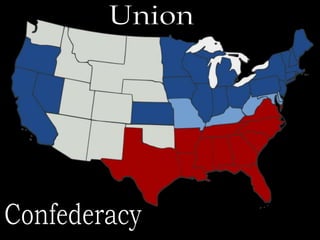
Union
the Northern States
Confederacy
The states that seceded from the Union
(South)
Civil War
A war fought between two parts of the
same country
Key Vocabulary
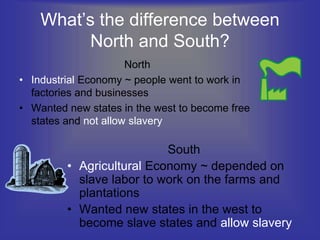
What’s the difference between
North and South?
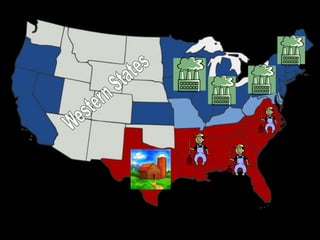
North
• Industrial Economy ~ people went to work in
factories and businesses
• Wanted new states in the west to become free
states and not allow slavery
South
• Agricultural Economy ~ depended on
slave labor to work on the farms and
plantations
• Wanted new states in the west to
become slave states and allow slavery
Events that led to secession
and war
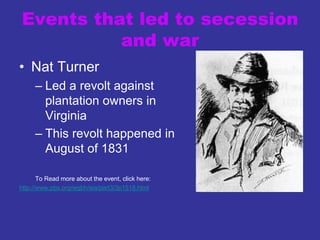
• Nat Turner
– Led a revolt against
plantation owners in
Virginia
– This revolt happened in
August of 1831
To Read more about the event, click here:
http://www.pbs.org/wgbh/aia/part3/3p1518.html
Events that led to secession
and war
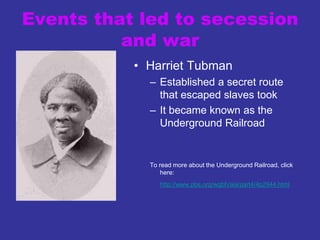
• Harriet Tubman
– Established a secret route
that escaped slaves took
– It became known as the
Underground Railroad
To read more about the Underground Railroad, click
here:
http://www.pbs.org/wgbh/aia/part4/4p2944.html
Events that led to secession
and war
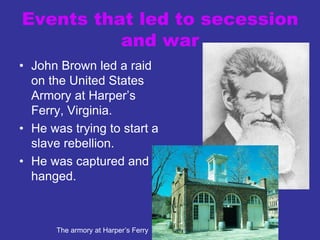
• John Brown led a raid
on the United States
Armory at Harper’s
Ferry, Virginia.
• He was trying to start a
slave rebellion.
• He was captured and
hanged.
The armory at Harper’s Ferry
Events that led to secession
and war
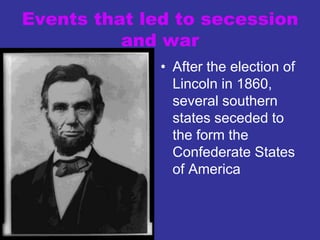
• After the election of
Lincoln in 1860,
several southern
states seceded to
the form the
Confederate States
of America
Major Events of the Civil War
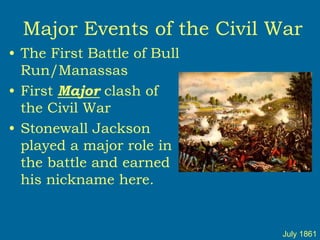
• The First Battle of Bull
Run/Manassas
• First Major clash of
the Civil War
• Stonewall Jackson
played a major role in
the battle and earned
his nickname here.
July 1861
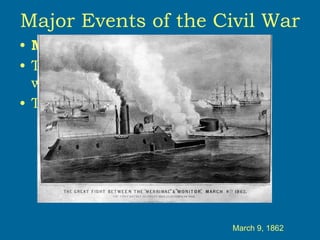
• Monitor vs. Merrimack
• Two iron clad ships battled in the
waters of Hampton Roads
• The battle ended in a draw
Major Events of the Civil War
March 9, 1862
Major Events of the Civil War
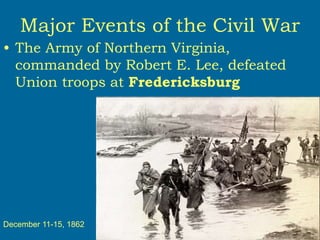
• The Army of Northern Virginia,
commanded by Robert E. Lee, defeated
Union troops at Fredericksburg
December 11-15, 1862
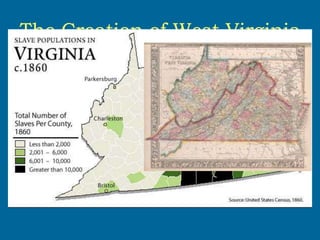
The Creation of West Virginia
• Happened during the Civil War, 1863
• Conflict grew between the eastern
counties of Virginia that relied on
slavery and the western counties that
favored the abolition of slavery
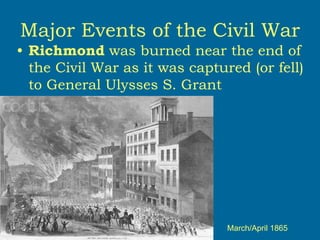
Major Events of the Civil War
• Richmond was burned near the end of
the Civil War as it was captured (or fell)
to General Ulysses S. Grant
March/April 1865
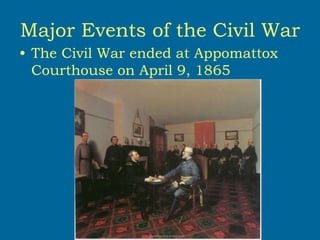
Major Events of the Civil War
• The Civil War ended at Appomattox
Courthouse on April 9, 1865
People of the Civil War
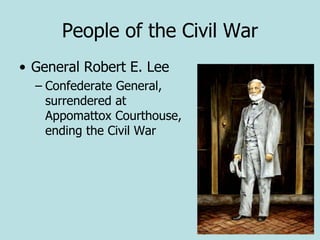
• General Robert E. Lee
– Confederate General,
surrendered at
Appomattox Courthouse,
ending the Civil War
People of the Civil War
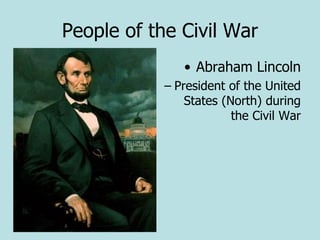
• Abraham Lincoln
– President of the United
States (North) during
the Civil War
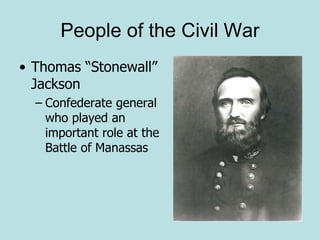
• Thomas “Stonewall”
Jackson
– Confederate general
who played an
important role at the
Battle of Manassas
People of the Civil War
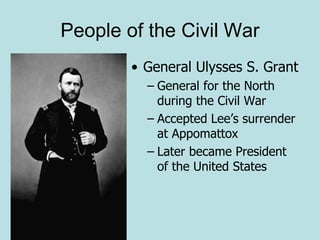
• General Ulysses S. Grant
– General for the North
during the Civil War
– Accepted Lee’s surrender
at Appomattox
– Later became President
of the United States
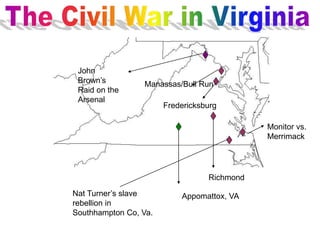
Nat Turner’s slave
rebellion in
Southhampton Co, Va.
John
Brown’s
Raid on the
Arsenal
Manassas/Bull Run
Fredericksburg
Monitor vs.
Merrimack
Richmond
Appomattox, VA
Most white Virginians supported the Confederacy.
The Confederacy relied on enslaved African Americans to
raise crops and provide labor for the Army.
Some free African Americans felt their limited rights could
best be protected by supporting the Confederacy.
Most American Indians did not take sides during the war
(neutral).
Who led a slave revolt against
plantation owners in Virginia?
AHarriet Tubman
BNat Turner
CJohn Brown
DRobert E. Lee
2. Who participated in a secret route that
escaped slaves took known as the
“Underground Railroad”?
A. Harriet Tubman
B. Nat Turner
C. John Brown
D. Robert E. Lee
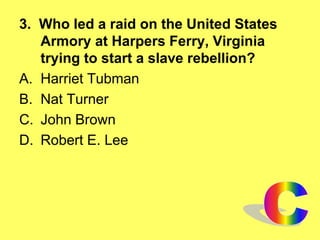
3. Who led a raid on the United States
Armory at Harpers Ferry, Virginia
trying to start a slave rebellion?
A. Harriet Tubman
B. Nat Turner
C. John Brown
D. Robert E. Lee
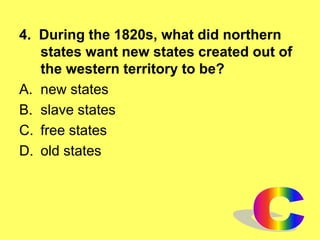
4. During the 1820s, what did northern
states want new states created out of
the western territory to be?
A. new states
B. slave states
C. free states
D. old states
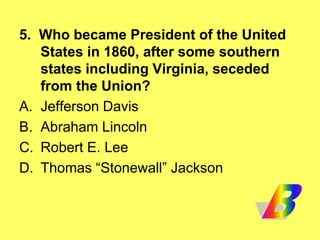
5. Who became President of the United
States in 1860, after some southern
states including Virginia, seceded
from the Union?
A. Jefferson Davis
B. Abraham Lincoln
C. Robert E. Lee
D. Thomas “Stonewall” Jackson
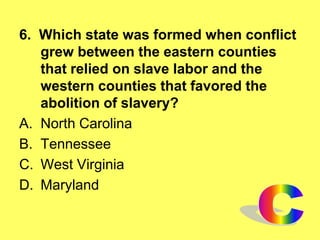
6. Which state was formed when conflict
grew between the eastern counties
that relied on slave labor and the
western counties that favored the
abolition of slavery?
A. North Carolina
B. Tennessee
C. West Virginia
D. Maryland
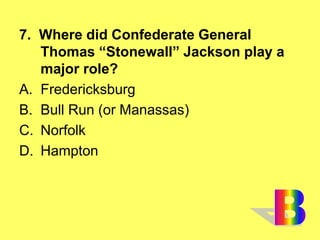
7. Where did Confederate General
Thomas “Stonewall” Jackson play a
major role?
A. Fredericksburg
B. Bull Run (or Manassas)
C. Norfolk
D. Hampton
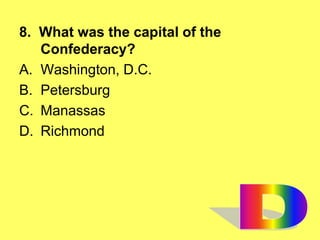
8. What was the capital of the
Confederacy?
A. Washington, D.C.
B. Petersburg
C. Manassas
D. Richmond
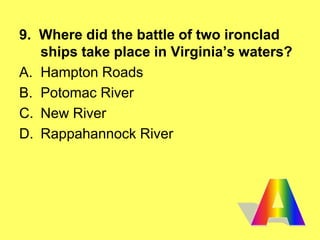
9. Where did the battle of two ironclad
ships take place in Virginia’s waters?
A. Hampton Roads
B. Potomac River
C. New River
D. Rappahannock River
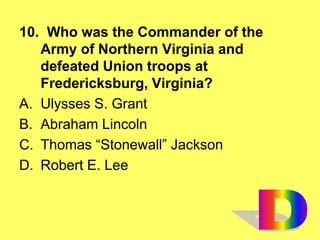
10. Who was the Commander of the
Army of Northern Virginia and
defeated Union troops at
Fredericksburg, Virginia?
A. Ulysses S. Grant
B. Abraham Lincoln
C. Thomas “Stonewall” Jackson
D. Robert E. Lee
11. Where did Robert E. Lee surrender
to Ulysses S. Grant in April 1865?
A. Washington, D.C.
B. Manassas, Virginia
C. Appomattox Court House, Virginia
D. Richmond, Virginia
12.What city was burned at the end of the
Civil War?
A. Washington
B. Norfolk
C. Richmond
D. Alexandria
13. Why did some Free African
Americans support the Confederacy?
A. They wanted to provide crops and labor
to the Army.
B. They felt their rights would be protected.
C. They wanted to have more rights.
D. They did not believe in the ideas of the
South
Vs7 review

Vs7 review

  • 1.
    VS.7 Review Sarah Duncan,Portsmouth Public Schools Social Studies Instructional Specialist
  • 2.
    Key Vocabulary Abolitionist person whowanted to end slavery Free State state that did not allow slavery Slave State state that allowed slavery Secede to leave the Union
  • 3.
    Union the Northern States Confederacy Thestates that seceded from the Union (South) Civil War A war fought between two parts of the same country Key Vocabulary
  • 5.
    What’s the differencebetween North and South? North • Industrial Economy ~ people went to work in factories and businesses • Wanted new states in the west to become free states and not allow slavery South • Agricultural Economy ~ depended on slave labor to work on the farms and plantations • Wanted new states in the west to become slave states and allow slavery
  • 7.
    Events that ledto secession and war • Nat Turner – Led a revolt against plantation owners in Virginia – This revolt happened in August of 1831 To Read more about the event, click here: http://www.pbs.org/wgbh/aia/part3/3p1518.html
  • 8.
    Events that ledto secession and war • Harriet Tubman – Established a secret route that escaped slaves took – It became known as the Underground Railroad To read more about the Underground Railroad, click here: http://www.pbs.org/wgbh/aia/part4/4p2944.html
  • 9.
    Events that ledto secession and war • John Brown led a raid on the United States Armory at Harper’s Ferry, Virginia. • He was trying to start a slave rebellion. • He was captured and hanged. The armory at Harper’s Ferry
  • 10.
    Events that ledto secession and war • After the election of Lincoln in 1860, several southern states seceded to the form the Confederate States of America
  • 11.
    Major Events ofthe Civil War • The First Battle of Bull Run/Manassas • First Major clash of the Civil War • Stonewall Jackson played a major role in the battle and earned his nickname here. July 1861
  • 12.
    • Monitor vs.Merrimack • Two iron clad ships battled in the waters of Hampton Roads • The battle ended in a draw Major Events of the Civil War March 9, 1862
  • 13.
    Major Events ofthe Civil War • The Army of Northern Virginia, commanded by Robert E. Lee, defeated Union troops at Fredericksburg December 11-15, 1862
  • 14.
    The Creation ofWest Virginia • Happened during the Civil War, 1863 • Conflict grew between the eastern counties of Virginia that relied on slavery and the western counties that favored the abolition of slavery
  • 15.
    Major Events ofthe Civil War • Richmond was burned near the end of the Civil War as it was captured (or fell) to General Ulysses S. Grant March/April 1865
  • 16.
    Major Events ofthe Civil War • The Civil War ended at Appomattox Courthouse on April 9, 1865
  • 17.
    People of theCivil War • General Robert E. Lee – Confederate General, surrendered at Appomattox Courthouse, ending the Civil War
  • 18.
    People of theCivil War • Abraham Lincoln – President of the United States (North) during the Civil War
  • 19.
    • Thomas “Stonewall” Jackson –Confederate general who played an important role at the Battle of Manassas People of the Civil War
  • 20.
    People of theCivil War • General Ulysses S. Grant – General for the North during the Civil War – Accepted Lee’s surrender at Appomattox – Later became President of the United States
  • 21.
    Nat Turner’s slave rebellionin Southhampton Co, Va. John Brown’s Raid on the Arsenal Manassas/Bull Run Fredericksburg Monitor vs. Merrimack Richmond Appomattox, VA
  • 22.
    Most white Virginianssupported the Confederacy. The Confederacy relied on enslaved African Americans to raise crops and provide labor for the Army. Some free African Americans felt their limited rights could best be protected by supporting the Confederacy. Most American Indians did not take sides during the war (neutral).
  • 24.
    Who led aslave revolt against plantation owners in Virginia? AHarriet Tubman BNat Turner CJohn Brown DRobert E. Lee
  • 25.
    2. Who participatedin a secret route that escaped slaves took known as the “Underground Railroad”? A. Harriet Tubman B. Nat Turner C. John Brown D. Robert E. Lee
  • 26.
    3. Who leda raid on the United States Armory at Harpers Ferry, Virginia trying to start a slave rebellion? A. Harriet Tubman B. Nat Turner C. John Brown D. Robert E. Lee
  • 27.
    4. During the1820s, what did northern states want new states created out of the western territory to be? A. new states B. slave states C. free states D. old states
  • 28.
    5. Who becamePresident of the United States in 1860, after some southern states including Virginia, seceded from the Union? A. Jefferson Davis B. Abraham Lincoln C. Robert E. Lee D. Thomas “Stonewall” Jackson
  • 29.
    6. Which statewas formed when conflict grew between the eastern counties that relied on slave labor and the western counties that favored the abolition of slavery? A. North Carolina B. Tennessee C. West Virginia D. Maryland
  • 30.
    7. Where didConfederate General Thomas “Stonewall” Jackson play a major role? A. Fredericksburg B. Bull Run (or Manassas) C. Norfolk D. Hampton
  • 31.
    8. What wasthe capital of the Confederacy? A. Washington, D.C. B. Petersburg C. Manassas D. Richmond
  • 32.
    9. Where didthe battle of two ironclad ships take place in Virginia’s waters? A. Hampton Roads B. Potomac River C. New River D. Rappahannock River
  • 33.
    10. Who wasthe Commander of the Army of Northern Virginia and defeated Union troops at Fredericksburg, Virginia? A. Ulysses S. Grant B. Abraham Lincoln C. Thomas “Stonewall” Jackson D. Robert E. Lee
  • 34.
    11. Where didRobert E. Lee surrender to Ulysses S. Grant in April 1865? A. Washington, D.C. B. Manassas, Virginia C. Appomattox Court House, Virginia D. Richmond, Virginia
  • 35.
    12.What city wasburned at the end of the Civil War? A. Washington B. Norfolk C. Richmond D. Alexandria
  • 36.
    13. Why didsome Free African Americans support the Confederacy? A. They wanted to provide crops and labor to the Army. B. They felt their rights would be protected. C. They wanted to have more rights. D. They did not believe in the ideas of the South