

Seminar About
Chronic Renal Failure
Prepare by Supervisor
Master Student Dr. Fakhrea Jabur
Haider Mohammed
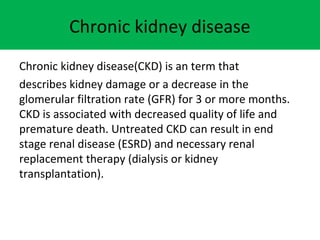
Chronic kidney disease
Chronic kidney disease(CKD) is an term that
describes kidney damage or a decrease in the
glomerular filtration rate (GFR) for 3 or more months.
CKD is associated with decreased quality of life and
premature death. Untreated CKD can result in end
stage renal disease (ESRD) and necessary renal
replacement therapy (dialysis or kidney
transplantation).
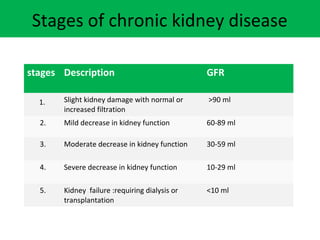
Stages of chronic kidney disease
stages Description GFR
1. Slight kidney damage with normal or
increased filtration
>90 ml
2. Mild decrease in kidney function 60-89 ml
3. Moderate decrease in kidney function 30-59 ml
4. Severe decrease in kidney function 10-29 ml
5. Kidney failure :requiring dialysis or
transplantation
<10 ml
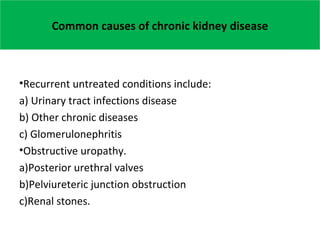
Common causes of chronic kidney disease
•Recurrent untreated conditions include:
a) Urinary tract infections disease
b) Other chronic diseases
c) Glomerulonephritis
•Obstructive uropathy.
a)Posterior urethral valves
b)Pelviureteric junction obstruction
c)Renal stones.
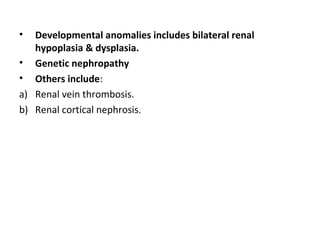
• Developmental anomalies includes bilateral renal
hypoplasia & dysplasia.
• Genetic nephropathy
• Others include:
a) Renal vein thrombosis.
b) Renal cortical nephrosis.
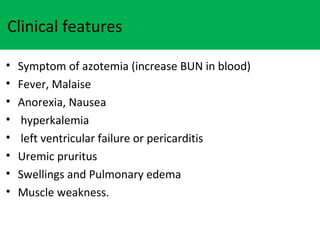
Clinical features
• Symptom of azotemia (increase BUN in blood)
• Fever, Malaise
• Anorexia, Nausea
• hyperkalemia
• left ventricular failure or pericarditis
• Uremic pruritus
• Swellings and Pulmonary edema
• Muscle weakness.
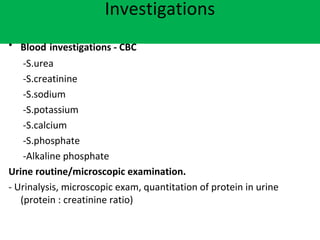
Investigations
• Blood investigations - CBC
-S.urea
-S.creatinine
-S.sodium
-S.potassium
-S.calcium
-S.phosphate
-Alkaline phosphate
Urine routine/microscopic examination.
- Urinalysis, microscopic exam, quantitation of protein in urine
(protein : creatinine ratio)
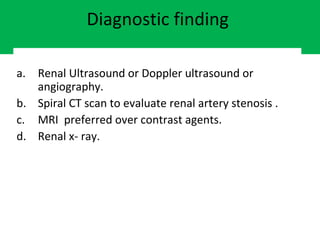
Diagnostic finding
a. Renal Ultrasound or Doppler ultrasound or
angiography.
b. Spiral CT scan to evaluate renal artery stenosis .
c. MRI preferred over contrast agents.
d. Renal x- ray.
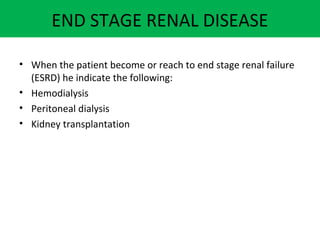
END STAGE RENAL DISEASE
• When the patient become or reach to end stage renal failure
(ESRD) he indicate the following:
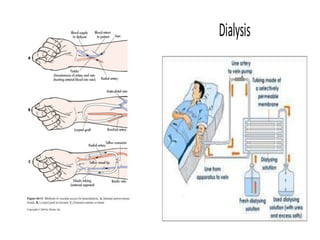
• Hemodialysis
• Peritoneal dialysis
• Kidney transplantation
Indications for hemodialysis
a. Uremia - azotemia with symptoms and/or signs .
b. Severe Hyperkalemia.
c. Volume Overload - usually with congestive heart failure
(pulmonary edema).
d. Toxin Removal.
a. Efficacy of hemodialysis
b. Some acids, BUN and creatinine are reduced
c. Phosphate is dialyzed, but quickly released from bone
d. Very effective at reducing intravascular volume/potassium
e. Not all uremic toxins are removed and patients generally do not
feel "normal"
f. Response of anemia to erythropoietin is often suboptimal with
hemodialysis.
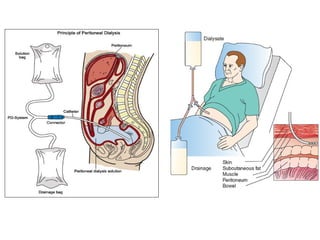
PERITONEAL DIALYSIS
PERITONEAL DIALYSIS
The goals of PD are to remove toxic substances and
metabolic wastes and to reestablish normal fluid and
electrolyte balance.
PD may be the treatment of choice for patients with renal
failure who are unable or unwilling to undergo
hemodialysis or renal transplantation. Patients who are
susceptible to the rapid fluid, electrolyte, and metabolic
changes that occur during hemodialysis experience fewer
of these problems with the slower rate of PD.
• Severe metabolic acidosis
• Hyperkalemia
• Pericarditis
• Intractable volume overload
• Peripheral neuropathy
• gastrointestinal disturbance
• decreased libido
• Osteomalacia or Osteitis
Complication
• Impaired skin integrity related to fluid imbalances.
• Risk for injury related to fistula.
• Activity intolerance related to nutrition status
changes.
• Fluid volume excessive related to tubular dysfunction.
• Psychological distress (e.g depression or anxiety).
• Self-esteem disturbances related to decrease daily
living activity.
Nursing Diagnosis
1- Auscultate heart and lung sounds. Evaluate presence of peripheral
edema, vascular congestion and reports of dyspnea.
2- monitor body vital signs.
3- Assess presence and degree of hypertension and give
antihypertensive drugs if need such (Capoten, Apresoline and lasix).
4- Monitor level of consciousness and behavior.
5- Observe for oozing from venipuncture sites, bleeding, ecchymotic
areas and any slight trauma.
6- Encourage adequate calorie intake, especially from carbohydrates,
regulating protein intake according to level of renal function and
avoid sodium and potassium.
Nursing Management
7- Monitor fluid intake and hydration of skin, mucous
membranes and Inspect skin for changes in color,
turgor, vascularity.
THANK YOU
FOR LISTENING

Chronic renal failure

  • 1.
    Seminar About Chronic RenalFailure Prepare by Supervisor Master Student Dr. Fakhrea Jabur Haider Mohammed
  • 2.
    Chronic kidney disease Chronickidney disease(CKD) is an term that describes kidney damage or a decrease in the glomerular filtration rate (GFR) for 3 or more months. CKD is associated with decreased quality of life and premature death. Untreated CKD can result in end stage renal disease (ESRD) and necessary renal replacement therapy (dialysis or kidney transplantation).
  • 3.
    Stages of chronickidney disease stages Description GFR 1. Slight kidney damage with normal or increased filtration >90 ml 2. Mild decrease in kidney function 60-89 ml 3. Moderate decrease in kidney function 30-59 ml 4. Severe decrease in kidney function 10-29 ml 5. Kidney failure :requiring dialysis or transplantation <10 ml
  • 4.
    Common causes ofchronic kidney disease •Recurrent untreated conditions include: a) Urinary tract infections disease b) Other chronic diseases c) Glomerulonephritis •Obstructive uropathy. a)Posterior urethral valves b)Pelviureteric junction obstruction c)Renal stones.
  • 5.
    • Developmental anomaliesincludes bilateral renal hypoplasia & dysplasia. • Genetic nephropathy • Others include: a) Renal vein thrombosis. b) Renal cortical nephrosis.
  • 6.
    Clinical features • Symptomof azotemia (increase BUN in blood) • Fever, Malaise • Anorexia, Nausea • hyperkalemia • left ventricular failure or pericarditis • Uremic pruritus • Swellings and Pulmonary edema • Muscle weakness.
  • 7.
    Investigations • Blood investigations- CBC -S.urea -S.creatinine -S.sodium -S.potassium -S.calcium -S.phosphate -Alkaline phosphate Urine routine/microscopic examination. - Urinalysis, microscopic exam, quantitation of protein in urine (protein : creatinine ratio)
  • 8.
    Diagnostic finding a. RenalUltrasound or Doppler ultrasound or angiography. b. Spiral CT scan to evaluate renal artery stenosis . c. MRI preferred over contrast agents. d. Renal x- ray.
  • 9.
    END STAGE RENALDISEASE • When the patient become or reach to end stage renal failure (ESRD) he indicate the following: • Hemodialysis • Peritoneal dialysis • Kidney transplantation
  • 10.
    Indications for hemodialysis a.Uremia - azotemia with symptoms and/or signs . b. Severe Hyperkalemia. c. Volume Overload - usually with congestive heart failure (pulmonary edema). d. Toxin Removal.
  • 12.
    a. Efficacy ofhemodialysis b. Some acids, BUN and creatinine are reduced c. Phosphate is dialyzed, but quickly released from bone d. Very effective at reducing intravascular volume/potassium e. Not all uremic toxins are removed and patients generally do not feel "normal" f. Response of anemia to erythropoietin is often suboptimal with hemodialysis.
  • 13.
    PERITONEAL DIALYSIS PERITONEAL DIALYSIS Thegoals of PD are to remove toxic substances and metabolic wastes and to reestablish normal fluid and electrolyte balance. PD may be the treatment of choice for patients with renal failure who are unable or unwilling to undergo hemodialysis or renal transplantation. Patients who are susceptible to the rapid fluid, electrolyte, and metabolic changes that occur during hemodialysis experience fewer of these problems with the slower rate of PD.
  • 15.
    • Severe metabolicacidosis • Hyperkalemia • Pericarditis • Intractable volume overload • Peripheral neuropathy • gastrointestinal disturbance • decreased libido • Osteomalacia or Osteitis Complication
  • 16.
    • Impaired skinintegrity related to fluid imbalances. • Risk for injury related to fistula. • Activity intolerance related to nutrition status changes. • Fluid volume excessive related to tubular dysfunction. • Psychological distress (e.g depression or anxiety). • Self-esteem disturbances related to decrease daily living activity. Nursing Diagnosis
  • 17.
    1- Auscultate heartand lung sounds. Evaluate presence of peripheral edema, vascular congestion and reports of dyspnea. 2- monitor body vital signs. 3- Assess presence and degree of hypertension and give antihypertensive drugs if need such (Capoten, Apresoline and lasix). 4- Monitor level of consciousness and behavior. 5- Observe for oozing from venipuncture sites, bleeding, ecchymotic areas and any slight trauma. 6- Encourage adequate calorie intake, especially from carbohydrates, regulating protein intake according to level of renal function and avoid sodium and potassium. Nursing Management
  • 18.
    7- Monitor fluidintake and hydration of skin, mucous membranes and Inspect skin for changes in color, turgor, vascularity.
  • 19.