NURSING INTERVENTION
OF PATIENTS WITH
GENITOURINARY DISORDERS
1
Mulugeta Emiru
(MSc in Adult Health Nursing)
Mizan-Tepi University,Ethiopia
2017
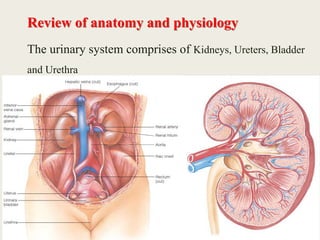
Review of anatomy and physiology
The urinary system comprises of Kidneys, Ureters, Bladder
and Urethra
2
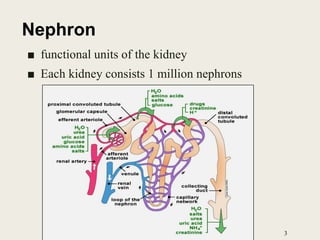
■ functional units of the kidney
■ Each kidney consists 1 million nephrons
3
Nephron
. . .
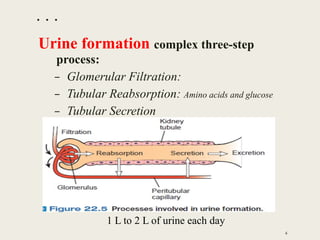
Urine formation complex three-step
process:
– Glomerular Filtration:
– Tubular Reabsorption: Amino acids and glucose
– Tubular Secretion
4
1 L to 2 L of urine each day
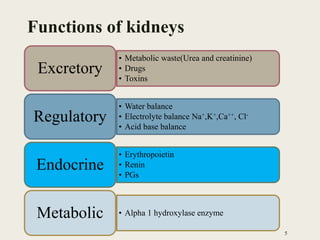
Functions of kidneys
5
• Metabolic waste(Urea and creatinine)
• Drugs
• Toxins
Excretory
• Water balance
• Electrolyte balance Na+,K+,Ca++, Cl-
• Acid base balance
Regulatory
• Erythropoietin
• Renin
• PGs
Endocrine
• Alpha 1 hydroxylase enzymeMetabolic
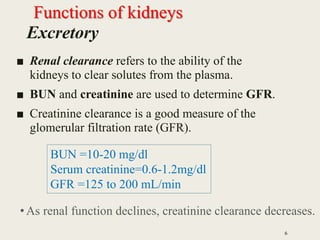
Excretory
■ Renal clearance refers to the ability of the
kidneys to clear solutes from the plasma.
■ BUN and creatinine are used to determine GFR.
■ Creatinine clearance is a good measure of the
glomerular filtration rate (GFR).
6
BUN =10-20 mg/dl
Serum creatinine=0.6-1.2mg/dl
GFR =125 to 200 mL/min
•As renal function declines, creatinine clearance decreases.
Functions of kidneys
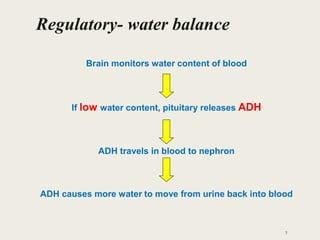
Regulatory- water balance
Brain monitors water content of blood
If low water content, pituitary releases ADH
ADH travels in blood to nephron
ADH causes more water to move from urine back into blood
7
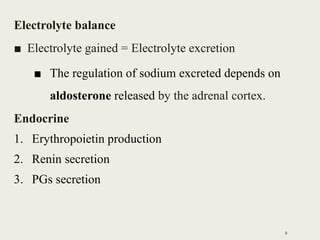
Electrolyte balance
■ Electrolyte gained = Electrolyte excretion
■ The regulation of sodium excreted depends on
aldosterone released by the adrenal cortex.
Endocrine
1. Erythropoietin production
2. Renin secretion
3. PGs secretion
8
Assessment of GUS
1. Health History
2. Physical Examination
3. Laboratory investigations and
4. Diagnostic Tests
9
Health History
■ Keep privacy and be confidential
■ Needs communication skill
■ The health Hx includes
■ C/C
■ HPI
■ general health,
■ childhood and family illnesses,
■ past medical history, allergies, sexual and reproductive
health, exposure to toxic chemicals or gas, and
■ Medication history
10
S/S
 Pain
 nausea, vomiting, diarrhea, abdominal
discomfort, and abdominal distention.
 Unexplained Anemia
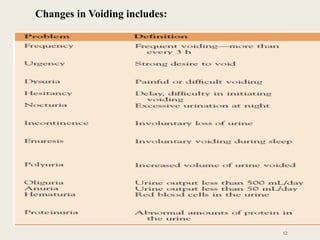
 Changes in Voiding:
11
12
Changes in Voiding includes:
Physical Examination
■ Prior to examination ask the client to void
■ Inspection
■ Auscultation
■ Percussion
■ Palpation
■ assesses for signs of electrolyte and water
imbalances
– Periorbital edema (swelling around the eyes)
– Edema of the extremities
– Cardiac failure
– Mental changes
■ Vital signs and weight
13
Diagnostic tests
■ Plain x-ray / KUB x-ray
– size and position of the kidneys, ureters, and bony
pelvis
– urinary calculi (stones),
– anatomic defects of the bony spinal column
■ Cystoscopy- Direct visualization of the bladder
– used to identify the cause of painless hematuria,
urinary incontinence, or urinary retention.
– evaluation of structural and functional changes of
the bladder
14
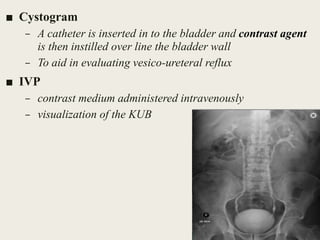
■ Cystogram
– A catheter is inserted in to the bladder and contrast agent
is then instilled over line the bladder wall
– To aid in evaluating vesico-ureteral reflux
■ IVP
– contrast medium administered intravenously
– visualization of the KUB
15
■ Retrograde pyelography
– Urethral catheters are passed up through the ureter
in to the renal pelvis by means of cystoscopy.
– Contrast agent is then introduced by injection
through the catheter.
16
■ Ultrasonography
– Is a noninvasive procedure that uses sound
waves passed into the body through a transducer
to detect abnormalities of internal tissues and
organs.
– Abnormalities such as fluid accumulation,
masses, congenital malformations, changes in
organ size, or obstructions can be identified.
■ CT & MRI
17
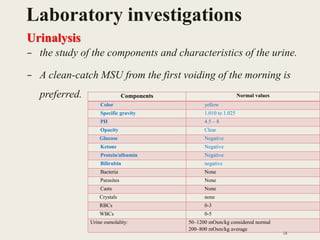
Laboratory investigations
– the study of the components and characteristics of the urine.
– A clean-catch MSU from the first voiding of the morning is
preferred.
18
Components Normal values
Color yellow
Specific gravity 1.010 to 1.025
PH 4.5 – 8
Opacity Clear
Glucose Negative
Ketone Negative
Protein/albumin Negative
Bilirubin negative
Bacteria None
Parasites None
Casts None
Crystals none
RBCs 0-3
WBCs 0-5
Urine osmolality: 50–1200 mOsm/kg considered normal
200–800 mOsm/kg average
Urinalysis
■ Urine macroscopic and microscopic characteristics.
Dipstick test
■ A thin, plastic stick with strips of chemicals on it is placed in the
urine to detect abnormalities.
■ A dipstick test checks for:
– Acidity (pH). The pH level indicates the amount of acid in
urine.
– Concentration /specific gravity, shows how concentrated
particles are in urine. A higher than normal concentration
often is a result of not drinking enough fluids.
– Protein. Low levels of protein in urine are normal. but
larger amounts may indicate a kidney problem.
– Sugar- Any detection of sugar on this test usually calls for
follow-up testing for diabetes.
– Ketones, Bilirubin, nitrites or leukocyte esterase, Blood
19
Microscopic exam
■ White blood cells (leukocytes) may be a sign of an
infection.
■ Red blood cells (erythrocytes) may be a sign of kidney
disease, a blood disorder or another underlying medical
condition, such as bladder cancer.
■ Bacteria or yeasts may indicate an infection.
■ Casts and Crystals from chemicals in urine may be a sign
of kidney stones.
20
–Use
 to assess the status of the patient’s kidney function.
 to evaluate the severity of kidney disease
–Includes
concentration tests,
serum creatinine and creatinine clearance,
blood urea nitrogen /BUN/ levels.
21
RFT / Renal Function Tests
Renal concentration tests
1. Specific Gravity:
– a measurement of the kidney’s ability to concentrate
urine
– compares the weight of urine (weight of particles)
to the weight of distilled water
– depends largely on hydration status: When fluid
intake decreases, specific gravity normally
increases, and vice versa.
22
urine specific gravity is 1.010 to 1.025
■ Diseases decrease sp. gr of urine
E.g.
– Diabetes insipidus
– glomerulonephritis, and
– severe renal damage
■ Diseases increase sp. gr of urine
E.g.
– DM,
– nephrosis, and
– excessive fluid loss
23
2. Urine osmolality:
■ Urine osmolality reflects the ability of the kidney to
concentrate and dilute urine, through measurement of
the number of particles in a kilogram of solution.
24
Urine osmolality:
50–1200 mOsm/kg considered normal;
200–800 mOsm/kg average
Osmolality of blood = 280 to 300 mOsm/kg.
Creatinine Clearance Test
■ Creatinine is a chemical waste molecule that is generated
from muscle metabolism.
■ Used to determine excretory function of kidney.
■ Creatinine is filtered by the glomeruli and is excreted at
a fairly constant rate by the kidney.
■ Creatinine excretion is not affected significantly by
dietary or fluid intake
25
. . .
■ Increased serum creatinine level indicate
decreased renal function
■ Creatinine is more accurate indicator
for renal function than the BUN.
26
Serum Creatinine level: 0.6–1.2 mg/dL (50–110 mmol/L)
BUN / Blood Urea Nitrogen
■ Urea is nitrogenous end product of protein
metabolism.
■ Serves as index of renal function.
■ Test values are affected by protein intake, tissue
breakdown, and fluid volume changes.
■ Rises when renal function deteriorates.
27
Blood urea nitrogen [BUN: 10–20 mg/dl]
Changes in the Urinary System Related to Aging
■ Nephrons decrease, resulting in decreased filtration and gradual
decrease in excretory and reabsorptive functions of renal tubules.
■ Glomerular filtration rate decreases, resulting in decreased renal
clearance of drugs.
■ Blood urea nitrogen increases 20% by age 70.
■ Sodium-conserving ability is diminished.
■ Bladder capacity decreases.
■ Renal function increases when client is lying down.
■ Bladder and perineal muscles weaken, resulting in inability to
empty bladder.
■ Incidence of stress incontinence increases in females.
■ Prostate may enlarge, causing frequency or dribbling.
28
FLUID AND ELECTROLYTE BALANCE
o To maintain proper balance, the amount of fluid gained and lost
must be equal.
o There are two major fluid compartments.
o ICF and ECF
o ECF again has two comp.
o Intravascular
o Interstitial
o Body fluid normally shifts between the two major
compartments or spaces in an effort to maintain an
equilibrium between the spaces.
o Loss of fluid from the body can disrupt this
equilibrium.
o Sometimes fluid is not lost from the body but is
unavailable for use by either the ICF or ECF called
third-space fluid shift, or “third spacing”
■ Fluid balance is maintained by
– Osmoreceptors (the release or inhibition of ADH)
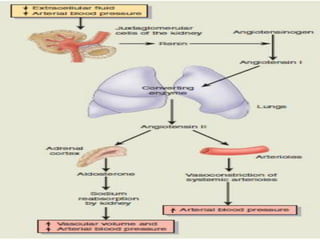
– Renin-angiotensin-aldosterone system
– Secretion of atrial natriuretic peptide /ANP/.
– Thirst
Electrolytes
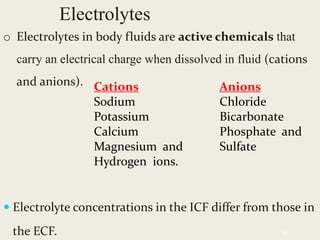
o Electrolytes in body fluids are active chemicals that
carry an electrical charge when dissolved in fluid (cations
and anions).
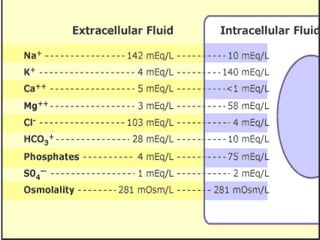
 Electrolyte concentrations in the ICF differ from those in
the ECF. 33
Cations
Sodium
Potassium
Calcium
Magnesium and
Hydrogen ions.
Anions
Chloride
Bicarbonate
Phosphate and
Sulfate
34
■ Normal movement of fluids through the capillary wall
into the tissues depends on hydrostatic pressure and
colloidal osmotic pressure.
■ Body fluids across the compartments is regulated by
■ Osmosis
■ Diffusion
■ Filtration
■ Na+ - K+ pump
35
?
HYPOVOLEMIA / FVD
■ Occurs when loss of ECF volume exceeds intake.
Causes
■ GI losses- Vomiting, diarrhea, suctioning
■ Sweating and hemorrhage
■ Decreased intake
■ Third-space fluid shifts
s/s
■ Acute weight loss; orthostatic hypotension
■ decreased skin turgor; oliguria; concentrated urine
■ Weak, rapid pulse; flattened neck veins;
■ Thirst; decreased or delayed capillary refill; decreased
central venous pressure
■ Cool, clammy, pale skin, lassitude; muscle weakness; and
cramps.
Diagnostic Findings
■ The cause of hypovolemia may be determined
through the health history and physical
examination.
■ BUN : creatinine ratio > 20:1
Nursing Dx & Management
Mgx
■ Treat the cause
■ When the deficit is not severe, the oral route is preferred
■ When fluid losses are acute or severe, IV 0.9% NaCl.
■ As soon as the patient becomes normotensive, 0.45% NaCl
provides both electrolytes and water, helps excretion of wastes.
39
NDx.
Deficient Fluid Volume
Decreased cardiac output
Ineffective tissue perfusion
…
■ Monitor fluid I/O at least every 8 hours, and sometimes
hrly.
■ Body weights daily, Skin turgor
■ Vital signs are closely monitored.
■ T0, Pulse, B/P ( postural hypotension )
40
?
HYPERVOLEMIA / FVE
■ Isotonic expansion of the ECF caused by the
abnormal retention of water and sodium.
Contributing factors include
• heart failure,
• renal failure, and
• cirrhosis of the liver
• consumption of excessive amounts of salts
CMs
■ Edema, distended neck veins, and crackles, SOB and
wheezing;
■ Increased blood pressure, pulse pressure, and central
venous pressure; tachycardia, increased weight; increased
urine output.
Diagnostic Findings
■ BUN and hematocrit, Urine sp. Gr, serum osmolality
■ Serum Sodium level, CVP, Chest x-rays
Medical Management
■ Management of FVE is directed at the causes.
■ When the fluid excess is related to excessive
administration of sodium-containing fluids, discontinuing
the infusion may be all that is needed.
■ Symptomatic treatment consists of administering diuretics
and restricting fluids and sodium.
Other modalities
■ Dialysis and Renal transplantation
43
Nursing Dx & Management
Mgx
■ Measure I/O, weigh daily,
■ Assess breath sounds,
■ Monitor the degree of edema
1. Excess Fluid Volume related to intake that exceeds fluid loss
AEB…
2. Risk for Impaired Skin Integrity related to compromised
circulation secondary to edema
3. Impaired skin integrity
4. Impaired gas exchange
Electrolyte imbalances
45
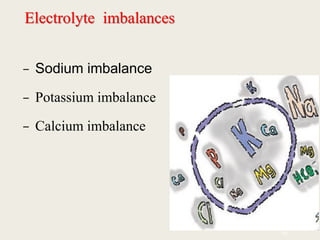
– Sodium imbalance
– Potassium imbalance
– Calcium imbalance
Alteration in Sodium Na+ Balance
■ The chief cation in ECF,
■ Essential for maintaining normal nerve and muscle
activity and regulating osmotic pressure.
■ The principal role of sodium is to regulate and
distribute fluid volume in the body
46
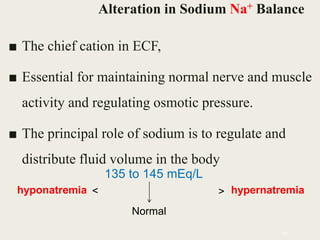
135 to 145 mEq/L
hyponatremia hypernatremia
Normal
< >
Sodium Deficit (Hyponatremia)
■ Hyponatremia- serum sodium <135 mEq/L
■ Hyponatremia primarily occurs due to an imbalance of
water rather than sodium
■ Can occur together with FVD or FVE.
Causes
– Renal loss- high sodium is detected in urine E.g.
diuretic use
– Non renal loss- low sodium is detected in urine as
the kidney retains sodium to compensate for non-
renal fluid loss. E.g. vomiting, diarrhea, sweating
– Aldosterone deficiency, as occurs in adrenal
insufficiency. 47
C/Ms
■ Signs of DHN and GI symptoms like nausea,
abdominal cramping, anorexia, muscle cramps, and
a feeling of exhaustion, Altered mental status.
■ When the serum sodium level drops below 115
mEq/L, Neurologic changes (signs of increasing
intracranial pressure), such as lethargy, confusion,
muscle twitching, focal weakness, and seizures,
may occur.
48
Diagnostic Findings
■ Serum sodium level is <135 mEq/L
■ Serum osmolality is also decreased, except in
azotemia or ingestion of toxins.
■ Urinary sodium
49
Medical Management
■ Assess speed with which hyponatremia occurred
– Acute hyponatremia causes severe cerebral edema
and compression of midbrain structures.
■ Careful sodium replacement either by mouth,
nasogastric tube, or parenteral route.
■ Serum sodium must not be increased by greater
than 12 mEq/L in 24 hours, to avoid neurologic
damage.
■ Hyponatremia with normal or excess fluid is treated by
fluid restriction. When neurologic symptoms are present,
however, it may be necessary to administer small volumes
of a hypertonic sodium solution, such as 3% or 5%
sodium chloride.
Nursing Mgt.
■ I/O, weight
■ Assess for abnormal losses of sodium or gains of water
■ alert for CNS changes
SODIUM EXCESS (Hypernatremia)
■ > 145 mEq/L [145 mmol/L])
■ Can be caused by
– a gain of sodium in excess of water or
– a loss of water in excess of sodium.
■ It can be associated with FVD or FVE.
Causes
– Administration of hypertonic enteral feedings without
adequate water
– watery diarrhea and greatly increased insensible water
loss (hyperventilation, Increased sweating)
– Diabetes insipidus, a deficiency of ADH
52
C/Ms
■ Symptoms are related with cellular dehydration.
■ A primary characteristic of hypernatremia is thirst
■ Subarachnoid hemorrhages that result from brain
contraction.
■ Restlessness and weakness in moderate hypernatremia and
disorientation, delusions, and hallucinations in severe
hypernatremia.
■ Increased muscle tone and deep tendon reflexes
Diagnostic Findings
■ serum sodium >145 mEq/L
■ serum osmolality >295 mOsm/kg
■ Urine sp. gr and urine osmolality are increased
Medical Management
■ Gradual lowering of the serum sodium level
hypotonic solution (eg, 0.3% NaCl) thereby
decreases the risk of cerebral edema
–Isotonic nonsaline solution (eg, dextrose 5% in
water [D5W]).
Nursing Management
■ I/O, Diuretics
■ obtain a medication history because some
prescription medications have a high sodium
content
■ monitor for changes in behavior
54
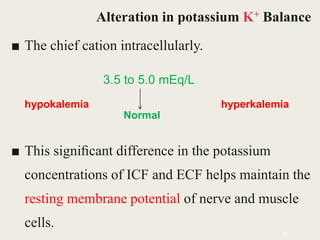
■ The chief cation intracellularly.
■ This significant difference in the potassium
concentrations of ICF and ECF helps maintain the
resting membrane potential of nerve and muscle
cells.
55
Alteration in potassium K+ Balance
3.5 to 5.0 mEq/L
hypokalemia hyperkalemia
Normal
Potassium Deficit
(HYPOKALEMIA)
■ < 3.5 mEq/L
■ GI loss is probably the most common cause
– severe vomiting or diarrhea, draining intestinal
fistulae, or prolonged suctioning
■ Recent ileostomy, Potassium-wasting diuretics
■ Alterations in acid–base balance have a significant effect
on potassium distribution.
56
■ Hypokalemia can cause alkalosis, and in turn
alkalosis can cause hypokalemia.
■ Leads to membrane hyperpolarization and
reduced excitability
■ Hyperaldosteronism increases renal potassium
wasting and can lead to severe potassium
depletion.
C/Ms
■ fatigue, anorexia, nausea, vomiting, muscle
weakness, leg cramps, decreased bowel motility,
paresthesia (numbness and tingling),
dysrhythmias, and increased sensitivity to
digitalis.
■ Potassium depletion depresses the release of
insulin and results in glucose intolerance.
Diagnostic Findings
■ ABGs values are checked for elevated
bicarbonate and pH.
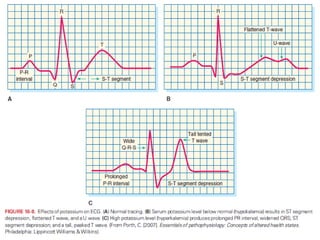
■ Hypokalemia produces characteristic changes in
the electrocardiogram (ECG) waveform.
59
Medical Management
■ For patients at risk for hypokalemia, a diet
containing sufficient potassium should be
provided.
■ When dietary intake is inadequate for any reason,
the physician may prescribe oral KCl.
■ The IV route is mandatory for patients with severe
hypokalemia (e.g., a serum level of 2 mEq/L).
Nursing Management
■ monitor for its early presence in patients at risk.
■ Fatigue, anorexia, muscle weakness, decreased
bowel motility, paresthesia, and dysrhythmias are
signals that warrant assessing the serum
potassium concentration.
62
NDx
■ Decreased Cardiac Output
■ Activity Intolerance
■ Risk for Imbalanced Fluid Volume
POTASSIUM EXCESS (HYPERKALEMIA)
■ Hyperkalemia can result from inadequate
excretion of potassium, excessively high intake
of potassium, or a shift of potassium from the
ICF to the ECF..
■ Patients with hypoaldosteronism have sodium
loss and potassium retention.
64
■ Medications have been identified as a probable
contributing factor in more than 60% of
hyperkalemic episodes.
■ Medications commonly implicated are KCl,
angiotensin-converting enzyme inhibitors
(ACEIs), potassium-sparing diuretics, heparin,
and NSAIDs.
CMs
■ The most important consequence on the
myocardium, depolarizes cardiac cells.
■ Cardiac effects of hyperkalemia are usually not
significant <7 mEq/L, but they are almost always
present when the level is 8 mEq/L or greater.
■ Skeletal muscle weakness and even paralysis,
related to a depolarization block in muscle.
■ Rapidly ascending muscular weakness-- quadriplegia
■ Similarly, ventricular conduction is slowed.
■ Paralysis of respiratory and speech muscles
Diagnostic Findings
■ Serum potassium
■ ECG changes are crucial to the diagnosis of
hyperkalemia.
■ ABG analysis- hyperkalemia occurs with acidosis
Medical Management
■ Mild hyperkalemia is treated by decreasing the
intake of potassium rich foods or discontinuing oral
potassium replacement.
■ Severe hyperkalemia is treated by intravenously
administering a combination of regular insulin and
glucose that temporarily shifts serum potassium
into cells within 30 minutes of administration.
■ Dialysis
Nrs mgx- same as hypokalemia
Acid–base Disturbances
■ In addition to water and electrolytes, body fluid also
contains acids and bases.
■ Acid and base content influence the pH of body fluid.
■ pH refers to the amount of hydrogen ions in a solution. The
greater the H+ concentration, the more acidic the solution
and the lower the pH.
■ The optimal PH of various body fluids differs but not very
much.
89
Acid–Base Balance
■ The normal PH value is:
– 7.45 for arterial blood
– 7.35 for venous blood and intestinal fluid
■ Acid-base balance is situation in which the PH of the
blood is maintained between 7.35 and 7.45.
■ Imbalances occur in the form of:
– Alkalosis- arterial blood PH rises above 7.45
– Acidosis- A drop in arterial PH below 7.35
Acid Base Regulatory Mechanisms
■ The body maintains the normal plasma pH by
■ Chemical regulation / buffer system
■ Organ regulation / lung and kidney
91
Buffer Systems 1st line of defense
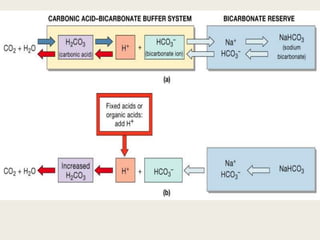
■ Buffer systems prevent major changes in the pH of body
fluids by removing or releasing H+; they can act quickly to
prevent excessive changes in H+ concentration.
■ H+ ions are buffered by both IC and EC buffers.
■ The body’s major EC buffer system is the bicarbonate-
carbonic acid buffer system.
■ Less important buffer systems in the ECF include the
inorganic phosphates and the plasma proteins.
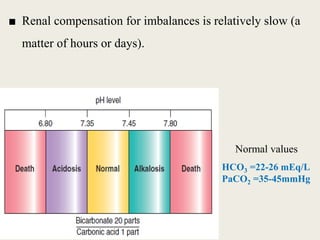
■ Normally, there are 20 parts of bicarbonate (HCO3
−) to 1
part of carbonic acid (H2CO3)
■ If this ratio is altered, the pH will change.
■ It is the ratio of HCO3
− to H2CO3 that is important in
maintaining pH, not absolute values.
■ CO2 is a potential acid; when dissolved in water, it becomes
carbonic acid
(CO2 + H2O = H2CO3).
■ Thus, when CO2 is increased, the carbonic acid content is
also increased, and vice versa.
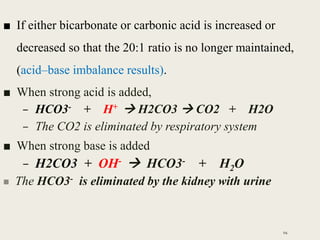
■ If either bicarbonate or carbonic acid is increased or
decreased so that the 20:1 ratio is no longer maintained,
(acid–base imbalance results).
■ When strong acid is added,
– HCO3- + H+  H2CO3  CO2 + H2O
– The CO2 is eliminated by respiratory system
■ When strong base is added
– H2CO3 + OH-  HCO3- + H2O
 The HCO3- is eliminated by the kidney with urine
94
Lungs- 2nd line of defense
■ The lungs, under the control of the medulla, control the CO2
and thus the carbonic acid content of the ECF.
■ They do so by adjusting ventilation in response to the
amount of CO2 in the blood.
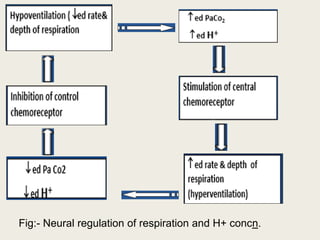
■ A rise in the partial pressure of CO2 in arterial blood (Pa
CO2) is a powerful stimulant to respiration.
■ In metabolic acidosis, the respiratory rate increases, causing
greater elimination of CO2 (to reduce the acid load).
■ In metabolic alkalosis, the respiratory rate decreases,
causing CO2 to be retained (to increase the acid load).
Fig:- Neural regulation of respiration and H+ concn.
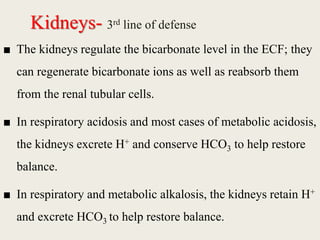
Kidneys- 3rd line of defense
■ The kidneys regulate the bicarbonate level in the ECF; they
can regenerate bicarbonate ions as well as reabsorb them
from the renal tubular cells.
■ In respiratory acidosis and most cases of metabolic acidosis,
the kidneys excrete H+ and conserve HCO3 to help restore
balance.
■ In respiratory and metabolic alkalosis, the kidneys retain H+
and excrete HCO3 to help restore balance.
■ Renal compensation for imbalances is relatively slow (a
matter of hours or days).
HCO3 =22-26 mEq/L
PaCO2 =35-45mmHg
Normal values
METABOLIC ACIDOSIS
(BASE BICARBONATE DEFICIT)
■ Metabolic acidosis is a clinical disturbance characterized by
increased organic acids (acids other than carbonic acid), a
low pH, increased H+ concn., and a low plasma
bicarbonate concn.
■ It can be produced by a gain of H+ or a loss of HCO3.
■ Organic acids increase during periods of anaerobic
metabolism. It occurs during shock and cardiac arrest.
■ Acids also increase in starvation and DKA, as fatty acids
accumulate because the body cannot use glucose for energy.
■ Accumulation of acids also may follow :
■ renal failure
■ Aspirin (acetylsalicylic acid) over dosage
■ profuse diarrhea and loss of intestinal fluid through
wound drainage
■ Hyperkalemia
Clinical Manifestations
■ Kussmaul’s breathing
■ anorexia, nausea, vomiting, abdominal pain or discomfort
■ Peripheral vasodilation and decreased cardiac output,
dysrhythmias, and shock
■ headache, confusion, flushing, lethargy, malaise, drowsiness
and weakness.
■ stupor and coma occur, and death may follow shortly.
Diagnostic Findings
■ ABG measurements
– Expected blood gas changes include a low pH and plasma HCO3.
– PaCO2 is normal initially, a condition referred to as an
uncompensated state.
– As the rapid and deep breathing becomes effective, PaCO2
decreases until pH returns to normal, it is referred to as a
partially compensated state.
– When pH returns to normal, it is referred to as a fully
compensated state.
Medical Management
■ Treat the cause.
■ If the problem results from excessive intake of chloride,
treatment is aimed at eliminating the source of the chloride.
■ When necessary, bicarbonate is administered if the pH is
less than 7.1 and the bicarbonate level is less than 10.
Medical Management
■ Although hyperkalemia occurs with acidosis, hypokalemia
may occur with reversal of the acidosis and subsequent
movement of potassium back into the cells.
■ Therefore, the serum potassium level is monitored closely
and hypokalemia is corrected as acidosis is reversed.
■ Treatment modalities may also include hemodialysis or
peritoneal dialysis.
■ Metabolic alkalosis is a clinical disturbance characterized
by a high pH (decreased H+ concn) and a high plasma
bicarbonate concn.
■ It can be produced by a gain of bicarbonate or a loss of
H+.
■ Probably the most common cause of metabolic alkalosis is
vomiting or gastric suction with loss of hydrogen and
chloride ions.
METABOLIC ALKALOSIS
(BASE BICARBONATE EXCESS)
■ The disorder also occurs in pyloric stenosis, in which only gastric
fluid is lost.
■ Gastric fluid has an acid pH (usually 1–3); therefore, loss of this
highly acidic fluid increases the alkalinity of body fluids.
■ Other situations predisposing to metabolic alkalosis include those
associated with loss of potassium, such as:
– Diuretic therapy that promotes excretion of potassium (eg,
thiazides, furosemide), and
– hyperaldosteronism
– Chronic ingestion of milk and calcium carbonate.
Clinical Manifestations
■ Alkalosis is primarily manifested by symptoms related to
decreased ionized calcium, such as tingling of the fingers
and toes, dizziness, and hypertonic muscles and tetany.
■ Respirations are depressed as a compensatory action by the
lungs.
■ Symptoms of hypokalemia; ventricular disturbances,
decreased motility and paralytic ileus may occur.
Diagnostic Findings
■ Evaluation of ABG reveals a pH >7.45 and a serum
bicarbonate concentration >26 mEq/L.
■ The PaCO2 increases as the lungs attempt to compensate for
the excess bicarbonate by retaining CO2.
Medical Management
■ Reverse the underlying disorder.
■ Sufficient chloride must be supplied for the kidney to
absorb sodium with chloride (allowing the excretion of
excess bicarbonate).
■ Treatment also includes restoring normal fluid volume by
administering sodium chloride fluids (because continued
volume depletion serves to maintain the alkalosis).
■ potassium is administered as KCl to replace both K+ and
Cl− losses.
■ Histamine-2 receptor antagonists, such as cimetidine
(Tagamet), reduce the production of gastric HCl, thereby
decreasing the metabolic alkalosis associated with gastric
suction.
■ Carbonic anhydrase inhibitors
■ Respiratory acidosis is a clinical disorder in which the pH is
<7.35 and the PaCO2 is >45 mm Hg.
■ Respiratory acidosis is always due to inadequate excretion
of CO2 with inadequate ventilation, resulting in elevated
plasma CO2 levels and thus elevated carbonic acid (H2CO3)
levels.
RESPIRATORY ACIDOSIS
(CARBONIC ACID EXCESS)
■ Acute respiratory acidosis occurs in emergency situations,
such as:
– Acute pulmonary edema,
– Aspiration of a foreign object,
– Atelectasis, or pneumothorax,
– Overdose of sedatives,
– Sleep apnea syndrome,
– ARDS
Clinical Manifestations
■ Sudden hypercapnia (elevated PaCO2) can cause:
– tachypnea, tachycardia, dysrhythmias, cyanosis,
– Expiratory volumes are decreased
– behavioral changes (mental cloudiness, confusion,
disorientation, hallucinations)
Diagnostic Findings
■ ABG reveals a pH <7.35, a PaCO2 > 45 mm Hg
■ Variation in the bicarbonate level, depending on the duration of the
acidosis.
Medical Management
■ Treatment is directed at improving ventilation.
■ Exact measures vary with the cause of inadequate
ventilation.
■ Pharmacologic agents are used as indicated.
– For example, bronchodilators, antibiotics, and
thrombolytics or anticoagulants are used for
pulmonary emboli.
■ Respiratory alkalosis is a clinical condition in which the
arterial pH is >7.45 and the PaCO2 is <35 mm Hg.
■ Respiratory alkalosis is always due to hyperventilation,
which causes excessive “blowing off” of CO2 and, hence, a
decrease in the plasma carbonic acid concentration.
■ Causes can include extreme anxiety, hypoxemia, gram-
negative bacteremia, high fever and inappropriate ventilator
settings that do not match the patient’s requirements.
RESPIRATORY ALKALOSIS
(CARBONIC ACID DEFICIT)
■ Chronic respiratory alkalosis results from chronic
hypocapnia, and decreased serum bicarbonate levels
(compensatory) are the consequence.
Clinical Manifestations
■ lightheadedness due to vasoconstriction and decreased
cerebral blood flow, inability to concentrate, numbness and
tingling from decreased calcium ionization, tinnitus, and at
times loss of consciousness.
■ tachycardia and ventricular and atrial dysrhythmias.
Diagnostic Findings
■ ABG assists in the diagnosis of respiratory alkalosis.
■ In the acute state, the pH is elevated above normal as a
result of a low PaCO2 and a normal bicarbonate level.
■ (The kidneys cannot alter the bicarbonate level quickly.)
Medical Management
■ Treatment depends on the underlying cause of respiratory
alkalosis.
■ If the cause is anxiety, the patient is instructed to breath
more slowly to allow CO2 to accumulate or to breath into a
closed system (such as a paper bag).
■ A sedative may be required to relieve hyperventilation in
very anxious patients.
Nursing Management
■ The nurse documents all presenting signs and symptoms
to provide accurate baseline data.
■ Monitors laboratory values; compares ABG and
electrolyte findings with previous results
■ I/O
■ Administer ordered fluid and electrolyte replacements,
suctioning the airway
■ monitor cardiac rate and rhythm
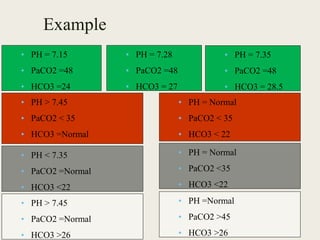
Example
• PH = 7.15
• PaCO2 =48
• HCO3 =24
• PH = 7.35
• PaCO2 =48
• HCO3 = 28.5
• PH > 7.45
• PaCO2 < 35
• HCO3 =Normal
• PH = Normal
• PaCO2 < 35
• HCO3 < 22
• PH < 7.35
• PaCO2 =Normal
• HCO3 <22
• PH = Normal
• PaCO2 <35
• HCO3 <22
• PH > 7.45
• PaCO2 =Normal
• HCO3 >26
• PH =Normal
• PaCO2 >45
• HCO3 >26
• PH = 7.28
• PaCO2 =48
• HCO3 = 27
123
Management of Patients
With
Urinary Disorders
INFECTIONS OF THE URINARY TRACT
Etiology:
Common pathogens are the gram -ve bacilli,
often found in the colon includes Escherichia
coli, klebsiella, proteus, and enterobacteria.
E. coli causes approximately 80% of acute
infections in patients without catheters, stone or
other urologic abnormalities.
124
PREDISPOSING FACTORS
 Factors which predispose an individual to UTI include
 Sex- 10 times more common in females than males. Because
• The female urethra is short.
• Close proximity of female urethra to rectum
• large numbers of pyogenic bacteria inhabit the vaginal
vestibule.
• the male urethra is enclosed in the penis
 stasis of the urine
 Instrumentation
• About 95 percent of people with catheters for three days
develop urinary tract infections.
 neurogenic bladder and Diseases (for example,DM)
125
Classification
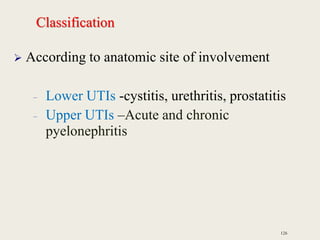
 According to anatomic site of involvement
– Lower UTIs -cystitis, urethritis, prostatitis
– Upper UTIs –Acute and chronic
pyelonephritis
126
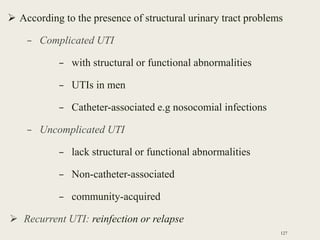
 According to the presence of structural urinary tract problems
– Complicated UTI
– with structural or functional abnormalities
– UTIs in men
– Catheter-associated e.g nosocomial infections
– Uncomplicated UTI
– lack structural or functional abnormalities
– Non-catheter-associated
– community-acquired
 Recurrent UTI: reinfection or relapse
127
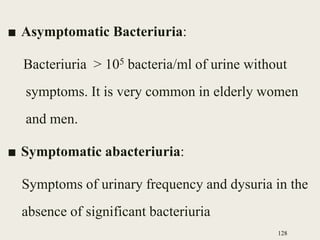
■ Asymptomatic Bacteriuria:
Bacteriuria > 105 bacteria/ml of urine without
symptoms. It is very common in elderly women
and men.
■ Symptomatic abacteriuria:
Symptoms of urinary frequency and dysuria in the
absence of significant bacteriuria
128
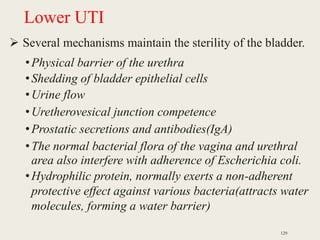
Lower UTI
 Several mechanisms maintain the sterility of the bladder.
•Physical barrier of the urethra
•Shedding of bladder epithelial cells
•Urine flow
•Uretherovesical junction competence
•Prostatic secretions and antibodies(IgA)
•The normal bacterial flora of the vagina and urethral
area also interfere with adherence of Escherichia coli.
•Hydrophilic protein, normally exerts a non-adherent
protective effect against various bacteria(attracts water
molecules, forming a water barrier)
129
Pathophysiology
 If bacteria do survive in the bladder, they adhere to the
mucosal lining of the bladder, multiply and ulcerations
may develop.
 When urine contacts these irritated areas, the client
experiences pain and urgency.
■ For infection to occur,
bacteria enter bladder--- attach and colonize the
epithelium ---evade host defense mechanisms---initiate
inflammation.
130
Routes of Infection
 Bacteria enter the urinary tract in three ways:
 Ascending infection: Urethrovesical reflux and
Vesicoureteral reflux
 Hematogenous spread
 Direct extension
■ Many UTIs result from ascending infection from
fecal organisms.
131
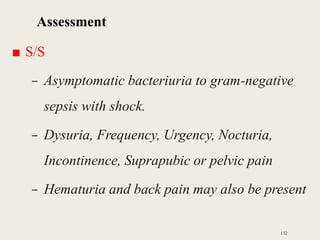
Assessment
■ S/S
– Asymptomatic bacteriuria to gram-negative
sepsis with shock.
– Dysuria, Frequency, Urgency, Nocturia,
Incontinence, Suprapubic or pelvic pain
– Hematuria and back pain may also be present
132
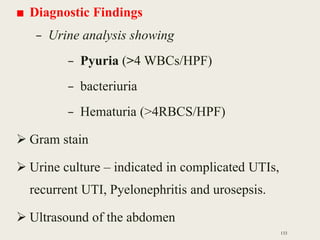
■ Diagnostic Findings
– Urine analysis showing
– Pyuria (>4 WBCs/HPF)
– bacteriuria
– Hematuria (>4RBCS/HPF)
 Gram stain
 Urine culture – indicated in complicated UTIs,
recurrent UTI, Pyelonephritis and urosepsis.
 Ultrasound of the abdomen
133
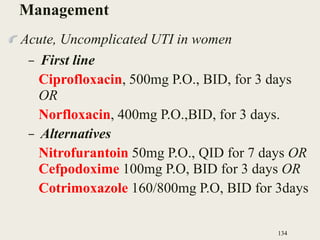
Management
Acute, Uncomplicated UTI in women
– First line
Ciprofloxacin, 500mg P.O., BID, for 3 days
OR
Norfloxacin, 400mg P.O.,BID, for 3 days.
– Alternatives
Nitrofurantoin 50mg P.O., QID for 7 days OR
Cefpodoxime 100mg P.O, BID for 3 days OR
Cotrimoxazole 160/800mg P.O, BID for 3days
134
■ Complicated UTIs
– First line and alternatives similar to
uncomplicated UTIs but needs prolonged
duration and closely followed as gram positives
could be the cause.
■ Recurrent UTI in women
– postcoital voiding and have liberal fluid intake
– Antibiotic prophylaxis is provided for at least 6
months
135
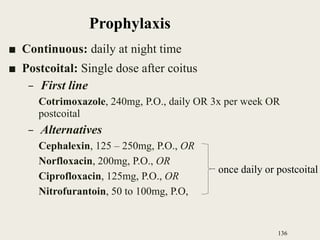
■ Continuous: daily at night time
■ Postcoital: Single dose after coitus
– First line
Cotrimoxazole, 240mg, P.O., daily OR 3x per week OR
postcoital
– Alternatives
Cephalexin, 125 – 250mg, P.O., OR
Norfloxacin, 200mg, P.O., OR
Ciprofloxacin, 125mg, P.O., OR
Nitrofurantoin, 50 to 100mg, P.O,
136
once daily or postcoital
Prophylaxis
Upper UTI
Pyelonephritis -is a bacterial infection of the renal pelvis,
tubules, and interstitial tissue of kidneys.
 Causes -upward spread of bacteria from the bladder or
spread from systemic sources via the bloodstream.
– E.g. Systemic infections (such as tuberculosis) can spread to
the kidneys and result in abscesses.
 This is a renal disease that may be either acute or
chronic.
137
Acute Pyelonephritis
■ Usually manifested by enlarged kidneys with
interstitial infiltrations of inflammatory cells.
■ Abscesses may be noted on the renal capsule
and at the corticomedullary junction.
138
. . .
Clinical Manifestations
Subj. chills, fever, Low back pain, flank pain,
nausea and vomiting, headache, malaise, and
painful urination.
In addition, dysuria and frequency are
common if lower urinary tract is involved.
Phy exam- CVAT
139
Chronic Pyelonephritis
■ Chronic pyelonephritis develops after recurrent episodes
of acute pyelonephritis.
■ Kidneys become scarred, contracted, and non-
functioning.
■ It is a cause of chronic kidney disease (renal failure) that
can result in the need for permanent renal replacement
therapies such as transplantation or dialysis.
140
S/S
■ Some clients with chronic pyelonephritis are
asymptomatic;
■ others have a low-grade fever and vague
gastrointestinal complaints.
■ Polyuria and Nocturia develop when the tubules of
the nephrons fail to reabsorb water efficiently.
141
. . .
■ Diagnostic Findings
WBC- leukocytosis
Urinalysis- bacteriuria and pyuria
Serum creat and BUN
Ultrasound or CT scan- any obstruction.
142
 Patients with acute uncomplicated pyelonephritis are
most often treated on an outpatient basis.
 Antipain and antipyretics; antispasmodics
Mild and moderate acute uncomplicated
pyelonephritis in non-pregnant women:
– First line
Ciprofloxacin, 500mg P.O., BID, oral for 7-10
days
– Alternatives
Cotrimoxazole, 160/800mg P.O, BID for 14 days
OR
Cefpodoxime, 200mg P.O., BID for 10 days
MEDICAL MANAGEMENT
143
• Severe acute uncomplicated pyelonephritis
(evidence of sepsis)
• intravenous therapy should be started and continued until the
patient improves (usually at 48–72 hours) then oral therapy is
continued to complete 10-14 days course
■ Ciprofloxacin, 400mg, I.V, BID OR
■ Ceftriaxone, 2gm, I.V, daily or 1gm, I.V, BID till patient
improves, then
■ Ciprofloxacin 500mg, PO, BID to complete 10-14
days course.
144
■ If no response in 48-72 hrs ultrasound is used to evaluate
for obstruction, abscess, or other complications of
pyelonephritis.
■ If obstruction or complication is not found gram +ve
organisms such as enterococci and S. saprophyticus
should be covered with Penicillins and aminoglycoside
combination.
145
Voiding disorders- Urinary retention
■ Urinary retention is bladder inability to empty the urine
completely during attempts to void.
■ Causes of urinary retention include an obstruction in
the urinary tract such as an enlarged prostate or bladder
stones, infections that cause swelling or irritation, nerve
problems that interfere with signals between the brain and the
bladder, medications (atropine or a phenothiazine), urethral
stricture.
■ Urinary retention can occur postoperatively in any patient
146
Assessment Findings
 acute retention
– sudden inability to void, distended bladder, and severe
lower abdominal pain and discomfort.
 Chronic retention
– bladder has stretched over time and accommodates
large volumes without producing discomfort
– fever, chills, pain on urination and dribbling may be
present
■ Urinalysis may show an increased number of
WBC, indicating an acute or chronic bladder
infection.
■ Catheterization or ultrasound can determine post
void residual volume
147
Medical and Surgical Management
o Urethral Catheterization for both acute and chronic
o Suprapubic cystostomy tube for chronic retention
o If it is possible to remove the cause, such as
excising excess prostatic tissue, surgery is
performed.
Nursing Management
■ measuring intake and output, palpating the
abdomen for a distended bladder, promoting
complete urination, and monitoring the voiding
pattern of clients.
148
■ Complications
– UTIs
– bladder damage
– kidney damage
149
■ older adults are prone for incontinence
■ Urinary incontinence may result from either bladder or urethral
dysfunction (or both) due to:
– Neurologic disease,
– bladder outlet obstruction /BOO/
– Trauma
– bladder prolapse and
– prostatic enlargement in men
– failure of the urethral sphincters.
150
Voiding disorders- Urinary Incontinence
Types
■ Stress incontinence- Client has involuntary loss of urine
from intact urethra, which results from sudden increase
in intra-abdominal pressure, such as with sneezing or
coughing.
 Urge incontinence- Client experiences urge to void but
cannot control voiding in time to reach a toilet.
 Overflow incontinence- Involuntary loss of urine related
to over distended bladder
151
■ Functional incontinence- Client has intact function of the
lower urinary tract but cannot identify the need to void or
ambulate to the toilet.
– Cognitive impairments, such as brain injury or
Alzheimer’s disease
■ Total incontinence- Urine is continuously and unpredictably
lost from the bladder.
– Results from surgery, trauma, or anatomic malformation
152
Assessment Findings
■ Clients complain of urgency, frequency, leaking
small amounts when coughing or sneezing, or
complete inability to control urine.
153
Medical Management
■ Management of urinary incontinence may be
behavioral, pharmacologic, or surgical .
■ Anticholinergic agents inhibit bladder contraction and
are considered first-line medications for urge
incontinence. E.g. atropine
■ tricyclic antidepressant medications E.g. amitriptyline
■ Sometimes medication to control incontinence results
in retention and must be discontinued.
154
Nursing Management
■ Preventing skin breakdown, reducing
anxiety, and
■ initiate a bladder-training program to
increase muscle tone and voluntary control.
155
Disorders of prostate gland
A) Prostatitis (male reproductive system)
■ Prostatitis is inflammation of prostate gland caused by
infectious agent or by a variety of other problems.
Cause
■ Infectious agents - bacteria, fungi & mycoplasma
■ Urethral stricture & hyperplasia of prostate
■ Microorganisms usually are carried to the prostate from
the urethra.
156
 Clinical Manifestation
■ Perineal pain and discomfort
■ Urethritis: Urgency , frequency and dysuria
■ Prostatodynia (pain in the prostate) on voiding.
■ Acute bacterial Prostatitis may produce a sudden onset of
fever & chills, low back pain and dysuria may be evident.
 Methods of Diagnosis
■ Careful history & digital examination
■ culture of prostate fluid or tissue and urine culture.
157
■ A broad spectrum antimicrobial drugs for 10 - 14 days,
■ I.V administration of the drug may be necessary to
achieve high serum and tissue level.
■ Bed rest, antispasmodics, laxatives to soften stool and sitz
bath
■ Patient education: therapy, fluid intake
■ avoidance of sexual intercourse and prolonged sitting,
and medical follow up for at least 6 months to 1 year.
158
Mgt
B) Benign prostate hyperplasia
(Hypertrophy) BPH
■ The most common problem of the adult male
reproductive system.
■ This problem occurs in about 50 % of men over 50 years
of age and 75% of men over 70 years.
■ The prostate gland enlarges extending up ward in to the
bladder and obstructing the outflow of urine by
encroaching on the vesical orifice.
159
Cause (Etiology)
■ Uncertain but evidences suggests a hormonal
cause as initiating hyperplasia of the supporting
stromal tissue and a glandular element in the
prostate.
160
Clinical Manifestation & Diagnostic
Evaluation
■ Nocturia
■ Hesitancy in starting urination
■ Increasing force of urinary stream
■ Interruption of urinary stream,
■ A sensation of incomplete emptying of the
bladder,
161
■ urine dribbles out after urination,
■ urinary retention (infection)
■ fatigue secondary to Nocturia
■ Anorexia, nausea and vomiting due to impaired renal
function
■ Epigastric discomfort due to distended bladder
■ Hematuria, uremia at the later stage
162
Diagnosis
 History and c/ms
■ Symptoms of prostatism (frequency , dysuria, urgency,
dribbling, hesitancy)
 P/E
■ On rectal examination the prostate is found to be
enlarged.
■ Complete hematological investigation,
■ x-ray and Cystoscopy examination.
163
 Mgt
■ The plan of treatment depends on the cause, the severity
of obstruction and the condition of the patient.
■ Catheterization to treat an acute urinary retention.
■ Some times a supra pubic cystostomy to give adequate
drainage.
164
■ Pharmacologic treatment for BPH includes use
of alpha 1-adrenergic blockers
■ Antimicrobial drugs may be necessary to treat
UTI
■ Surgery to remove the hyper plastic prostate
tissue to provide permanent relief of the
obstruction it is referred to as a prostatectomy.
165
Diseases of the kidney
– Renal failure (acute and chronic)
– Nephrolithiasis
– Hydronephrosis
– Cysts and tumors of the kidney
– Glomerulonephritis (acute and chronic)
– Nephrotic syndrome
– Nephrosclerosis
166
RENAL FAILURE
■ Renal failure results when the kidneys can’t remove
the body’s metabolic wastes or perform their
regulatory functions.
■ The substances normally eliminated in the urine
accumulate in the body fluids as a result of impaired
renal excretion.
■ Classified as acute and chronic renal failure
167
Acute renal failure
■ Is a sudden loss of kidney function (reduced GFR)
over a period of hours to days.
■ Manifested with .
– Oliguria (<400ml/day urine)
– Anuria (<100 ml/day urine) is not common.
– Rising serum creatinine and BUN levels and
retention of other metabolic waste products.
168
Categories of ARF
Based on conditions that cause ARF
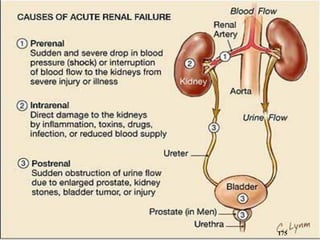
1. Prerenal failure
2. Intrarenal failure
3. Postrenal failure
169
Prerenal Failure
■ Occurs because of decreased renal blood flow
■ Common causes of decreased renal blood flow
include:
A. Volume depletion resulting from:
– Hemorrhage
– Renal losses (diuretics, osmotic diuresis)
– GI losses (diarrhea, vomiting)
170
B. Cardiac insufficiency resulting from:
– Myocardial infarction
– Heart failure
– Dysrrhthmias
C. Vasodilation resulting from:
– Sepsis
– Anaphylaxis
– Antihypertensive medications
171
2. Intrarenal failure:
• Results from actual parenchymal damage to
glomeruli or kidney tubules due to:
– Nephrotoxic agents,
– infections,
– ischemia and blockages,
– polycystic kidney disease
172
3. Post renal failure
■ Usually as a result of an obstruction somewhere distal to
the kidney. Including:
- Calculi (stones)
- Tumors
- Benign prostate hyperplasia (BPH)
- Stricture and blood clot.
173
??????????
Prerenal failure results from:
A. bilateral obstruction of urine outflow.
B. conditions that diminish blood flow to the
kidneys.
C. damage to the kidneys themselves.
D. any preexisting condition that contributed to
renal dysfunction.
174
175
Acute Renal Failure
■ phases
– Initial –begins with the initial insult and ends
when oliguria develops.
■ Acute tubular necrosis /ATN/
■ 1-3 days
– Oliguric – UOP < 400/d,
■ ^BUN, Creat, Phos, K,
■ Fluid volume excess develops
■ Azotemia,
■ may last up to 14 d
176
– Diuretic – is marked by a gradual increase in
urine output, which signals that glomerular
filtration has started to recover.
– Laboratory values stabilize and eventually
decrease.
– UOP ^ to as much as 4000 mL/d but no
waste products, at end of this stage may
begin to see improvement
– Recovery – things go back to normal or may
remain insufficient and become chronic.
– 3 to 12 months
177
Signs and symptoms
– Almost every system of the body is affected
– The patient appears critically ill and lethargic with
persistent nausea, vomiting and diarrhea.
– The skin and mucous membrane are dry and the
breath may have the odor of urine.
– Excoriation and itching of the skin.
– CNS S/S include drowsiness, headache and
seizure.
178
Diagnostic findings
■Changes in urine
–Oliguria
–low specific gravity
■Increased BUN and creatinine
levels.
■hyperkalemia.
■metabolic acidosis
■Anemia
■ IVP provides evidence of renal
dysfunction
■ renal biopsy shows destruction
of nephrons
■ Radiography and
ultrasonography demonstrate
structural defects
179
Prevention
■ Clients at risk for dehydration are adequately
hydrated
■ Shock and hypotension are treated as quickly as
possible with replacement fluids and blood.
■ Continuous monitoring of renal function is very
important for clients at risk for ARF.
■ prevent toxic drug effects
180
Management
• Prerenal azotemia is treated by optimizing renal
perfusion,
• postrenal failure is treated by relieving the
obstruction.
• Intrarenal azotemia is treated with supportive
therapy, with removal of causative agents
• Fluid excesses can be detected by the clinical
findings of dyspnea, tachycardia, and distended
neck veins.
• Mannitol, furosemide may be prescribed to initiate
diuresis.
181
■ Adequate renal blood flow in patients with prerenal
causes of ARF may be restored by IV fluids or
transfusions of blood products.
■ Infusion of albumin may be given hypoproteinemia
■ Dialysis may be initiated to prevent complications of
ARF, such as hyperkalemia, metabolic acidosis,
pericarditis, and pulmonary edema.
182
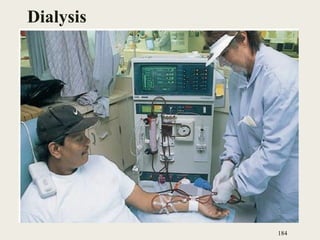
Dialysis
■ For acute renal failure, dialysis can be
done to remove toxic substance of
metabolism and correct electrolyte
imbalance.
■ Dialysis is a process for removing waste
and excess water from the blood.
183
Dialysis
184
Two main types of dialysis
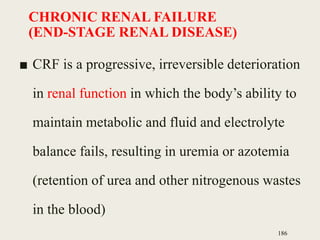
■ Hemodialysis
Removes wastes and water by circulating blood outside the
body through an external filter, called a dialyzer, that contains
a semipermeable membrane
■ Peritoneal dialysis
– Wastes and water are removed from the blood inside the
body using the peritoneum as a natural semipermeable
membrane. Wastes and excess water move from the blood,
across the peritoneal membrane
185
CHRONIC RENAL FAILURE
(END-STAGE RENAL DISEASE)
■ CRF is a progressive, irreversible deterioration
in renal function in which the body’s ability to
maintain metabolic and fluid and electrolyte
balance fails, resulting in uremia or azotemia
(retention of urea and other nitrogenous wastes
in the blood)
186
■ ESRD may be caused by systemic diseases, such as:
– DM (leading cause);
– hypertension;
– chronic glomerulonephritis;
– pyelonephritis;
– obstruction of the urinary tract;
– hereditary lesions, as in polycystic kidney disease;
– vascular disorders; infections; medications; or toxic
agents
187
Stages of Chronic Renal Disease
■ Stage 1
Reduced renal reserve, characterized by a 40% to 75%
loss of nephron function. The patient usually does not
have symptoms
■ Stage 2
Renal insufficiency occurs when 75% to 90% of
nephron function is lost. At this point, the serum
creatinine and blood urea nitrogen rise, the kidney loses
its ability to concentrate urine and anemia develops.
188
■ Stage 3
–End-stage renal disease (ESRD), the final stage of
chronic renal failure, occurs when there is less than
10% nephron function remaining.
–All of the normal regulatory, excretory, and hormonal
functions of the kidney are severely impaired.
–ESRD is evidenced by elevated creatinine and blood
urea nitrogen levels as well as electrolyte imbalances.
189
Clinical Manifestations
– Heart failure and
pulmonary edema (due to
fluid overload)
– Severe itching (deposit of
urea crystals on the skin)
– Anorexia, nausea,
vomiting,
– Altered levels of
consciousness, inability to
concentrate, and seizures
– Hypertension
– Acidosis
– Anemia
– Calcium and phosphorus
imbalance
190
• Because virtually every body system is affected by
the uremia of chronic renal failure
Diagnostic Findings
■ Renal function test
– Decreased GFR
– Increased serum creatinine and BUN levels
191
Complications
– Hyperkalemia
– Hypertension
– Anemia
– Bone disease
– Metabolic acidosis
192
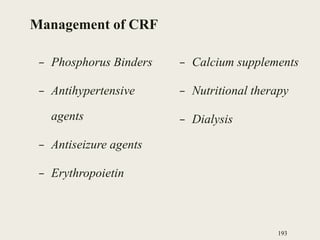
Management of CRF
– Phosphorus Binders
– Antihypertensive
agents
– Antiseizure agents
– Erythropoietin
– Calcium supplements
– Nutritional therapy
– Dialysis
193
NEPHROLITHIASIS
–Formation or presence of stony masses in the UT
–Stones are formed in the UT when urinary concentrations
of substances such as calcium oxalate, calcium
phosphate, and uric acid increase
–Stones may be found anywhere from the kidney to the
bladder
–They may vary in size from small grains of sand, up to
stones the size of an orange.
194
Factors that favor the formation of stones are:
– Infection,
– Urinary stasis, and
– Some metabolic changes which increase the concentration
of some salts in the urine.
■ Types of stone
– Calcium Stones
– Uric Acid Stones
– Oxalate Stones
195
Signs and Symptoms
– Depend whether they are in the kidney, kidney pelvis,
ureter, or bladder.
– Usually kidney stones cause only vague symptoms.
– There may be mild backache, and some urinary frequency.
– Intense, deep ache in the CVA region
– Examination of the urine: WBC’s and RBC’s because the
stone irritates the epithelium causing microscopic
bleeding.
196
Management
■ The goals of management are
– to eradicate the stone
– to determine the stone type
– to prevent nephrons destruction
– to control infection, and
– to relieve any obstruction that may be present.
197
■ Opioid analgesics or NSAIDs(to relieve the pain )
■ Hot baths or moist heat to the flank area
■ A high fluid intake
■ restrict calcium in their diet
■ Encourage low-purine diet
198
■ Surgical management
– Extracorporeal shock wave lithotripsy (is a
noninvasive procedure used to break up stones in the
calyx of the kidney )
– Percutaneous nephrolithotomy
– Cystoscopy
– Ureteroscope
199
HYDRONEPHROSIS
■ It is a dilatation of the renal pelvis and calyces of one
or both kidneys.
■ The obstruction to urine flow causes increases pressure
in the renal collecting system.
■ This causes a gradual thinning of the renal parynchema.
■ If the obstruction is in the bladder or urethra, both
kidneys will be affected.
200
■ The obstruction may be due to a stone in the kidney
pelvis partly obstructing the ureteropelvic junction, or
the stone may be in the ureter but also causing only a
partial obstruction.
■ In older men, the most common cause of mild to
moderate hydronephrosis is enlargement of the
prostate causing bladder outlet obstruction.
201
Cysts of the kidney
■ Kidney cysts are round pouches of fluid that form on or in
the kidneys.
■ Polycystic kidney disease, which is a progressive disease
that can lead to kidney failure.
■ Simple kidney cysts most often do not cause harm. In
most cases, a doctor finds them during an ultrasound or
computerized tomography (CT) scan done for another
reason.
202
■ Cause pain , back, or upper abdomen if they enlarge and
press on other organs
■ Bleeding
■ Become infected, causing fever, chills, or other signs of
infection
■ Impair kidney function (rare)
■ Treatments for cysts that cause signs and symptoms
■ Puncturing and draining the cyst,
■ Surgery to remove the cyst.
203
Glomerulonephritis
■ Glomerulonephritis is an inflammation of the
glomerular capillaries.
■ Glomerular diseases include a group of disorders
characterized by pathologic alterations in normal
glomerular structure and function.
■ The major clinical manifestations of glomerular injury
include proteinuria, hematuria, decreased glomerular
filtration rate, and alterations in excretion of sodium
(leading to edema and hypertension).
204
■ Primary glomerular diseases :
– Acute glomerulonephritis
– Chronic glomerulonephritis
205
Acute Glomerulonephritis (AGN)
■ Glomerulonephritis is an inflammation of the
glomerular capillaries.
■ Primarily a disease of children older than 2 years of
age, but it can occur at any age.
206
Pathophysiology
■ The most common etiologic factor associated with
AGN is immunologic reactions after group -A beta-
hemolytic streptococcal infections.
■ Commonly after skin and throat infections.
■ AGN is not a direct bacterial infection in the kidney.
207
Clinical Manifestations
– The primary presenting feature of AGN is
hematuria.
– RBC casts indicate glomerular injury
– Proteinuria (primarily albumin)
– Generalized edema
– Hypertension
– CVA tenderness
208
Diagnosis
■ Definitive diagnosis may need a kidney biopsy.
■ Usually made by S/S
■ The urine examination will show dark urine with
proteinuria, RBC, and many casts.
■ BUN may be elevated and the patient may be anemic
209
Complications
■ Hypertension
■ Heart failure
■ Pulmonary edema
■ Anemia
210
Management:
– Antibiotics
– Corticosteroids
– Salt free diet
211
Chronic Glomerulonephritis
– It is very often not diagnosed until late permanent
damage has been done to the kidneys.
– The kidneys shrink, and atrophy so that cortex of
glomerular tissue becomes very thin.
– is characterized by irreversible and progressive
glomerular and tubulointerstitial fibrosis
– Scars also affect the kidney cortex disturbing
nephrons, blood supply and drainage system.
212
Clinical Manifestations:
– Weight loss, weakness, Nocturia, headaches,
and digestive disturbances.
– As chronic glomerulonephritis progresses,
signs and symptoms of chronic renal failure.
– Blood pressure may be normal or elevated
and there is usually dependent edema.
213
Diagnosis
– Made by urine tests, elevated BUN
– Once the kidney damage has become severe, there is
little chance that renal function can return to normal
again.
– May also be diagnosed by finding complications:
■ Hypertension, edema of feet, anemia , loss
of weight, headache, dizziness
214
Medical management
Symptomatic treatment is directed toward the:
 Hypertension
 Heart failure
 Anemia
 Urinary tract infection or other complications.
215
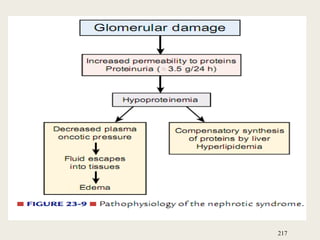
NEPHROTIC SYNDROME
– Nephrotic syndrome is a nonspecific kidney disorder
characterized by three signs of disease:
large proteinuria, hypoalbuminemia, and edema
– Very low hypoalbuminemia can also cause a variety of
secondary problems, such as water in the abdominal
cavity (ascites), around the heart or lung (pericardial
effusion, pleural effusion),
– high cholesterol (hence hyperlipidemia), loss of molecules
regulating coagulation (hence increased risk of
thrombosis).
216
217
Diagnosis
■ Proteinuria >3-3.5 g/day is sufficient for the diagnosis of
nephrotic syndrome
Complications
■ Infection due to deficient immune response
■ Thromboembolism (especially deep vein)
■ Acute renal failure (due to hypovolemia)
■ Accelerated atherosclerosis (due to hyperlipidemia)
218
???????????????
The major manifestation of nephrotic syndrome is:
a. hematuria.
b. hyperalbuminemia.
c. edema.
d. anemia.
219
Nephrosclerosis
■ Nephrosclerosis: A progressive disease of the
kidneys that results from sclerosis (hardening)
of the small blood vessels in the kidneys.
■ Commonly associated with hypertension or
diabetes
■ Can lead to kidney failure.
220
■ In the kidneys, as a result of hypertension,
hyaline accumulates in the wall of small
arteries and arterioles, producing the
thickening of their walls and the narrowing
of the Lumina — arteriolosclerosis.
■ Consequent ischemia will produce tubular
atrophy, interstitial fibrosis, glomerular
alterations.
■ In advanced stages, kidney failure will
occur.
221
■ Clinical manifestation of hypertensive Nephrosclerosis
– long-term essential hypertension
– Hypertensive retinopathy
– left ventricular hypertrophy,
– Minimal proteinuria, and progressive renal
insufficiency
– No evidence of another renal disease
– RX-control hypertension
222
Tumor of the kidney
■ A kidney tumor is an abnormal growth within the kidney.
The terms "mass," "lesion" and "tumor" are often used
interchangeably. Tumors may be benign (non-cancerous)
or malignant cancerous).
■ Almost all kidney cancers first appear in the lining of tiny
tubes (tubules) in the kidney. This type of kidney cancer
is called renal cell carcinoma.
■ The good news is that most of kidney cancers are found
before they spread (metastasize) to distant organs
223
– tumors may metastasize early to the
lungs, bone, liver, brain
■ Clinical Manifestations
– Many renal tumors produce no symptoms
– hematuria,
– Pain, and a mass in the flank
– Unexplained weight loss, increasing weakness, and
anemia(if metastasized)
224
Disorders of the male reproductive system
– Problems of the penis
– Cancer of the penis(Reading assignment)
– Infection
■ Prostatitis (Discussed)
■ Epididymitis
■ Orchitis
■ Benign prostatic hypertrophy (BPH) (Discussed)
225
Acute Epididymitis
– Is more often sterile than it is bacterial.
– Sterile epididymitis is thought to be caused by a
sudden retrograde flow of urine from the prostatic
urethra through the ejaculator duct, through the
vas deferens, and into the epididymis.
– Urine reaching the epididymis causes an
inflammation by chemical effect.
226
■ This is quite painful and lasts for 2 to 3 weeks.
■ Treatment of this is directed toward the pain.
■ Elevation of the scrotum with some support can
reduce the heavy feeling.
■ Analgesics for severe cases and bed rest will further
help until the inflammation subsides spontaneously.
227
Chronic epididymitis
■ Chronic epididymitis can be bacterial, but is often
found to be tuberculosis.
■ If the inflammation has lasted 2 to 3 moths and/or
there is drainage from the scrotum, tuberculosis
should be strongly suspected.
■ TB infection should be treated like TB infection
elsewhere.
228
ORCHITIS
■ An acute infection of the testicles is uncommon.
■ By some reports, of the male children who get
epidemic parotitis (mumps), about one out of
five may develop mumps orchitis.
229
PROBLEMS OF THE TESTIS:
■ The entry into the scrotum usually occurs before the
9th month of fetal life.
■ For normal spermatogenesis, the testicle must be in
the scrotum where the temperature is one or two
degrees lower than intra-abdominal temperature.
230
CRYPTORCHIDISM (UNDECENDED TESTICLE)
■ In case the testicle does not reach the scrotum before
birth, the abnormality is called cryptorchidism, which
means, an undescended testicle.
■ An undescended testicle will not produce
spermatozoa, and it has a higher risk of developing a
malignancy later in life.
231
Management
■ The testicle need to be surgically placed into the
scrotum, if it does not reach that position by age 2 or
3.
■ Waiting until age 8 or 10 may cause permanent
damage to testicle.
■ The congenital abnormality is usually unilateral
although it can be bilateral.
232
HYDROCELE
• It is a collection of fluid (like water) inside the fibrous
capsule surrounding the testicle.
• The cause of hydrocele is not known.
• A hydrocele is usually slow growing painless enlargement of
the testicle
• They require careful examination to differentiate a
hydrocele from a hernia
• Treatment for large hydroceles is surgery.
• Cure is expected.
233
PROBLEMS OF THE PENIS
PHIMOSIS
■ Is a condition in which the uncircumcised foreskin cannot be
retracted over the glans.
■ If the foreskin stays a long time without cleansing under it,
various kinds of bacteria can cause infections.
■ If the foreskin has become scarred and fixed so that it cannot be
retracted, a circumcision should be done.
234
PARAPHIMOSIS
■ In this condition the foreskin has been retracted back
of the glans, and then becomes so edematous that it
cannot be replaced over the glans again
■ By steady gentle pressure, usually the glans can be
pushed back under the foreskin, but sometimes
anesthesia and a circumcision is required.
235
HYPOSPADIUS
■ This is a congenital abnormality of the penis in which the
urethral opening is not in the normal position in the glans penis.
■ It is instead somewhere along the shaft toward the scrotum.
■ This problem needs correction because the downward curvature
of the penis prevents straight erection which prevents sexual
intercourse.
■ Surgery is usually advised between ages 3 to 6 so that the child
may appear normal by the time he stars going to school.
236
END
237

Genitourinary nursing

  • 1.
    NURSING INTERVENTION OF PATIENTSWITH GENITOURINARY DISORDERS 1 Mulugeta Emiru (MSc in Adult Health Nursing) Mizan-Tepi University,Ethiopia 2017
  • 2.
    Review of anatomyand physiology The urinary system comprises of Kidneys, Ureters, Bladder and Urethra 2
  • 3.
    ■ functional unitsof the kidney ■ Each kidney consists 1 million nephrons 3 Nephron
  • 4.
    . . . Urineformation complex three-step process: – Glomerular Filtration: – Tubular Reabsorption: Amino acids and glucose – Tubular Secretion 4 1 L to 2 L of urine each day
  • 5.
    Functions of kidneys 5 •Metabolic waste(Urea and creatinine) • Drugs • Toxins Excretory • Water balance • Electrolyte balance Na+,K+,Ca++, Cl- • Acid base balance Regulatory • Erythropoietin • Renin • PGs Endocrine • Alpha 1 hydroxylase enzymeMetabolic
  • 6.
    Excretory ■ Renal clearancerefers to the ability of the kidneys to clear solutes from the plasma. ■ BUN and creatinine are used to determine GFR. ■ Creatinine clearance is a good measure of the glomerular filtration rate (GFR). 6 BUN =10-20 mg/dl Serum creatinine=0.6-1.2mg/dl GFR =125 to 200 mL/min •As renal function declines, creatinine clearance decreases. Functions of kidneys
  • 7.
    Regulatory- water balance Brainmonitors water content of blood If low water content, pituitary releases ADH ADH travels in blood to nephron ADH causes more water to move from urine back into blood 7
  • 8.
    Electrolyte balance ■ Electrolytegained = Electrolyte excretion ■ The regulation of sodium excreted depends on aldosterone released by the adrenal cortex. Endocrine 1. Erythropoietin production 2. Renin secretion 3. PGs secretion 8
  • 9.
    Assessment of GUS 1.Health History 2. Physical Examination 3. Laboratory investigations and 4. Diagnostic Tests 9
  • 10.
    Health History ■ Keepprivacy and be confidential ■ Needs communication skill ■ The health Hx includes ■ C/C ■ HPI ■ general health, ■ childhood and family illnesses, ■ past medical history, allergies, sexual and reproductive health, exposure to toxic chemicals or gas, and ■ Medication history 10
  • 11.
    S/S  Pain  nausea,vomiting, diarrhea, abdominal discomfort, and abdominal distention.  Unexplained Anemia  Changes in Voiding: 11
  • 12.
  • 13.
    Physical Examination ■ Priorto examination ask the client to void ■ Inspection ■ Auscultation ■ Percussion ■ Palpation ■ assesses for signs of electrolyte and water imbalances – Periorbital edema (swelling around the eyes) – Edema of the extremities – Cardiac failure – Mental changes ■ Vital signs and weight 13
  • 14.
    Diagnostic tests ■ Plainx-ray / KUB x-ray – size and position of the kidneys, ureters, and bony pelvis – urinary calculi (stones), – anatomic defects of the bony spinal column ■ Cystoscopy- Direct visualization of the bladder – used to identify the cause of painless hematuria, urinary incontinence, or urinary retention. – evaluation of structural and functional changes of the bladder 14
  • 15.
    ■ Cystogram – Acatheter is inserted in to the bladder and contrast agent is then instilled over line the bladder wall – To aid in evaluating vesico-ureteral reflux ■ IVP – contrast medium administered intravenously – visualization of the KUB 15
  • 16.
    ■ Retrograde pyelography –Urethral catheters are passed up through the ureter in to the renal pelvis by means of cystoscopy. – Contrast agent is then introduced by injection through the catheter. 16
  • 17.
    ■ Ultrasonography – Isa noninvasive procedure that uses sound waves passed into the body through a transducer to detect abnormalities of internal tissues and organs. – Abnormalities such as fluid accumulation, masses, congenital malformations, changes in organ size, or obstructions can be identified. ■ CT & MRI 17
  • 18.
    Laboratory investigations – thestudy of the components and characteristics of the urine. – A clean-catch MSU from the first voiding of the morning is preferred. 18 Components Normal values Color yellow Specific gravity 1.010 to 1.025 PH 4.5 – 8 Opacity Clear Glucose Negative Ketone Negative Protein/albumin Negative Bilirubin negative Bacteria None Parasites None Casts None Crystals none RBCs 0-3 WBCs 0-5 Urine osmolality: 50–1200 mOsm/kg considered normal 200–800 mOsm/kg average Urinalysis
  • 19.
    ■ Urine macroscopicand microscopic characteristics. Dipstick test ■ A thin, plastic stick with strips of chemicals on it is placed in the urine to detect abnormalities. ■ A dipstick test checks for: – Acidity (pH). The pH level indicates the amount of acid in urine. – Concentration /specific gravity, shows how concentrated particles are in urine. A higher than normal concentration often is a result of not drinking enough fluids. – Protein. Low levels of protein in urine are normal. but larger amounts may indicate a kidney problem. – Sugar- Any detection of sugar on this test usually calls for follow-up testing for diabetes. – Ketones, Bilirubin, nitrites or leukocyte esterase, Blood 19
  • 20.
    Microscopic exam ■ Whiteblood cells (leukocytes) may be a sign of an infection. ■ Red blood cells (erythrocytes) may be a sign of kidney disease, a blood disorder or another underlying medical condition, such as bladder cancer. ■ Bacteria or yeasts may indicate an infection. ■ Casts and Crystals from chemicals in urine may be a sign of kidney stones. 20
  • 21.
    –Use  to assessthe status of the patient’s kidney function.  to evaluate the severity of kidney disease –Includes concentration tests, serum creatinine and creatinine clearance, blood urea nitrogen /BUN/ levels. 21 RFT / Renal Function Tests
  • 22.
    Renal concentration tests 1.Specific Gravity: – a measurement of the kidney’s ability to concentrate urine – compares the weight of urine (weight of particles) to the weight of distilled water – depends largely on hydration status: When fluid intake decreases, specific gravity normally increases, and vice versa. 22 urine specific gravity is 1.010 to 1.025
  • 23.
    ■ Diseases decreasesp. gr of urine E.g. – Diabetes insipidus – glomerulonephritis, and – severe renal damage ■ Diseases increase sp. gr of urine E.g. – DM, – nephrosis, and – excessive fluid loss 23
  • 24.
    2. Urine osmolality: ■Urine osmolality reflects the ability of the kidney to concentrate and dilute urine, through measurement of the number of particles in a kilogram of solution. 24 Urine osmolality: 50–1200 mOsm/kg considered normal; 200–800 mOsm/kg average Osmolality of blood = 280 to 300 mOsm/kg.
  • 25.
    Creatinine Clearance Test ■Creatinine is a chemical waste molecule that is generated from muscle metabolism. ■ Used to determine excretory function of kidney. ■ Creatinine is filtered by the glomeruli and is excreted at a fairly constant rate by the kidney. ■ Creatinine excretion is not affected significantly by dietary or fluid intake 25
  • 26.
    . . . ■Increased serum creatinine level indicate decreased renal function ■ Creatinine is more accurate indicator for renal function than the BUN. 26 Serum Creatinine level: 0.6–1.2 mg/dL (50–110 mmol/L)
  • 27.
    BUN / BloodUrea Nitrogen ■ Urea is nitrogenous end product of protein metabolism. ■ Serves as index of renal function. ■ Test values are affected by protein intake, tissue breakdown, and fluid volume changes. ■ Rises when renal function deteriorates. 27 Blood urea nitrogen [BUN: 10–20 mg/dl]
  • 28.
    Changes in theUrinary System Related to Aging ■ Nephrons decrease, resulting in decreased filtration and gradual decrease in excretory and reabsorptive functions of renal tubules. ■ Glomerular filtration rate decreases, resulting in decreased renal clearance of drugs. ■ Blood urea nitrogen increases 20% by age 70. ■ Sodium-conserving ability is diminished. ■ Bladder capacity decreases. ■ Renal function increases when client is lying down. ■ Bladder and perineal muscles weaken, resulting in inability to empty bladder. ■ Incidence of stress incontinence increases in females. ■ Prostate may enlarge, causing frequency or dribbling. 28
  • 29.
    FLUID AND ELECTROLYTEBALANCE o To maintain proper balance, the amount of fluid gained and lost must be equal. o There are two major fluid compartments. o ICF and ECF o ECF again has two comp. o Intravascular o Interstitial
  • 30.
    o Body fluidnormally shifts between the two major compartments or spaces in an effort to maintain an equilibrium between the spaces. o Loss of fluid from the body can disrupt this equilibrium. o Sometimes fluid is not lost from the body but is unavailable for use by either the ICF or ECF called third-space fluid shift, or “third spacing”
  • 31.
    ■ Fluid balanceis maintained by – Osmoreceptors (the release or inhibition of ADH) – Renin-angiotensin-aldosterone system – Secretion of atrial natriuretic peptide /ANP/. – Thirst
  • 33.
    Electrolytes o Electrolytes inbody fluids are active chemicals that carry an electrical charge when dissolved in fluid (cations and anions).  Electrolyte concentrations in the ICF differ from those in the ECF. 33 Cations Sodium Potassium Calcium Magnesium and Hydrogen ions. Anions Chloride Bicarbonate Phosphate and Sulfate
  • 34.
  • 35.
    ■ Normal movementof fluids through the capillary wall into the tissues depends on hydrostatic pressure and colloidal osmotic pressure. ■ Body fluids across the compartments is regulated by ■ Osmosis ■ Diffusion ■ Filtration ■ Na+ - K+ pump 35 ?
  • 36.
    HYPOVOLEMIA / FVD ■Occurs when loss of ECF volume exceeds intake. Causes ■ GI losses- Vomiting, diarrhea, suctioning ■ Sweating and hemorrhage ■ Decreased intake ■ Third-space fluid shifts
  • 37.
    s/s ■ Acute weightloss; orthostatic hypotension ■ decreased skin turgor; oliguria; concentrated urine ■ Weak, rapid pulse; flattened neck veins; ■ Thirst; decreased or delayed capillary refill; decreased central venous pressure ■ Cool, clammy, pale skin, lassitude; muscle weakness; and cramps.
  • 38.
    Diagnostic Findings ■ Thecause of hypovolemia may be determined through the health history and physical examination. ■ BUN : creatinine ratio > 20:1
  • 39.
    Nursing Dx &Management Mgx ■ Treat the cause ■ When the deficit is not severe, the oral route is preferred ■ When fluid losses are acute or severe, IV 0.9% NaCl. ■ As soon as the patient becomes normotensive, 0.45% NaCl provides both electrolytes and water, helps excretion of wastes. 39 NDx. Deficient Fluid Volume Decreased cardiac output Ineffective tissue perfusion
  • 40.
    … ■ Monitor fluidI/O at least every 8 hours, and sometimes hrly. ■ Body weights daily, Skin turgor ■ Vital signs are closely monitored. ■ T0, Pulse, B/P ( postural hypotension ) 40 ?
  • 41.
    HYPERVOLEMIA / FVE ■Isotonic expansion of the ECF caused by the abnormal retention of water and sodium. Contributing factors include • heart failure, • renal failure, and • cirrhosis of the liver • consumption of excessive amounts of salts
  • 42.
    CMs ■ Edema, distendedneck veins, and crackles, SOB and wheezing; ■ Increased blood pressure, pulse pressure, and central venous pressure; tachycardia, increased weight; increased urine output. Diagnostic Findings ■ BUN and hematocrit, Urine sp. Gr, serum osmolality ■ Serum Sodium level, CVP, Chest x-rays
  • 43.
    Medical Management ■ Managementof FVE is directed at the causes. ■ When the fluid excess is related to excessive administration of sodium-containing fluids, discontinuing the infusion may be all that is needed. ■ Symptomatic treatment consists of administering diuretics and restricting fluids and sodium. Other modalities ■ Dialysis and Renal transplantation 43
  • 44.
    Nursing Dx &Management Mgx ■ Measure I/O, weigh daily, ■ Assess breath sounds, ■ Monitor the degree of edema 1. Excess Fluid Volume related to intake that exceeds fluid loss AEB… 2. Risk for Impaired Skin Integrity related to compromised circulation secondary to edema 3. Impaired skin integrity 4. Impaired gas exchange
  • 45.
    Electrolyte imbalances 45 – Sodiumimbalance – Potassium imbalance – Calcium imbalance
  • 46.
    Alteration in SodiumNa+ Balance ■ The chief cation in ECF, ■ Essential for maintaining normal nerve and muscle activity and regulating osmotic pressure. ■ The principal role of sodium is to regulate and distribute fluid volume in the body 46 135 to 145 mEq/L hyponatremia hypernatremia Normal < >
  • 47.
    Sodium Deficit (Hyponatremia) ■Hyponatremia- serum sodium <135 mEq/L ■ Hyponatremia primarily occurs due to an imbalance of water rather than sodium ■ Can occur together with FVD or FVE. Causes – Renal loss- high sodium is detected in urine E.g. diuretic use – Non renal loss- low sodium is detected in urine as the kidney retains sodium to compensate for non- renal fluid loss. E.g. vomiting, diarrhea, sweating – Aldosterone deficiency, as occurs in adrenal insufficiency. 47
  • 48.
    C/Ms ■ Signs ofDHN and GI symptoms like nausea, abdominal cramping, anorexia, muscle cramps, and a feeling of exhaustion, Altered mental status. ■ When the serum sodium level drops below 115 mEq/L, Neurologic changes (signs of increasing intracranial pressure), such as lethargy, confusion, muscle twitching, focal weakness, and seizures, may occur. 48
  • 49.
    Diagnostic Findings ■ Serumsodium level is <135 mEq/L ■ Serum osmolality is also decreased, except in azotemia or ingestion of toxins. ■ Urinary sodium 49
  • 50.
    Medical Management ■ Assessspeed with which hyponatremia occurred – Acute hyponatremia causes severe cerebral edema and compression of midbrain structures. ■ Careful sodium replacement either by mouth, nasogastric tube, or parenteral route. ■ Serum sodium must not be increased by greater than 12 mEq/L in 24 hours, to avoid neurologic damage.
  • 51.
    ■ Hyponatremia withnormal or excess fluid is treated by fluid restriction. When neurologic symptoms are present, however, it may be necessary to administer small volumes of a hypertonic sodium solution, such as 3% or 5% sodium chloride. Nursing Mgt. ■ I/O, weight ■ Assess for abnormal losses of sodium or gains of water ■ alert for CNS changes
  • 52.
    SODIUM EXCESS (Hypernatremia) ■> 145 mEq/L [145 mmol/L]) ■ Can be caused by – a gain of sodium in excess of water or – a loss of water in excess of sodium. ■ It can be associated with FVD or FVE. Causes – Administration of hypertonic enteral feedings without adequate water – watery diarrhea and greatly increased insensible water loss (hyperventilation, Increased sweating) – Diabetes insipidus, a deficiency of ADH 52
  • 53.
    C/Ms ■ Symptoms arerelated with cellular dehydration. ■ A primary characteristic of hypernatremia is thirst ■ Subarachnoid hemorrhages that result from brain contraction. ■ Restlessness and weakness in moderate hypernatremia and disorientation, delusions, and hallucinations in severe hypernatremia. ■ Increased muscle tone and deep tendon reflexes Diagnostic Findings ■ serum sodium >145 mEq/L ■ serum osmolality >295 mOsm/kg ■ Urine sp. gr and urine osmolality are increased
  • 54.
    Medical Management ■ Graduallowering of the serum sodium level hypotonic solution (eg, 0.3% NaCl) thereby decreases the risk of cerebral edema –Isotonic nonsaline solution (eg, dextrose 5% in water [D5W]). Nursing Management ■ I/O, Diuretics ■ obtain a medication history because some prescription medications have a high sodium content ■ monitor for changes in behavior 54
  • 55.
    ■ The chiefcation intracellularly. ■ This significant difference in the potassium concentrations of ICF and ECF helps maintain the resting membrane potential of nerve and muscle cells. 55 Alteration in potassium K+ Balance 3.5 to 5.0 mEq/L hypokalemia hyperkalemia Normal
  • 56.
    Potassium Deficit (HYPOKALEMIA) ■ <3.5 mEq/L ■ GI loss is probably the most common cause – severe vomiting or diarrhea, draining intestinal fistulae, or prolonged suctioning ■ Recent ileostomy, Potassium-wasting diuretics ■ Alterations in acid–base balance have a significant effect on potassium distribution. 56
  • 57.
    ■ Hypokalemia cancause alkalosis, and in turn alkalosis can cause hypokalemia. ■ Leads to membrane hyperpolarization and reduced excitability ■ Hyperaldosteronism increases renal potassium wasting and can lead to severe potassium depletion.
  • 58.
    C/Ms ■ fatigue, anorexia,nausea, vomiting, muscle weakness, leg cramps, decreased bowel motility, paresthesia (numbness and tingling), dysrhythmias, and increased sensitivity to digitalis. ■ Potassium depletion depresses the release of insulin and results in glucose intolerance.
  • 59.
    Diagnostic Findings ■ ABGsvalues are checked for elevated bicarbonate and pH. ■ Hypokalemia produces characteristic changes in the electrocardiogram (ECG) waveform. 59
  • 61.
    Medical Management ■ Forpatients at risk for hypokalemia, a diet containing sufficient potassium should be provided. ■ When dietary intake is inadequate for any reason, the physician may prescribe oral KCl. ■ The IV route is mandatory for patients with severe hypokalemia (e.g., a serum level of 2 mEq/L).
  • 62.
    Nursing Management ■ monitorfor its early presence in patients at risk. ■ Fatigue, anorexia, muscle weakness, decreased bowel motility, paresthesia, and dysrhythmias are signals that warrant assessing the serum potassium concentration. 62
  • 63.
    NDx ■ Decreased CardiacOutput ■ Activity Intolerance ■ Risk for Imbalanced Fluid Volume
  • 64.
    POTASSIUM EXCESS (HYPERKALEMIA) ■Hyperkalemia can result from inadequate excretion of potassium, excessively high intake of potassium, or a shift of potassium from the ICF to the ECF.. ■ Patients with hypoaldosteronism have sodium loss and potassium retention. 64
  • 65.
    ■ Medications havebeen identified as a probable contributing factor in more than 60% of hyperkalemic episodes. ■ Medications commonly implicated are KCl, angiotensin-converting enzyme inhibitors (ACEIs), potassium-sparing diuretics, heparin, and NSAIDs.
  • 66.
    CMs ■ The mostimportant consequence on the myocardium, depolarizes cardiac cells. ■ Cardiac effects of hyperkalemia are usually not significant <7 mEq/L, but they are almost always present when the level is 8 mEq/L or greater. ■ Skeletal muscle weakness and even paralysis, related to a depolarization block in muscle.
  • 67.
    ■ Rapidly ascendingmuscular weakness-- quadriplegia ■ Similarly, ventricular conduction is slowed. ■ Paralysis of respiratory and speech muscles Diagnostic Findings ■ Serum potassium ■ ECG changes are crucial to the diagnosis of hyperkalemia. ■ ABG analysis- hyperkalemia occurs with acidosis
  • 68.
    Medical Management ■ Mildhyperkalemia is treated by decreasing the intake of potassium rich foods or discontinuing oral potassium replacement. ■ Severe hyperkalemia is treated by intravenously administering a combination of regular insulin and glucose that temporarily shifts serum potassium into cells within 30 minutes of administration. ■ Dialysis Nrs mgx- same as hypokalemia
  • 69.
  • 70.
    ■ In additionto water and electrolytes, body fluid also contains acids and bases. ■ Acid and base content influence the pH of body fluid. ■ pH refers to the amount of hydrogen ions in a solution. The greater the H+ concentration, the more acidic the solution and the lower the pH. ■ The optimal PH of various body fluids differs but not very much. 89 Acid–Base Balance
  • 71.
    ■ The normalPH value is: – 7.45 for arterial blood – 7.35 for venous blood and intestinal fluid ■ Acid-base balance is situation in which the PH of the blood is maintained between 7.35 and 7.45. ■ Imbalances occur in the form of: – Alkalosis- arterial blood PH rises above 7.45 – Acidosis- A drop in arterial PH below 7.35
  • 72.
    Acid Base RegulatoryMechanisms ■ The body maintains the normal plasma pH by ■ Chemical regulation / buffer system ■ Organ regulation / lung and kidney 91
  • 73.
    Buffer Systems 1stline of defense ■ Buffer systems prevent major changes in the pH of body fluids by removing or releasing H+; they can act quickly to prevent excessive changes in H+ concentration. ■ H+ ions are buffered by both IC and EC buffers. ■ The body’s major EC buffer system is the bicarbonate- carbonic acid buffer system. ■ Less important buffer systems in the ECF include the inorganic phosphates and the plasma proteins.
  • 74.
    ■ Normally, thereare 20 parts of bicarbonate (HCO3 −) to 1 part of carbonic acid (H2CO3) ■ If this ratio is altered, the pH will change. ■ It is the ratio of HCO3 − to H2CO3 that is important in maintaining pH, not absolute values. ■ CO2 is a potential acid; when dissolved in water, it becomes carbonic acid (CO2 + H2O = H2CO3). ■ Thus, when CO2 is increased, the carbonic acid content is also increased, and vice versa.
  • 75.
    ■ If eitherbicarbonate or carbonic acid is increased or decreased so that the 20:1 ratio is no longer maintained, (acid–base imbalance results). ■ When strong acid is added, – HCO3- + H+  H2CO3  CO2 + H2O – The CO2 is eliminated by respiratory system ■ When strong base is added – H2CO3 + OH-  HCO3- + H2O  The HCO3- is eliminated by the kidney with urine 94
  • 76.
    Lungs- 2nd lineof defense ■ The lungs, under the control of the medulla, control the CO2 and thus the carbonic acid content of the ECF. ■ They do so by adjusting ventilation in response to the amount of CO2 in the blood. ■ A rise in the partial pressure of CO2 in arterial blood (Pa CO2) is a powerful stimulant to respiration.
  • 77.
    ■ In metabolicacidosis, the respiratory rate increases, causing greater elimination of CO2 (to reduce the acid load). ■ In metabolic alkalosis, the respiratory rate decreases, causing CO2 to be retained (to increase the acid load).
  • 78.
    Fig:- Neural regulationof respiration and H+ concn.
  • 79.
    Kidneys- 3rd lineof defense ■ The kidneys regulate the bicarbonate level in the ECF; they can regenerate bicarbonate ions as well as reabsorb them from the renal tubular cells. ■ In respiratory acidosis and most cases of metabolic acidosis, the kidneys excrete H+ and conserve HCO3 to help restore balance. ■ In respiratory and metabolic alkalosis, the kidneys retain H+ and excrete HCO3 to help restore balance.
  • 80.
    ■ Renal compensationfor imbalances is relatively slow (a matter of hours or days). HCO3 =22-26 mEq/L PaCO2 =35-45mmHg Normal values
  • 81.
    METABOLIC ACIDOSIS (BASE BICARBONATEDEFICIT) ■ Metabolic acidosis is a clinical disturbance characterized by increased organic acids (acids other than carbonic acid), a low pH, increased H+ concn., and a low plasma bicarbonate concn. ■ It can be produced by a gain of H+ or a loss of HCO3. ■ Organic acids increase during periods of anaerobic metabolism. It occurs during shock and cardiac arrest.
  • 82.
    ■ Acids alsoincrease in starvation and DKA, as fatty acids accumulate because the body cannot use glucose for energy. ■ Accumulation of acids also may follow : ■ renal failure ■ Aspirin (acetylsalicylic acid) over dosage ■ profuse diarrhea and loss of intestinal fluid through wound drainage ■ Hyperkalemia
  • 83.
    Clinical Manifestations ■ Kussmaul’sbreathing ■ anorexia, nausea, vomiting, abdominal pain or discomfort ■ Peripheral vasodilation and decreased cardiac output, dysrhythmias, and shock ■ headache, confusion, flushing, lethargy, malaise, drowsiness and weakness. ■ stupor and coma occur, and death may follow shortly.
  • 84.
    Diagnostic Findings ■ ABGmeasurements – Expected blood gas changes include a low pH and plasma HCO3. – PaCO2 is normal initially, a condition referred to as an uncompensated state. – As the rapid and deep breathing becomes effective, PaCO2 decreases until pH returns to normal, it is referred to as a partially compensated state. – When pH returns to normal, it is referred to as a fully compensated state.
  • 85.
    Medical Management ■ Treatthe cause. ■ If the problem results from excessive intake of chloride, treatment is aimed at eliminating the source of the chloride. ■ When necessary, bicarbonate is administered if the pH is less than 7.1 and the bicarbonate level is less than 10.
  • 87.
    Medical Management ■ Althoughhyperkalemia occurs with acidosis, hypokalemia may occur with reversal of the acidosis and subsequent movement of potassium back into the cells. ■ Therefore, the serum potassium level is monitored closely and hypokalemia is corrected as acidosis is reversed. ■ Treatment modalities may also include hemodialysis or peritoneal dialysis.
  • 88.
    ■ Metabolic alkalosisis a clinical disturbance characterized by a high pH (decreased H+ concn) and a high plasma bicarbonate concn. ■ It can be produced by a gain of bicarbonate or a loss of H+. ■ Probably the most common cause of metabolic alkalosis is vomiting or gastric suction with loss of hydrogen and chloride ions. METABOLIC ALKALOSIS (BASE BICARBONATE EXCESS)
  • 89.
    ■ The disorderalso occurs in pyloric stenosis, in which only gastric fluid is lost. ■ Gastric fluid has an acid pH (usually 1–3); therefore, loss of this highly acidic fluid increases the alkalinity of body fluids. ■ Other situations predisposing to metabolic alkalosis include those associated with loss of potassium, such as: – Diuretic therapy that promotes excretion of potassium (eg, thiazides, furosemide), and – hyperaldosteronism – Chronic ingestion of milk and calcium carbonate.
  • 90.
    Clinical Manifestations ■ Alkalosisis primarily manifested by symptoms related to decreased ionized calcium, such as tingling of the fingers and toes, dizziness, and hypertonic muscles and tetany. ■ Respirations are depressed as a compensatory action by the lungs. ■ Symptoms of hypokalemia; ventricular disturbances, decreased motility and paralytic ileus may occur.
  • 91.
    Diagnostic Findings ■ Evaluationof ABG reveals a pH >7.45 and a serum bicarbonate concentration >26 mEq/L. ■ The PaCO2 increases as the lungs attempt to compensate for the excess bicarbonate by retaining CO2.
  • 92.
    Medical Management ■ Reversethe underlying disorder. ■ Sufficient chloride must be supplied for the kidney to absorb sodium with chloride (allowing the excretion of excess bicarbonate). ■ Treatment also includes restoring normal fluid volume by administering sodium chloride fluids (because continued volume depletion serves to maintain the alkalosis).
  • 93.
    ■ potassium isadministered as KCl to replace both K+ and Cl− losses. ■ Histamine-2 receptor antagonists, such as cimetidine (Tagamet), reduce the production of gastric HCl, thereby decreasing the metabolic alkalosis associated with gastric suction. ■ Carbonic anhydrase inhibitors
  • 94.
    ■ Respiratory acidosisis a clinical disorder in which the pH is <7.35 and the PaCO2 is >45 mm Hg. ■ Respiratory acidosis is always due to inadequate excretion of CO2 with inadequate ventilation, resulting in elevated plasma CO2 levels and thus elevated carbonic acid (H2CO3) levels. RESPIRATORY ACIDOSIS (CARBONIC ACID EXCESS)
  • 95.
    ■ Acute respiratoryacidosis occurs in emergency situations, such as: – Acute pulmonary edema, – Aspiration of a foreign object, – Atelectasis, or pneumothorax, – Overdose of sedatives, – Sleep apnea syndrome, – ARDS
  • 96.
    Clinical Manifestations ■ Suddenhypercapnia (elevated PaCO2) can cause: – tachypnea, tachycardia, dysrhythmias, cyanosis, – Expiratory volumes are decreased – behavioral changes (mental cloudiness, confusion, disorientation, hallucinations) Diagnostic Findings ■ ABG reveals a pH <7.35, a PaCO2 > 45 mm Hg ■ Variation in the bicarbonate level, depending on the duration of the acidosis.
  • 97.
    Medical Management ■ Treatmentis directed at improving ventilation. ■ Exact measures vary with the cause of inadequate ventilation. ■ Pharmacologic agents are used as indicated. – For example, bronchodilators, antibiotics, and thrombolytics or anticoagulants are used for pulmonary emboli.
  • 98.
    ■ Respiratory alkalosisis a clinical condition in which the arterial pH is >7.45 and the PaCO2 is <35 mm Hg. ■ Respiratory alkalosis is always due to hyperventilation, which causes excessive “blowing off” of CO2 and, hence, a decrease in the plasma carbonic acid concentration. ■ Causes can include extreme anxiety, hypoxemia, gram- negative bacteremia, high fever and inappropriate ventilator settings that do not match the patient’s requirements. RESPIRATORY ALKALOSIS (CARBONIC ACID DEFICIT)
  • 99.
    ■ Chronic respiratoryalkalosis results from chronic hypocapnia, and decreased serum bicarbonate levels (compensatory) are the consequence. Clinical Manifestations ■ lightheadedness due to vasoconstriction and decreased cerebral blood flow, inability to concentrate, numbness and tingling from decreased calcium ionization, tinnitus, and at times loss of consciousness. ■ tachycardia and ventricular and atrial dysrhythmias.
  • 100.
    Diagnostic Findings ■ ABGassists in the diagnosis of respiratory alkalosis. ■ In the acute state, the pH is elevated above normal as a result of a low PaCO2 and a normal bicarbonate level. ■ (The kidneys cannot alter the bicarbonate level quickly.)
  • 101.
    Medical Management ■ Treatmentdepends on the underlying cause of respiratory alkalosis. ■ If the cause is anxiety, the patient is instructed to breath more slowly to allow CO2 to accumulate or to breath into a closed system (such as a paper bag). ■ A sedative may be required to relieve hyperventilation in very anxious patients.
  • 102.
    Nursing Management ■ Thenurse documents all presenting signs and symptoms to provide accurate baseline data. ■ Monitors laboratory values; compares ABG and electrolyte findings with previous results ■ I/O ■ Administer ordered fluid and electrolyte replacements, suctioning the airway ■ monitor cardiac rate and rhythm
  • 103.
    Example • PH =7.15 • PaCO2 =48 • HCO3 =24 • PH = 7.35 • PaCO2 =48 • HCO3 = 28.5 • PH > 7.45 • PaCO2 < 35 • HCO3 =Normal • PH = Normal • PaCO2 < 35 • HCO3 < 22 • PH < 7.35 • PaCO2 =Normal • HCO3 <22 • PH = Normal • PaCO2 <35 • HCO3 <22 • PH > 7.45 • PaCO2 =Normal • HCO3 >26 • PH =Normal • PaCO2 >45 • HCO3 >26 • PH = 7.28 • PaCO2 =48 • HCO3 = 27
  • 104.
  • 105.
    INFECTIONS OF THEURINARY TRACT Etiology: Common pathogens are the gram -ve bacilli, often found in the colon includes Escherichia coli, klebsiella, proteus, and enterobacteria. E. coli causes approximately 80% of acute infections in patients without catheters, stone or other urologic abnormalities. 124
  • 106.
    PREDISPOSING FACTORS  Factorswhich predispose an individual to UTI include  Sex- 10 times more common in females than males. Because • The female urethra is short. • Close proximity of female urethra to rectum • large numbers of pyogenic bacteria inhabit the vaginal vestibule. • the male urethra is enclosed in the penis  stasis of the urine  Instrumentation • About 95 percent of people with catheters for three days develop urinary tract infections.  neurogenic bladder and Diseases (for example,DM) 125
  • 107.
    Classification  According toanatomic site of involvement – Lower UTIs -cystitis, urethritis, prostatitis – Upper UTIs –Acute and chronic pyelonephritis 126
  • 108.
     According tothe presence of structural urinary tract problems – Complicated UTI – with structural or functional abnormalities – UTIs in men – Catheter-associated e.g nosocomial infections – Uncomplicated UTI – lack structural or functional abnormalities – Non-catheter-associated – community-acquired  Recurrent UTI: reinfection or relapse 127
  • 109.
    ■ Asymptomatic Bacteriuria: Bacteriuria> 105 bacteria/ml of urine without symptoms. It is very common in elderly women and men. ■ Symptomatic abacteriuria: Symptoms of urinary frequency and dysuria in the absence of significant bacteriuria 128
  • 110.
    Lower UTI  Severalmechanisms maintain the sterility of the bladder. •Physical barrier of the urethra •Shedding of bladder epithelial cells •Urine flow •Uretherovesical junction competence •Prostatic secretions and antibodies(IgA) •The normal bacterial flora of the vagina and urethral area also interfere with adherence of Escherichia coli. •Hydrophilic protein, normally exerts a non-adherent protective effect against various bacteria(attracts water molecules, forming a water barrier) 129
  • 111.
    Pathophysiology  If bacteriado survive in the bladder, they adhere to the mucosal lining of the bladder, multiply and ulcerations may develop.  When urine contacts these irritated areas, the client experiences pain and urgency. ■ For infection to occur, bacteria enter bladder--- attach and colonize the epithelium ---evade host defense mechanisms---initiate inflammation. 130
  • 112.
    Routes of Infection Bacteria enter the urinary tract in three ways:  Ascending infection: Urethrovesical reflux and Vesicoureteral reflux  Hematogenous spread  Direct extension ■ Many UTIs result from ascending infection from fecal organisms. 131
  • 113.
    Assessment ■ S/S – Asymptomaticbacteriuria to gram-negative sepsis with shock. – Dysuria, Frequency, Urgency, Nocturia, Incontinence, Suprapubic or pelvic pain – Hematuria and back pain may also be present 132
  • 114.
    ■ Diagnostic Findings –Urine analysis showing – Pyuria (>4 WBCs/HPF) – bacteriuria – Hematuria (>4RBCS/HPF)  Gram stain  Urine culture – indicated in complicated UTIs, recurrent UTI, Pyelonephritis and urosepsis.  Ultrasound of the abdomen 133
  • 115.
    Management Acute, Uncomplicated UTIin women – First line Ciprofloxacin, 500mg P.O., BID, for 3 days OR Norfloxacin, 400mg P.O.,BID, for 3 days. – Alternatives Nitrofurantoin 50mg P.O., QID for 7 days OR Cefpodoxime 100mg P.O, BID for 3 days OR Cotrimoxazole 160/800mg P.O, BID for 3days 134
  • 116.
    ■ Complicated UTIs –First line and alternatives similar to uncomplicated UTIs but needs prolonged duration and closely followed as gram positives could be the cause. ■ Recurrent UTI in women – postcoital voiding and have liberal fluid intake – Antibiotic prophylaxis is provided for at least 6 months 135
  • 117.
    ■ Continuous: dailyat night time ■ Postcoital: Single dose after coitus – First line Cotrimoxazole, 240mg, P.O., daily OR 3x per week OR postcoital – Alternatives Cephalexin, 125 – 250mg, P.O., OR Norfloxacin, 200mg, P.O., OR Ciprofloxacin, 125mg, P.O., OR Nitrofurantoin, 50 to 100mg, P.O, 136 once daily or postcoital Prophylaxis
  • 118.
    Upper UTI Pyelonephritis -isa bacterial infection of the renal pelvis, tubules, and interstitial tissue of kidneys.  Causes -upward spread of bacteria from the bladder or spread from systemic sources via the bloodstream. – E.g. Systemic infections (such as tuberculosis) can spread to the kidneys and result in abscesses.  This is a renal disease that may be either acute or chronic. 137
  • 119.
    Acute Pyelonephritis ■ Usuallymanifested by enlarged kidneys with interstitial infiltrations of inflammatory cells. ■ Abscesses may be noted on the renal capsule and at the corticomedullary junction. 138
  • 120.
    . . . ClinicalManifestations Subj. chills, fever, Low back pain, flank pain, nausea and vomiting, headache, malaise, and painful urination. In addition, dysuria and frequency are common if lower urinary tract is involved. Phy exam- CVAT 139
  • 121.
    Chronic Pyelonephritis ■ Chronicpyelonephritis develops after recurrent episodes of acute pyelonephritis. ■ Kidneys become scarred, contracted, and non- functioning. ■ It is a cause of chronic kidney disease (renal failure) that can result in the need for permanent renal replacement therapies such as transplantation or dialysis. 140
  • 122.
    S/S ■ Some clientswith chronic pyelonephritis are asymptomatic; ■ others have a low-grade fever and vague gastrointestinal complaints. ■ Polyuria and Nocturia develop when the tubules of the nephrons fail to reabsorb water efficiently. 141
  • 123.
    . . . ■Diagnostic Findings WBC- leukocytosis Urinalysis- bacteriuria and pyuria Serum creat and BUN Ultrasound or CT scan- any obstruction. 142
  • 124.
     Patients withacute uncomplicated pyelonephritis are most often treated on an outpatient basis.  Antipain and antipyretics; antispasmodics Mild and moderate acute uncomplicated pyelonephritis in non-pregnant women: – First line Ciprofloxacin, 500mg P.O., BID, oral for 7-10 days – Alternatives Cotrimoxazole, 160/800mg P.O, BID for 14 days OR Cefpodoxime, 200mg P.O., BID for 10 days MEDICAL MANAGEMENT 143
  • 125.
    • Severe acuteuncomplicated pyelonephritis (evidence of sepsis) • intravenous therapy should be started and continued until the patient improves (usually at 48–72 hours) then oral therapy is continued to complete 10-14 days course ■ Ciprofloxacin, 400mg, I.V, BID OR ■ Ceftriaxone, 2gm, I.V, daily or 1gm, I.V, BID till patient improves, then ■ Ciprofloxacin 500mg, PO, BID to complete 10-14 days course. 144
  • 126.
    ■ If noresponse in 48-72 hrs ultrasound is used to evaluate for obstruction, abscess, or other complications of pyelonephritis. ■ If obstruction or complication is not found gram +ve organisms such as enterococci and S. saprophyticus should be covered with Penicillins and aminoglycoside combination. 145
  • 127.
    Voiding disorders- Urinaryretention ■ Urinary retention is bladder inability to empty the urine completely during attempts to void. ■ Causes of urinary retention include an obstruction in the urinary tract such as an enlarged prostate or bladder stones, infections that cause swelling or irritation, nerve problems that interfere with signals between the brain and the bladder, medications (atropine or a phenothiazine), urethral stricture. ■ Urinary retention can occur postoperatively in any patient 146
  • 128.
    Assessment Findings  acuteretention – sudden inability to void, distended bladder, and severe lower abdominal pain and discomfort.  Chronic retention – bladder has stretched over time and accommodates large volumes without producing discomfort – fever, chills, pain on urination and dribbling may be present ■ Urinalysis may show an increased number of WBC, indicating an acute or chronic bladder infection. ■ Catheterization or ultrasound can determine post void residual volume 147
  • 129.
    Medical and SurgicalManagement o Urethral Catheterization for both acute and chronic o Suprapubic cystostomy tube for chronic retention o If it is possible to remove the cause, such as excising excess prostatic tissue, surgery is performed. Nursing Management ■ measuring intake and output, palpating the abdomen for a distended bladder, promoting complete urination, and monitoring the voiding pattern of clients. 148
  • 130.
    ■ Complications – UTIs –bladder damage – kidney damage 149
  • 131.
    ■ older adultsare prone for incontinence ■ Urinary incontinence may result from either bladder or urethral dysfunction (or both) due to: – Neurologic disease, – bladder outlet obstruction /BOO/ – Trauma – bladder prolapse and – prostatic enlargement in men – failure of the urethral sphincters. 150 Voiding disorders- Urinary Incontinence
  • 132.
    Types ■ Stress incontinence-Client has involuntary loss of urine from intact urethra, which results from sudden increase in intra-abdominal pressure, such as with sneezing or coughing.  Urge incontinence- Client experiences urge to void but cannot control voiding in time to reach a toilet.  Overflow incontinence- Involuntary loss of urine related to over distended bladder 151
  • 133.
    ■ Functional incontinence-Client has intact function of the lower urinary tract but cannot identify the need to void or ambulate to the toilet. – Cognitive impairments, such as brain injury or Alzheimer’s disease ■ Total incontinence- Urine is continuously and unpredictably lost from the bladder. – Results from surgery, trauma, or anatomic malformation 152
  • 134.
    Assessment Findings ■ Clientscomplain of urgency, frequency, leaking small amounts when coughing or sneezing, or complete inability to control urine. 153
  • 135.
    Medical Management ■ Managementof urinary incontinence may be behavioral, pharmacologic, or surgical . ■ Anticholinergic agents inhibit bladder contraction and are considered first-line medications for urge incontinence. E.g. atropine ■ tricyclic antidepressant medications E.g. amitriptyline ■ Sometimes medication to control incontinence results in retention and must be discontinued. 154
  • 136.
    Nursing Management ■ Preventingskin breakdown, reducing anxiety, and ■ initiate a bladder-training program to increase muscle tone and voluntary control. 155
  • 137.
    Disorders of prostategland A) Prostatitis (male reproductive system) ■ Prostatitis is inflammation of prostate gland caused by infectious agent or by a variety of other problems. Cause ■ Infectious agents - bacteria, fungi & mycoplasma ■ Urethral stricture & hyperplasia of prostate ■ Microorganisms usually are carried to the prostate from the urethra. 156
  • 138.
     Clinical Manifestation ■Perineal pain and discomfort ■ Urethritis: Urgency , frequency and dysuria ■ Prostatodynia (pain in the prostate) on voiding. ■ Acute bacterial Prostatitis may produce a sudden onset of fever & chills, low back pain and dysuria may be evident.  Methods of Diagnosis ■ Careful history & digital examination ■ culture of prostate fluid or tissue and urine culture. 157
  • 139.
    ■ A broadspectrum antimicrobial drugs for 10 - 14 days, ■ I.V administration of the drug may be necessary to achieve high serum and tissue level. ■ Bed rest, antispasmodics, laxatives to soften stool and sitz bath ■ Patient education: therapy, fluid intake ■ avoidance of sexual intercourse and prolonged sitting, and medical follow up for at least 6 months to 1 year. 158 Mgt
  • 140.
    B) Benign prostatehyperplasia (Hypertrophy) BPH ■ The most common problem of the adult male reproductive system. ■ This problem occurs in about 50 % of men over 50 years of age and 75% of men over 70 years. ■ The prostate gland enlarges extending up ward in to the bladder and obstructing the outflow of urine by encroaching on the vesical orifice. 159
  • 141.
    Cause (Etiology) ■ Uncertainbut evidences suggests a hormonal cause as initiating hyperplasia of the supporting stromal tissue and a glandular element in the prostate. 160
  • 142.
    Clinical Manifestation &Diagnostic Evaluation ■ Nocturia ■ Hesitancy in starting urination ■ Increasing force of urinary stream ■ Interruption of urinary stream, ■ A sensation of incomplete emptying of the bladder, 161
  • 143.
    ■ urine dribblesout after urination, ■ urinary retention (infection) ■ fatigue secondary to Nocturia ■ Anorexia, nausea and vomiting due to impaired renal function ■ Epigastric discomfort due to distended bladder ■ Hematuria, uremia at the later stage 162
  • 144.
    Diagnosis  History andc/ms ■ Symptoms of prostatism (frequency , dysuria, urgency, dribbling, hesitancy)  P/E ■ On rectal examination the prostate is found to be enlarged. ■ Complete hematological investigation, ■ x-ray and Cystoscopy examination. 163
  • 145.
     Mgt ■ Theplan of treatment depends on the cause, the severity of obstruction and the condition of the patient. ■ Catheterization to treat an acute urinary retention. ■ Some times a supra pubic cystostomy to give adequate drainage. 164
  • 146.
    ■ Pharmacologic treatmentfor BPH includes use of alpha 1-adrenergic blockers ■ Antimicrobial drugs may be necessary to treat UTI ■ Surgery to remove the hyper plastic prostate tissue to provide permanent relief of the obstruction it is referred to as a prostatectomy. 165
  • 147.
    Diseases of thekidney – Renal failure (acute and chronic) – Nephrolithiasis – Hydronephrosis – Cysts and tumors of the kidney – Glomerulonephritis (acute and chronic) – Nephrotic syndrome – Nephrosclerosis 166
  • 148.
    RENAL FAILURE ■ Renalfailure results when the kidneys can’t remove the body’s metabolic wastes or perform their regulatory functions. ■ The substances normally eliminated in the urine accumulate in the body fluids as a result of impaired renal excretion. ■ Classified as acute and chronic renal failure 167
  • 149.
    Acute renal failure ■Is a sudden loss of kidney function (reduced GFR) over a period of hours to days. ■ Manifested with . – Oliguria (<400ml/day urine) – Anuria (<100 ml/day urine) is not common. – Rising serum creatinine and BUN levels and retention of other metabolic waste products. 168
  • 150.
    Categories of ARF Basedon conditions that cause ARF 1. Prerenal failure 2. Intrarenal failure 3. Postrenal failure 169
  • 151.
    Prerenal Failure ■ Occursbecause of decreased renal blood flow ■ Common causes of decreased renal blood flow include: A. Volume depletion resulting from: – Hemorrhage – Renal losses (diuretics, osmotic diuresis) – GI losses (diarrhea, vomiting) 170
  • 152.
    B. Cardiac insufficiencyresulting from: – Myocardial infarction – Heart failure – Dysrrhthmias C. Vasodilation resulting from: – Sepsis – Anaphylaxis – Antihypertensive medications 171
  • 153.
    2. Intrarenal failure: •Results from actual parenchymal damage to glomeruli or kidney tubules due to: – Nephrotoxic agents, – infections, – ischemia and blockages, – polycystic kidney disease 172
  • 154.
    3. Post renalfailure ■ Usually as a result of an obstruction somewhere distal to the kidney. Including: - Calculi (stones) - Tumors - Benign prostate hyperplasia (BPH) - Stricture and blood clot. 173
  • 155.
    ?????????? Prerenal failure resultsfrom: A. bilateral obstruction of urine outflow. B. conditions that diminish blood flow to the kidneys. C. damage to the kidneys themselves. D. any preexisting condition that contributed to renal dysfunction. 174
  • 156.
  • 157.
    Acute Renal Failure ■phases – Initial –begins with the initial insult and ends when oliguria develops. ■ Acute tubular necrosis /ATN/ ■ 1-3 days – Oliguric – UOP < 400/d, ■ ^BUN, Creat, Phos, K, ■ Fluid volume excess develops ■ Azotemia, ■ may last up to 14 d 176
  • 158.
    – Diuretic –is marked by a gradual increase in urine output, which signals that glomerular filtration has started to recover. – Laboratory values stabilize and eventually decrease. – UOP ^ to as much as 4000 mL/d but no waste products, at end of this stage may begin to see improvement – Recovery – things go back to normal or may remain insufficient and become chronic. – 3 to 12 months 177
  • 159.
    Signs and symptoms –Almost every system of the body is affected – The patient appears critically ill and lethargic with persistent nausea, vomiting and diarrhea. – The skin and mucous membrane are dry and the breath may have the odor of urine. – Excoriation and itching of the skin. – CNS S/S include drowsiness, headache and seizure. 178
  • 160.
    Diagnostic findings ■Changes inurine –Oliguria –low specific gravity ■Increased BUN and creatinine levels. ■hyperkalemia. ■metabolic acidosis ■Anemia ■ IVP provides evidence of renal dysfunction ■ renal biopsy shows destruction of nephrons ■ Radiography and ultrasonography demonstrate structural defects 179
  • 161.
    Prevention ■ Clients atrisk for dehydration are adequately hydrated ■ Shock and hypotension are treated as quickly as possible with replacement fluids and blood. ■ Continuous monitoring of renal function is very important for clients at risk for ARF. ■ prevent toxic drug effects 180
  • 162.
    Management • Prerenal azotemiais treated by optimizing renal perfusion, • postrenal failure is treated by relieving the obstruction. • Intrarenal azotemia is treated with supportive therapy, with removal of causative agents • Fluid excesses can be detected by the clinical findings of dyspnea, tachycardia, and distended neck veins. • Mannitol, furosemide may be prescribed to initiate diuresis. 181
  • 163.
    ■ Adequate renalblood flow in patients with prerenal causes of ARF may be restored by IV fluids or transfusions of blood products. ■ Infusion of albumin may be given hypoproteinemia ■ Dialysis may be initiated to prevent complications of ARF, such as hyperkalemia, metabolic acidosis, pericarditis, and pulmonary edema. 182
  • 164.
    Dialysis ■ For acuterenal failure, dialysis can be done to remove toxic substance of metabolism and correct electrolyte imbalance. ■ Dialysis is a process for removing waste and excess water from the blood. 183
  • 165.
  • 166.
    Two main typesof dialysis ■ Hemodialysis Removes wastes and water by circulating blood outside the body through an external filter, called a dialyzer, that contains a semipermeable membrane ■ Peritoneal dialysis – Wastes and water are removed from the blood inside the body using the peritoneum as a natural semipermeable membrane. Wastes and excess water move from the blood, across the peritoneal membrane 185
  • 167.
    CHRONIC RENAL FAILURE (END-STAGERENAL DISEASE) ■ CRF is a progressive, irreversible deterioration in renal function in which the body’s ability to maintain metabolic and fluid and electrolyte balance fails, resulting in uremia or azotemia (retention of urea and other nitrogenous wastes in the blood) 186
  • 168.
    ■ ESRD maybe caused by systemic diseases, such as: – DM (leading cause); – hypertension; – chronic glomerulonephritis; – pyelonephritis; – obstruction of the urinary tract; – hereditary lesions, as in polycystic kidney disease; – vascular disorders; infections; medications; or toxic agents 187
  • 169.
    Stages of ChronicRenal Disease ■ Stage 1 Reduced renal reserve, characterized by a 40% to 75% loss of nephron function. The patient usually does not have symptoms ■ Stage 2 Renal insufficiency occurs when 75% to 90% of nephron function is lost. At this point, the serum creatinine and blood urea nitrogen rise, the kidney loses its ability to concentrate urine and anemia develops. 188
  • 170.
    ■ Stage 3 –End-stagerenal disease (ESRD), the final stage of chronic renal failure, occurs when there is less than 10% nephron function remaining. –All of the normal regulatory, excretory, and hormonal functions of the kidney are severely impaired. –ESRD is evidenced by elevated creatinine and blood urea nitrogen levels as well as electrolyte imbalances. 189
  • 171.
    Clinical Manifestations – Heartfailure and pulmonary edema (due to fluid overload) – Severe itching (deposit of urea crystals on the skin) – Anorexia, nausea, vomiting, – Altered levels of consciousness, inability to concentrate, and seizures – Hypertension – Acidosis – Anemia – Calcium and phosphorus imbalance 190 • Because virtually every body system is affected by the uremia of chronic renal failure
  • 172.
    Diagnostic Findings ■ Renalfunction test – Decreased GFR – Increased serum creatinine and BUN levels 191
  • 173.
    Complications – Hyperkalemia – Hypertension –Anemia – Bone disease – Metabolic acidosis 192
  • 174.
    Management of CRF –Phosphorus Binders – Antihypertensive agents – Antiseizure agents – Erythropoietin – Calcium supplements – Nutritional therapy – Dialysis 193
  • 175.
    NEPHROLITHIASIS –Formation or presenceof stony masses in the UT –Stones are formed in the UT when urinary concentrations of substances such as calcium oxalate, calcium phosphate, and uric acid increase –Stones may be found anywhere from the kidney to the bladder –They may vary in size from small grains of sand, up to stones the size of an orange. 194
  • 176.
    Factors that favorthe formation of stones are: – Infection, – Urinary stasis, and – Some metabolic changes which increase the concentration of some salts in the urine. ■ Types of stone – Calcium Stones – Uric Acid Stones – Oxalate Stones 195
  • 177.
    Signs and Symptoms –Depend whether they are in the kidney, kidney pelvis, ureter, or bladder. – Usually kidney stones cause only vague symptoms. – There may be mild backache, and some urinary frequency. – Intense, deep ache in the CVA region – Examination of the urine: WBC’s and RBC’s because the stone irritates the epithelium causing microscopic bleeding. 196
  • 178.
    Management ■ The goalsof management are – to eradicate the stone – to determine the stone type – to prevent nephrons destruction – to control infection, and – to relieve any obstruction that may be present. 197
  • 179.
    ■ Opioid analgesicsor NSAIDs(to relieve the pain ) ■ Hot baths or moist heat to the flank area ■ A high fluid intake ■ restrict calcium in their diet ■ Encourage low-purine diet 198
  • 180.
    ■ Surgical management –Extracorporeal shock wave lithotripsy (is a noninvasive procedure used to break up stones in the calyx of the kidney ) – Percutaneous nephrolithotomy – Cystoscopy – Ureteroscope 199
  • 181.
    HYDRONEPHROSIS ■ It isa dilatation of the renal pelvis and calyces of one or both kidneys. ■ The obstruction to urine flow causes increases pressure in the renal collecting system. ■ This causes a gradual thinning of the renal parynchema. ■ If the obstruction is in the bladder or urethra, both kidneys will be affected. 200
  • 182.
    ■ The obstructionmay be due to a stone in the kidney pelvis partly obstructing the ureteropelvic junction, or the stone may be in the ureter but also causing only a partial obstruction. ■ In older men, the most common cause of mild to moderate hydronephrosis is enlargement of the prostate causing bladder outlet obstruction. 201
  • 183.
    Cysts of thekidney ■ Kidney cysts are round pouches of fluid that form on or in the kidneys. ■ Polycystic kidney disease, which is a progressive disease that can lead to kidney failure. ■ Simple kidney cysts most often do not cause harm. In most cases, a doctor finds them during an ultrasound or computerized tomography (CT) scan done for another reason. 202
  • 184.
    ■ Cause pain, back, or upper abdomen if they enlarge and press on other organs ■ Bleeding ■ Become infected, causing fever, chills, or other signs of infection ■ Impair kidney function (rare) ■ Treatments for cysts that cause signs and symptoms ■ Puncturing and draining the cyst, ■ Surgery to remove the cyst. 203
  • 185.
    Glomerulonephritis ■ Glomerulonephritis isan inflammation of the glomerular capillaries. ■ Glomerular diseases include a group of disorders characterized by pathologic alterations in normal glomerular structure and function. ■ The major clinical manifestations of glomerular injury include proteinuria, hematuria, decreased glomerular filtration rate, and alterations in excretion of sodium (leading to edema and hypertension). 204
  • 186.
    ■ Primary glomerulardiseases : – Acute glomerulonephritis – Chronic glomerulonephritis 205
  • 187.
    Acute Glomerulonephritis (AGN) ■Glomerulonephritis is an inflammation of the glomerular capillaries. ■ Primarily a disease of children older than 2 years of age, but it can occur at any age. 206
  • 188.
    Pathophysiology ■ The mostcommon etiologic factor associated with AGN is immunologic reactions after group -A beta- hemolytic streptococcal infections. ■ Commonly after skin and throat infections. ■ AGN is not a direct bacterial infection in the kidney. 207
  • 189.
    Clinical Manifestations – Theprimary presenting feature of AGN is hematuria. – RBC casts indicate glomerular injury – Proteinuria (primarily albumin) – Generalized edema – Hypertension – CVA tenderness 208
  • 190.
    Diagnosis ■ Definitive diagnosismay need a kidney biopsy. ■ Usually made by S/S ■ The urine examination will show dark urine with proteinuria, RBC, and many casts. ■ BUN may be elevated and the patient may be anemic 209
  • 191.
    Complications ■ Hypertension ■ Heartfailure ■ Pulmonary edema ■ Anemia 210
  • 192.
  • 193.
    Chronic Glomerulonephritis – Itis very often not diagnosed until late permanent damage has been done to the kidneys. – The kidneys shrink, and atrophy so that cortex of glomerular tissue becomes very thin. – is characterized by irreversible and progressive glomerular and tubulointerstitial fibrosis – Scars also affect the kidney cortex disturbing nephrons, blood supply and drainage system. 212
  • 194.
    Clinical Manifestations: – Weightloss, weakness, Nocturia, headaches, and digestive disturbances. – As chronic glomerulonephritis progresses, signs and symptoms of chronic renal failure. – Blood pressure may be normal or elevated and there is usually dependent edema. 213
  • 195.
    Diagnosis – Made byurine tests, elevated BUN – Once the kidney damage has become severe, there is little chance that renal function can return to normal again. – May also be diagnosed by finding complications: ■ Hypertension, edema of feet, anemia , loss of weight, headache, dizziness 214
  • 196.
    Medical management Symptomatic treatmentis directed toward the:  Hypertension  Heart failure  Anemia  Urinary tract infection or other complications. 215
  • 197.
    NEPHROTIC SYNDROME – Nephroticsyndrome is a nonspecific kidney disorder characterized by three signs of disease: large proteinuria, hypoalbuminemia, and edema – Very low hypoalbuminemia can also cause a variety of secondary problems, such as water in the abdominal cavity (ascites), around the heart or lung (pericardial effusion, pleural effusion), – high cholesterol (hence hyperlipidemia), loss of molecules regulating coagulation (hence increased risk of thrombosis). 216
  • 198.
  • 199.
    Diagnosis ■ Proteinuria >3-3.5g/day is sufficient for the diagnosis of nephrotic syndrome Complications ■ Infection due to deficient immune response ■ Thromboembolism (especially deep vein) ■ Acute renal failure (due to hypovolemia) ■ Accelerated atherosclerosis (due to hyperlipidemia) 218
  • 200.
    ??????????????? The major manifestationof nephrotic syndrome is: a. hematuria. b. hyperalbuminemia. c. edema. d. anemia. 219
  • 201.
    Nephrosclerosis ■ Nephrosclerosis: Aprogressive disease of the kidneys that results from sclerosis (hardening) of the small blood vessels in the kidneys. ■ Commonly associated with hypertension or diabetes ■ Can lead to kidney failure. 220
  • 202.
    ■ In thekidneys, as a result of hypertension, hyaline accumulates in the wall of small arteries and arterioles, producing the thickening of their walls and the narrowing of the Lumina — arteriolosclerosis. ■ Consequent ischemia will produce tubular atrophy, interstitial fibrosis, glomerular alterations. ■ In advanced stages, kidney failure will occur. 221
  • 203.
    ■ Clinical manifestationof hypertensive Nephrosclerosis – long-term essential hypertension – Hypertensive retinopathy – left ventricular hypertrophy, – Minimal proteinuria, and progressive renal insufficiency – No evidence of another renal disease – RX-control hypertension 222
  • 204.
    Tumor of thekidney ■ A kidney tumor is an abnormal growth within the kidney. The terms "mass," "lesion" and "tumor" are often used interchangeably. Tumors may be benign (non-cancerous) or malignant cancerous). ■ Almost all kidney cancers first appear in the lining of tiny tubes (tubules) in the kidney. This type of kidney cancer is called renal cell carcinoma. ■ The good news is that most of kidney cancers are found before they spread (metastasize) to distant organs 223
  • 205.
    – tumors maymetastasize early to the lungs, bone, liver, brain ■ Clinical Manifestations – Many renal tumors produce no symptoms – hematuria, – Pain, and a mass in the flank – Unexplained weight loss, increasing weakness, and anemia(if metastasized) 224
  • 206.
    Disorders of themale reproductive system – Problems of the penis – Cancer of the penis(Reading assignment) – Infection ■ Prostatitis (Discussed) ■ Epididymitis ■ Orchitis ■ Benign prostatic hypertrophy (BPH) (Discussed) 225
  • 207.
    Acute Epididymitis – Ismore often sterile than it is bacterial. – Sterile epididymitis is thought to be caused by a sudden retrograde flow of urine from the prostatic urethra through the ejaculator duct, through the vas deferens, and into the epididymis. – Urine reaching the epididymis causes an inflammation by chemical effect. 226
  • 208.
    ■ This isquite painful and lasts for 2 to 3 weeks. ■ Treatment of this is directed toward the pain. ■ Elevation of the scrotum with some support can reduce the heavy feeling. ■ Analgesics for severe cases and bed rest will further help until the inflammation subsides spontaneously. 227
  • 209.
    Chronic epididymitis ■ Chronicepididymitis can be bacterial, but is often found to be tuberculosis. ■ If the inflammation has lasted 2 to 3 moths and/or there is drainage from the scrotum, tuberculosis should be strongly suspected. ■ TB infection should be treated like TB infection elsewhere. 228
  • 210.
    ORCHITIS ■ An acuteinfection of the testicles is uncommon. ■ By some reports, of the male children who get epidemic parotitis (mumps), about one out of five may develop mumps orchitis. 229
  • 211.
    PROBLEMS OF THETESTIS: ■ The entry into the scrotum usually occurs before the 9th month of fetal life. ■ For normal spermatogenesis, the testicle must be in the scrotum where the temperature is one or two degrees lower than intra-abdominal temperature. 230
  • 212.
    CRYPTORCHIDISM (UNDECENDED TESTICLE) ■In case the testicle does not reach the scrotum before birth, the abnormality is called cryptorchidism, which means, an undescended testicle. ■ An undescended testicle will not produce spermatozoa, and it has a higher risk of developing a malignancy later in life. 231
  • 213.
    Management ■ The testicleneed to be surgically placed into the scrotum, if it does not reach that position by age 2 or 3. ■ Waiting until age 8 or 10 may cause permanent damage to testicle. ■ The congenital abnormality is usually unilateral although it can be bilateral. 232
  • 214.
    HYDROCELE • It isa collection of fluid (like water) inside the fibrous capsule surrounding the testicle. • The cause of hydrocele is not known. • A hydrocele is usually slow growing painless enlargement of the testicle • They require careful examination to differentiate a hydrocele from a hernia • Treatment for large hydroceles is surgery. • Cure is expected. 233
  • 215.
    PROBLEMS OF THEPENIS PHIMOSIS ■ Is a condition in which the uncircumcised foreskin cannot be retracted over the glans. ■ If the foreskin stays a long time without cleansing under it, various kinds of bacteria can cause infections. ■ If the foreskin has become scarred and fixed so that it cannot be retracted, a circumcision should be done. 234
  • 216.
    PARAPHIMOSIS ■ In thiscondition the foreskin has been retracted back of the glans, and then becomes so edematous that it cannot be replaced over the glans again ■ By steady gentle pressure, usually the glans can be pushed back under the foreskin, but sometimes anesthesia and a circumcision is required. 235
  • 217.
    HYPOSPADIUS ■ This isa congenital abnormality of the penis in which the urethral opening is not in the normal position in the glans penis. ■ It is instead somewhere along the shaft toward the scrotum. ■ This problem needs correction because the downward curvature of the penis prevents straight erection which prevents sexual intercourse. ■ Surgery is usually advised between ages 3 to 6 so that the child may appear normal by the time he stars going to school. 236
  • 218.