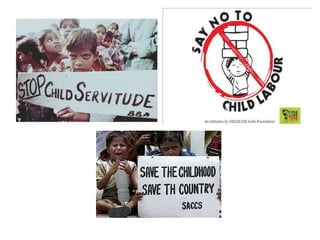
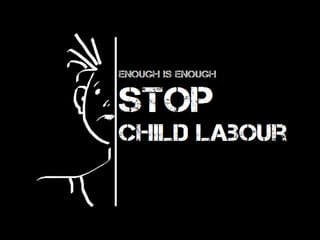
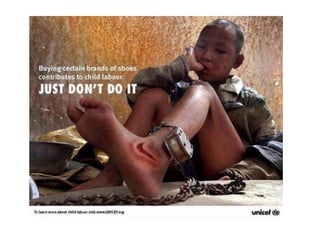
 What is child labour
 Types of child labour
 Magnitude of child labour
 Major sectors of child labour
 Major causes of child labour
 Significant consequences of child labour
 Prevention of Child labour
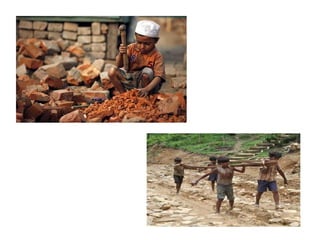
 It is the employment of children in an
industry or business, especially when
illegal or considered exploitative.
In simple words, child labour can be
explained as an act where homeless and
needful children are made to work under
difficult conditions to earn a living.
UNICEF has classified child work into
three categories:
 Within the Family
 Within the Family but outside the Home
 Outside the Family
 Migrant Child Labour
 Bonded Child Labour
 Invisible Child Labour.
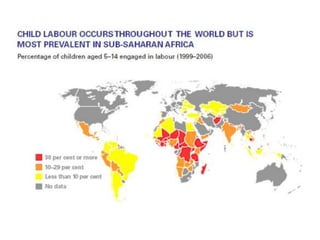
GLOBAL :
According to International Labour Organization's
Bureau of Statistics (1998), there are 250-
million child labourers in the age group 5-14 in
the developing countries. Of them, 120 million
children are working full time and are engaged
in hazardous and exploitative occupations.
INDIA :
In India, according to 1991 census there
were 11.29 million child workers. National
sample survey figures for the year 1999-
2000 indicated that there were 10.4 million
child labourers.
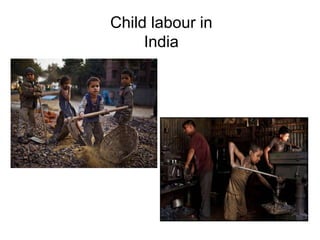
Child labour in
India
Children work as a part of family labour or
as wage earners, sometimes as migrant
labour. Very often they remain invisible
and in bondage. They are found in all the
three sectors of the economy i.e. the
Agrarian, manufacturing and Service
sectors.
 In rural area children are engaged in
agricultural and allied occupations as a
part of family labour or as individual
workers. They may work as paid or unpaid
workers in different forms:
 Migrant Labour
 Invisible Labour
 Bonded Labour
Children are engaged in various manufacturing
process of different Home-based industries such
as Brassware, Lock, Match and Fire works etc.
Very often they work in sub-human conditions and
in exploitative situation. They may be working as:
 Migrant Labour
 Invisible Labour
 Wage Labour
 Self employed children
 Self-employed Labour
 Invisible Labour
 Wage-based employment
 Poverty
 Parental illiteracy
 Tradition of making children learn the
family skills
 Absence of universal compulsory Primary
education
 Social apathy and tolerance of child
labour
 Ignorance of the parents about the
adverse consequences of Child labour
 Ineffective enforcement of the legal
provisions pertaining to child labour
 Non-availability of and non-accessibility to
schools
 Irrelevant and non-attractive school
curriculum
 Employers prefer children as they constitute
cheap labour and they are not able to
organize themselves against exploitation.
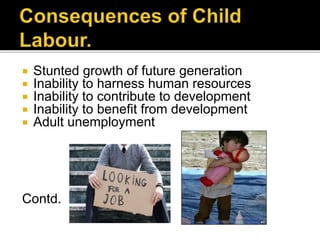
 Stunted growth of future generation
 Inability to harness human resources
 Inability to contribute to development
 Inability to benefit from development
 Adult unemployment
Contd.
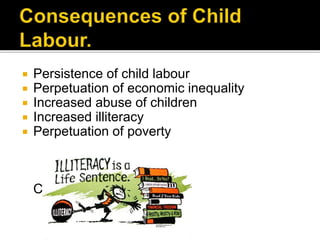
 Persistence of child labour
 Perpetuation of economic inequality
 Increased abuse of children
 Increased illiteracy
 Perpetuation of poverty
Contd.
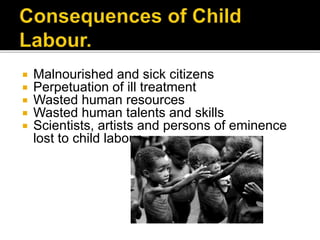
 Malnourished and sick citizens
 Perpetuation of ill treatment
 Wasted human resources
 Wasted human talents and skills
 Scientists, artists and persons of eminence
lost to child labour
• Help children understand their rights and the
importance of education.
• Stop children from working in dangerous
places.
• Help working children to leave work and go to
school or be trained.
• Raise awareness about the dangers of child
labor to children’s development.
 Learn about your rights and, in particular,
your right to peace and education.
• Participate in peace-building projects.
• Promote education and skills training needs
of adolescents and youth.
• Organize discussions at home and in school.
• Commemorate the World Day Against Child
Labor on 12 June each year
Steps that young people and
children can undertake –
 Teacher –
 Ppt. Made by – Ayush Dubey
Group Members-
 Rajat goyal
 Siddhanth pruthi
 Akshat sharma
 Bharat
 Vishal yadav
Child labour.

Child labour.

  • 2.
     What ischild labour  Types of child labour  Magnitude of child labour  Major sectors of child labour  Major causes of child labour  Significant consequences of child labour  Prevention of Child labour
  • 3.
     It isthe employment of children in an industry or business, especially when illegal or considered exploitative. In simple words, child labour can be explained as an act where homeless and needful children are made to work under difficult conditions to earn a living.
  • 5.
    UNICEF has classifiedchild work into three categories:  Within the Family  Within the Family but outside the Home  Outside the Family  Migrant Child Labour  Bonded Child Labour  Invisible Child Labour.
  • 6.
    GLOBAL : According toInternational Labour Organization's Bureau of Statistics (1998), there are 250- million child labourers in the age group 5-14 in the developing countries. Of them, 120 million children are working full time and are engaged in hazardous and exploitative occupations.
  • 7.
    INDIA : In India,according to 1991 census there were 11.29 million child workers. National sample survey figures for the year 1999- 2000 indicated that there were 10.4 million child labourers.
  • 8.
  • 10.
    Children work asa part of family labour or as wage earners, sometimes as migrant labour. Very often they remain invisible and in bondage. They are found in all the three sectors of the economy i.e. the Agrarian, manufacturing and Service sectors.
  • 11.
     In ruralarea children are engaged in agricultural and allied occupations as a part of family labour or as individual workers. They may work as paid or unpaid workers in different forms:  Migrant Labour  Invisible Labour  Bonded Labour
  • 12.
    Children are engagedin various manufacturing process of different Home-based industries such as Brassware, Lock, Match and Fire works etc. Very often they work in sub-human conditions and in exploitative situation. They may be working as:  Migrant Labour  Invisible Labour  Wage Labour  Self employed children
  • 13.
     Self-employed Labour Invisible Labour  Wage-based employment
  • 14.
     Poverty  Parentalilliteracy  Tradition of making children learn the family skills  Absence of universal compulsory Primary education  Social apathy and tolerance of child labour  Ignorance of the parents about the adverse consequences of Child labour
  • 15.
     Ineffective enforcementof the legal provisions pertaining to child labour  Non-availability of and non-accessibility to schools  Irrelevant and non-attractive school curriculum  Employers prefer children as they constitute cheap labour and they are not able to organize themselves against exploitation.
  • 16.
     Stunted growthof future generation  Inability to harness human resources  Inability to contribute to development  Inability to benefit from development  Adult unemployment Contd.
  • 17.
     Persistence ofchild labour  Perpetuation of economic inequality  Increased abuse of children  Increased illiteracy  Perpetuation of poverty Contd.
  • 18.
     Malnourished andsick citizens  Perpetuation of ill treatment  Wasted human resources  Wasted human talents and skills  Scientists, artists and persons of eminence lost to child labour
  • 19.
    • Help childrenunderstand their rights and the importance of education. • Stop children from working in dangerous places. • Help working children to leave work and go to school or be trained. • Raise awareness about the dangers of child labor to children’s development.
  • 20.
     Learn aboutyour rights and, in particular, your right to peace and education. • Participate in peace-building projects. • Promote education and skills training needs of adolescents and youth. • Organize discussions at home and in school. • Commemorate the World Day Against Child Labor on 12 June each year Steps that young people and children can undertake –
  • 24.
     Teacher – Ppt. Made by – Ayush Dubey Group Members-  Rajat goyal  Siddhanth pruthi  Akshat sharma  Bharat  Vishal yadav