1
Cell Signaling
Cell signaling is a fundamental process that governs the communication
between cells, enabling them to respond to their environment, coordinate
their activities, and maintain homeostasis.( the ability of the body to
maintain a stable internal environment, even when the external conditions
change)
1. Overview of Cell Signaling
Cell signaling refers to the complex system of communication that
governs basic cellular activities and coordinates cell actions. Signals can
originate from the environment (external signals) or within the cell
(internal signals). These signals trigger a cascade of molecular events
that result in cellular responses, such as changes in gene expression,
metabolic activity, or cell movement.
2. Types of Cell Signaling
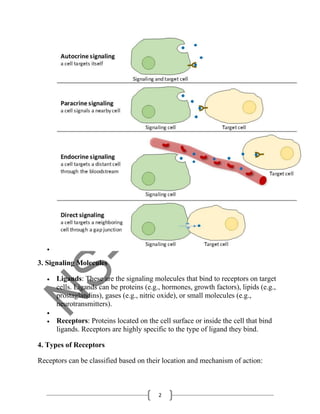
There are several types of cell signaling, each categorized based on the
distance and nature of the signal:
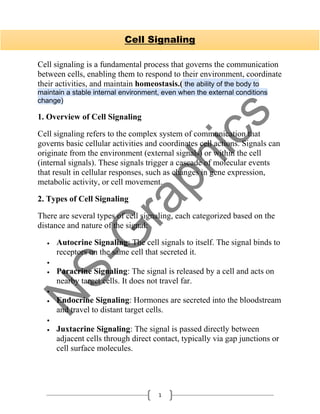
• Autocrine Signaling: The cell signals to itself. The signal binds to
receptors on the same cell that secreted it.
•
• Paracrine Signaling: The signal is released by a cell and acts on
nearby target cells. It does not travel far.
•
• Endocrine Signaling: Hormones are secreted into the bloodstream
and travel to distant target cells.
•
• Juxtacrine Signaling: The signal is passed directly between
adjacent cells through direct contact, typically via gap junctions or
cell surface molecules.
Cell Signaling
2
•
3. Signaling Molecules
• Ligands: These are the signaling molecules that bind to receptors on target
cells. Ligands can be proteins (e.g., hormones, growth factors), lipids (e.g.,
prostaglandins), gases (e.g., nitric oxide), or small molecules (e.g.,
neurotransmitters).
•
• Receptors: Proteins located on the cell surface or inside the cell that bind
ligands. Receptors are highly specific to the type of ligand they bind.
4. Types of Receptors
Receptors can be classified based on their location and mechanism of action:
3
• Cell Surface Receptors: Found on the plasma membrane and involved in
receiving signals from hydrophilic ligands. These are further divided into:
o Ion-channel-linked receptors: Ligand binding causes ion channels to
open or close, changing the ion flow across the membrane (e.g.,
neurotransmitter receptors).
o G-Protein-Coupled Receptors (GPCRs): Ligand binding activates G
proteins, which in turn activate or inhibit intracellular signaling
pathways (e.g., adrenaline receptors).
o Enzyme-linked receptors: Receptors that have intrinsic enzyme
activity or associate with enzymes upon ligand binding (e.g., receptor
tyrosine kinases).
• Intracellular Receptors: Found in the cytoplasm or nucleus and bind
hydrophobic ligands, such as steroid hormones (e.g., cortisol or estrogen),
which can easily pass through the lipid bilayer.
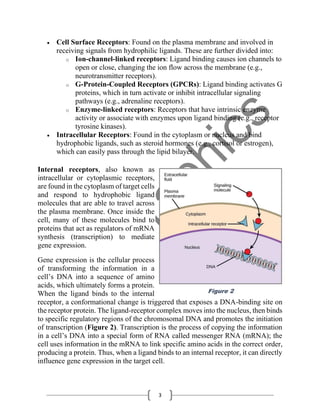
Internal receptors, also known as
intracellular or cytoplasmic receptors,
are found in the cytoplasm of target cells
and respond to hydrophobic ligand
molecules that are able to travel across
the plasma membrane. Once inside the
cell, many of these molecules bind to
proteins that act as regulators of mRNA
synthesis (transcription) to mediate
gene expression.
Gene expression is the cellular process
of transforming the information in a
cell’s DNA into a sequence of amino
acids, which ultimately forms a protein.
When the ligand binds to the internal
receptor, a conformational change is triggered that exposes a DNA-binding site on
the receptor protein. The ligand-receptor complex moves into the nucleus, then binds
to specific regulatory regions of the chromosomal DNA and promotes the initiation
of transcription (Figure 2). Transcription is the process of copying the information
in a cell’s DNA into a special form of RNA called messenger RNA (mRNA); the
cell uses information in the mRNA to link specific amino acids in the correct order,
producing a protein. Thus, when a ligand binds to an internal receptor, it can directly
influence gene expression in the target cell.
Figure 2
4
5. Signal Transduction Pathways
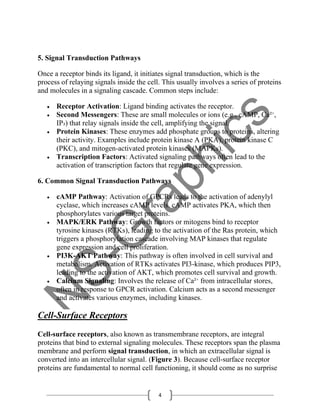
Once a receptor binds its ligand, it initiates signal transduction, which is the
process of relaying signals inside the cell. This usually involves a series of proteins
and molecules in a signaling cascade. Common steps include:
• Receptor Activation: Ligand binding activates the receptor.
• Second Messengers: These are small molecules or ions (e.g., cAMP, Ca²⁺,
IP₃) that relay signals inside the cell, amplifying the signal.
• Protein Kinases: These enzymes add phosphate groups to proteins, altering
their activity. Examples include protein kinase A (PKA), protein kinase C
(PKC), and mitogen-activated protein kinases (MAPKs).
• Transcription Factors: Activated signaling pathways often lead to the
activation of transcription factors that regulate gene expression.
6. Common Signal Transduction Pathways
• cAMP Pathway: Activation of GPCRs leads to the activation of adenylyl
cyclase, which increases cAMP levels. cAMP activates PKA, which then
phosphorylates various target proteins.
• MAPK/ERK Pathway: Growth factors or mitogens bind to receptor
tyrosine kinases (RTKs), leading to the activation of the Ras protein, which
triggers a phosphorylation cascade involving MAP kinases that regulate
gene expression and cell proliferation.
• PI3K-AKT Pathway: This pathway is often involved in cell survival and
metabolism. Activation of RTKs activates PI3-kinase, which produces PIP3,
leading to the activation of AKT, which promotes cell survival and growth.
• Calcium Signaling: Involves the release of Ca²⁺ from intracellular stores,
often in response to GPCR activation. Calcium acts as a second messenger
and activates various enzymes, including kinases.
Cell-Surface Receptors
Cell-surface receptors, also known as transmembrane receptors, are integral
proteins that bind to external signaling molecules. These receptors span the plasma
membrane and perform signal transduction, in which an extracellular signal is
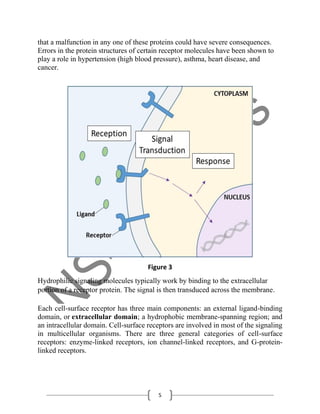
converted into an intercellular signal. (Figure 3). Because cell-surface receptor
proteins are fundamental to normal cell functioning, it should come as no surprise
5
that a malfunction in any one of these proteins could have severe consequences.
Errors in the protein structures of certain receptor molecules have been shown to
play a role in hypertension (high blood pressure), asthma, heart disease, and
cancer.
Figure 3
Hydrophilic signaling molecules typically work by binding to the extracellular
portion of a receptor protein. The signal is then transduced across the membrane.
Each cell-surface receptor has three main components: an external ligand-binding
domain, or extracellular domain; a hydrophobic membrane-spanning region; and
an intracellular domain. Cell-surface receptors are involved in most of the signaling
in multicellular organisms. There are three general categories of cell-surface
receptors: enzyme-linked receptors, ion channel-linked receptors, and G-protein-
linked receptors.
6
Enzyme-linked receptors are cell-surface receptors with intracellular domains that
are associated with an enzyme. In some cases, the intracellular domain of the
receptor itself is an enzyme. Other enzyme-linked receptors have a small
intracellular domain that interacts directly with an enzyme. Enzyme-linked receptors
normally have large extracellular and intracellular domains, but the membrane-
spanning region consists of a single alpha-helix in the peptide strand.
When a ligand binds to the extracellular domain of an enzyme-linked receptor, a
signal is transferred through the membrane, activating the enzyme. Activation of the
enzyme sets off a chain of events within the cell that eventually leads to a response.
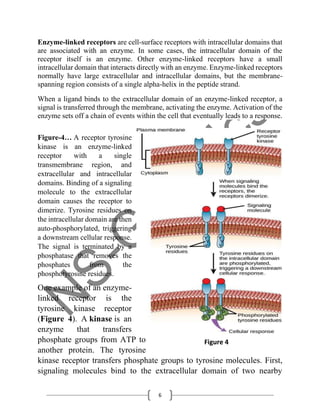
Figure-4… A receptor tyrosine
kinase is an enzyme-linked
receptor with a single
transmembrane region, and
extracellular and intracellular
domains. Binding of a signaling
molecule to the extracellular
domain causes the receptor to
dimerize. Tyrosine residues on
the intracellular domain are then
auto-phosphorylated, triggering
a downstream cellular response.
The signal is terminated by a
phosphatase that removes the
phosphates from the
phosphotyrosine residues.
One example of an enzyme-
linked receptor is the
tyrosine kinase receptor
(Figure 4). A kinase is an
enzyme that transfers
phosphate groups from ATP to
another protein. The tyrosine
kinase receptor transfers phosphate groups to tyrosine molecules. First,
signaling molecules bind to the extracellular domain of two nearby
Figure 4
7
tyrosine kinase receptors. The two neighboring receptors then bond
together, or dimerize. Phosphates are then added to tyrosine residues on
the intracellular domain of the receptors (phosphorylation). The
phosphorylated residues can then transmit the signal to the next
messenger within the cytoplasm.
Epidermal growth factor receptors are an example of receptor tyrosine
kinases that follows this mode of signaling. Defects in ErbB signaling in
this family can lead to neuromuscular diseases such as multiple sclerosis
and Alzheimer’s disease
8
Ion- channel-linked receptors bind to a ligand and open a
channel through the membrane that allows specific ions to pass through.
This type of cell-surface receptor has an extensive membrane-spanning
region with hydrophobic amino acids. Conversely, the amino acids that
line the inside of the channel are hydrophilic to allow for the passage of
ions. When a ligand binds to the extracellular region of the channel, there
is a conformational change in the protein’s structure that allows ions such
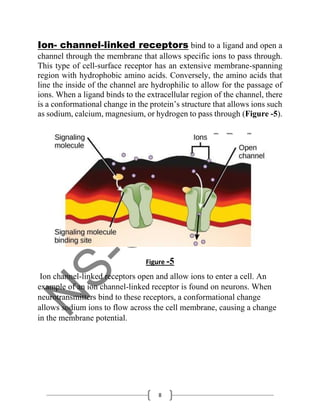
as sodium, calcium, magnesium, or hydrogen to pass through (Figure -5).
Figure -5
Ion channel-linked receptors open and allow ions to enter a cell. An
example of an ion channel-linked receptor is found on neurons. When
neurotransmitters bind to these receptors, a conformational change
allows sodium ions to flow across the cell membrane, causing a change
in the membrane potential.
9
G-protein-linked receptors bind to a ligand and activate an
associated G-protein. The activated G- protein then interacts with a nearby
membrane protein, which may be an ion channel or an enzyme (Figure -6). All G-
protein-linked receptors have seven transmembrane domains, but each receptor has
a specific extracellular domain and G-protein-binding site.
Figure 6 Some G proteins have three subunits: α, β, and γ. When a signaling
molecule binds to a G- protein receptor, a GDP molecule associated with the α
subunit is exchanged for GTP. The β and γ subunits dissociate from the α subunit,
10
and a cellular response is triggered. Hydrolysis of GTP to GDP terminates the signal.
Image by Chris Wrobel.
Cell signaling using G-protein-linked receptors occurs as a cycle. Once the ligand
binds to the receptor, the resultant shape change activates the G-protein, which
releases GDP and picks up GTP. The subunits of the G-protein then split into α and
βγ subunits. One or both of these G-protein fragments may be able to activate other
proteins in the cell. After a while, the GTP on the active α subunit of the G-protein
is hydrolyzed to GDP and the βγ subunit is deactivated. The subunits re-associate to
form the inactive G-protein and the cycle begins again (Figure 6).
G-protein linked receptors are used in many physiological processes including
those for vision transduction, taste, and regulation of immune system and
inflammation.
7. End of Signal and Termination of Response
The cellular response must be terminated to prevent prolonged signaling. This
involves:
• Receptor Desensitization: Receptors may undergo desensitization (e.g., via
phosphorylation), reducing their ability to bind to ligands.
• Degradation of Second Messengers: For example, cAMP is broken down
by phosphodiesterase.
• Phosphatases: Enzymes that remove phosphate groups from proteins,
turning off the signaling pathway.
8. Examples of Cell Signaling in Biological Systems
• Insulin Signaling: Involves the binding of insulin to RTKs, leading to
activation of the PI3K/AKT pathway and the regulation of glucose uptake.
• Neurotransmitter Signaling: Neurotransmitters like acetylcholine bind to
receptors on nerve cells, leading to changes in ion permeability and neuronal
excitability.
• Immune Response: Cytokines bind to receptors on immune cells, activating
signaling pathways like JAK/STAT, leading to immune responses.
11
9. Pathologies Related to Cell Signaling
Disruptions in cell signaling can lead to various diseases, including:
• Cancer: Mutations in signaling pathways (e.g., overactivation of the
Ras/MAPK pathway) can result in uncontrolled cell growth and
proliferation.
• Diabetes: Impaired insulin signaling (e.g., insulin resistance) leads to
defective glucose uptake.
• Neurodegenerative Diseases: Aberrant signaling in neurons can contribute
to conditions like Alzheimer’s disease.
Hormones are chemical messengers that play a crucial role in regulating various
physiological processes in the body. They are produced by glands and secreted into
the bloodstream to act on specific target cells, tissues, or organs. These hormones
exert their effects by binding to specific hormone receptors on or within the target
cells. The interaction between hormones and their receptors is a key part of cell
signaling, enabling communication across long distances in the body.
1. Types of Hormones
Hormones can be classified based on their chemical structure, which influences
how they interact with receptors:
• Peptide (Protein) Hormones:
o Examples: Insulin, glucagon, growth hormone, and oxytocin.
o Structure: Chains of amino acids (from small peptides to large
proteins).
o Solubility: Water-soluble.
o Receptor Location: These hormones typically bind to cell surface
receptors because they cannot easily pass through the cell membrane.
• Steroid Hormones:
o Examples: Estrogen, testosterone, cortisol, and aldosterone.
o Structure: Derived from cholesterol.
o Solubility: Lipid-soluble (hydrophobic).
Hormones & their Receptors
12
o Receptor Location: Steroid hormones can pass through the cell
membrane and bind to intracellular receptors located in the
cytoplasm or nucleus. Once bound, they can directly influence gene
expression.
• Amino Acid Derivatives:
o Examples: Thyroid hormones (e.g., thyroxine), epinephrine, and
norepinephrine.
o Structure: Derived from amino acids (e.g., tyrosine or tryptophan).
o Solubility: Varies—some are water-soluble, others are lipid-soluble.
o Receptor Location: Water-soluble ones bind to surface receptors,
while lipid-soluble derivatives may bind to intracellular receptors.
• Fatty Acid Derivatives (Eicosanoids):
o Examples: Prostaglandins, leukotrienes.
o Structure: Derived from fatty acids.
o Solubility: Lipid-soluble.
o Receptor Location: These hormones act through cell surface
receptors and are often involved in local signaling like inflammation
or immune responses.
2. Hormone Receptors
Hormones exert their effects by binding to specific hormone receptors, which are
proteins located either on the surface of the target cell or within the cell.
• Cell Surface Receptors (for Water-Soluble Hormones):
o These receptors are embedded in the plasma membrane of the target
cell.
o Mechanism: When a hormone binds to its receptor on the cell
surface, it activates a signaling cascade inside the cell, often involving
secondary messengers (like cAMP, IP3, or calcium ions).
o Types of Surface Receptors:
▪ G-Protein Coupled Receptors (GPCRs): These receptors
activate intracellular signaling pathways through G-proteins.
Examples: adrenaline (epinephrine) receptors.
▪ Receptor Tyrosine Kinases (RTKs): These receptors become
autophosphorylated after hormone binding, initiating a signal
cascade. Examples: Insulin receptors, growth factor receptors.
• Intracellular Receptors (for Lipid-Soluble Hormones):
o These receptors are found inside the target cell, either in the
cytoplasm or in the nucleus.
13
o Mechanism: Hormones (like steroid hormones) can diffuse through
the lipid membrane and bind to their receptors, forming hormone-
receptor complexes that directly affect gene expression by binding to
DNA.
o Examples: Corticosteroid receptors, thyroid hormone receptors, and
estrogen receptors.
3. Mechanisms of Hormone Action
The action of hormones can be divided into two main types based on their receptor
location and signaling mechanism:
• Surface Receptor Mechanism (for Water-Soluble Hormones):
o The hormone binds to a receptor on the cell membrane.
o This binding activates a signal transduction pathway, often involving
secondary messengers (e.g., cAMP, inositol trisphosphate, calcium
ions).
o The secondary messenger triggers a cascade of intracellular events,
resulting in cellular responses such as enzyme activation or changes in
gene expression.
• Intracellular Receptor Mechanism (for Lipid-Soluble Hormones):
o The hormone crosses the cell membrane (because it is lipid-soluble).
o Inside the cell, the hormone binds to its specific receptor, often in the
cytoplasm or nucleus.
o The hormone-receptor complex directly interacts with DNA to initiate
or repress gene transcription, leading to long-term cellular effects.
4. Hormone Receptor Regulation
• Upregulation: When a cell increases the number of receptors on its surface,
making it more sensitive to a hormone. This typically happens in response to
low hormone levels.
• Downregulation: When a cell reduces the number of receptors, decreasing
its sensitivity to a hormone. This often occurs when there is prolonged
exposure to high levels of a hormone.
14
5. Examples of Hormones and Their Effects
• Insulin (Peptide Hormone): Produced by the pancreas, it binds to the
insulin receptor (a receptor tyrosine kinase) on cells, promoting glucose
uptake and lowering blood sugar.
• Thyroxine (Amino Acid Derivative): Produced by the thyroid gland, it
binds to nuclear receptors, influencing metabolic processes and growth.
• Estrogen (Steroid Hormone): Binds to intracellular estrogen receptors and
regulates reproductive and sexual functions.

Cell Signaling Notes for B.Sc. Biotech/Botany Sem-1

  • 1.
    1 Cell Signaling Cell signalingis a fundamental process that governs the communication between cells, enabling them to respond to their environment, coordinate their activities, and maintain homeostasis.( the ability of the body to maintain a stable internal environment, even when the external conditions change) 1. Overview of Cell Signaling Cell signaling refers to the complex system of communication that governs basic cellular activities and coordinates cell actions. Signals can originate from the environment (external signals) or within the cell (internal signals). These signals trigger a cascade of molecular events that result in cellular responses, such as changes in gene expression, metabolic activity, or cell movement. 2. Types of Cell Signaling There are several types of cell signaling, each categorized based on the distance and nature of the signal: • Autocrine Signaling: The cell signals to itself. The signal binds to receptors on the same cell that secreted it. • • Paracrine Signaling: The signal is released by a cell and acts on nearby target cells. It does not travel far. • • Endocrine Signaling: Hormones are secreted into the bloodstream and travel to distant target cells. • • Juxtacrine Signaling: The signal is passed directly between adjacent cells through direct contact, typically via gap junctions or cell surface molecules. Cell Signaling
  • 2.
    2 • 3. Signaling Molecules •Ligands: These are the signaling molecules that bind to receptors on target cells. Ligands can be proteins (e.g., hormones, growth factors), lipids (e.g., prostaglandins), gases (e.g., nitric oxide), or small molecules (e.g., neurotransmitters). • • Receptors: Proteins located on the cell surface or inside the cell that bind ligands. Receptors are highly specific to the type of ligand they bind. 4. Types of Receptors Receptors can be classified based on their location and mechanism of action:
  • 3.
    3 • Cell SurfaceReceptors: Found on the plasma membrane and involved in receiving signals from hydrophilic ligands. These are further divided into: o Ion-channel-linked receptors: Ligand binding causes ion channels to open or close, changing the ion flow across the membrane (e.g., neurotransmitter receptors). o G-Protein-Coupled Receptors (GPCRs): Ligand binding activates G proteins, which in turn activate or inhibit intracellular signaling pathways (e.g., adrenaline receptors). o Enzyme-linked receptors: Receptors that have intrinsic enzyme activity or associate with enzymes upon ligand binding (e.g., receptor tyrosine kinases). • Intracellular Receptors: Found in the cytoplasm or nucleus and bind hydrophobic ligands, such as steroid hormones (e.g., cortisol or estrogen), which can easily pass through the lipid bilayer. Internal receptors, also known as intracellular or cytoplasmic receptors, are found in the cytoplasm of target cells and respond to hydrophobic ligand molecules that are able to travel across the plasma membrane. Once inside the cell, many of these molecules bind to proteins that act as regulators of mRNA synthesis (transcription) to mediate gene expression. Gene expression is the cellular process of transforming the information in a cell’s DNA into a sequence of amino acids, which ultimately forms a protein. When the ligand binds to the internal receptor, a conformational change is triggered that exposes a DNA-binding site on the receptor protein. The ligand-receptor complex moves into the nucleus, then binds to specific regulatory regions of the chromosomal DNA and promotes the initiation of transcription (Figure 2). Transcription is the process of copying the information in a cell’s DNA into a special form of RNA called messenger RNA (mRNA); the cell uses information in the mRNA to link specific amino acids in the correct order, producing a protein. Thus, when a ligand binds to an internal receptor, it can directly influence gene expression in the target cell. Figure 2
  • 4.
    4 5. Signal TransductionPathways Once a receptor binds its ligand, it initiates signal transduction, which is the process of relaying signals inside the cell. This usually involves a series of proteins and molecules in a signaling cascade. Common steps include: • Receptor Activation: Ligand binding activates the receptor. • Second Messengers: These are small molecules or ions (e.g., cAMP, Ca²⁺, IP₃) that relay signals inside the cell, amplifying the signal. • Protein Kinases: These enzymes add phosphate groups to proteins, altering their activity. Examples include protein kinase A (PKA), protein kinase C (PKC), and mitogen-activated protein kinases (MAPKs). • Transcription Factors: Activated signaling pathways often lead to the activation of transcription factors that regulate gene expression. 6. Common Signal Transduction Pathways • cAMP Pathway: Activation of GPCRs leads to the activation of adenylyl cyclase, which increases cAMP levels. cAMP activates PKA, which then phosphorylates various target proteins. • MAPK/ERK Pathway: Growth factors or mitogens bind to receptor tyrosine kinases (RTKs), leading to the activation of the Ras protein, which triggers a phosphorylation cascade involving MAP kinases that regulate gene expression and cell proliferation. • PI3K-AKT Pathway: This pathway is often involved in cell survival and metabolism. Activation of RTKs activates PI3-kinase, which produces PIP3, leading to the activation of AKT, which promotes cell survival and growth. • Calcium Signaling: Involves the release of Ca²⁺ from intracellular stores, often in response to GPCR activation. Calcium acts as a second messenger and activates various enzymes, including kinases. Cell-Surface Receptors Cell-surface receptors, also known as transmembrane receptors, are integral proteins that bind to external signaling molecules. These receptors span the plasma membrane and perform signal transduction, in which an extracellular signal is converted into an intercellular signal. (Figure 3). Because cell-surface receptor proteins are fundamental to normal cell functioning, it should come as no surprise
  • 5.
    5 that a malfunctionin any one of these proteins could have severe consequences. Errors in the protein structures of certain receptor molecules have been shown to play a role in hypertension (high blood pressure), asthma, heart disease, and cancer. Figure 3 Hydrophilic signaling molecules typically work by binding to the extracellular portion of a receptor protein. The signal is then transduced across the membrane. Each cell-surface receptor has three main components: an external ligand-binding domain, or extracellular domain; a hydrophobic membrane-spanning region; and an intracellular domain. Cell-surface receptors are involved in most of the signaling in multicellular organisms. There are three general categories of cell-surface receptors: enzyme-linked receptors, ion channel-linked receptors, and G-protein- linked receptors.
  • 6.
    6 Enzyme-linked receptors arecell-surface receptors with intracellular domains that are associated with an enzyme. In some cases, the intracellular domain of the receptor itself is an enzyme. Other enzyme-linked receptors have a small intracellular domain that interacts directly with an enzyme. Enzyme-linked receptors normally have large extracellular and intracellular domains, but the membrane- spanning region consists of a single alpha-helix in the peptide strand. When a ligand binds to the extracellular domain of an enzyme-linked receptor, a signal is transferred through the membrane, activating the enzyme. Activation of the enzyme sets off a chain of events within the cell that eventually leads to a response. Figure-4… A receptor tyrosine kinase is an enzyme-linked receptor with a single transmembrane region, and extracellular and intracellular domains. Binding of a signaling molecule to the extracellular domain causes the receptor to dimerize. Tyrosine residues on the intracellular domain are then auto-phosphorylated, triggering a downstream cellular response. The signal is terminated by a phosphatase that removes the phosphates from the phosphotyrosine residues. One example of an enzyme- linked receptor is the tyrosine kinase receptor (Figure 4). A kinase is an enzyme that transfers phosphate groups from ATP to another protein. The tyrosine kinase receptor transfers phosphate groups to tyrosine molecules. First, signaling molecules bind to the extracellular domain of two nearby Figure 4
  • 7.
    7 tyrosine kinase receptors.The two neighboring receptors then bond together, or dimerize. Phosphates are then added to tyrosine residues on the intracellular domain of the receptors (phosphorylation). The phosphorylated residues can then transmit the signal to the next messenger within the cytoplasm. Epidermal growth factor receptors are an example of receptor tyrosine kinases that follows this mode of signaling. Defects in ErbB signaling in this family can lead to neuromuscular diseases such as multiple sclerosis and Alzheimer’s disease
  • 8.
    8 Ion- channel-linked receptorsbind to a ligand and open a channel through the membrane that allows specific ions to pass through. This type of cell-surface receptor has an extensive membrane-spanning region with hydrophobic amino acids. Conversely, the amino acids that line the inside of the channel are hydrophilic to allow for the passage of ions. When a ligand binds to the extracellular region of the channel, there is a conformational change in the protein’s structure that allows ions such as sodium, calcium, magnesium, or hydrogen to pass through (Figure -5). Figure -5 Ion channel-linked receptors open and allow ions to enter a cell. An example of an ion channel-linked receptor is found on neurons. When neurotransmitters bind to these receptors, a conformational change allows sodium ions to flow across the cell membrane, causing a change in the membrane potential.
  • 9.
    9 G-protein-linked receptors bindto a ligand and activate an associated G-protein. The activated G- protein then interacts with a nearby membrane protein, which may be an ion channel or an enzyme (Figure -6). All G- protein-linked receptors have seven transmembrane domains, but each receptor has a specific extracellular domain and G-protein-binding site. Figure 6 Some G proteins have three subunits: α, β, and γ. When a signaling molecule binds to a G- protein receptor, a GDP molecule associated with the α subunit is exchanged for GTP. The β and γ subunits dissociate from the α subunit,
  • 10.
    10 and a cellularresponse is triggered. Hydrolysis of GTP to GDP terminates the signal. Image by Chris Wrobel. Cell signaling using G-protein-linked receptors occurs as a cycle. Once the ligand binds to the receptor, the resultant shape change activates the G-protein, which releases GDP and picks up GTP. The subunits of the G-protein then split into α and βγ subunits. One or both of these G-protein fragments may be able to activate other proteins in the cell. After a while, the GTP on the active α subunit of the G-protein is hydrolyzed to GDP and the βγ subunit is deactivated. The subunits re-associate to form the inactive G-protein and the cycle begins again (Figure 6). G-protein linked receptors are used in many physiological processes including those for vision transduction, taste, and regulation of immune system and inflammation. 7. End of Signal and Termination of Response The cellular response must be terminated to prevent prolonged signaling. This involves: • Receptor Desensitization: Receptors may undergo desensitization (e.g., via phosphorylation), reducing their ability to bind to ligands. • Degradation of Second Messengers: For example, cAMP is broken down by phosphodiesterase. • Phosphatases: Enzymes that remove phosphate groups from proteins, turning off the signaling pathway. 8. Examples of Cell Signaling in Biological Systems • Insulin Signaling: Involves the binding of insulin to RTKs, leading to activation of the PI3K/AKT pathway and the regulation of glucose uptake. • Neurotransmitter Signaling: Neurotransmitters like acetylcholine bind to receptors on nerve cells, leading to changes in ion permeability and neuronal excitability. • Immune Response: Cytokines bind to receptors on immune cells, activating signaling pathways like JAK/STAT, leading to immune responses.
  • 11.
    11 9. Pathologies Relatedto Cell Signaling Disruptions in cell signaling can lead to various diseases, including: • Cancer: Mutations in signaling pathways (e.g., overactivation of the Ras/MAPK pathway) can result in uncontrolled cell growth and proliferation. • Diabetes: Impaired insulin signaling (e.g., insulin resistance) leads to defective glucose uptake. • Neurodegenerative Diseases: Aberrant signaling in neurons can contribute to conditions like Alzheimer’s disease. Hormones are chemical messengers that play a crucial role in regulating various physiological processes in the body. They are produced by glands and secreted into the bloodstream to act on specific target cells, tissues, or organs. These hormones exert their effects by binding to specific hormone receptors on or within the target cells. The interaction between hormones and their receptors is a key part of cell signaling, enabling communication across long distances in the body. 1. Types of Hormones Hormones can be classified based on their chemical structure, which influences how they interact with receptors: • Peptide (Protein) Hormones: o Examples: Insulin, glucagon, growth hormone, and oxytocin. o Structure: Chains of amino acids (from small peptides to large proteins). o Solubility: Water-soluble. o Receptor Location: These hormones typically bind to cell surface receptors because they cannot easily pass through the cell membrane. • Steroid Hormones: o Examples: Estrogen, testosterone, cortisol, and aldosterone. o Structure: Derived from cholesterol. o Solubility: Lipid-soluble (hydrophobic). Hormones & their Receptors
  • 12.
    12 o Receptor Location:Steroid hormones can pass through the cell membrane and bind to intracellular receptors located in the cytoplasm or nucleus. Once bound, they can directly influence gene expression. • Amino Acid Derivatives: o Examples: Thyroid hormones (e.g., thyroxine), epinephrine, and norepinephrine. o Structure: Derived from amino acids (e.g., tyrosine or tryptophan). o Solubility: Varies—some are water-soluble, others are lipid-soluble. o Receptor Location: Water-soluble ones bind to surface receptors, while lipid-soluble derivatives may bind to intracellular receptors. • Fatty Acid Derivatives (Eicosanoids): o Examples: Prostaglandins, leukotrienes. o Structure: Derived from fatty acids. o Solubility: Lipid-soluble. o Receptor Location: These hormones act through cell surface receptors and are often involved in local signaling like inflammation or immune responses. 2. Hormone Receptors Hormones exert their effects by binding to specific hormone receptors, which are proteins located either on the surface of the target cell or within the cell. • Cell Surface Receptors (for Water-Soluble Hormones): o These receptors are embedded in the plasma membrane of the target cell. o Mechanism: When a hormone binds to its receptor on the cell surface, it activates a signaling cascade inside the cell, often involving secondary messengers (like cAMP, IP3, or calcium ions). o Types of Surface Receptors: ▪ G-Protein Coupled Receptors (GPCRs): These receptors activate intracellular signaling pathways through G-proteins. Examples: adrenaline (epinephrine) receptors. ▪ Receptor Tyrosine Kinases (RTKs): These receptors become autophosphorylated after hormone binding, initiating a signal cascade. Examples: Insulin receptors, growth factor receptors. • Intracellular Receptors (for Lipid-Soluble Hormones): o These receptors are found inside the target cell, either in the cytoplasm or in the nucleus.
  • 13.
    13 o Mechanism: Hormones(like steroid hormones) can diffuse through the lipid membrane and bind to their receptors, forming hormone- receptor complexes that directly affect gene expression by binding to DNA. o Examples: Corticosteroid receptors, thyroid hormone receptors, and estrogen receptors. 3. Mechanisms of Hormone Action The action of hormones can be divided into two main types based on their receptor location and signaling mechanism: • Surface Receptor Mechanism (for Water-Soluble Hormones): o The hormone binds to a receptor on the cell membrane. o This binding activates a signal transduction pathway, often involving secondary messengers (e.g., cAMP, inositol trisphosphate, calcium ions). o The secondary messenger triggers a cascade of intracellular events, resulting in cellular responses such as enzyme activation or changes in gene expression. • Intracellular Receptor Mechanism (for Lipid-Soluble Hormones): o The hormone crosses the cell membrane (because it is lipid-soluble). o Inside the cell, the hormone binds to its specific receptor, often in the cytoplasm or nucleus. o The hormone-receptor complex directly interacts with DNA to initiate or repress gene transcription, leading to long-term cellular effects. 4. Hormone Receptor Regulation • Upregulation: When a cell increases the number of receptors on its surface, making it more sensitive to a hormone. This typically happens in response to low hormone levels. • Downregulation: When a cell reduces the number of receptors, decreasing its sensitivity to a hormone. This often occurs when there is prolonged exposure to high levels of a hormone.
  • 14.
    14 5. Examples ofHormones and Their Effects • Insulin (Peptide Hormone): Produced by the pancreas, it binds to the insulin receptor (a receptor tyrosine kinase) on cells, promoting glucose uptake and lowering blood sugar. • Thyroxine (Amino Acid Derivative): Produced by the thyroid gland, it binds to nuclear receptors, influencing metabolic processes and growth. • Estrogen (Steroid Hormone): Binds to intracellular estrogen receptors and regulates reproductive and sexual functions.