Chapter 9 Preterite of “ver,” comparisons, and direct objects
The preterite of “ver” (to see) Here are the forms of the verb “ver” in the preterite tense.  “Ver” is slightly irregular in the preterite: vi vimos viste vi ó vieron
Comparisons In English, comparisons are typically made by adding an “er” to the end of an adjective.  For example: Mr. Hahn is smart er  than Mrs. Hahn. Accounting is cool er  than Spanish.
However… We could make those same comparisons in a slightly different way: Mr. Hahn is  more intelligent  than Mrs. Hahn. Spanish is  less cool  than Accounting. I say this because the Spanish construction is exactly like the above sentences.
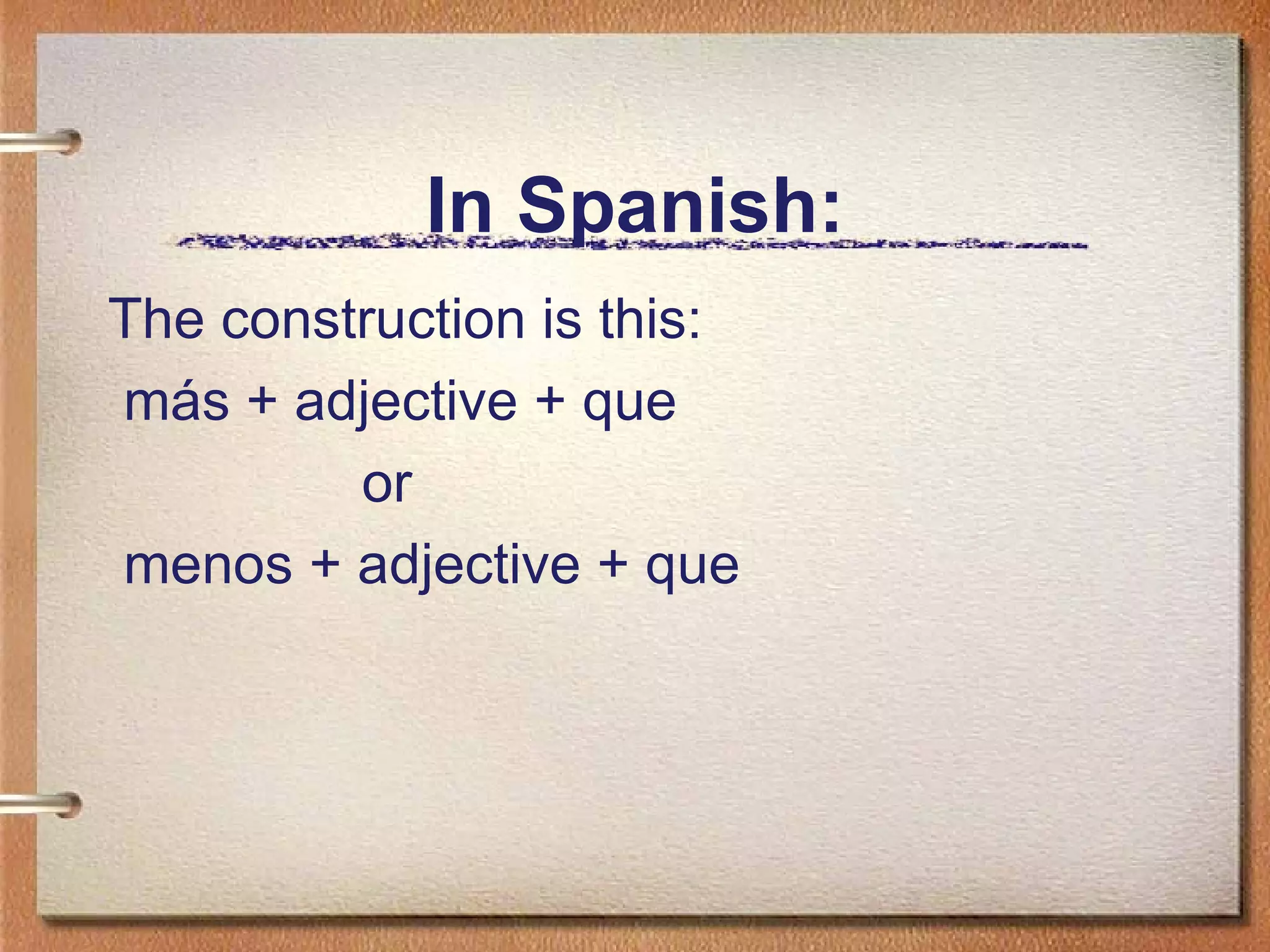
In Spanish: The construction is this: m ás + adjective + que or menos + adjective + que
Some Examples: I am taller than Marta. Yo soy  m ás alto que  Marta. They are more popular than us. Son  más populares que  nosotros. She is less interesting than her brother. Ella es  menos interesante que  su hermano.
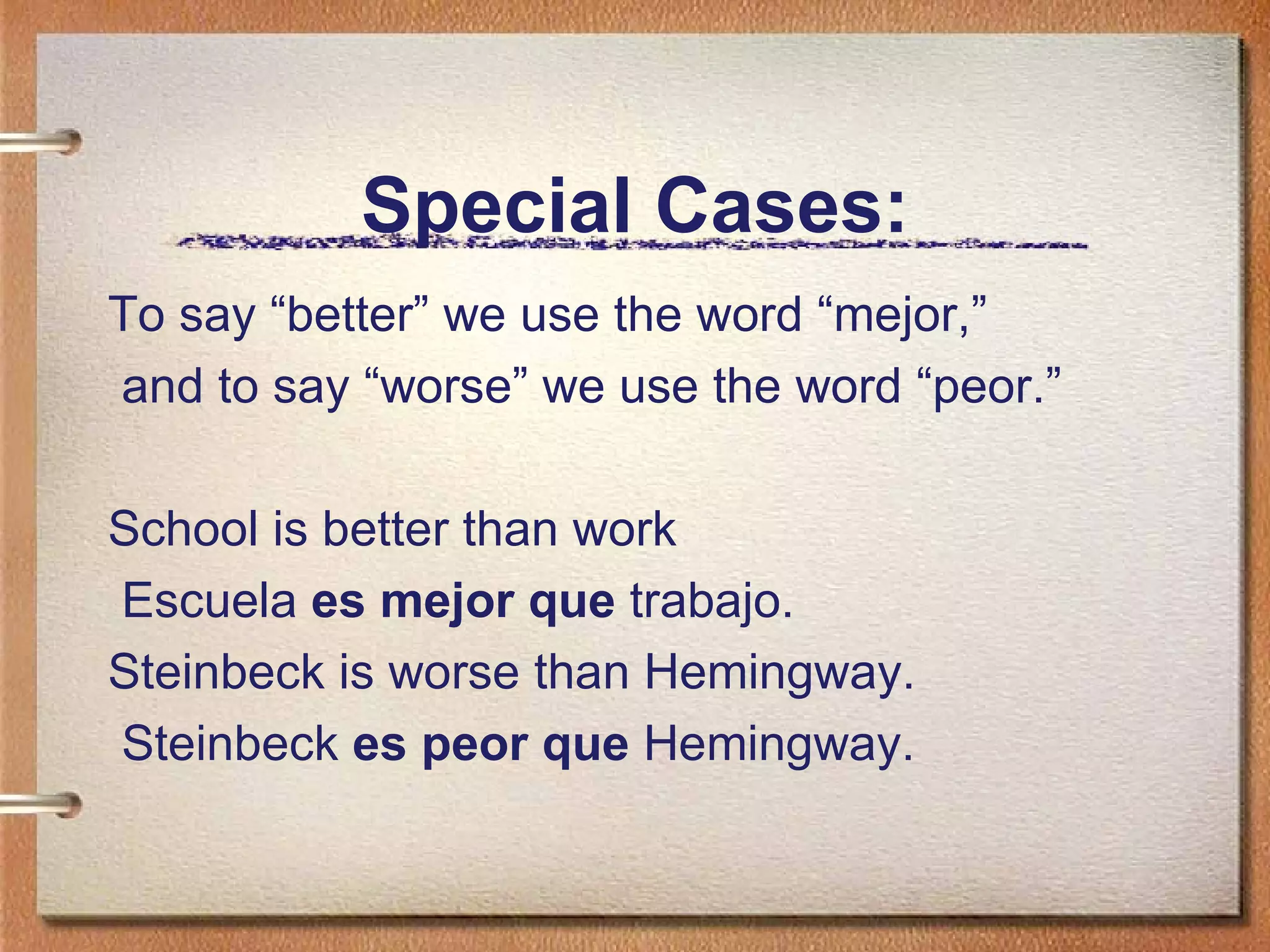
Special Cases: To say “better” we use the word “mejor,” and to say “worse” we use the word “peor.” School is better than work Escuela  es mejor que  trabajo. Steinbeck is worse than Hemingway. Steinbeck  es peor que  Hemingway.
Direct Objects We use direct objects in English all the time.  They simply refer to words spoken in a previous sentence. Did you read the magazine? Yes I read  it. “ It” is the direct object in this case for two reasons. It is the object receiving action. It is replacing “magazine” from the previous sentence.
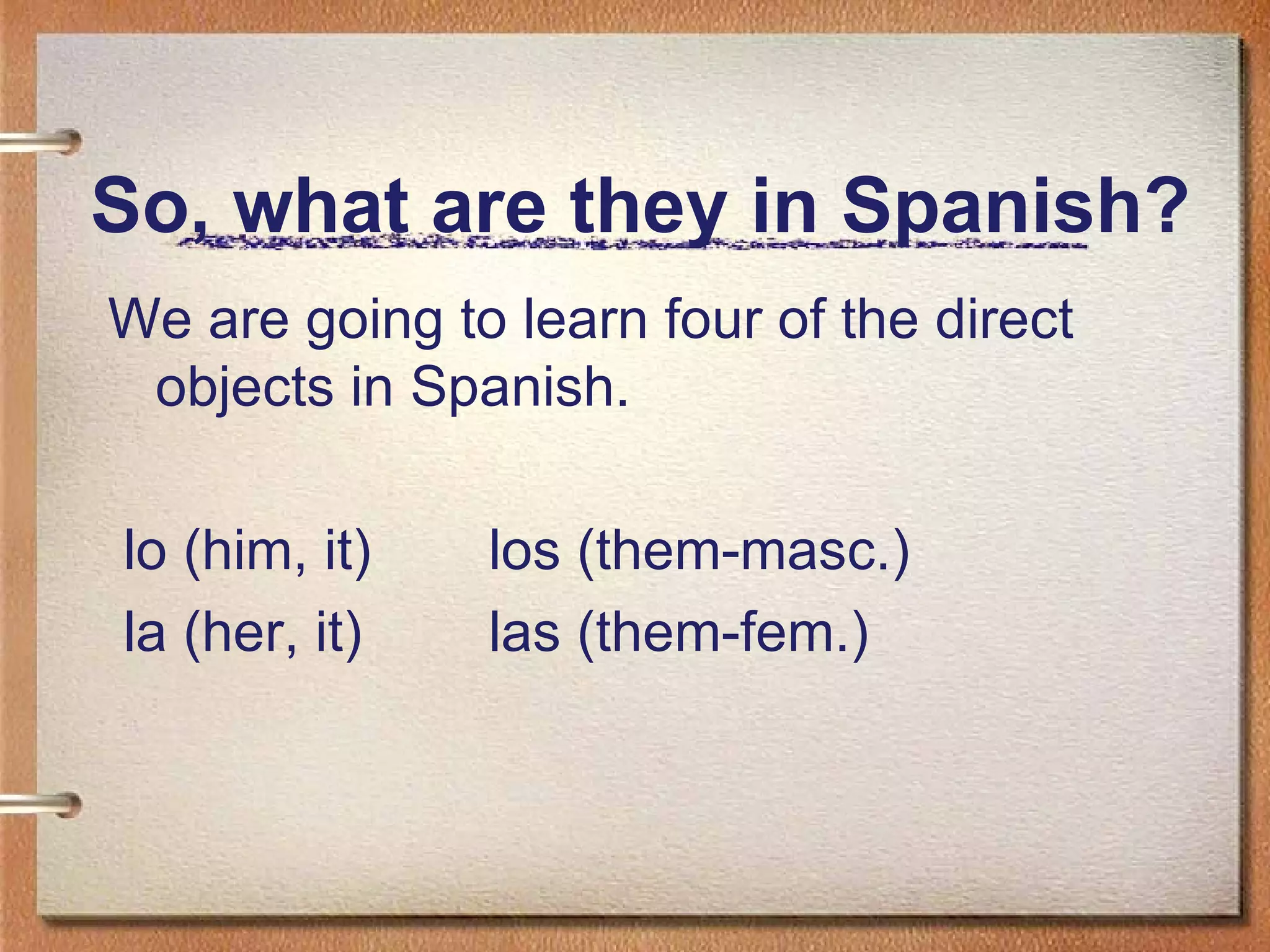
So, what are they in Spanish? We are going to learn four of the direct objects in Spanish.  lo (him, it) los (them-masc.) la (her, it) las (them-fem.)
Here are some sentences: Do you have the books? Yes, I have  them . Tienes los libros? S í,  los  tengo. Did you see the movie?  No, we didn’t see  it . ¿Vieron la película? No, no  la  vimos. Did you guys talk to Jan and Emilia? Yes, we talked to  them . Uds. Hablaron a Jan y Emilia.  Sí,  las  hablamos.
PLEASE ASK QUESTIONS!! The direct object section can be somewhat tricky.  Stop and ask me if you have questions!!!  Or email me at  [email_address] .  The information covered in this presentation came from pages 242-244 of your textbook.

Chapter9

  • 1.
    Chapter 9 Preteriteof “ver,” comparisons, and direct objects
  • 2.
    The preterite of“ver” (to see) Here are the forms of the verb “ver” in the preterite tense. “Ver” is slightly irregular in the preterite: vi vimos viste vi ó vieron
  • 3.
    Comparisons In English,comparisons are typically made by adding an “er” to the end of an adjective. For example: Mr. Hahn is smart er than Mrs. Hahn. Accounting is cool er than Spanish.
  • 4.
    However… We couldmake those same comparisons in a slightly different way: Mr. Hahn is more intelligent than Mrs. Hahn. Spanish is less cool than Accounting. I say this because the Spanish construction is exactly like the above sentences.
  • 5.
    In Spanish: Theconstruction is this: m ás + adjective + que or menos + adjective + que
  • 6.
    Some Examples: Iam taller than Marta. Yo soy m ás alto que Marta. They are more popular than us. Son más populares que nosotros. She is less interesting than her brother. Ella es menos interesante que su hermano.
  • 7.
    Special Cases: Tosay “better” we use the word “mejor,” and to say “worse” we use the word “peor.” School is better than work Escuela es mejor que trabajo. Steinbeck is worse than Hemingway. Steinbeck es peor que Hemingway.
  • 8.
    Direct Objects Weuse direct objects in English all the time. They simply refer to words spoken in a previous sentence. Did you read the magazine? Yes I read it. “ It” is the direct object in this case for two reasons. It is the object receiving action. It is replacing “magazine” from the previous sentence.
  • 9.
    So, what arethey in Spanish? We are going to learn four of the direct objects in Spanish. lo (him, it) los (them-masc.) la (her, it) las (them-fem.)
  • 10.
    Here are somesentences: Do you have the books? Yes, I have them . Tienes los libros? S í, los tengo. Did you see the movie? No, we didn’t see it . ¿Vieron la película? No, no la vimos. Did you guys talk to Jan and Emilia? Yes, we talked to them . Uds. Hablaron a Jan y Emilia. Sí, las hablamos.
  • 11.
    PLEASE ASK QUESTIONS!!The direct object section can be somewhat tricky. Stop and ask me if you have questions!!! Or email me at [email_address] . The information covered in this presentation came from pages 242-244 of your textbook.