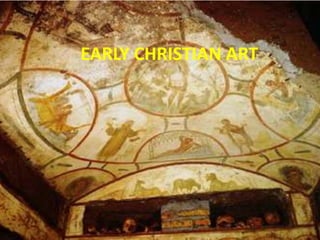
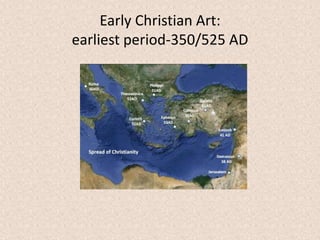
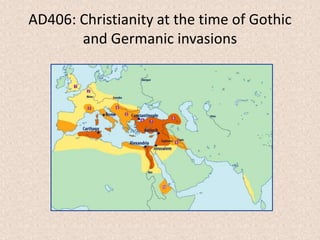
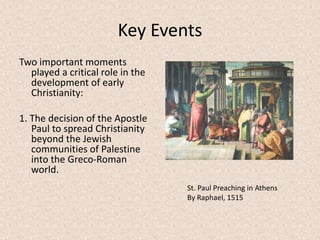
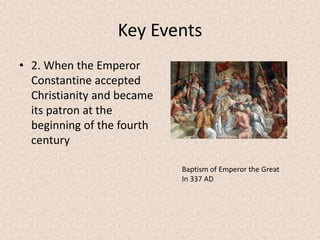
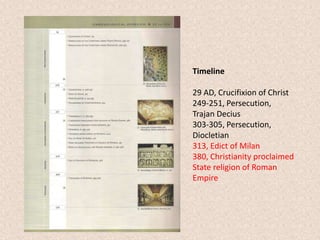
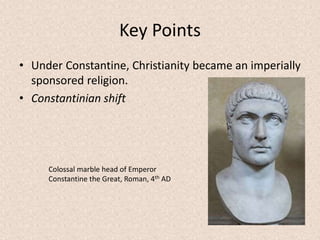
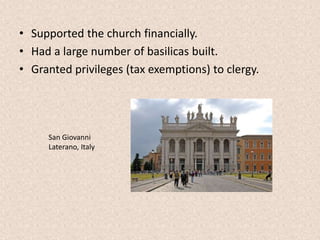
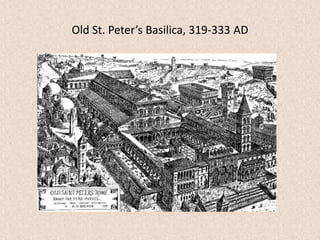
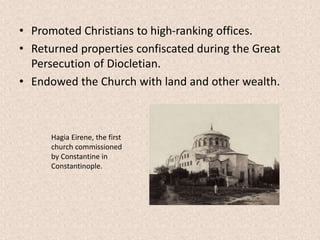
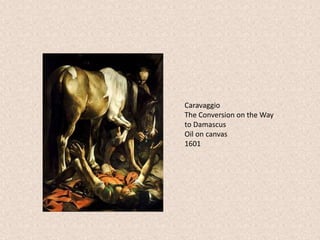
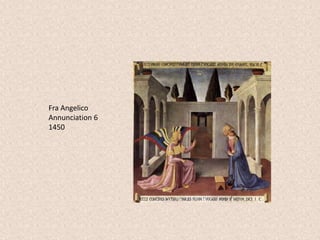
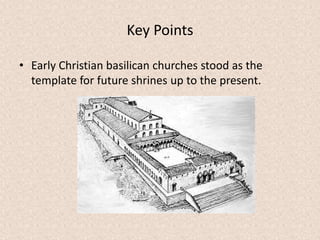
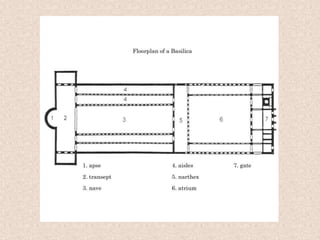
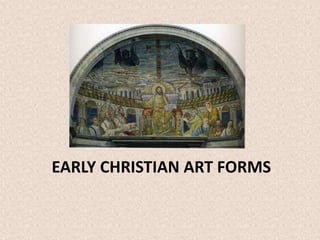
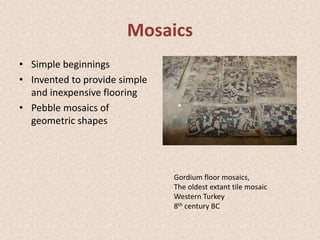
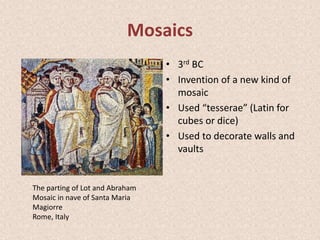
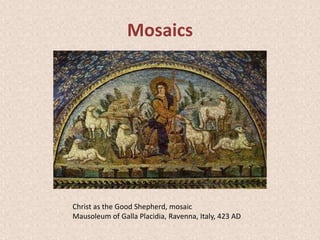
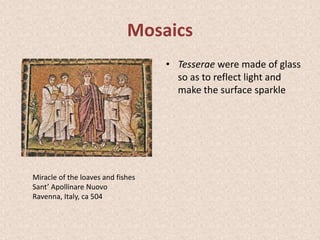
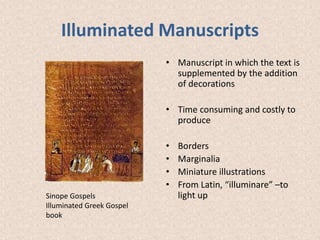
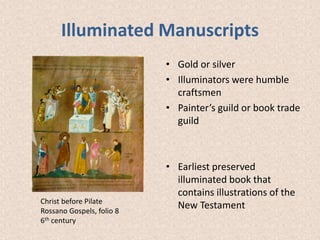
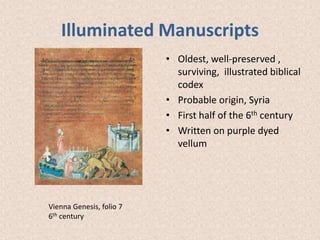
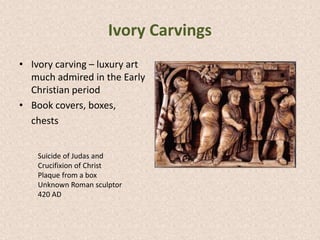
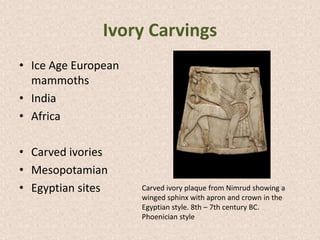
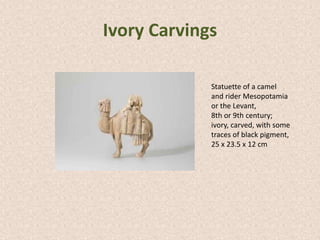
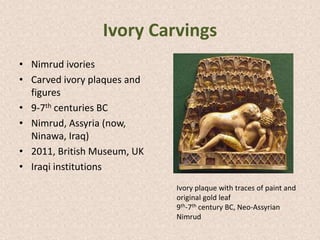
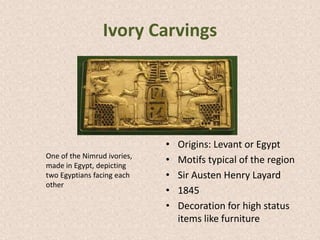
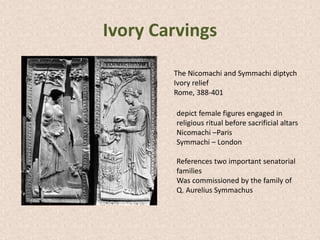
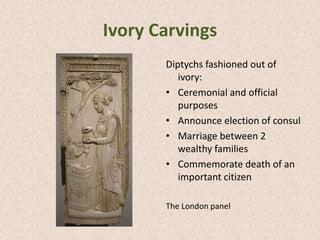
Early Christian art developed from the 1st to 5th centuries AD. Key events that influenced its development included the spread of Christianity by St. Paul and its acceptance by Emperor Constantine in the 4th century. Art forms included frescoes, mosaics using small cubes called tesserae, sculptures, and illuminated manuscripts with decorative borders and illustrations. Mosaics became more advanced and were used to decorate walls and vaults of churches. Illuminated manuscripts were hand-crafted books containing illustrations. Ivory carvings were produced and used to decorate luxury religious objects. Under Constantine's patronage, Christianity became the state religion and large basilica churches were constructed, influencing architectural styles.