AMERICAN SOCIETY &
ECONOMY TRANSFORMED
Second Great Awakening
Began in New England in the 1790s, but spread
across the country
Camp meetings became common:
 Large audiences listened to many different preachers
 Speakers called on worshippers to ask for forgiveness &
prepare for the Second Coming
 Largest meeting took place in Kentucky in 1801
Second Great Awakening
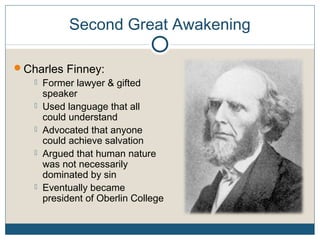
Charles Finney:
 Former lawyer & gifted
speaker
 Used language that all
could understand
 Advocated that anyone
could achieve salvation
 Argued that human nature
was not necessarily
dominated by sin
 Eventually became
president of Oberlin College
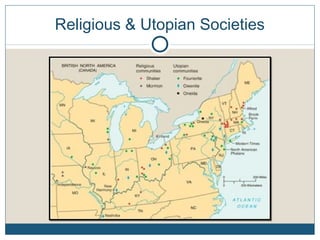
Religious & Utopian Societies
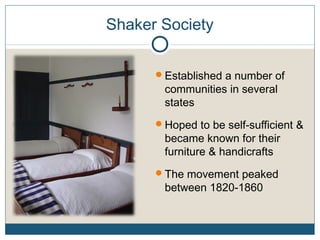
Shaker Society
Established a number of
communities in several
states
Hoped to be self-sufficient &
became known for their
furniture & handicrafts
The movement peaked
between 1820-1860
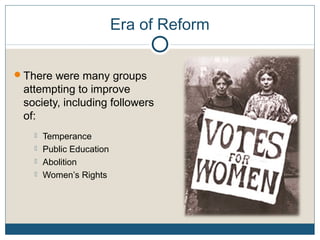
Era of Reform
There were many groups
attempting to improve
society, including followers
of:
 Temperance
 Public Education
 Abolition
 Women’s Rights
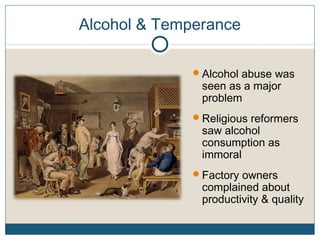
Alcohol & Temperance
Alcohol abuse was
seen as a major
problem
Religious reformers
saw alcohol
consumption as
immoral
Factory owners
complained about
productivity & quality
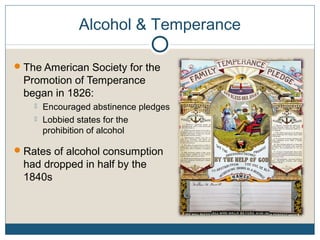
Alcohol & Temperance
The American Society for the
Promotion of Temperance
began in 1826:
 Encouraged abstinence pledges
 Lobbied states for the
prohibition of alcohol
Rates of alcohol consumption
had dropped in half by the
1840s
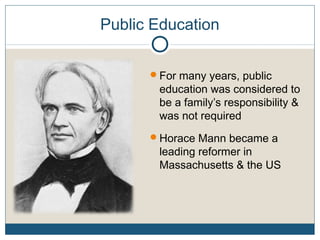
Public Education
For many years, public
education was considered to
be a family’s responsibility &
was not required
Horace Mann became a
leading reformer in
Massachusetts & the US
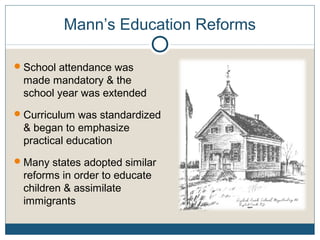
Mann’s Education Reforms
School attendance was
made mandatory & the
school year was extended
Curriculum was standardized
& began to emphasize
practical education
Many states adopted similar
reforms in order to educate
children & assimilate
immigrants
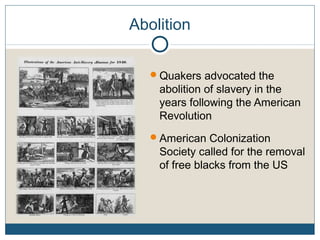
Abolition
Quakers advocated the
abolition of slavery in the
years following the American
Revolution
American Colonization
Society called for the removal
of free blacks from the US
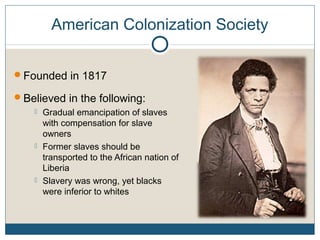
American Colonization Society
Founded in 1817
Believed in the following:
 Gradual emancipation of slaves
with compensation for slave
owners
 Former slaves should be
transported to the African nation of
Liberia
 Slavery was wrong, yet blacks
were inferior to whites
American Colonization Society
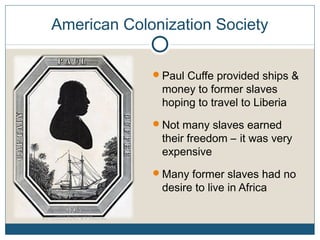
Paul Cuffe provided ships &
money to former slaves
hoping to travel to Liberia
Not many slaves earned
their freedom – it was very
expensive
Many former slaves had no
desire to live in Africa
Abolition
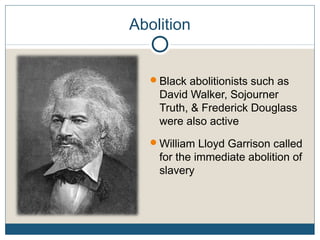
Black abolitionists such as
David Walker, Sojourner
Truth, & Frederick Douglass
were also active
William Lloyd Garrison called
for the immediate abolition of
slavery
Women in the Abolition Movement
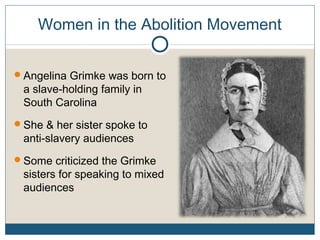
Angelina Grimke was born to
a slave-holding family in
South Carolina
She & her sister spoke to
anti-slavery audiences
Some criticized the Grimke
sisters for speaking to mixed
audiences
Women’s Rights
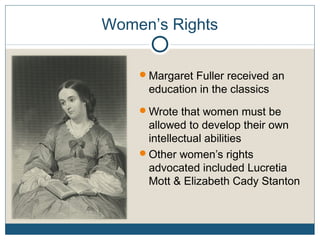
Margaret Fuller received an
education in the classics
Wrote that women must be
allowed to develop their own
intellectual abilities
Other women’s rights
advocated included Lucretia
Mott & Elizabeth Cady Stanton
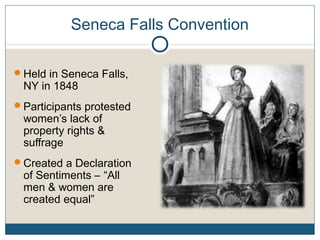
Seneca Falls Convention
Held in Seneca Falls,
NY in 1848
Participants protested
women’s lack of
property rights &
suffrage
Created a Declaration
of Sentiments – “All
men & women are
created equal”

Chapter 15 Notes

  • 1.
  • 2.
    Second Great Awakening Beganin New England in the 1790s, but spread across the country Camp meetings became common:  Large audiences listened to many different preachers  Speakers called on worshippers to ask for forgiveness & prepare for the Second Coming  Largest meeting took place in Kentucky in 1801
  • 3.
    Second Great Awakening CharlesFinney:  Former lawyer & gifted speaker  Used language that all could understand  Advocated that anyone could achieve salvation  Argued that human nature was not necessarily dominated by sin  Eventually became president of Oberlin College
  • 4.
  • 5.
    Shaker Society Established anumber of communities in several states Hoped to be self-sufficient & became known for their furniture & handicrafts The movement peaked between 1820-1860
  • 6.
    Era of Reform Therewere many groups attempting to improve society, including followers of:  Temperance  Public Education  Abolition  Women’s Rights
  • 7.
    Alcohol & Temperance Alcoholabuse was seen as a major problem Religious reformers saw alcohol consumption as immoral Factory owners complained about productivity & quality
  • 8.
    Alcohol & Temperance TheAmerican Society for the Promotion of Temperance began in 1826:  Encouraged abstinence pledges  Lobbied states for the prohibition of alcohol Rates of alcohol consumption had dropped in half by the 1840s
  • 9.
    Public Education For manyyears, public education was considered to be a family’s responsibility & was not required Horace Mann became a leading reformer in Massachusetts & the US
  • 10.
    Mann’s Education Reforms Schoolattendance was made mandatory & the school year was extended Curriculum was standardized & began to emphasize practical education Many states adopted similar reforms in order to educate children & assimilate immigrants
  • 11.
    Abolition Quakers advocated the abolitionof slavery in the years following the American Revolution American Colonization Society called for the removal of free blacks from the US
  • 12.
    American Colonization Society Foundedin 1817 Believed in the following:  Gradual emancipation of slaves with compensation for slave owners  Former slaves should be transported to the African nation of Liberia  Slavery was wrong, yet blacks were inferior to whites
  • 13.
    American Colonization Society PaulCuffe provided ships & money to former slaves hoping to travel to Liberia Not many slaves earned their freedom – it was very expensive Many former slaves had no desire to live in Africa
  • 14.
    Abolition Black abolitionists suchas David Walker, Sojourner Truth, & Frederick Douglass were also active William Lloyd Garrison called for the immediate abolition of slavery
  • 15.
    Women in theAbolition Movement Angelina Grimke was born to a slave-holding family in South Carolina She & her sister spoke to anti-slavery audiences Some criticized the Grimke sisters for speaking to mixed audiences
  • 16.
    Women’s Rights Margaret Fullerreceived an education in the classics Wrote that women must be allowed to develop their own intellectual abilities Other women’s rights advocated included Lucretia Mott & Elizabeth Cady Stanton
  • 17.
    Seneca Falls Convention Heldin Seneca Falls, NY in 1848 Participants protested women’s lack of property rights & suffrage Created a Declaration of Sentiments – “All men & women are created equal”