Pre- Spanish
Period
Filipino
Culture
Government
•The government was called “barangay”.
•There was no national government.
There were many independent barangays
and datus. But there was no datu strong
enough to unite the archipelago into one
nation. Some barangays, however, united
to form a confederation.
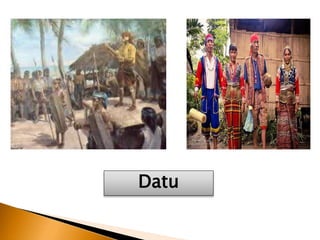
•It was headed by a ruler called datu or
raja.
Barangay
Datu
Powers and
Functions of
Datu
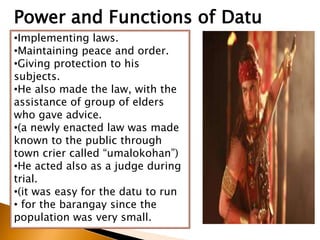
Power and Functions of Datu
•Implementing laws.
•Maintaining peace and order.
•Giving protection to his
subjects.
•He also made the law, with the
assistance of group of elders
who gave advice.
•(a newly enacted law was made
known to the public through
town crier called “umalokohan”)
•He acted also as a judge during
trial.
•(it was easy for the datu to run
• for the barangay since the
population was very small.
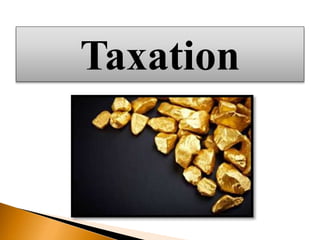
Taxation
 Ancient Filipinos started the
practice of paying taxes.
 The purpose of paying taxes
was simple, it was for the
protection they received from
the datu.
 The collected tax was called
“buwis”.
 The chieftain’s family
members were enjoying
exemption from paying
taxes.
 Non-payment of taxes
was already punishable
during this period.
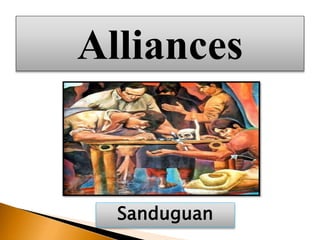
Alliances
Sanduguan
•Like community of nations,
alliances among barangay were
formed. The purpose of forming
alliances was for trade, peace
and mutual protection.
•An alliances was sealed through
blood compact (sanduguan), to
ensure conformity, sincerity and
commitment of the chieftains.
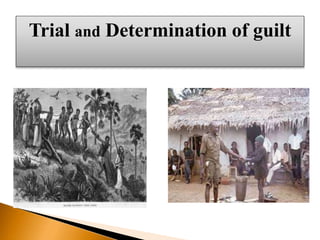
Trial and Determination of guilt
Courtship and Marriage
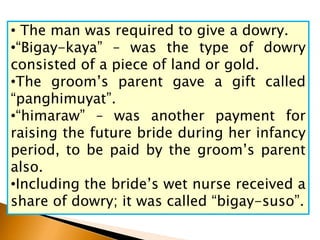
• The man was required to give a dowry.
•“Bigay-kaya” – was the type of dowry
consisted of a piece of land or gold.
•The groom’s parent gave a gift called
“panghimuyat”.
•“himaraw” – was another payment for
raising the future bride during her infancy
period, to be paid by the groom’s parent
also.
•Including the bride’s wet nurse received a
share of dowry; it was called “bigay-suso”.
•Mixed marriage, that was marriage
between couples belonging to different
social classes were not common. Early
Filipinos practiced divorce. Several
grounds of divorce were:
•Adultery
•Abandonment on the part of the husband
•Cruelty
•And insanity
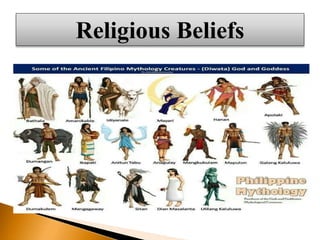
Religious Beliefs
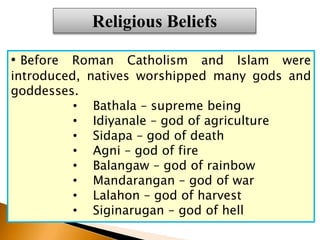
• Before Roman Catholism and Islam were
introduced, natives worshipped many gods and
goddesses.
• Bathala – supreme being
• Idiyanale – god of agriculture
• Sidapa – god of death
• Agni – god of fire
• Balangaw – god of rainbow
• Mandarangan – god of war
• Lalahon – god of harvest
• Siginarugan – god of hell
Religious Beliefs
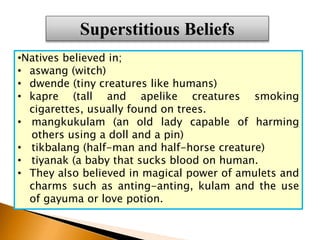
•Natives believed in;
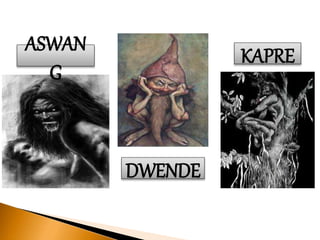
• aswang (witch)
• dwende (tiny creatures like humans)
• kapre (tall and apelike creatures smoking
cigarettes, usually found on trees.
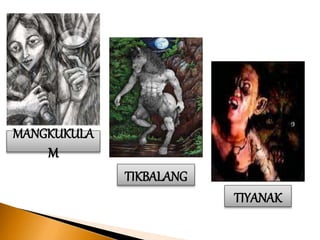
• mangkukulam (an old lady capable of harming
others using a doll and a pin)
• tikbalang (half-man and half-horse creature)
• tiyanak (a baby that sucks blood on human.
• They also believed in magical power of amulets and
charms such as anting-anting, kulam and the use
of gayuma or love potion.
Superstitious Beliefs
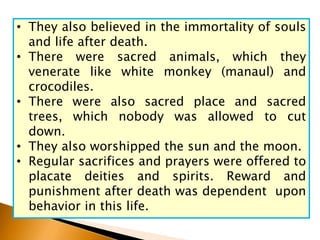
• They also believed in the immortality of souls
and life after death.
• There were sacred animals, which they
venerate like white monkey (manaul) and
crocodiles.
• There were also sacred place and sacred
trees, which nobody was allowed to cut
down.
• They also worshipped the sun and the moon.
• Regular sacrifices and prayers were offered to
placate deities and spirits. Reward and
punishment after death was dependent upon
behavior in this life.
ASWAN
G
DWENDE
KAPRE
MANGKUKULA
M
TIKBALANG
TIYANAK
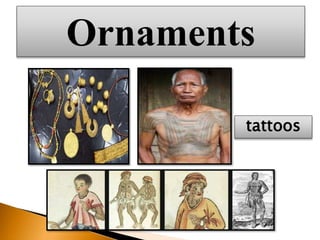
Ornaments
tattoos
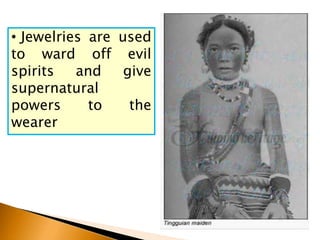
• Jewelries are used
to ward off evil
spirits and give
supernatural
powers to the
wearer
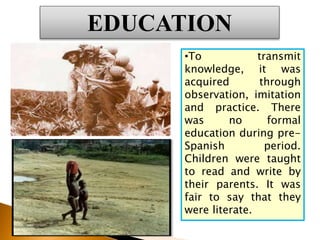
•To transmit
knowledge, it was
acquired through
observation, imitation
and practice. There
was no formal
education during pre-
Spanish period.
Children were taught
to read and write by
their parents. It was
fair to say that they
were literate.
EDUCATION
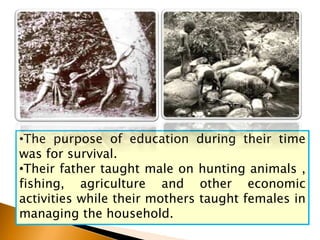
•The purpose of education during their time
was for survival.
•Their father taught male on hunting animals ,
fishing, agriculture and other economic
activities while their mothers taught females in
managing the household.
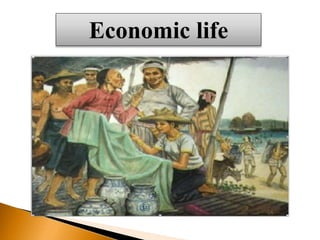
Economic life
• Domestic trade of different barangays
from different regions and islands
were made possible using boats.
• Foreign trade was carried on with
countries like Borneo, China, Japan,
Cambodia, Java and Siam (Thailand).
• Other means of livelihood were
shipbuilding, poultry raising, mining,
weaving and lumbering.
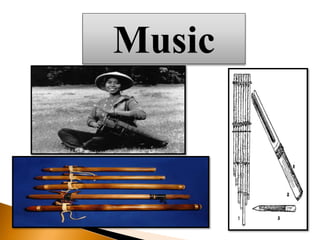
Music
• Natives were without a doubt, music lovers. Each
community had their own sets of musical
instrument. In the account of Pigafetta, the official
historian of Magellan expedition, women from
Cebu were harmoniously playing
- cymbals (plantiles)
- nose flutes, bamboo mouth organs (aphiw)
- brass gong (gansa)
- flute (bansic)
- long drum (colibao)
- bamboo harp (subing)
- water whistle (paiyak)
- guitar (bugtot)
- xylophone (agong)
- drum (tugo)
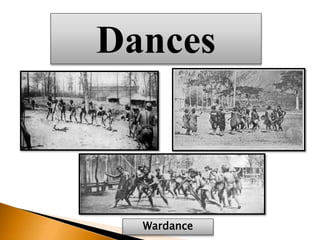
Dances
Wardance
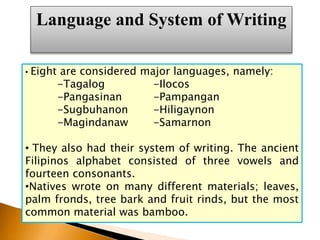
• Eight are considered major languages, namely:
-Tagalog -Ilocos
-Pangasinan -Pampangan
-Sugbuhanon -Hiligaynon
-Magindanaw -Samarnon
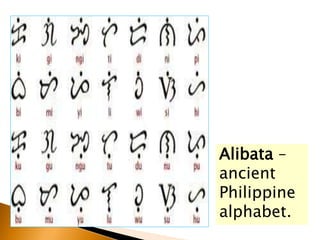
• They also had their system of writing. The ancient
Filipinos alphabet consisted of three vowels and
fourteen consonants.
•Natives wrote on many different materials; leaves,
palm fronds, tree bark and fruit rinds, but the most
common material was bamboo.
Language and System of Writing
Alibata –
ancient
Philippine
alphabet.
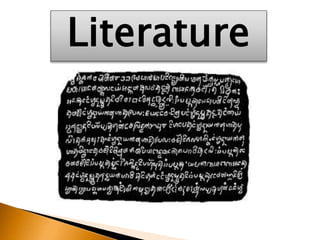
Literature
• The early form of literature during pre-Spanish
period was a classified into written or oral. Examples
of oral literature consisted of;
•maxims (sabi)
•Bugtong (riddles)
•Boat song (talindaw)
•Victory songs (tagumpay)
•Lullaby (uyayi)
•Wedding song (ihiman)
•War song (kumintang) etc.
• examples of written literature are;
•Biag ni Lam-Ang (Ilocano epic)
•Indarapatra at Sulayman and Bidasari (Muslim Epics)
•Handiong (Bicolanos)
Philippine History: Pre-Spanish

Philippine History: Pre-Spanish

  • 1.
  • 2.
  • 3.
  • 4.
    •The government wascalled “barangay”. •There was no national government. There were many independent barangays and datus. But there was no datu strong enough to unite the archipelago into one nation. Some barangays, however, united to form a confederation. •It was headed by a ruler called datu or raja.
  • 5.
  • 6.
  • 7.
  • 8.
    Power and Functionsof Datu •Implementing laws. •Maintaining peace and order. •Giving protection to his subjects. •He also made the law, with the assistance of group of elders who gave advice. •(a newly enacted law was made known to the public through town crier called “umalokohan”) •He acted also as a judge during trial. •(it was easy for the datu to run • for the barangay since the population was very small.
  • 9.
  • 10.
     Ancient Filipinosstarted the practice of paying taxes.  The purpose of paying taxes was simple, it was for the protection they received from the datu.  The collected tax was called “buwis”.
  • 11.
     The chieftain’sfamily members were enjoying exemption from paying taxes.  Non-payment of taxes was already punishable during this period.
  • 12.
  • 13.
    •Like community ofnations, alliances among barangay were formed. The purpose of forming alliances was for trade, peace and mutual protection. •An alliances was sealed through blood compact (sanduguan), to ensure conformity, sincerity and commitment of the chieftains.
  • 14.
  • 15.
  • 16.
    • The manwas required to give a dowry. •“Bigay-kaya” – was the type of dowry consisted of a piece of land or gold. •The groom’s parent gave a gift called “panghimuyat”. •“himaraw” – was another payment for raising the future bride during her infancy period, to be paid by the groom’s parent also. •Including the bride’s wet nurse received a share of dowry; it was called “bigay-suso”.
  • 17.
    •Mixed marriage, thatwas marriage between couples belonging to different social classes were not common. Early Filipinos practiced divorce. Several grounds of divorce were: •Adultery •Abandonment on the part of the husband •Cruelty •And insanity
  • 18.
  • 19.
    • Before RomanCatholism and Islam were introduced, natives worshipped many gods and goddesses. • Bathala – supreme being • Idiyanale – god of agriculture • Sidapa – god of death • Agni – god of fire • Balangaw – god of rainbow • Mandarangan – god of war • Lalahon – god of harvest • Siginarugan – god of hell Religious Beliefs
  • 20.
    •Natives believed in; •aswang (witch) • dwende (tiny creatures like humans) • kapre (tall and apelike creatures smoking cigarettes, usually found on trees. • mangkukulam (an old lady capable of harming others using a doll and a pin) • tikbalang (half-man and half-horse creature) • tiyanak (a baby that sucks blood on human. • They also believed in magical power of amulets and charms such as anting-anting, kulam and the use of gayuma or love potion. Superstitious Beliefs
  • 21.
    • They alsobelieved in the immortality of souls and life after death. • There were sacred animals, which they venerate like white monkey (manaul) and crocodiles. • There were also sacred place and sacred trees, which nobody was allowed to cut down. • They also worshipped the sun and the moon. • Regular sacrifices and prayers were offered to placate deities and spirits. Reward and punishment after death was dependent upon behavior in this life.
  • 22.
  • 23.
  • 24.
  • 25.
    • Jewelries areused to ward off evil spirits and give supernatural powers to the wearer
  • 26.
    •To transmit knowledge, itwas acquired through observation, imitation and practice. There was no formal education during pre- Spanish period. Children were taught to read and write by their parents. It was fair to say that they were literate. EDUCATION
  • 27.
    •The purpose ofeducation during their time was for survival. •Their father taught male on hunting animals , fishing, agriculture and other economic activities while their mothers taught females in managing the household.
  • 28.
  • 29.
    • Domestic tradeof different barangays from different regions and islands were made possible using boats. • Foreign trade was carried on with countries like Borneo, China, Japan, Cambodia, Java and Siam (Thailand). • Other means of livelihood were shipbuilding, poultry raising, mining, weaving and lumbering.
  • 30.
  • 31.
    • Natives werewithout a doubt, music lovers. Each community had their own sets of musical instrument. In the account of Pigafetta, the official historian of Magellan expedition, women from Cebu were harmoniously playing - cymbals (plantiles) - nose flutes, bamboo mouth organs (aphiw) - brass gong (gansa) - flute (bansic) - long drum (colibao) - bamboo harp (subing) - water whistle (paiyak) - guitar (bugtot) - xylophone (agong) - drum (tugo)
  • 32.
  • 34.
    • Eight areconsidered major languages, namely: -Tagalog -Ilocos -Pangasinan -Pampangan -Sugbuhanon -Hiligaynon -Magindanaw -Samarnon • They also had their system of writing. The ancient Filipinos alphabet consisted of three vowels and fourteen consonants. •Natives wrote on many different materials; leaves, palm fronds, tree bark and fruit rinds, but the most common material was bamboo. Language and System of Writing
  • 35.
  • 36.
  • 37.
    • The earlyform of literature during pre-Spanish period was a classified into written or oral. Examples of oral literature consisted of; •maxims (sabi) •Bugtong (riddles) •Boat song (talindaw) •Victory songs (tagumpay) •Lullaby (uyayi) •Wedding song (ihiman) •War song (kumintang) etc. • examples of written literature are; •Biag ni Lam-Ang (Ilocano epic) •Indarapatra at Sulayman and Bidasari (Muslim Epics) •Handiong (Bicolanos)