Reel Engine Studios | 2020
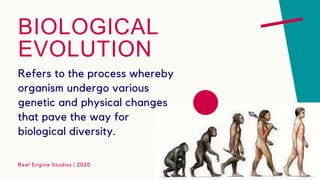
BIOLOGICAL
EVOLUTION
Refers to the process whereby
organism undergo various
genetic and physical changes
that pave the way for
biological diversity.
FRANCISCO JOSE AYALA
According to Ayala a noted Spanish-American
biologist, the theory of evolution in biology
suggests that "various types types of plants,
animals, and other living things on earth have
their origins in other pre-existing types and the
distinguishable differences are due to
modifications in successive generations."
TECHNOLOGICAL
EVOLUTION
IS A THEORY OF RADICAL
TRANSFORMATION OF SOCIETY
THROUGH TECHNOLOGICAL
DEVELOPMENT.
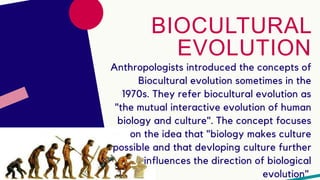
Anthropologists introduced the concepts of
Biocultural evolution sometimes in the
1970s. They refer biocultural evolution as
"the mutual interactive evolution of human
biology and culture". The concept focuses
on the idea that "biology makes culture
possible and that devloping culture further
influences the direction of biological
evolution".
BIOCULTURAL
EVOLUTION
THE
EVOLUTION OF
SOCIAL AND
POLITICAL
INSTITUTIONS
The Savage stage is the lowest stage of development which is
exemplified by the nomadic and hunger-gathered lifestyle.
In the 19th century, he came up with an evolutionary
scheme that divided history into three stages of
development; Savery, barbarism and civilization.
LEWIS HENRY
MORGAN
The barbaric stage, meanwhile, is the middle stage of development
where people began learning agriculture techniques and the
domestication of animals.
The civilized stage is the highest stage of development where
people learned writing.
HERBERT
SPENCER
HERBERT SPENCER APPLIED
CHARLES DARWIN'S PRINCIPLES OF
BIOLOGICAL EVOLUTION TO SOCIAL
EVOLUTION. FOR SPENCER,
INDIVIDUAL MEMBERS WITHIN
SOCIETIES ENGAGE IN A
COMPETITION FOR SURVIVAL
WHEREBY THE SUPERIOR ONES
DOMINATE THOSE WHO ARE OF THE
INFERIOR TYPE.
INDUSTRIAL
REVOLUTION
BEGINNING IN THE MID-1700S UNTIL THE
1800S, MANY SOCIETIES IN THE WORLD,
PARTICULARLY IN WESTERN EUROPE,
WERE TRANSFORMED BY THE INDUSTRIAL
EVOLUTION. THE INCREASED USE OF
MECHANICAL DEVICES AND THE
DISCOVERY OF STEAM POWER LED TO
DEVELOPMENT OF THE FACTORY SYSTEM
WHICH BROUGHT ABOUT MANY CHANGES
IN SOCIETY.
SOCIETY AS A NATURAL
INSTITUTION
THE GREEK PHILOSOPHER ARISTOTLE
BELIEVE THAT HUMAN BEINGS ARE BY
NATURE SOCIAL AND POLITICAL
ANIMALS, AND THAT HUMAN
INTERACTIONS FULFILL CERTAIN BASIC
NEEDS.
SOCIETY AS A PRODUCT OF A
SOCIAL CONTRACT
IT IS AN AGREEMENT MADE BY THE
MEMBERS OF SOCIETY THAT DEFINES
AND INFLUENCES THEIR
INTERACTIONS, PARTICULARLY WITH
THOSE IN AUTHORITY. THE ENGLISH
PHILOSOPHER, THOMAS HOBBES,
THOUGHT THAT THE AGREEMENT WAS
NECESSITATED BY THE NEED TO
GUARANTEE THE SECURITY WITHIN
SOCIETY.
The historical-materialist perspective developed by
Karl Marx and Friedrich Engles, asserts that societies
evolve in stages in relation to the development of the
means of production and its ownership.
MODERNIZATION
THEORIES
The sociologist Max Weber, writing in the early 20th
century, observed the process of rationalization and
bureaucratization that happened in modern
industrial societies.
Emile Durkheim, distinguished archaic, traditional
societies from modern societies.
MODERNIZATION
THEORIES
Durkheim describe traditional societies to be bound
by what he called mechanical solidarity, or a sense
of bonding within the community based on similar
belief, values, and activities as well as kinship ties
berween its members.
More developed societies, are characterized by an
organic solidarity where division of labor is
specialized.
Thank
You

Chapter 5 (UCSP).pptx

  • 3.
    Reel Engine Studios| 2020 BIOLOGICAL EVOLUTION Refers to the process whereby organism undergo various genetic and physical changes that pave the way for biological diversity.
  • 4.
    FRANCISCO JOSE AYALA Accordingto Ayala a noted Spanish-American biologist, the theory of evolution in biology suggests that "various types types of plants, animals, and other living things on earth have their origins in other pre-existing types and the distinguishable differences are due to modifications in successive generations."
  • 5.
    TECHNOLOGICAL EVOLUTION IS A THEORYOF RADICAL TRANSFORMATION OF SOCIETY THROUGH TECHNOLOGICAL DEVELOPMENT.
  • 6.
    Anthropologists introduced theconcepts of Biocultural evolution sometimes in the 1970s. They refer biocultural evolution as "the mutual interactive evolution of human biology and culture". The concept focuses on the idea that "biology makes culture possible and that devloping culture further influences the direction of biological evolution". BIOCULTURAL EVOLUTION
  • 7.
  • 8.
    The Savage stageis the lowest stage of development which is exemplified by the nomadic and hunger-gathered lifestyle. In the 19th century, he came up with an evolutionary scheme that divided history into three stages of development; Savery, barbarism and civilization. LEWIS HENRY MORGAN The barbaric stage, meanwhile, is the middle stage of development where people began learning agriculture techniques and the domestication of animals. The civilized stage is the highest stage of development where people learned writing.
  • 9.
    HERBERT SPENCER HERBERT SPENCER APPLIED CHARLESDARWIN'S PRINCIPLES OF BIOLOGICAL EVOLUTION TO SOCIAL EVOLUTION. FOR SPENCER, INDIVIDUAL MEMBERS WITHIN SOCIETIES ENGAGE IN A COMPETITION FOR SURVIVAL WHEREBY THE SUPERIOR ONES DOMINATE THOSE WHO ARE OF THE INFERIOR TYPE.
  • 11.
    INDUSTRIAL REVOLUTION BEGINNING IN THEMID-1700S UNTIL THE 1800S, MANY SOCIETIES IN THE WORLD, PARTICULARLY IN WESTERN EUROPE, WERE TRANSFORMED BY THE INDUSTRIAL EVOLUTION. THE INCREASED USE OF MECHANICAL DEVICES AND THE DISCOVERY OF STEAM POWER LED TO DEVELOPMENT OF THE FACTORY SYSTEM WHICH BROUGHT ABOUT MANY CHANGES IN SOCIETY.
  • 13.
    SOCIETY AS ANATURAL INSTITUTION THE GREEK PHILOSOPHER ARISTOTLE BELIEVE THAT HUMAN BEINGS ARE BY NATURE SOCIAL AND POLITICAL ANIMALS, AND THAT HUMAN INTERACTIONS FULFILL CERTAIN BASIC NEEDS.
  • 14.
    SOCIETY AS APRODUCT OF A SOCIAL CONTRACT IT IS AN AGREEMENT MADE BY THE MEMBERS OF SOCIETY THAT DEFINES AND INFLUENCES THEIR INTERACTIONS, PARTICULARLY WITH THOSE IN AUTHORITY. THE ENGLISH PHILOSOPHER, THOMAS HOBBES, THOUGHT THAT THE AGREEMENT WAS NECESSITATED BY THE NEED TO GUARANTEE THE SECURITY WITHIN SOCIETY.
  • 15.
    The historical-materialist perspectivedeveloped by Karl Marx and Friedrich Engles, asserts that societies evolve in stages in relation to the development of the means of production and its ownership. MODERNIZATION THEORIES The sociologist Max Weber, writing in the early 20th century, observed the process of rationalization and bureaucratization that happened in modern industrial societies.
  • 16.
    Emile Durkheim, distinguishedarchaic, traditional societies from modern societies. MODERNIZATION THEORIES Durkheim describe traditional societies to be bound by what he called mechanical solidarity, or a sense of bonding within the community based on similar belief, values, and activities as well as kinship ties berween its members. More developed societies, are characterized by an organic solidarity where division of labor is specialized.
  • 17.