Direction: Arranged the given jumbled letters to identify the correct
terminology and define the fixed word
a hazard is a threat or harm that has the potential to
cause damage (e.g., injury, destruction of
properties, environmental degradation) to a
community.
Natural hazards are inevitable.
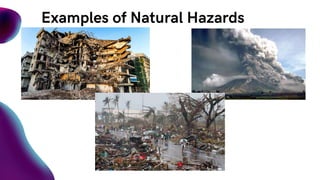
Natural hazards are those that are caused by
physical and biological elements in the
environment. Natural Hazard are part of natural
processes of Earth operating throughout Earth's
History.
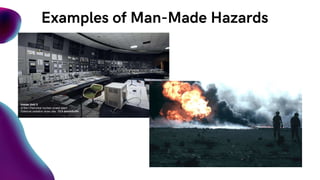
Also called technolohical hazards.
Man-made hazards are those caused by factors that are
generally traced to human errors, intent or negligence, or
glitches in technology.
Profiling hazards is important in predicting the possible
disasters that a certain hazard can bring. Hazards can be
profiled in different ways; magnitude of event (high-
scale or low-scale), frequency (number of times in a
year), duration (short-term or long-term), and causality
effects (direct or indirect).
The Magnitude of hazard can be assessed by
the measurements obtained from scientific
instruments.
The frequency of hazard to occur in an
area is important because it tells its
proneness to the hazard.
The impact of hazard varies in duration. The
assessment of the duration is either short or long.
The impact of hazards can also be
assessed based on the causality of
event.
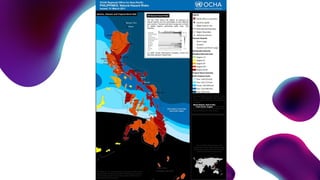
A hazard-prone area is a location where a natural
hazard is likely to happen if preventive measures
are not implemented.
Direction: In a one whole yellow
pad. Create a hazard profiling
using your place or your
environment.
Basic Concept Of Hazard (PPT).pptx

Basic Concept Of Hazard (PPT).pptx

  • 2.
    Direction: Arranged thegiven jumbled letters to identify the correct terminology and define the fixed word
  • 3.
    a hazard isa threat or harm that has the potential to cause damage (e.g., injury, destruction of properties, environmental degradation) to a community.
  • 5.
    Natural hazards areinevitable. Natural hazards are those that are caused by physical and biological elements in the environment. Natural Hazard are part of natural processes of Earth operating throughout Earth's History.
  • 7.
    Also called technolohicalhazards. Man-made hazards are those caused by factors that are generally traced to human errors, intent or negligence, or glitches in technology.
  • 9.
    Profiling hazards isimportant in predicting the possible disasters that a certain hazard can bring. Hazards can be profiled in different ways; magnitude of event (high- scale or low-scale), frequency (number of times in a year), duration (short-term or long-term), and causality effects (direct or indirect).
  • 11.
    The Magnitude ofhazard can be assessed by the measurements obtained from scientific instruments.
  • 12.
    The frequency ofhazard to occur in an area is important because it tells its proneness to the hazard.
  • 13.
    The impact ofhazard varies in duration. The assessment of the duration is either short or long.
  • 14.
    The impact ofhazards can also be assessed based on the causality of event.
  • 16.
    A hazard-prone areais a location where a natural hazard is likely to happen if preventive measures are not implemented.
  • 18.
    Direction: In aone whole yellow pad. Create a hazard profiling using your place or your environment.