Section 1: What is
Climate?
 Climate is the pattern of weather that
occurs in an area over many years.
 It determines the types of plants or animals
that can survive, and influences how people
live.
Climate continued…
 Elements that are averaged to determine
climate: Temperature, Precipitation, air
pressure, humidity, and days of sunshine.
Climate…
Factors that Affect Climate
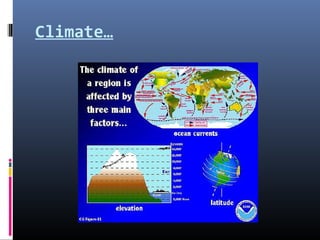
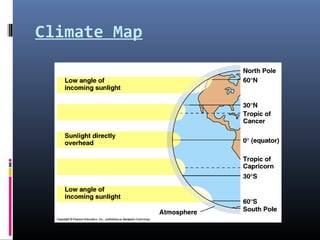
1. Latitude: distance north or south of the
equator.
a. Tropics: (between 23 degrees N. and 23
degrees S.); Sun shines directly from
overhead, keeping temperatures high
Factors that Affect Climate
b. Polar Zones: (66 degrees N. & 66 degrees
S. to the poles) ; Sun shines at a low angle,
keeping Temperatures low
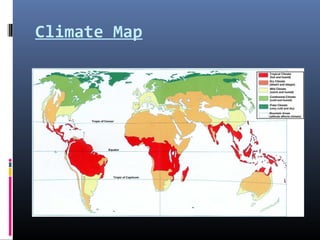
c. Temperate Zones: (between the tropics
and the poles); Moderate Temperatures
Climate Map
Climate Map
Factors that Affect Climate
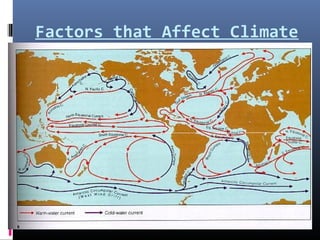
2. Ocean Currents & Large Bodies of Water:
a. Ocean Currents can bring cool or warm
water and moisture to coastal areas
b. Large bodies of water affect the climate
of coastal areas by absorbing or giving
off heat
Factors that Affect Climate
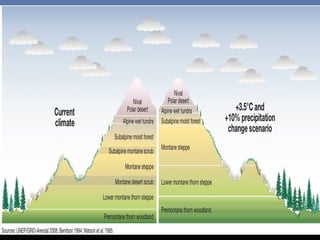
 3. Elevation:
a. Mountains affect their own climate as well as the
climates of nearby areas
b. At the same latitude, the climate on a mountain is
colder than the climate at sea level
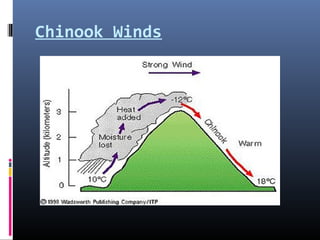
c. Mountains cause air to rise, cool, and condense,
creating a wetter climate on the windward side of
the mountain and a much drier climate on the
leeward side (Chinook Winds)
Chinook Winds
Factors that Affect Climate
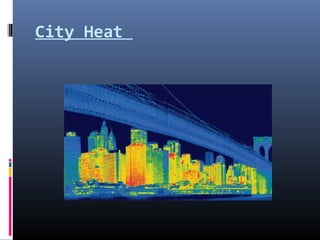
 4. Cities: because of their large areas of
solar radiation—absorbing pavement, cities
frequently have higher temperatures that
surrounding areas
City Heat

Chapter 16 climate

  • 2.
    Section 1: Whatis Climate?  Climate is the pattern of weather that occurs in an area over many years.  It determines the types of plants or animals that can survive, and influences how people live.
  • 3.
    Climate continued…  Elementsthat are averaged to determine climate: Temperature, Precipitation, air pressure, humidity, and days of sunshine.
  • 4.
  • 5.
    Factors that AffectClimate 1. Latitude: distance north or south of the equator. a. Tropics: (between 23 degrees N. and 23 degrees S.); Sun shines directly from overhead, keeping temperatures high
  • 6.
    Factors that AffectClimate b. Polar Zones: (66 degrees N. & 66 degrees S. to the poles) ; Sun shines at a low angle, keeping Temperatures low c. Temperate Zones: (between the tropics and the poles); Moderate Temperatures
  • 7.
  • 8.
  • 9.
    Factors that AffectClimate 2. Ocean Currents & Large Bodies of Water: a. Ocean Currents can bring cool or warm water and moisture to coastal areas b. Large bodies of water affect the climate of coastal areas by absorbing or giving off heat
  • 10.
  • 11.
    Factors that AffectClimate  3. Elevation: a. Mountains affect their own climate as well as the climates of nearby areas b. At the same latitude, the climate on a mountain is colder than the climate at sea level c. Mountains cause air to rise, cool, and condense, creating a wetter climate on the windward side of the mountain and a much drier climate on the leeward side (Chinook Winds)
  • 13.
  • 14.
    Factors that AffectClimate  4. Cities: because of their large areas of solar radiation—absorbing pavement, cities frequently have higher temperatures that surrounding areas
  • 15.