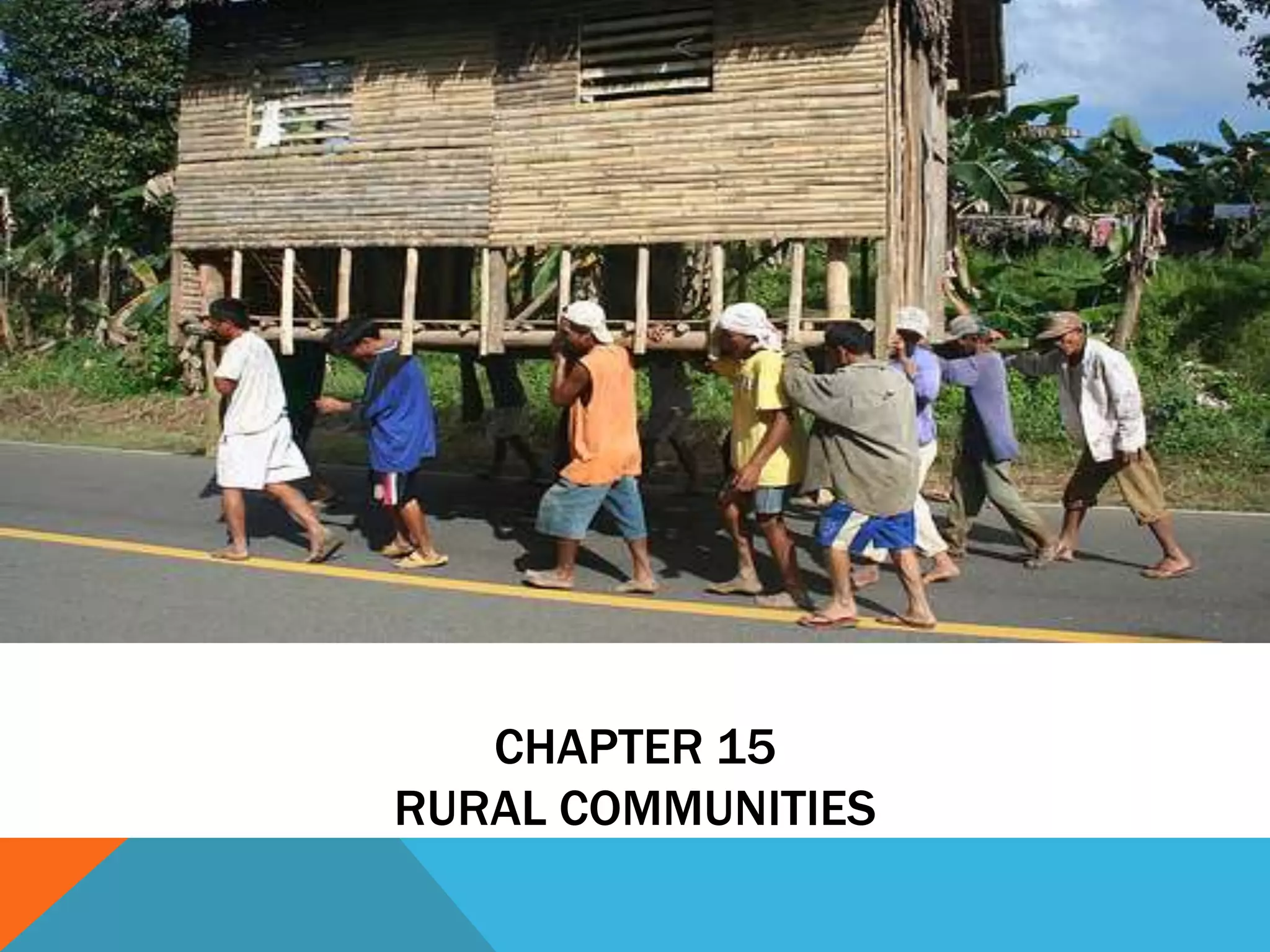
CHAPTER 15
RURAL COMMUNITIES
INTRODUCTION
People live in communities. Some
people live close to each other.
They are called neighbors.
A community is a term for groups
of people living in somewhat close
area, and usually under common
rules.
A citizen is a member of a
community, state, or country.
Following laws is an important
part of being a good citizen.
Another way to be a good citizen
is to help others.
INTRODUCTI
ON
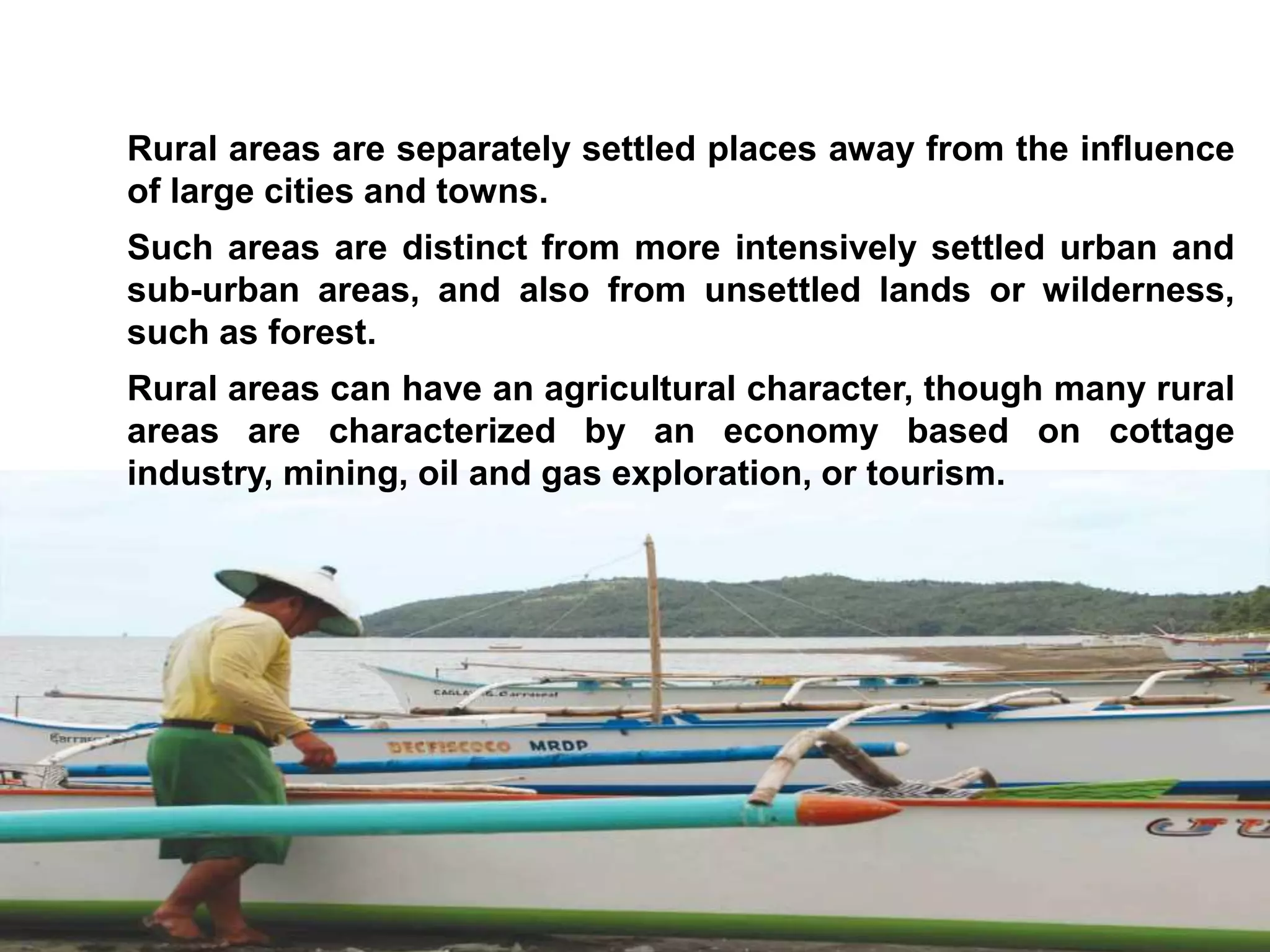
Rural areas are separately settled places away from the influence
of large cities and towns.
Such areas are distinct from more intensively settled urban and
sub-urban areas, and also from unsettled lands or wilderness,
such as forest.
Rural areas can have an agricultural character, though many rural
areas are characterized by an economy based on cottage
industry, mining, oil and gas exploration, or tourism.
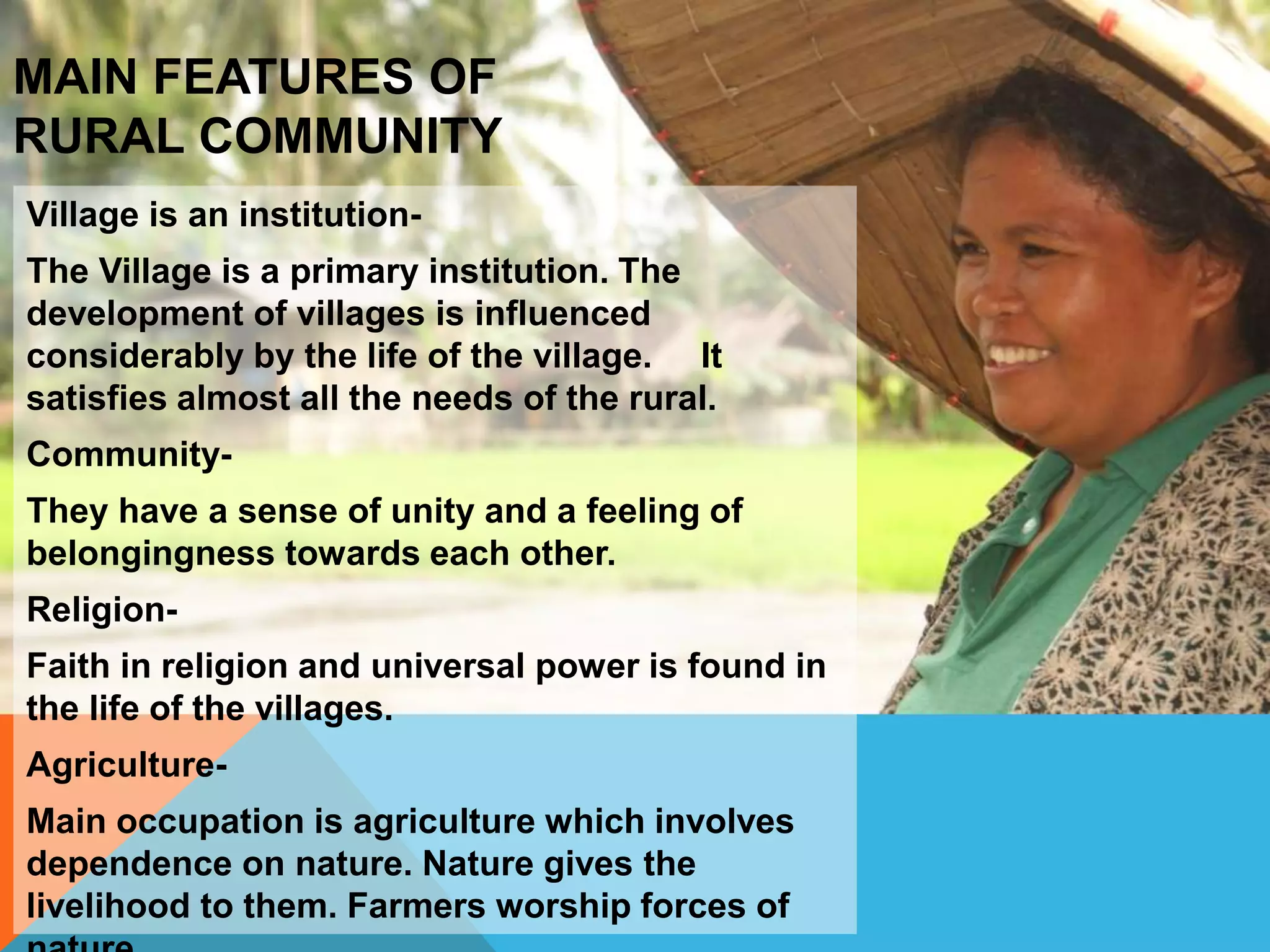
Village is an institution-
The Village is a primary institution. The
development of villages is influenced
considerably by the life of the village. It
satisfies almost all the needs of the rural.
Community-
They have a sense of unity and a feeling of
belongingness towards each other.
Religion-
Faith in religion and universal power is found in
the life of the villages.
Agriculture-
Main occupation is agriculture which involves
dependence on nature. Nature gives the
livelihood to them. Farmers worship forces of
MAIN FEATURES OF
RURAL COMMUNITY
 Rural – is usually areas which are
sparsely settled places away from the
influence of large cities and towns.
People in rural areas live in villages,
on farms and in other isolated
houses, as in pre-industrial societies.
Rural areas usually have agriculture
character though many areas are
characterized by an economy based
on logging, mining, petroleum and
natural gas exploration, or tourism.
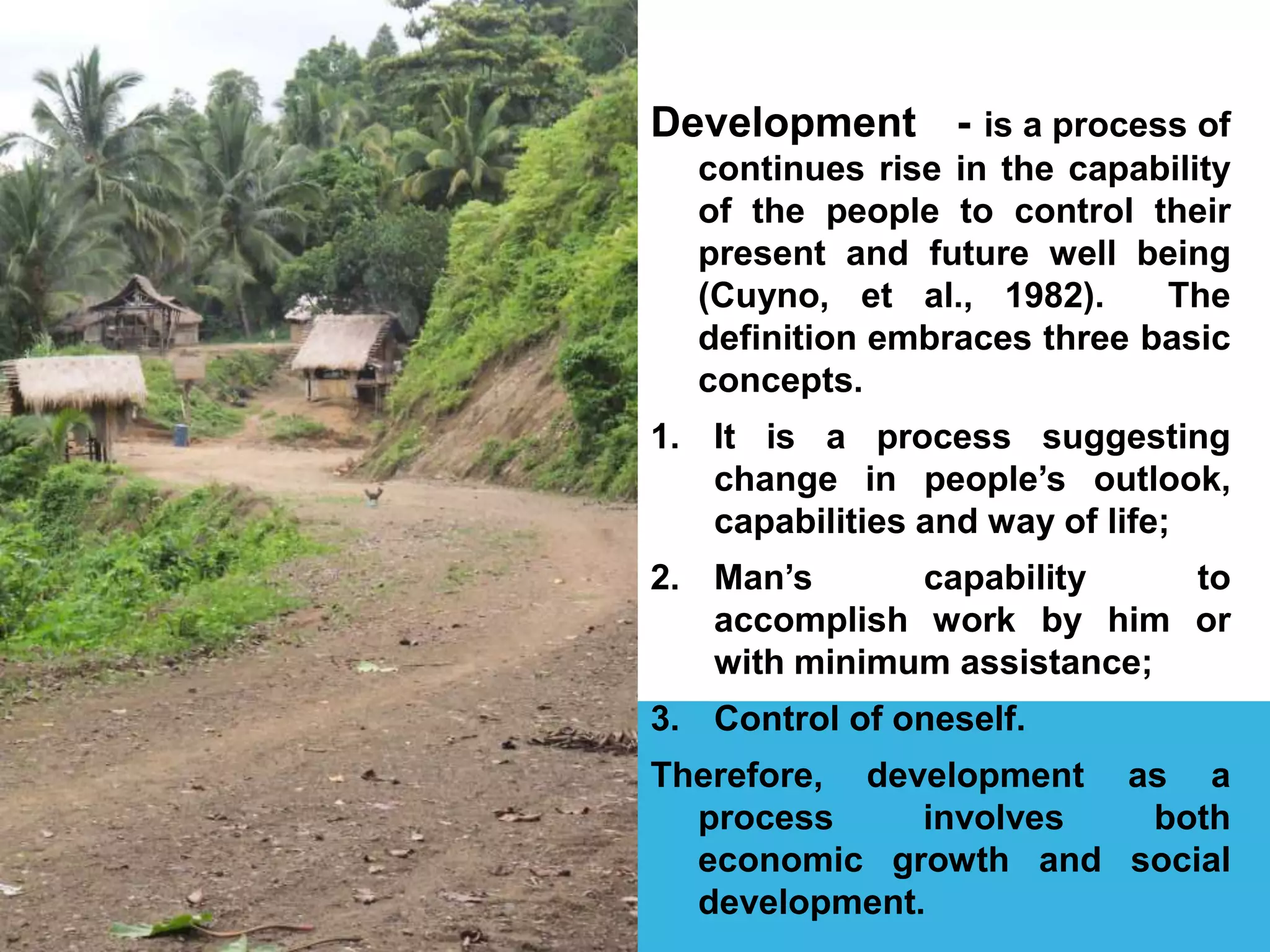
Development - is a process of
continues rise in the capability
of the people to control their
present and future well being
(Cuyno, et al., 1982). The
definition embraces three basic
concepts.
1. It is a process suggesting
change in people’s outlook,
capabilities and way of life;
2. Man’s capability to
accomplish work by him or
with minimum assistance;
3. Control of oneself.
Therefore, development as a
process involves both
economic growth and social
development.
Development includes:
The people (self esteem, dignity, security,
potential); the economy; technology;
Culture; Moral values; Environmental
preservation; Social justice; Literacy
and education; Change in social
structure; Equal distribution of
wealth; Organization; Discipline;
Freedom (from servitude, debt, etc.);
Control over political destiny; Peace
and order
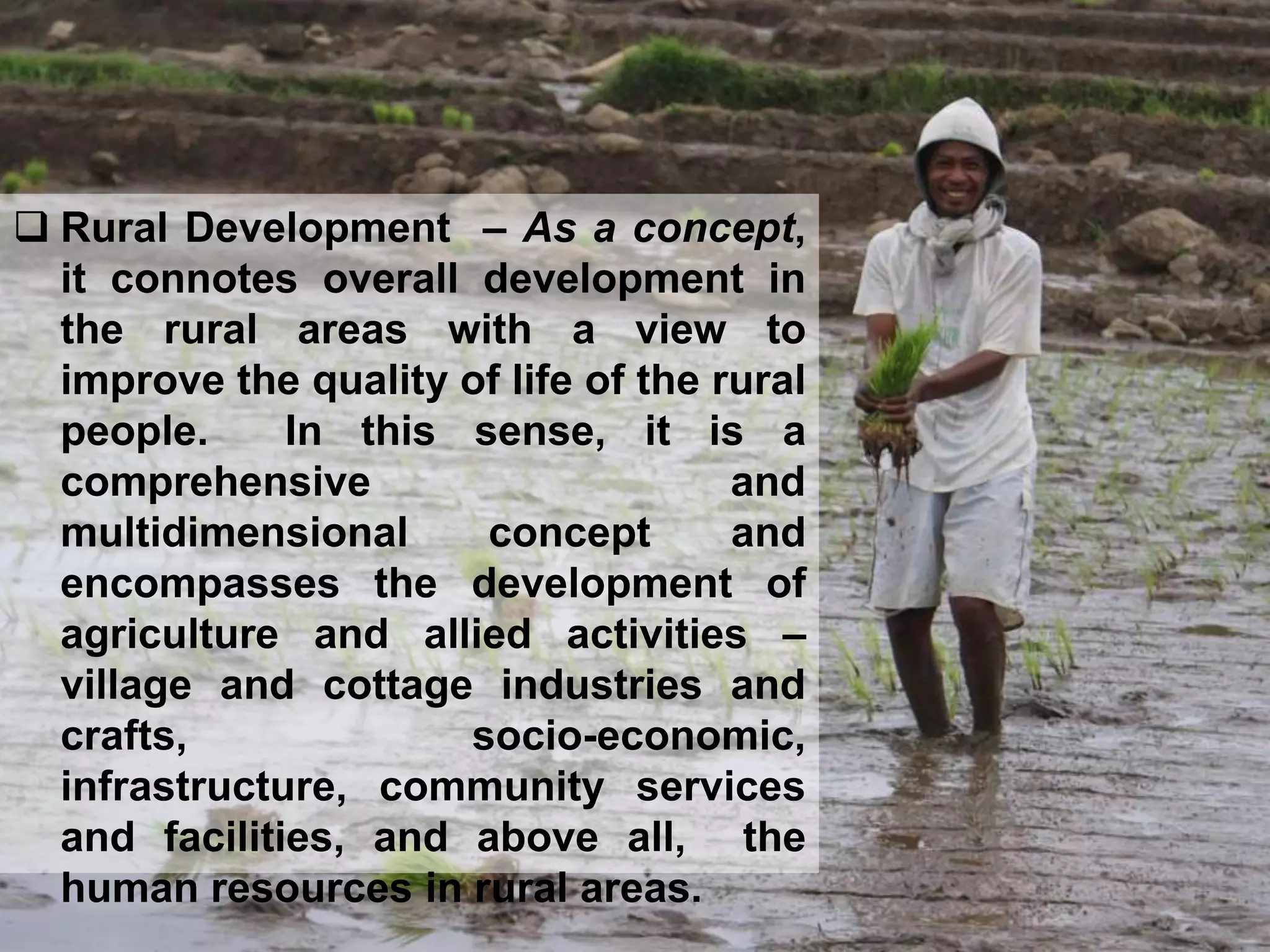
 Rural Development – As a concept,
it connotes overall development in
the rural areas with a view to
improve the quality of life of the rural
people. In this sense, it is a
comprehensive and
multidimensional concept and
encompasses the development of
agriculture and allied activities –
village and cottage industries and
crafts, socio-economic,
infrastructure, community services
and facilities, and above all, the
human resources in rural areas.
DEFINITION OF TERMS
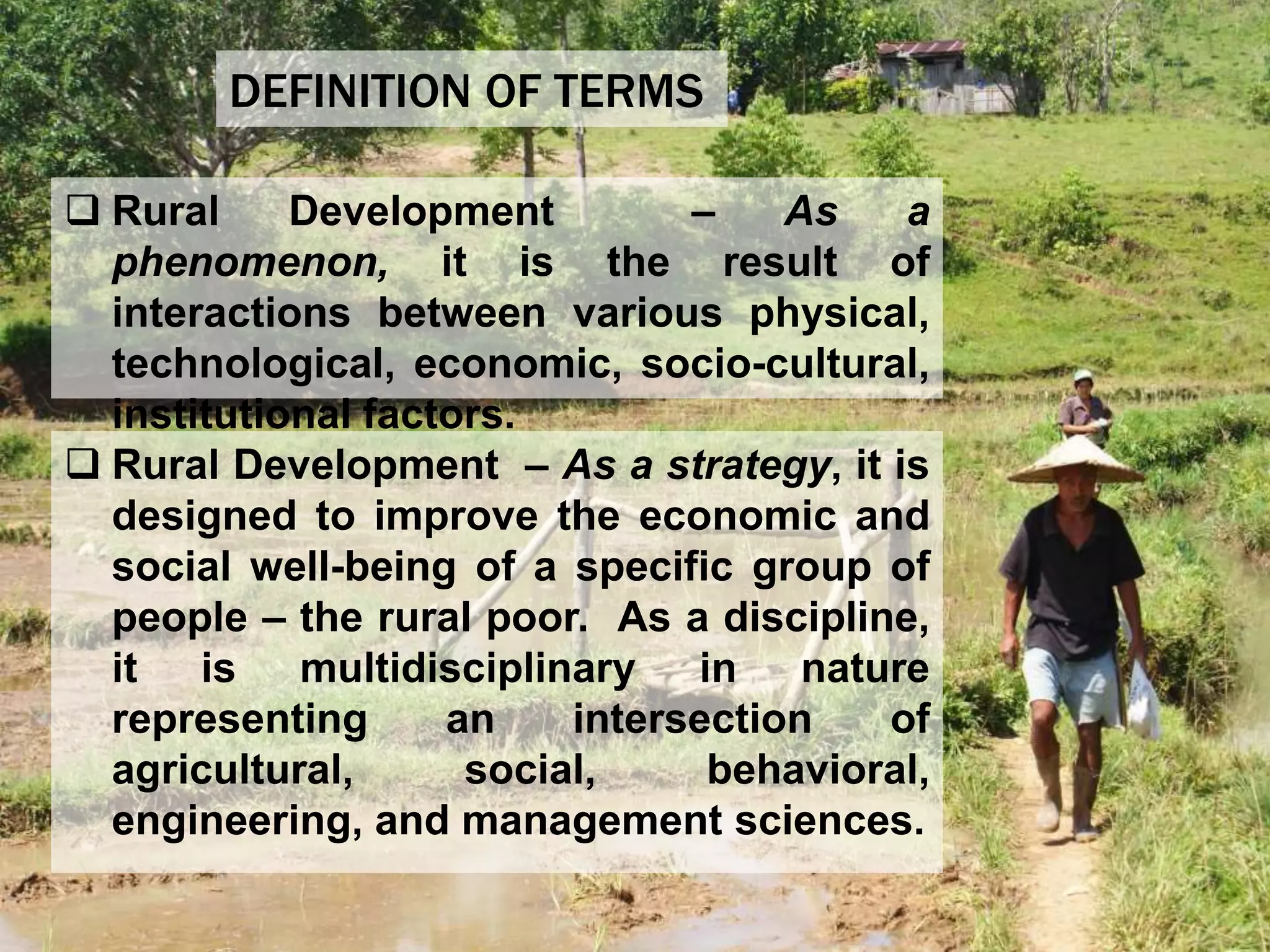
 Rural Development – As a
phenomenon, it is the result of
interactions between various physical,
technological, economic, socio-cultural,
institutional factors.
 Rural Development – As a strategy, it is
designed to improve the economic and
social well-being of a specific group of
people – the rural poor. As a discipline,
it is multidisciplinary in nature
representing an intersection of
agricultural, social, behavioral,
engineering, and management sciences.
 Rural Development, ergo, is
defined as a process of
developing and utilizing natural
and human resources,
technologies, infrastructural
facilities, institutions and
organizations, and government
policies and programmes to
encourage and speed up
economic growth in rural areas,
to provide jobs and to improve
the quality of rural life towards
self-sustenance (Singh, 1986).
RURAL DEV’T PARADIGM SHIFT
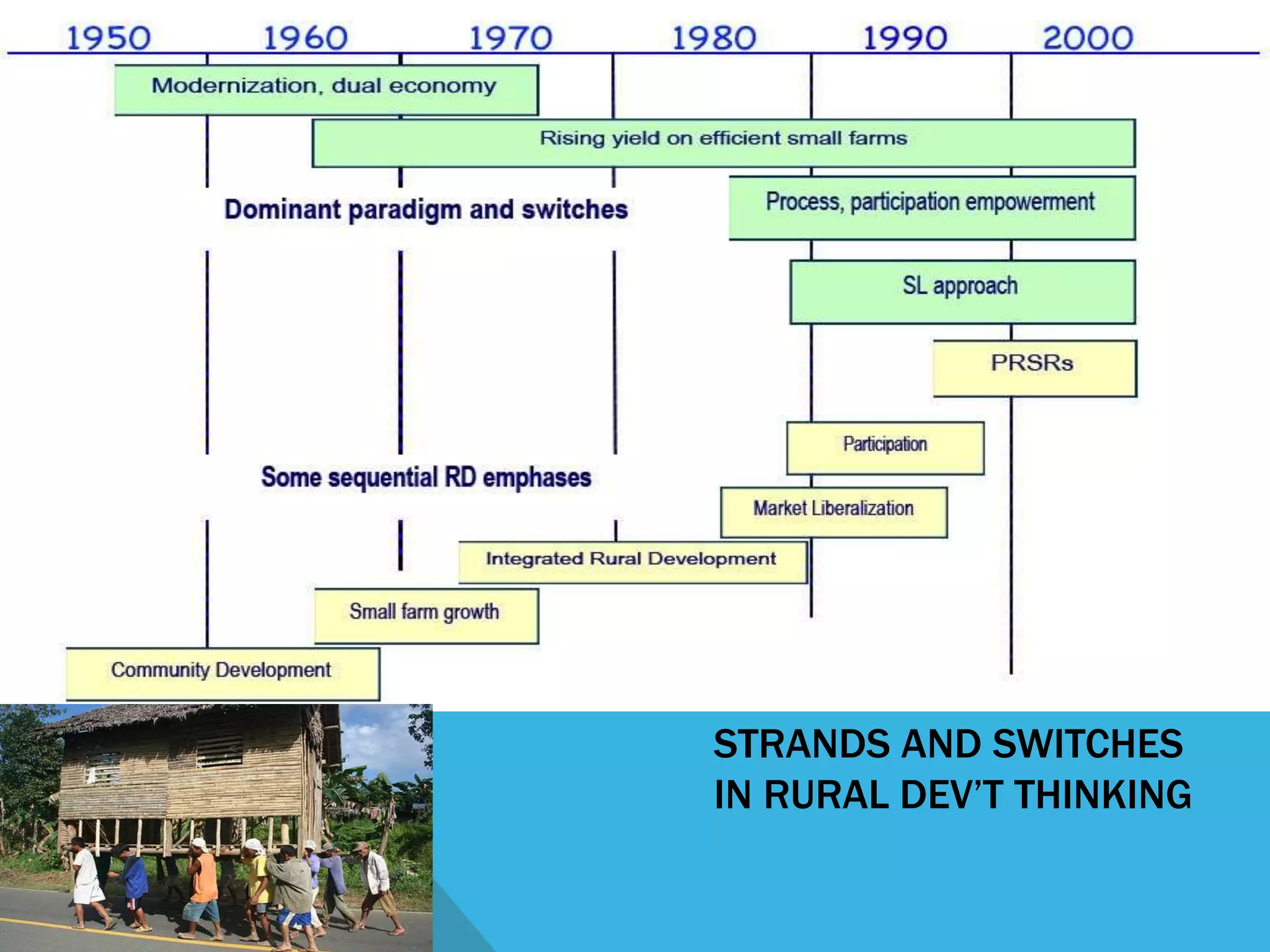
STRANDS AND SWITCHES
IN RURAL DEV’T THINKING
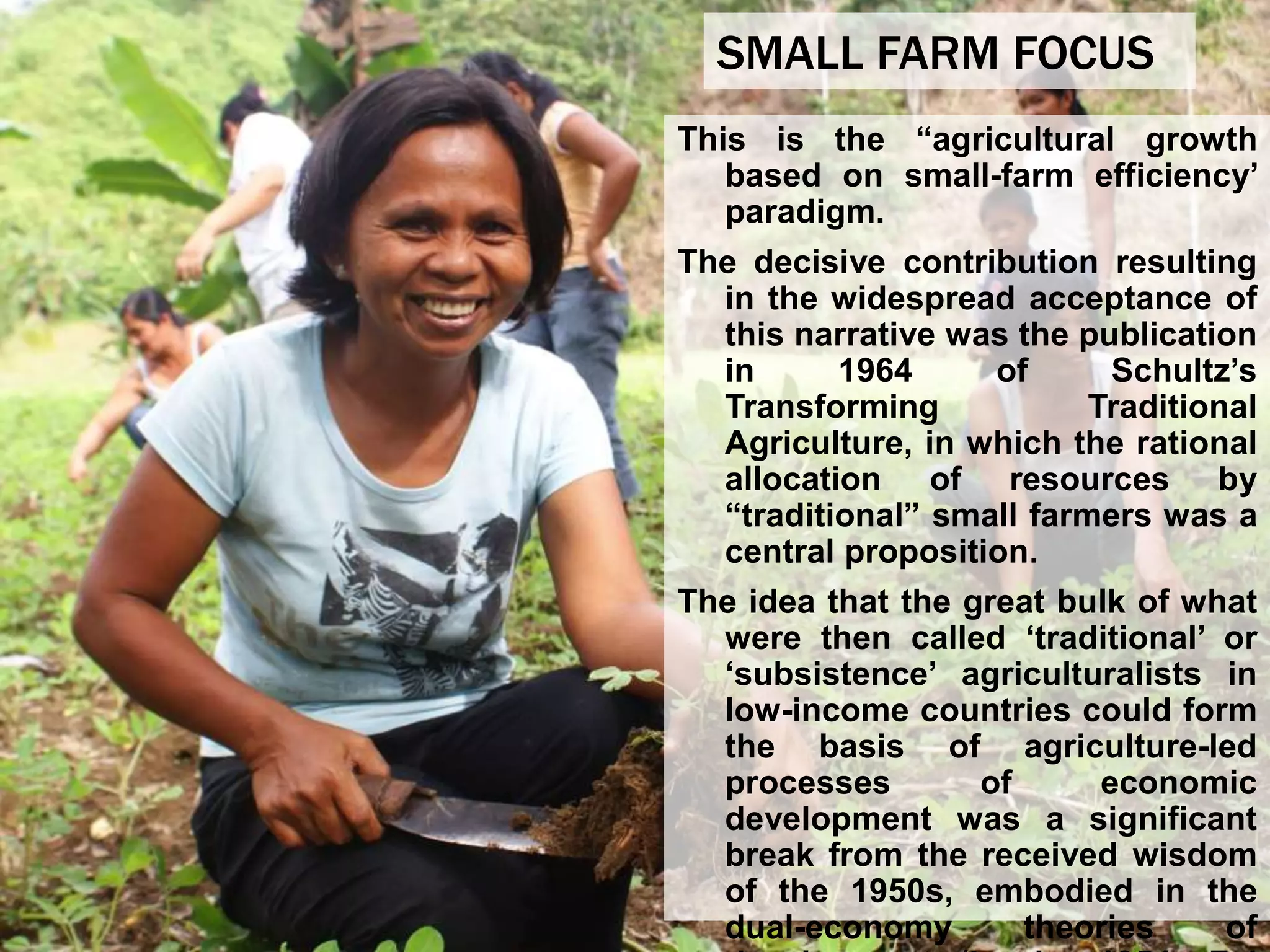
SMALL FARM FOCUS
This is the “agricultural growth
based on small-farm efficiency’
paradigm.
The decisive contribution resulting
in the widespread acceptance of
this narrative was the publication
in 1964 of Schultz’s
Transforming Traditional
Agriculture, in which the rational
allocation of resources by
“traditional” small farmers was a
central proposition.
The idea that the great bulk of what
were then called ‘traditional’ or
‘subsistence’ agriculturalists in
low-income countries could form
the basis of agriculture-led
processes of economic
development was a significant
break from the received wisdom
of the 1950s, embodied in the
dual-economy theories of
SMALL FARM FOCUS
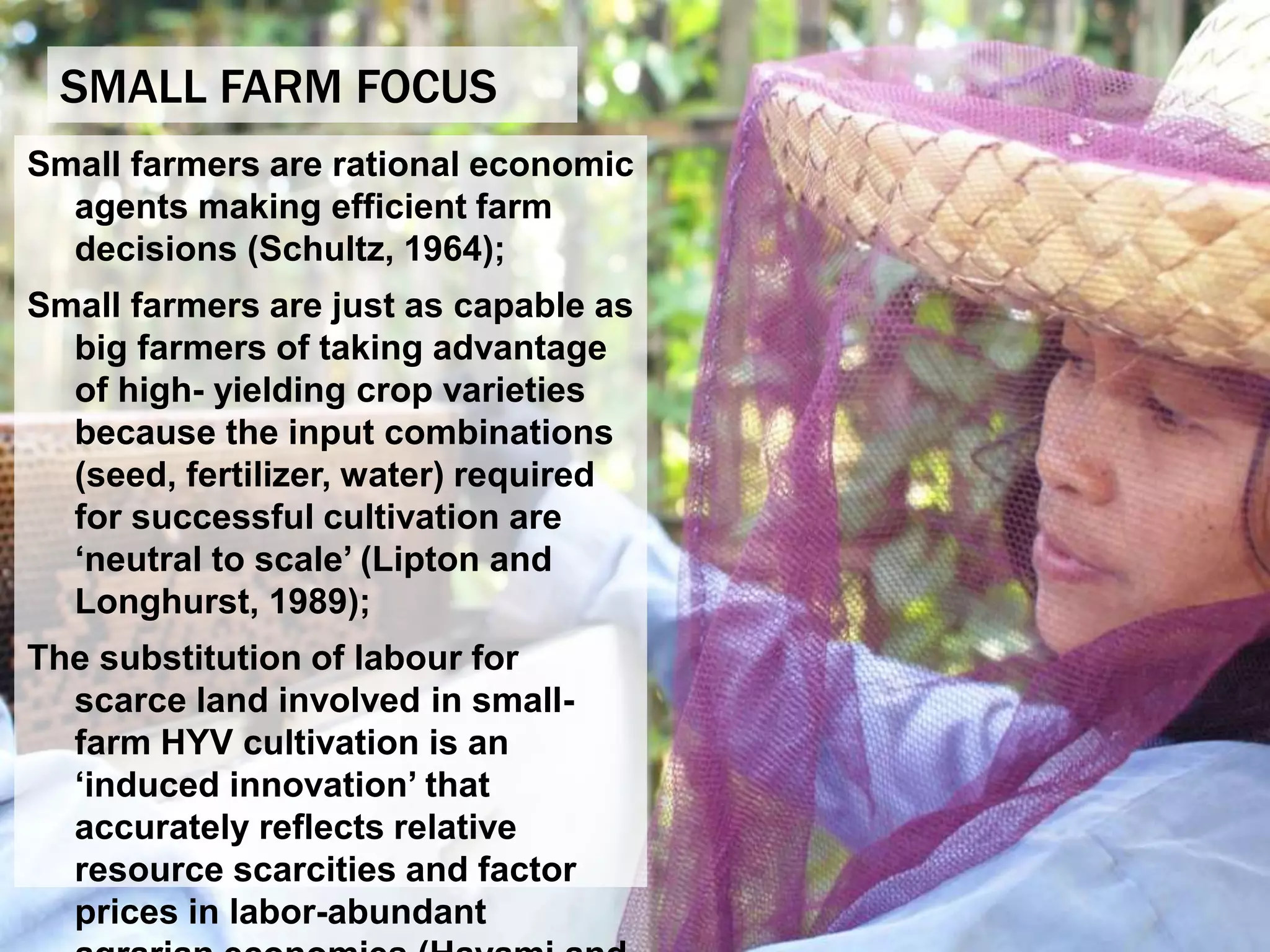
Small farmers are rational economic
agents making efficient farm
decisions (Schultz, 1964);
Small farmers are just as capable as
big farmers of taking advantage
of high- yielding crop varieties
because the input combinations
(seed, fertilizer, water) required
for successful cultivation are
‘neutral to scale’ (Lipton and
Longhurst, 1989);
The substitution of labour for
scarce land involved in small-
farm HYV cultivation is an
‘induced innovation’ that
accurately reflects relative
resource scarcities and factor
prices in labor-abundant
There exists an ‘inverse relationship’
between farm size and economic
efficiency, such that small farmers are
more efficient than large farmers
because of the intensity of their use of
abundant labor in combination with
small land holdings and low
requirements for scarce capital (Berry
and Cline, 1979);
These factors lead in the direction of a
‘unimodal’ agricultural strategy
favouring small family farms rather than
a ‘bimodal’ strategy that bets on the
strength of a modern farm sector
composed of large farms and estates
(Johnston and Kilby, 1975: Ch.4);
Rising agricultural output in the small-farm
sector results in ‘rural growth linkages’
that spur the growth of labour-intensive
non-farm activities in rural areas, and
SMALL FARM FOCUS
The notion of ‘rural growth
linkages’ has proved
particularly pervasive and
durable (Delgado et al., 1998;
IFAD, 2001), even though the
methods used to substantiate
the significance of such
linkages are somewhat
debatable (Harriss, 1987; Hart,
1989; 1993).
‘The growth of the non- farm
economy depends on the
vitality of the farm economy;
without agricultural growth in
rural areas, redressing
poverty is an impossible task’
(Singh, 1990).
PROCESS APPROACHES
TO RURAL DEV’T
The second ‘paradigm shift’
was the switch occurring
during the 1980s and 1990s
from the top-down or
“blueprint” approach to
rural development,
characterized by external
technologies and national-
level policies, to the
bottom-up, grassroots, or
“process” approach
(Rondinelli, 1983; Mosse et
al., 1998). This envisages
rural development as a
participatory process that
empowers rural dwellers to
KEY STRANDS ON APPROACHES TO RURAL DEV’T
The advent of farming systems research (FSR),
and the growing argument that the Green
Revolution in monocrop farming systems (rice
and wheat), mainly in Asia, might not
necessarily work for raising incomes in
diverse, risk-prone and resource-poor
environments (e.g. Chambers et al., 1989);
A growing acknowledgement of the validity of
indigenous technical knowledge (ITK), and of
the ability of the poor themselves to contribute
to solutions to the problems they confront
(Richards, 1985);
The rise of the participatory method, originating
in rapid rural appraisal (RRA) techniques in the
1980s and evolving into participatory rural
appraisal (PRA) and participatory learning and
action (PLA) during the 1990s (Chambers,
1994; 1997);
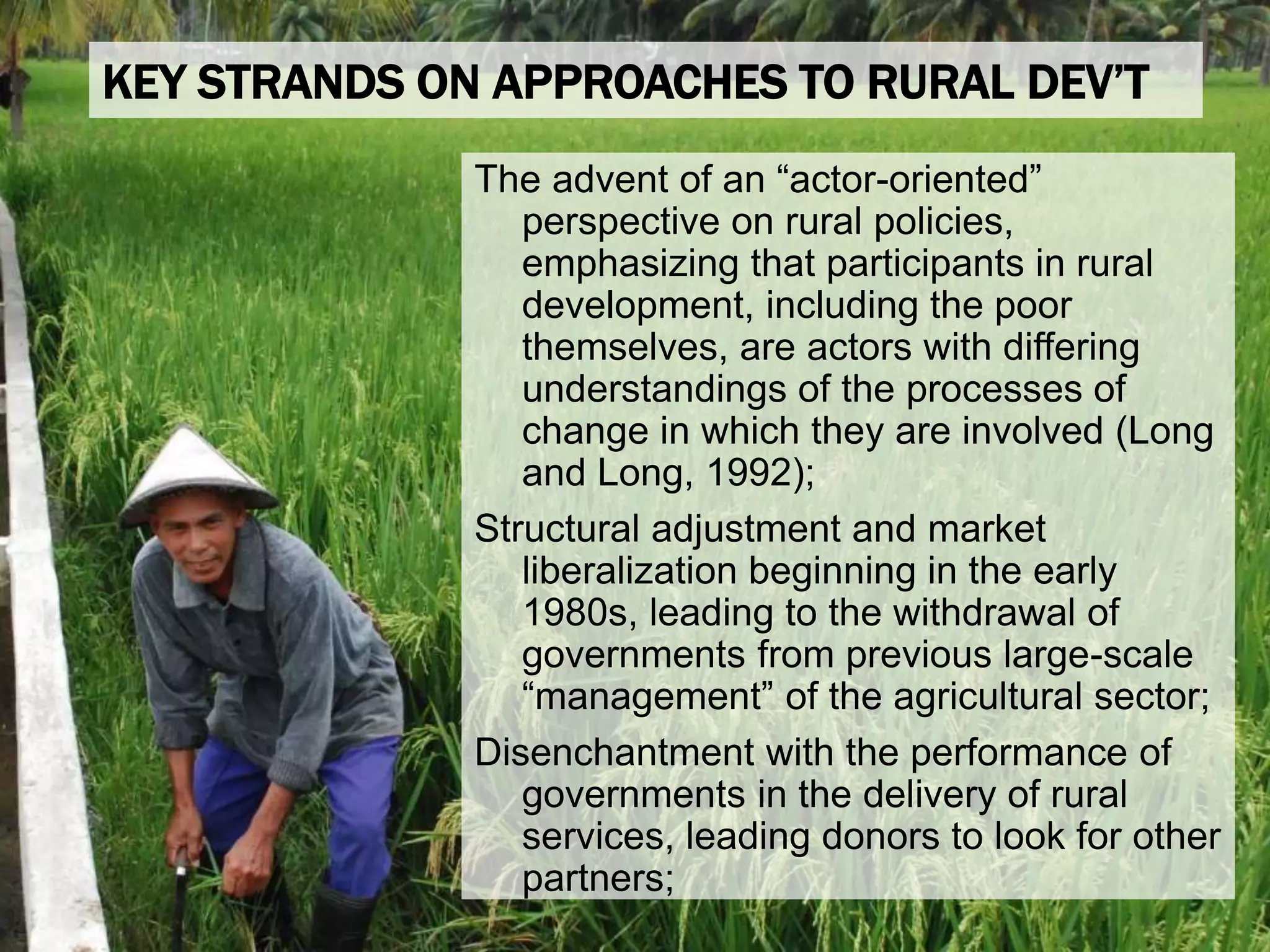
The advent of an “actor-oriented”
perspective on rural policies,
emphasizing that participants in rural
development, including the poor
themselves, are actors with differing
understandings of the processes of
change in which they are involved (Long
and Long, 1992);
Structural adjustment and market
liberalization beginning in the early
1980s, leading to the withdrawal of
governments from previous large-scale
“management” of the agricultural sector;
Disenchantment with the performance of
governments in the delivery of rural
services, leading donors to look for other
partners;
KEY STRANDS ON APPROACHES TO RURAL DEV’T
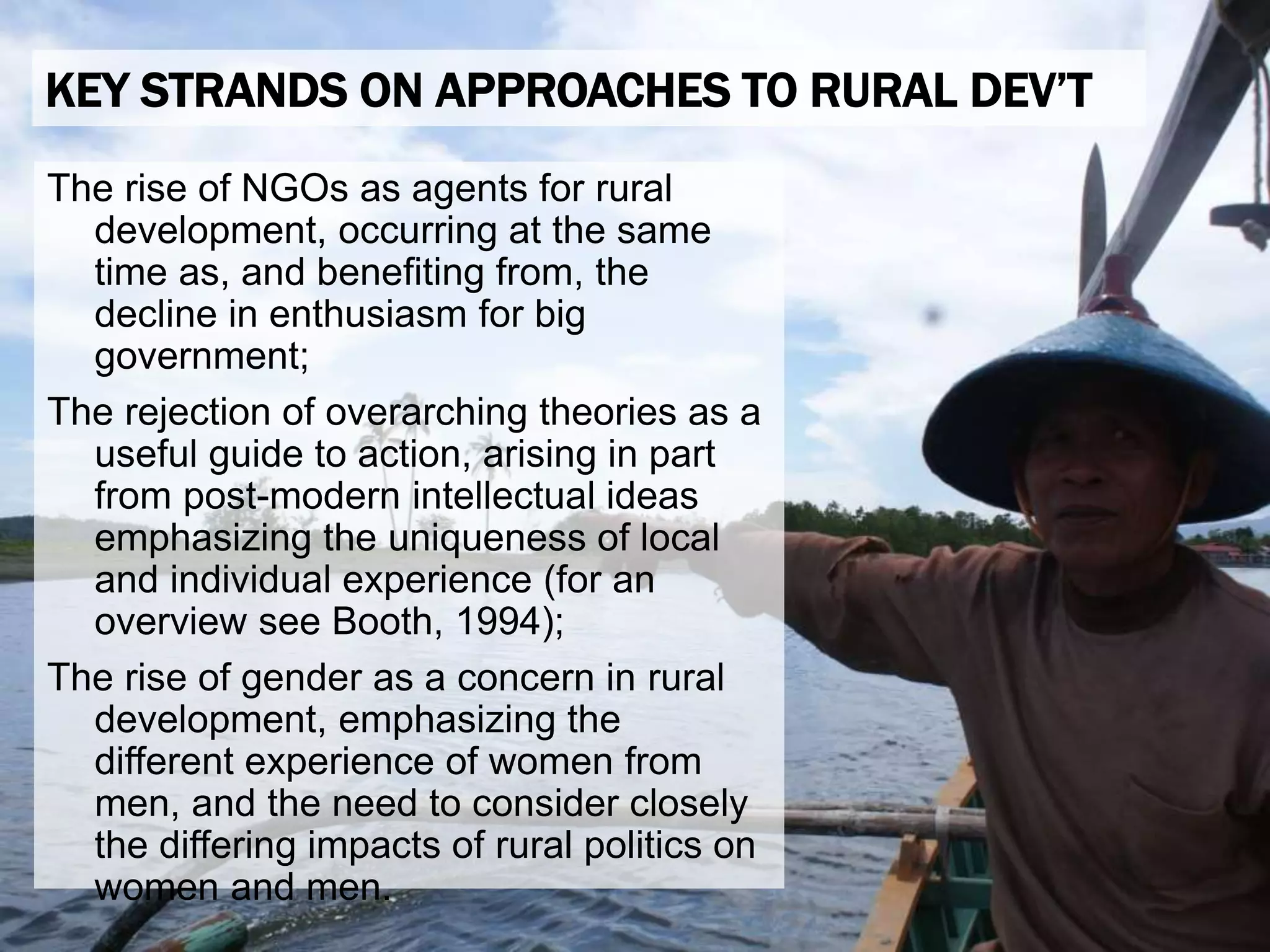
The rise of NGOs as agents for rural
development, occurring at the same
time as, and benefiting from, the
decline in enthusiasm for big
government;
The rejection of overarching theories as a
useful guide to action, arising in part
from post-modern intellectual ideas
emphasizing the uniqueness of local
and individual experience (for an
overview see Booth, 1994);
The rise of gender as a concern in rural
development, emphasizing the
different experience of women from
men, and the need to consider closely
the differing impacts of rural politics on
women and men.
KEY STRANDS ON APPROACHES TO RURAL DEV’T
CONCLUSION
Currently few developing country
governments, and few donors, take a
sufficiently cross- or multi-sectoral
view of the possibilities of rural
poverty reduction Notwithstanding
energetic assertions about the
underfunding of agriculture (IFAD,
2001), the reality on the ground is
that agriculture is preferred in the
public funding of services to rural
productive activity (via research,
extension, credit, seeds and so on) to
say, providing an enabling
environment for start-up non-farm
activities, or removing barriers to
trade and mobility, or reducing
licensing requirements for small
businesses, or a host of other
potential means by which the options
and opportunities of the rural poor
CONCLUSION
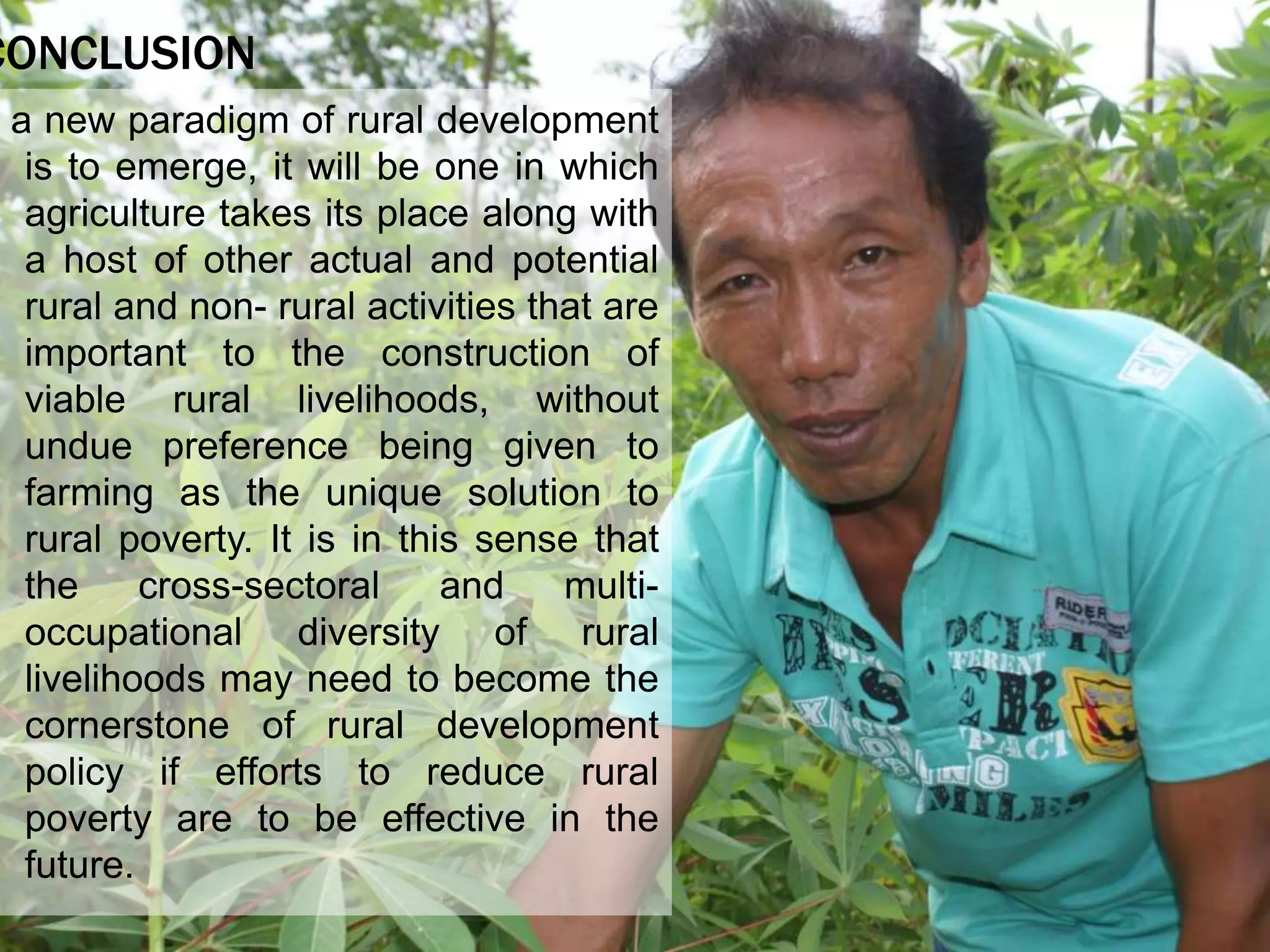
a new paradigm of rural development
is to emerge, it will be one in which
agriculture takes its place along with
a host of other actual and potential
rural and non- rural activities that are
important to the construction of
viable rural livelihoods, without
undue preference being given to
farming as the unique solution to
rural poverty. It is in this sense that
the cross-sectoral and multi-
occupational diversity of rural
livelihoods may need to become the
cornerstone of rural development
policy if efforts to reduce rural
poverty are to be effective in the
future.
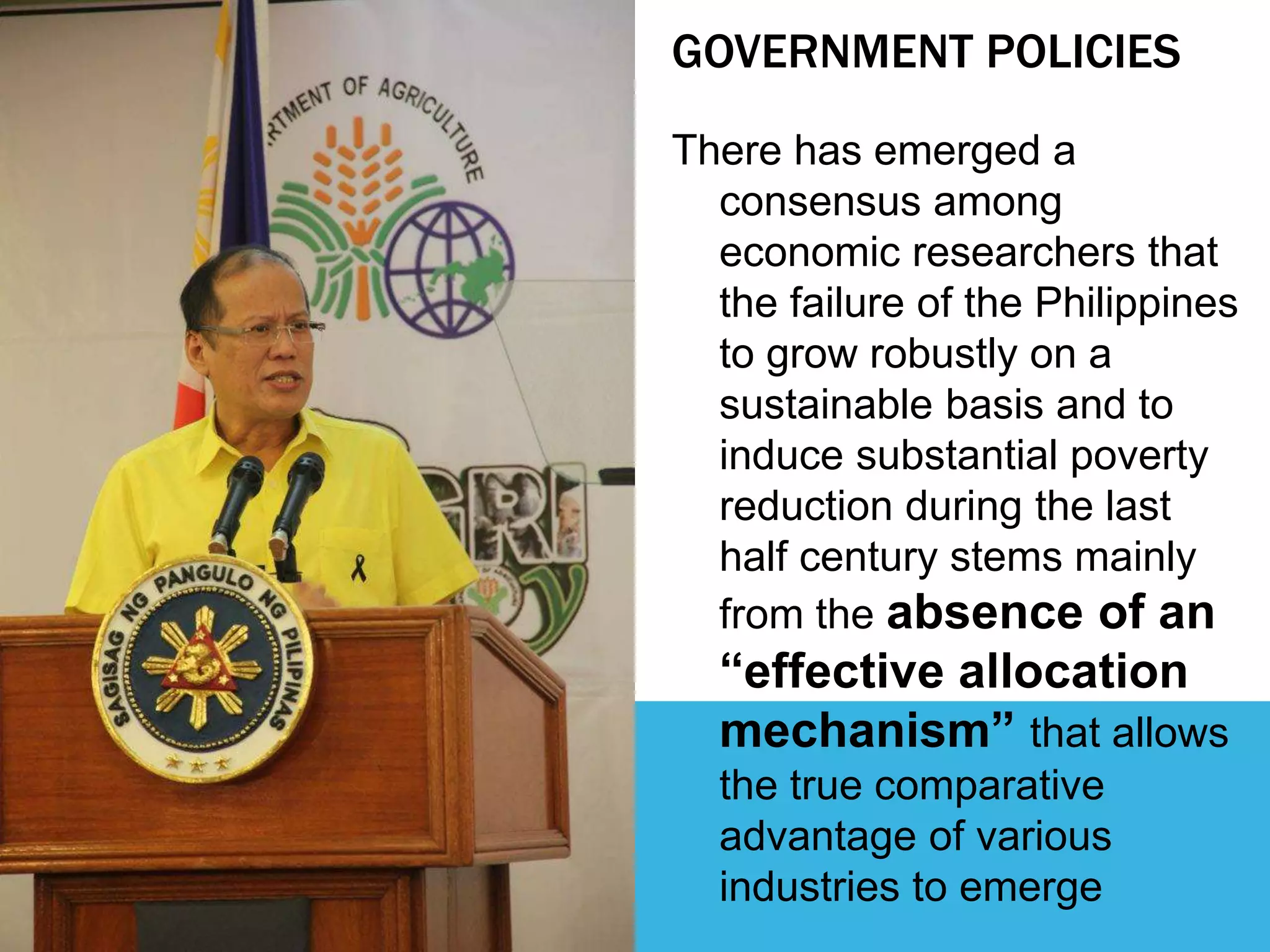
GOVERNMENT POLICIES
There has emerged a
consensus among
economic researchers that
the failure of the Philippines
to grow robustly on a
sustainable basis and to
induce substantial poverty
reduction during the last
half century stems mainly
from the absence of an
“effective allocation
mechanism” that allows
the true comparative
advantage of various
industries to emerge
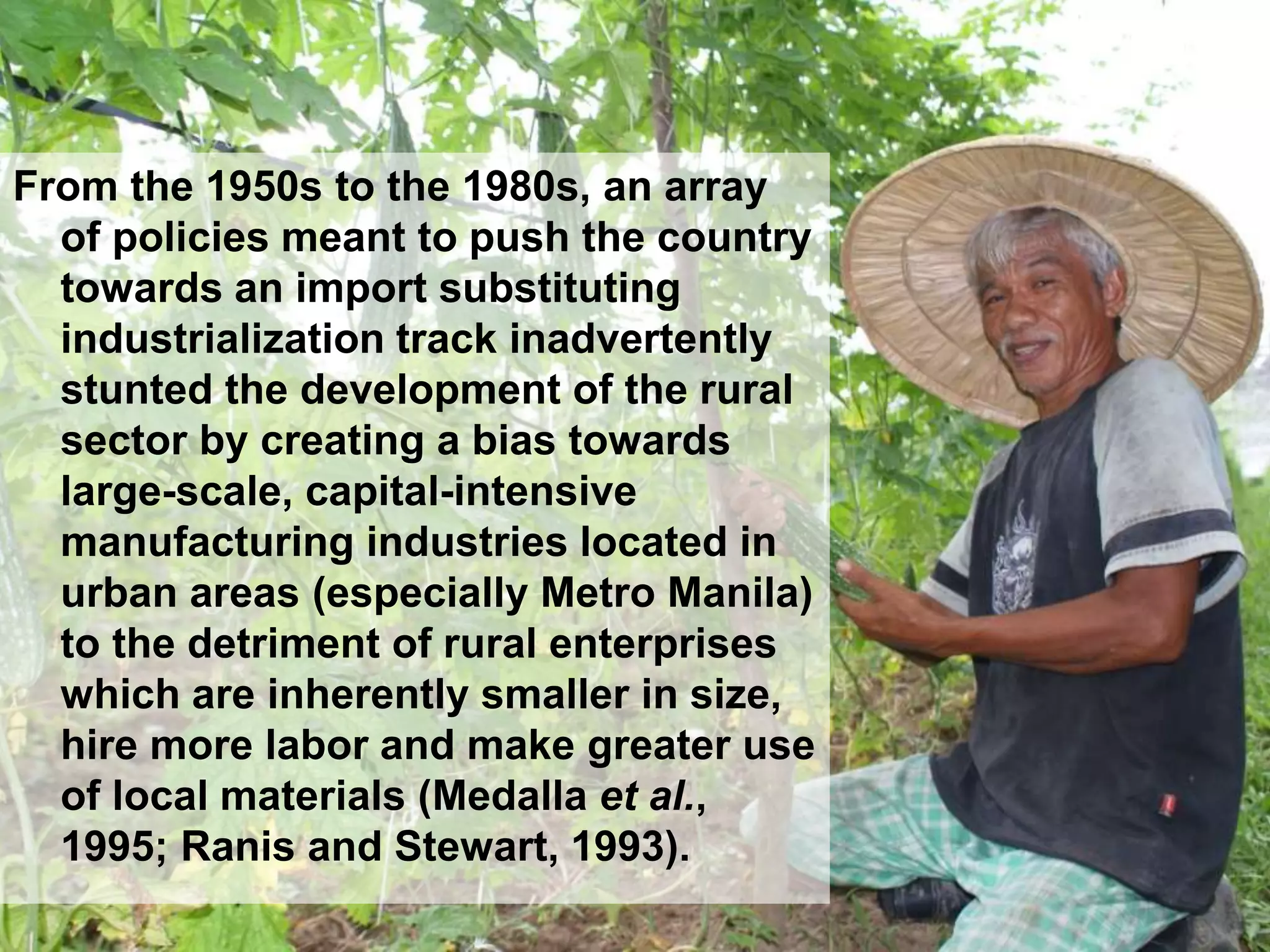
From the 1950s to the 1980s, an array
of policies meant to push the country
towards an import substituting
industrialization track inadvertently
stunted the development of the rural
sector by creating a bias towards
large-scale, capital-intensive
manufacturing industries located in
urban areas (especially Metro Manila)
to the detriment of rural enterprises
which are inherently smaller in size,
hire more labor and make greater use
of local materials (Medalla et al.,
1995; Ranis and Stewart, 1993).
SECTORAL POLICIES
• Masagana 99 and launched in 1974, the program
called for government assistance in the form of credit,
irrigation, extension services and fertilizer subsidy.
•the National Grains Authority (NGA), the government’s
rice and corn agency, expanded its control of the food
sector to include the effective monopolization of wheat
(beginning 1975) and soybean (beginning 1978) imports .
•NGA transformed to NFA in January 14, 1981 – PD 1770
• Agrarian reform (land reform)in 70’s
Presidential Decree No. 27 (PD 27) was
issued stipulating that all rice and corn
fields of over 7 hectares be transferred
to the tenants who tilled them at a price
2.5 times the value of average annual
production and that all the rice and corn
lands of 7 hectares or less under share
tenancy be converted to fixed-rent
leasehold with the official rental ceiling
of 25 percent of average output for the
three ‘normal’ years prior to land reform.
• In 1992, Congress, with the endorsement
of the executive branch, passed the
Magna Carta of Small Farmers (Republic
Act 7607), which barred importation of
agricultural products produced locally in
sufficient quantity.
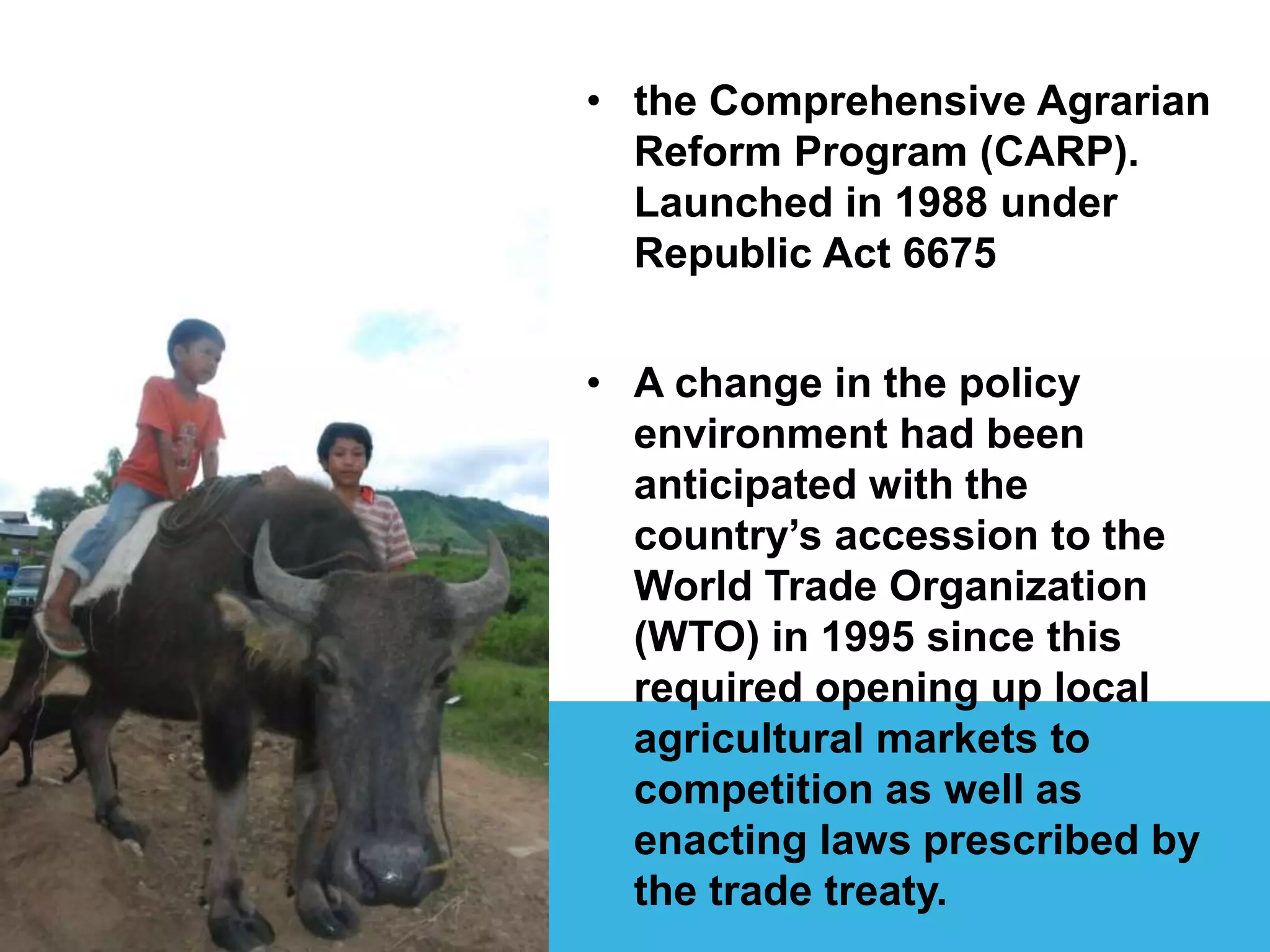
• the Comprehensive Agrarian
Reform Program (CARP).
Launched in 1988 under
Republic Act 6675
• A change in the policy
environment had been
anticipated with the
country’s accession to the
World Trade Organization
(WTO) in 1995 since this
required opening up local
agricultural markets to
competition as well as
enacting laws prescribed by
the trade treaty.
The Agriculture and Fisheries Modernization Act (AFMA)
was enacted in 1997 partly in response to the farm
lobbies’ opposition to the country’s entry to the WTO.
THE END

Chapter 15 : Rural Communities

  • 1.
  • 2.
    INTRODUCTION People live incommunities. Some people live close to each other. They are called neighbors. A community is a term for groups of people living in somewhat close area, and usually under common rules. A citizen is a member of a community, state, or country. Following laws is an important part of being a good citizen. Another way to be a good citizen is to help others. INTRODUCTI ON
  • 3.
    Rural areas areseparately settled places away from the influence of large cities and towns. Such areas are distinct from more intensively settled urban and sub-urban areas, and also from unsettled lands or wilderness, such as forest. Rural areas can have an agricultural character, though many rural areas are characterized by an economy based on cottage industry, mining, oil and gas exploration, or tourism.
  • 4.
    Village is aninstitution- The Village is a primary institution. The development of villages is influenced considerably by the life of the village. It satisfies almost all the needs of the rural. Community- They have a sense of unity and a feeling of belongingness towards each other. Religion- Faith in religion and universal power is found in the life of the villages. Agriculture- Main occupation is agriculture which involves dependence on nature. Nature gives the livelihood to them. Farmers worship forces of MAIN FEATURES OF RURAL COMMUNITY
  • 5.
     Rural –is usually areas which are sparsely settled places away from the influence of large cities and towns. People in rural areas live in villages, on farms and in other isolated houses, as in pre-industrial societies. Rural areas usually have agriculture character though many areas are characterized by an economy based on logging, mining, petroleum and natural gas exploration, or tourism.
  • 6.
    Development - isa process of continues rise in the capability of the people to control their present and future well being (Cuyno, et al., 1982). The definition embraces three basic concepts. 1. It is a process suggesting change in people’s outlook, capabilities and way of life; 2. Man’s capability to accomplish work by him or with minimum assistance; 3. Control of oneself. Therefore, development as a process involves both economic growth and social development.
  • 7.
    Development includes: The people(self esteem, dignity, security, potential); the economy; technology; Culture; Moral values; Environmental preservation; Social justice; Literacy and education; Change in social structure; Equal distribution of wealth; Organization; Discipline; Freedom (from servitude, debt, etc.); Control over political destiny; Peace and order
  • 8.
     Rural Development– As a concept, it connotes overall development in the rural areas with a view to improve the quality of life of the rural people. In this sense, it is a comprehensive and multidimensional concept and encompasses the development of agriculture and allied activities – village and cottage industries and crafts, socio-economic, infrastructure, community services and facilities, and above all, the human resources in rural areas.
  • 9.
    DEFINITION OF TERMS Rural Development – As a phenomenon, it is the result of interactions between various physical, technological, economic, socio-cultural, institutional factors.  Rural Development – As a strategy, it is designed to improve the economic and social well-being of a specific group of people – the rural poor. As a discipline, it is multidisciplinary in nature representing an intersection of agricultural, social, behavioral, engineering, and management sciences.
  • 10.
     Rural Development,ergo, is defined as a process of developing and utilizing natural and human resources, technologies, infrastructural facilities, institutions and organizations, and government policies and programmes to encourage and speed up economic growth in rural areas, to provide jobs and to improve the quality of rural life towards self-sustenance (Singh, 1986).
  • 11.
  • 12.
    STRANDS AND SWITCHES INRURAL DEV’T THINKING
  • 13.
    SMALL FARM FOCUS Thisis the “agricultural growth based on small-farm efficiency’ paradigm. The decisive contribution resulting in the widespread acceptance of this narrative was the publication in 1964 of Schultz’s Transforming Traditional Agriculture, in which the rational allocation of resources by “traditional” small farmers was a central proposition. The idea that the great bulk of what were then called ‘traditional’ or ‘subsistence’ agriculturalists in low-income countries could form the basis of agriculture-led processes of economic development was a significant break from the received wisdom of the 1950s, embodied in the dual-economy theories of
  • 14.
    SMALL FARM FOCUS Smallfarmers are rational economic agents making efficient farm decisions (Schultz, 1964); Small farmers are just as capable as big farmers of taking advantage of high- yielding crop varieties because the input combinations (seed, fertilizer, water) required for successful cultivation are ‘neutral to scale’ (Lipton and Longhurst, 1989); The substitution of labour for scarce land involved in small- farm HYV cultivation is an ‘induced innovation’ that accurately reflects relative resource scarcities and factor prices in labor-abundant
  • 15.
    There exists an‘inverse relationship’ between farm size and economic efficiency, such that small farmers are more efficient than large farmers because of the intensity of their use of abundant labor in combination with small land holdings and low requirements for scarce capital (Berry and Cline, 1979); These factors lead in the direction of a ‘unimodal’ agricultural strategy favouring small family farms rather than a ‘bimodal’ strategy that bets on the strength of a modern farm sector composed of large farms and estates (Johnston and Kilby, 1975: Ch.4); Rising agricultural output in the small-farm sector results in ‘rural growth linkages’ that spur the growth of labour-intensive non-farm activities in rural areas, and
  • 16.
    SMALL FARM FOCUS Thenotion of ‘rural growth linkages’ has proved particularly pervasive and durable (Delgado et al., 1998; IFAD, 2001), even though the methods used to substantiate the significance of such linkages are somewhat debatable (Harriss, 1987; Hart, 1989; 1993). ‘The growth of the non- farm economy depends on the vitality of the farm economy; without agricultural growth in rural areas, redressing poverty is an impossible task’ (Singh, 1990).
  • 17.
    PROCESS APPROACHES TO RURALDEV’T The second ‘paradigm shift’ was the switch occurring during the 1980s and 1990s from the top-down or “blueprint” approach to rural development, characterized by external technologies and national- level policies, to the bottom-up, grassroots, or “process” approach (Rondinelli, 1983; Mosse et al., 1998). This envisages rural development as a participatory process that empowers rural dwellers to
  • 18.
    KEY STRANDS ONAPPROACHES TO RURAL DEV’T The advent of farming systems research (FSR), and the growing argument that the Green Revolution in monocrop farming systems (rice and wheat), mainly in Asia, might not necessarily work for raising incomes in diverse, risk-prone and resource-poor environments (e.g. Chambers et al., 1989); A growing acknowledgement of the validity of indigenous technical knowledge (ITK), and of the ability of the poor themselves to contribute to solutions to the problems they confront (Richards, 1985); The rise of the participatory method, originating in rapid rural appraisal (RRA) techniques in the 1980s and evolving into participatory rural appraisal (PRA) and participatory learning and action (PLA) during the 1990s (Chambers, 1994; 1997);
  • 19.
    The advent ofan “actor-oriented” perspective on rural policies, emphasizing that participants in rural development, including the poor themselves, are actors with differing understandings of the processes of change in which they are involved (Long and Long, 1992); Structural adjustment and market liberalization beginning in the early 1980s, leading to the withdrawal of governments from previous large-scale “management” of the agricultural sector; Disenchantment with the performance of governments in the delivery of rural services, leading donors to look for other partners; KEY STRANDS ON APPROACHES TO RURAL DEV’T
  • 20.
    The rise ofNGOs as agents for rural development, occurring at the same time as, and benefiting from, the decline in enthusiasm for big government; The rejection of overarching theories as a useful guide to action, arising in part from post-modern intellectual ideas emphasizing the uniqueness of local and individual experience (for an overview see Booth, 1994); The rise of gender as a concern in rural development, emphasizing the different experience of women from men, and the need to consider closely the differing impacts of rural politics on women and men. KEY STRANDS ON APPROACHES TO RURAL DEV’T
  • 21.
    CONCLUSION Currently few developingcountry governments, and few donors, take a sufficiently cross- or multi-sectoral view of the possibilities of rural poverty reduction Notwithstanding energetic assertions about the underfunding of agriculture (IFAD, 2001), the reality on the ground is that agriculture is preferred in the public funding of services to rural productive activity (via research, extension, credit, seeds and so on) to say, providing an enabling environment for start-up non-farm activities, or removing barriers to trade and mobility, or reducing licensing requirements for small businesses, or a host of other potential means by which the options and opportunities of the rural poor
  • 22.
    CONCLUSION a new paradigmof rural development is to emerge, it will be one in which agriculture takes its place along with a host of other actual and potential rural and non- rural activities that are important to the construction of viable rural livelihoods, without undue preference being given to farming as the unique solution to rural poverty. It is in this sense that the cross-sectoral and multi- occupational diversity of rural livelihoods may need to become the cornerstone of rural development policy if efforts to reduce rural poverty are to be effective in the future.
  • 23.
    GOVERNMENT POLICIES There hasemerged a consensus among economic researchers that the failure of the Philippines to grow robustly on a sustainable basis and to induce substantial poverty reduction during the last half century stems mainly from the absence of an “effective allocation mechanism” that allows the true comparative advantage of various industries to emerge
  • 24.
    From the 1950sto the 1980s, an array of policies meant to push the country towards an import substituting industrialization track inadvertently stunted the development of the rural sector by creating a bias towards large-scale, capital-intensive manufacturing industries located in urban areas (especially Metro Manila) to the detriment of rural enterprises which are inherently smaller in size, hire more labor and make greater use of local materials (Medalla et al., 1995; Ranis and Stewart, 1993).
  • 25.
    SECTORAL POLICIES • Masagana99 and launched in 1974, the program called for government assistance in the form of credit, irrigation, extension services and fertilizer subsidy. •the National Grains Authority (NGA), the government’s rice and corn agency, expanded its control of the food sector to include the effective monopolization of wheat (beginning 1975) and soybean (beginning 1978) imports . •NGA transformed to NFA in January 14, 1981 – PD 1770
  • 26.
    • Agrarian reform(land reform)in 70’s Presidential Decree No. 27 (PD 27) was issued stipulating that all rice and corn fields of over 7 hectares be transferred to the tenants who tilled them at a price 2.5 times the value of average annual production and that all the rice and corn lands of 7 hectares or less under share tenancy be converted to fixed-rent leasehold with the official rental ceiling of 25 percent of average output for the three ‘normal’ years prior to land reform. • In 1992, Congress, with the endorsement of the executive branch, passed the Magna Carta of Small Farmers (Republic Act 7607), which barred importation of agricultural products produced locally in sufficient quantity.
  • 27.
    • the ComprehensiveAgrarian Reform Program (CARP). Launched in 1988 under Republic Act 6675 • A change in the policy environment had been anticipated with the country’s accession to the World Trade Organization (WTO) in 1995 since this required opening up local agricultural markets to competition as well as enacting laws prescribed by the trade treaty.
  • 28.
    The Agriculture andFisheries Modernization Act (AFMA) was enacted in 1997 partly in response to the farm lobbies’ opposition to the country’s entry to the WTO.
  • 29.