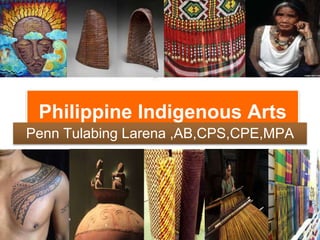
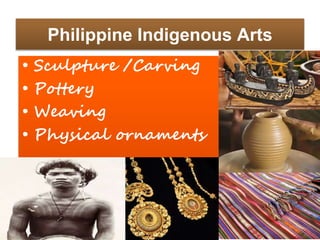
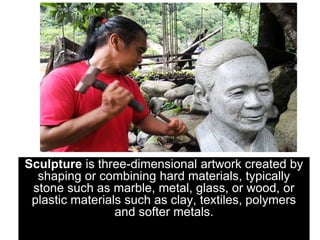
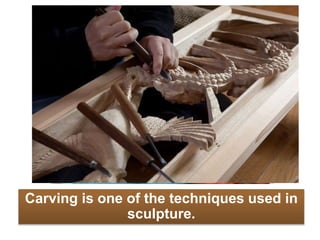
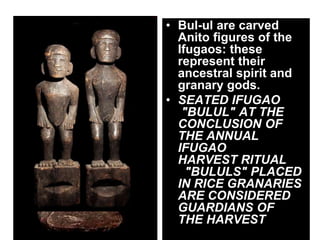
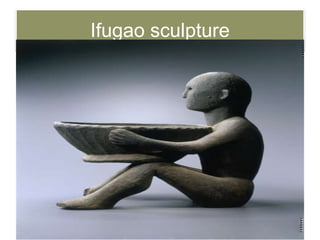
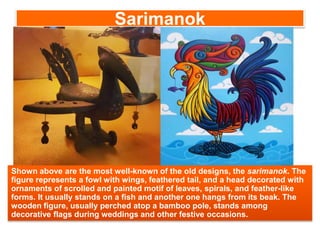
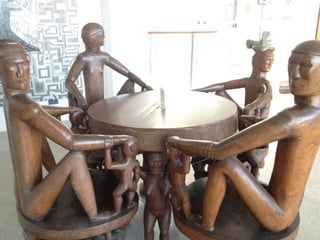

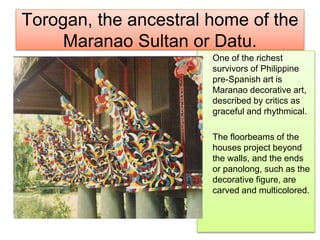
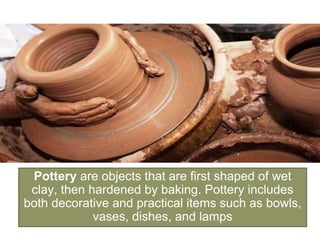
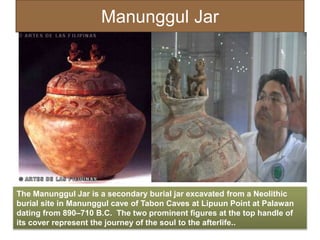
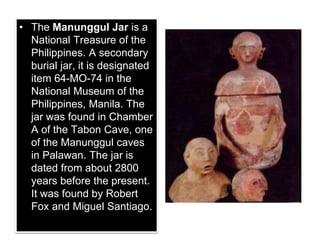
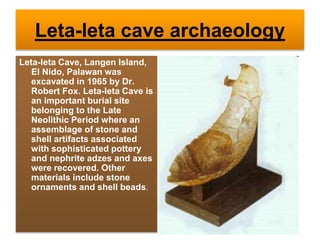
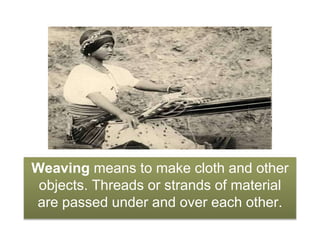
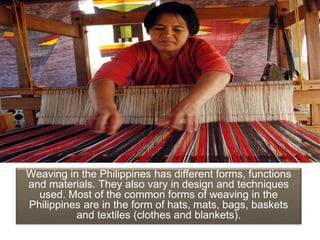
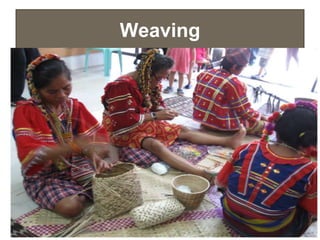
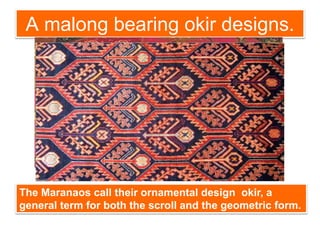
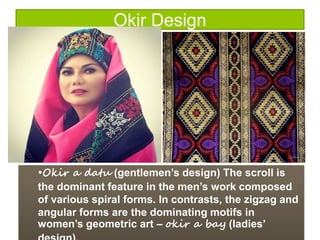
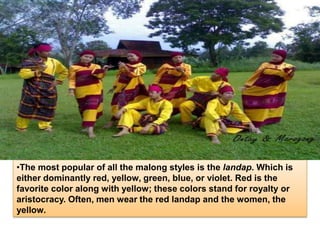
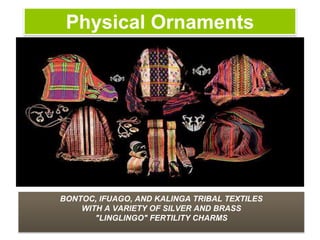
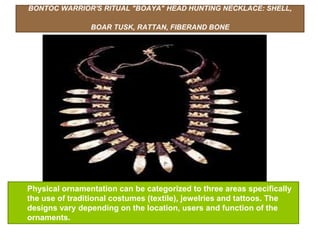
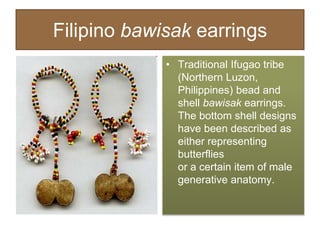
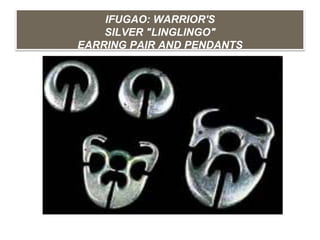
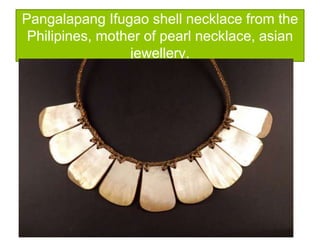
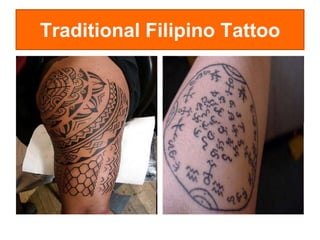
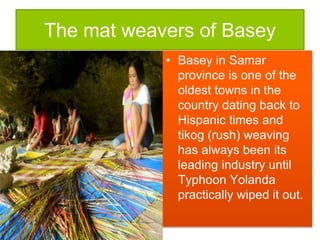
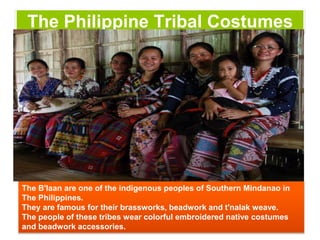
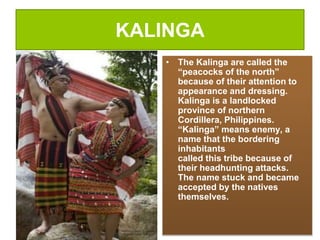
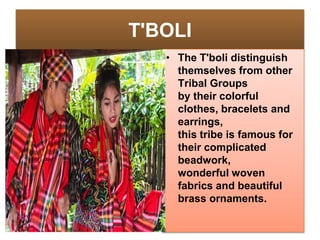
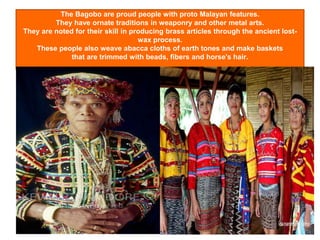


Philippine indigenous arts developed over thousands of years as various groups migrated to the islands. Major art forms included sculpture, pottery, weaving, and physical ornaments. Sculptures like the Bul-ul figures and hagabi chairs reflected important cultural and social roles. Pottery like the Manunggul Jar showed influences of beliefs about the afterlife. Weaving traditions varied by region and material, with techniques and designs demonstrating cultural identities. Ornaments displayed in textiles, jewelry, and tattoos communicated status and heritage. Overall, indigenous Philippine art was deeply rooted in each group's environment, history, and way of life.


