To trace our rich heritage of ideas
and handed down to us from our
forefathers
For appreciation of our heritage.
To Understand that we have noble
traditions which can serve as the
means to assimilate other cultures.
 Literature and history are closely interrelated.
 In discovering history of a race, a country, we basically
understand their own culture and traditions, hence
the written customs and traditions of a country, the
dreams and aspirations of its people is called
Literature.
 History can also be written down and this too, is
literature. History therefore is an integral part of
literature.
 The literature of a formative past by the various groups
of people who inhabited the archipelago
 A literature of varying human interest
 Close to the religious and political organizations of the
ancient Filipinos
 The verses were addressed to the ears rather than the
eyes
 Verses composed and sung were regarded as group
property
 Versification:
 Octosyllabic
 Legendary and religious poems
 Dodecasyllabic
 Romance
Dalawang Balon
Hindi Malingon
Sa araw ay Bunbong
Sa gabi ay dahon
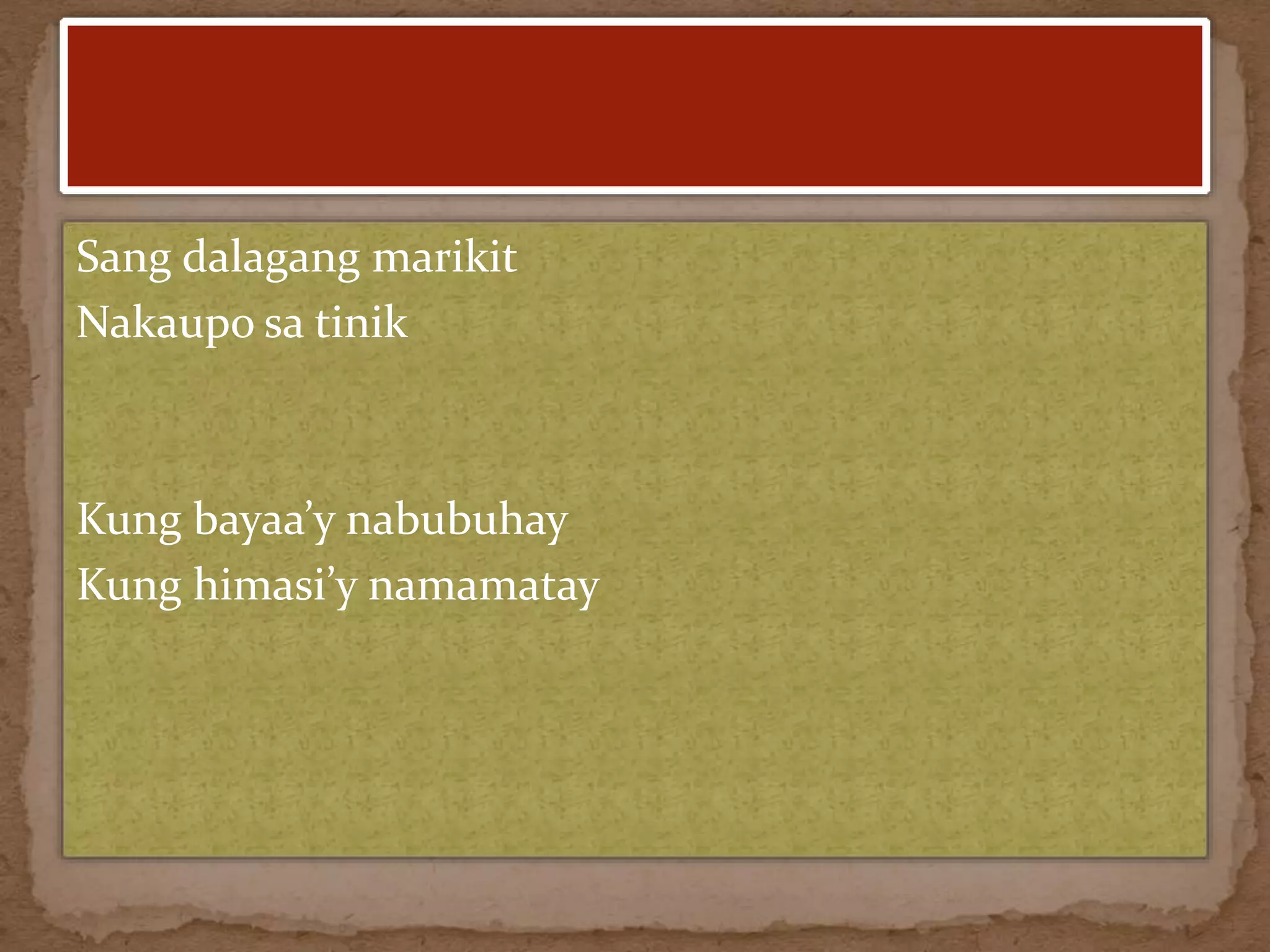
Sang dalagang marikit
Nakaupo sa tinik
Kung bayaa’y nabubuhay
Kung himasi’y namamatay
 Made up of one or more measured lines with rhymes
and may consist of 4 to 12 syllables
 Showcase the Filipino wit, literary talent, and keen
observation of the surroundings
 Involves reference to one or two images that symbolize
the characteristics of an unknown object that is to be
guessed
 To entertain. Living in remote areas, before the advent of
electricity, families would sit around the fire and the elders
would quiz the younger generation with riddles.
 To educate. Riddles serve the function of passing down
knowledge from one generation to the next. They require
thinking in order to solve them.
 To titillate. Many old Filipino riddles contain double
entendres that were intended to amuse the men and shock
the women.
 To curse, without expressly cursing. A riddle could be
made up against an enemy, rival town, or suitor.
 To preserve the culture. Riddles communicate the old
ways from one generation to the next.
 Ate mo, ate ko, Ate ng lahat ng tao.(My sister, your
sister, everyone's sister)
 Atis (Sugar Apple)
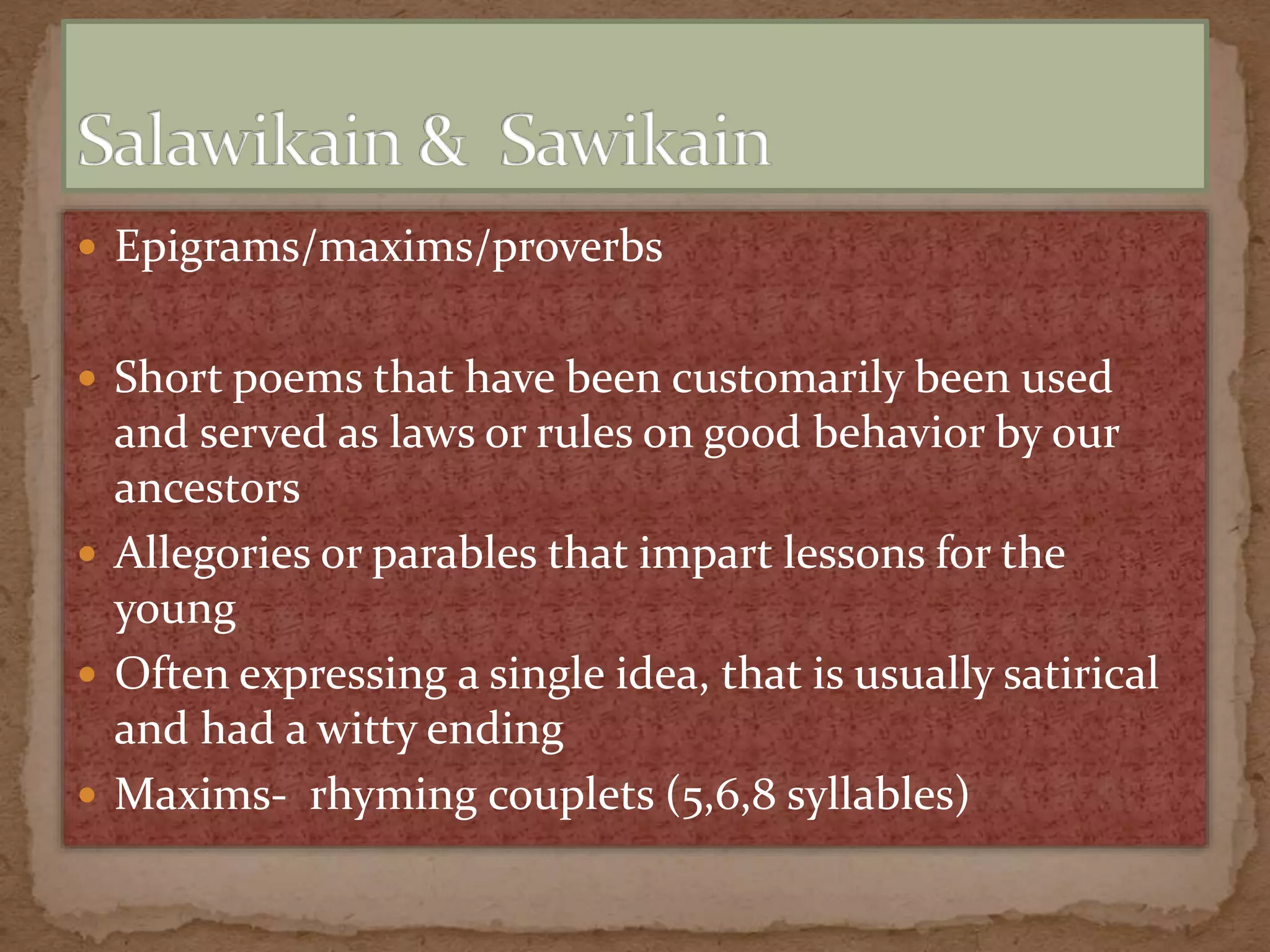
 Epigrams/maxims/proverbs
 Short poems that have been customarily been used
and served as laws or rules on good behavior by our
ancestors
 Allegories or parables that impart lessons for the
young
 Often expressing a single idea, that is usually satirical
and had a witty ending
 Maxims- rhyming couplets (5,6,8 syllables)
 Ex of salawikain
 Ang matapat na kaibigan, tunay na maaasahan. - - -You
will know a true friend in time of need.
 Ex of Sawikain
 kumukulo ang dugo
"blood is boiling" = is very angry
 isulat sa tubig
"write on water" = forget about it
Ex of Maxims
 Pag hindi ukol,
Hindi bubukol.
-means
What is not intended for one will not bear fruit.
 Used in witchcraft or enchantments
 Sa hinaba-haba ng prusisyon
Sa simbahan din pala ang tuloy
Hele hele
Bago kyeme
 Halimbawa (for example):
Tabi, tabi po, Ingkong
Makikiraan po lamang.
 Used in teasing or to comment on a persons’
acutations
 “Catitibay ca tolos
Sacaling datnang agos
Aco’ I momonting lomot
Sa iyo’ I popolopot”
 Nag-almusal mag-isa
Kaning lamig, tinapa;
Nahulog ang kutsara
Ikaw na sana, sinta
 A quatrain with seven syllables each with the same
rhyme at the end of each line
 No title
 7-7-7-7
 AABB
 Ex. “Tahak ng tingin, tulak
ng sulyap, yakap, lapat
ng titig sa balikat.
hatak pa, kindat, hakat”
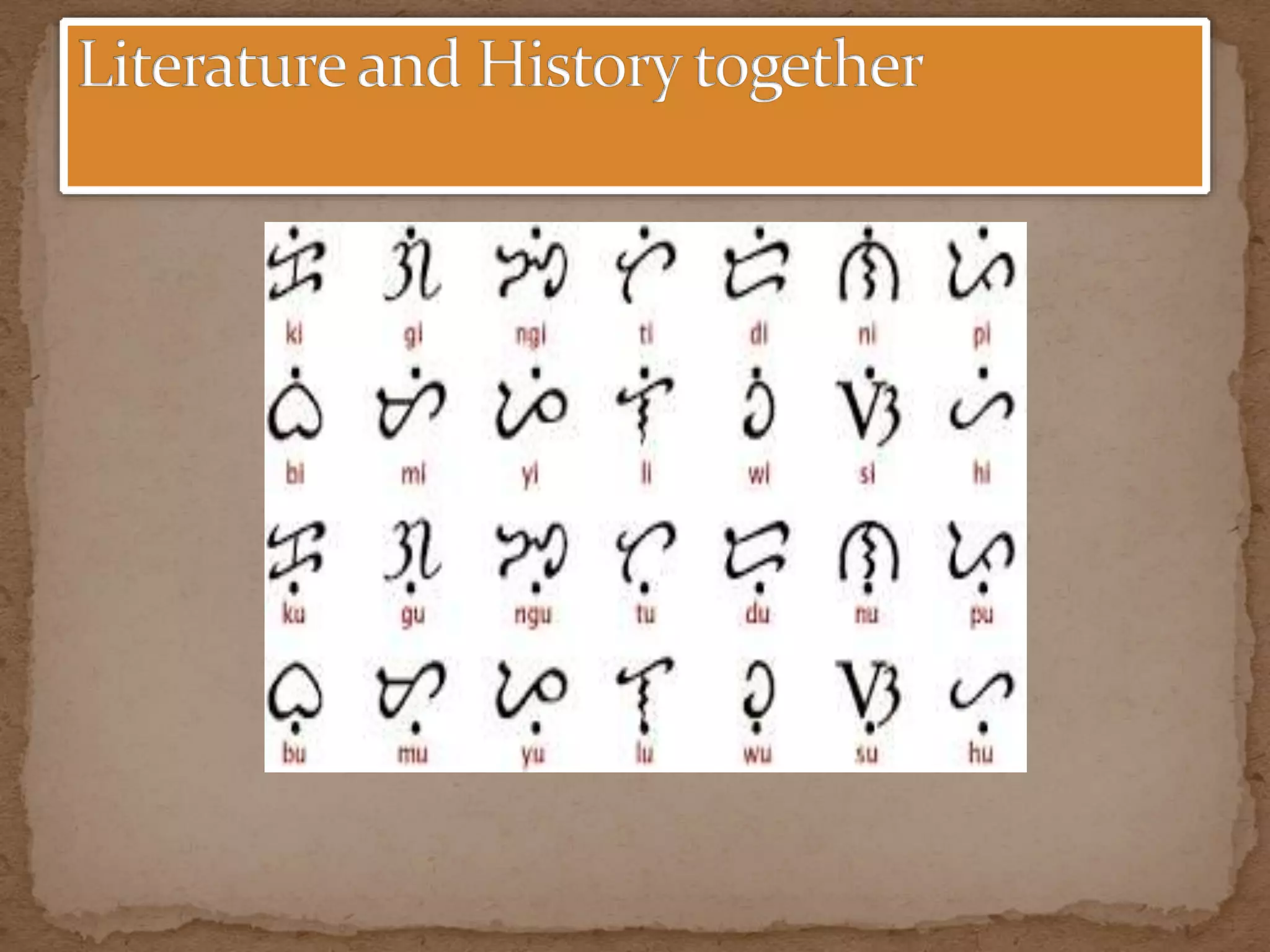
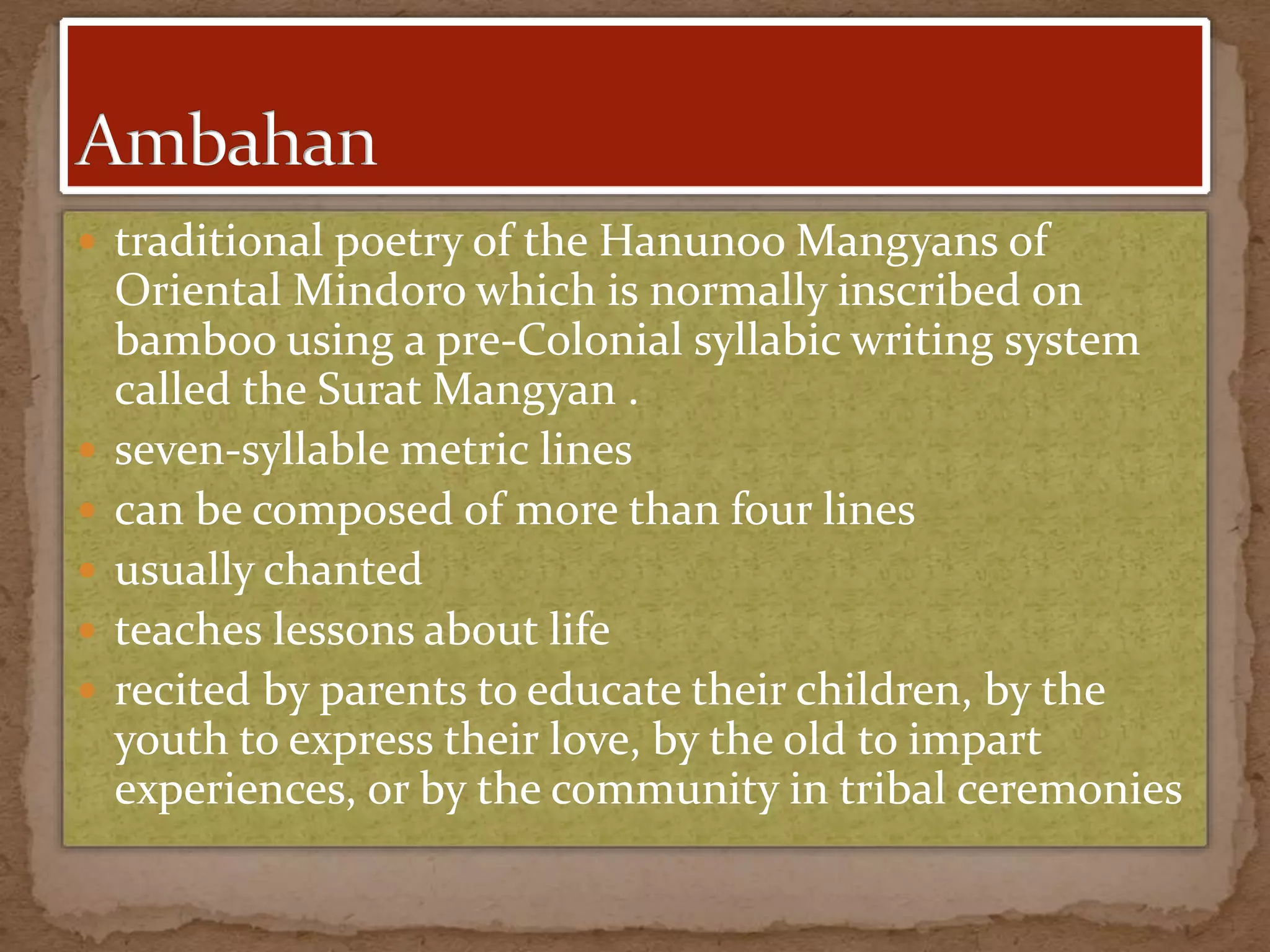
 traditional poetry of the Hanunoo Mangyans of
Oriental Mindoro which is normally inscribed on
bamboo using a pre-Colonial syllabic writing system
called the Surat Mangyan .
 seven-syllable metric lines
 can be composed of more than four lines
 usually chanted
 teaches lessons about life
 recited by parents to educate their children, by the
youth to express their love, by the old to impart
experiences, or by the community in tribal ceremonies
 on some occasions like burial rites, the ambahan is
used for entertainment
Sugot nga maaw kunman
Tangdayan no ma-amban
Sabungan no manuywan
Impad las yami daywan
Hanggan buhok timbangan
Hanggan sa balod pangdan
Bugkat di way yamungan
Bilang dayi bunlagan
No kang tinaginduman
Kang magpahalimbaw-an
Ga bugtong ti bilugan
 (Isn't this the truth with all:
If the wife is good and kind,
the husband reasonable,
you have always friends around,
like long hair drooping so nice.
Till the final burial mount,
you'll be sleeping on one mat.
You don't want to separate
Putting down my thoughts like this:
An example very clear,
being TWO, you're only ONE.)
 derived from Philippine folk literature, which is the
traditional oral literature of the Filipino people. This
refers to a wide range of material due to the ethnic mix
of the Philippines
 There are many different creation myths in Philippine
mythology, originating from various ethnic groups.
 Story of Bathala
 Visayan version
 The legend of Maria Makiling
 Presence of different deities
 Ex. Bathala
 Lakambakod
 Mythical creatures
 Aswang
 Dila
 Diwata
 Dwende
 Tikbalang
 Mankukulam
 Ifugao – Hudhud hi Aliguyon
 Ilocos – Biagni Lam-ang
 Bicol - Ibalon
 Mindanao – Darangan
 Panay – Hinilawod
 Bagobo - Tuwaang
 Kalinga – Ulaliim
 Manobo – Agyu or Olahing
 Subanon - Sandayo
 Aliguyon
 the exploits of Aliguyon as he battles his arch-enemy, Pambukhayon
 Biagni Lam-Ang
 tells of the adventuresvof Lam-Ang who exhibits extraordinary
powers at a very early age.
 Ibalon
 the story of three Bicol heroes: Baltog, Handiong, Bantiong
 Hinilawod
 oldest and longest epic poem in Panay
 the exploits of three Sulodnon demigod brothers, LabawDonggon,
Humadapnon and Dumalapdap of ancient Panay
IBALON FESTIVAL
Hinilawod
 a form of folk lyric which expresses the people’s hopes,
aspirations, and lifestyles
 repetitive and sonorous, didactic and naive
 traditional songs and melodies
 inspired by the reaction of the people to their
environment
 uyayi – lullaby
 komintang – war song
 kundiman – melancholic love song
 harana – serenade
 tagay – drinking song
 mambayu – Kalinga rice-pounding song
 subli – dance-ritual song of courtship /marriage
 Tagulaylay- songs of the dead
Pre Colonial  Literature Philippines

Pre Colonial Literature Philippines

  • 2.
    To trace ourrich heritage of ideas and handed down to us from our forefathers For appreciation of our heritage. To Understand that we have noble traditions which can serve as the means to assimilate other cultures.
  • 4.
     Literature andhistory are closely interrelated.  In discovering history of a race, a country, we basically understand their own culture and traditions, hence the written customs and traditions of a country, the dreams and aspirations of its people is called Literature.  History can also be written down and this too, is literature. History therefore is an integral part of literature.
  • 6.
     The literatureof a formative past by the various groups of people who inhabited the archipelago  A literature of varying human interest  Close to the religious and political organizations of the ancient Filipinos  The verses were addressed to the ears rather than the eyes
  • 7.
     Verses composedand sung were regarded as group property  Versification:  Octosyllabic  Legendary and religious poems  Dodecasyllabic  Romance
  • 8.
    Dalawang Balon Hindi Malingon Saaraw ay Bunbong Sa gabi ay dahon
  • 9.
    Sang dalagang marikit Nakauposa tinik Kung bayaa’y nabubuhay Kung himasi’y namamatay
  • 10.
     Made upof one or more measured lines with rhymes and may consist of 4 to 12 syllables  Showcase the Filipino wit, literary talent, and keen observation of the surroundings  Involves reference to one or two images that symbolize the characteristics of an unknown object that is to be guessed
  • 11.
     To entertain.Living in remote areas, before the advent of electricity, families would sit around the fire and the elders would quiz the younger generation with riddles.  To educate. Riddles serve the function of passing down knowledge from one generation to the next. They require thinking in order to solve them.  To titillate. Many old Filipino riddles contain double entendres that were intended to amuse the men and shock the women.  To curse, without expressly cursing. A riddle could be made up against an enemy, rival town, or suitor.  To preserve the culture. Riddles communicate the old ways from one generation to the next.
  • 12.
     Ate mo,ate ko, Ate ng lahat ng tao.(My sister, your sister, everyone's sister)  Atis (Sugar Apple)
  • 13.
     Epigrams/maxims/proverbs  Shortpoems that have been customarily been used and served as laws or rules on good behavior by our ancestors  Allegories or parables that impart lessons for the young  Often expressing a single idea, that is usually satirical and had a witty ending  Maxims- rhyming couplets (5,6,8 syllables)
  • 14.
     Ex ofsalawikain  Ang matapat na kaibigan, tunay na maaasahan. - - -You will know a true friend in time of need.
  • 15.
     Ex ofSawikain  kumukulo ang dugo "blood is boiling" = is very angry  isulat sa tubig "write on water" = forget about it Ex of Maxims  Pag hindi ukol, Hindi bubukol. -means What is not intended for one will not bear fruit.
  • 16.
     Used inwitchcraft or enchantments  Sa hinaba-haba ng prusisyon Sa simbahan din pala ang tuloy Hele hele Bago kyeme
  • 17.
     Halimbawa (forexample): Tabi, tabi po, Ingkong Makikiraan po lamang.
  • 18.
     Used inteasing or to comment on a persons’ acutations  “Catitibay ca tolos Sacaling datnang agos Aco’ I momonting lomot Sa iyo’ I popolopot”  Nag-almusal mag-isa Kaning lamig, tinapa; Nahulog ang kutsara Ikaw na sana, sinta
  • 19.
     A quatrainwith seven syllables each with the same rhyme at the end of each line  No title  7-7-7-7  AABB  Ex. “Tahak ng tingin, tulak ng sulyap, yakap, lapat ng titig sa balikat. hatak pa, kindat, hakat”
  • 20.
     traditional poetryof the Hanunoo Mangyans of Oriental Mindoro which is normally inscribed on bamboo using a pre-Colonial syllabic writing system called the Surat Mangyan .  seven-syllable metric lines  can be composed of more than four lines  usually chanted  teaches lessons about life  recited by parents to educate their children, by the youth to express their love, by the old to impart experiences, or by the community in tribal ceremonies
  • 21.
     on someoccasions like burial rites, the ambahan is used for entertainment Sugot nga maaw kunman Tangdayan no ma-amban Sabungan no manuywan Impad las yami daywan Hanggan buhok timbangan Hanggan sa balod pangdan Bugkat di way yamungan Bilang dayi bunlagan No kang tinaginduman Kang magpahalimbaw-an Ga bugtong ti bilugan
  • 22.
     (Isn't thisthe truth with all: If the wife is good and kind, the husband reasonable, you have always friends around, like long hair drooping so nice. Till the final burial mount, you'll be sleeping on one mat. You don't want to separate Putting down my thoughts like this: An example very clear, being TWO, you're only ONE.)
  • 23.
     derived fromPhilippine folk literature, which is the traditional oral literature of the Filipino people. This refers to a wide range of material due to the ethnic mix of the Philippines  There are many different creation myths in Philippine mythology, originating from various ethnic groups.  Story of Bathala  Visayan version  The legend of Maria Makiling
  • 24.
     Presence ofdifferent deities  Ex. Bathala  Lakambakod  Mythical creatures  Aswang  Dila  Diwata  Dwende  Tikbalang  Mankukulam
  • 25.
     Ifugao –Hudhud hi Aliguyon  Ilocos – Biagni Lam-ang  Bicol - Ibalon  Mindanao – Darangan  Panay – Hinilawod  Bagobo - Tuwaang  Kalinga – Ulaliim  Manobo – Agyu or Olahing  Subanon - Sandayo
  • 26.
     Aliguyon  theexploits of Aliguyon as he battles his arch-enemy, Pambukhayon  Biagni Lam-Ang  tells of the adventuresvof Lam-Ang who exhibits extraordinary powers at a very early age.  Ibalon  the story of three Bicol heroes: Baltog, Handiong, Bantiong  Hinilawod  oldest and longest epic poem in Panay  the exploits of three Sulodnon demigod brothers, LabawDonggon, Humadapnon and Dumalapdap of ancient Panay
  • 27.
  • 28.
     a formof folk lyric which expresses the people’s hopes, aspirations, and lifestyles  repetitive and sonorous, didactic and naive  traditional songs and melodies  inspired by the reaction of the people to their environment
  • 29.
     uyayi –lullaby  komintang – war song  kundiman – melancholic love song  harana – serenade  tagay – drinking song  mambayu – Kalinga rice-pounding song  subli – dance-ritual song of courtship /marriage  Tagulaylay- songs of the dead