
EXPECTATIONS
vs
REALITIES
OF
RURAL
DEVELOPMENT
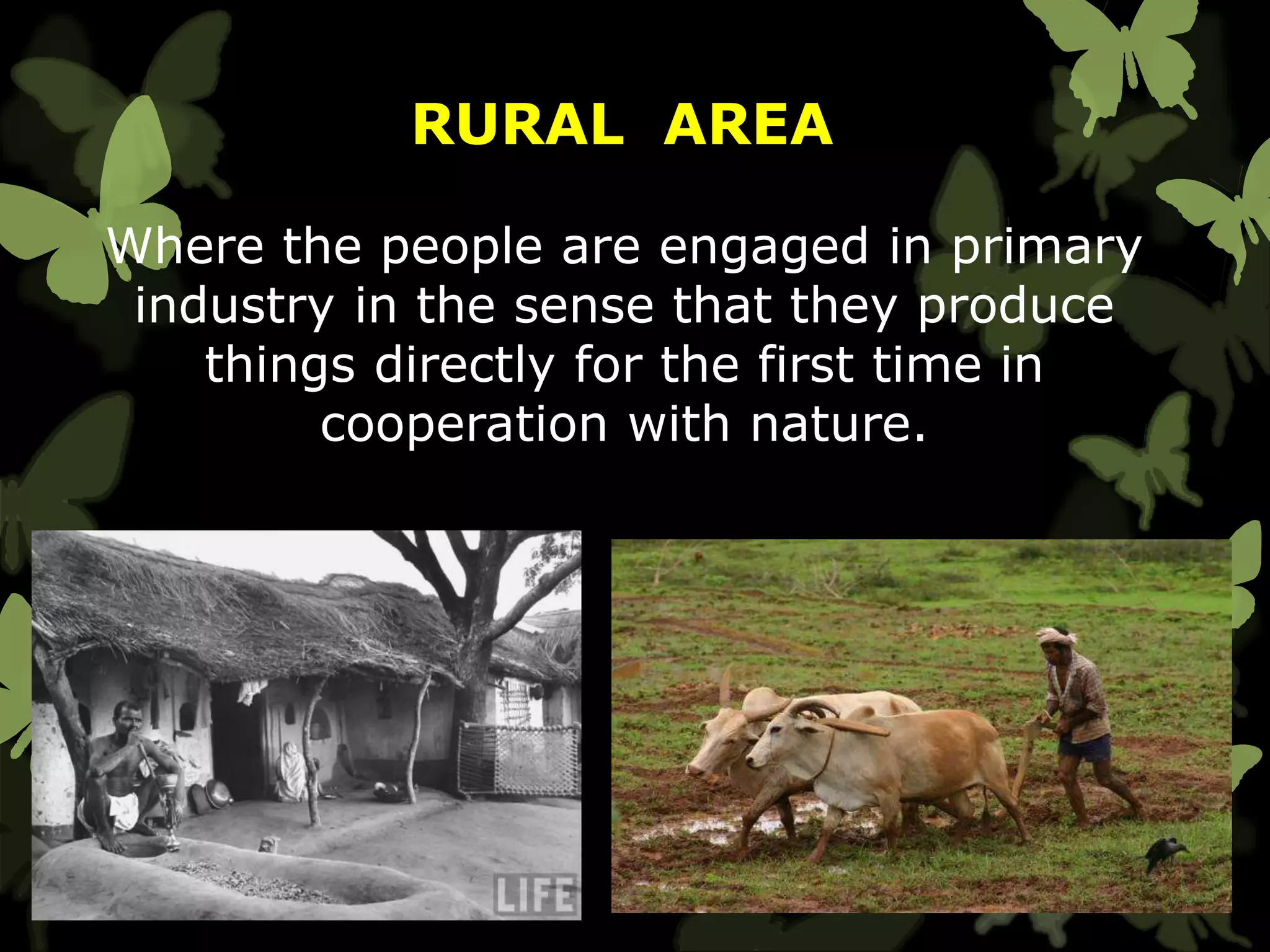
RURAL AREA
Where the people are engaged in primary
industry in the sense that they produce
things directly for the first time in
cooperation with nature.
RURAL COMMUNITY
A group of people with a common characteristic
or interest living together, in a village.
A Rural Community can be classified as rural
based on the criteria of lower population
density, less social differentiation, less social
and spatial mobility, slow rate of social change,
etc.
Agriculture is the major occupation of rural
people.
MAIN FEATURES OF RURAL COMMUNITY
Village is an institution
The Village is a primary institution. The development of villages
is influenced considerably by the life of the village. It satisfies
almost all the needs of the rural.
Community
They have a sense of unity and a feeling of belongingness
towards each other.
Religion
Faith in religion and universal power is found in the life of the
villages.
Agriculture
Main occupation is agriculture which involves dependence on
nature. Nature gives the livelihood to them. Farmers worship
forces of nature.
LIFE OF RURAL PEOPLE
Lifestyles in rural areas are different than
those in urban areas, mainly because limited
services are available.
Governmental services like law
enforcement, schools, fire departments, and
libraries may be distant, limited in scope, or
unavailable.
Utilities like water, sewer, street lighting,
and garbage collection may not be present.
Public transport is sometimes absent or
very limited, people use their own vehicles,
walk or ride an animal.
PROBLEMS IN RURAL AREAS
1.People-related problems
2.Agriculture-related problems
3.Infrastructure-related problems
4.Economic problems
5.Social and Cultural problems
6.Leadership-related problems
7.Administrative problems
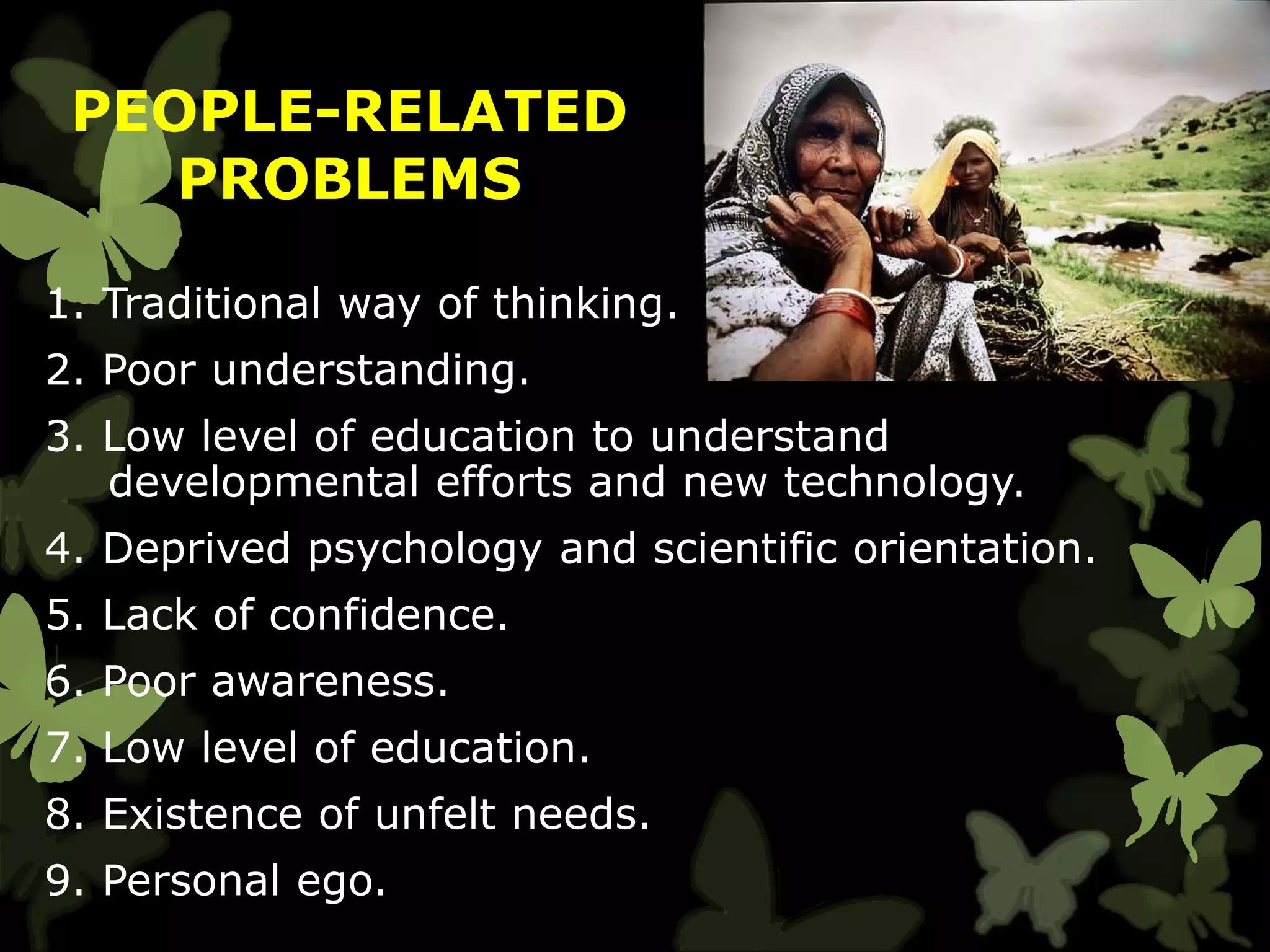
1. Traditional way of thinking.
2. Poor understanding.
3. Low level of education to understand
developmental efforts and new technology.
4. Deprived psychology and scientific orientation.
5. Lack of confidence.
6. Poor awareness.
7. Low level of education.
8. Existence of unfelt needs.
9. Personal ego.
PEOPLE-RELATED
PROBLEMS
1. Lack of expected awareness, knowledge, skill
and attitude.
2. Unavailability of inputs.
3. Poor marketing facility.
4. Insufficient extension staff and services.
5. Multidimensional tasks to extension personnel.
6. Small size of land holding.
7. Division of land.
8. Unwillingness to work and stay in rural areas.
AGRICULTURE-RELATED PROBLEMS
INFRASTRUCTURE-RELATED
PROBLEMS
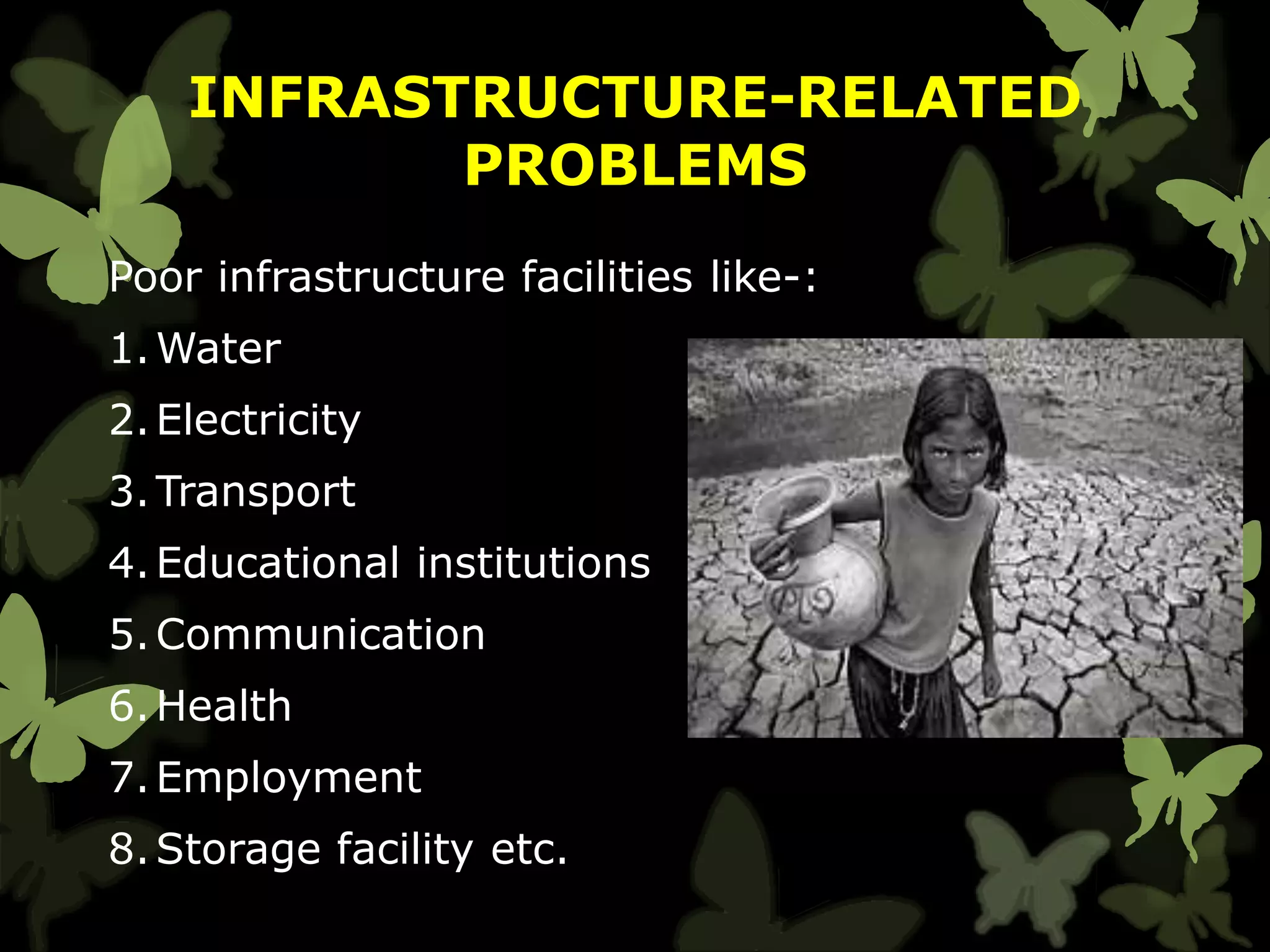
Poor infrastructure facilities like-:
1.Water
2.Electricity
3.Transport
4.Educational institutions
5.Communication
6.Health
7.Employment
8.Storage facility etc.
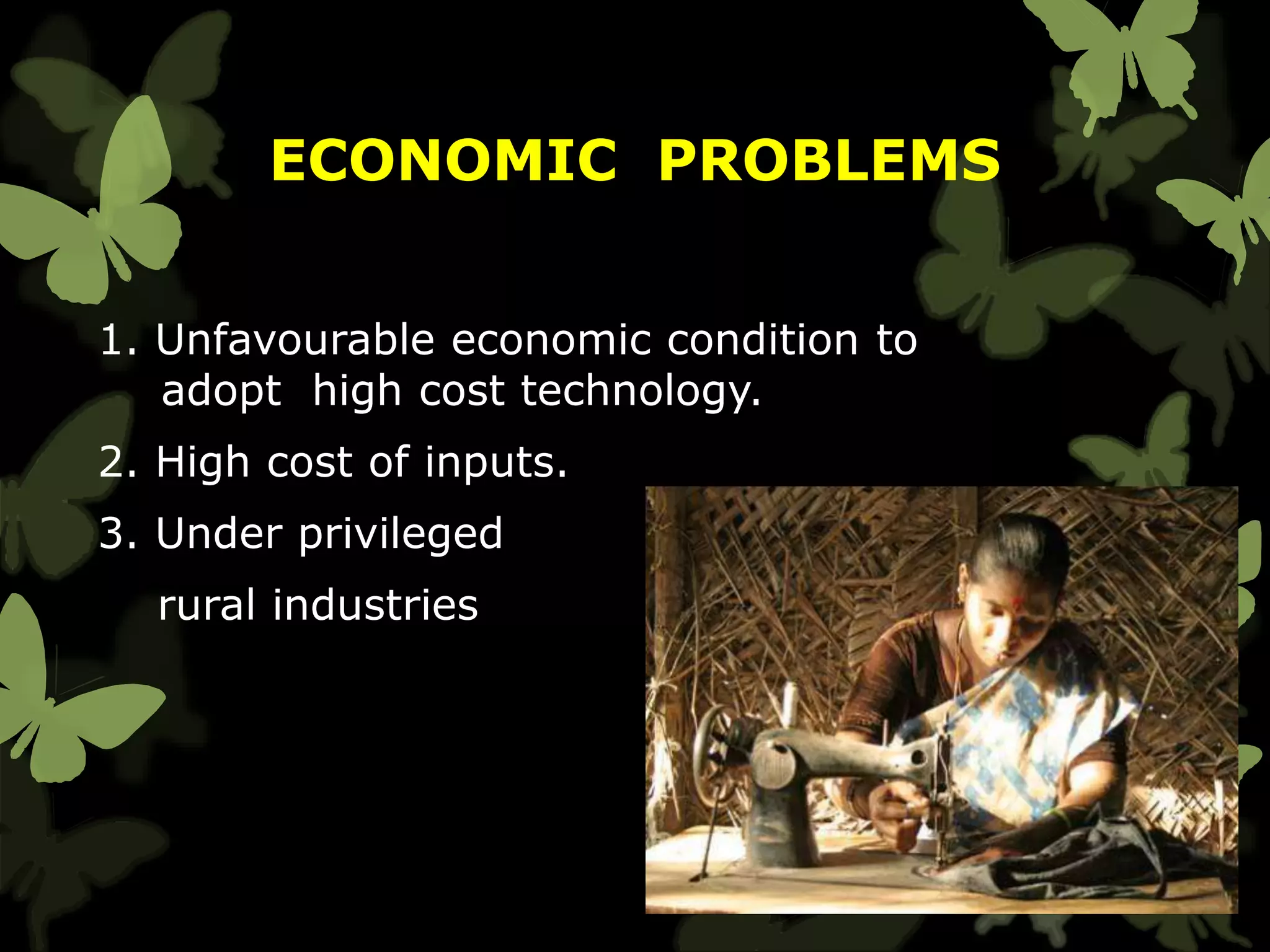
ECONOMIC PROBLEMS
1. Unfavourable economic condition to
adopt high cost technology.
2. High cost of inputs.
3. Under privileged
rural industries
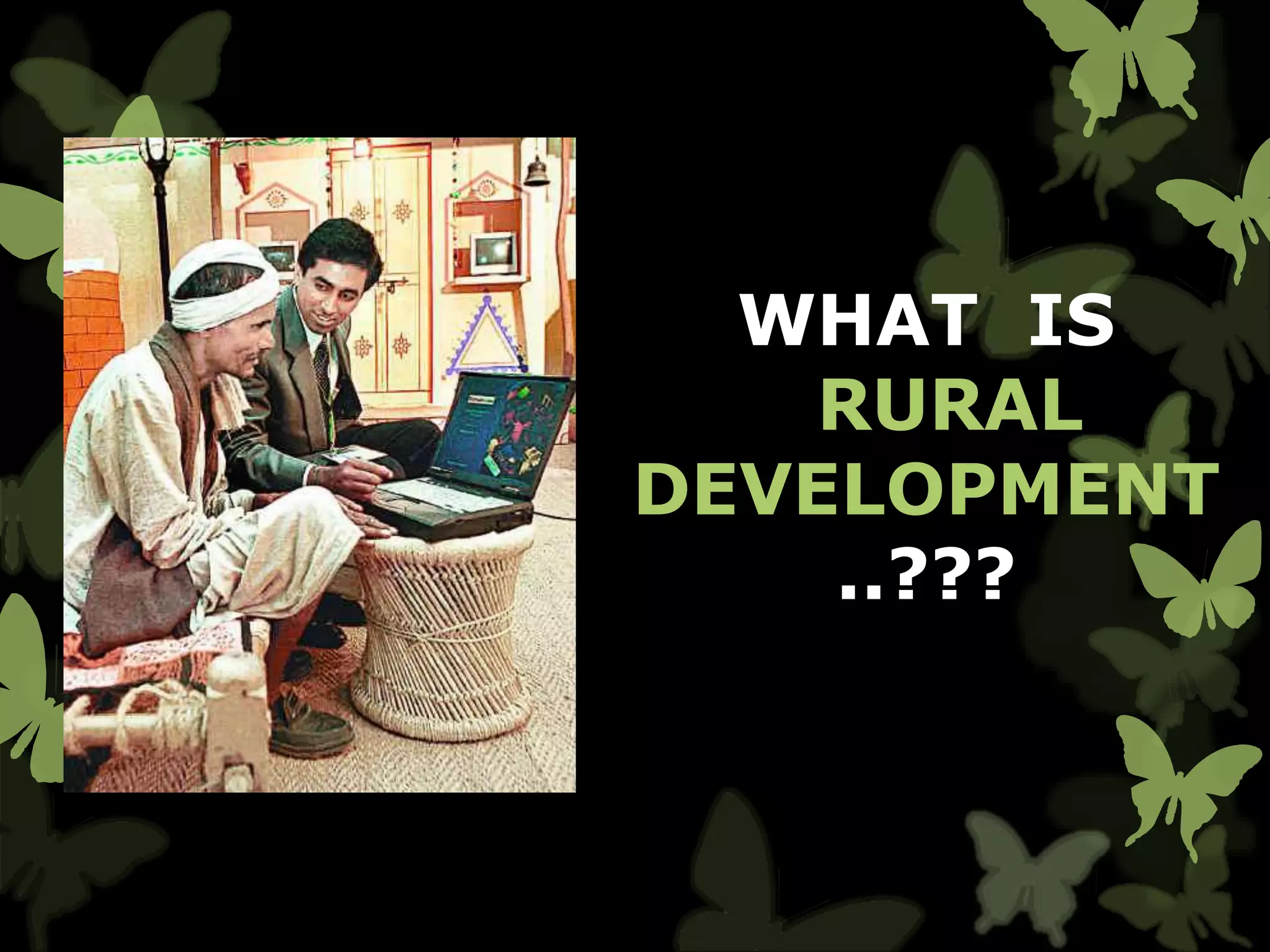
WHAT IS
RURAL
DEVELOPMENT
..???
Rural development is a strategy designed to
improve the economic and social life of rural
poor.
It is a process, which aims at improving the
well being and self realization of people living
outside the urbanized areas through collective
process.
Rural Development is all about bringing
change among rural community from the
traditional way of living to progressive
way of living. It is also expressed as a
movement for progress.
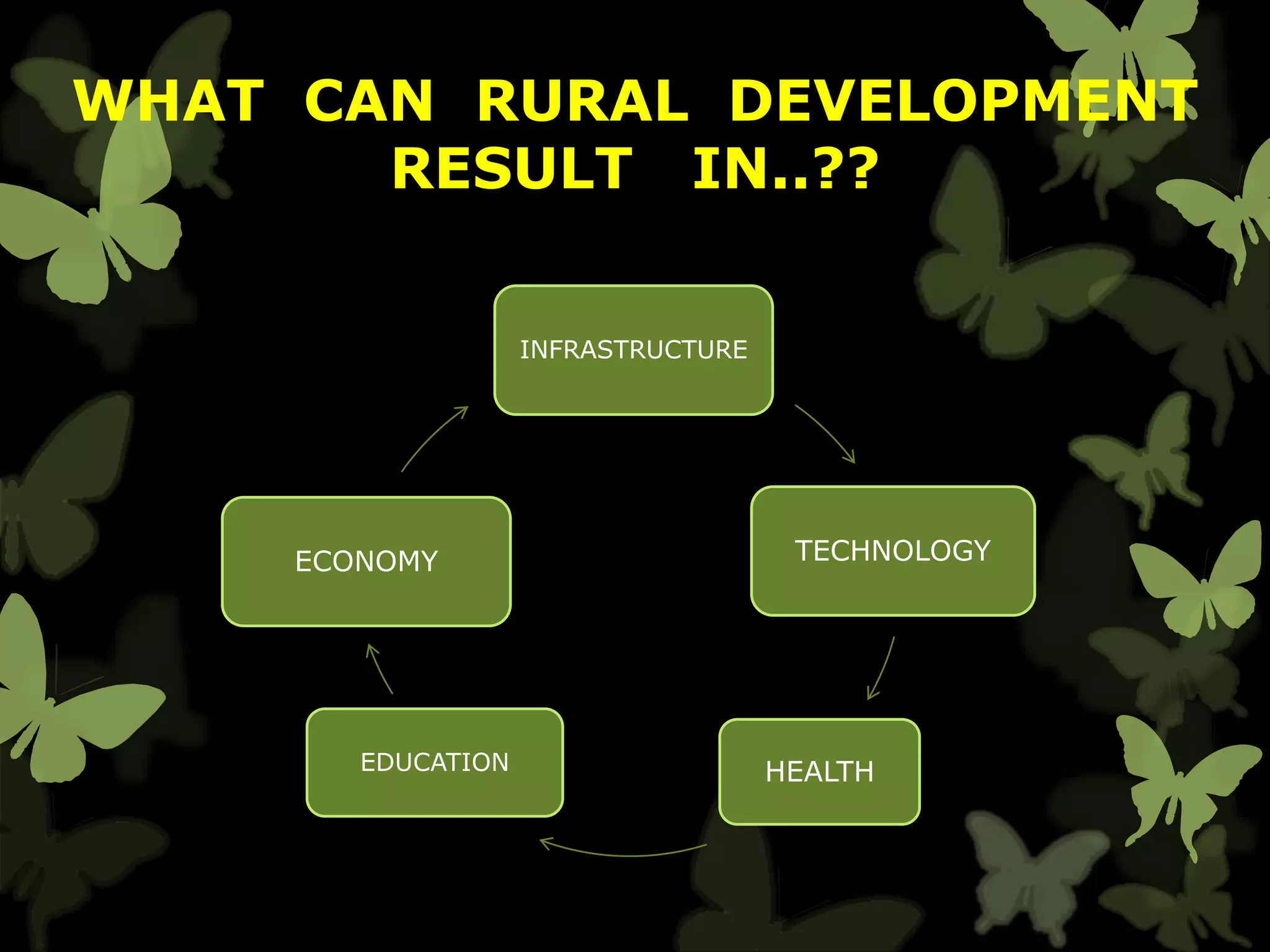
WHAT CAN RURAL DEVELOPMENT
RESULT IN..??
INFRASTRUCTURE
TECHNOLOGY
HEALTHEDUCATION
ECONOMY
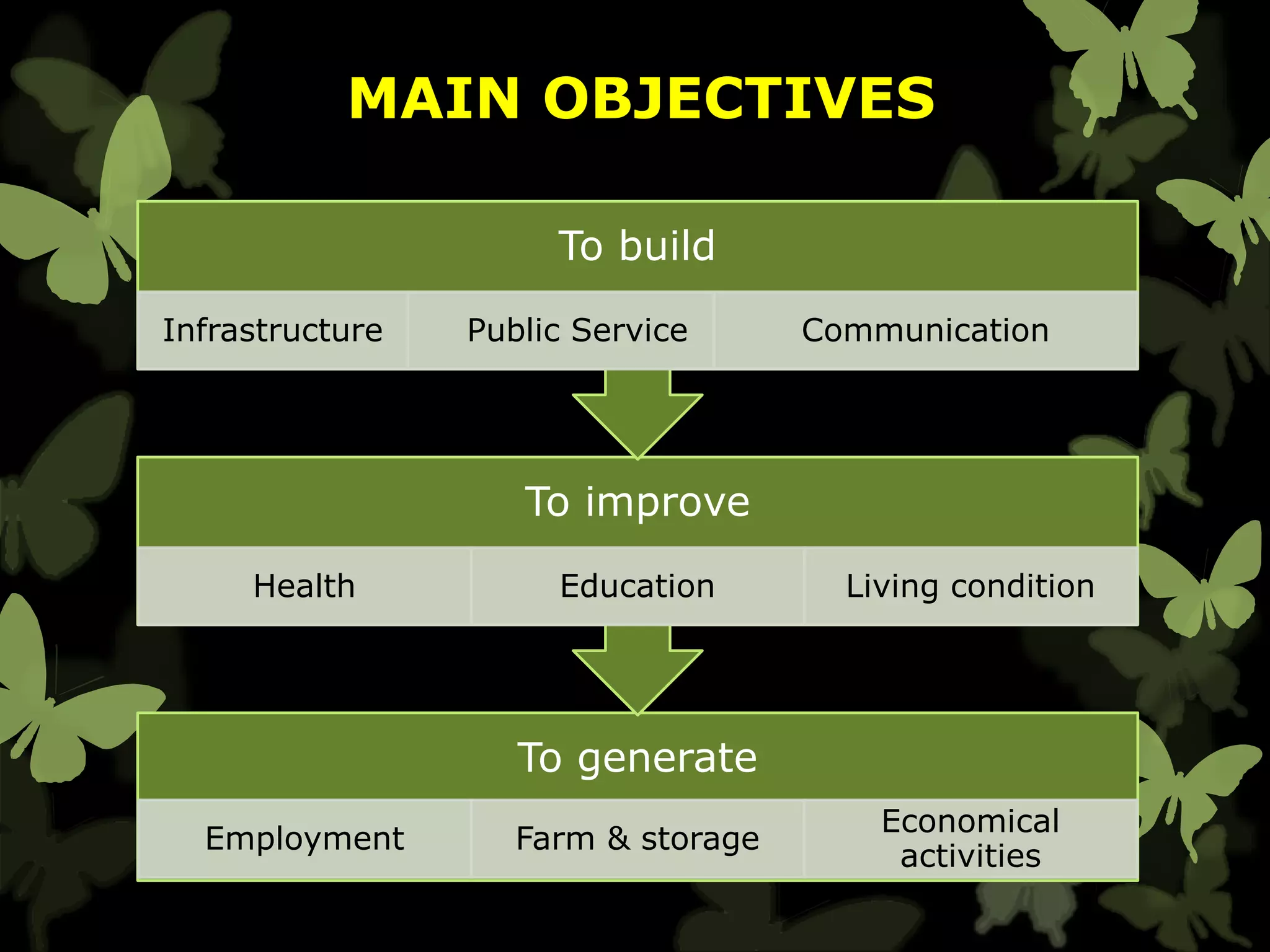
MAIN OBJECTIVES
To generate
Employment Farm & storage
Economical
activities
To improve
Health Education Living condition
To build
Infrastructure Public Service Communication
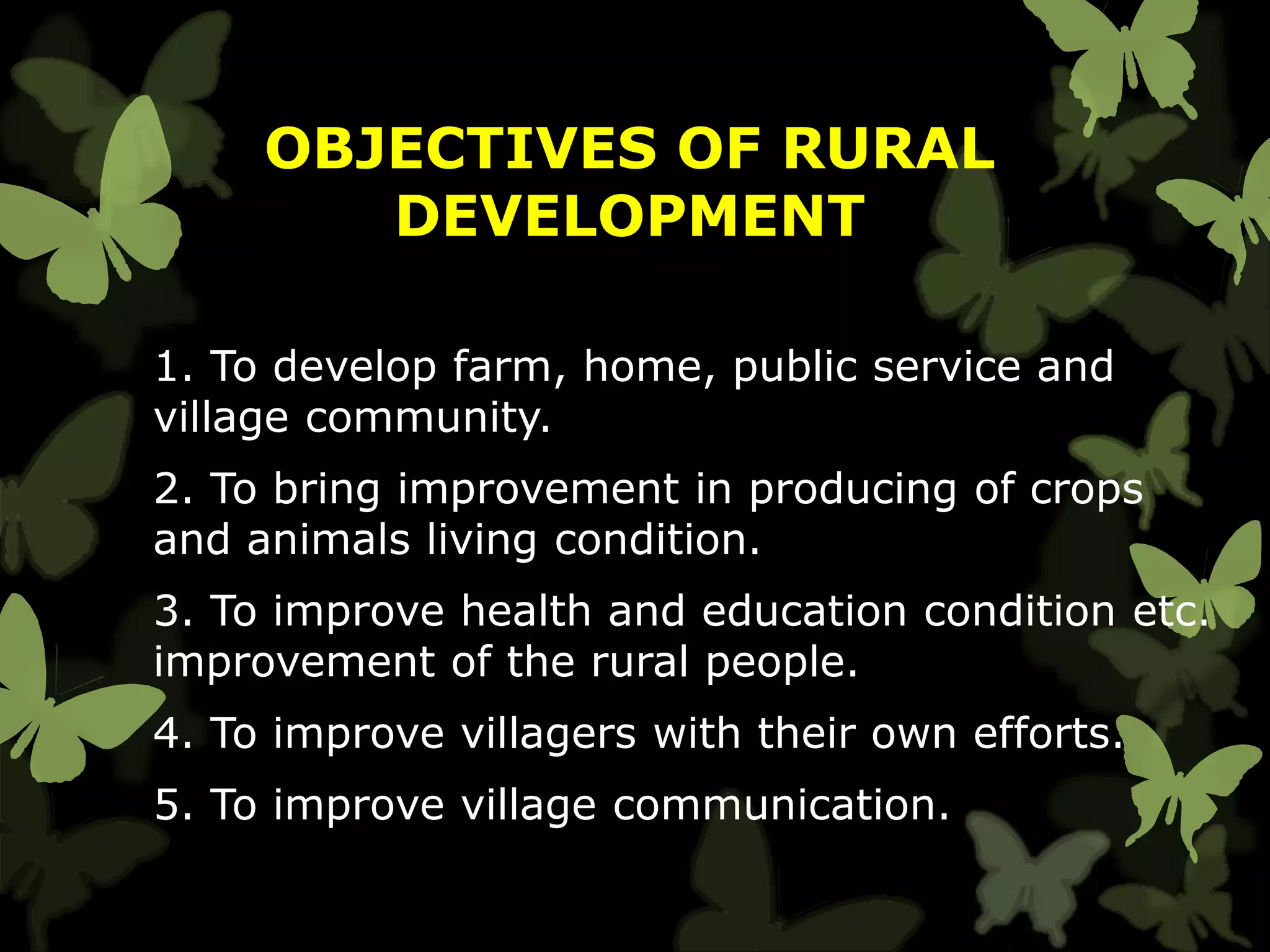
OBJECTIVES OF RURAL
DEVELOPMENT
1. To develop farm, home, public service and
village community.
2. To bring improvement in producing of crops
and animals living condition.
3. To improve health and education condition etc.
improvement of the rural people.
4. To improve villagers with their own efforts.
5. To improve village communication.
NEED & IMPORTANCE OF RURAL
DEVELOPMENT
NEED for RURAL DEVELOPEMENT
1. To develop rural area as whole in terms of culture,
society, economy, technology and health.
2. To develop living slandered of rural mass.
3. To develop rural youths, children and women.
4. To develop and empower human resource of rural
area in terms of their psychology, skill, knowledge,
attitude and other abilities.
5. To solve the problems faced by the rural mass for
their development.
IMPORTANCE OF RURAL DEVELOPMENT
Rural development is a dynamic process,
which is mainly concerned with the rural areas.
These include-
Agricultural growth, putting up of economic and
social infrastructure, fair wages as also housing
and house sites for the landless, village
planning, public health, education and
functional literacy, communication etc.
Rural development is a national necessity and
has considerable importance in India
THANK YOU
for all your time and attention.
UTKARSH MANI TRIPATHI
COMPUTER SCIENCE & ENGG DEPTT.
MNNIT ALLAHABAD

Expectations vs Reality - Rural development

  • 1.
  • 2.
    RURAL AREA Where thepeople are engaged in primary industry in the sense that they produce things directly for the first time in cooperation with nature.
  • 3.
    RURAL COMMUNITY A groupof people with a common characteristic or interest living together, in a village. A Rural Community can be classified as rural based on the criteria of lower population density, less social differentiation, less social and spatial mobility, slow rate of social change, etc. Agriculture is the major occupation of rural people.
  • 4.
    MAIN FEATURES OFRURAL COMMUNITY Village is an institution The Village is a primary institution. The development of villages is influenced considerably by the life of the village. It satisfies almost all the needs of the rural. Community They have a sense of unity and a feeling of belongingness towards each other. Religion Faith in religion and universal power is found in the life of the villages. Agriculture Main occupation is agriculture which involves dependence on nature. Nature gives the livelihood to them. Farmers worship forces of nature.
  • 5.
  • 6.
    Lifestyles in ruralareas are different than those in urban areas, mainly because limited services are available. Governmental services like law enforcement, schools, fire departments, and libraries may be distant, limited in scope, or unavailable. Utilities like water, sewer, street lighting, and garbage collection may not be present. Public transport is sometimes absent or very limited, people use their own vehicles, walk or ride an animal.
  • 7.
    PROBLEMS IN RURALAREAS 1.People-related problems 2.Agriculture-related problems 3.Infrastructure-related problems 4.Economic problems 5.Social and Cultural problems 6.Leadership-related problems 7.Administrative problems
  • 8.
    1. Traditional wayof thinking. 2. Poor understanding. 3. Low level of education to understand developmental efforts and new technology. 4. Deprived psychology and scientific orientation. 5. Lack of confidence. 6. Poor awareness. 7. Low level of education. 8. Existence of unfelt needs. 9. Personal ego. PEOPLE-RELATED PROBLEMS
  • 9.
    1. Lack ofexpected awareness, knowledge, skill and attitude. 2. Unavailability of inputs. 3. Poor marketing facility. 4. Insufficient extension staff and services. 5. Multidimensional tasks to extension personnel. 6. Small size of land holding. 7. Division of land. 8. Unwillingness to work and stay in rural areas. AGRICULTURE-RELATED PROBLEMS
  • 10.
    INFRASTRUCTURE-RELATED PROBLEMS Poor infrastructure facilitieslike-: 1.Water 2.Electricity 3.Transport 4.Educational institutions 5.Communication 6.Health 7.Employment 8.Storage facility etc.
  • 11.
    ECONOMIC PROBLEMS 1. Unfavourableeconomic condition to adopt high cost technology. 2. High cost of inputs. 3. Under privileged rural industries
  • 12.
  • 13.
    Rural development isa strategy designed to improve the economic and social life of rural poor. It is a process, which aims at improving the well being and self realization of people living outside the urbanized areas through collective process. Rural Development is all about bringing change among rural community from the traditional way of living to progressive way of living. It is also expressed as a movement for progress.
  • 14.
    WHAT CAN RURALDEVELOPMENT RESULT IN..?? INFRASTRUCTURE TECHNOLOGY HEALTHEDUCATION ECONOMY
  • 15.
    MAIN OBJECTIVES To generate EmploymentFarm & storage Economical activities To improve Health Education Living condition To build Infrastructure Public Service Communication
  • 16.
    OBJECTIVES OF RURAL DEVELOPMENT 1.To develop farm, home, public service and village community. 2. To bring improvement in producing of crops and animals living condition. 3. To improve health and education condition etc. improvement of the rural people. 4. To improve villagers with their own efforts. 5. To improve village communication.
  • 17.
    NEED & IMPORTANCEOF RURAL DEVELOPMENT
  • 18.
    NEED for RURALDEVELOPEMENT 1. To develop rural area as whole in terms of culture, society, economy, technology and health. 2. To develop living slandered of rural mass. 3. To develop rural youths, children and women. 4. To develop and empower human resource of rural area in terms of their psychology, skill, knowledge, attitude and other abilities. 5. To solve the problems faced by the rural mass for their development.
  • 19.
    IMPORTANCE OF RURALDEVELOPMENT Rural development is a dynamic process, which is mainly concerned with the rural areas. These include- Agricultural growth, putting up of economic and social infrastructure, fair wages as also housing and house sites for the landless, village planning, public health, education and functional literacy, communication etc. Rural development is a national necessity and has considerable importance in India
  • 20.
    THANK YOU for allyour time and attention. UTKARSH MANI TRIPATHI COMPUTER SCIENCE & ENGG DEPTT. MNNIT ALLAHABAD

Editor's Notes

  • #21 Thanks-sushmita tripathi MNNIT ALLAHABAD M.SW FIRST YEAR 2016MW01